Christianity is not a philosophy, ideology, or religious program; it is a friendship with the Son of God, risen from the dead. There is simply no more intense union with Jesus than the Mass.
Pope Francis celebrates morning Mass in the chapel of his residence at the Domus Sanctae Marthae at the Vatican Sept. 25. (CNS photo/L'Osservatore Romano)
As many Catholics know, the Second Vatican Council famously referred to the liturgy as the “source and summit of the Christian life.” And following the prompts of the great figures of the liturgical movement in the first half of the twentieth century, the Council Fathers called for a fuller, more conscious, and more active participation in the liturgy on the part of Catholics.
That the Vatican II dream of a revived liturgical awareness and practice has, at least in the West, largely remained unrealized goes without saying. In the years following the Council, Mass attendance in Europe, North America, and Australia has plummeted. The numbers of Catholics who regularly attend Mass in those parts of the world hover between 10% and 25%. Therefore, it is not surprising that an extraordinary number of those who self-identify as Catholics in the West have very little idea what the Mass actually is. My thirty-one years of priestly ministry convince me that, even for a great number of those who attend Mass, the liturgy is a kind of religiously-themed jamboree.
So what is the Mass? What happens during this paradigmatic prayer? Why is it the beginning and culmination of what it means to be a Christian? In the course of this brief article, I will share just a couple of basic insights.
First, the Mass is a privileged encounter with the living Christ. Christianity is not a philosophy, ideology, or religious program; it is a friendship with the Son of God, risen from the dead. There is simply no more intense union with Jesus than the Mass. Consider for a moment the two major divisions of the Mass: the liturgy of the Word and the liturgy of the Eucharist. When we meet with another person in a formal setting, we typically do two things. We get together and talk, and then we eat. Think of the first part of Mass as an exchange, a conversation, between the Son of God and members of his mystical body. In the prayers and interventions of the priest, and especially in the words of the Scriptures, Jesus speaks to his people, and in the songs, responses, and psalms, the people talk back. There is, if you will, a lovely call and response between the Lord and those who have been grafted onto him through baptism. In the course of this spirited conversation, the union between head and members is intensified, strengthened, confirmed. Having talked, we then sit down to eat, not an ordinary meal, but the banquet of the Lord’s body and blood, hosted by Jesus himself. The communion that commenced with the call and response during the first part of Mass is now brought to a point of unsurpassed intensity (at least this side of heaven), as the faithful come to eat the body and drink the lifeblood of Jesus.
A second rubric under which to consider the Mass is that of play. We tend quite naturally to think of play as something less than serious, something frivolous and far less important than work. But nothing could be further from the truth. Work is always subordinated to an end beyond itself; it is for the sake of a higher good. So I work on my car that I might drive it; I work at my place of employment that I might make money; I work around the house so that it might be a more pleasant place to live, etc. But play has no ulterior motive, no end to which it is subordinated. Hence, I play baseball or watch golf or attend a symphony or engage in philosophical speculation or get lost in a sprawling novel simply because it is good so to do. These activities are referred to in the classical tradition as “liberal,” precisely because they are free (<i liber) from utility. When I was teaching philosophy years ago in the seminary, I would gleefully tell my students that they were engaging in the most useless study of all. Invariably they laughed—revealing the utilitarian prejudice of our culture—but I always reminded them that this meant the highest and most noble kind of study.
The Mass, as an act of union with the highest good, is therefore the supreme instance of play. It is the most useless and hence sublimest activity in which one could possibly engage. Recently, I had the privilege of attending the Mass for the installation of new members of the Knights and Ladies of the Holy Sepulcher. For the solemn liturgy, the Knights wore dashing capes emblazoned with the Jerusalem cross and jaunty black berets, while the ladies donned elegant black gowns, gloves, and lace mantillas. Two bishops, in full Mass vestments and tall mitres, welcomed the new members into the order by dubbing them on both shoulders with impressively large swords. As I watched the proceedings, I couldn’t help but think of G.K. Chesterton’s remark that children often dress up when they engage in their “serious play.” Capes, hats, ceremonial gloves, vestments, and swords for dubbing are all perfectly useless, which is precisely their point. So all of the colorful accouterments and stately actions of the Mass are part of the sublime play.
Why is the Mass so important? Why is it the “source and summit” of the Christian life? I could say many more things in answer to these questions, but suffice it to say for the moment that it is the most beautiful encounter between friends and that it is an anticipation of the play that will be our permanent preoccupation in heaven.
If you value the news and views Catholic World Report provides, please consider donating to support our efforts. Your contribution will help us continue to make CWR available to all readers worldwide for free, without a subscription. Thank you for your generosity!
Click here for more information on donating to CWR. Click here to sign up for our newsletter.
Bishop Robert Barron has been the bishop of the Diocese of Winona-Rochester in Minnesota since 2022. He is the founder of www.WordonFire.org, a nonprofit global media apostolate that seeks to draw people into—or back to—the Catholic faith.
Archbishop Arthur Roche, prefect of the Vatican’s Congregation for Divine Worship, recently sent the world’s bishops instructions regulating local usage of the Traditional Latin Mass. Those instructions were intended to implement Pope Francis’s 2021 motu […]
Vatican II in session, circa 1962-1965 / Photo credit: Catholic Press Photo/Wikimedia Commons
CNA Newsroom, Oct 11, 2022 / 12:30 pm (CNA).
Oct. 11 marks the 60th anniversary of a monumental event in the history of the Catholic Church: the gathe… […]
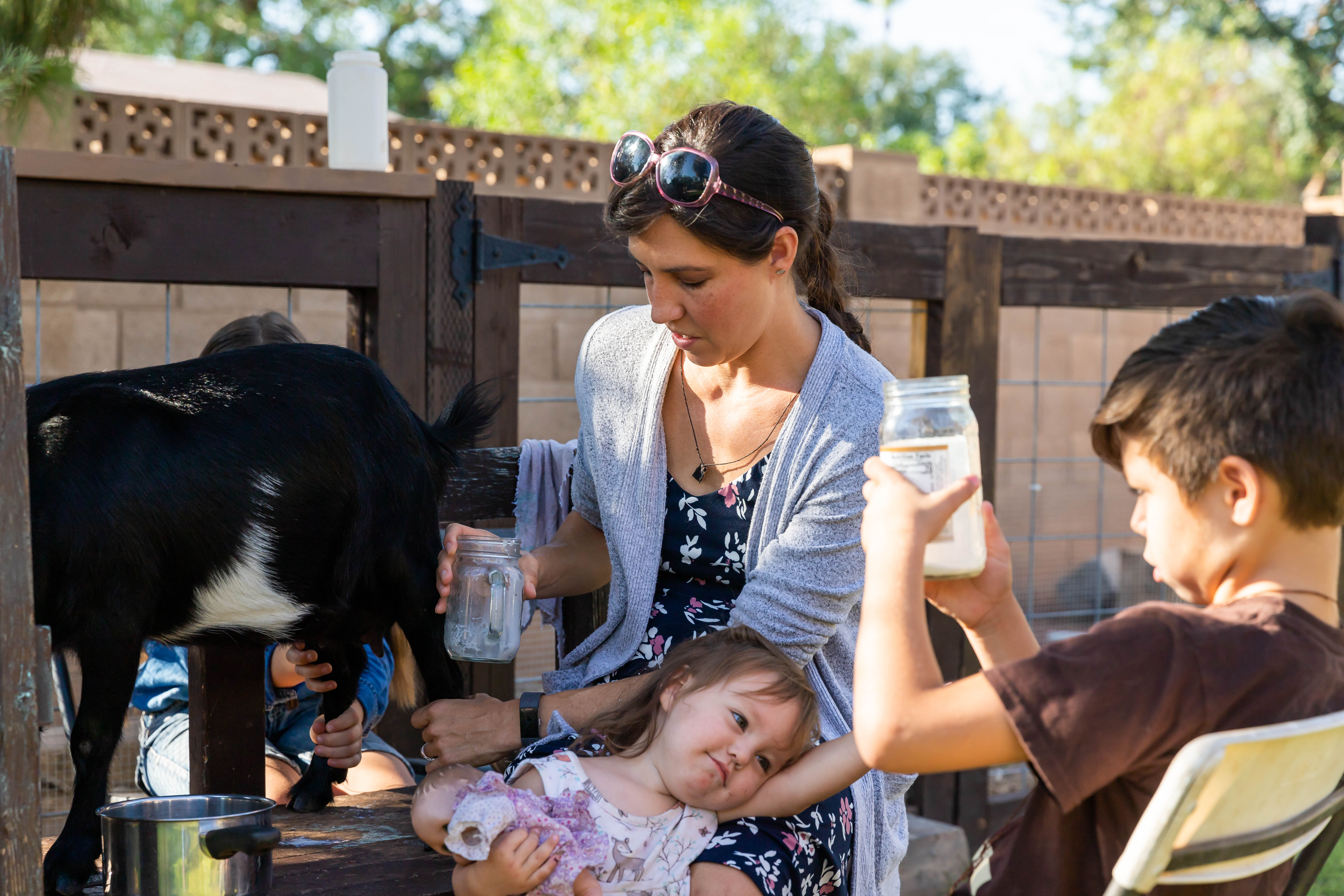
Maureen McKinley milks one of her family’s goats in their backyard with help from three of her children, Madeline (behind), Fiona and Augustine on Monday, Aug. 2, 2021. McKinley and her family own two goats, chickens, a rabbit, and a dog. / Jake Kelly
Denver Newsroom, Aug 10, 2021 / 16:32 pm (CNA).
With five children ages 10 and under to care for, and a pair of goats, a rabbit, chickens and a dog to tend to, Maureen and Matt McKinley rely on a structured routine to keep their busy lives on track.
Chores, nap times, scheduled story hours – they’re all important staples of their day. But the center of the McKinleys’ routine, what focuses their family life and strengthens their Catholic faith, they say, is the Traditional Latin Mass.
Its beauty, reverence, and timelessness connect them to a rich liturgical legacy that dates back centuries.
“This is the Mass that made so many saints throughout time,” observes Maureen, 36, a parishioner at Mater Misericordiæ Catholic Church in Phoenix.
“You know what Mass St. Alphonsus Ligouri, St. Therese, St. Teresa of Avila and St. Augustine were attending? The Traditional Latin Mass,” Maureen says.
“We could have a conversation about it, and we would have all experienced the exact same thing,” she says. “That’s exciting.”
Recent developments in the Catholic Church, however, have curbed some of that excitement. On July 16, Pope Francis released a motu proprio titled Traditiones custodis, or “Guardians of the Tradition”, that has cast doubt on the future of the Traditional Latin Mass (TLM) – and deeply upset and confused many of its devotees.
Pope Francis’ directive rescinds the freedom Pope Benedict XVI granted to priests 14 years ago to say Masses using the Roman Missal of 1962, the form of liturgy prior to Vatican II, without first seeking their bishop’s approval. Under the new rules, bishops now have the “exclusive competence” to decide where, when, and whether the TLM can be said in their dioceses.
In a letter accompanying the motu proprio, Pope Francis maintains that the faculties granted to priests by his predecessor have been “exploited to widen the gaps, reinforce the divergences, and encourage disagreements that injure the Church, block her path, and expose her to the peril of division.”
Using the word “unity” a total of 15 times in the accompanying letter, the pope suggests that attending the TLM is anything but unifying, going so far as to correlate a strong personal preference for such masses with a rejection of Vatican II.
Weeks later, many admirers of the “extraordinary” form of the Roman rite – the McKinleys among them – are still struggling to wrap their minds and hearts around the pope’s order, and the pointed tone he used to deliver it.
Maureen McKinley says she had never considered herself a “traditionalist Catholic” before. Instead, she says she and her husband have just “always moved toward the most reverent way to worship and the best way to teach our children.”
“It didn’t feel like I became a particular type of Catholic by going to Mater Misericordiæ. But since the motu proprio came out, I feel like I have been categorized, like I was something different, something other than the rest of the Church,” she says.
“It feels like our Holy Father doesn’t understand this whole group of people who love our Lord so much.”
McKinley isn’t alone in feeling this way. Sadness, anger, frustration, and disbelief are some common themes in conversations among those who regularly attend the TLM.
They want to understand and support the Holy Father, but they also see the restriction as unnecessary, especially when plenty of other more pressing issues in the Church abound.
Eric Matthews, another Mater Misericordiæ parishioner, views the new restrictions as an “attack on devout Catholic culture,” citing the beauty that exists across the rites recognized within the Church. There are seven rites recognized in the Catholic Church: Latin, Byzantine, Alexandrian or Coptic, Syriac, Armenian, Maronite, and Chaldean.
“It’s the same Mass,” says Matthews, 39, who first discovered the TLM about eight years ago. “It’s just different languages, different cultures, but the people that you have there are there for the right reasons.”
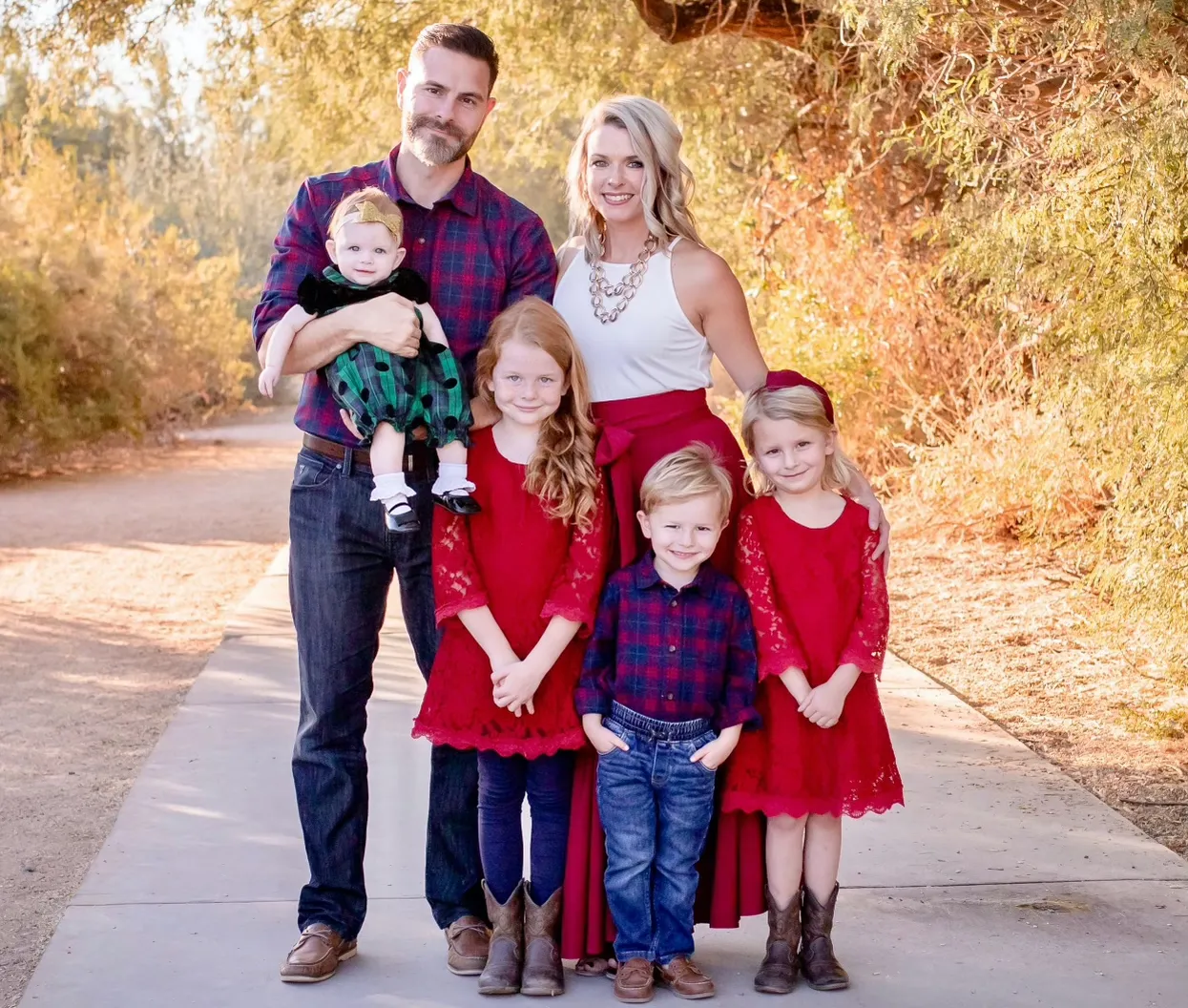
Eric and Geneva Matthews with their four children. / Narissa Lowicki
Different paths to the TLM
The pope’s motu proprio directly affects a tiny fraction of U.S. Catholics – perhaps as few as 150,000, or less than 1 percent of some 21 million regular Mass-goers, according to some estimates. According to one crowd-sourced database, only about 700 venues – compared to over 16,700 parishes nationwide – offer the TLM.
Also, since the motu proprio’s release July 16, only a handful of bishops have stopped the TLM in their dioceses. Of those bishops who have made public responses, most are allowing the Masses to continue as before – in some cases because they see no evidence of disunity, and in others because they need more time to study the issue.
But for those who feel drawn to the TLM – for differing reasons that have nothing to do with a rejection of Vatican II – it feels as if the ground has shifted under their feet.
Maureen McKinley wants her children to understand the importance of hard work, of which they have no shortage when it comes to their urban farm. After morning prayer, Maureen milks the family’s goats with the help of the children. Madeline (age 10) feeds the bunny; Augustine (7) exercises the dog; John (6) checks for eggs from the chickens; and Michael (4) helps anyone he chooses.
With a noisy clatter in the kitchen, the McKinleys eat breakfast, tidy up their rooms, and begin their daily activities. They break at 11 a.m. to head to daily Mass at Mater Misericordiæ, an apostolate of the Priestly Fraternity of Saint Peter (FSSP), where they first attended two years ago.
Matt, 34, wanted to know how the early Christians worshipped.
“The funny thing about converts is they’re always wanting more,” says Maureen, who was, at first, a little resistant to the idea of attending the TLM because she didn’t know Latin. “Worship was a big part of his conversion.”
Maureen agreed to follow her husband’s lead, and they continued to attend the TLM. What kept them coming back week after week was the reverence for the Eucharist.
“Matt had a really hard time watching so many people receive communion in the hand at the other parish,” says Maureen. “He says he didn’t want our kids to think that that was the standard. That’s the exception to the rule, not the rule.”
Reverence in worship also drew Elizabeth Sisk to the TLM. A 28-year-old post-anesthesia care unit nurse, she attends both the Novus Ordo, the Mass promulgated by St. Paul VI in 1969, and the extraordinary form in Raleigh, North Carolina, where her parish, the Holy Name of Jesus Cathedral, offers the TLM on the first Sunday of the month.
Sisk has noticed recently that more people in her area — especially young people who are converts to Catholicism — are attending both forms of the Mass. While the Novus Ordo is what brought many of them, herself included, to the faith, she feels that the extraordinary form invites them to go deeper.
“We want to do something radical with our lives,” Sisk says. “To be Catholic right now as a young person is a really radical decision. I think the people who choose to be Catholic right now, we’re all in. We don’t want ‘watered-down’ Catholicism.”
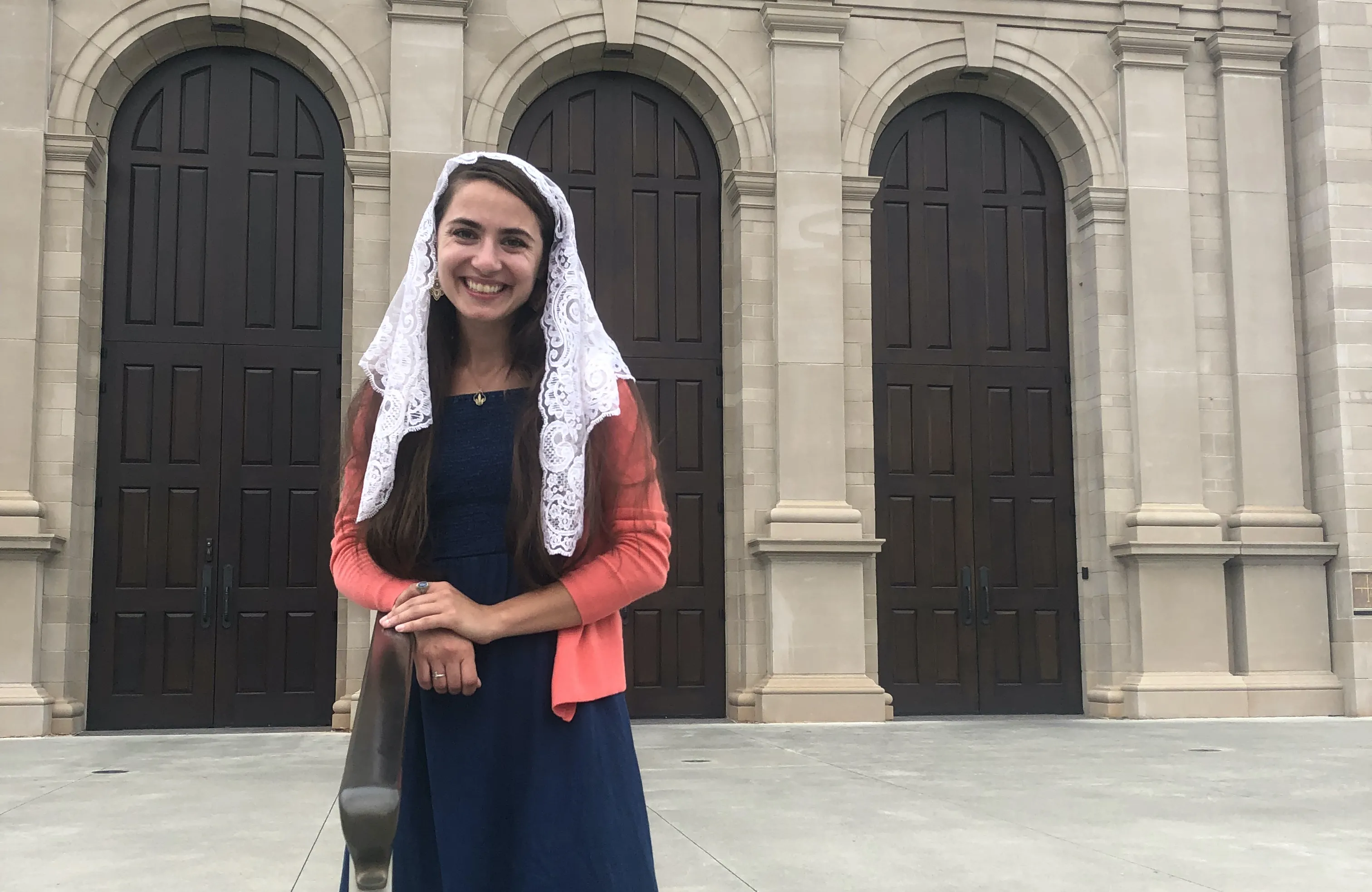
Elizabeth Sisk stands in front of Holy Name of Jesus Cathedral in Raleigh, North Carolina.
With the lack of Christian values in the world today, Sisk desires “something greater,” which she says she can tell is happening in the TLM.
Many TLM parishes saw an increase in attendance during the pandemic, as they were often the only churches open while many others shut their doors or held Masses outside. This struck some as controversial, if not disobedient to the local government. For others, it was a saving grace to have access to the sacraments.
The priests at Erin Hanson’s parish obtained permission from the local bishop to celebrate Mass all day, every day, with 10 parishioners at a time during the height of the COVID pandemic.
“We were being told by the world that church is not necessary,” says Hanson, a 39-year-old mother of three. “Our priest says, ‘No, that’s a lie. Our church is essential. Our salvation is essential. The sacraments are essential.’”
Andy Stevens, 52, came into the Church through the TLM, much to the surprise of his wife, Emma, who had been a practicing Catholic for many years. Andy was “very adamantly not going to become Catholic,” but was happy to help Emma with their children at Mass. It wasn’t until they attended a TLM that Andy began to think differently about the Church.
“He believed that you die and then there is nothing, and he never really spoke to me about becoming a Catholic,” says Emma, 48, who was pregnant with their seventh child at the time.
Andy noticed an intense focus among the worshippers, which he recognized as a “real presence of God” that he didn’t see anywhere else. After the birth of their 7th child, he joined the Church.
All 12 of the Stevens’ children prefer the TLM to the Novus Ordo.
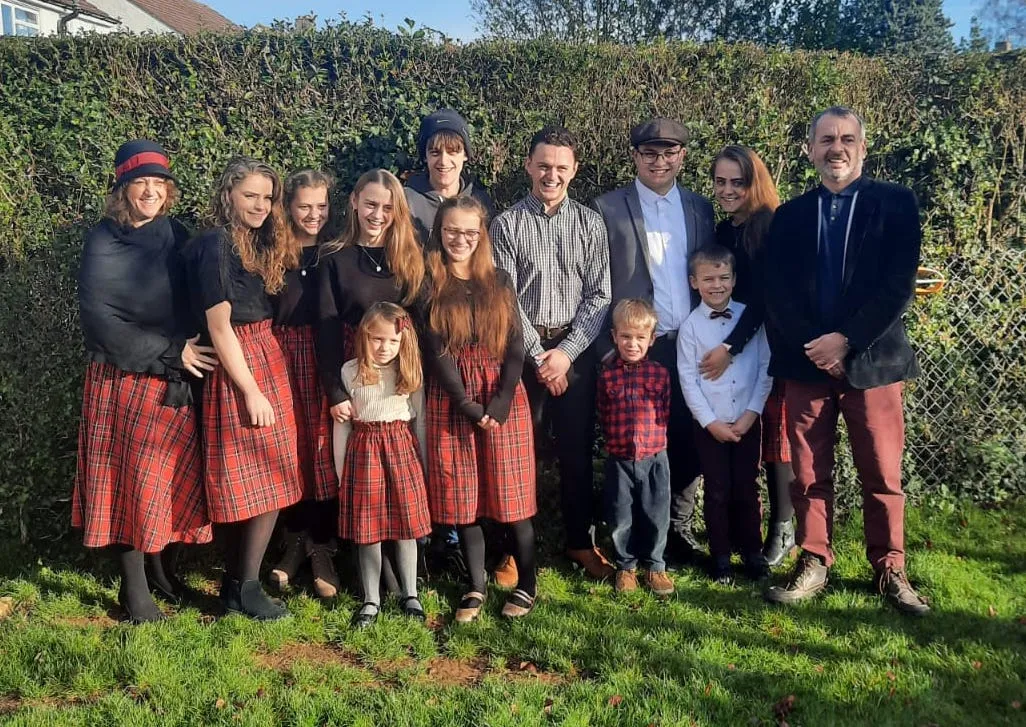
Emma and Andy Stevens with their 12 children in Oxford, England.
“It’s a Mass of the ages,” says their eldest son, Ryan, 27. “I can feel the veil between heaven and earth palpably thinner.”
A native of Chicago, Adriel Gonzalez, 33, remembers attending the TLM as a child, which he did not particularly like. It was “very long, very boring,” and the people who went to the TLM were “very stiff and they could come off as judgmental” towards his family, he says.
Gonzalez, who also attended Mass in Spanish with his family, didn’t understand the differences among rites, since Chicago was a sort of “salad bowl, ethnically,” he says, and Mass was celebrated in many languages and forms.
He took a step back from faith for some time, he says, noting that he had a “respectability issue” with the Christianity he grew up with. He watched as some of his friends were either thoughtless in the way they practiced their faith, or were “on fire,” but lacked intentionality. When he did come back to the faith, it was through learning about the Church’s intellectual tradition.
He spent time in monasteries and Eastern Catholic parishes with the Divine Liturgy because there was “something so obviously ancient about it.” He decided to stay within the Roman rite with a preference for a reverent Novus Ordo.
When he moved to Ann Arbor, Michigan, Gonzalez committed to his neighborhood parish, which had a strong contingent of people who loved tradition in general. The parish instituted a TLM in the fall of 2020, when they started having Mass indoors again after the pandemic.
Hallie and Adriel Gonzalez.
“If I’m at a Latin Mass, I’m more likely to get a sense that this is a time-honored practice, something that has been honed over the millennia,” he says. “There is clearly a love affair going on here with the Lord that requires this much more elaborate song and dance.”
For Eric Matthews, the TLM feels a little like time travel.
“It could be medieval times, it could be the enlightenment period, it could be the early 1900s, and the experience is going to be so similar,” he says.
“I just feel like that’s that universal timeframe – not just the universal Church in 2021 – but the universal Church in almost any time period. We’re the only church that can claim that.”
What happens now?
The motu proprio caught Adriel Gonzalez’ attention. He sought clarity about whether his participation in the extraordinary form was, in fact, part of a divisive movement, or simply an expression of his faith.
If it was a movement, he wanted no part of it, he says.
“As far as I can tell, the Church considers the extraordinary form and the ordinary form equal and valid,” says Gonzalez. “Ideally, there should be no true difference between going to one or the other, outside of just preference. It shouldn’t constitute a completely different reality within Catholicism.”
With this understanding, Gonzalez says he resonated with some of the reasoning set forth in the motu proprio because it articulated that the celebration of the TLM was never intended to be a movement away from the Novus Ordo or Vatican II. Gonzalez also emphasized that the extraordinary form was never supposed to be a “superior” way of celebrating the Mass.
Gonzalez believes the Lord allowed the growth in the TLM “to help us to recover a love for liturgy, and to ask questions about what worship and liturgy looks like.” He would have preferred if what was good was kept and encouraged, and what was potentially dangerous “coaxed out and called out.”
Mater Misericordæ Catholic Church in Phoenix, Arizona. / Viet Truong
Erin Hanson, of Mater Misericordiæ, agrees.
“If [Pope Francis] does believe there is division between Novus Ordo and traditional Catholics, I don’t think he did anything to try to fix that division,” she says.
Hanson would like to know who the bishops are that Pope Francis consulted in making this decision, sharing that she doesn’t feel that there is any of the transparency needed for such a major document. If there are divisions, she says, she would like the opportunity to work on them in a different way.
“This isn’t going to be any less divisive if he causes a possible schism,” Hanson says.
According to the motu proprio and the accompanying letter, the TLM is not to be celebrated in diocesan churches or in new churches constructed for the purpose of the TLM, nor should new groups be established by the bishops. Left out of their parish churches, some are worried their only option to attend Mass will be in a recreation center or hotel ballroom.
Eric Matthews hopes that everyone is able to experience the extraordinary form at least once in their life so they can know that this is not about division.
“I can’t imagine someone going to the Latin Mass and saying, ‘This is creating disunity,’” he says. “There’s nothing to be afraid of with the Latin Mass. You’re just going to be surrounding yourself with people that really take it to heart.”
Maureen McKinley was home sick when her husband Matt found out about the motu proprio. He had taken the kids to a neighborhood park, where he ran into some friends who also attend Mater Misericordiæ. They asked if he had heard the news.
“I felt disgust at a document that pretends to say so much while actually saying so little and disregards the Church’s very long and rich tradition of careful legal documents,” Matt McKinley says.
Bishop Thomas Olmsted of Phoenix stated that the TLM may continue at Mater Misericordiæ, as well as in chapels, oratories, mission churches, non-parochial churches, and at seven other parishes in the diocese. Participation in the TLM and all of the activities of the parish are so important to the McKinleys that they are willing to move to another state or city should further restrictions be implemented.
For now, their family’s routine continues the same as before.
At the end of their day, the McKinleys pray a family rosary in front of their home altar, which has a Bible at the center, and an icon of Christ and a statue of the Virgin Mary. They eat dinner together, milk the goat again, and take care of their evening animal chores. After night prayer, the kids head off to bed, blessing themselves with holy water from the fonts mounted on the wall before they enter their bedroom.
“The life of the Church springs from this Mass,” Maureen says. “That’s why we’re here—not because the Latin Mass is archaic, but that it’s actually just so alive.”
Good grief, a sure sign that the “theology” of the Mass has changed for the worse: a bishop speaking about the Mass with no mention of the main elements: sacrifice, worship. Instead we see the same contemporary stuff, essentially sociological: it is about an “encounter between friends,” a community banquet. And the bishop wonders why mass attendance has plummeted since VII?
Gosh, indeed! I am awaiting some more information in this regard. When I have more of his original intent re writing this article, I will be able to form a better thought on the matter. However, at this point in time, I concur, this is a rather unfortunate 1970s ‘Holy Banquet’ themed article. The implications of which are, to say the least, worrying…..
Exactly, Chris. That’s why I had to leave my old parish. The priest had no sense whatsoever of the Mass being THE Sacrifice of Christ! So if he has to have the intention of offering the Sacrifice to make it valid, how can it be effected if he doesn’t believe?
Lighten up, Chris. Bishop Barron’s article does talk about worship and sacrifice but in a novel and illuminating way. Novel and illuminating for me, at least. This is what I so love about Bishop Barron: his way of talking about faith in ways that help me see it ever more clearly. “Were not our hearts burning within us?” God Bless you, Chris, and you, Bishop Barron.
The good bishop’s point about ‘play’ harkens back to a book i read years ago on Liesure, by Piper. I think. He is very good at presenting the faith in a new (this case old as per Piper) way. For that i read his things with an open mind. Thank you Bishop.
Am I now to forget that the Holy Sacrifice of the Mass has three vital elements without which there is no Mass, namely, the Offertory, the Consecration, and the Priest’s Communion?
We use Bishop Barron’s W-O-F courses in our adult stody group in our parish. In fact, we have used all of them and are now beginning the latest on David. His courses are without equal. We especially value and enjoy his insightful and lively commentaries. When I saw this article on CWR I thought, “Good, an exposition of what the Mass is really about.” Sadly, the article turned out to be another social, party-time distortion of the Mass. When I got to the end and saw Bishop Barron as author . . . Is there a ghost writer masquerading as the bishop? We can hope.
Apparently a good number of the commentators for Bishop Barron’s article on what the Mass is have missed the good Bishop’s point altogether…!
“First, the Mass is a privileged encounter with the living Christ. Christianity is not a philosophy, ideology, or religious program; it is a friendship with the Son of God, risen from the dead. There is simply no more intense union with Jesus than the Mass. Consider for a moment the two major divisions of the Mass: the liturgy of the Word and the liturgy of the Eucharist. When we meet with another person in a formal setting, we typically do two things. We get together and talk, and then we eat. Think of the first part of Mass as an exchange, a conversation, between the Son of God and members of his mystical body. In the prayers and interventions of the priest, and especially in the words of the Scriptures, Jesus speaks to his people, and in the songs, responses, and psalms, the people talk back. There is, if you will, a lovely call and response between the Lord and those who have been grafted onto him through baptism. In the course of this spirited conversation, the union between head and members is intensified, strengthened, confirmed. Having talked, we then sit down to eat, not an ordinary meal, but the banquet of the Lord’s body and blood, hosted by Jesus himself. The communion that commenced with the call and response during the first part of Mass is now brought to a point of unsurpassed intensity (at least this side of heaven), as the faithful come to eat the body and drink the lifeblood of Jesus.”
Put your pre-conceived ideas and your egos away and try a listen to what this very Holy Bishop is trying to express to all about what the Mass really is…!
‘First, the Mass is a privileged encounter with the living Christ’ a representation of the sacrifice of Calvary across space and time, so that we can be fully present in this act of love…! So we can participate…!! Hopefully you can too…!
Except what you label as pre-concieved idea and ego are what the Church has taught the Mass is. It is only recently, beginning in the 1970’s, that certain folks began to promote a different idea. A main point is that it is no accident that the the latter ideas, which Barron repeats, coincide with the same period of unprecedented decline in mass attendance, contradicting the whole reason for his piece- it is not that people don’t know this, but precisely because they do & have substituted it for the true, primary reality. It it not hard to see how that happens when people see the mass as a social thing, all about them, their subjective experience, their participation, etc.
At least the Bishop acknowledges that Vatll regarded the Mass as the “source and summit”….I have seen that quote
turned into the Eucharistic Celebration is the source and summit. Eucharistic Celebration is a Protestant term for their
whole ceremony but Catholics think it means Holy Communion….which totally eliminates the sacrificial aspect of Holy Mass. The Bishop goes on to neglect the propitiatory Sacrifice of our Divine Savior .When priests are no longer aware
of offering the actual sacrifice of Christ to God the Father to make up for sins then the question arises …will their Masses be valid?
Bishop Barron, in attempting to make his point about “play”, may have omitted a modifier to the word “useless”. Surely he meant to describe the Mass and reception of the Body and Blood of Christ as “useless” as far as pragmatic, utilitarian matters are concerned – no money is earned; no visible works of art are created; no academic credits to count toward a degree are awarded. Nothing “useful” in worldly affairs.
But reception of the Body and Blood of Christ cannot be “useless” to the soul of the one who devoutly receives and experiences Communion with Jesus. At the level of our being, we advance closer to God; we are more closely conformed to Christ. We are changed.
This post may have been intended as a simple introduction to those who seek the Truth about the Mass. Bishop Barron perhaps chose simple, familiar, comfortable imagery as a beginning, intending to go further in his series.
Upon reading this article on the Mass I grabbed my “Modern Catholic Dictionary” by John A Hardon S.J. Turning to pg 338 on the Mass. Let the young generation read this once and I promise they will flock to the nearest Catholic Church to attend Mass and “receive” at the banquet of the altar the “paschal meal” where Fr. Hardon states that “The entire tradition of the Church teaches that the faithful participate more perfectly in the Eucharistic celebration through sacramental Communion”. They do not “eat” the body but instead, as Fr Hardon states, “receive Christ himself sacramentally so as to receive more fully the fruits of this most holy sacrifice”. Where are all the words that go with the Mass that bring to us all the beautiful mystery of the great Sacrament? Words like re-presentation, memorial,Calvary, merits, sacrifice. We are told that the young are flocking to the Latin Mass. Bishop Barron find these young people and you will find the future of the Catholic Church.
With all due respect, your Excellency, but if you take away the actual theology of the sacrifice of the mass you lose all of the power of the crucifixion of Christ who fulfilled all offerings that were possible to made due for the forgiveness of sins. To go to mass is more than just meeting God with all our friends. It is a powerful active participation where we offer our joys and sufferings of our life with Christ who makes those joys and sufferings efficacious through his own sacrifice. Your sense of the mass seems minimized if all it is is just a representation of the Lord’s Supper vs the both/and of his offering of his self for us.
“Having talked, we then sit down to eat, not an ordinary meal, but the banquet of the Lord’s body and blood, hosted by Jesus himself.”
— Bishop Barron
Yes, Christ had said to His disciples:
“Truly, truly, I say to you, unless you eat the flesh of the Son of man and drink his blood, you have no life in you; he who eats my flesh and drinks my blood has eternal life, and I will raise him up at the last day. For my flesh is food indeed, and my blood is drink indeed. He who eats my flesh and drinks my blood abides in me, and I in him.” (John 6:53-56)
He didn’t back down at all when many of His disciples left Him because He had said these things. He didn’t say to them as they left “Whoa! Wait a minute. Let me explain what I meant. I was speaking metaphorically …” Instead He asked the twelve, “Will you also go away?”
So, the Church has always used the language the Lord used in terms of our consumption of His body and blood, and doesn’t back down from a quite literal interpretation of His words, after the example of Jesus. Even so, Christ didn’t explain what He meant in terms of a “banquet of the Lord’s body and blood, hosted by Jesus himself.” He explained it as “He who eats my flesh and drinks my blood abides in me, and I in him.” This union with Him, He explains, has an effect: “He who eats my flesh and drinks my blood has eternal life, and I will raise him up at the last day.” And if you don’t, by consuming His flesh and blood, enter into this union with the very life of Christ — which is divine life, eternal life — then “you have no life in you.”
The disciples who abandoned Christ were thinking of a “banquet of the Lord’s body and blood, hosted by Jesus himself.” So of course they left. It sounded like Christ was not only advocating cannibalism, but also violating the prohibition of the drinking of blood that is scattered throughout the Hebrew Scriptures. There are a few places where the reason why that was prohibited is explained. Gen 9:1-7 is one of them. There it is explained that life itself is in the blood. Another place where this is explained is Deut. 12:23 and another is Lev 17:10-12. I don’t think the twelve had a clue as to what Christ was getting at anymore than those who left Him. But the twelve remained with Him.
According to the Hebrew Scriptures life is in the blood. Consuming the blood of Christ — divine life, eternal life — was a step up for humanity, not a step down like the consumption of animal life would have been, which is why the Hebrew Scriptures prohibited it. Indeed, as has been said countless times at Holy Mass, “May we come to share in the divinity of Christ, who humbled himself to share in our humanity.”
In my opinion this union with the life of Christ, this mingling of the divine humanity with our own through the consumption of His flesh and blood, is what we ought to think of when receiving the Eucharist, rather than a “banquet of the Lord’s body and blood, hosted by Jesus himself.” This union should eventually lead us to be able to say with St. Paul, “I have been crucified with Christ; it is no longer I who live, but Christ who lives in me; and the life I now live in the flesh [the life of Christ] I live by faith in the Son of God, who loved me and gave himself for me.” (Gal 2:20)
😉 Everyone is a little sensitive due to AL and the politics ranging from the Holy Father down to every Catholic blog. I can only vouch for myself and state that I hate seeing the mass minimized to just a communion meal or theatrics (not setting a straw man against your point. Just that this has been stated before by certain types of Catholics).
I was interested in the comments about Bishop Barron’s article.
They accurately point out that various essential elements about the Mass were not mentioned. But to conclude from this that the theology of the Mass has therefore been changed by the Bishop is going too far. After all, the article was short, only 800 words as the Bishop himself has replied.
Consider an example from the Gospel of Saint John. After the opening Prologue, he starts his account with the appearance of John the Baptist. There is no mention of the stories of Luke relating to the birth of Christ. Does this mean that John by his omission is changing the theology or truths about the life of Christ? Of course not.
In fact, the answer to the concerns of those commenting on Bishop Barron’s article appear at the end of Saint John’s Gospel. He records “There were many other things that Jesus did; if all were written down, the world itself, I suppose, would not hold all the books that would have to be written”.
No written account can do full justice as to what the Mass is for us because it will only become better understood by each of us in the fullness of eternity.
I enjoyed the article and the discussions following. The beauty and efficacyof the mass can include all for the various points of view. IK enjoyed them all and I believe them all.






Good grief, a sure sign that the “theology” of the Mass has changed for the worse: a bishop speaking about the Mass with no mention of the main elements: sacrifice, worship. Instead we see the same contemporary stuff, essentially sociological: it is about an “encounter between friends,” a community banquet. And the bishop wonders why mass attendance has plummeted since VII?
Gosh, indeed! I am awaiting some more information in this regard. When I have more of his original intent re writing this article, I will be able to form a better thought on the matter. However, at this point in time, I concur, this is a rather unfortunate 1970s ‘Holy Banquet’ themed article. The implications of which are, to say the least, worrying…..
Exactly, Chris. That’s why I had to leave my old parish. The priest had no sense whatsoever of the Mass being THE Sacrifice of Christ! So if he has to have the intention of offering the Sacrifice to make it valid, how can it be effected if he doesn’t believe?
Agree.
I agree with Chris.
Adoration, Contrition, Thanksgiving, and Supplication.
Did the Bishop mention these?
Lighten up, Chris. Bishop Barron’s article does talk about worship and sacrifice but in a novel and illuminating way. Novel and illuminating for me, at least. This is what I so love about Bishop Barron: his way of talking about faith in ways that help me see it ever more clearly. “Were not our hearts burning within us?” God Bless you, Chris, and you, Bishop Barron.
The good bishop’s point about ‘play’ harkens back to a book i read years ago on Liesure, by Piper. I think. He is very good at presenting the faith in a new (this case old as per Piper) way. For that i read his things with an open mind. Thank you Bishop.
Am I now to forget that the Holy Sacrifice of the Mass has three vital elements without which there is no Mass, namely, the Offertory, the Consecration, and the Priest’s Communion?
We use Bishop Barron’s W-O-F courses in our adult stody group in our parish. In fact, we have used all of them and are now beginning the latest on David. His courses are without equal. We especially value and enjoy his insightful and lively commentaries. When I saw this article on CWR I thought, “Good, an exposition of what the Mass is really about.” Sadly, the article turned out to be another social, party-time distortion of the Mass. When I got to the end and saw Bishop Barron as author . . . Is there a ghost writer masquerading as the bishop? We can hope.
Apparently a good number of the commentators for Bishop Barron’s article on what the Mass is have missed the good Bishop’s point altogether…!
“First, the Mass is a privileged encounter with the living Christ. Christianity is not a philosophy, ideology, or religious program; it is a friendship with the Son of God, risen from the dead. There is simply no more intense union with Jesus than the Mass. Consider for a moment the two major divisions of the Mass: the liturgy of the Word and the liturgy of the Eucharist. When we meet with another person in a formal setting, we typically do two things. We get together and talk, and then we eat. Think of the first part of Mass as an exchange, a conversation, between the Son of God and members of his mystical body. In the prayers and interventions of the priest, and especially in the words of the Scriptures, Jesus speaks to his people, and in the songs, responses, and psalms, the people talk back. There is, if you will, a lovely call and response between the Lord and those who have been grafted onto him through baptism. In the course of this spirited conversation, the union between head and members is intensified, strengthened, confirmed. Having talked, we then sit down to eat, not an ordinary meal, but the banquet of the Lord’s body and blood, hosted by Jesus himself. The communion that commenced with the call and response during the first part of Mass is now brought to a point of unsurpassed intensity (at least this side of heaven), as the faithful come to eat the body and drink the lifeblood of Jesus.”
Put your pre-conceived ideas and your egos away and try a listen to what this very Holy Bishop is trying to express to all about what the Mass really is…!
‘First, the Mass is a privileged encounter with the living Christ’ a representation of the sacrifice of Calvary across space and time, so that we can be fully present in this act of love…! So we can participate…!! Hopefully you can too…!
Except what you label as pre-concieved idea and ego are what the Church has taught the Mass is. It is only recently, beginning in the 1970’s, that certain folks began to promote a different idea. A main point is that it is no accident that the the latter ideas, which Barron repeats, coincide with the same period of unprecedented decline in mass attendance, contradicting the whole reason for his piece- it is not that people don’t know this, but precisely because they do & have substituted it for the true, primary reality. It it not hard to see how that happens when people see the mass as a social thing, all about them, their subjective experience, their participation, etc.
At least the Bishop acknowledges that Vatll regarded the Mass as the “source and summit”….I have seen that quote
turned into the Eucharistic Celebration is the source and summit. Eucharistic Celebration is a Protestant term for their
whole ceremony but Catholics think it means Holy Communion….which totally eliminates the sacrificial aspect of Holy Mass. The Bishop goes on to neglect the propitiatory Sacrifice of our Divine Savior .When priests are no longer aware
of offering the actual sacrifice of Christ to God the Father to make up for sins then the question arises …will their Masses be valid?
Bishop Barron, in attempting to make his point about “play”, may have omitted a modifier to the word “useless”. Surely he meant to describe the Mass and reception of the Body and Blood of Christ as “useless” as far as pragmatic, utilitarian matters are concerned – no money is earned; no visible works of art are created; no academic credits to count toward a degree are awarded. Nothing “useful” in worldly affairs.
But reception of the Body and Blood of Christ cannot be “useless” to the soul of the one who devoutly receives and experiences Communion with Jesus. At the level of our being, we advance closer to God; we are more closely conformed to Christ. We are changed.
This post may have been intended as a simple introduction to those who seek the Truth about the Mass. Bishop Barron perhaps chose simple, familiar, comfortable imagery as a beginning, intending to go further in his series.
Upon reading this article on the Mass I grabbed my “Modern Catholic Dictionary” by John A Hardon S.J. Turning to pg 338 on the Mass. Let the young generation read this once and I promise they will flock to the nearest Catholic Church to attend Mass and “receive” at the banquet of the altar the “paschal meal” where Fr. Hardon states that “The entire tradition of the Church teaches that the faithful participate more perfectly in the Eucharistic celebration through sacramental Communion”. They do not “eat” the body but instead, as Fr Hardon states, “receive Christ himself sacramentally so as to receive more fully the fruits of this most holy sacrifice”. Where are all the words that go with the Mass that bring to us all the beautiful mystery of the great Sacrament? Words like re-presentation, memorial,Calvary, merits, sacrifice. We are told that the young are flocking to the Latin Mass. Bishop Barron find these young people and you will find the future of the Catholic Church.
With all due respect, your Excellency, but if you take away the actual theology of the sacrifice of the mass you lose all of the power of the crucifixion of Christ who fulfilled all offerings that were possible to made due for the forgiveness of sins. To go to mass is more than just meeting God with all our friends. It is a powerful active participation where we offer our joys and sufferings of our life with Christ who makes those joys and sufferings efficacious through his own sacrifice. Your sense of the mass seems minimized if all it is is just a representation of the Lord’s Supper vs the both/and of his offering of his self for us.
“Having talked, we then sit down to eat, not an ordinary meal, but the banquet of the Lord’s body and blood, hosted by Jesus himself.”
— Bishop Barron
Yes, Christ had said to His disciples:
“Truly, truly, I say to you, unless you eat the flesh of the Son of man and drink his blood, you have no life in you; he who eats my flesh and drinks my blood has eternal life, and I will raise him up at the last day. For my flesh is food indeed, and my blood is drink indeed. He who eats my flesh and drinks my blood abides in me, and I in him.” (John 6:53-56)
He didn’t back down at all when many of His disciples left Him because He had said these things. He didn’t say to them as they left “Whoa! Wait a minute. Let me explain what I meant. I was speaking metaphorically …” Instead He asked the twelve, “Will you also go away?”
So, the Church has always used the language the Lord used in terms of our consumption of His body and blood, and doesn’t back down from a quite literal interpretation of His words, after the example of Jesus. Even so, Christ didn’t explain what He meant in terms of a “banquet of the Lord’s body and blood, hosted by Jesus himself.” He explained it as “He who eats my flesh and drinks my blood abides in me, and I in him.” This union with Him, He explains, has an effect: “He who eats my flesh and drinks my blood has eternal life, and I will raise him up at the last day.” And if you don’t, by consuming His flesh and blood, enter into this union with the very life of Christ — which is divine life, eternal life — then “you have no life in you.”
The disciples who abandoned Christ were thinking of a “banquet of the Lord’s body and blood, hosted by Jesus himself.” So of course they left. It sounded like Christ was not only advocating cannibalism, but also violating the prohibition of the drinking of blood that is scattered throughout the Hebrew Scriptures. There are a few places where the reason why that was prohibited is explained. Gen 9:1-7 is one of them. There it is explained that life itself is in the blood. Another place where this is explained is Deut. 12:23 and another is Lev 17:10-12. I don’t think the twelve had a clue as to what Christ was getting at anymore than those who left Him. But the twelve remained with Him.
According to the Hebrew Scriptures life is in the blood. Consuming the blood of Christ — divine life, eternal life — was a step up for humanity, not a step down like the consumption of animal life would have been, which is why the Hebrew Scriptures prohibited it. Indeed, as has been said countless times at Holy Mass, “May we come to share in the divinity of Christ, who humbled himself to share in our humanity.”
In my opinion this union with the life of Christ, this mingling of the divine humanity with our own through the consumption of His flesh and blood, is what we ought to think of when receiving the Eucharist, rather than a “banquet of the Lord’s body and blood, hosted by Jesus himself.” This union should eventually lead us to be able to say with St. Paul, “I have been crucified with Christ; it is no longer I who live, but Christ who lives in me; and the life I now live in the flesh [the life of Christ] I live by faith in the Son of God, who loved me and gave himself for me.” (Gal 2:20)
People, it’s one article of 800 words! There is more to come. Why is everyone in the Internet space loaded for bear every moment?
😉 Everyone is a little sensitive due to AL and the politics ranging from the Holy Father down to every Catholic blog. I can only vouch for myself and state that I hate seeing the mass minimized to just a communion meal or theatrics (not setting a straw man against your point. Just that this has been stated before by certain types of Catholics).
I was interested in the comments about Bishop Barron’s article.
They accurately point out that various essential elements about the Mass were not mentioned. But to conclude from this that the theology of the Mass has therefore been changed by the Bishop is going too far. After all, the article was short, only 800 words as the Bishop himself has replied.
Consider an example from the Gospel of Saint John. After the opening Prologue, he starts his account with the appearance of John the Baptist. There is no mention of the stories of Luke relating to the birth of Christ. Does this mean that John by his omission is changing the theology or truths about the life of Christ? Of course not.
In fact, the answer to the concerns of those commenting on Bishop Barron’s article appear at the end of Saint John’s Gospel. He records “There were many other things that Jesus did; if all were written down, the world itself, I suppose, would not hold all the books that would have to be written”.
No written account can do full justice as to what the Mass is for us because it will only become better understood by each of us in the fullness of eternity.
I enjoyed the article and the discussions following. The beauty and efficacyof the mass can include all for the various points of view. IK enjoyed them all and I believe them all.