
Washington D.C., Jul 1, 2018 / 04:04 pm (CNA/EWTN News).- When Maggie* was in high school, she stayed after class to talk to ask a teacher what to do about a very personal concern she felt her physician was not taking seriously.
What she learned led to the discovery of a brain tumor, and treatment for the growth, which had been affecting the teen for years. The tools she needed to find and treat this growth came from an awareness of her fertility and natural cycles.
“It wasn’t so much that I was trying to avoid pregnancy or get pregnant – it’s that there was something legitimately wrong with my body,” Maggie told CNA.
By the time she was in her late teens, Maggie had noticed that her cycles had never regulated, and had no idea what that meant except that it wasn’t normal. While for the first years after a young woman begins to menstruate her cycles are of varying length and heaviness, they typically regulate within a few years. But several years after her own cycles began, Maggie was concerned that they never had settled into a normal pattern – in fact, she sometimes would have as few as one cycle a year. In addition, she also faced rounds of headaches.
One day, Maggie approached her college-level biology teacher, who also happened to be a practicing Catholic, looking for an explanation for her concerns and asking what to do. The teacher told her to ask her pediatrician, but also put her in touch with her church’s fertility instructor to see what could be done.
Maggie said her pediatrician immediately assumed that she was pregnant: an impossibility, because she was not sexually active. When the pregnancy tests came back negative, the doctor responded, “‘I don’t know what your problem is’ and brushed me off,” she recalled.
Meanwhile, the local parish’s natural family planning (NFP) instructor saw the teen’s distress and put her in touch with a Catholic fertility physician who could teach Maggie how to observe and chart the signs of her fertility.
Understanding Fertility
“A sign of health in a woman is a normal, regular cycle,” Dr. Lorna Cvetkovich, a gynecologist and obstetrician at Tepeyac Family Center in Fairfax, Va., explains. “We know what a normal cycle looks like,” she continued, “so at any time the parameters fall outside of those, then that’s a clue that maybe they’re not ovulating, they may have a luteal phase defect, they may have fibroids. It can show you all sorts of things.”
For women whose cycles fall within a normal range, normal bodily processes present themselves in a predictable pattern.
In the first part of a woman’s cycle, called the follicular phase, hormonal signals from the pituitary gland trigger the follicles (egg-containing structures within the ovaries) to prepare an egg for ovulation and to secrete estrogen into the woman’s body. This rise in estrogen levels triggers changes in the kind of fluid the cervix secretes, as well as thickening the uterine lining, making them more able to support the conception process.
After ovulation a woman’s body secretes progesterone, which causes a sharp increase in a woman’s basal, or resting, body temperature, as well as a preparation of the uterine lining for possible implantation. If a pregnancy occurs, the basal body temperature and hormone levels may continue to rise, whereas if pregnancy does not happen, the resulting dip in hormones triggers a drop in temperature, menstruation, and the beginning of a new cycle.
In a healthy woman who is not pregnant, this cycle will repeat every 21-35 days.
These changes can be observed by any woman, and can be used by married couples as a valid method to achieve or delay pregnancy, according to the teaching of the Catholic Church, which teaches that it is immoral to disrupt this natural cycle with the use of contraceptive pills, implants, barrier methods, or by having incomplete intercourse. Using these observations to help in the discernment of family size is known as natural family planning.
However, the same observations and data – commonly collected into charts for easier analysis – can be used to help diagnose gynecological issues such as ovarian cysts and growths in the uterus, called fibroids, as well as hormone deficiencies and other abnormalities affecting bodily functions. The information can also be essential in pinpointing issues surrounding pregnancy, such as the exact date of conception, infertility, and miscarriages.
This information is such a valuable insight into a patients health and symptoms – and an invaluable tool for doctors practicing reproductive medicine. “I just think it’s invaluable, and I don’t really know how people practice [gynecology] without having the charting,” said Cvetkovich. “There’s just so many uses, and it adds so much to your evaluation of the patient.”
Cycles and Diagnosis
Disorders in other bodily systems – such as the endocrine system – can manifest in a woman’s menstrual cycle and her chart. “Thyroid plays a role in almost every function of the body, so it may show up as a sign in the cycle,” explained Cvetkovich.
For Christine, charting her bodily signs helped her to catch an issue with her thyroid that might otherwise have been missed. After charting for four years, she started noticing that some months there was no ovulation that could be detected by temperature or with chemical tests for the hormones that trigger ovulation.
“I had what looked like a really long cycle, and then eventually, what to the uninformed observer would look to be a light period. But because I knew I hadn’t peaked, I was able to identify it as estrogen breakthrough bleeding and not a real cycle,” she explained.
“It seemed like my body was trying to ovulate, and not really getting there.”
She approached her doctor, explaining she was not ovulating and that she would like to find the cause for something that was out of the ordinary. The doctor then ordered comprehensive blood tests, and found that some of her thyroid-stimulating hormone levels were elevated beyond normal – in fact, her levels were twice as high s they had been a year ago.
After receiving treatment, her cycles returned to their normal pattern.
“I didn’t have a lot of signs or symptoms of hypothyroidism, aside from missing ovulation,” Christine noted, saying she wouldn’t have picked up on the disorder had she not been charting. “ I wouldn’t have realized there was an issue,” Christine she added, reflecting on the fact that she probably would not have even received the treatment she needed.
“Whenever I’m sharing my experience with NFP with somebody, I’m always quick to point out not only all of the standard benefits, but that it enabled me to know my body and know there’s a problem that so many people wouldn’t be aware of.”
How Fertility Awareness Helped to Find a Tumor
After a local NFP instructor put Maggie in touch with physicians familiar with fertility awareness, she became more aware of what was going on in her own body. She learned to observe her basal body temperature and cervical fluid signs – and noticed that while sometimes she had a more typical menstrual cycle and her chart showed the usual peaks and dips of a healthy young woman, at other times her cycle was irregular and her temperature was more elevated.
Even though she was not sexually active, “my body was acting like it was pregnant,” Maggie said. The doctors at the Catholic fertility clinic sent Maggie out for blood work, which showed a high level of prolactin – a hormone present during pregnancy and breastfeeding. She took this information back to her pediatrician, and then to an endocrinologist, who ordered an MRI scan of her brain.
“There was a tumor pressing into my pituitary, pressing into my frontal cortex,” Maggie explained.
“When I first heard the word ‘tumor’ I freaked out,” she related, but thankfully, “it wasn’t cancerous,” but a benign growth which explained both her irregular cycles and some of her headaches.
Maggie received the treatment she needed to shrink the tumor, and told CNA that “things are pretty much normal now.” While the tumor is still there – “it’ll never really go away, unless I get surgery,” she related; “what’s happened at this point is that it’s checked.”
While since receiving treatment she has no need to monitor as rigorously all of her signs and symptoms, knowledge of her fertility and its signs has given Maggie tools she can use use if the tumor starts to grow again.
“I have this, and I know these are indicators to know [if] something is wrong with my prolactin.”
Fertility – ‘A Public Health Issue’
Cvetkovich suggested this level of awareness can be useful for any woman looking to take care of their health.
“I think that anytime you put someone more in tune with your body, they’re just going to know that things are wrong earlier. I think that’s what it’s all about, knowing what’s normal for you, and being in tune with it.”
She commented that many of her fellow physicians, as well as the general public, have grown accustomed to relying on hormonal contraceptives to address disorders, a practice she said “makes people very distant from their bodies and from their cycles.”
“We’ve lost the idea that having a normal monthly cycle is health – that’s normal. Being fertile is normal. I think that’s where NFP brings us back to, really: to reality.”
Maggie agrees, saying that some of her initial struggle in receiving treatment was a result of people “missing the point that fertility isn’t sort of an accessory to being a human woman – it’s an integral part of how our bodies work.” Awareness of how women’s bodies work, and how to tell when they’re not working correctly, is important for everyone.
“It’s a public health issue.”
*Name has been changed to protect privacy.
This article was originally published July 31, 2015.
 […]
[…]


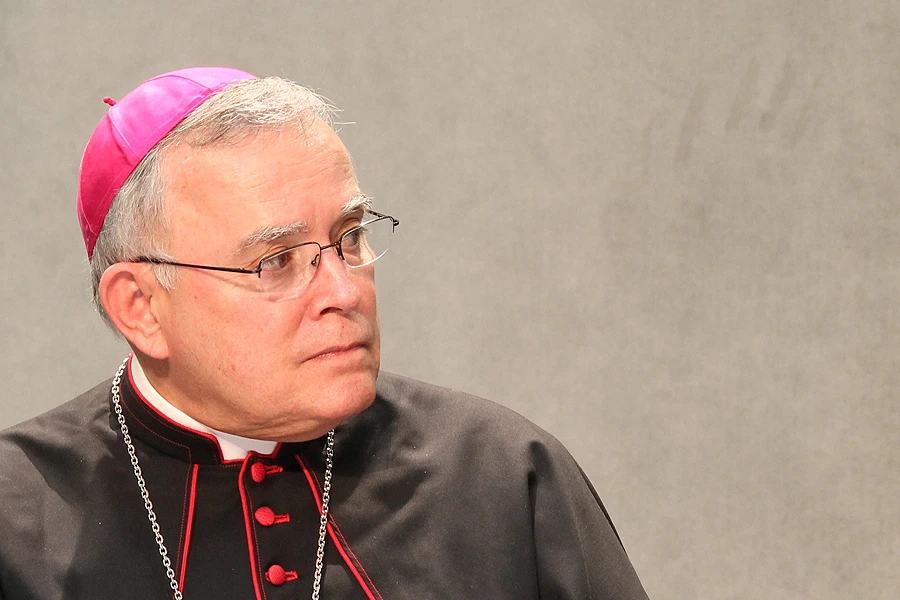

How can one respect a heretic?
Perhaps the same way that Christ respected the Pharisees and priests of his day when He called the whited sepulchers, children of father of lies, congregation of the devil…. (and they weren’t even attempting to justify the that sin of which this whole issue is about)
Re: “the same way that Christ respected the Pharisees . . . ”
It seems to me that perhaps one would need the discernment of Christ to feel secure in making a call like that w/r/t our contemporaries. I think Abp. Chaput makes a good point – – address the ideas, leave the personal vitriol aside (hey, one could even offer the lack of vitriol as a sacrifice).
if it walks like a duck, it probably isn’t a cow.
You might have missed the point of Abp. Chaput’s remarks.
With all due respect to the archbishop, he has demonstrated that he is a culture warrior in his own right in hi attempt to justify and defend Fr. Martin’s obvious undermining of Catholic teachings on homosexuality – where he does not overtly defy it.
I have yet to see any examples of the vitriol which Chaput and Bishop McElroy refer (the latter is himself guilty of the very claim he makes about others). No quotes have been offered.
Both Church Militant – not always my favorite – and Lepanto Institute use language which once was quite the norm for ecclesial leaders when calling out renegades like Fr. Martin, who serves better as an apologist for homosexuality in general and a shill for its normalization in the Church.
Today, the Church lacks shepherds with spine. It is disappointing to see Archbishop Chaput join the Amen chorus in the left corner condemning those who are doing his job. The appropriate behavior for Fr. Martin’s bishop is to silence him, but all he has dene is to order him to not reveal his own sexuality. This act, of course, has outed Fr. Martin completely, when before there was only uncertainty.
If by your self-serving reference to our human difficulties in attaining the discernment of Christ you mean we should eschew tough language, I’m afraid you are contradicted not only by several saints but also by loads of scripture.
Our bishops today are faint of heart and weak-minded. Study the Church Fathers and their saintly contemporaries who blistered both straying clergy and laity alike with the truth, and would turn their wrath upon those like you for your failure to stand for that truth.
The caterwauling we are hearing (and it is a revelation about Chaput) is the reaction of timid bishops to seeing what saintliness in action against those who would pour drops of poison into the waters of the Church.
Quote: “Father Martin is a man of intellect and skill”
One wonders really when he says things like the teaching of the Church not being received hence not binding.
Does that display intellect and skill? Or the devil’s own craftiness.
I love the way faithful Catholics will not avoid the reality of life, and will not back down from a religious fight, no matter the title of the person they are addressing. For myself, I like to maintain the intellectual purity of the argument, so that people arguing with me cannot say, “But you said…” I prefer merely presenting relevant Church documents having the greatest theological authority as my “argument.” That way, the argument is not “mine”, but belongs to the Church’s tradition and the Church’s own authority.
With all due respect, pretending that the enemy’s motives are pure is always the best thing to do. Pretending that Fr. Martin (or Pope Francis) isn’t trying to move the church away from it’s mission might make one feel good about oneself, but doesn’t help.
“The perceived ambiguities in some of Fr. Martin’s views on sexuality have created much of the apprehension and criticism surrounding his book”. There are errors, dangerous errors to the faith that contribute to the loss of souls. Not simply ambiguities in Fr Martin’s book. What is far more deadly to the salvation of all souls is not the “vitriol”. It’s the amelioration of heresy and unwillingness of our prelates to voice the truth.
Exactly. I have great respect for Archbishop Chaput, but I disagree with the position, as stated in the article, he might be taking on the Fr. Martin debacle.
The Church and its ministers must be faithful to the Gospel. We take that solemn oath at ordination. Fr. Martin’s positions and the deceptiveness of his arguments must be called to correction and possible punitive action should he not be properly responsive…that is the duty of the shepherds. The faithful see no evidence of that happening. On the contrary they see his advancement! Failure to address the false teaching clearly leaves the faithful feeling powerless as misdirection and error is not corrected. Psychologically speaking, why would we not expect some amount of vitriol?
Fr. Martin needs correction. Failure on the part of the shepherds to not address the errors is to the detriment of the Church and the Gospel.
Difficult this.
Given his obvious intelligence, what are the options? He really and truly does not support Catholic teaching in his heart, he begrudgingly does so but also works to mute it as much as possible, or his take on the Catholic moral code is so different I find it unrecognizable. None of these options lend themselves to mad respect.
Not to mention Martin’s embrace of spin tactics worthy of political parties versus churchmen.
Especially for those who believe homosexuality, while not a malicious orientation or sin, interesects with matters of grave sin …
Fr. Martin stubbornly providing confusing moral guidance. That is nothing to respect.
Look, people. This ain’t hard. Jesus calls us to love our enemies. It’s that simple directive that makes us different than pagans. Pagans would jump on a heretic and beat him to death. Christians don’t do that sort of thing. Chaput has it right. Everyone deserves his due, and God demands that we respect what is good in each man, even if we disagree with him. Now, we can have some self discipline, and be real Christians, and be respectful of someone like Father James Martin even when he is in the wrong. He has written some books previous to this that have brought people to Christ. Now, he is making huge mistakes now and he is saying some very stupid things. But he can be respectfully taken apart rhetorically, and put in his place, and it can be done in a nice civilized manner. The thing he wants most right now is for putative Christians to descend on him like a pack of dogs, so that he can whine and play the victim. The more respect and civility we show him, the easier it becomes to deal with him. He basically is destroying himself at this point, and the only thing that can save him is stupid moves that enable him to become a gay martyr. He has started panicking, and saying stupid thing after stupid thing. It seems that self destruction is built into him. Every move he has made in this controversy has made things worse for his cause. Don’t help him out by being unnecessarily unkind to the man. Even he can be redeemed, and who knows, in a year or two, he may see the error of his ways and turn around
Samton909, how do you know Martin is being disrespect. No quotes are offered – I suppose they must be so egregious they can’t reproduce them?
I don’t believe that without evidence.
Let’s not conflate disrespect with confrontation, with pushback. There’s nothing mealy-mouthed about this pushback, nor should there be.
To treat the responses he has legitimately brought upon himself as disrespect is a trick as old as the hills. It changes the subject. Please note the ecclesial claim of vitriol and disrespect comes on the heels of a host of cancellations of public appearances by Fr. Martin at Catholic venues.
Wow…LOL a lot of supposition as to motives, intention, etc.
I agree with you and grieve that one like Fr. Martin might be on the road to self-destruction professionally and personally with regard to reputation and, more importantly, salvation. I deeply hope for his repentant return and that of any other misleading teachers.
Basic human respect is a given to all human persons including enemies. At the same time, one cannot respect what is disrespectful. Fr. Martin has earned a certain disrespect due to his failure to teach authentically. No condemnation here, but a clear call to change-conversion.
We are still called upon by the Gospel to correct our brothers and sisters when they are in error. There is a formula for that in the New Testament. I am a purist about definitions, and I have my own definitions. For instance, “love” is to will and, when prudent, to work for the good of the other. “Good” is whatever God says is good. If I see something written by a person, I know that others will read it. If the other person’s writing contains something I think is in error, I must point that out so that others with not be led astray. However, I am subject to possible error, so as I wrote elsewhere, I prefer to use only authoritative Church statements as my argument. Hopefully people who read both the errant writing and my [hopefully] correct argument will recognize the validity of the Church’s teaching, and dissociate that from anyone’s opinion. When we wish to be wise, we should seek God’s will, since His will is perfect wisdom. I still respect the fact that faithful Catholics will support the Church’s consistent teaching, no matter who is presenting possibly contrary opinions.
There’s a YouTube video, referred to on The Catholic Thing. Fr. Martin is given an award by a lgbt activist group. In the Q&A, he is asked about the health risks in homoerotic sex. He literally takes the Obama pass: it’s above my pay grade, I don’t really know about that. I lived in New York in the 80s and 90s, by the end, everyone knew about the risks, they knew what was going on, including the Gay Mens Health Collective. Fr. Martin by his professed ignorance, puts gay men at risk. He also said that he does not preach Catholic sexual morality from the pulpit, only on an individual basis. Does his excellency Archbishop Chaput know these things? Are they not lies and refutation of Catholic moral teachings?
James Martin want respect but he does not show it to those who have been in the trench’s of the gay life style and have come out alive only by the grace of God. Just ask Joseph Sciambra.
Archbishop Chaput—I have been an admirer of yours, but I must say, you disappoint me greatly in this matter. There are some things that should inspire strong reactions and strong, plain talk, and Fr. Martin’s views fit the bill. It is unlikely that he even cares what people say.