The Dispatch

Let’s not make a deal…at least this deal

April 26, 2017 George Weigel 3

Helping those who have broken away from the Catholic Church come back into full communion is a noble endeavor. But such reconciliations cannot be conducted as if they were the ecclesiastical equivalent of labor negotiations: you give […]

No Picture
News Briefs

Pope Francis: Everything passes – except God’s love for us

April 26, 2017 CNA Daily News 1

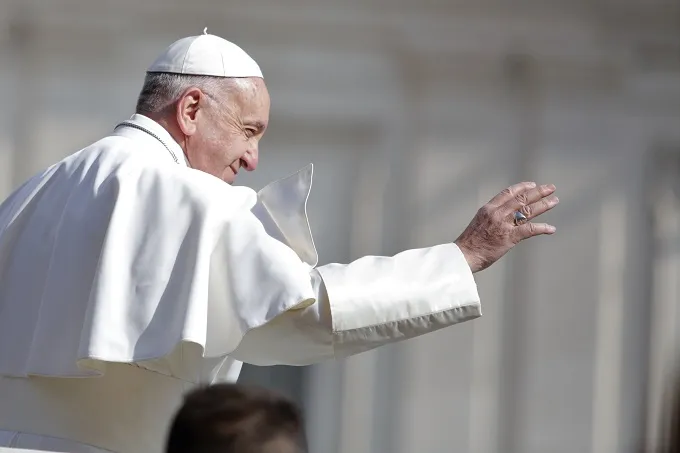
Vatican City, Apr 26, 2017 / 04:38 am (CNA/EWTN News).- On Wednesday Pope Francis said Christian hope, rather than coming from the empty promises of other human beings, is rooted in Christ’s promise to never leave us, and to stay by our side until the end of time.

“How long, by comparison, will God’s care for mankind last?” the Pope asked April 26. “The Gospel’s answer leaves no doubt: until the end of the world!”

“The heavens will pass away, the earth will pass away, human hope will be erased, but the Word of God is greater than everything and will not pass away.”

“There will be no day of our life where we will cease to be a concern for the heart of God,” he said, adding that “God will certainly provide for all our needs, he will not abandon us in times of trial and darkness.”

Pope Francis spoke to pilgrims during his weekly general audience, continuing his catechesis on the theme of hope.

In his speech, he stressed that for Christians, hope is not a vague feeling, or the same thing as the “changing sentiment” of those who want to change the world using only their own willpower.

“Christian hope, in fact, finds its root not in the attraction of the future, but in the security of what God has promised us and made in Jesus Christ,” he said.

Because of this promise, we can follow the Lord without fear, he said, explaining that “if the beginning of every vocation is a ‘follow me’ by which he assures us he will always remain before us, then why fear? With this promise, Christians can walk everywhere.”

Even in those places of the world filled with wounds or bad circumstances, we can be assured of Christ’s presence, he said. As Psalm 23:4 says: “Even though I walk through the valley of the shadow of death, I will fear no evil, for you are with me.”

“It is exactly where the darkness spreads that we need to keep lighting a light,” he said.

Francis noted how in St. Matthew’s Gospel, the evangelist recalls the prophetic announcement which is also found in the Book of Isaiah: “To him will be given the name of Emmanuel, which means God with us.”

This verse, along with the promise at the end of the Gospel, “I am with you every day until the end of the world,” together communicate the mystery of God’s identity – that he is “God with us,” the Pope said.

“Our existence is a pilgrimage, a journey,” but on this journey, we are never alone, he said. “Above all, the Christian does not ever feel abandoned, because Jesus promises to not wait until the end of our long journey, but to accompany us in each of our days.”

However, Francis warned that if we rely on our own strength in this journey, we will be discouraged and disappointed, “because the world often proves resistant to the laws of love.”

This, he said, is why “the holy faithful people of God are people standing and walking in hope. And wherever they go, they know that God’s love has preceded him: there is no part of the world that escapes the victory of the Risen Christ, the victory of love.”

[…]

No Picture
News Briefs

In TED talk, Pope says sowing solidarity will reap hope for the future

April 26, 2017 CNA Daily News 0

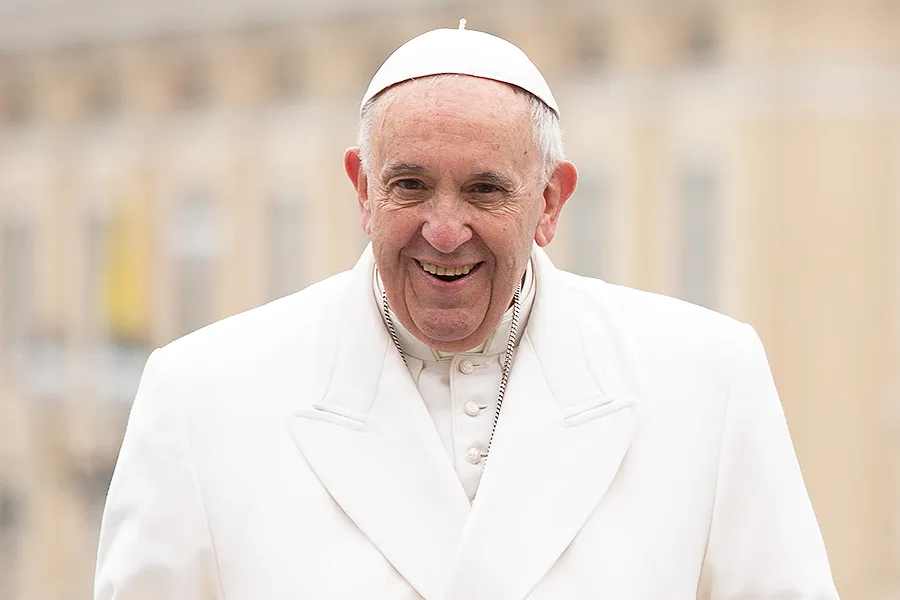
Vatican City, Apr 26, 2017 / 02:15 am (CNA/EWTN News).- Early Wednesday morning Pope Francis addressed the TED 2017 conference, telling participants that to have a hopeful outlook for the future, we must plant seeds of humility, solidarity and tenderness today.

Referencing his 80 years of life, the Pope opened his talk saying that “quite a few years of life have strengthened my conviction that each and everyone’s existence is deeply tied to that of others: life is not time merely passing by, life is about interactions.”

“We all need each other, none of us is an island, an autonomous and independent ‘I,’ separated from the other,” he said.

“We can only build the future by standing together, including everyone,” the Pope continued, adding that that while we might not think about it often, “everything is connected, and we need to restore our connections to a healthy state.”

“Even the harsh judgment I hold in my heart against my brother or my sister, the open wound that was never cured, the offense that was never forgiven, the rancor that is only going to hurt me, are all instances of a fight that I carry within me.”

This “flare” embedded deep within our hearts “needs to be extinguished before it goes up in flames, leaving only ashes behind.”

Pope Francis gave his TED Talk April 26 at 3:30a.m. local time in Rome for TED 2017, which is taking place April 24-28 in Vancouver, Canada.

<div style=”max-width:640″><div style=”position:relative;height:0;padding-bottom:56.25%”><iframe src=”https://embed.ted.com/talks/pope_francis_why_the_only_future_worth_building_includes_everyone” width=”640″ height=”360″ style=”position:absolute;left:0;top:0;width:100%;height:100%” frameborder=”0″ scrolling=”no” allowfullscreen></iframe></div></div>

TED is an international media organization that posts brief talks online that are for free distribution and run under the slogan “ideas worth spreading.” The organization was founded in February 1984 as a conference, which has been held annually since 1990.

The talks are typically run between 10-20 minutes, and are given by influential speakers who are experts in various fields such as business, science and technology, among others. Subtitles are available in more than 100 languages.

Pope Francis is the first pontiff to give a TED Talk, however, just days before announcing his resignation in 2013 Benedict XVI was given the “Charter of Compassion” by the organization’s European director, Bruno Giussani.

This year’s TED conference holds the theme “The Future You,” and is dedicated to addressing the pressing questions of our time.

In his talk, which lasted 18 minutes and was filmed inside Vatican City, Pope Francis offered a response to today’s challenges, focusing on how to maintain an attitude of hope through solidarity with one another.

He noted that for many people a happy future is something that seems distant and at times impossible to achieve.

However, while these concerns must be taken seriously, they are not “invincible,” he said, explaining that happiness can be discovered when looking to the harmony that exists between the whole and each individual part.

Francis then moved to his second point, saying it would be ideal if scientific and technological growth were coupled with greater equality and social inclusion.

“How wonderful would it be if solidarity, this beautiful and, at times, inconvenient word, were not simply reduced to social work, and became, instead, the default attitude in political, economic and scientific choices, as well as in the relationships among individuals, peoples and countries,” he said.

Only a thorough education in solidarity can overcome the “culture of waste” prevalent in today’s society, turning people’s attention not so much toward goods and food, but toward people.

“Solidarity is a term that many wish to erase from the dictionary,” he said, but noted that solidarity “is not an automatic mechanism.”

“It cannot be programmed or controlled. It is a free response born from the heart of each and everyone,” he said, explaining that to truly do good to another person, courage, memory and creativity are needed.

“I know that TED gathers many creative minds,” the Pope observed, but stressed that when it comes to developing projects and ideas, “good intentions and conventional formulas, so often used to appease our conscience, are not enough.”

Rather, a concrete and “ingenious” attitude is needed, he said. “Let us help each other, all together, to remember that the other is not a statistic or a number. The other has a face. The ‘you’ is always a real presence, a person to take care of.”

Pope Francis then pointed to the parable of the Good Samaritan, explaining, as he often does, that while the two powerful men of the day ignored the man on the side of the road, it was the Samaritan, a “despised ethnicity” at the time, who had compassion and paid for the man’s healing out of his own pocket.

The story of the Good Samaritan can easily sum up the state of humanity today, Francis said, explaining that many people’s paths are “riddled with suffering,” as if everything centered around money and things, rather than people.

“And often there is this habit, by people who call themselves ‘respectable,’ of not taking care of the others, thus leaving behind thousands of human beings, or entire populations, on the side of the road.”

Pointing to Mother Teresa, whom he canonized in September 2016, Francis said she is an example of the people who are “creating a new world” based on care for others.

“We have so much to do, and we must do it together. But how can we do that with all the evil we breathe every day?” he asked.

While not everyone can achieve the scale of Mother Teresa or the Good Samaritan, the Pope stressed that we are all precious and irreplaceable in the eyes of God, and that amid today’s conflicts, each of us “can become a bright candle, a reminder that light will overcome darkness, and never the other way around.”

“To Christians, the future does have a name, and its name is hope,” he said, explaining that hope doesn’t mean being “optimistically naïve,” ignoring suffering or dwelling on the past, but is a virtue that is able “to see a tomorrow.”

“Hope is the door that opens onto the future,” he said, noting that it is like the hidden yeast that makes bread grow, and as such “can do so much, because a tiny flicker of light that feeds on hope is enough to shatter the shield of darkness.”

“A single individual is enough for hope to exist,” telling conference participants: “that individual can be you.”

“And then there will be another ‘you,’ and another ‘you,’ and it turns into an ‘us,’” he said, explaining that hope begins with a “you,” and when an “us” develops, “there begins a revolution.”

The Pope then repeated his frequent call for a “revolution of tenderness,” which is “the love that comes close and becomes real.”

“Tenderness means to use our hands and our heart to comfort the other, to take care of those in need,” he said, noting that God himself descended to our level, which is the same thing the Good Samaritan did.

To have tenderness, he said, “the path of choice for the strongest, most courageous men and women. Tenderness is not weakness; it is fortitude. It is the path of solidarity, the path of humility.”

Pointing to a common phrase in Argentina, Francis said “power is like drinking gin on an empty stomach. You feel dizzy, you get drunk, you lose your balance and you will end up hurting yourself and those around you if you don’t connect your power with humility and tenderness.”

Pope Francis closed his speech saying the future of humanity isn’t just in the hands of politicians or great leaders or big companies, but is primarily in the hands “of those people who recognize the other as a ‘you’ and themselves as part of an ‘us.’”

“We all need each other, he said. “So, please, think of me as well with tenderness, so that I can fulfill the task I have been given for the good of the other, of each and every one, of all of you, of all of us.”

[…]

No Picture
News Briefs

How to pray the Rosary more deeply

April 26, 2017 CNA Daily News 0

Vatican City, Apr 26, 2017 / 12:29 am (CNA).- It is interesting that in her appearances at Lourdes, Fatima and other locations, the Mother of God repeatedly recommends praying the Rosary. She does not invite us to pray the Divine Office, or to do spiritual reading, or Eucharistic Adoration, or practice interior prayer or mental prayer. All the mentioned forms of prayer are good, recognized by the Church and practiced by many saints. Why does Mary “only” place the Rosary in our hearts?

We can find a possible answer by looking at the visionaries of Lourdes and Fatima. Mary revealed herself to children of little instruction, who could not even read or write correctly. The Rosary was for them the appropriate school to learn how to pray well, since bead after bead, it leads us from vocal prayer, to meditation, and eventually to contemplation. With the Rosary, everyone who allows himself to be led by Mary can arrive at interior prayer without any kind of special technique or complicated practices.

This does not mean – and I want to emphasize this point – that praying the Rosary is for “dummies” or for simple minded people. Even great intellectuals must come before God as children, who in their prayers are always simple and sincere, always full of confidence, praying from within.

All Christians are called to the kind of interior prayer that allows an experience of closeness with God and recognition of his action in our lives. We can compare the Rosary to playing the guitar. The vocal prayers – the Our Father, the Hail Mary and the Glory Be – are the central prayers of Christianity, rooted in Scripture. These are like the rhythm in a song.  

But simply strumming a guitar is not a song. And mindless repetition of words is not interior prayer. In addition to rhythm, keys are needed. The Mysteries of the Rosary are like the chords on the guitar. The vocal prayers form the framework for meditation on the Mysteries.

There are always these five chords to the rhythm of the repetition of the prayers, which make the lives of Jesus and Mary pass before our eyes. With meditation, we go on reflecting on what happens in each Mystery and what it means for our lives: At Nazareth, the Son of God is incarnated in Mary. In Holy Communion, He also comes to me. In Gethsemane, Jesus sweats blood. He suffers, is in anguish, and yet his friends remain asleep. Can I keep vigil with Him or do my eyes close with tiredness? On Easter morning, Jesus rises and breaks forth from the tomb. The first day of creation brought light. The first day of the week conquered death and gave us life. Christ can change the darkness in my life into light.

And so, our prayer begins to change into music. That is to say, it is no longer monotonous and boring, but now it is full of images and thoughts. And when the grace of God permits, it is also filled with supernatural illuminations and inspirations.

There is one more thing needed to have really great music, or to have a prayer that is even more profound and intimate: the melody that the heart sings. When playing the guitar, a voice is needed to interpret the song. When praying the Rosary, it is the song of our heart, as we place our own life before God, to the tempo of the prayers and meditations.  

It is this song of the heart that allows us to enter into the mysteries of the Rosary: For my sake you were scourged, and it was I who struck you. Forgive me! You have ascended into Heaven, Lord. I long for You, I for your kingdom, my true homeland.

In contemplation, the person praying sees the mysteries pass before his eyes, and at the same time he abides in particular affections or movements of the heart before God. The one who prays sings the song of his own life, in which naturally there can arise specific desires: You wanted to be the son of a human Mother; help my sick mother! You were crowned with thorns; help me in this financial difficulty which I can’t get out of my head. You sent the Holy Spirit; without You I don’t have the courage or the strength to make a good decision.

With this understanding, the following tips can help those who pray the Rosary move from vocal prayer to meditation to inner contemplation:

1) Schedule the time

Our schedule is full of appointments. More or less consciously, we also plan out the time we’re going to need for each task or appointment. Sometimes it is good to set aside 20 or 30 minutes to pray the Rosary, and write it down in the schedule. This “appointment” with Jesus and Mary is then just as important as all the other ones planned. For all of us, it is possible to set aside a time to pray the Rosary, at first, once, twice or three times a week.  Over time – and this is the goal – it will be easier to find a time to pray the Rosary daily.

2) Don’t rush

We can learn a lesson about prayer by observing people in love. During a romantic candlelit dinner, no one would be constantly looking at the clock, or choking down their food, or leaving the dessert to one side to finish as quickly as possible. Rather, a romantic meal is stretched out, maybe lingering for an hour to sip a cocktail, and enjoying every moment spent together. So it is with praying the Rosary. It shouldn’t be treated as sets of Hail Mary’s to be performed as if one were lifting weights. I can spend time lingering on a thought. I can also break away from it. I can, principally at the beginning, simply be peaceful. If I keep this peaceful attitude and an awareness of how important this 20-minute “appointment” is, then I will have prayed well. It will have been a good prayer, because my will is focused on pleasing the Beloved and not myself.

3) Savor the experience

Saint Ignatius recommends what’s called the “third form of prayer,” which consists in adjusting the words to the rhythm of one’s own breathing. Often it is sufficient in praying the Rosary to briefly pause between the mysteries, and to remember that Jesus and Mary are looking at me full of joy and love, recognizing with gratitude that I am like a little child babbling words every so often to in some way affirm that I love God. To do this, it can be useful to pause and take a few breaths before resuming vocal prayer.

4) A gaze of love

The vocal prayers of the Rosary only provide the rhythm of the prayer. With my thoughts, I can and should go out from the rhythm to encounter the Mystery which is being contemplated. This is more clear in German, where the mystery is announced not only at the beginning of each decade, but before each Hail Mary. It’s a time to look your Beloved in the eyes and let Him look back, with eyes full of love. 

5) Allow yourself to be amazed

One of the first and most important steps for inner prayer is to go from thinking and speculation to looking upon and being amazed. Think of lovers who meet, not to plan out what they’re going to give each other or what they might do on the next vacation, but to enjoy the time together and to rejoice in each other. Looking at a family photo album is very different from looking at a history book. In the photo album, we see people who are important to us, whom we love – and even more – who love us! That’s how our gaze at Jesus and Mary ought to be in the Rosary.

6) Allow your “inner cameraman” to notice details

Some people close their eyes while praying in order to concentrate. Others find it useful to focus their eyes on a certain point (such as a crucifix). Either way, what is important is for the eyes of the heart to be open. Praying the Rosary is like going to the movies. It’s about seeing images. It’s useful to ask yourself: Who, What, Where am I looking at when I contemplate the birth of Jesus, or his crucifixion, or his ascension into Heaven? And on some occasions, like a good cameraman does, come in for a close-up image of some detail: contemplate the warm breath of the ox that’s warming the Child, the pierced hand of Jesus that spread so much love, the tears in John’s eyes as he gazes at Jesus rising up to Heaven.

7) Pray in words, mind, and heart

The words accompany, the mind opens, but it is the heart that has the leading role in prayer. All the great spiritual authors agree that inner prayer is about dwelling in the affections, that is, the inner sentiments and movements. Teresa of Avila says very simply: “Don’t think a lot, love a lot!” An elderly lady was ruefully complaining to me that she could not reflect while praying her daily Rosary, and that in that situation she could barely say “Jesus, Mary, I love you!” I congratulated the lady. That is exactly what praying the Rosary ought to lead us to.


[…]

No Picture
News Briefs

Ahead of trip, Pope Francis sends message of joy to Egypt

April 25, 2017 CNA Daily News 0

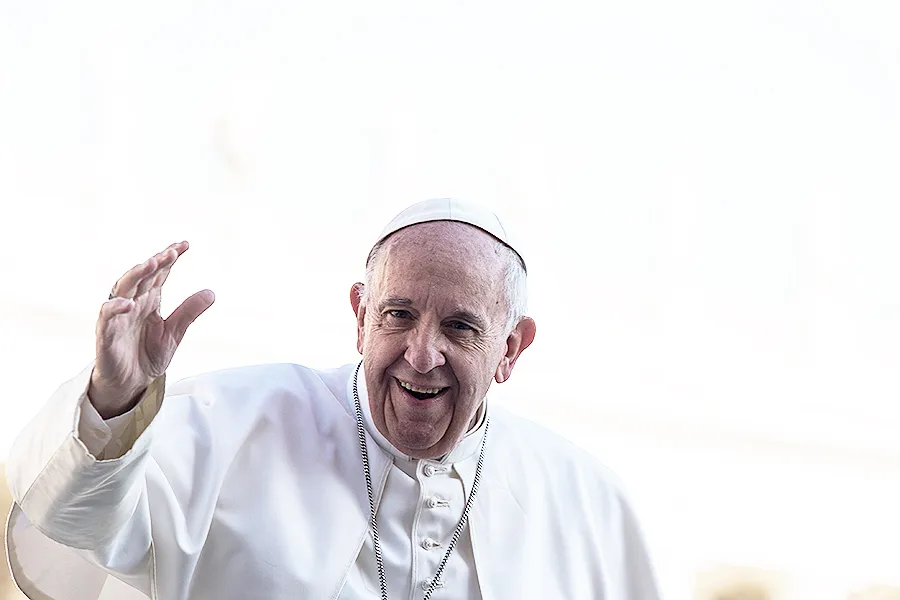
Vatican City, Apr 25, 2017 / 05:25 pm (CNA/EWTN News).- Pope Francis expressed his joy for his upcoming trip to Cairo in a video message, saying he hopes to bring peace and friendship to all Egyptian citizens.

“I am truly happy to come as a friend, as a messenger of peace and as a pilgrim to the Country that gave, more than two thousand years ago, refuge and hospitality to the Holy Family fleeing from the threats of King Herod,” the Pope said an April 25 video message.

The video shows Pope Francis expressing his excitement to visit the land “where Patriarchs and Prophets lived,” and wishes to bring strength and comfort to the Christian community.

“I hope that this visit will be an embrace of consolation and of encouragement to all Christians in the Middle East; a message of friendship and esteem to all inhabitants of Egypt and the region.”

On April 10, the Director of the Holy See Press Office confirmed the Pope’s trip to Egypt despite the recent violence from the Islamic State taking place within the country.  

Coptic Christians make up the majority of Egypt’s Christian community, but suicide bombings, kidnappings, and other violent attacks from the Islamic State have affected both Christians and Muslims.

General Minister of the Franciscan Community acknowledged the present dangers and said the Pope is “very informed” of the issues occurring in Egypt.

“Our world, torn by blind violence, which has also afflicted the heart of your dear land – needs peace, love and mercy; it needs workers for peace, free and liberating people, courageous people able to learn from the past to build a future without closing themselves up in prejudices,” Pope Francis said.

He added, “It needs builders of bridges of peace, dialogue, brotherhood, justice, and humanity.”

The Pope hopes he may bring “a message of fraternity and reconciliation to all children of Abraham, particularly in the Islamic world, in which Egypt occupies a primary position.”

Pope Francis will begin his trip by giving an address for an international conference of peace at Cairo’s Al-Azhar University, an esteemed Muslim institute. He will be speaking with the Grand Imam of Al-Azhar, Ahmed el-Tayyeb, who is considered by some to be head of the Sunni Muslim branch of thought.

Afterwards, the Pope will meet with the state officials and Patriarch Tawadros II of Alexandria, head of the Coptic Orthodox Church.  

Patriarch Tawadros II was nearly injured during one of the two attacks which killed 44 people and injured over 100 more. During Palm Sunday liturgy, one suicide bomber detonated at the entrance of St. Mark’s Cathedral in Alexandria.

The Pope will then celebrate mass on Saturday, and have a meeting with the Coptic Catholic Bishops over lunch. Pope Francis was invited by the Coptic Catholic Patriarchy during their ad limina visit to the Vatican on Feb. 6.

[…]

No Picture
News Briefs

Pope Francis refuses bullet-proof vehicle for Egypt trip

April 25, 2017 CNA Daily News 0

Vatican City, Apr 25, 2017 / 10:32 am (CNA/EWTN News).- Pope Francis will not use a bulletproof vehicle during his trip to Egypt this weekend, despite recent terror attacks against Christians in the country, according to Reuters.  

“The Pope will use a closed car to move around, but not an armoured one,” Vatican spokesman Greg Burke confirmed yesterday. “That’s how he wanted it.”

This is not the first time Pope Francis has done so – he typically prefers to travel in more open vehicles, or ones that are not bulletproof, because he feels that allows him to better interact with the people on the streets.

Pope Francis will be traveling to Cairo, Egypt, April 28-29 for his first international trip of the year. Interfaith dialogue with Muslims and showing solidarity with persecuted Christians will be main priorities of the trip.

His trip comes after several recent attacks on Christian in the country.

In December, a bombing at Cairo’s main Coptic cathedral killed at least 25 people and wounded dozens of others, most of them women and children.

On Palm Sunday, the bombing of two Coptic churches killed 43 and injured more than 100 others.

Last week, gunmen attacked security forces near the famous St Catherine’s Monastery in the Sinai desert, killing a police officer and injuring three others. This attack and the church bombings were all claimed by ISIS.

Egypt’s president has declared a three-month state of emergency in the country following the Palm Sunday attacks. Despite the risk, the Vatican announced earlier this month that the Pope’s trip to Egypt would continue as planned.

Pope Francis was invited to visit Egypt by Coptic Catholic bishops during their visit at the Vatican Feb. 6. The Pope had also received an invitation to visit Egypt from the country’s president and from the Grand Imam of al Azhar, Ahmed el-Tayyeb, after his visit to the Vatican in the spring of 2016, marking a thaw in Vatican-Muslim relations in Egypt.  

During his trip, Pope Francis will meet with the Grand Imama state officials, leaders of Egypt’s Catholic Coptic and Orthodox Coptic churches, and Catholic priests and religious of the country.

[…]

No Picture
News Briefs

Pope Francis to visit graves of two 20th century Italian priests

April 24, 2017 CNA Daily News 0

Vatican City, Apr 24, 2017 / 11:28 am (CNA/EWTN News).- Pope Francis will make a pilgrimage June 20 to visit the graves of two 20th century Italian priests in the towns of Bozzolo and Bariana, the Vatican announced Monday.

Fr. Lorenzo Milani and Fr. Primo Mazzolari both have reputations for being anti-establishment, though they were obedient to the Church throughout their lives. The Pope’s visit to their graves will take place in a “private and unofficial manner,” the April 24 communique stated.

The pilgrimage takes place in commemoration of the 50th anniversary of the death of Fr. Milani, who lived from 1923-1967. Pope Francis spoke about Fr. Milani in a video message to the participants of a presentation on the priest’s complete works in Milan Sunday.

“I would love to remember him especially as a believer, in love with the Church even though he was wounded,” the Pope said in the message April 23, “and as a passionate educator with a vision of the school that seems to me to respond to the need of the hearts and the intelligence of our children and youth.”

Pope Francis’ brief visit – only half a day – will begin with an early morning helicopter flight to Bozzolo June 20, landing at 9:00 a.m. He will be welcomed by the Mayor of Bozzolo and the Bishop of Cremona, Antonio Napolioni.

From there the Pope will proceed to the parish of St. Peter to pray at the tomb of Fr. Primo Mazzolari, after which he will give a commemorative speech to the faithful present at the church.

At 10:30 a.m. he will leave for Barbiana, arriving at the Barbiana church at 11:15 a.m. He will be welcomed there by Cardinal Giuseppe Betori, Archbishop of Florence and the Mayor of Vicchio, a municipality of Florence.

He will then visit privately the cemetery of the church to pray at the grave of Fr. Lorenzo Milani. Afterwards, Pope Francis will meet in the church with still-living disciples of Fr. Milani.

After a short visit to the rectory in the adjacent garden he will give a speech in the presence of around 200 people, including the disciples, priests of the diocese and some children living in family homes in the area. The Pope will return to the Vatican by about 1:15 p.m.

Fr. Milani came from a wealthy but secular family, the son of an atheist father and a Jewish mother. He studied art, which had a profound influence on his conversion to Catholicism and eventual entrance into the priesthood in 1947.

His “frankness that sometimes seemed too rough when not marked by rebellion” carried over even into his priesthood, Pope Francis noted in his video message. This led to some friction and misunderstandings with ecclesiastical and civil structures “because of his educational proposal, his preference for the poor, and defense of conscientious objection.”

Despite this, however, he was always deeply obedient to the Church and to her directives. He once wrote: “I will never oppose the Church because I need (her) several times a week for the forgiveness of my sins, and I would not know to whom else to go to look for it if I had left the Church.”

Fr. Primo Mazzolari lived from 1890-1959. He grew up in a small neighborhood of the town of Cremona, Italy, entering the seminary in 1902. Some have called him a “priest of the embankment,” because he grew up on the banks of the Po River and also at the “embankment” of the Church.

Very politically active, he intervened in the First World War and after, and was so anti-fascist he refused to sing the “Te Deum” after a failed attack on Mussolini by Tito Zaniboni in 1925.

His greatness already recognized, he was invited to the Vatican by both Pope John XXIII and Pope Paul VI before his death. In 2015 permission was formally granted to open the diocesan phase of Fr. Mazzolari’s cause for beatification.
 
Andrea Gagliarducci contributed to this report.

[…]

No Picture
News Briefs

Pope Francis comforts sister of French priest slain last year

April 24, 2017 CNA Daily News 0

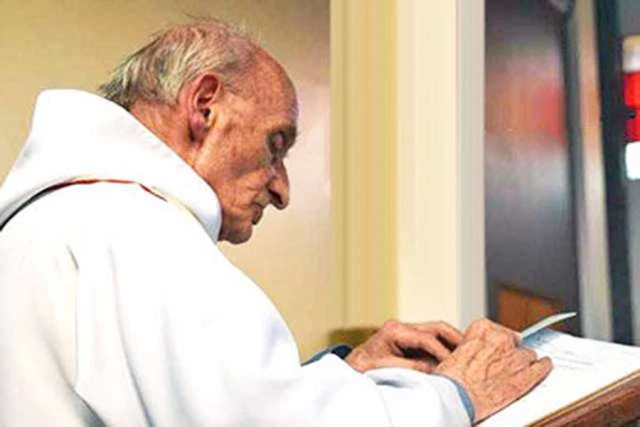
Vatican City, Apr 24, 2017 / 10:07 am (CNA/EWTN News).- Pope Francis on Saturday comforted the sister of Father Jacques Hamel, an 85-year-old priest who was killed by ISIS sympathizers while celebrating Mass in Normandy, France last summer.

According to the Associated Press, the Pope gripped the hands of Roselyne Hamel and spoke quietly to her during an April 22 liturgy honoring the “new martyrs” of the 20th and 21st centuries in the Basilica of St Bartholomew on Rome’s Tiber Island.

Fr. Hamel was killed July 26, 2016 while celebrating Mass after two armed gunmen stormed a church in Saint-Etienne-du-Rouvray in Normandy. The assailants entered the church and took the priest and four others hostage. Local law enforcement reported that the priest’s throat was slit in the attack, and that both of the hostage takers were shot dead by police. The attackers were identified as Islamist extremists.

Pope Francis issued a statement at the time decrying the “absurd violence.” He later said during a Mass in September at the Vatican in honor of Fr. Hamel that the slain priest “is blessed now,” according to Archbishop Dominique Lebrun of Rouen who was there.

The Pope referred to the priest as “an example of courage” because “he emptied himself to serve others, to build brotherhood among men.”

Last October, the French diocese of Rouen officially began an inquiry into the beatification of Fr. Hamel after the Pope waived the traditional five-year waiting period.

At the service Saturday, Roselyne shared with the congregation how her brother was “strong in his faith in Christ, strong in his love for the Gospel and for people, whoever it was, and – I am certain – also for his killers.”

She said that his death was a witness for the whole world, and continued the ‘yes’ with which he had given his life in service to Christ at the moment of his ordination.

…..

You may also like:

<blockquote class=”twitter-tweet” data-lang=”en”><p lang=”en” dir=”ltr”>Pope Francis green-lights opening of Fr. Jacques Hamel beatification process <a href=”https://t.co/2vk9URDioB”>https://t.co/2vk9URDioB</a> <a href=”https://twitter.com/hashtag/France?src=hash”>#France</a></p>&mdash; Catholic News Agency (@cnalive) <a href=”https://twitter.com/cnalive/status/782708743192600577″>October 2, 2016</a></blockquote>
<script async src=”//platform.twitter.com/widgets.js” charset=”utf-8″></script>


[…]