Opinion

A new Vatican birth control commission?

May 24, 2017 Russell Shaw 3

A new birth control commission? Here’s hoping the reports out of Rome are only speculation, possibly generated by the fact that the 50th anniversary of Humanae Vitae, Pope Paul VI’s encyclical condemning artificial contraception, is […]

No Picture
News Briefs

Pope Francis: Even in the darkest moments, Jesus walks with us

May 24, 2017 CNA Daily News 0

Vatican City, May 24, 2017 / 08:39 am (CNA/EWTN News).- On Wednesday Pope Francis said that no matter what trials we might face, we have hope because Jesus is always by our side, just like he was for the disciples on the road to Emmaus.

“All of us, in our lives, have had difficult, dark times; moments in which we have walked sad, thoughtful, without horizons and (with) only a wall in front,” Pope Francis said May 24.

However, even in these moments “Jesus is always beside us to give us hope, warm the heart and say, ‘Go ahead, I’m with you. Go ahead,’” the Pope said, adding that “the secret of the road leading to Emmaus is all here: even through unfavorable appearances, we continue to be loved.”

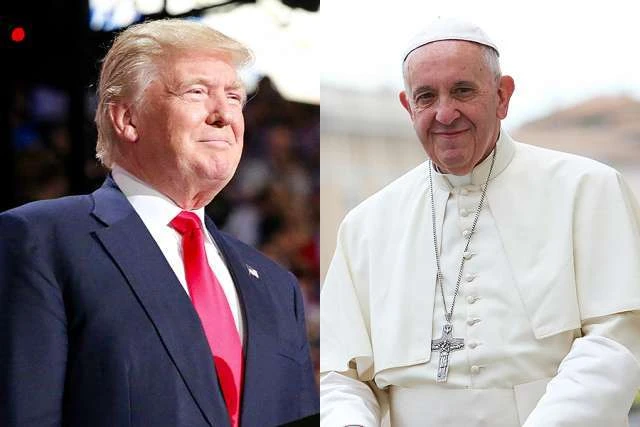
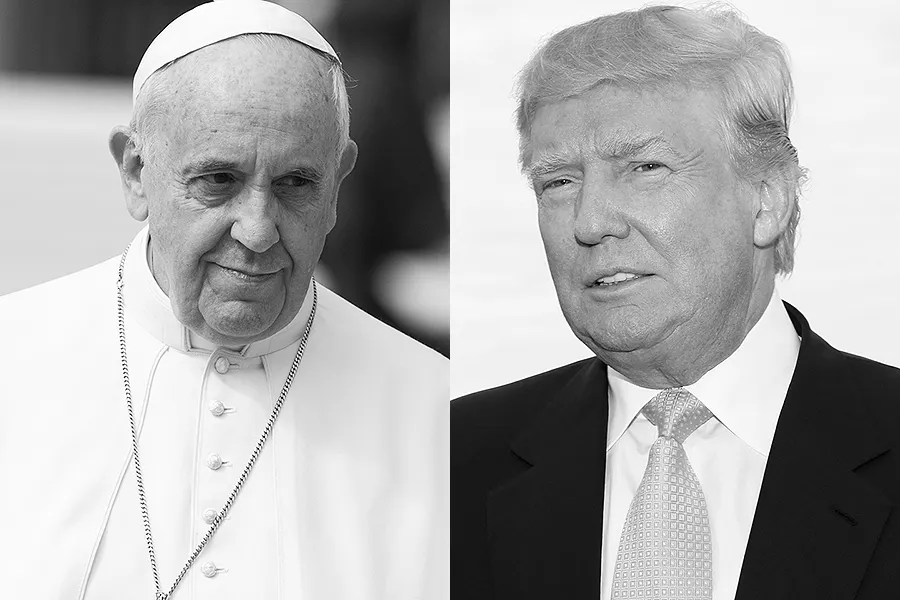
The Pope met with thousands of pilgrims in St. Peter’s Square for his weekly general audience, immediately following his meeting with U.S. President Donald Trump.

Francis said that no matter what, God always wants the best for us and “will walk with us.”

“Even in the most painful moments, even in the worst moments, even in moments of defeat: the Lord is there. And this is our hope. Let’s go ahead with that hope! Because he is next to us and walks with us always!”

The Pope reflected on hope as it is found in the story of Christ’s appearance to the two disciples on the road to Emmaus, when they feel sad, discouraged and defeated because Jesus has been killed, but they do not yet know about his Resurrection.

All of their hopes from before the crucifixion have been shattered, but this is because they “cultivated only human hope,” Francis said.

It is on this scene that Jesus appears. “This scenario – the road – had already been important in the accounts of the Gospels,” he explained, but “now it will become even more, as they begin to recount the story of the Church.”

This encounter of Jesus with the disciples seems “fortuitous,” he said, in the way it resembles the many times we are carrying our own crosses or burdens of sorrow and disappointment. But Jesus joins them, even though they do not recognize him, and he begins what Pope Francis called a “therapy of hope.”

The first step in this therapy, he said, is to “ask and listen: our God is not an intrusive God. Even though he already knows the reason for the disappointment of those two, he leaves them time to be able to gauge the depth of the bitterness that he has undergone.”

Then, listening to their words, we hear “a chorus of human existence: ‘We hoped, but…We hoped, but….’”

“How much sadness, how many defeats, how many failures there are in each person’s life!” the Pope said, noting that “we are all a bit like those two disciples.”

“How many times in life we hoped, how many times we felt a step away from happiness, and then we found ourselves disappointed,” he asked.

“But Jesus walks with all discouraged people who go forward with head down. And walking with them, in a subtle way, he succeeds in returning hope.”

When he does speak to them, Jesus does it first through the Scriptures. In the Bible, you will not find stories of “easy heroism, thunderous campaigns of conquest,” the Pope said. “True hope is never cheap: it always goes through defeats.”

In fact, Francis said, Jesus models this for us by not being the kind of leader that drags his people to victory by violently destroying his opponents. Instead, he takes a position of disdain himself.

Later that same night, when the disciples have invited him to eat dinner with them, they recognize him when he breaks the bread, repeating the gesture of the first Eucharist.

“In this series of gestures, is there not the whole story of Jesus? And is there not, in every Eucharist, the sign of what the Church must be? Jesus takes us, blesses us, ‘breaks’ our lives – because there is no love without sacrifice – and offers it to others, offers it to everyone.”

Jesus’ encounter with the disciples on the road to Emmaus is quick, he said, but in it we find “the fate of the Church.”

“He tells us that the Christian community is not locked up in a fortified citadel, but walks in its most vital environment; namely, the road. And there it meets people, with their hopes and their disappointments, sometimes heavy.”

“The Church listens to the stories of everyone, as they emerge from the depths of personal conscience, in order then to offer the Word of Life, the testimony of love, faithful love to the end,” he concluded. “And then, the hearts of people return to burning hope.”

[…]

No Picture
News Briefs

Pope Francis, Trump hold landmark first meeting

May 24, 2017 CNA Daily News 0

Vatican City, May 24, 2017 / 02:48 am (CNA/EWTN News).- After months of anticipation, Pope Francis and U.S. President Donald Trump finally met at the Vatican Wednesday in a friendly encounter which included an exchange of gifts and an emphasis on peace and unity.

The Pope and Trump met at the Vatican May 24, at 8:30a.m., immediately before the weekly general audience in St. Peter’s Square.

Trump arrived to Italy May 23 after stopping in both Saudi Arabia and Israel as part of his first international trip. He is also set to attend a NATO meeting in Brussels on May 25 and a G7 summit in Sicily on May 26 before returning to the U.S.

President Trump arrived to the Vatican via the side entrance by Casa Santa Marta around 8:15a.m. Greeted by a group of Swiss Guards in the San Damaso courtyard. After stepping out of the car, Trump and First Lady Melania greeted Cardinal George Ganswein and other Vatican dignitaries before entering the Apostolic Palace.

Pope Francis and Trump smiled as they first greeted each other. They then sat down at the Pope’s desk in the papal library. Pope Francis said, “Welcome!” and Trump responded, “Thank you very much, this is such a great honor.”

Smiling, Francis went on to explain that he doesn’t speak English well and needs to wait for the translator, but added that he was “very happy to meet” Trump.

At this point, they both waited for the cameras to leave before beginning the private part of their conversation, which lasted about 30 minutes, with only the Vatican’s English translator, Msgr. Mark Miles, present.

After their formal conversation, gifts were exchanged between Francis, Trump and the president’s official delegation. There were 12 people in his entourage, including First Lady Melania Trump; daughter Ivanka, his assistant; and son-in-law Jared Kushner, his assistant and senior advisor.

Also present for the meeting with Pope Francis were U.S. Secretary of State Rex Tillerson, Assistant to the President for National Security Affairs H.R. McMaster and Louis Bono, American Chargé d’Affaires ad interim to the Holy See until a permanent ambassador is named.

Despite their differing opinions on climate change, Pope Francis gave Trump a copy of his environmental encyclical Laudato Si’, as well as copies of his 2015 Apostolic Exhortation on the family “Amoris Laetitia” and his 2013 exhortation “Evangelii Gaudium.”

In addition to the customary gift of these three documents, Francis also gave President Trump a copy of his message for the 2017 World Day of Peace, saying: “I signed it personally for you.” Trump responded that he would be reading them.

The Pope also gifted the U.S. President with a medallion he said symbolizing peace and unity, which, after the translator explained in English, he added in Spanish: “Have it because you are an instrument of peace.” Trump said that “we can use peace.”

President Trump gifted Pope Francis a set of books by Martin Luther King, Jr. “I think you’ll enjoy them, I hope you do,” he said.

Members of the delegation each received a medal and a rosary from the pontiff. When greeting Francis, First Lady Melania told him that she would afterward be visiting the hospital. Joking, the Pope asked her if they had given her potica, a traditional Slovenian dessert, to eat, to which she responded, “yes, potica,” as they both laughed.

After meeting with Pope Francis, Trump met with Vatican Secretary of State Cardinal Pietro Parolin and Secretary for Relations with States Bishop Paul Richard Gallagher, as is customary for heads of state.

Pope Francis went immediately to begin the Wednesday general audience with thousands of pilgrims in St. Peter’s Square.

After the meeting, First Lady Melania paid a visit to the Vatican-owned Pediatric hospital Bambino Gesu, also known as the “Pope’s hospital.”

Bambino Gesu sits next to the Pontifical North American College on top of Rome’s Gianicolo hill, and is among the most important pediatric hospitals in the world. Founded in 1869 by the Duchess Arabella Salviati, the hospital was donated to Pius XI in 1924, with the aim of giving it a more stable future.

At the same time, Trump’s daughter and high-profile adviser, Ivanka, will make her way to the Roman neighborhood of Trastevere to meet with the Community of Sant’Egidio to discuss efforts to oppose human trafficking.

The Sant’Egidio Community is often praised by Pope Francis for their work with the poor and refugees, in particular.

Ivanka is participating in each of the seven days of Trump’s first trip abroad as president, and was also present for the public portion of his meeting with Francis.

Before leaving with her father on his first international tour, Ivanka hosted an anti-human trafficking roundtable discussion at the White House May 17.

During her meeting with Sant’Egidio, she is expected to meet with several women who are victims of trafficking, and discuss various ways in which the Church and the U.S. government can collaborate on the issue.

[…]

No Picture
News Briefs

Manchester bishop: there is ‘no justification’ for horrific attack

May 23, 2017 CNA Daily News 0

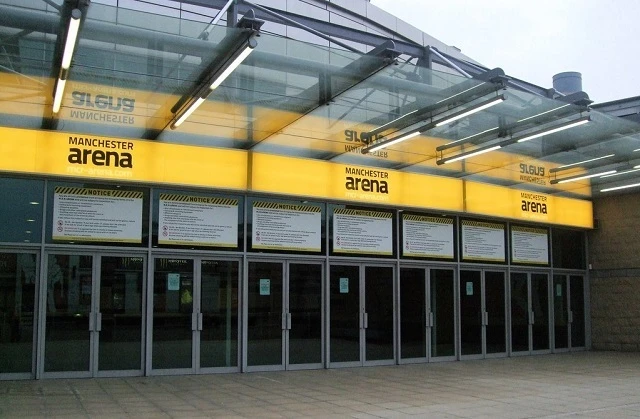
Manchester, United Kingdom, May 23, 2017 / 04:16 am (CNA/EWTN News).- After what has been deemed a terrorist attack killed 22 people – mostly youth – at a theater in Manchester Monday night, local Bishop John Arnold condemned the act, saying there is no justification for such violence.

“The citizens of Manchester and members of the Catholic community are united in condemning the attack on the crowds at the Arena. Such an attack can have no justification,” Bishop Arnold said in a May 23 statement via the diocese’s Twitter account.  

In a series of tweets, he thanked the emergency services “for their prompt and speedy response which saved lives. We join in prayer for all those who have died and for the injured and their families and all affected by this tragedy.”

The bishop stressed that “we must all commit to working together, to help the victims and their families and to build and strengthen our community solidarity.”

Bishop Arnold, who oversees the Salford diocese that includes Manchester, made his statement in response to an attack which took place at Manchester Arena Monday night at the end of a concert by popular American pop artist Ariana Grande, who is popular among teens.

A bomb exploded in the foyer of the arena May 22 around 10:30p.m. local time, as concert goers were beginning to leave. At least 22 are dead, including children, and almost 60 are injured, according to reports.

The lone attacker was also killed in the blast. He is believed to have been carrying an improvised explosive device, which he detonated to cause the explosion, according to Manchester Police Chief Constable Ian Hopkins.

Investigations have not yet revealed whether the attacker was working alone or if he was part of a larger network or terrorist group.

Cardinal Vincent Nichols, head of the Archdiocese of Westminster in London, sent a letter to Bishop Arnold May 23 expressing his condolences for the attack.

“It was with great sorrow that I heard the media reports of last night’s atrocity, in Manchester,” he said. “May God welcome into His merciful presence all who have died. May God turn the hearts of all who commit evil to a true understanding of His desire and intention for humanity.”

“I assure you, and all those you serve, of the prayers and condolences of your brother bishops in England and Wales,” he said, adding that “We, too, mourn this loss of life. We pray for the eternal repose of all who have died.”

The Diocese of Salford announced that Bishop Arnold would say a special Mass for the victims May 23 at 12:30p.m. at St. Mary’s Church, commonly called the “Hidden Gem,” and which is the Catholic Mother Church of Greater Manchester. Another Mass will be held at the Salford cathedral at 7p.m. local time.

In a May 23 statement immediately following a meeting of the government’s emergency meeting, Cobra, UK Prime Minister Theresa May called the bombing “a callous terrorist attack” that targeted “some of the youngest people in our society with cold calculation.”

“Our thoughts and prayers are with the victims and the families and friends of all those affected,” she said, noting that the attack is “among the worst terrorist incidents we have ever experienced in the United Kingdom.”

“All acts of terrorism are cowardly attacks on innocent people,” May continued, but said the arena attack stands out “for its appalling, sickening cowardice, deliberately targeting innocent, defenseless children and young people who should have been enjoying one of the most memorable nights of their lives.”

Although he’s traveling abroad, U.S. President Donald Trump said during a joint appearance with Palestinian Authority President Mahmoud Abbas Tuesday, that the “wicked ideology” of terrorism “must be obliterated.”

“I extend my deepest condolences to those so terribly injured in this terrorist attack, and to the many killed and the families, so many families, of the victims.”

“So many young, beautiful, innocent people living and enjoying their lives, murdered by evil losers in life,” he added. “I won’t call them monsters, because they would like that term, they would think that’s a great name. I will call them, from now on, losers, because that’s what they are.”

The attack is the worst Britain has seen since a bombing on the London transport network on July 7, 2005 killed 52 people.

[…]

No Picture
News Briefs

Pope Francis’ newest cardinals show a global Church

May 22, 2017 CNA Daily News 0

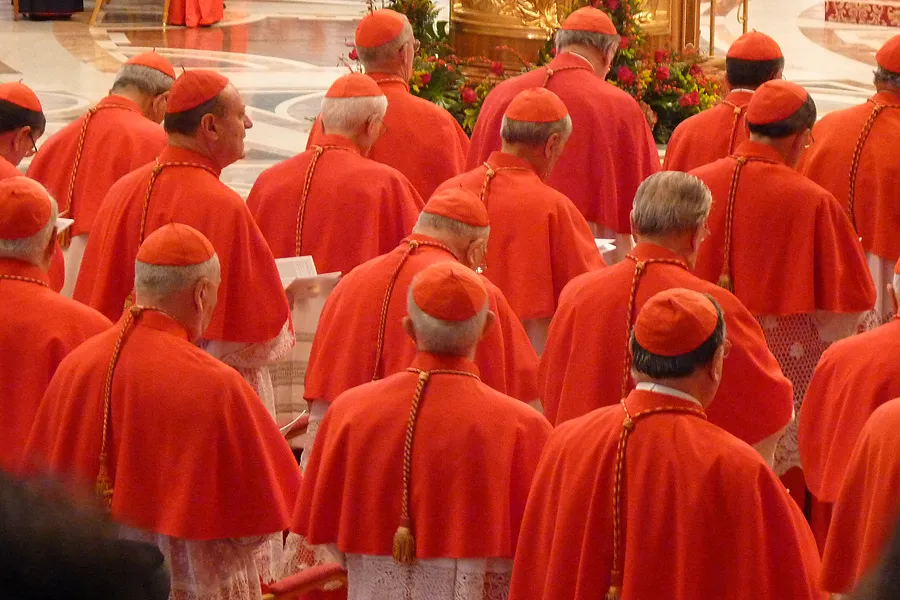
Vatican City, May 22, 2017 / 03:08 pm (CNA/EWTN News).- Only seven months after Pope Francis’ last consistory, he will create five new cardinals in June. He continues a pattern of finding cardinals at the peripheries of the world, from dioceses which have not traditionally had a cardinal.

The next consistory will take place June 28.

In this new batch Pope Francis has confirmed his preference for dioceses that are not traditional sees for a cardinal. For instance, this is the first time a bishop from El Salvador, Sweden, Mali, and Laos will receive a red hat.

The Pope’s choice of Bishop Louis Marie Ling Mangkhanekhoun, Vicar Apostolic of Paksé, reveals his particular interest in Laos.

Laos, a one-party communist republic averse to religion, is one of the few countries lacking full diplomatic relations with the Holy See.
 
However, in recent years the Laotian government has been showing a greater openness to the international community, and also to the religious sentiment of its mostly Buddhist population.

There are only 45,000 Catholics in Laos, less than one percent of the 7 million Laotians. Laos has no dioceses: there are only three apostolic vicariates with 22 priests and 11 religious priests. Three new priests were ordained in the country in 2016, and two more will be ordained this year.

The beatification of Italian missionary Mario Borzaga, of the Laotian priest Joseph Thao Thien and 14 companions martyred in 1960 gave more impetus to the Laotian “baby Church,” to use Bishop Mangkhanekhoun’s words.

The beatification Mass took place in Vientiane on Dec. 11, 2016, with the participation of over 7,000 faithful. The government’s permission for the public celebration was considered a sign that the Laotian government is changing its hostile attitude towards religion. Meanwhile, the Holy See is trying to establish full diplomatic ties with the country in order to better protect the Catholic flock.

In Mali, the red biretta for Archbishop Jean Zerbo of Bamao can also be read through diplomatic lense.

Archbishop Zerbo has strongly committed to the ongoing dialogue for reconciliation in his country. In 2012, Al-Qaeda exploited a rebellion carried out by ethnic Tuaregs and tried to take control of the central government. Ever since, Mali has been living in a constant political crisis that has turned into a refugee crisis.

His elevation as cardinal will give Archbishop Zerbo more weight in the peace talks.

After his trip to Sweden late last year, Pope Francis also named as cardinal Bishop Anders Arborelius of Stockholm.

Bishop Arborelius, a convert from Lutheranism, is the first Swedish-born Catholic bishop in the country since the Lutheran Reformation.

In El Salvador, Bishop José Gregorio Rosa Chavez, auxiliary bishop of San Salvador, is the first auxiliary bishop ever to be appointed a cardinal while the bishop in charge of his archdiocese remains but a bishop.

His red biretta may be considered a reward for his service to El Salvador in his more than 30 years as auxiliary bishop, especially during the difficult years of the 1980-1992 civil war.

In contrast to other cardinals-to-be, the red hat for Archbishop Juan José Omella Omella is not a dramatic departure from tradition, as Barcelona is traditionally a see with a cardinal. Archbishop Omella’s predecessor, Cardinal Lluis Martinez Sistach, turned 80 on Apr. 29.

The announcement that Archbishop Omella will be created a cardinal comes only two days after the new presidency of the Spanish Bishops’ Conference met with Pope Francis in a private audience in Rome.

The Spanish Bishops’ Conference gathered for its general assembly in Madrid on March 15. Cardinal Ricardo Blázquez Pérez was re-elected as president for a second three-year mandate by a strong majority. Cardinal Antonio Cañizares Llovera, archbishop of Valencia and former prefect of the Congregation for Divine Worship, was elected vice-president.

In the race for the presidency, Cardinal Carlos Osoro Sierra of Madrid, got four votes, while Archbishop Omella got just one vote.

By naming Archbishop Omella a cardinal, the Pope might want to show the Spanish Bishops’ Conference the men in whom he places his trust. The two Spaniards, Cardinal Osoro Sierra, appointed by Pope Francis as Archbishop of Madrid, and Archbishop Omella will have gotten their red hats in back to back consistories only seven months apart.

All of the new cardinals are below 80, so they all have the right to vote in a conclave to elect a Pope. Sweden’s Bishop Anders Arborelius is the youngest, as he will turn 68 in September, while Bishop Rosa is the oldest, about to turn 75.

In the last consistory, 13 out of 17 new red hats were given to bishops or archbishops below the age of 80.

Church rules set the maximum number of cardinal electors in a conclave at 120.

With the five new cardinals, Pope Francis has the increased the number of voting cardinals to 121, exceeding the limit by one.

The five new cardinals also slightly re-shape the composition of the College of Cardinals. After the June 28 consistory, Europe will be represented by 53 voting cardinals, compared with 51 at present. Central America’s voting cardinals will increase to five from four. Africa and Asia combined will have 15 cardinals in a prospective conclave, an increase of one.

Other regions’ number of cardinal electors is unchanged: North America still has 17 voting cardinals, South America has 12, and Oceania four.

Up to now, Pope Francis has created 61 cardinals: 49 voting cardinals, and 12 non-voting. The college of voting cardinals is completed by 52 cardinals created by Benedict XVI, and 20 by St. John Paul II.

[…]

No Picture
News Briefs

What common ground could Trump and Pope Francis find?

May 22, 2017 CNA Daily News 0

Vatican City, May 22, 2017 / 12:02 pm (CNA/EWTN News).- When Pope Francis was asked last week about his upcoming meeting with U.S. president Donald Trump, he made headlines for answering that he always tries to look for common ground.

Given that they have vocally disagreed on prominent issues in the past, what will the areas of shared agreement be?

The two are set to meet at the Vatican Wednesday, May 24, at 8:30 a.m., before Pope Francis’ weekly general audience.

President Trump arrives to Italy May 23 after stopping in both Saudi Arabia and Israel as part of his first international trip, which lasts nine days. He will also attend a NATO meeting in Brussels on May 25 and a G7 summit in Sicily on May 26.

Perhaps the most prominent area of disagreement between Trump and Francis is immigration.

During a Feb. 18, 2016, in-flight press conference, the Pope was asked to respond to Donald Trump’s immigration stand, particularly his threat to build a wall along the U.S.-Mexico border.

Pope Francis responded saying “a person who thinks only about building walls, wherever they may be, and not building bridges, is not Christian. This is not in the Gospel.” However, he also said that he would “give the benefit of the doubt” to the political candidate.

One week prior, Trump had bashed Pope Francis as a “pawn” for the Mexican government and “a very political person” who does not understand the problems of the United States.

After the fact, then-Holy See spokesman Fr. Federico Lombardi told Vatican Radio that the Pope’s comment “was never intended to be, in any way, a personal attack or an indication of how to vote” and had repeated a longstanding theme of his papacy: bridge-building.

During Trump’s time in office so far, U.S. bishops – who have Francis’ full backing on the issue – have been critical of Trump’s moves on immigration, criticizing the “ban” he implemented in his first week in office halting refugee admissions for 120 days – indefinitely for Syrian refugees – and temporarily banning visa permissions for people seeking entry to the United States from Iraq, Syria, Iran, Sudan, Libya, Somalia and Yemen.

Trump and Francis also have very divergent opinions on climate change. Francis insisted on the need to protect creation in his environmental encyclical Laudato Si, saying problems such as global warming are caused by human activity.

The Pope gave his full support of the Paris Climate deal in 2015, sending Vatican Secretary of State, Cardinal Pietro Parolin, to the Nov. 30-Dec. 11 summit as his personal delegate to the gathering.

Trump later threatened to back out of the deal, but delayed the process until after the G7 summit he’ll be participating in this week.

While there will certainly be these and other points the two disagree on, there are several issues – other than their shared disregard for formal protocol – that could actually bring the two together.

These, to name a few, could be: pro-life issues, above all defense of the unborn; religious freedom, particularly for Christians in the Middle East; and the push for a solution to the Israel-Palestine conflict.

Since his campaign days, Trump has identified himself as pro-life, and even gave a shout-out to the Jan. 27 March for Life in Washington D.C. in a clip of an interview with David Muir of ABC.

U.S. Vice President Mike Pence became the first vice president to participate in the event, giving a keynote speech that stressed the “sanctity of life.”

Pro-life issues are likely to be at least one strong point of union for Trump and Francis, who has often spoken out against abortion and other concerns such as euthanasia, calling them in one audience in 2014 “sins against God.”

He has also encouraged the use of conscientious objection based on religious convictions, at one point describing it as “a basic human right.”

When it comes to the Trump administration, the pro-life issue remains a big issue for many U.S. Catholics, who praised the president’s reinstatement of the “Mexico City Policy,” which prohibits U.S. funding of non-government organizations that either promote or perform abortions through family-planning funds.

Trump was also lauded for his appointment of Niel Gorsuch to fill the Supreme Court vacancy left when Justice Antonin Scalia passed away last year. Gorsuch has been praised not only for his pro-life stance, but also for his commitment to religious freedom.

Pope Francis and Trump are also likely to share concern for persecuted Christians and other religious minorities in Iraq and throughout the Middle East.

Both Trump and Francis have called for greater solidarity and protection of persecuted Christians.

Francis has repeatedly spoken out on modern persecution, saying there are more martyrs today than in the early Church, with the “ecumenism of blood” having become a watermark phrase of his pontificate.

Trump himself said during his campaign that protecting persecuted Christians would be a priority. As evidence of this intent, at a May 11 summit on persecuted Christians U.S. Vice President Mike Pence said, “We’re with you, we stand with you,” and assured of both his and Trump’s prayers.

As with any political figure, questions still loom as to how much Trump will actually do, especially if differing political opinions get in the way. But overall, the topic will likely be a point of agreement and collaboration with the Vatican.

And while Trump’s previous rhetoric on Islam is something Francis would likely hastily disagree with, a recent shift in the president’s tone is something the Pope would certainly welcome.
 
During his election campaign, Trump called for the “total and complete shutdown of Muslims entering the United States,” and voicing his opinion that “Islam hates us.”

However, so far Trump’s rhetoric on Muslims has cooled during his first international trip abroad.

In his May 21 speech at the Arab Islamic American Summit in Ridyadh, Saudi Arabia, Trump avoided the phrase “radical Islamic terrorism,” referring instead to “the crisis of Islamist extremism and the Islamist terror groups it inspires.”

“The nations of the Middle East will have to decide what kind of future they want for themselves, for their country and, frankly, for their families and for their children,” Trump said, speaking to leaders from more than 50 predominantly Muslim countries.

The choice is “between two futures,” and “it is a choice America cannot make for you,” he said, adding that “a better future is only possible if your nations drive out the terrorists and drive out the extremists.”

He said he didn’t come to “lecture,” but to seek an end to terrorism and the beginning of peace in the Middle East region, noting that roughly 95 percent of terrorist victims are themselves Muslim.

The president said he wants a partnership with people who share the same “interests and values” as the U.S., calling Islam one of the “great faiths” with an “ancient heritage” that has served as the “cradle of civilization.”

In addition, Trump said the problem of terrorism is not “a battle between different faiths, different sects, or different civilizations. This is a battle between barbaric criminals who seek to obliterate human life and decent people of all religions who seek to protect it…This is a battle between good and evil.”

The U.S. president’s more moderate tone on Islam, and indeed his unprecedented praise of some aspects of Muslim culture, is something Pope Francis would likely appreciate. The Pope has on multiple occasions warned against “Islamophobia,” insisting that not all Muslims are terrorist.

However, while the two might have new-found common ground in terms of how they refer to the Muslim community, at least in the public sphere, Francis will likely take issue with the weapons deal signed by Trump and Saudi King Salman.

The deal guarantees the Middle Eastern powerhouse some $350 billion in weapons over the next 10 years, with $110 billion going into effect immediately.

Francis has consistently called for an end to the arms trade, criticizing nations that sell weapons to warring countries in order to keep the conflicts going that line their own pockets. The Pope has used almost countless occasions to insist for an end to this “scourge.”  

Saudi Arabia has also been criticized by many other Middle Eastern nations for funding ISIS, most directly through weapons sales.

But regardless of the deal, terrorism is sure to be one of the key topics discussed, and if Trump’s speech in Saudi Arabia is an indication of how he intends to address the issue from here on out, the two just might be able agree on this point.

After leaving Saudi Arabia, Trump flew to Israel for an official visit in a bid to cement Israeli ties and help move forward on a peace deal with Palestine. After arriving this morning, he voiced hopes to Israeli President Reuven Rivlin of a broader peace deal in the region.

“You have a great opportunity right now. Great feeling for peace throughout the Middle East. People have had enough of the bloodshed and the killing. I think we’re going to start see things starting to happen,” he told Rivlin.

In a speech to Israeli Prime Minister on the tarmac, Trump said: “We have before us a rare opportunity to bring security and stability and peace to this region and its people, defeating terrorism and creating a future of harmony, prosperity and peace, but we can only get there working together. There is no other way.”

In a previous encounter, Trump had asked Netenyahu to “hold off” on building more settlements in order help give space to further peace discussions in the region.

Earlier this month Trump met with Palestinian leader Mahmoud Abbas at the White House, telling him that when it comes to a deal that pleases both parties, “we will get it done.”

The commitment to a two-state solution has been a longstanding priority for the Vatican, which was reinforced during a recent 2015 agreement between Palestine and the Holy See to promote religious freedom in the area.

Trump himself, however, has said his administration is not married to the idea of a two-state solution to the decades-long conflict, deviating from previous administrations on the issue.

While the Vatican and Trump might not agree on what exactly a peace deal looks like, it’s likely to be a shared concern.

Another topic that could be a point of union between the Pope and the president is human trafficking; not necessarily because Trump himself has been a hardliner on the issue, but more likely because the president’s daughter and high-profile adviser Ivanka Trump has made a commitment to it.

It is in this capacity that she is participating in each of the nine days of Trump’s first trip abroad as president, including the public portion of his meeting with Francis.

While in Italy, Ivanka is also set to meet with the Community of Sant’Egidio, a group often praised by Pope Francis for their work with the poor and refugees, to discuss putting an end to human trafficking.

During the meeting, the Ivanka is expected to meet with several women who are victims of trafficking, and discuss various ways in which the Church and the U.S. government can collaborate on the issue.

So while there are clearly many areas in which Pope Francis and Trump diverge, the meeting will likely find both men seeking to find common ground.

Francis himself during his May 13 press conference refrained from making a premature evaluation of Trump, saying “I never make a judgment of a person without listening to them. I believe that I should not do this.”

When the two finally meet, “things will come out, I will say what I think, he will say what he thinks, but I never, ever, wanted to make a judgment without hearing the person.”

Peace and friendship are things that can’t be forced, he said, explaining that they take daily effort and are “handcrafted.”

“Respect the other, say that which one thinks, but with respect, but walk together,” he said. Even if someone thinks differently, “be very sincere,” and respectful. 

[…]

No Picture
News Briefs

Man builds replica of St. Peter’s Square with 36,000 toothpicks

May 21, 2017 CNA Daily News 0

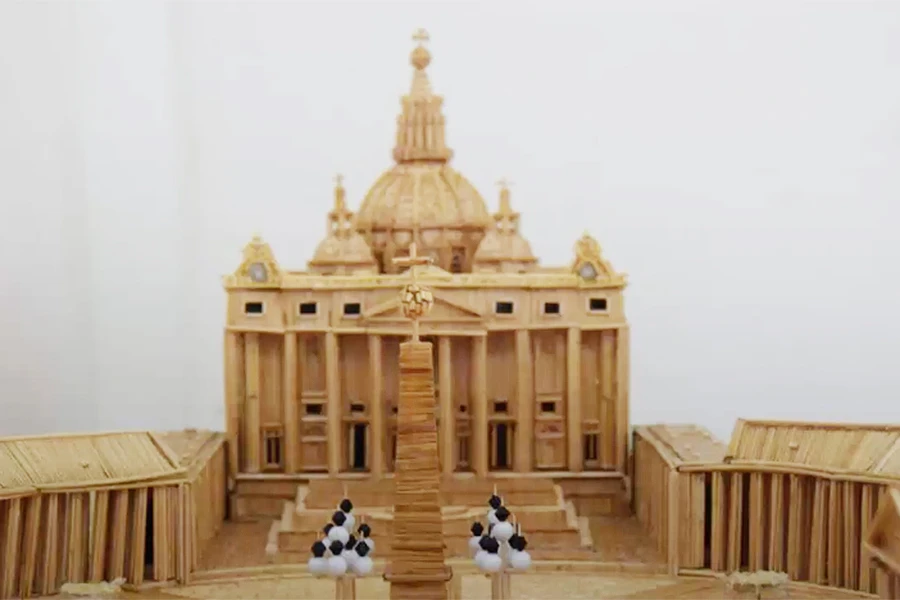
Vatican City, May 21, 2017 / 04:23 pm (CNA/EWTN News).- The Eiffel Tower, the Roman Coliseum, the Statue of Liberty, the Taj Mahal; are just some of the universal monuments that a Colombian teacher makes to scale out of little wooden sticks (toothpicks).

One of his recent works is Saint Peter’s Square and he dreams of showing it to Pope Francis during the visit the pontiff will make to this country in September.

Alberto Antonio Cruz Serna has been building models with toothpicks since he was 12.

He currently resides in the town of Puerto Berrio, in the Antioquia district teaches natural science to high school students at the Antonio Nariño Educational Institution, and has built more than 200 artistic creations with his own unique style.

Among his works there are also small-scale replicas of Catholic buildings such as Our Lady of Sorrows Parish in Puerto Berrio and Saint Peter’s Square in the Vatican.

Cruz, who is the father of five children, has displayed his works in a number of cities in Colombia, such as Medellín and Barrancabermeja. He has also won several awards.

“What motivates me to build these works of art in toothpicks is the challenge of it. The structure is spectacular. It’s not like the wood you cut and set in place. Here it’s about joining stick to stick, seeing the lengths and making shapes. The degree of difficulty makes it more interesting,” the 59-year-old teacher told CNA.

Cruz revealed that he has never visited the monuments he has reproduced with toothpicks. Nor has he studied architecture or design. He just does research on the Internet and in books on every detail of the artwork he wants to reproduce.

His tools? A nail clipper and special wood glue.

Cruz commented that his motivation for building the replica of Saint Peter’s Square was that in late 2015, he learned that Pope Francis might be visiting Colombia. The Vatican would later confirm the trip, which is scheduled for this September.

The construction of the artwork took 17 months. Cruz spent about five hours a day on the project. On weekends, he worked almost all day. 

The Saint Peter’s Square model was made of more than 36,000 toothpicks. It measures about 6 feet long by 3 feet wide.

Cruz said that one of the most beautiful characteristics of St. Peter’s Square are the columns because “they are like arms that welcome Catholics from all parts of the world each time that the Pope celebrates a Mass or appears. The shape of the plaza is like a hug.”

While he was working on this structure, Cruz also made a reproduction of the Leaning Tower of Pisa and the Roman Coliseum.

Regarding the pontiff’s visit to his country, Cruz said that “we Colombians are waiting for the moment when the pope visits. It is critical to the process we are going through (as a nation).”

He added that the Pope is important to him because “I’m Catholic, my family is too. And so, who would not want to meet the Pope? If he is the closest representative of God that we have on Earth? For Catholics, who would not want to be at his side?

Cruz said that he would like to display the model of St. Peter’s Square and the other works of art in Medellin during Pope Francis’ apostolic visit.

“My dream is that wherever the Holy Father is, I’d be nearby with my artwork and so he could take a look at them…That is the dream I want to fulfill. So he would be with me for just a few seconds.”

The teacher hopes that the Antioquia political and religious authorities will take an interest in his work and he will have the opportunity to display them. “I’ll keep on persevering and knocking on doors,” he said.

Cruz said that the governor of Antioquia will soon be visiting the school where he teaches, and he will take advantage of the occasion to show him the Saint Peter’s Square, the Leaning Tower of Pisa and the Roman Coliseum.

His upcoming projects include the Sagrada Familia in Barcelona, Spain, the Shrine of Our Lady of the Rosary of Las Lajas, and Notre Dame Cathedral.
 

[…]