No Picture
News Briefs

Why bother with beauty? A book for right-brained Catholics

October 1, 2017 CNA Daily News 3

Fort Wayne, Ind., Oct 1, 2017 / 04:42 pm (CNA).- Just a few weeks after Catholic artist Cory Heimann got married, a close friend of his, who had been planning on travelling to Africa to film a documentary, passed away.

That friend had a simple but inspiring mission statement: “Present Christ as irresistible to the yearning heart.”

“Ever since that day, I’ve taken that mission as my own,” Heimann told CNA in e-mail comments. “And if Christ is irresistible, all we have to do is show it. I think that’s our job as artists, whether subtle or overt.”  

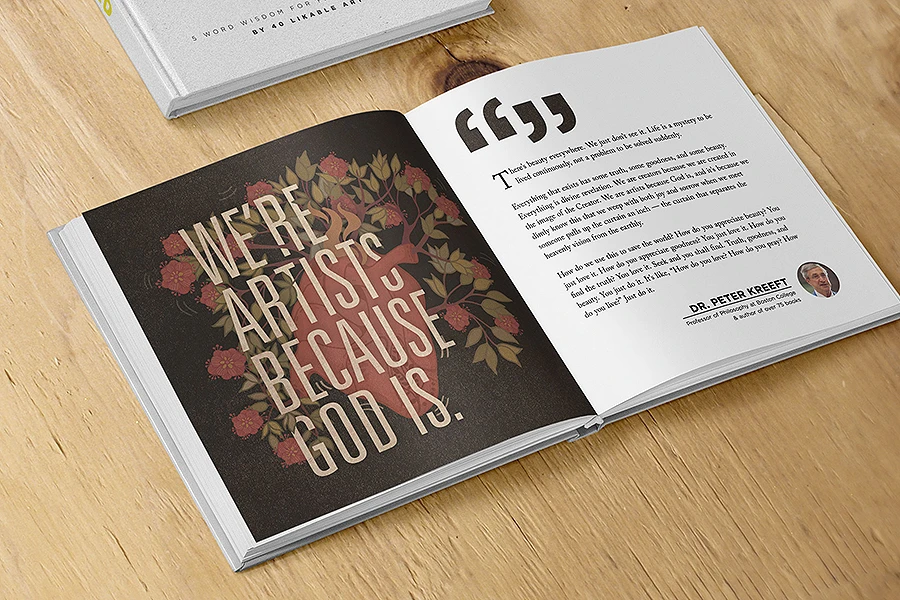
That mission statement has driven Heimann’s work with his design studio, Likable Art, as well as the work behind his new book, “Created: Bridging the Gap Between Your Art and Your Creator,” which explores the art and inspiration of more than 40 Catholic artists and creators of all kinds.

“When I see great work I want to know how the heck did they do that? How did they take their ideas and share it with me in a way that moves me to my core?” Heimann said in a video about the project.

So he decided to ask them – if you could share anything with your fellow artists and creators, what would be your first five words to them?

Heimann chose to start with five words, because the first five words of the Bible are also about creation: “In the beginning, God created.” (Genesis 1:1).

“I realized that’s why it’s so innate in us to create – because we’re sharing in the first thing that God shared that He did,” he said.

For the book, Heimann sought out his heroes – Catholic artists, architects, chefs, musicians, calligraphers, and everyone in between. He talked both to artists who are doing specifically Catholic work, and artists who are Catholic but working in the secular world.  

“We have everything from podcasters to painters, from Bishop Barron to a kindergarten teacher,” he said.

That’s because, as Catholic author and philosophy professor Peter Kreeft explains on his page: “We’re artists because God is.”

“Which goes to show that in some way we are all artists, we just have to recognize it,” Heimann added.

This idea was also proposed by Pope John Paul II in his 1999 letter to artists, in which he wrote: “Not all are called to be artists in the specific sense of the term. Yet, as Genesis has it, all men and women are entrusted with the task of crafting their own life: in a certain sense, they are to make of it a work of art, a masterpiece.”

There has been a recent re-emphasis on the importance of beauty and quality art in the Church, including the creation of a collaborative group called Catholic Creatives, the brainchild of brothers Marcellino and Anthony D’Ambrosio. Many of the artists and creators in the book, including Heimann, are part of the group.

Good art is important in the Church, Heimann said, because it is the first thing that can attract and invite modern man into a deeper conversation.

He said that Bishop Robert Barron of the Archdiocese of Los Angeles explains on his page that using beauty to draw someone to the Church is like taking a kid to a baseball game to inspire him to play baseball, rather than just telling him all the rules.

“You take him to a game, let him smell the smells and watch the players, and he will desire and ask how to play the game. Good art does that for the Church, it draws us in to ask for the truth. We don’t abandon the truth, but we do lead with beauty,” Heimann said.

He added that he hopes the book will inspire people to continue creating, and will help them see how the act of creating could lead them closer to God, and ultimately answer the question, “Why bother with beauty?”

“I think this book will (show) those that wrestle with being too artsy for their Catholic friends and too Catholic for their artsy friends that they have a place in the Church, and that their passions and desires are needed. I hope that it will help people to not turn inwardly in their creating but instead turn toward the ultimate creator.”  

The 9×9-inch book features a full-sized color photo or work of art from each collaborator, as well as their first five words and a brief reflection on how their art leads them to God. The book’s beauty also has the potential to draw in people who might not consider God as part of their creative process, Heimann noted.

“We never intended it, but I think this turned out to be one of the best evangelization books for the right-brained,” he said. “The average person reads two books a year, but this book doesn’t fall into that problem. It’s a book where you flip through a bit, you read a page, then another and all of a sudden you’ve read the whole book.”

The project has already seen impressive success – within two days of launching the book’s kickstarter fundraising page, the project had already surpassed its goal of $7,000, with more than $10,000 pledged by a total of 218 backers.

[…]

No Picture
News Briefs

Puerto Rican bishops offer message of hope after hurricanes

September 29, 2017 CNA Daily News 1

San Juan, Puerto Rico, Sep 29, 2017 / 04:58 pm (ACI Prensa).- The Puerto Rican bishops’ conference issued a message of hope to Puerto Ricans after Hurricanes Irma and Maria destroyed much of the U.S. territory this summer.

In the letter, published on Sept. 27, the bishops of Puerto Rico said that the destruction “fills us with pain and suffering, especially when we see so many tears, and so much anguish in the faces of our people.”

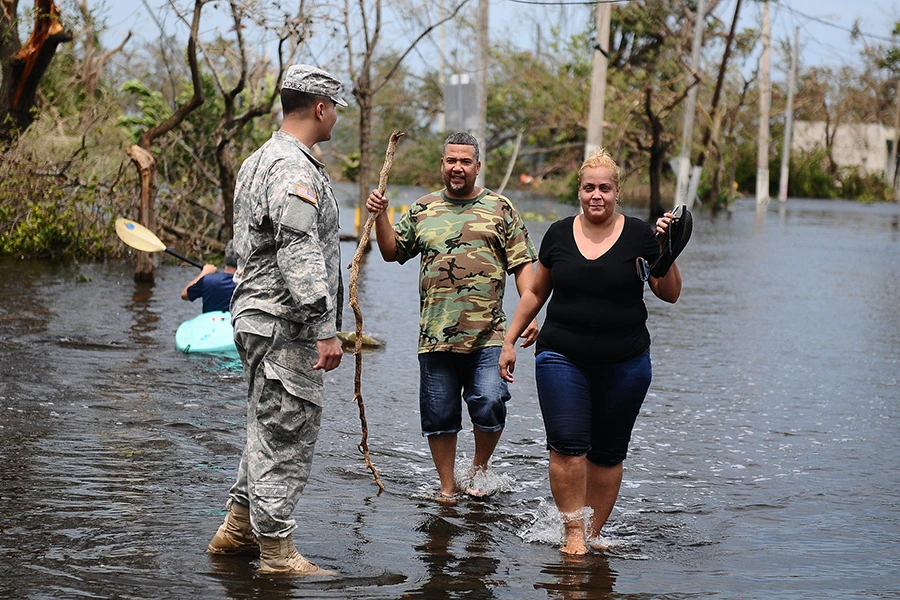
On Sept. 6, Hurricane Irma passed through northern Puerto Rico, though it did not directly impact the whole island. However, on Sept. 20, Hurricane Maria directly hit the island as a Category 4 storm, leaving at least 16 dead. The hurricanes have left much of the island without water and electricity, and have led to widespread shortages of gasoline and food.

Puerto Rico’s governor, Ricardo Rosselló, told local media that these storms are “Puerto Rico’s biggest catastrophe…in terms of damage to infrastructure.”

Reuters reported that the storms had left an estimated $30 billion in material losses.

The Puerto Rican bishops praised the faithful for maintaining “…order and respect for neighbors, the law and the property of others.”

They added that the two massive hurricanes show the urgency of the need to address climate change.

“We understand that we cannot act as before and continue like this,” they said.

The bishops noted that the only way for the island to “be reborn” is by clinging to the “love of Christ.”

“From his cross and his pain, our hope is reborn,” they wrote.

The bishops’ conference also recommended that the Puerto Rican people adopt three attitudes: “to rebuild, rediscover, and have a reunion with Jesus.”

The bishops stressed that as people rebuild houses, churches or roads, they also need to repair “the damage that does not allow us to grow as a people and to progress as a nation.”

“Let us overcome the barriers, selfishness and divisions that may exist between us, and unite to rebuild our homeland, which shines with the beautiful, noble and Christian values that live in our hearts, and spring from our identity,” they said.

“Jesus comes to meet us, calms the storm and give us confidence. He invites us to walk towards Him, takes us by the hand and will not let us sink, so that we can say: ‘Everywhere we are pressed, but not crushed.’”

The bishops promised to provide financial aid to the most affected dioceses and offered prayers for the victims of the storm. They also thanked local authorities and rescuers for their work.

“In these days, where basic resources are scarce, especially light and water, let us enter into personal and community prayer with the Lord,” they said, and urged everyone to continue their “gestures of solidarity with those brothers and sisters in need.”

The full press release in Spanish can be found here.


This article was originally published by our sister agency, ACI Prensa. It has been translated and adapted by CNA.

[…]

No Picture
News Briefs

Questions and Answers on the ‘filial correction’

September 29, 2017 CNA Daily News 4

Steubenville, Ohio, Sep 29, 2017 / 03:19 am (CNA).- Dr. Jacob Wood, an assistant professor of theology at the Franciscan University of Steubenville, offers answers on some frequently-asked-questions about the ‘Filial Correction on the Spread of Heresies” a letter sent to Pope Francis by a group of bishops, priests, and scholars, who released the letter this past weekend.  

What is fraternal correction?

Fraternal correction is an act of charity (CCC 1829), in which we call a brother or sister in Christ, who has fallen into serious sin, back to the way of the Gospel. Fraternal correction is explained by Jesus in the Gospel (Mt 18:15-17).

Why is this called a “filial” and not a “fraternal” correction?

Christ established a hierarchy in his Church (CCC 877), and the signatories on the letter are not on equal footing with the pope in that hierarchy. Out of respect for the pope’s authority, they appeal to the pope as his spiritual sons and daughters, not as spiritual brothers and sisters.

Why is this correction being issued?

Some of the signatories issued a filial appeal to Pope Francis last year, asking him to clarify the Church’s teaching with regard to marriage, sin, and grace. When they did not receive a response, they prepared this correction. The correction was originally sent to Pope Francis privately in July.

Why is this correction being made public now?

When the signatories received no response from Pope Francis to their appeal or their correction, they were concerned about the possibility of scandal, and so they made it public.

Was it right to make the correction public?

Not necessarily, no.

In Donum Veritatis, the Congregation for the Doctrine of the Faith stipulates that theologians who wish to critique the timeliness, form, or substance of non-infallible magisterial documents should address their concerns to the “responsible authority” rather than the “mass media” (DV 30). The responsible authority for the Church’s teaching on faith and morals is the Congregation for the Doctrine of the Faith. The responsible authority for the interpretation of canon law is the Pontifical Council for Legislative Texts.

Moreover, the principal concern of a filial or fraternal correction should be the amendment of the one who is thought to have sinned. But the publication of the document (as opposed to its private submission) was not undertaken primarily with a view towards correcting a supposed sin of Pope Francis. Rather, the cited reason for the publication of the correction is the avoidance of scandal to others, not the correction of Pope Francis himself.

Furthermore, although the correction seeks to avoid scandal, the correction itself has served as a cause of scandal. It insinuates that the pope is a heretic, it thereby weakens people’s trust in the pastors of the Church, and it provides the mass media with the opportunity to paint a false picture of the Church, in which those who believe the Church’s teaching about marriage, sin, and grace are seen as somehow opposed to the pope.

What authority does the correction have?

The correction is a private act on the part of the individual signatories, which they have undertaken in their capacity as baptized members of the Church (Can. 212, §3). The correction therefore has no magisterial authority in the Church.

Are Catholics required to follow the correction?

No. Since the correction lacks magisterial authority, Catholics are not required to agree with it or to follow it.

What is heresy?

“Heresy is the obstinate post-baptismal denial of some truth which must be believed with divine and catholic faith, or it is likewise an obstinate doubt concerning the same…” (CCC 2089).

Does this mean that the pope is a heretic?

No. Despite the document’s title, the signatories acknowledge in the document that they lack the authority to judge whether the pope has committed the sin of heresy or the canonical crime of heresy. The difference between the sin and the crime of heresy, and an answer to the question about whether the pope can be a heretic, are discussed here.

If the signatories cannot convict the pope of heresy, what sin do the signatories claim that the pope has committed?

The signatories claim that the pope has failed to stop the spread of heresy, rather than that he has committed the sin of heresy himself.

What heresy do the signatories claim that the pope has failed to stop?

The signatories claim that the pope has failed to stop the spread of seven heresies. Most of these concern the Church’s teaching on mortal sin. The Church’s teaching is that we cannot with full knowledge and deliberate consent choose to perform grave evil without cutting ourselves off from God’s grace (CCC 1857), and that we cannot live in a state in life which is contrary to God’s law without cutting ourselves off from the Sacrament of the Eucharist (CCC 1650).

Are those heresies contained in Amoris Laetitia?

None of the passages of Amoris Laetitia cited by the correction explicitly denies that a person who knowingly and willingly commits grave evil cuts himself or herself off from God’s grace.

Amoris Laetitia does explore the possibility that a person who commits grave evil may in some cases not have full knowledge or deliberate consent when doing so, but precisely insofar as they lack full knowledge and/or deliberate consent, such a person is not necessarily committing mortal sin.

Amoris Laetitia also explores the process of healing the gravely sinful elements of a state in life which is contrary to God’s law, without necessarily abandoning that state in life altogether. Amoris Laetitia only speculates as to what may be possible in this context, and its teaching is not clear. The Church teaches that in ambiguous cases such as this one, “everyone should be careful to interpret insofar as possible his neighbor’s thoughts, words, and deeds in a favorable way.” (CCC 2478) That means interpreting ambiguous statements in continuity with the faith and practice of the Church, not in terms of a rupture with that faith and practice.

How can we gain clarity about the teaching of the Church on divorce and remarriage?

With magisterial authority, St. John Paul II declared that the Catechism of the Catholic Church is a “sure norm for teaching the faith” (Fidei Depositum 3). We may therefore look to the teaching of the Catechism on the Sacrament of Holy Matrimony (1601-1666), sin (1846-1879), and grace (1950-2029). Four Cardinals of the Catholic Church have also submitted five “dubia” to Pope Francis. A “dubium” is a question about faith and/or morals to which the faithful would like a magisterial answer, and “dubia” is the plural of “dubium.” Should Pope Francis answer the dubia, it would give us further guidance as to his intended teaching.

What should Catholics do now?

Catholics should pray for the pope, for the signatories of the correction, and for the Church. Jesus Christ himself promised to send his Holy Spirit so as to lead the Church into all truth (Jn 16:13), and to defend the Church from error (Mt 16:18). Jesus is always faithful to his promises.


Dr. Jacob Wood is assistant professor of theology at the Franciscan University of Steubenville. His opinions are his own.

[…]

No Picture
News Briefs

Baptist theologian: Fr. Martin’s ideas ‘require a total redefinition of doctrine’

September 28, 2017 CNA Daily News 2

Washington D.C., Sep 28, 2017 / 05:47 pm (CNA/EWTN News).- A Baptist theologian, Dr. Albert Mohler, has claimed that Fr. James Martin’s teaching on sexuality is “an entire re-orientation of the Catholic faith.”

Mohler’s comments refer to Martin’s suggestion that Catholics should refer to same sex attraction or an LGBT identity as “differently ordered” rather than the Catechism’s use of “intrinsically disordered.” Mohler says the suggestion fundamentally changes Catholic teaching on sexuality, and on creation itself.

In comments to CNA, Martin rebuffed Mohler’s comments, calling them “obtuse,” and stating that those who identify as LGBT, or those who are not educated in philosophy or theology, could easily perceive the Church’s language to be “cruel.”

“So my point is simply that we have to be sensitive to the language we use. We can’t pretend that language like that isn’t harmful,” Martin told CNA.

Martin has drawn criticism after the publication of his most recent book, Building A Bridge, which addresses the Church’s engagement with those who identify as LGBT. Most notably, he has been critiqued for the book’s avoidance of Catholic teaching on celibacy and chastity, and for the book’s lack of engagement with Catholics who identify as LGBT, but observe the moral teachings of the Catholic Church. In August, Martin announced on Facebook that he intends to respond to these critiques in a revised edition of the book.

Martin’s comments came in response to a podcast by Mohler, who is president of the Southern Baptist Theological Seminary.

On the Sept. 19 edition of his podcast, “The Briefing,” Mohler points to a passage in Martin’s book, which suggests replacing the theological term “disordered” with the phrase “differently ordered.”

“If you say that LGBT sexual orientation is merely differently ordered, you have actually not only changed the catechism in this specific case of the Roman Catholic Church, you have changed the Catholic Church’s understanding of the doctrines of creation, of humanity, of sin, of redemption, of the church. It is an entire re-orientation of the Catholic faith,” Mohler said.

Mohler explained his comments in an interview with CNA, saying that to an evangelical Protestant, language like Martin’s is “pointing to a fundamental change that’s happening in the Catholic Church.”

He expressed concern that given Martin’s statements, his role at the Vatican could imply a change in Catholic Church doctrine. In April, Martin, the editor-at-large of America Magazine, was appointed to serve as a Consultor to the Secretariat for Communications in the Vatican.

“Acceptance of the LGBT revolution by Christians, or any belief system based upon a claim to revelation, will require a total redefinition of doctrine,” Mohler said. He stated that, in his view, such a change of language “isn’t just about sex, it’s about our understanding of Creation.”

Mohler elaborated, saying that the phrase ‘intrinsically disordered’ explains that same-sex attractions are a result of mankind’s fall, whereas the phrase ‘differently ordered,’ means that those attractions are “a part of the goodness of creation.”

“That’s just not changing the position on homosexuality, now you’re redefining the Garden of Eden.”

Martin called Mohler’s understanding of his book “absurd,” and questioned Mohler’s conclusions. He continued, saying that Mohler’s reaction is part of why it’s difficult to even discuss persons who identify as LGBT in Christian churches. “To link a new way of understanding their sexuality with the destruction of the faith is not only absurd, it’s a sign of how LGBT people are still seen primarily, and in this case totally, as sinful,” he said.

Martin accused such an approach of echoing the “scribes and Pharisees, who cared more about words than about people,” rather than Jesus. “The Catholic faith, in the end, is not about a single phrase in the Catechism; it is about an encounter with the Risen One,” he said.

The phrase in question derives from paragraph 2357 of the Catechism of Catholic Church, which states that “ tradition has always declared that ‘homosexual acts are intrinsically disordered’…They do not proceed from a genuine affective and sexual complementarity. Under no circumstances can they be approved.”

The Catechism elaborates, explaining that those “who have deep-seated homosexual tendencies,” should be “accepted with respect, compassion, and sensitivity.”  


[…]