
No Picture
News Briefs

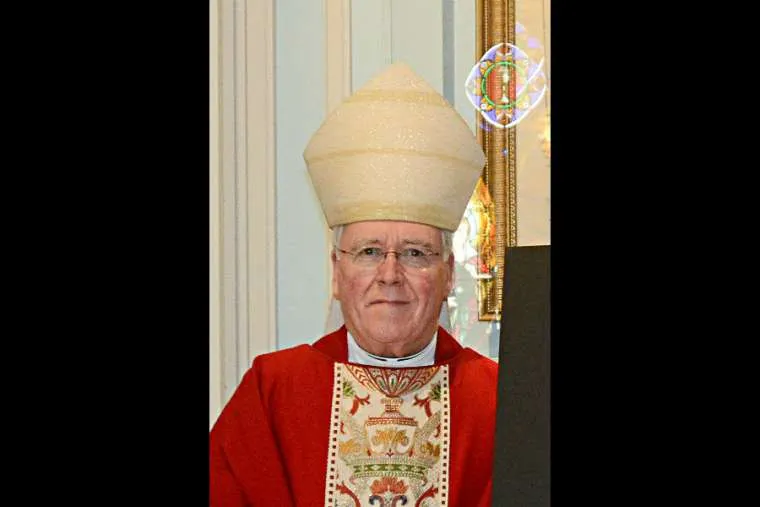
Whistleblower says Buffalo diocese did not disclose priest abuse reports
October 29, 2018 CNA Daily News 0

Buffalo, N.Y., Oct 29, 2018 / 03:30 pm (CNA).- A former Church employee said she leaked diocesan documents because when the Buffalo diocese addressed sexual abuse allegations it seemed primarily concerned with protecting the reputation and assets of the Church.

A local media investigation published Aug. 22-23 revealed confidential diocesan documents indicating that Bishop Richard Malone allowed priests to stay in ministry despite multiple abuse allegations made against them.

Siobhan O’Connor, a former executive assistant to Bishop Malone, told “60 Minutes” on Sunday that she decided to leak the internal diocesan documents mentioned in the report after an incomplete list of priests accused of abuse was published.

“Bishop Malone had agreed to release a list of 42 priests accused of sexually abusing minors,” according to the program. “But O’Connor knew there should be more names because she had seen the draft list that circulated between the bishop and diocesan lawyers … As they worked on the list, the bishop and his lawyers decided they would not reveal the names of accused priests still in ministry.”

The list, released March 20, “identifies diocesan priests who were removed from ministry, were retired, or left ministry after allegations of sexual abuse of a minor,” according to the diocese. It “also includes deceased priests with more than one allegation made against them.”

O’Connor said: “It was a very carefully curated list. And I– I saw all the– the lawyers coming in and out, and I was aware of the– the various strategies that were in place.”

“To my mind the overarching attitude seemed to be to protect the church’s reputation and her assets,” she added.

O’Connor worked as Malone’s assistant for three years, quitting in August, shortly after she leaked the personnel files to a local television station. That station’s report subsequent focused on two priests whose names were reportedly considered for inclusion on the publicly-released list of credibly accused clergy, but removed before publication. Both priests were in active ministry at the time of the list’s publication in March.

Among the cases which troubled her was that of Fr. Arthur Smith, who had been suspended from his parish by Malone’s predecessor in 2011, after complaints were made that he had shown signs of grooming and stalking students, and had inappropriate communications with one male student.

In November 2012, Bishop Malone returned Smith to ministry, as chaplain of a nursing home. There, two young adult men said they were touched inappropriately by Smith. The regional superior of the religious order running the nursing home wrote to Malone to report the complaints, and to say that the order was discontinuing Smith’s work there.

In 2015, Malone wrote in a letter to Vatican officials that Smith had groomed a young boy, refused to stay in a treatment center, faced repeated boundary issues, and been accused of inappropriate touching of at least four young men. However, in the same letter, Malone said that “On the basis of his cooperation in regard to regular counseling, I have granted Father Smith faculties to function as a priest in the Diocese of Buffalo.”

The same year, the bishop wrote a letter of approval for Smith to serve as a priest on a cruise ship, explicitly clearing him for work with minor children.

In 2017, Malone assigned Smith as a “priest in residence” at an area parish. The priest was suspended in 2018, after the diocese said it had received a new substantiated allegation of sexual abuse of a minor.

“Our previous bishop had removed him from ministry, so I always thought it was odd that Bishop Malone had reinstated him,” O’Connor told “60 Minutes.”

“When I explored his file more in-depth, that might have really been the moment when I knew that I had to do something with this information.”

Because the list of accused priests was substantially shorter than she believed it should be, O’Connor said, “I felt that instead of being transparent, we were almost being the opposite or– or half transparent. Here are the names that we would like you to know about, but please don’t ask us about the rest.”

“60 Minutes” also interviewed two clerics of the Buffalo diocese who are dissatisfied with how the local Church has handled allegations of sexual abuse: Fr. Robert Zilliox, who holds a licentiate in canon law, and Deacon Paul Snyder.

Bishop Malone declined to be interviewed by “60 Minutes,” and issued a statement about that decision Oct. 27.

The first reason, he said, is that child protection and victim reconciliation is occupying most of his time.

Second, he said, “it is clear to me and my staff that your roster of interviews did not include those who are aware of the full extent of the efforts of our Diocese to combat child abuse. Nor does it include those who urge me every day to stay the course and restore the confidence of our faithful.”


 

[…]

No Picture
News Briefs

Number of Americans who say they are witches is on the rise

October 28, 2018 CNA Daily News 0

Washington D.C., Oct 28, 2018 / 01:00 pm (ACI Prensa).- The number of Americans who claim to be witches has increased dramatically over the past 30 years.


An estimated 1 to 1.5 million people say they practice Wicca or paganism, a rise from an estimated 8,000 Wiccans in 1990, and 340,000 in 2008.


In 2014, a Pew Research Center survey found about 0.4 percent of Americans identify themselves Pagan or Wiccan, a significant increase over prior years.


If accurate, the Pew data would suggest that there are more self-identified “witches” in the United States than members of some mainline Protestant denominations. For example, according to 2017 figures, there are 1.4 million practicing Presbyterians in the United States.


Wicca is a form of modern pagan witchcraft begun in the 1940s and 1950s in the United Kingdom. Those who practice Wicca often refer to themselves as “witches.” People who practice other forms of witchcraft may not identify with the “Wiccan” or “pagan” label, meaning that the number of self-identified witches in the United States might actually be higher than reported.


Online, witchcraft has become increasingly popular and mainstream. The hashtag “#WitchesofInstagram” has been used nearly two million times on Instagram, featuring images of crystals, pentagrams, and people sharing their experiences as witches.


A priest pursuing doctoral studies in exorcisms told CNA that he was not surprised by the increasing number of Americans interested in dabbling in witchcraft.


The priest, who asked not be identified because of the attention exorcist priests often receive, pointed to the increasing popularity of spiritualism in general, which includes yoga and ouija, and the need for instant results in American culture.


He theorized that people who are dissatisfied with their religion begin to look for a “quick fix– magic.”


And while some witches differentiate between “white magic” and “black magic,” with black magic being intentionally malicious, he rejected the idea there could be any such thing as positive or harmless magic.


“Both of them are associated with Satan, and he’s in charge of that,” the priest told CNA.


People who embrace one form of witchcraft, whether to find love or solve a problem may find themselves “trapped” in the world of the occult, he said.


“I have personally had many, many experiences of people coming to me,” with issues that stemmed from something initially thought to be innocuous, he said.


The modern appeal of paganism may stem from Christianity’s early roots, the priest said. When Christianity first spread to pagan areas–Ireland, France, etc.–the people who lived there were incredibly superstitious. Christianity was able to provide a sort of spiritual reassurance.


“Christianity always has good news, and the good news is that the devil is overcome,” he said.


Now, he said, as people have begun to turn away from the message of Christ’s lordship, and have begun to “glorify their own reason and understanding,” Christianity has become less appealing–and people return to the superstitious practices of long ago.


A lack of faith in the Christian God coupled with the “very hedonistic society” of modern times adds to the appeal of the supposed quick fix of magic, he said.


“Anything we want, we have to have right away,” he said.

“I mean, if I suffer, I need to have a solution. Even if you go to a hospital, you look at the chart and they always ask you ‘how do you feel from one to 10?’ and if you feel that your pain is too high, they will pump you with opioid painkillers.”


These comments were echoed by Fr. Thomas Petri, O.P., vice president and academic dean at the Dominican House of Studies.


Petri told CNA that he did not find it surprising that some people who have turned away from Christianity would turn toward pagan worship.


“Man is essentially a religious animal who seeks meaning beyond the ordinary and so is prone to worship powers beyond himself,” he explained.


The increase of self-identfied “witches” could also be as a result of Satan, he said, who “is actively at work in the world seeking to drive as many people away from salvation in Christ as he can.” Satan, he said, does this “under the guise of principalities and powers that some people think are more novel and powerful than Christ.”


“Sadly, they couldn’t be more wrong and they need our prayers.”

[…]

No Picture
News Briefs

Some Fighting Irish are fighting porn

October 26, 2018 CNA Daily News 1

South Bend, Ind., Oct 27, 2018 / 12:00 am (CNA).- Students at the University of Notre Dame have asked university administrators to block pornography on the university’s wi-fi networks.

More than one hundred students signed letters, one sent by m… […]

No Picture
News Briefs

Mail-order abortion pill service may violate drug laws, FDA says

October 25, 2018 CNA Daily News 0

Denver, Colo., Oct 25, 2018 / 04:30 pm (CNA/EWTN News).- A European online service that has been quietly offering mail-order abortion pills to women in the United States for several months is being investigated by the FDA for possibly violating abortion drug laws. Aid Access is a website that says it offers abortion-inducing drugs to healthy women who are nine weeks pregnant or less.

If women qualify for the pills through online consultations, Aid Access writes them prescriptions for the two abortion-inducing drugs, misoprostol and mifepristone. These prescriptions are filled at a pharmacy in India, which mails the drugs to women in the U.S.

To date, Aid Access has reportedly mailed abortion drugs to 600 women in the U.S. The service costs $95, and the website notes that financial aid is available.

The FDA, however, has issued warnings that women should not buy mifepristone online, “because you will bypass important safeguards designed to protect your health (and the health of others).”

“Mifeprex (mifepristone) has special safety restrictions on how it is distributed to the public. Also, drugs purchased from foreign Internet sources are not the FDA-approved versions of the drugs, and they are not subject to FDA-regulated manufacturing controls or FDA inspection of manufacturing facilities,” the warning states.

In a statement made earlier this week reported by The Guardian, the FDA said that it “takes the allegations related to the sale of mifepristone in the U.S. through online distribution channels very seriously and is evaluating the allegations to assess potential violations of U.S. law.”

Aid Access founder, Dutch physician Dr. Rebecca Gomperts, has not commented on the FDA statement but told CNN that she has “no worries.”

“Everything I do is according to the law,” she said.

Gomperts is also the founder of Women on Web, a site launched 12 years ago to provide abortion drugs to women in countries where the procedure is illegal, and to military women serving overseas. Women on Web reportedly mails about 9,000 abortion pill packages to women each year.

Gomperts has said she believes she has a “moral obligation” to provide this service to women who may have difficulty accessing surgical or medical abortions for a variety of reasons.

A medical abortion consists of a woman taking two different medications within about 48 hours of each other – the first, mifepristone, blocks the progesterone that makes the womb an inhabitable place for a baby. The second, misoprostol, is taken 48 hours after the first pill, and makes the uterus contract and expel its contents – the baby.

Studies show that about one in every 100,000 women who induce a medical abortion will need surgical intervention due to complications. According to FDA numbers, about one in 155,000 women die from complications of medical abortions.

Doctors who perform medical abortion reversals have said that the risks of medical abortions are often due to lack of thorough follow-ups, because women often receive the abortion-inducing drugs from clinics with which they do not have an established relationship.

Pro-life groups have slammed Gomperts and her organizations for putting money and politics ahead of women’s welfare.

“Risking women’s lives to make a political point and a quick profit makes no sense, and we sadly anticipate horror stories when inevitably something goes wrong,” said Kristan Hawkins, a spokesperson for Students for Life of America (SFLA).

“Handing out deadly drugs through the mail is a disaster waiting to happen. We know that women have died using chemical abortion drugs, and that how far along a woman’s pregnancy is or where it is can be a life or death issue. Women later in pregnancy or women experiencing an ectopic pregnancy in particular are in great risk — two things that must be determined by examination and not by some online questionnaire,” Hawkins said in a statement.

Mail-order abortions would also aid abusers of women who want “to end wanted pregnancy, something that this distribution model would make even easier. Women deserve better,” she said. Catherine Glenn Foster, president and CEO of Americans United for Life, told CNN that Aid Access’ service was “reckless and irresponsible,” especially since women cannot be screened online for an ectopic pregnancy, “a dangerous and potentially life-threatening condition that no abortion clinic would try to manage.”

“Because Gomperts’ plan is dangerous to women’s health and safety, the act of sending unregulated prescription abortion pills through the mail should be the subject of federal regulation,” she told CNN. “For this reason, Americans United for Life is exploring the possibility of Congressional intervention to protect women.”


[…]

No Picture
News Briefs

New York friar’s new album says life is a pilgrimage made ‘poco a poco’

October 24, 2018 CNA Daily News 1

New York City, N.Y., Oct 24, 2018 / 05:06 pm (CNA).- Musical inspiration can come from unexpected places – like a Franciscan friar’s struggle to learn Spanish.

The inspiration for the title and theme of “Poco a Poco,” a new CD from the Franciscan Friars of the Renewal, came from a friar living in Honduras, who worked at a hospital that serves the poorest of the poor.

Although he was having a hard time learning Spanish, the friar wanted to encourage people as they waited to for medical attention – some of whom had walked for miles to receive care – so he memorized a simple but encouraging phrase in Spanish: “Somos peregrinos caminamos al Señor; poco a poco, vamos al llegar,” which translates to: “We are pilgrims walking to the Lord, little by little, we will arrive.”

“It was just this little way of like encouraging people…little by little, step by step, I can get through another day,” said another Franciscan, Fr. Mark-Mary, CFR, who heard the friar’s phrase for the first time when he was also living and working in Honduras.

“But it ends with this hope of ‘vamos a llegar’, we’re going to make it, our hope is in Christ and we do not hope in vain,” he told CNA.

Fr. Mark-Mary shared the phrase and story with friend and fellow friar Br. Isaiah, CFR, who found that it resonated with him so personally that he chose “Poco a Poco” for the title of his first full-length musical album.

“Every time I heard it I just lit up because there was something about it that just grabbed my heart” Br. Isaiah said in a video about the CD for Ascension Press.

“Little by little, there’s something about that that my heart just says ok yeah, I can handle that…its become a chorus for me when facing life’s difficulties,” he said. “It’s become a rallying phrase for whatever the moment calls for.”  

The biblical theme of life as a pilgrimage journeying to the Lord, and with the Lord, is something that permeates the whole CD, Br. Isaiah said in email comments to CNA.

“The Book of Exodus recounts how God led Israel ‘little by little’ through the desert in their pilgrimage to the Promised Land and so He does with us,” he said.

“‘Poco a poco,’ God guides us along our journey, encouraging the heart to set out each day to a land it knows not, by paths it has not known, all with the promised accompaniment of an ever-present and unwearied Love, capable of carrying us beyond the familiar lands of our habits and capacities to frontiers of growth, transformation, and ever-deepening peace as we come to behold the God of love, in the face of Christ Jesus, whose peace (and love for us) ‘passes all understanding,’” he said.

The theme of life as pilgrimage also fits perfectly with the charism of the friars, as stated on their recently-received Pontifical Decree from Rome: “In imitation of St. Francis of Assisi, the friars seek to follow in the footsteps of Jesus, as a prophetic witness that life is a pilgrimage to the Father, of faith, hope and love of God and neighbor, made possible by the Holy Spirit.”

The album is the fruit of prayer and brotherhood, said Fr. Mark-Mary, who is the CD’s executive producer.

“There’s this really popular line from St. Irenaeus, that ‘the glory of God is man fully alive,’ but man fully alive is man in communion,” Fr. Mark-Mary said.  

“There’s something about this album that’s the fruit of our Franciscan brotherhood, it’s not the fruit of Brother Isaiah being a superstar, it’s listening to one of our simple, older brother’s prayer and the way he’s speaking to the poor in Honduras, and then sharing that and putting my gifts at the service of Brother Isaiah, and Brother Isaiah receiving that gift,” he said.

“This (album) wouldn’t happen if it weren’t for our Franciscan brotherhood, which we take very seriously, we’re really proud of it,” he said.

Using music as a way to evangelize is deeply embedded in the Franciscan charism, Fr. Mark-Mary noted, and goes all the way back to St. Francis of Assisi, who had a talented musical friend and follower.

“So St. Francis would have him come and play in the market square and he’d get people’s attention, and then the musician would take a break and then they’d preach, so its very much a part of the Franciscan charism,” he said.

It’s also particularly a part of the CFR charism – one of the founding members of the order is the rapping Fr. Stan Fortuna (of ‘Everybody Got 2 Suffer’ fame), and many other musically talented brothers who have joined the order over the years.

The music adds, rather than detracts, from the friars’ primary mission of serving the poor and evangelizing, Fr. Mark-Mary noted.

“I thought it was really beautiful that on the night when (the CD) was released, Br. Isaiah came down to our homeless shelter in the Bronx, and he’s playing music and giving a word to the homeless in the shelter,” he said.

“There’s something beautiful about being able to do this but in a way that doesn’t take us away from our first call.”

Something else that Fr. Mark-Mary said he appreciated about being involved in the project was the opportunity to add something positive to the culture.

“I have a chance to lead the way again with some of the friars’ work with media evangelization,” he said.

“What it comes down to is that we’re in a battle for minds, and so…how can we be speaking goodness into the world? Because so much of the culture these days…its not morally neutral, a lot of the stuff out there, it’s really like poison.”

But it’s not enough to tell people “don’t watch this, don’t listen to that,” Fr. Mark-Mary noted, there has to be something else to take its place.

“The full work is saying – watch this instead, listen to this instead. So we’re trying to do that and finding that music is one way to get into people’s personal cultures, to get on their phones get in their car radios,” he said.  

So far the album has been received very well, Fr. Mark-Mary said. It was at one point the fourth best-selling Christian album according to Amazon, and the number 23 best-selling album for all music on Amazon.

The album “Poco a Poco” is available on iTunes and Amazon, and CDs and merchandise can also be ordered through Ascension Press.

One of Fr. Mark-Mary’s favorite parts of the experience has been watching the comments that people have made on a music video for one of the tracks, “Struggler”, produced by Spirit Juice Productions and posted on Ascension Press’ website.

“I think one of my favorite comments has been ‘I regret underestimating this,’” Fr. Mark-Mary said.

He said he has found that people often expect “church stuff” to be mediocre or lower in quality, and he likes breaking those stereotypes.

“I’m very much committed to speaking a message in a way where the means doesn’t undermine what you’re trying to say.”

[…]

No Picture
News Briefs

How a new study says premarital sex affects marital happiness

October 24, 2018 CNA Daily News 0

Denver, Colo., Oct 24, 2018 / 10:08 am (CNA).- People who have had only one lifetime sexual partner have happier marriages than people with two or more lifetime partners, according to a new report from the Institute for Family Studies.

The study’s author, Dr. Nicholas Wolfinger of the University of Utah, found that women who have been sexually intimate only with their spouses are most likely to report having “very happy” marriages, at 65 percent. Among women with between six and ten lifetime sexual partners, only 52% reported being “very happy” in their marriage, the lowest in the study.

Among men, 71% with one partner reported being very happy with their marriage, according the study. For men who report two or more sexual partners, the number drops to 65 percent.

In addition, 40% of the study’s respondents reported having had only one or zero sexual partners before getting married. Wolfinger pointed out that the rate among younger Americans, who have married since 2000, is closer to 27 percent. The median American woman born in the 1980s has had three sex partners in her lifetime, and the median man six; just five percent of all women marrying in the 2010s were virgins.

“The surprisingly large number of Americans reporting one lifetime sex partner have the happiest marriages,” the study reads. “Past one partner, it doesn’t make as much of a difference. The overall disparity isn’t huge, but neither is it trivial.”

The study controlled for the religiosity of its subjects, which Wolfinger said has been shown by other studies to be a major factor in happy marriages, but not the only explanation. He said the data he has is not conclusive on this point.

“Coming into this beforehand, I would have expected religion to be one reason why people who don’t have a lot of sex partners would have happier marriages,” Wolfinger told CNA.

“Church attendance, in itself, produces happier marriages…but be that as it may, controlling for [denomination and church attendance] did not substantially affect the relationship between how many premarital sex partners you have and whether you’re in a very happy marriage.”

What this means, Wolfinger clarified, is that people are more likely to have a happy marriage if they have fewer premarital sexual partners whether they are religious or not.

One major factor affecting this result, he said, is the fact that premarital sex can often result in children born out of wedlock, which unfortunately tend to strain future relationships. Moreover, people who have had previous sexual partners before marriage may later compare their spouse to those previous partners, leading to a decline in the happiness of their marriage.

In a similar 2016 study, Wolfinger examined the divorce rate in relation to the number of sexual partners a woman has had in her lifetime. He found that survey respondents who had not had sexual partners before marriage had the lowest divorce rates, and those with ten or more partners in their lifetime were the most likely to spit up, with a 30% chance of divorce in the first 5 years of marriage.

Of those women who married in the 2000s without having first had sex, nearly 70% reported regularly attending some kind of church services, while less than 30% of women with ten or more partners were churchgoers.

“Everything should be on the table”

Father Brian O’Brien, a priest of the Diocese of Tulsa in Oklahoma, told CNA that the statistics presented in the IFS study are confirmed by his experience working in marriage preparation for 11 years. He said he often presents statistics to the couples he counsels, to try to help explain how premarital cohabitation and premarital sex can negatively affect the happiness of their marriage.

“Ultimately it comes down to: we’re not meant to be used,” O’Brien told CNA.

“I think what happens in a lot of cases is [people think]: ‘I’ll just sleep with a whole bunch of people, and maybe one of them will work out.’ And that’s exactly what happens in the movies…but the idea that you can just use somebody and move on as if that didn’t happen, I think is where the unhappiness sets in.”

People will remember the sexual partners that they had “along the way,” because sex bonds people together, he said. A bond with a person who is no longer in a person’s life will remain with them even if they start a new relationship, leaving a “lingering guilt,” “unresolved issues,” and “baggage” that makes new relationships that much more difficult.

“Marriage is hard enough, and it’s even harder if you’re bringing in a bunch of baggage,” he said. “For couples that are going to enter into a marriage covenant, everything should be on the table.”

O’Brien said that the broader trend in society of couples coming into marriage with multiple sexual partners, as evidenced by statistics cited in the IFS study, has also manifested itself among the couples he counsels.

“I go into [marriage prep] assuming, until I talk to them, that the couple is probably living together, and I assume that they are sexually active,” O’Brien said.

“I tell [couples] that I want their marriage to be as happy and holy as possible, and your marriage will be happier and holier if you abstain from sex and if you don’t live together.”

O’Brien said he thinks most couples who are living together know what they’re doing is wrong, especially when it comes to being sexually active. He said he suspects that there are many couples that don’t see anything wrong with cohabitation before marriage, viewing the move primarily as an economic decision.

“It’s not that they’re sort of ‘trying each other out,’ it’s that ‘we don’t want to pay two rents,'” O’Brien explained. “So I think in that way they’re not really flaunting Church teaching, they’re trying to make good economic decisions.”

He said he takes a pastoral approach to the couple’s situation, affirming them in their good decisions and “meeting them where they are.”

“If they’re not living together, and they’re not sexually active, it’s my chance to say: “Awesome! Great job!” and to really affirm them in those decisions,” he said.

He said generally in the second or third marriage prep meeting, he’ll ask some basic information such as the couple’s home address. If the couple is already living together, they will often admit it at that point, if reluctantly.

“They’ll look at each other like: ‘Oh no. Should we give him the same address?’ And as soon as they do that, I’ll ask ‘So do you guys live at the same place?’ And they have this guilty look on their face, and they’ll say yes,” O’Brien said.

“And I’ll say: ‘Ok, I’m not yelling at you, but obviously you guys feel bad about it.’ So then we’ll kind of take that and discuss it as we go.”

O’Brien said despite popular opinion that may suggest that fewer people are seeking marriage in the Catholic Church, he and his fellow priests in Oklahoma are engaged in marriage prep and presiding at weddings “all the time.”

“I’m not ready to throw in the towel on the young people of the Church,” he said. “Because I think there really is a desire to have God as part of their marriage, and they’re not finding that in other places.”

Father Zach Swantek, a chaplain at Seton Hall University, offered his thoughts about his experience with modern marriage prep in an email to CNA.

“Often priests are afraid to discuss issues such as pre-marital sex, chastity, cohabitation, contraception and even participation in the Church with [couples], for fear that they will be offended or scared off,” Swantek wrote.

“On the other hand, some priests boast about how they refuse to marry couples that fail to live in strict adherence to the teachings of the Church, yet do not help these couples to understand and live these teachings,” he added.

“Marriage preparation must be viewed as an opportunity to accompany the couple, gradually leading them to the fullness of truth about faith, sacraments and marriage. This requires patience and work, but it is well worth the effort.”

[…]