No Picture
News Briefs

Why Christians believe in resurrection, not reincarnation
October 24, 2018 CNA Daily News 0

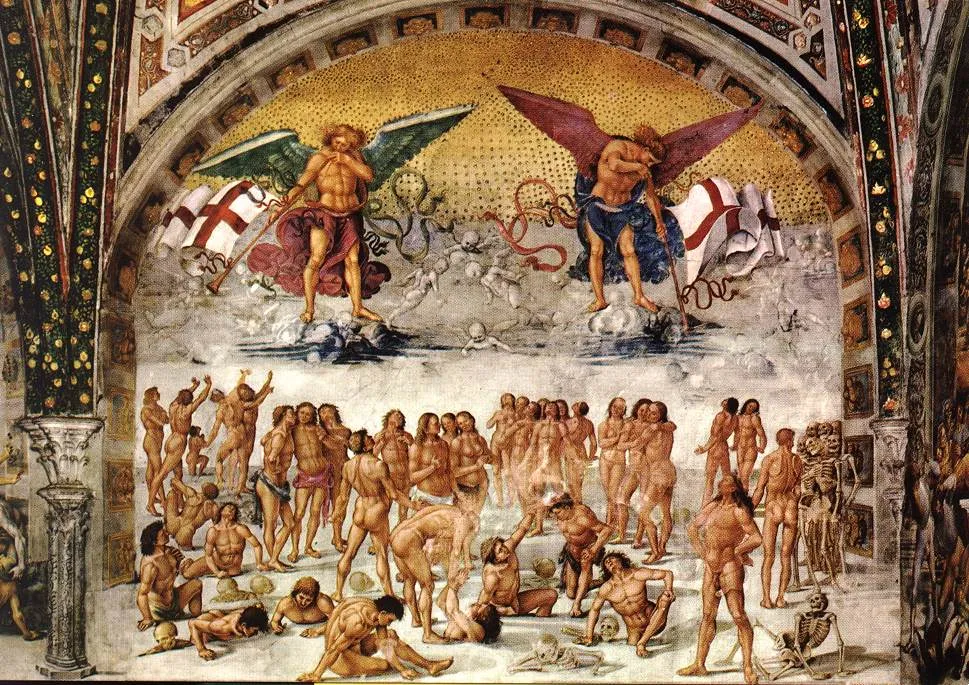
Denver, Colo., Oct 24, 2018 / 03:01 am (CNA).- Every time Christians recite the Apostles’ Creed, they affirm their belief in what will happen to them after death: “’I believe in the resurrection of the body and life everlasting.”

The belief in the resurrection of one’s physical body at the end of time is central to Christian theology, and finds its basis in the resurrection of Christ, who rose in body and soul three days after his passion and death.

But according to a new Pew survey, 29 percent of Christians in the US hold the New Age belief of reincarnation – the belief that when one’s body dies, one’s soul lives on in a new and different body, unrelated to the first.

The percentage of Catholics in the US who said they believe in reincarnation was even higher – 36 percent; just shy of the 38 percent of religiously unaffiliated people who said they believe the same.

However, according to Catholic teaching, belief in anything other than the resurrection of the body is completely incompatible with a Christian theology and anthropology of the human person.

Where did the belief in resurrection come from?

Even before Christ, the belief that the body would rise at the end of time was becoming a more common, though not universally held, belief among certain groups of Jews, such as the Pharisees.

The Sadducees, for example, “were dubious about the authority to be given to the Prophets and other writings…(which included) skepticism about spiritual realities like the soul or even angels,”  said Deacon Joel Barstad, who serves as Academic Dean and associate professor of theology at Saint John Vianney Theological Seminary in Denver, Colorado.

“From New Testament evidence it would seem they were particularly hostile to the idea of a future resurrection of the dead,” he told CNA.  

“The Pharisees on the other hand believed in angels and spiritual souls and the general resurrection of the dead,” he said.

As they became more convinced of the “radical faithfulness of God,” he noted, belief in bodily resurrection took root, paving the way for the acceptance of the resurrection of Christ.

“The resurrection of Jesus from the dead confirmed that belief, but it also gave it a deep and solid foundation,” he said.
 
What does belief in resurrection mean for Christians?
 
According to the Catechism of the Catholic Church: “The ‘resurrection of the flesh’ (the literal formulation of the Apostles’ Creed) means not only that the immortal soul will live on after death, but that even our ‘mortal body’ will come to life again. Belief in the resurrection of the dead has been an essential element of the Christian faith from its beginnings. ‘The confidence of Christians is the resurrection of the dead; believing this we live.’ How can some of you say that there is no resurrection of the dead? But if there is no resurrection of the dead, then Christ has not been raised; if Christ has not been raised, then our preaching is in vain and your faith is in vain…. But in fact Christ has been raised from the dead, the first fruits of those who have fallen asleep.”

The Christian confidence in bodily resurrection comes from Christ himself, and the New Testament promise that salvation comes through follow Christ in everything, including his death and resurrection, Michael Root, a professor of Systematic Theology at The Catholic University of America, told CNA.

“Salvation is unity with Christ, Christ brings the kingdom of God, and that kingdom is realized in the resurrection,” Root said.

There is a great deal of “fuzziness of thinking” regarding death that many Christians hold besides reincarnation, Barstad added, such as believing that after death one dies and goes to heaven and stays there forever, rather than joining with their resurrected body at the end of time. “The vague notion that something called a soul or a spirit or a shade lingers after death in some kind of place or condition where it can be more or less happy is not Christian,” Barstad said. “A human soul without a body is a tragedy. Think about what a body is to the soul. It is the instrument, the nexus, the node, the vessel through which, by which, in which a soul establishes and sustains contact with reality,” he added.

A body, he said, has concretely experienced everything that a soul has gone through in its lifetime. It is the actual mode through which the soul has related to others. It makes that person who they are – the father of a particular son, or the daughter of a particular mother, the wife of a particular husband, or the friend of a particular person.
 
“A soul stripped completely of its body is literally nobody. Who cares whether such a nobody lives forever! A Christian is someone who wants to be this somebody…now and after death and unto the ages of ages. But for that to be possible, I’ll need my body resurrected along with the bodies of everyone and everything I have a relationship with,” he said. “I have to die completely and be dissolved back into the dust from which I came; and then I have to be put back together again in a new kind of life,” he said. “The trouble is I would cease to exist at the midpoint of this process. Someone else has to hold me in being as I pass over from death to new life. Only because Christ loves me am I held in being, not just my soul, the nobody, but the somebody I am because I have this body.”

Why Christians should reject reincarnation

The two main reasons that a Christian should reject reincarnation is that it is opposed to the way of salvation offered by Christ, and because it goes against the nature of the human person, Root said.
“It contradicts the picture of salvation that we have in the New Testament, where our participation in Christ’s resurrection is what salvation is all about,” Root said, “and it gives us quite a different picture of what it is to be a human being – a disembodied self that isn’t related to any particular time.”

“Christianity takes very seriously that we are embodied beings, and any notion of reincarnation means that the real self only has a kind of accidental connection to any specific body, because you’ll go on to another body and another body and another body, and bodiliness ends up being kind of at best side point about who you are,” he said.

The belief in the resurrection is bound up with a Christian view of the human person, Root said, which is that a person will only ever have on particular body, and what happens in that particular body matters.

“There’s very little formal Catholic dogma about the resurrection details, but one that there is is that we will rise in the same body we now have. There’s no official definition of what ‘same’ is here, and there’s a big transformation, but nevertheless it is official Catholic dogma that we will rise in the body we now have,” he said.

The transformation of the body can be seen in the resurrected Christ who, once resurrected, was able to walk through walls, appear or disappear suddenly, and seemingly control who was able to recognize him, though he maintained his body, Root noted.

The Christian view of the human person also means that what happens with each person’s body matters. In the document “Jesus Christ: The Bearer of the Water of Life” by the Pontifical Councils for Culture and for Interreligious Dialogue, the Vatican said that belief in reincarnation is incompatible with Christianity because it denies the freedom and responsibility of persons who act through their bodies.

Reincarnation is “irreconcilable with the Christian belief that a human person is a distinct being, who lives one life, for which he or she is fully responsible: this understanding of the person puts into question both responsibility and freedom,” the document states. A Christian occupies a body, which is able to be judged for its sins, but is also able to participate in Christ’s redemptive work through its suffering, the Vatican noted.

“In bringing about the redemption through suffering, Christ has also raised human suffering to the level of the redemption. Thus each man in his suffering can also become a sharer in the redemptive suffering of Christ,” the document states.
Barstad noted that the New Age belief in reincarnation as something positive even contradicts most traditional religions that believe in reincarnation, such as Buddhism and Hinduism, which ultimately view reincarnation as something to be escaped.

“I am not aware of any robust doctrine of reincarnation, whether that of Western Platonists or Eastern Buddhists, that regards reincarnation of a soul as a good thing; maybe certain Hindus or a Stoic could see it as a benign cosmic necessity, like the physical laws governing the conservation of energy,” he said. “But certainly the deepest aspiration of Platonists and Buddhists is to dissolve the nexus of temporal, bodily relationships once and for all; that is, to dissolve the relationship to body so completely that no further embodiment is possible for that soul. The goal is for the soul to become completely and permanently nobody.”
 
The hope of the resurrection

Christian hope lies in the belief that Christ has conquered death, and Christians will be able to be known and loved fully as themselves in eternal life, which will include their resurrected bodies, Barstad said.

“(A) Christian wants to continue to exist as himself. He knows that he is loved by his Creator and Redeemer who wants him to exist always. Consequently, he can have the courage to love himself enough to want that self, this somebody, to exist forever,” Barstad said.
 
While Christians may experience wrongs and sufferings in this life, they can have the hope of knowing that “they have been loved by Christ who through his own divine-human dying and rising can take them apart, to the very dust, and refashion them, making something beautiful out of the tangled mess,” he added.
 
Christians also have the hope that not only will they be resurrected individually, but that they will rejoin their loves ones, “living in a renewed and refashioned heaven and earth,” Barstad said.

“This is why we evangelize, this is why we repent and make amends for our wrongs and forgive those who wrong us, this is why we pray for the dead, and this is why the saints who already enjoy the (beatific) vision of God nonetheless still pray for us. They are still invested in this world and await with us the final revelation of Christ that will bring about the resurrection of everybody.”
[…]

No Picture
News Briefs

Parma eparchy says Aug. attack didn’t happen, places priest on leave

October 23, 2018 CNA Daily News 0

Parma, Ohio, Oct 23, 2018 / 02:01 pm (CNA/EWTN News).- The Ruthenian Eparchy of Parma has announced that a priest who was reportedly attacked in August has been placed on administrative leave due to a credible accusation of sexual misconduct with a minor.

Fr. Basil Hutsko is accused of misconduct alleged to have occurred 35 years ago (or in 1983), the eparchy stated.

“Though Father Basil Hutsko denies the accusation, Bishop Milan Lach, SJ, having heard from the priest, the Review Board, and the Promotor [sic] of Justice, has found the accusation to be credible,” the eparchy said. “A finding that the accusation is credible is not a finding of guilt,” it added.

In August, Hutsko had been reported to have been attacked at his parish. The eparchy’s statement said that attack did not take take place.

The eparchy “has recently verified with a member of Father Basil Hutsko’s immediate family that the incident Father Basil Hutsko reported on Aug. 20, 2018, did not occur,” the statement said.

An August statement attributed to the eparchial chancery which was widely shared on Facebook said Fr. Hutsko “was attacked and knocked unconscious” in the altar server’s sacristy at his parish after celebrating the Divine Liturgy.

That statement said the priest was choked and his head slammed to the ground, making him lose consciousness. According to the statement, the attacker said, “This is for all the kids.”

Fr. Hutsko, 64, was serving as pastor of St. Michael parish in Merrillville, Ind., immediately south of Gary.

The August statement was signed by Fr. Thomas J. Loya, who is pastor of Annunciation Byzantine Catholic Church in Homer Glen, Ill.

A source close to Fr. Hutsko confirmed that the priest was hospitalized in August, but did not have additional knowledge about the incident.

Jeff Rice, spokesman for the Merrillville police, told the Chicago Tribune Fr. Hutsko had been “definitely bruised and banged up.”

The police department alerted the FBI about the supposed incident.

Later in August, the eparchy said that an abuse complaint had been made against Fr. Hutsko in 2004, but it was not deemed credible. The complaint was made by a woman who said the priest had abused her as a child between 1979 and 1983.

Fr. Hutsko has also served at parishes in Cleveland, Dayton, and Marblehead, Ohio, and Sterling Heights, Michigan.

The Parma eparchy has also placed on administrative leave Fr. Stephen Muth, in response to a recent credible accusation of sexual misconduct involving a vulnerable adult.

“The Eparchy of Parma is committed to protecting children and helping to heal victims of abuse,” the chancery stated. “We are deeply sorry for the pain suffered by survivors of abuse due to actions of some members of the clergy.”

[…]

No Picture
News Briefs

DC attorney general announces abuse investigation

October 23, 2018 CNA Daily News 0

Washington D.C., Oct 23, 2018 / 09:47 am (CNA).- The District of Columbia’s attorney general has opened an investigation into clerical sexual abuse in the Archdiocese of Washington. The announcement was made during a Mayor-Council breakfast meeting on Oct. 23.


A statement released by DC attorney general Karl Racinev said that “while we generally don’t talk publicly about our confidential enforcement activity, I can report that our office has launched a civil investigation into whether the Archdiocese – which is a nonprofit institution – violated the District’s Nonprofit Act by potentially covering up allegations of sexual abuse of minors.”


Racine told the breakfast meeting that “according to the law, nonprofits are required to work for a public purpose; if they are in fact covering up child sex abuse, that is clearly not in the public interest.”


CNA contacted the attorney general’s office and asked if the investigation was in response to allegations it had received, or if it was a proactive step being taken on the AG’s own initiative. A spokesperson for the attorney general’s office declined to comment and said they were not prepared to answer “detailed questions” about the announcement.  


Racine previously stated in a radio interview in August that he had received considerable pressure from the public to open such an investigation.


The Archdiocese of Washington is currently led by Cardinal Donald Wuerl as interim-administrator pending the appointment of a successor by Pope Francis.


A spokesman for the archdiocese told CNA that archdiocesan officials met with the attorney general last month and stressed their eagerness to engage in a collaborative and cooperative process.


The spokesman also said that the archdiocese encouraged the attorney general to consider a wider investigation into all bodies with a child protection mandate, including other charities and public schools, in the interests of the public good. “Clearly the attorney general has decided to go another way,” the spokesman said.


On Oct. 15, the Archdiocese of Washington released a list of clergy who had been credibly accused of sexual abuse. At the time of that release, the archdiocese stressed that no priest currently in ministry had been accused of sexual abuse, and that no credible allegations had been received concerning the abuse of minors in nearly twenty years.


News of the attorney general’s investigation comes only one day after the opening of a special hotline for residents of the district to report allegations of clerical sexual abuse. That line was announced Monday, Oct. 22 by federal prosecutors at the Superior Court Division of the U.S. Attorney’s Office for the District of Columbia.


Following the publication of the Pennsylvania grand jury report in July, attorneys general in several states have announced similar inquiries, including in Michigan, Missouri, Maryland, New York, and New Jersey. Last week, federal prosecutors served subpoenas to the dioceses of Pennsylvania, opening a new investigation into clerical sexual abuse in that state.


The Washington attorney general specifically emphasised the trend, saying in his remarks Tuesday that “our investigation brings the count of states with open investigations to 14.”


The Archdiocese of Washington is home to nearly 700,000 Catholics, six Catholic colleges and universities, and 93 Catholic schools.


As the last archdiocese to be led by former cardinal Theodore McCarrick, Washington has been the subject of considerable attention and scrutiny during a summer in which several different sexual abuse scandals have unfolded at once.


Despite accusations of sexual abuse or harassment against McCarrick concerning his time in several dioceses in New York and New Jersey, no public accusations have been made concerning his time in Washington, either while archbishop or in retirement.

[…]

No Picture
News Briefs

U.S. attorney for D.C. announces federal hotline for victims of clergy sex abuse

October 22, 2018 CNA Daily News 0

Washington D.C., Oct 22, 2018 / 04:40 pm (CNA).- Following the launch of a federal investigation into several Catholic dioceses last week, federal prosecutor Jessie K. Liu has announced the opening of a hotline for victims of sexual abuse by clergy in the District of Columbia.

The hotline, announced Monday, is being launched in collaboration with the Superior Court Division’s Sex Offense and Domestic Violence Section and the Victim Witness Assistance Unit of the U.S. Attorney’s Office for the District of Columbia.

There is both an email address and a phone number where “survivors of child sexual abuse by clergy who wish to share their experiences and/or those who have knowledge of such abuse” can make incident reports “for potential criminal investigation and prosecution,” said an announcement published by Liu’s office.

Survivors of child sexual abuse by a clergy member that took place in the District of Columbia “in a house of worship, school, or other location” can make reports to the Clergy Abuse Reporting Line at 202-252-7008 or by e-mail at USADC.ReportClergyAbuse@usdoj.gov.

“All reports will be reviewed and a team of experienced criminal investigators, prosecutors, and victim advocates from the Superior Court Division of the U.S. Attorney’s Office will determine whether any criminal charges can be brought or victim services provided,” the announcement states. “The victim advocates, who are part of the Victim Witness Assistance Unit, are available to offer support and guidance to survivors who wish to report.”

The creation of such a hotline comes at the end of the so-called “summer of scandal” during which numerous accusations of abuse surfaced against former cardinal Theodore McCarrick, a grand jury report from Pennsylvania detailed decades of clerical abuse, and former Vatican nuncio Archbishop Carlo Maria Vigano accused Vatican officials, including Pope Francis, of failing to sufficiently respond to reports of misconduct on McCarrick’s part.

It also comes about a week after Pope Francis accepted the resignation of D.C.’s Cardinal Donald Wuerl, who has been the subject of criticism since late June, when revelations about alleged sexual misconduct on the part of his predecessor, McCarrick, raised questions about what Wuerl knew about McCarrick, and how he responded to that knowledge.

The announcement of the hotline also shortly followed the federal government’s launch of an investigation into seven of the eight Catholic dioceses in the state of Pennsylvania, as well as the Diocese of Buffalo in New York, which is also being investigated by its State Attorney General’s Office.

According to documents obtained by local media, the Diocese of Buffalo appears to have been served with the a subpoena from the U.S. attorney’s office in late May or early June of this year, though it was only made public last week.

Emails between Buffalo’s Bishop Richard J. Malone, his staff and attorney mention the words “subpoena” and “Grand Jury” as early as May 31 of this year, Channel 7 Eyewitness News WKBW in Buffalo, an ABC affiliate, reported.

In those emails, Malone said he found it “encouraging” that the scope of the investigation would likely be small, based on the criteria of the probe. He also said that he hoped any prosecutable cases would be “all men (already) removed from ministry.”

A source told WKBW that the subpoena was related “to pornography, taking victims across state lines and use of cell phones/social media.”

On Oct. 18, the Diocese of Buffalo released a statement acknowledging that a federal subpoena was served to the diocese “several months ago.”

“A subpoena was provided and after some discussion, an agreement was reached to produce documents. We have heard nothing since early June. As far as we know, our response has nothing to do with the current Pennsylvania investigation that has just begun.”


[…]