No Picture
News Briefs

European leaders discuss plight of child victims of war

June 5, 2017 CNA Daily News 0

Rome, Italy, Jun 5, 2017 / 11:40 am (CNA/EWTN News).- Last week the Order of Malta hosted diplomats and politicians from throughout Europe for a discussion on the effects of violent conflict on children.

Participants said the topic is increasingly urgent since children all over the world are growing up surrounded by war.

“It’s self-explanatory that the well-being of children is key for the future of humanity, and on the other hand the first victims of conflicts, of disasters, of any kind of turmoil, are the weakest in society, and these are women and children,” Order of Malta Grand Chancellor Albrecht von Boeselager told CNA.

Because of this, he said the order tries to concentrate the relief they give to “the weakest…especially, children.”

Providing educational opportunities and psychological care for children affected by violent conflict are among the top priorities “because the lack of education and the effect of traumas very often have very long-term effects, and sometimes they turn up only later and have a deteriorating effect on countries.”

The Grand Chancellor was one of several European leaders participating in a June 1 conference titled “Children Victims of Armed Violence” commemorating the 75th anniversary of the Lidice massacre in the Czech Republic.

Nazi troops stormed the village in 1942 on the order of Adolf Hitler in retaliation for the assassination of Reinhard Heydrich, a high-ranking German official and the main architect of the Holocaust, a few months earlier. Nazi intelligence had erroneously linked the village to Heydrich’s assassins.

The men were rounded up and killed, and the women and 88 children of the village were gathered and sent to the Chelmno extermination camp, where they were gassed to death. Only a few children considered racially suitable for “Germanization” – the spreading of the German language and culture – survived, and were handed over to SS families.

To mark the anniversary, a Czech group came on pilgrimage to Rome last week. They met Pope Francis during his general audience May 31, and later had Mass with Vatican Secretary of State Cardinal Pietro Parolin, who offered the liturgy for children who are victims of armed conflicts. The group then participated in the half-day conference Thursday, followed by a Mass said by Cardinal Dominik Duka of Prague.

During the conference, Veronika Rymonova, a survivor of the Lidice massacre, shared her testimony. Although she was just five months at the time of the attack, Rymonova said the soldiers hit her on the face, leaving a scar on her forehead, and tore her earlobes.

She was one of the few children to survive, and said that despite the fact she has no memories of her village, she is proud of it because Lidice has become a “symbol against Nazism.”

“This unprecedented act of evil and hatred did not remain without a response,” she said, noting that after the massacre “a wave of solidarity arose all over the world,” with countries naming squares, streets, and towns after the village, and even sending donations to survivors.

“The fact that I am here today proves the fact that you are not indifferent to the fate of a small village in the heart of Europe, even 75 years after its massacre,” Rymonova said, voicing her hope that what happened in Lidice “would be a warning for the next generation” so that innocent lives “would never become a wasted sacrifice.”

In an opening address, Vaclav Kolaja, the Czech deputy foreign minister, told participants that while contemporary European youth have lived in relative peace, armed conflicts “remain part of everyday life in other parts of the world, especially in the Middle East, Africa and Asia.”

Armed conflicts are “leaving behind a growing number of victims, devastated countries and wounded families,” he said, noting that the situation “is even worse for the millions of children growing in war or post-war countries.”

These children “become the passive witnesses and victims of human cruelties, or accept an active role in armed conflicts, becoming child soldiers,” he said. They also face rape and other forms of abuse.

Many times children in conflict areas will lack access to basic food, healthcare, shelter, and education, as well as access to a stable family life.

In his comments, Kolaja noted that if war is the only reality children experience growing up, “this naturally shapes the future of the world.”

As millions of migrants including unaccompanied minors, continue to pour into Europe, greater concern is mounting not only for how to ensure them safe passage, but also for how to help them integrate into their new societies.

In their recent “A child is a child” report, the United Nations Children’s Fund (UNICEF) reported that the global number of migrant and refugee children who move alone has reached a record high. At least 300,000 unaccompanied minors and separated children were recorded in around 80 countries for 2015-2016, a massive jump from the 66,000 recorded for 2010-2011.

UNICEF Italy Team Leader for Refugee and Migrant Response, Gianfranco Rotigliano also spoke at the conference, telling participants that we are “losing generations” to armed conflicts.

“There is no sanctity anymore for hospitals,” he said, noting that they have often become targets, with numerous children among the casualties.

He also lamented the fact that children from warring countries often stop going to school, saying: “when children do not go to school, they are out of society, or they become the last part of society. They will not participate in the process of development in their own country and in their own society.”

Tomas Bocek, the Council of Europe’s Special Representative of the Secretary General for Migration and Refugees, noted that children who grow up with war generally suffer from anger and often drift into criminal activities.

Children also simply disappear, many times because of poor organization in refugee camps, or out of fear of deportation, he said, stressing the need to focus on systemic problems “so children do not fall through the net.”

Good and effective systems must be put into place, he said, noting that 1 in 3 asylum seekers in Europe is a child.

Because trafficking is such a huge risk, especially for unaccompanied minors, Bocek said the rapid identification of victims is essential so that they are accounted for before they disappear.  

Stories from other panelists during the conference provided a shocking dose of reality in terms of what children go through.

One panelist recounted how in a visit to a warring country, she met a child who was waiting for the electricity to come back on after a bombing, not realizing that she had in fact lost her sight.

Other stories told of children who suffered from nosebleeds every time a bomb would go off, as well as the cases of children who, after coming home from school to see their homes destroyed and their family killed, wanted to commit suicide so they could be with their relatives.

In comments to CNA, Bocek said that of all the discussions taking place right now on global conflicts, the topic of how they affect children is one of the most important because “they are the most vulnerable ones, they are without protection, especially when they are on their own.”

One of the “most problematic areas” unaccompanied migrant children face is guardianship and obtaining basic information, he said, explaining that a plan of the Council for Europe provides for age-assessment, family reunification, and integration.

Integration, Bocek said, is key, and begins with learning the language, followed by education.

“They need to go to school. They not only need it, this is their basic right. So we really have to facilitate this, that all children who are coming are educated and can go to school.”

Responding to Pope Francis’ many appeals to European leaders to not only be generous in accepting the number of migrants they can reasonably welcome, but also to facilitate their integration, Bocek said he views the Roman Pontiff’s words as an encouragement for leaders.

“All these pushes, encouragements for our action,” he said, “will help to convince the leaders of European States, not only me, but in Europe, to really think twice and show more solidarity, because now this is really needed most.”

[…]

No Picture
News Briefs

Catholic bishops respond to ‘tragic’ terrorist attacks in London

June 4, 2017 CNA Daily News 1

London, England, Jun 4, 2017 / 12:40 pm (CNA/EWTN News).- Catholic Cardinals and bishops throughout the world are offering their prayers after the terrorist attack in London last night that left seven dead and dozens more injured.

Cardinal Vincent Nichols, Archbishop of Westminster and President of the Catholic Bishops’ Conference of England and Wales, said on Twitter last night that the victims of the attack were in his prayers.

All involved in disturbing and violent incidents in #LondonBridge #BoroughMarket and #Vauxhall are in my prayers this night.

— Cardinal Nichols (@CardinalNichols) June 3, 2017

Cardinal Wilfrid Fox Napier, OFM, Archbishop of Durban, South Africa, responded to Cardinal Nichols’ tweet with his prayers and condolences.

Cardinal Vincent, please accept my sincere sympathies for all affected by recent acts of terror in London & Manchester!

— Cardinal Napier (@CardinalNapier) June 4, 2017

Seven people were killed and 48 others injured last night when three men drove a van into a crowd of people on London Bridge around 10 p.m. local time last night. The men then went on a stabbing spree in nearby Borough Market where people were enjoying a Saturday night out at restaurants and pubs.

The three men reportedly shouted “this is for Allah” during the attack. The three attackers were shot dead by police within eight minutes of the first emergency call.

According to police, 12 more people have been arrested in connection to the attacks.

The United States Conference of Catholic Bishops also offered their prayers and condolences to the victims and their families in a statement released Sunday.

“The Vigil of Pentecost had barely begun when the world was burdened yet again, this time by the sinister attacks on innocent men and women in the heart of London,” Cardinal Daniel N. DiNardo of Galveston-Houston, President of the U.S. Conference of Catholic Bishops, said in the statement.

“In such tragic hours we implore the Holy Spirit to pour out His gift of comfort on those who grieve the loss of loved ones and on the dozens who were so tragically injured in this horrible attack.”

“At the same time,” he added, “we see in the courage of the first responders the true and courageous spirit of our brothers and sisters, the people of Great Britain. May God grant strength, wisdom and protection to the men and women who safeguard our families and may He convert the hearts of all who follow the path of evil extremism.  Our solidarity in Christian hope and commitment to peace is a bond that cannot be broken.”

“Together with my brother bishops and with Catholics throughout the United States, we join the prayerful intercession made already by Pope Francis: ‘May the Holy Spirit grant peace to the whole world. May He heal the wounds of war and of terrorism, which even this (Saturday) night, in London, struck innocent civilians: let us pray for the victims and their families.’”

Many dioceses and churches also offered their prayers and condolences over social media.

In your hands, Lord, we humbly entrust our brothers and sisters. #LondonBridge #Pray4London #pray4peace pic.twitter.com/ACueFEx20J

— DC Archdiocese (@WashArchdiocese) June 4, 2017


[…]

No Picture
News Briefs

Pope prays for victims of terror attack in central London

June 4, 2017 CNA Daily News 0

Vatican City, Jun 4, 2017 / 08:33 am (CNA/EWTN News).- At the end of Mass on Pentecost Sunday, Pope Francis prayed for the victims of the London Bridge terrorist attack.

“May the Holy Spirit grant peace to the whole world,” the Pope said after Mass, before praying the Regina Coeli.

“May He heal the wounds of war and of terrorism, which even this (Saturday) night, in London, struck innocent civilians: let us pray for the victims and their families.”

Seven people were killed and 48 others injured last night when three men drove a van into a crowd of people on London Bridge around 10 p.m. local time last night. The men then went on a stabbing spree in nearby Borough Market where people were enjoying a Saturday night out at restaurants and pubs.

The three men reportedly shouted “this is for Allah” during the attack. The three attackers were shot dead by police within eight minutes of the first emergency call.

According to police, 12 more people have been arrested in connection to the attacks.

It is the third terror attack in the UK in three months, after another car and knife attack in Westminster in March, which left five people dead, and the Manchester bombing at a concert less than two weeks ago, in which 22 people were killed.

In a statement on Sunday, U.K. Prime Minister Theresa May promised to crack down on terrorism in the face of the recent attacks.

“(W)e believe we are experiencing a new trend in the threat we face, as terrorism breeds terrorism, and perpetrators are inspired to attack…by copying one another and often using the crudest of means of attack,” May said.

“We cannot and must not pretend that things can continue as they are,” she added.

May noted that while the recent attacks were connected by one common theme – “they are bound together by Islamistic extremism that preaches hatred, sews division, and promotes sectarianism. It is an ideology that is a perversion of Islam and a perversion of truth,” she said. 

“It will only be defeated when we turn people’s minds away from this violence and make them understand that our values, pluralistic, British values, are superior to anything offered by the preachers and supporters of hate.”

May also said that internet must be regulated against terrorism, and that “extremism” must be stamped out both in the private and public sector.

“It is time to say enough is enough.”

[…]

No Picture
News Briefs

One of Poland’s new priests is the prime minister’s son

June 3, 2017 CNA Daily News 0

Warsaw, Poland, Jun 3, 2017 / 03:02 am (CNA/EWTN News).- A son of the Polish prime minister has been ordained a Catholic priest, and he celebrated his first Mass this last Sunday.

Father Tymoteusz Szydlo, 25, celebrated Mass at the church in the southern Polish town of Przecieszyn, where he was baptized as a child, the U.K. newspaper The Catholic Herald reported. He was ordained over the weekend.

“Human words are unable to express the gratitude I owe You, my God,” said the newly ordained priest. “Therefore, I humbly ask You to keep me in Your holy service.”

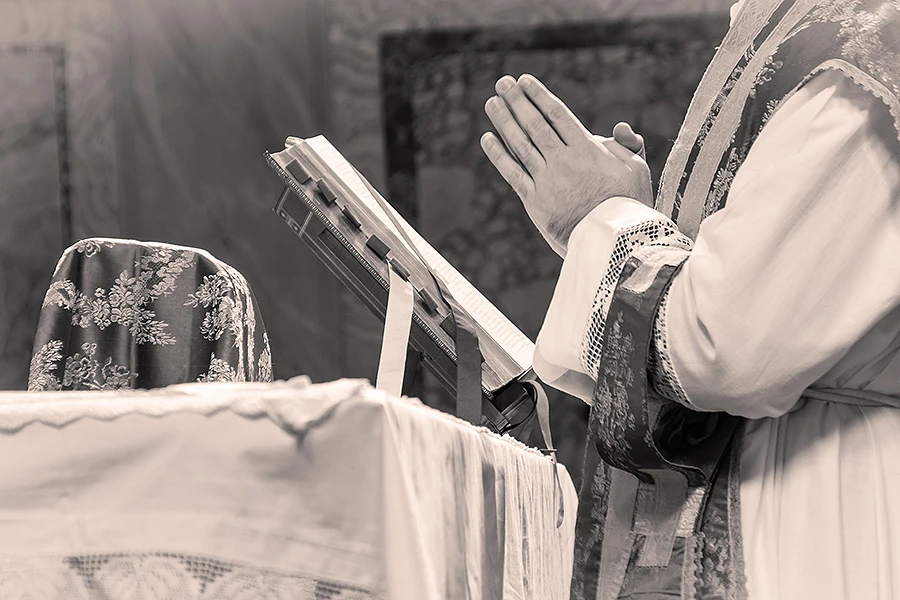
The priest is a member of the Priestly Fraternity of St. Peter, which celebrates a Latin-language Mass in the Extraordinary Form. Fr. Szydlo’s mother, Prime Minister Beata Szydlo, heads a government formed by the ruling Law and Justice party.

She said she and her husband are “very happy and proud,” the Associated Press reports. On Pentecost, Fr. Szydlo will celebrate Mass in Krakow at the Priestly Fraternity of St. Peter’s Church of the Holy Cross.

Poland is known for its strong Catholic identity, and is currently considering legislation that would completely ban abortion.

Thousands of Polish pro-lifers have rallied within the last year, calling on parliament to pass a bill that would allow abortions only to save a women’s life. The legislation would increase the maximum prison sentence for unauthorized abortions from two years to five.

Since 1993, Poland’s abortion law allows abortions only for pregnancies that result from rape or incest, that pose a risk to the health of the mother, or that involve a baby with severe deformities.

Poland is probably the last country in Europe where a picture of the Prime Minister going to her son’s first Holy Mass is possible. pic.twitter.com/dd0QSBNTvm

— Marcin Makowski (@makowski_m) May 28, 2017

[…]

No Picture
News Briefs

Looking forward to 10 years of Summorum Pontificum

June 1, 2017 CNA Daily News 0

Rome, Italy, Jun 1, 2017 / 03:04 am (CNA/EWTN News).- Ten years after Benedict XVI broadened access to the celebration of the Traditional Latin Mass, the document by which he did so is being hailed as a means of closing the rift of division following liturgical changes made after the Second Vatican Council.

“Sometimes there are these polemics, but I think Benedict tried to overcome these polemics, saying that even in the liturgy there is a certain progress … but clearly in full continuity with the tradition of the Church,” Fr. Vincenzo Nuara, OP, told CNA May 31.

Tensions were heightened after the Second Vatican Council’s reforms, and “unfortunately these situations of contrast, of opposition are created” even today, Fr. Nuara said.  

In light of this situation, Benedict XVI’s 2007 motu proprio Summorum Pontificum, which widened access to the pre-Vatican II liturgy, “was not an instrument to divide” or throw further fuel on the flames, he said.

Rather, “it was an instrument to unite. To unite, and to bring again that ecclesial peace that’s needed in this time.”

“I see it as a positive instrument, not negative,” Fr. Nuara said. “It’s not an instrument for going backwards. It’s an instrument to reconnect ourselves in continuity” with different ecclesial styles.

Fr. Nuara is president of the association “Priestly Friends of Summorum Pontificum” and founder and spiritual assistant of the “Youth and Tradition” association.

He is also one of the organizers of an upcoming Sept. 14-17 pilgrimage marking the 10th anniversary of Summorum Pontificum, and spoke to journalists at a working breakfast on the event. 

The motu proprio was issued July 7, 2007, and went into effect Sept. 14 of that year, the feast of the Exaltation of the Cross.

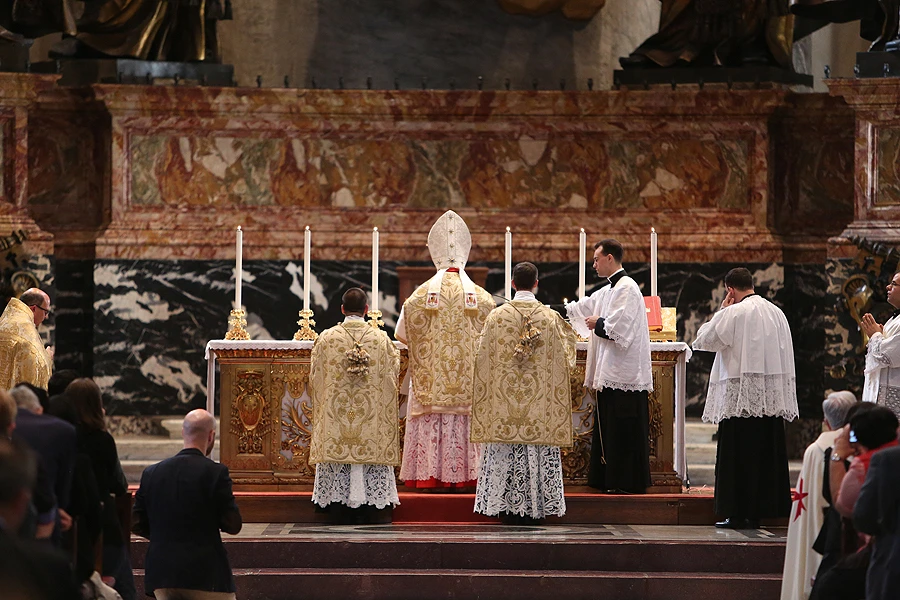
The document established that the post-Vatican II Roman Missal, first issued by Blessed Paul VI, is the ordinary form of the Roman rite, and that the prior version, last issued by St. John XXIII in 1962 and known as the Traditional Latin Mass or the Tridentine Mass, is the Roman rite’s extraordinary form.

In the motu proprio, Benedict noted that the Traditional Latin Mass was never abrogated. He awknowledged clearly the right of all priests of the Roman rite to say Mass using the Roman Missal of 1962, and established that parish priests should be willing say the extraordinary form for groups of the faithful who request it.

Benedict also established that the faithful could have recourse to their bishop or even the Vatican if their requests for celebration of the extraordinary form were not satisfied.

The provisions of Summorum Pontificum for the use of the extraordinary form replaced those of St. John Paul II laid down in Quattuor abhinc annos and Ecclesia Dei.

According to that indult, priests and faithful who wished to celebrate the Traditional Latin Mass had to get permission from their bishop to do so. It could only be for those who requested it, could not normally be said at parish churches, and the bishop could set days and conditions for its celebration.

After the Second Vatican Council, the Missal issued by Bl. Paul VI, also known as the Novus Ordo, was widely adopted. It was widely translated into vernacular languages, and is often celebrated with the priest facing toward the congregation.

However, not a few faithful continued to be attached to the earlier form of the liturgy, and Benedict’s motu proprio was considered a generous response to these faithful.

Benedict wrote in the motu proprio that the two forms “will in no way lead to a division” in the Church’s belief “for they are two usages of the one Roman rite.”

In his letter to bishops accompanying Summorum Pontificum, Benedict also noted that “the two Forms of the usage of the Roman Rite can be mutually enriching.”

Fr. Nuara reflected that since Summorum Pontificum, “those who have permission to use the ancient form of the liturgy have also at the same time rediscovered the sanctity of the new.”

This mutual enrichment is a discovery Fr. Nuara said he himself has made in his 25 years as a priest, during which he has celebrated both the new and ancient liturgical formulas.

But it is also a discovery “that many (other) priests have made.”

“Benedict is a positive man. Benedict, who reflects as a theologian and a pastor, realized that the ancient form that has grown in the history of the Church for years, can give new impetus to the new form,” he said.

The Mass “is the bridge where they meet, because the Eucharist is the point of encounter …  the sacrament of unity,” Fr. Nuara said, adding that what “must be avoided” is that people “take advantage of their particular trend or attention to one or the other liturgy, to create fences of division and separation.”

Benedict himself celebrated the new form of the liturgy “with great dignity,” but before his election as Bishop of Rome was also known to celebrate the ancient liturgy with the same esteem.

What Summorum Pontificum seeks to do, then, is to work for this unity, he said, adding that at 10 years since its publication, his hope is that people from both sides will work toward this goal.

“We want to send, to communicate this message,” he said. “Because the Church is a family, the family of God.”

When the Summorum Pontificum Pilgrimage takes place in September, it will be a privileged time to show this unity, he said.

The event’s first day, held at the Pontifical University of St. Thomas Aquinas, will feature keynote addresses from Archbishop Guido Pozzo, secretary of the Pontifical Commission Ecclesia Dei; Cardinal Gerhard Müller, prefect of the Congregation for the Doctrine of the Faith and president of the PCED;  and Cardinal Robert Sarah, prefect of the Congregation for Divine Worship.

Pilgrims who come will participate in various other activities throughout the rest of the three days, including adoration and a Eucharistic procession presided over by Archbishop Pozzo on Sept. 16, followed by a Pontifical High Mass said by Cardinal Carlo Caffarra, Archbishop Emeritus of Bologna.

Titled “Summorum Pontificum: A renewed youth for the Church,” the pilgrimage is being organized by the “Priestly Friends of Summorum Pontificum” and “Youth and Tradition” associations in partnership with the Coetus Internationalis Summorum Pontificum.

Speaking of the title in comments to journalists, Fr. Nuara noted that a “truly surprising” phenomenon is that the “true protagonists” of this new “season of the Church … are the youth.”

In his letter accompanying the motu proprio, Benedict had noted that while “it has clearly been demonstrated that young persons too have discovered this liturgical form, felt its attraction and found in it a form of encounter with the Mystery of the Most Holy Eucharist, particularly suited to them.”

“Benedict XVI already in 2007 was aware that the new recipients of this liturgy, loved, desired and also sought, were the youth,” Fr. Nuara said.

Pope Francis has also commented on the fact that many of the enthusiasts for the Traditional Latin Mass are young people who never knew it growing up, but encountered it later.  

“Youth can’t be nostalgic for something they didn’t know,” Fr. Nuara said, adding that “this is very nice, because by experience I can say that the youth who draw near to the ancient liturgy of the Church love it” for the reverence and silence of the celebration.

In celebrating the ancient form, “you really understand who is at the center, who the protagonist is,” the priest said, noting that “youth understand very well that this liturgy speaks of … the essential truth of the faith.”

[…]

No Picture
News Briefs

Looking forward to 10 years of Summorum Pontificum

June 1, 2017 CNA Daily News 0

Rome, Italy, Jun 1, 2017 / 03:04 am (CNA/EWTN News).- Ten years after Benedict XVI broadened access to the celebration of the Traditional Latin Mass, the document by which he did so is being hailed as a means of closing the rift of division following liturgical changes made after the Second Vatican Council.

“Sometimes there are these polemics, but I think Benedict tried to overcome these polemics, saying that even in the liturgy there is a certain progress … but clearly in full continuity with the tradition of the Church,” Fr. Vincenzo Nuara, OP, told CNA May 31.

Tensions were heightened after the Second Vatican Council’s reforms, and “unfortunately these situations of contrast, of opposition are created” even today, Fr. Nuara said.  

In light of this situation, Benedict XVI’s 2007 motu proprio Summorum Pontificum, which widened access to the pre-Vatican II liturgy, “was not an instrument to divide” or throw further fuel on the flames, he said.

Rather, “it was an instrument to unite. To unite, and to bring again that ecclesial peace that’s needed in this time.”

“I see it as a positive instrument, not negative,” Fr. Nuara said. “It’s not an instrument for going backwards. It’s an instrument to reconnect ourselves in continuity” with different ecclesial styles.

Fr. Nuara is president of the association “Priestly Friends of Summorum Pontificum” and founder and spiritual assistant of the “Youth and Tradition” association.

He is also one of the organizers of an upcoming Sept. 14-17 pilgrimage marking the 10th anniversary of Summorum Pontificum, and spoke to journalists at a working breakfast on the event. 

The motu proprio was issued July 7, 2007, and went into effect Sept. 14 of that year, the feast of the Exaltation of the Cross.

The document established that the post-Vatican II Roman Missal, first issued by Blessed Paul VI, is the ordinary form of the Roman rite, and that the prior version, last issued by St. John XXIII in 1962 and known as the Traditional Latin Mass or the Tridentine Mass, is the Roman rite’s extraordinary form.

In the motu proprio, Benedict noted that the Traditional Latin Mass was never abrogated. He awknowledged clearly the right of all priests of the Roman rite to say Mass using the Roman Missal of 1962, and established that parish priests should be willing say the extraordinary form for groups of the faithful who request it.

Benedict also established that the faithful could have recourse to their bishop or even the Vatican if their requests for celebration of the extraordinary form were not satisfied.

The provisions of Summorum Pontificum for the use of the extraordinary form replaced those of St. John Paul II laid down in Quattuor abhinc annos and Ecclesia Dei.

According to that indult, priests and faithful who wished to celebrate the Traditional Latin Mass had to get permission from their bishop to do so. It could only be for those who requested it, could not normally be said at parish churches, and the bishop could set days and conditions for its celebration.

After the Second Vatican Council, the Missal issued by Bl. Paul VI, also known as the Novus Ordo, was widely adopted. It was widely translated into vernacular languages, and is often celebrated with the priest facing toward the congregation.

However, not a few faithful continued to be attached to the earlier form of the liturgy, and Benedict’s motu proprio was considered a generous response to these faithful.

Benedict wrote in the motu proprio that the two forms “will in no way lead to a division” in the Church’s belief “for they are two usages of the one Roman rite.”

In his letter to bishops accompanying Summorum Pontificum, Benedict also noted that “the two Forms of the usage of the Roman Rite can be mutually enriching.”

Fr. Nuara reflected that since Summorum Pontificum, “those who have permission to use the ancient form of the liturgy have also at the same time rediscovered the sanctity of the new.”

This mutual enrichment is a discovery Fr. Nuara said he himself has made in his 25 years as a priest, during which he has celebrated both the new and ancient liturgical formulas.

But it is also a discovery “that many (other) priests have made.”

“Benedict is a positive man. Benedict, who reflects as a theologian and a pastor, realized that the ancient form that has grown in the history of the Church for years, can give new impetus to the new form,” he said.

The Mass “is the bridge where they meet, because the Eucharist is the point of encounter …  the sacrament of unity,” Fr. Nuara said, adding that what “must be avoided” is that people “take advantage of their particular trend or attention to one or the other liturgy, to create fences of division and separation.”

Benedict himself celebrated the new form of the liturgy “with great dignity,” but before his election as Bishop of Rome was also known to celebrate the ancient liturgy with the same esteem.

What Summorum Pontificum seeks to do, then, is to work for this unity, he said, adding that at 10 years since its publication, his hope is that people from both sides will work toward this goal.

“We want to send, to communicate this message,” he said. “Because the Church is a family, the family of God.”

When the Summorum Pontificum Pilgrimage takes place in September, it will be a privileged time to show this unity, he said.

The event’s first day, held at the Pontifical University of St. Thomas Aquinas, will feature keynote addresses from Archbishop Guido Pozzo, secretary of the Pontifical Commission Ecclesia Dei; Cardinal Gerhard Müller, prefect of the Congregation for the Doctrine of the Faith and president of the PCED;  and Cardinal Robert Sarah, prefect of the Congregation for Divine Worship.

Pilgrims who come will participate in various other activities throughout the rest of the three days, including adoration and a Eucharistic procession presided over by Archbishop Pozzo on Sept. 16, followed by a Pontifical High Mass said by Cardinal Carlo Caffarra, Archbishop Emeritus of Bologna.

Titled “Summorum Pontificum: A renewed youth for the Church,” the pilgrimage is being organized by the “Priestly Friends of Summorum Pontificum” and “Youth and Tradition” associations in partnership with the Coetus Internationalis Summorum Pontificum.

Speaking of the title in comments to journalists, Fr. Nuara noted that a “truly surprising” phenomenon is that the “true protagonists” of this new “season of the Church … are the youth.”

In his letter accompanying the motu proprio, Benedict had noted that while “it has clearly been demonstrated that young persons too have discovered this liturgical form, felt its attraction and found in it a form of encounter with the Mystery of the Most Holy Eucharist, particularly suited to them.”

“Benedict XVI already in 2007 was aware that the new recipients of this liturgy, loved, desired and also sought, were the youth,” Fr. Nuara said.

Pope Francis has also commented on the fact that many of the enthusiasts for the Traditional Latin Mass are young people who never knew it growing up, but encountered it later.  

“Youth can’t be nostalgic for something they didn’t know,” Fr. Nuara said, adding that “this is very nice, because by experience I can say that the youth who draw near to the ancient liturgy of the Church love it” for the reverence and silence of the celebration.

In celebrating the ancient form, “you really understand who is at the center, who the protagonist is,” the priest said, noting that “youth understand very well that this liturgy speaks of … the essential truth of the faith.”

[…]

No Picture
News Briefs

Rome conference to tackle safeguarding children online

May 31, 2017 CNA Daily News 0

Rome, Italy, May 31, 2017 / 11:05 am (CNA/EWTN News).- An international congress in Rome this autumn will bring together experts to focus on the problem of online sexual abuse of minors and how to better safeguard children on the internet.

The Oct. 3-6 meeting is hosted by the Pontifical Gregorian University’s Center for Child Protection and will conclude in an audience with Pope Francis during which he will be presented a “Declaration on Child Dignity in the Digital World.”

According to a May 31 statement, there are 3.2 billion internet users worldwide, children making up over one quarter of these – about 800 million users. These children and adolescents “are vulnerable to entirely new forms of harm and abuse such as trolling, cyberbullying, sextortion, and grooming for sexual exploitation.”

The international congress “will focus on the latest scientific research and technical understanding in this field, bringing together global experts and decision makers to discuss the risks and challenges of the digital age and its impact on the dignity of children.”

The invitation-only meeting intends to bring in more than 140 academic experts, leaders in business and civil society, high-level politicians, and religious representatives recognized around the globe.

The four days will include keynotes, plenary sessions, workshops, and a discussion forum focusing on the fields of cyber protection, cyber education, and cyber responsibility.

Afterward, the conference will issue a “Call for Papers” with the hope to stimulate innovative research and solutions to the problem of child protection online.

The congress is organized in partnership with WePROTECT Global Alliance, a movement dedicated to changing the handling of online child sexual exploitation around the world, and Telefono Azzurro, a non-profit whose purpose is the protection of minors from abuse and violence.

Fr. Hans Zollner, SJ, president of the CCP and a member of the Pontifical Commission for the Protection of Minors, said in a statement that “the congress provides an outstanding opportunity to exchange knowledge and good practice on risks and prevention as children navigate this new digital world.”

Ernesto Caffo, the scientific coordinator of the congress, added that they “are proud to bring
together many of the world’s leading scholars and researchers in the field of child
victimization.”

Their goal for the conference being to “substantially expand the body of knowledge on these complex issues and generate true global dialogue.”

UK Minister for Internet Safety and Security Joanna Shields said that while our increasingly connected society greatly empowers children, it “also exposes them to risks that compromise their safety and wellbeing.”

“To address these escalating global threats we need a broad coalition of government, faith leaders, academia and industry, all committed to protecting the dignity of children in this digital age.”

The congress follows a day-long seminar held March 23 on the prevention of child abuse, hosted by the CCP and the Pontifical Commission for the Protection of Minors.

The seminar narrowed in on the importance of education in schools and parishes in the safeguarding of children – not only for teachers, but for parents and children – and on the Church’s role.

[…]

No Picture
News Briefs

In historic move, Irish nuns to give up three Dublin hospitals

May 30, 2017 CNA Daily News 0

Dublin, Ireland, May 30, 2017 / 04:07 pm (CNA/EWTN News).- Ireland’s Sisters of Charity will end their management of three Dublin hospitals, the sisters have announced, saying they will hand over control to a group that will not follow Catholic medical ethics.

“Although the Sisters of Charity no longer have any direct involvement in the provision of healthcare services we remain dedicated to preserving the legacy of Mary Aikenhead, whose mission in life was to heal and care for the sick and poor,” Sister Mary Christian, Congregational Leader of the Religious Sisters of Charity, said Monday.

“We believe that the future continued success of St. Vincent’s Healthcare Group can best be ensured by our transferring ownership of the group to a newly formed company with charitable status to be called ‘St. Vincent’s.’ The Religious Sisters of Charity will have no involvement in this new company.”

The decision to transfer control of the three Dublin hospitals had been under consideration for more than two years, James Menton, chairman of the healthcare group, told the Irish state broadcaster RTÉ.

Menton said the developments “reflect the wonderful legacy to Irish healthcare of the Sisters of Charity.”

“The sisters have always held the highest ambitions for the provision of world class healthcare services in Ireland and have successfully achieved and sustained this,” he said.

“They also see the need for the proposed development of the new National Maternity Hospital integrated within the Elm Park campus and want to do everything possible to ensure this vital facility for mothers and babies is developed as quickly as possible.”

The health care group’s origins date back to 1834, when Mary Aikenhead, the founder of the Religious Sisters of Charity, established St. Vincent’s Hospital.

Until this year, the St. Vincent’s Healthcare Group included three hospitals. Two sisters who were on the board of the healthcare group’s board will resign and the congregation will give up the right to appoint board directors.

The long-considered move to give up the three hospitals follows recent controversy over a reported proposal that the sisters be given ownership of a $335 million taxpayer-funded National Maternity Hospital because the congregation owned the land on which it would be built, the campus of St. Vincent’s University Hospital.

The controversy prompted the Irish Minister for Health Simon Harris to say in April that there must be “no question of religious interference” in the new hospital.

The National Maternity Hospital’s board had said the new facility would be run independently and would provide procedures like sterilization, in-vitro fertilization, and some abortions.

The sisters have now said they will not own or help manage the new hospital.

The controversy over the new hospital often included claims from critics that Catholic ethics were not good medical practice.

The sisters’ statement appeared to echo these claims, saying the governing documents of the new health care group so that the Religious Sisters of Charity Health Service Philosophy and Ethical Code would no longer be authoritative.

Rather, it will be “amended and replaced to reflect compliance with national and international best practice guidelines on medical ethics and the laws of the Republic of Ireland,” the statement said.

Some observers predicted further ethical problems if Ireland were to instate permissive abortion laws, a possible outcome of current heavy lobbying from pro-abortion advocates.

Fiona Crowley, Amnesty International’s research and legal manager, responded to the hospital decision. She said her organization had been concerned “at the proposed involvement in women’s health services of a religious congregation whose ethos is inherently antithetical to women’s sexual and reproductive rights.” Crowley said the group hopes that the government will ensure the new group and the new facility “will be free of any religious ideology prejudicial to women’s health.”

Crowley linked the move to the push to overturn the Republic of Ireland’s strongly pro-life Eighth Amendment.  

Amnesty’s Irish affiliate is a part of that effort, in part with funding by international groups like the Open Society Foundations. The foundations see Ireland as a possible model to advance permissive abortion laws in Catholic countries.

The Sisters of Charity have committed to paying millions in financial redress to compensate abuse victims who lived the residential institutions they and 18 other religious congregations managed on behalf of the government in previous decades.

[…]