No Picture
News Briefs

In Rome, Catholic Charismatic Renewal to celebrate 50 years

May 30, 2017 CNA Daily News 0

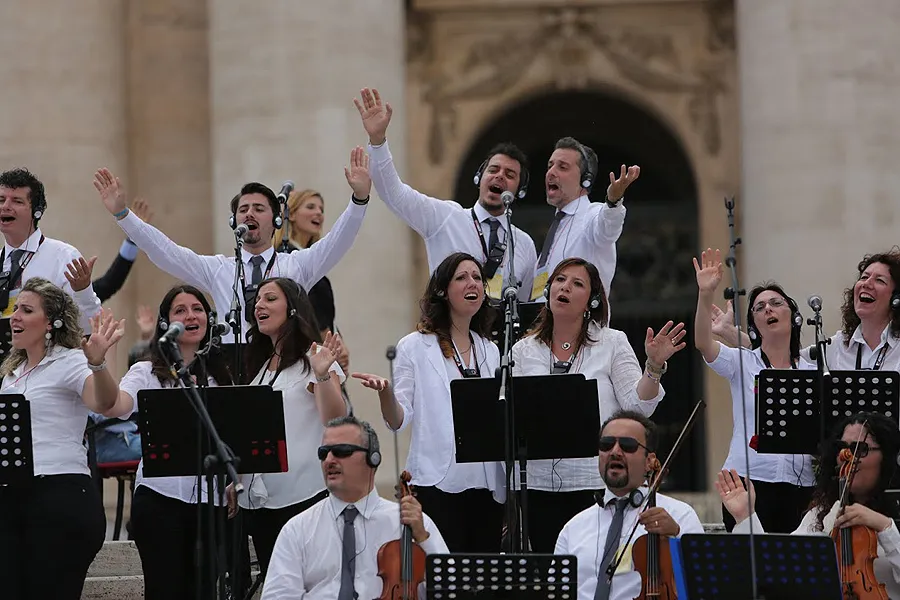
Rome, Italy, May 30, 2017 / 02:09 pm (CNA/EWTN News).- Some 30,000 followers of the Catholic Charismatic Renewal will be in Rome this week to celebrate the 50th anniversary of the movement with meetings and Mass, culminating in a prayer vigil led by Pope Francis in the Circus Maximus.

The May 31 – June 4 jubilee is being organized by the International Catholic Charismatic Renewal Services and the Catholic Fraternity of Charismatic Covenant Communities and Fellowships.

The celebrations are capped on each end by events with Pope Francis, starting with the Wednesday General Audience and ending with Mass in St. Peter’s Square for Pentecost.

On the vigil of Pentecost the Pope will address participants during an ecumenical prayer vigil.

Organizers told journalists Tuesday that they expect participants to hail from some 220 countries around the world. Of these, around 300 are evangelical or Pentecostal leaders.

There will also be 600 priests and 50 bishops present.

The program includes meetings, symposia and workshops in locations across Rome, including testimony by some of the witness of the early years of the charismatic renewal.

Other smaller events throughout will include Eucharistic adoration, concerts, conferences, and street evangelization. Mass on Friday will be said by Cardinal Kevin Farrell, prefect of the Dicastery for Laity, Family and Life.

Salvatore Martinez, president of Italy’s Catholic charismatic association, told journalists May 30 that the Golden Jubilee is a sign of communion, unity, and charity.

“The Pope urges us to be protagonists of history, and to make these charisms a dynamism of love for men of our time,” he said. “Spiritual ecumenism will be the culminating moment, the heart of this spiritual celebration.”

This spiritual ecumenism will not included discussion of doctrine, according of Michelle Moran, president of ICCRS.

Gilberto Gomes Barbosa, head of the Catholic Fraternity, said the work must be about “spiritual communion,” not indoctrination.

Pope Francis met with members of the Catholic Charismatic Renewal at Roman gatherings in 2014 and 2015.

Speaking June 1, 2014, the Pope voiced hope that both evangelical and Catholic charismatic groups, would share the same office as a sign of ecumenism.

His attendance for two consecutive years at the Catholic charismatic movement’s Renewal with the Spirit convocation and his planned participation during this year’s Golden Jubilee celebration show his attention to charismatic movements as a means to foster an ecumenical path and dialogue.


[…]

No Picture
News Briefs

In Iraq, necessity makes priests become engineers

May 27, 2017 CNA Daily News 0

Rome, Italy, May 27, 2017 / 03:02 am (CNA/EWTN News).- Priests in Iraq are helping reconstruct around 13,000 homes in the Plain of Nineveh which have been damaged or destroyed by ISIS so that Christians will have a place to come back to.

To accomplish this, the Pontifical Foundation Aid to the Church in Need (ACN) has created a Commission for the Reconstruction of Nineveh.  

Besides celebrating Mass, the priests also serve as surveyors and obtain electric service and materials for the reconstruction of homes. The first work is being done in places that ISIS occupied for a short time and where there is not a lot of material damage.

One of the members of this project is Fr. Georges Jahola, a Syrian Catholic priest from Qaraqosh.

The priest told ACN that “here in Iraq if the Church doesn’t do these things, who’s going to do them? We have the capacity to act and do the talking, and also the contacts.”
 
The reconstruction of the Plain of Nineveh includes five Chaldean Christian villages: Badnaya, Karamlesh, Telleskof, Bakofa and Telkef, located in the eastern part.

Fr. Salar Boudagh, another member of this initiative, said that $7,000 is needed to renovate a lightly damaged home. To restore a burned home costs $25,000 and to reconstruct a totally destroyed home runs $65,000.

“We have begun the reconstruction of Telleskof and Bakofa, because there damage to the homes is not too serious, as opposed to what is happening in Badnaya where 80 percent of the homes are destroyed,” the priest said.

“Before the arrival of the Islamic State 1,450 families lived in Telleskof, 110 in Bakofa, 950 in Badnaya, another 700 in Telkef and 875 in Karamlesh,” said Fr. Boudagh, who is also the Vicar General of the Chaldean Diocese of Alqosh.

“For these families, the first condition to return to their villages is security.”

The priest emphasized that “our area, the eastern part of the Nineveh Plain, is controlled by a Christian security force, the Zeravani, who are guaranteeing us 100 percent security. It’s an official militia which is paid by Kurdistan.”

In Qaraqosh, 6,327 houses  of Syrian Catholics and 400 homes of Syrian Orthodox Christians must be rebuilt.

Fr. Jahola explained that after the liberation of Qaraqosh from the control of the jihadists, an operation which took place in November and December of 2016, 6,000 houses in the city were photographed. These were divided into sectors and classified according to the level of damage.

“There are very damaged or totally destroyed homes that would would need to be rebuilt from the ground up, burned homes or hit by a missile that can be restored, and finally, there are homes partially damaged the we can renovate with little means,” he said.   

“When we began we had a team of 20 volunteer engineers; now we have 40 and some 2,000 workers ready to begin work. We’re optimists, since electric service is slowly being restored throughout the city,” Fr. Jahola said.

[…]

No Picture
News Briefs

Why this cardinal has high hopes for Pope Francis’ Colombia visit

May 25, 2017 CNA Daily News 0

Rome, Italy, May 25, 2017 / 04:51 pm (CNA/EWTN News).- Pope Francis is headed to Colombia this summer, and one of the nation’s leading bishops believes the visit will be a chance for progress for many countries in the region.

Cardinal Rubén Salazar Gómez of Bogota said the Pope’s message will be relevant for all Latin American countries. The visit is “truly going to help all of us create stronger bonds between the different countries and also to be able to work toward common solutions,” he said.

“I think the Holy Father is aware that Colombia has a certain emblematic character in Latin America, because perhaps it is the best sample of the problems we suffer from on the continent,” said the cardinal, who is also president of the Latin American Episcopal Council (CELAM).

He was speaking to reporters after the CELAM president met with ambassadors accredited to the Holy See.

The cardinal discussed a few details of Pope Francis’ Sept. 6-11 trip to Colombia, saying the Pope is aware of the problems facing Colombia and Latin America.

Cardinal Salazar named poverty as a problem. He also noted the “cancer of corruption”, which Pope Francis has described as “a cancer that has metastasized everywhere, that has infiltrated all areas of society.”

Violence is another scourge on the continent, the cardinal said, calling the papal visit “a balm of hope and consolation.”

“The Holy Father is going to give us courage, make us realize that if we really want to resolve our problems in depth, we have to start with a change of heart,” he said.

Cardinal Salazar told CNA that Colombians “are preparing ourselves well” to receive the Pope.

“Not only because for the people the Pope’s visit is extremely important, but also because we are doing everything possible to prepare ourselves spiritually,” he added.

“There is going to be a very strong evangelization effort on all levels,” he said. “Meetings, forums, catechesis, and preaching are being prepared so the people will be truly prepared, so the Pope’s message falls on good ground and, therefore, produces fruit. We are doing all this and we are very hopeful.”

He also explained some points on the program for the trip.

“The Mass to be celebrated in Bogota will have a special emphasis on respect for, care for and the promotion of life,” Cardinal Salazar said. “There will also be special priority for the disabled, the sick and the elderly to attend.”

“In Villavicencio,” he continued, “the emphasis will be ecological: the whole Amazon region’s problems, and (the need for) respect for the Earth, but also respect for indigenous cultures, ethnic minorities.”

He also discussed the peace process with FARC rebels and other guerrillas, acknowledging that “the situation is not easy, but despite the difficulties there have been, it’s going gradually moving forward.”

“I hope that what we have achieved so far not only won’t be destroyed, but that we can move forward to the point of achieving complete peace,” he said. “There is genuine hope. We’re sure that despite the difficulties, peace will prevail.”

He recognized concern that Colombia is polarized on the “very complex issue” isssue.

“The political polarization that we are experiencing which every day seems to be getting stronger,  deeper, more difficult. We hope the Pope works those miracles that politically are not easy to do,” said Cardinal Salazar.

[…]

No Picture
News Briefs

To meet God we need silence, Cardinal Sarah says

May 25, 2017 CNA Daily News 0

Rome, Italy, May 25, 2017 / 12:01 pm (CNA/EWTN News).- At a presentation for his new book on Wednesday, Cardinal Robert Sarah said that not only does the Church need silence, but the act of being in silence and of listening to God is efficient, in its own way.

“We have seen we must talk, we must do something, we must act; but silence is an act of adoration, it is an act of goodness, so it’s not about doing something that is efficient,” said Cardinal Sarah, prefect of the Congregation for Divine Worship and the Discipline of the Sacraments.

“Silence is (itself) very, very efficient. It gives you the opportunity to see yourself, to listen to yourself, to listen to God.”

Cardinal Sarah said that he wrote The Power of Silence: Against the Dictatorship of Noise because “we need silence, not only regarding the liturgy, but even to read a book, to listen to music.”

“To have rest, you need silence,” he continued, “and silence helps one to see inside oneself.”

People are in a very “awkward” situation, he said. “We never have silence in our lives, from the beginning to the last hours of the day. We listen to rumors, news, radio, the telephone. We need silence, anyway, to meet God and to have a very human life. Man needs to be silent.”

Cardinal Sarah spoke to EWTN May 24 after a presentation on the German edition of his book, given at the church of Santa Maria dell’Anima near Piazza Navona in Rome.

The German edition is unique because it has an afterword written by Benedict XVI, marking one of the rare occasions he has spoken publicly or published any sort of document since his 2013 resignation.

This came about after Benedict read the book, Cardinal Sarah said, when he approached the cardinal to say he would like to write an afterword for the German edition. Silence “is a fountain for my spiritual life,” Cardinal Sarah recalled him saying.

“I think that Pope Benedict is very interested in liturgy. And liturgy needs silence,” he said, explaining that Benedict told him the book had moved his heart deeply. “I said: ‘I’m very honored, Holy Father, please do it.’ It was his own initiative.”

During his presentation, Cardinal Sarah said that “when creation knows how to place itself in silence, God makes his voice heard.”

If we want to combat the modern problem and confusion in the world and in the Church, the solution, he told EWTN, is that “we must pray.”

In addition to prayer, we should uphold the doctrines of the Church and the family, as well as be faithful to the doctrines, he said.

“God will give us the right way to walk, you know: [that] confusion is not a good way to live. If we see clearly the way, then we can walk with security. So I think we must hold firmly to doctrine, and pray.”

He went on to say that is hopeful about the future of the liturgy in the Church, however, because many young priests do believe in and understand the importance of silence, which gives him confidence that there could be change in the future.

In his presentation the cardinal was careful to point out that finding and making silence in our lives and liturgy wasn’t the end in itself, but “a necessary condition” for the true destination, which is communion with God.

The voice of God, he said, is “Jesus Christ, the Word, and it is precisely the mystery of the Incarnation to shed light on the divine-human relationship. And it is in this light that he illuminates also the sense of the liturgy.”

“It is the irruption of divine in the human being,” he explained. “A bundle of light that comes down to us and brightens all our darkness.”

And silence is what creates the environment which makes it possible to “welcome the incarnation.”

Closing, the cardinal said that silence is “the inner climate, the inner attitude, the inner disposition that allows all this and makes the Word of the Church fruitful.”

“To a Church that is likely to become impoverished because it can close itself in parameters of purely human judgement, I humbly allow myself to point the way of silence, so that every believer, but also every celebrating community, opens to God’s initiative and accepts all grace which comes from Him.”

Edward Pentin and Paul Badde contributed to this report.

[…]

No Picture
News Briefs

Ivanka Trump meets with human trafficking survivors in Rome

May 24, 2017 CNA Daily News 1

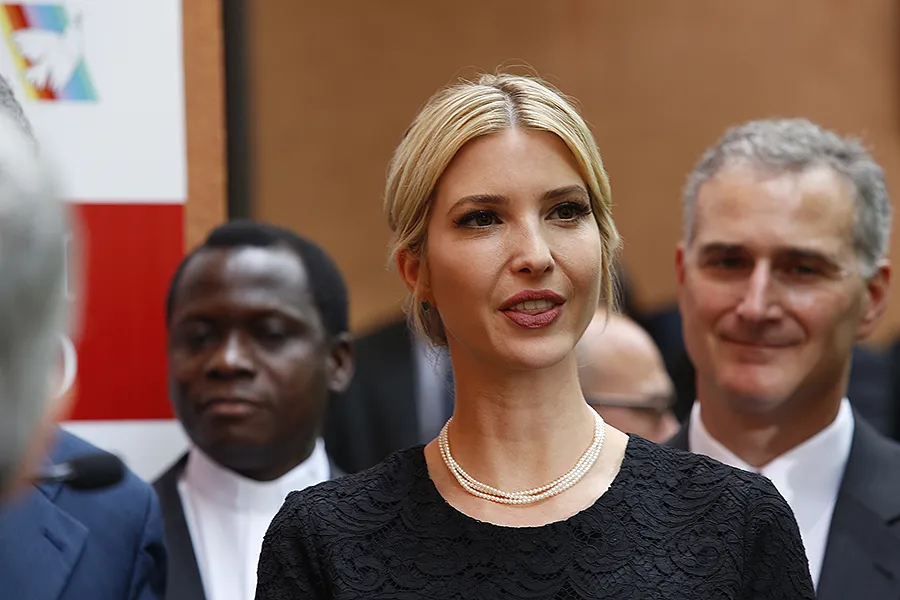
Rome, Italy, May 24, 2017 / 10:30 am (CNA/EWTN News).- After a visit with Pope Francis Wednesday, Ivanka Trump met a group of human trafficking survivors, calling them examples of strength and addressing various legislative ways the U.S. government can help victims.

Ivanka met with a dozen victims of human trafficking from Nigeria and Eritrea. She described them as “remarkable women,” who are “testaments to strength, faith and perseverance in the face of unspeakable adversity and challenge.”

Ivanka is currently accompanying her father, U.S. President Donald Trump, on his first international tour, which also included stops in Saudi Arabia and Israel. Earlier in the day, Trump and Pope Francis had their first highly anticipated meeting.

The encounter between Ivanka and human trafficking victims took place at the headquarters of the Community of Sant’Egidio in Rome’s Trastevere neighborhood.

Founded in 1968 by Italian layman Andrea Riccardi, a historian and former minister in the Italian government, the community focuses their mission on service to the poor and refugees, conflict resolution, and both ecumenical and inter-faith dialogue.

Sant’Egidio is a favorite of Pope Francis, who often praises the community for their work. It has long been involved in campaigns to combat human trafficking – also an important topic for Pope Francis – and has partnered with the U.S. Embassy to the Holy See for several events.

Ivanka thanked the community for their work, which she said “resonates strongly” not just in Italy, “but throughout the world.”

She said that in her meeting with representatives of Sant’Egidio, they were able to discuss several programs “that have been successfully launched and developed over many, many years now.”

These programs, she said, “have provided support and help to those who need it most, whether it’s the elderly or the disadvantaged, and also victims of human trafficking throughout Africa and the whole world.”

“So it was a great privilege to be able to be here and the hear firsthand from these tremendous thought leaders about the work that’s being done, what has worked and what has the potential to work better and to be better executed in the future,” she said, adding that she looks forward to further collaboration.

In comments to journalists following the meeting with Ivanka, two women from Sant’Egidio who work with the trafficking victims said it was an “intense” and “moving” encounter.

Some of the women told their stories, including how they were rescued, how their lives have changed and the situations they are in now.

There was “a lot of interest” on the part of Ivanka, they said, noting that she “listened very carefully” to their stories, but also asked questions about possible legislative initiatives on the part of the government to stop human trafficking, specifically when it comes to women.

Trafficking in the Mediterranean and Africa was mentioned specifically, including the trafficking of children, and a strong emphasis was placed on how the process begins in the countries where the victims originate.

According to the women from Sant’Egidio, Ivanka referred to her brief meeting with Pope Francis earlier that morning, telling the women that he is “a great advocate of your stories” of success and integration.

Ivanka then asked the victims what could be done. They said there is a greater need for communication and the sharing of information in their countries of origin, since many women are tricked into a trafficking ring under the false pretense that they will be moving to Europe for legitimate work, in many cases as a cook or maid.

They said that “public campaigns” are needed, because most women “never imagined” they would end up being trafficked.

In addition to the trafficking of persons, organ trafficking was also discussed, as well as the role of religion in ending violence and achieving peace, the freedom of women and the education of children.

In brief comments to journalists, Sant’Egidio founder and president Andrea Riccardi noted that Ivanka made a strong reference to collaboration with the organization’s projects in Africa, specifically in terms of helping to get legal documents for the continent’s “ghost children,” meaning children who are not registered and therefore have no legal identity, making them extra vulnerable and easy prey for traffickers.

Riccardi said Ivanka also showed a strong interest in an initiative the community is currently trying to push forward in Italy to get legal documents for women rescued from forced prostitution.

Before leaving with her father on his first international tour, Ivanka hosted an anti-human trafficking roundtable discussion at the White House May 17. The event gathered a swath of bipartisan lawmakers and representatives of numerous organizations that deal with human trafficking.  

According to reports, Ivanka spoke during that discussion about the Trump administration’s efforts to combat trafficking not only in the U.S., but throughout the world, telling attendees that “combatting human trafficking and modern slavery is both a moral and strategic interest domestically and abroad.”

That particular roundtable was a follow-up to a February discussion on the same topic, which was also organized by Ivanka. At the time, President Trump said he would use the “full force and weight” of the U.S. government to fight against trafficking.


[…]

No Picture
News Briefs

This Italian nun is helping brides say ‘yes’ to the dress

May 24, 2017 CNA Daily News 0

Umbria, Italy, May 24, 2017 / 03:02 am (CNA/EWTN News).- Italian brides are finding wedding dresses at an unusual spot hidden in the Umbrian hills, where they are able to pick out their special gown – all for the cost of a donation.

Sister Maria Laura at the Augustinian monastery of St. Rita in Cascia, Italy began running the thrifty wedding dress service out of a surplus of donated wedding dresses.

“It gives me great joy to see a young woman who can fulfill her dream of love with a dress appropriate for the happiest day of her life,” said Sister Maria Laura, according to the DailyMail.  

Since about 1950, brides have been making pilgrimages to St. Rita’s to ask for her special intercession in marriage, and would leave their wedding dresses at the monastery in gratitude. Over the years, the monastery has collected hundreds of dresses.

Sister Maria Laura entered monastic life at the age of 28, having previously been a seamstress and designer in Tuscany. She has been running the bridal dress collection at the monastery for the past few years with the help of other nuns, and uses her skills to alter the dresses to fit each and every bride that comes through.

The sewing sister only sees brides-to-be by appointment, who often bring family members and bridesmaids for their opinion. But, Sister Maria Laura noted her special intuition about each of the dresses.

“I know which one she will take; you can tell from their faces,” she said, according to the New York Times. “If you have a dream and we can make it come true, we’ll do our best.”

Currently, they have about three women a week visit to pick out wedding dresses, while up to 10 dresses a month are donated. All of the dresses are offered for free, but they do ask for a simple donation. According to the New York Times, one donation amounted to $1,200.

The Augustinian monastery is a special spot for brides, as St. Rita is the patron saint of difficult marriages. When Rita was 12, her parents forced her into a marriage with a husband who abused her for years.

After her husband died, Rita entered the monastery of St. Mary Magdalene in Cascia at the age of 36, which is now the same place where brides visit to pray for their own marriages, and try on wedding dresses.

As Italy continues in their recession, the monastery considers their service a charity for economical brides who are getting married but trying to keep costs down.

One bride explained that the second-hand gown service was her only option to buy a dress, saying that “if I can’t find it here, I simply can’t afford to buy one.” Another bride explained how she had “felt at home here from the very first minute.”

[…]