No Picture
News Briefs

Polish bishops see continuity between Amoris laetitia, Familiaris consortio

June 9, 2017 CNA Daily News 1

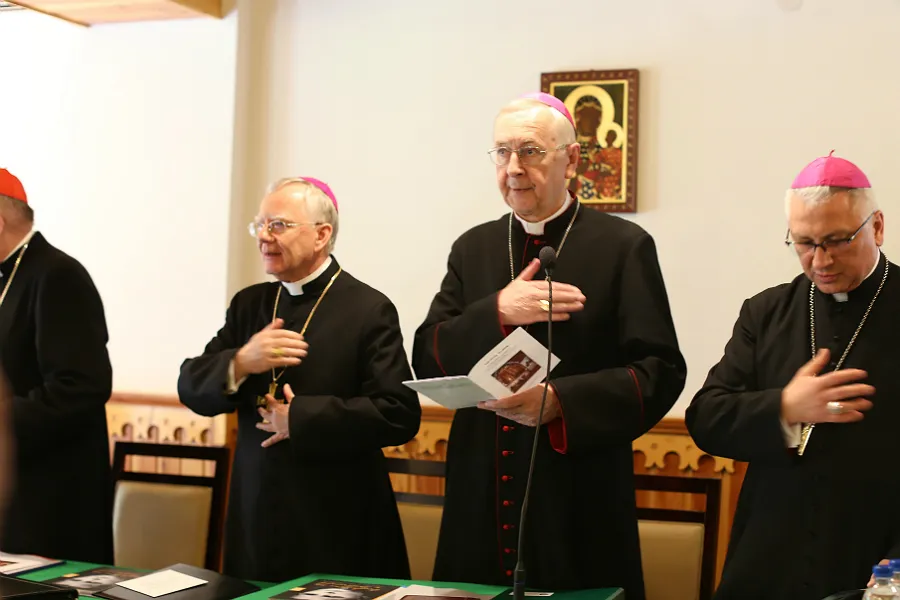
Krakow, Poland, Jun 9, 2017 / 11:18 am (CNA/EWTN News).- The pastoral care of families was one of the key areas of discussion for Poland’s bishops in their latest plenary assembly, which focused on continuity between the teaching of St. John Paul II and Pope Francis.

“The bishops understand that the Church thinks in a linear way; it’s not a change of teaching, but it is in one line,” Fr. Pawel Rytel-Andrianik, spokesman for the Polish bishops’ conference, told CNA June 9.

“In Familiaris consortio and Amoris laetitia you have one line in terms of teaching on the family,” he said, noting that a large chuck of the first day of their June 6-7 plenary focused on the progress of guidelines for the application of Amoris laetitia regarding the pastoral care of families in general, as well as couples in irregular unions.

According to the official communique issued after the plenary assembly, the main idea guiding discussion of the issue was “that Familiaris consortio and Amoris laetitia are in the same line, with this linear understanding of these documents” in terms of Church teaching.

The Polish bishops, who typically meet three times a year in plenary assemblies, held their latest gathering in Zakopane, nearly 70 miles south of Krakow, to mark the 20th anniversary of St. John Paul II’s visit to the town.

Falling within the 100th anniversary of the Fatima Marian apparitions, the plenary was also meant to honor the centenary.

On the first day of the plenary the bishops renewed the Act of Consecration of the Church in Poland to the Immaculate Heart of Mary, which was originally made Sept. 8, 1946, by Cardinal August Hlond of Warsaw and Gniezno at the Jasna Gora shrine in Cz?stochowa.

The renewal of the consecration, especially in the centenary year of the Fatima apparitions, Fr. Rytel-Andrianik said, is  “very, very important for the life of the Church in Poland.” In fact, “more than 70 percent of all parishes in Poland have a special devotion to Our Lady of Fatima.”

Pope Francis’ 2016 apostolic exhortation Amoris laetitia, on love in the family, was also a focus of discussion at the bishops’ assembly. The document has been the subject of varied reception and interpretation, particularly regarding the pastoral care of divorced-and-remarried persons.

The sticking point is whether Amoris laetitia‘s eighth chapter, on accompanying, discerning and integrating weakness, has opened the door for divorced persons who have remarried, and without taking on the duty to live in complete continence, to receive reconciliation and Communion.

Some, like Robert Spaemann and the four cardinals who submitted dubia to Pope Francis regarding the exhortation, have maintained Amoris laetitia is incompatible with Church teaching; and others, like Cardinal Müller, prefect of the Congregation for the Doctrine of the Faith, that it has not changed the Church’s discipline or teaching.

Still others, like Norbert Lüdecke and the Maltese episcopal conference, read ambiguities in Amoris laetitia as opening the way to a new pastoral practice; or even (e.g., Rocco Buttiglione, Cardinal Christoph Schönborn of Vienna) as a progression in continuity with the teaching of St. John Paul II.

As for the Polish bishops, Fr. Rytel-Andrianik said they agreed that what Pope Francis wrote in Amoris laetitia is “the same teaching as Familiaris consortio.”

The bishops, he said, constantly call for “a new approach to these people to try to include them into the life of the Church, in the light of Amoris laetitia and in the light of Familiaris consortio 84.”

In paragraph 84 of Familiaris consortio, St. John Paul II said that the increase in the number of divorced couples who have entered into new unions is a problem which “must be faced with resolution and without delay.”

“I earnestly call upon pastors and the whole community of the faithful to help the divorced, and with solicitous care to make sure that they do not consider themselves as separated from the Church, for as baptized persons they can, and indeed must, share in her life,” he said.

Going on, St. John Paul II said these couples “should be encouraged to listen to the word of God, to attend the Sacrifice of the Mass, to persevere in prayer, to contribute to works of charity and to community efforts in favor of justice, to bring up their children in the Christian faith, to cultivate the spirit and practice of penance and thus implore, day by day, God’s grace. Let the Church pray for them, encourage them and show herself a merciful mother, and thus sustain them in faith and hope.”

Pope Francis expressed much of the same sentiments in Amoris laetitia, particularly on the need to welcome these couples and encourage their participation in parish life, so that they don’t feel stigmatized or ostracized.

Fr. Rytel-Andrianik said “the bishops appreciate, very much, Amoris laetitia,” and see it as “a treasure of the Church that builds on Familiaris consortio.”

Although the Polish bishops have yet to publish official guidelines for the application of Amoris laetitia, as some other bishops’ conferences have, Fr. Rytel-Andrianik said the guidelines are in the final phases of revision, and should come out sometime in autumn.

In addition to the application of Amoris laetitia, other key issues discussed during the plenary were the new pastoral program for the Church in Poland for the coming year, liturgical questions, and cooperation with the state when it comes to protection of minors.

Specifically, discussion on abuse prevention focused on adjusting ecclesial law to match an amendment to the state’s penal code that will go into effect in July, introducing a strict legal obligation to report immediately incidents of sex abuse or consensual sex with a minor to the appropriate authorities.

In terms of the new pastoral program for 2017-2018, the year will be dedicated to the Holy Spirit and the sacrament of Confirmation, according to the Polish bishops’ official website.

[…]

No Picture
News Briefs

This priest and three companions were killed for the faith in Iraq

June 9, 2017 CNA Daily News 0

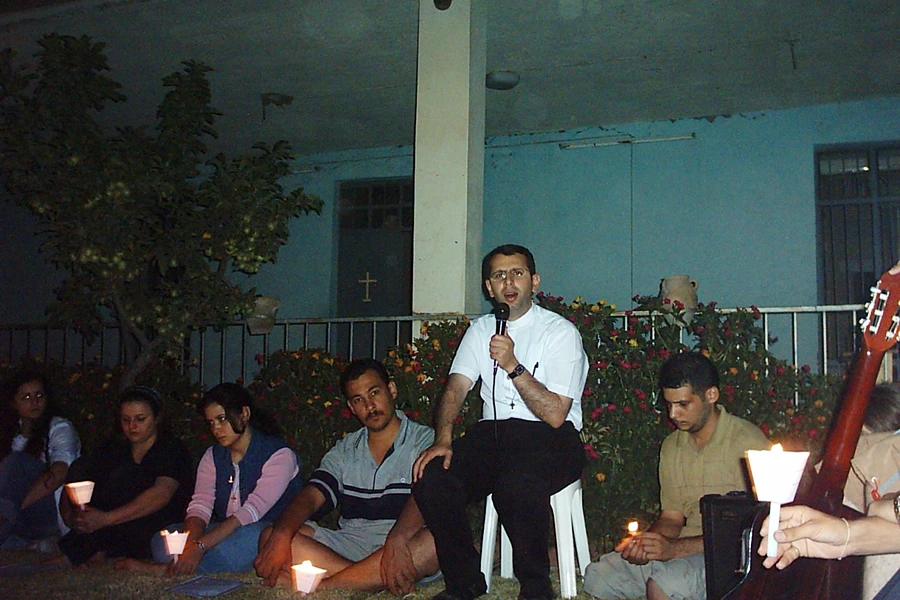
Rome, Italy, Jun 9, 2017 / 03:04 am (CNA/EWTN News).- When Fr. Ragheed Aziz Ganni was confronted by armed men after celebrating the Eucharist at his Chaldean Catholic parish in Mosul, they asked him why he was still there and why he hadn’t closed the church as they had demanded.

“How can I close the house of God?” he responded, right before they shot and killed him, alongside three friends and subdeacons at the parish: Waheed, Ghasan, and Basman.

An Iraqi priest born in 1972 in a town in the Plain of Ninevah, Fr. Ganni moved to Rome in 1996 to study at the Pontifical University of Saint Thomas Aquinas on a scholarship from the pontifical foundation Aid to the Church in Need.

In 2003 he decided to return to Iraq, despite the war following the American invasion, and the persecution of Christians that was taking place. He served at a parish in Mosul until the day of his death, June 3, 2007.

Ten years after his death, Fr. Ganni’s friend and fellow priest, Fr. Rebwar Basa, has written a book about his life and death, and about the ongoing situation of Christians in Iraq. He spoke to CNA at a presentation for A Catholic Priest in the Islamic State, published by Aid to the Church in Need.

The martyrdom and testimony of Fr. Ganni, he said, “is very important for the whole Church, but especially in Iraq.”

“He is an example for all of us to resist and to testify to the Gospel in the midst of the conflict and violence that we have in Iraq. Because we need this kind of witness to reconstruct Iraq, to be able to live together in peace and unity.”

Baian Adam Balla, the wife of Waheed Hanna Isho’a, one of those killed with Fr. Ganni, was an eyewitness to the events of the martyrdom, though her life was spared. In an interview published in the book, she described how they were attacked.

The day of the murder, Fr. Ganni was accompanied by three subdeacons of the parish, Waheed, Ghasan and Basman, as well as Waheed’s wife, Baian.

Driving home after saying Sunday evening Eucharist at Holy Spirit church in Mosul, they were approached by masked men carrying machine guns and told to get out of the car and put their hands up in the air.

“And then they fired and took the car. And I began to cry out. There was a butcher, I do not know, a butcher man. He was a Muslim. They took the car and kidnapped him. But at us Christians …  they shot and they killed them,” Baian recounted.

“Certainly there is an effect. Not an effect on our faith, but an effect on us, because we are not able to go in the church … because we are not able to continue so … How are we able to continue like this? In these conditions? But what do they want from us? What have we done?”

There had been around 10 different attacks on the church before this, though with no casualties. But Fr. Ganni seemed to know that something worse might happen.

The morning of his death, after meeting with some young men for breakfast and renewing his ID, he visited his father and mother, bringing with him a recent photograph of himself, which he gave them.

In an interview recorded in Fr. Basa’s book, Fr. Ganni’s father recalled him saying to his mother that the photograph “is for my funeral, so it is not a worry to you.”

His mother remembered that he said to her, “Mamma, if I die now or I die in 10 years, there is always a death. If they cut my throat with a knife, at the beginning it will hurt badly, but then I will feel nothing more.”

She said to him, “So they have threatened you!” and he answered: “I know that they have threatened the whole Church, but have they threatened me personally?” He was laughing but he didn’t answer the question, she related.

Fr. Basa explained that Fr. Ganni himself described the situation in Iraq during his five years as a priest there as “worse than hell.”

“Now it is even worse than in that period because of the invasion of ISIS and the dramatic situation for the minorities in Iraq, including Christians,” he said.

He added that people should be very careful to distinguish between Muslims and a certain ideology which doesn’t tolerate other religions. This ideology “should be refused”, and Muslims encouraged not to become victims of this ideology themselves.

But as a Christian and a Catholic priest, he explained, he doesn’t feel it is his place to say what Islam is – it is up to Muslims themselves to show they are peaceful.

The solution to the violence, he said, is to respect human rights and human freedom, which is a product of real religion, “not the propaganda that terrorists and fundamentalists want to offer us.”

“Real religion is the religion in which we live in peace and respect each other and the freedom of others to express their ideas, their faith, as they like,” he said.

“What we need is very simple, that they (the government) recognize our human rights, the human rights of the Iraqi people in general, and especially the minorities.”

Continuing, he maintained that Islam should not be the established religion of the nation.

Iraq’s constitution establishes Islam as the country’s official religion and a foundation source of legislation. It adds that no law may contradict Islam’s established provisions, the principles of democracy, or the rights and basic freedoms stipulated in the constitution.

It also guarantees the Islamic identity of the majority of Iraqis, while also guaranteeing “the full religious rights to religious freedom of religious belief and practice of all individuals such as Christians, Yazidis, and Mandean Sabeans.”

The priest maintained that “saying that Islam is the official religion of the State, is an official invitation for the fundamentalists to feel better a superior to others. That could be the start point for terrorism!”
 
Fr. Basa explained that from the beginning of time, Iraq has been made up of many different religions and civilizations, and that is what should be focused on.

His hope, he noted, is that the United Nations, the United States, Europe, and the whole world will help Iraq to overcome present divisions and concentrate on the human dignity and rights of all citizens of the country.

“Because when there are these rights – religious freedom and other kinds of freedoms – I think everybody can live his or her faith as they like and we can live in peace,” he said. “This would be a great richness for Iraq, for the whole region, and for the whole world.”

[…]

No Picture
News Briefs

English bishop issues liturgical norms for Neocatechumenal Way

June 8, 2017 CNA Daily News 0

Lancaster, England, Jun 8, 2017 / 02:58 pm (CNA/EWTN News).- The Bishop of Lancaster issued last week liturgical norms for the Neocatechumenal Way, which apply to all in the diocese, in the interest of “fostering clarity” around the celebration of the Eucharist.

“The Neocatechumenal Way has been active in our Diocese for many years and has been a blessing to many people,” Bishop Michael Campbell, OSA, wrote in a May 28 statement issuing the norms.

“Recent years have seen a growing sense of unease about the multiplication of small community Masses in some of our already quite small parishes and about some of the differences in the way the Mass is celebrated among the communities of the Neocatechumenal Way,” he added.

The movement must celebrate Mass at a consecrated altar and members of the congregation who receive the Blessed Sacrament must consume it as soon as they receive it, Bishop Campell directed.

The Neocatechumenal Way is an ecclesial movement that focuses on post-baptismal adult formation in small parish-based groups. It was founded in 1963 by Spanish painter Kiko Arguello. Today it is estimated that the movement has about 1 million members, in some 40,000 parish-based communities around the world.

Bishop Campbell cited the Second Vatican Council’s constitution on the liturgy and the Neocatechumenal Way’s statutes, and then noted that “every Eucharistic celebration is an action of the one Christ together with His one Church and its therefore essentially open to all who belong to His Church.”

“Here, I exercise my authority to establish norms regarding the regulation of the liturgy, as a way of fostering clarity concerning the celebration of the Eucharist,” the bishop wrote.

In the statement, five liturgical norms were reiterated for the Lancaster diocese.

The first stated that all Masses said on Saturday evenings “must be celebrated at a consecrated altar,” for “If we cannot find find unity among ourselves at the one Altar of Sacrifice, where else will we find it?”

The second norm stipulated that if the Neocatechumenal Way’s Mass is one of a parish’s regularly scheduled Masses, its special character be noted in the bulletin; if the Mass is in addition to a regularly scheduled Mass on Saturday evening, a portion of its collection should go to the parish.

The third norm stated that the pastor has the authority to direct how many additional Masses may be said.

In order to allow for the time it may take to rearrage Mass schedules such that all are said at a consecrated altar, the fourth norm said this condition takes effect on July 1.

The fifth norm concerned the reception of Communion. Bishop Campbell directed that, in accord with the General Instruction of the Roman Missal, the celebrant of a Mass must consume the Body and Blood of Christ prior to distributing Communion, and that communicants are to consume the Body and Blood as soon as they receive the host or chalice. “There is to be no delay,” the bishop emphasized.

Neocatechumenal Way Masses typically direct that communicants hold the Eucharist in their hand and consume the Body of Christ only after everyone has been given a Host.

In a follow-up, clarifying statement issued June 6, the Diocese of Lancaster recalled that the “modest liturgical norms” were issued “by way of reminder” and that they “apply to all in the Diocese of Lancaster – not just to the Neocatechumenal Way.”

It added that the liturgy “belongs to the whole Church” and that even though the Neocatechumenal Way has its own statutes “these do not replace the principles given in the General Instruction of the Roman Missal or the role of Universal or Particular (liturgical) Law of the Church.”

The diocese added that “in no way should these norms be seen as punitive or issued for any other motive than simply reminding all of the liturgical norms of the Church and ensuring that the Liturgy of the Church in the Diocese of Lancaster is governed by the Diocesan Bishop.”

It also referred to a report that a representative of the Neocatechumenal Way, Paul Hayward, had said, according to the Catholic Herald, that “he had asked Bishop Campbell to hold off implementing the new norms until representatives of the Way had had a chance to meet him.”

The Lancaster diocese stated that while a meeting had been requested, “there was no mention at all of any desired-discussion of the norms in this request nor any mention of a request to delay these norms until such a meeting had taken place.”

Bishop Campell’s liturgical norms mirror those issued in March for the Archdiocese of Agaña.

Since the Neocatechumenal Way was founded, the group has sometimes been cautioned by the Vatican for inserting various novel practices into the Masses it organizes. These include practices such as lay preaching, the reception of Holy Communion while sitting, and the passing of the Most Precious Blood from person to person.

[…]

No Picture
News Briefs

Denmark repealed its blasphemy law. Will other nations follow?

June 8, 2017 CNA Daily News 0

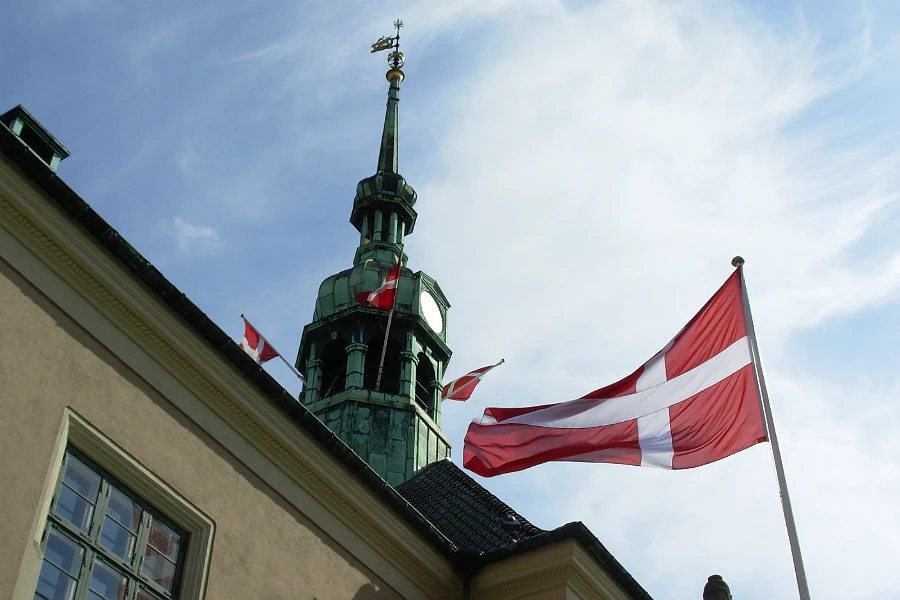
Copenhagen, Denmark, Jun 8, 2017 / 06:01 am (CNA/EWTN News).- The Danish parliament has repealed an anti-blasphemy law at a time when such laws are still used around the world.

“I am glad they are dropping the law. But the law was almost never used in the last 46 years, so it is only a small step,” Paul Marshall, a senior fellow at the Hudson Institute’s Center for Religious Freedom, told CNA. He thought it significant that it had not been used in recent instances of blasphemy against Christians.

“Throughout the world blasphemy laws and accusations are misused, and they are bad even if used as intended,” Marshall said. “They are vague, and are frequently used against dissenters and critics of dominant religious and political views. Most of their use is against anyone accused of criticizing Islam.”

Bruno Jerup, a spokesman on church issues for the Denmark’s Red-Green Alliance political party, characterized the Danish law as “an unnecessary narrowing of freedom of speech” that “sends the wrong signal to the world that it is acceptable to be punished for criticizing God and religions,” the Copenhagen Post reports.

The Danish People’s Party had also supported repealing the law, while the Social Democrats were supportive of the legislation.

In the history of the law, only eight cases were brought under it. Only two sets of convictions have resulted. A 1938 conviction punished four people who hanged up public posters and printed in newspapers mockeries of Jewish belief. In 1946, two people were convicted for mock-baptizing a doll during a masked ball in Copenhagen.

The law was dropped in response to charges filed earlier this year against a man who in 2015 burned a copy of the Quran and posted the video to Facebook. The accused could have faced a sentence of up to four months in prison, but the prosecutor sought only a fine. His trial had been scheduled for June.

While Marshall said he would agree with some opposition to blasphemy, he opposed criminalization, saying that “dragging the modern state into the matter increases hostility and will not have the desired effect.”

He said the repeal of the Danish law would probably have little effect around the world. Some might take it as a sign that they should ease anti-blasphemy laws, while others “would be outraged that a man burned a Quran and was unpunished.”

In some countries such laws “tend to lead to mob and vigilante violence – which is a far greater threat to those accused than is state action.”

Marshall cited the case of Basuki Tjahaja Purnama, a Christian and former governor of Jakarta more commonly known as Ahok, who last month was sentenced to two years in jail for criminal blasphemy in Indonesia. Ahok denied the charge, saying Islamic hardliners’ edited version of his speech wrongly triggered the charges alongside mass protests.

Ahok’s speech accused some of his opponents for misusing a Quran verse to trick people into voting against him.

Marshall was also critical of hate speech laws in Denmark and elsewhere.  

One such law was used in the case against Lars Hedegaard, a Danish Marxist historian and journalist who has made strong criticisms of Islam. In 2011 he was fined on evidence of a recording of his remarks at home which criticized Islamic society, including claims of familial rape. The fine was thrown out in a 2013 decision by the Danish Supreme Court.

“In practice these function as quasi-blasphemy laws, or are ways of silencing unpopular views,” Marshall said.

“I would like to see these ‘hate speech’ laws repealed as well, for the reasons just mentioned, but also because they don’t work – they increase conflict and hatred, not diminish it.”

[…]

No Picture
News Briefs

Are we less free than a 1950s housewife? A look at contraception

June 8, 2017 CNA Daily News 1

Rome, Italy, Jun 8, 2017 / 02:58 am (CNA).- What started as a means to liberate women seems to have taken an ironic twist.

The past century has witnessed the widespread normalization of artificial contraception, with its promise of empowering women and teenage girls to gain freedom over their bodies and fertility, along with a level of sexual liberation equal to that of men.

This freedom has emerged from what is seen as a longstanding culture of misogyny – exemplified by the so-called “1950s housewife” – where women were expected to marry young and dedicate their lives solely to homemaking, placing the comfort and desires of their husbands before their own interests.

Thanks to contraception, its proponents say, women no longer need to be controlled by a society ruled by the expectation to marry and have a family rather than have a career. In other words, with contraception, women can finally achieve their true potential and earn the respect they deserve.

Yet, little more a decade into the 21st century, the sexual exploitation of women and girls is at an all-time high, and the dream of woman’s liberation – as promised by contraception – seems to be falling far short of the reality.

Provocatively-clad women are regularly used in advertising campaigns to sell everything from car insurance to sandwiches. Studies reveal an alarming percentage of young teenage girls being forced or coerced into sexual activity with their boyfriends, with similar trends colloquially seen among adult women. Victims of “rape-culture” at universities are speaking out in increasing numbers about widespread sexual violations on their campuses.

Then there’s the pornography industry, which has so normalized depictions of degrading and aggressive sexual acts toward women that mainstream films and television shows are following suit for the sake of entertainment.

All of this begs the question: Did the 1950s housewife in fact have it better than women of the 21st century when it comes to sexual freedom and respect? And, could contraception be at least in part to blame for the current climate?

One expert who believes that contraception is actually damaging to woman’s freedom in society is Fiorella Nash, a Catholic novelist and researcher for the London-based pro-life group, Society for the Protection of Unborn Children (SPUC).

Instead of liberating women, a culture which readily encourages the use of contraception in fact “undermines female autonomy,” Nash told CNA in an interview last year in London.

“We’ve sort of created a situation where, in order for women to be equal to men, they have to make their bodies a little bit more like men.”

Ironically, this discrepancy between contraception’s promise of freedom and the tendency to make women more susceptible to coercion begins with their fertility. Nash cited the example of the “Pill” which is widely prescribed to treat a host of conditions, from painful periods to acne, while the core causes of these ailments are routinely neglected.

“It suggests that women can’t look after their own fertility,” Nash said. Consequently, many women are uneducated when it comes to their own bodies.

“Fertility is very essential to women’s lives, and it ought to be something that we work with, rather than (something we’re) constantly trying to manipulate,” she explained.

“There is something very patronizing to me about the fact that we circumvent knowledge by giving an artificial way out, almost as if women need a cure for being female.”  

Contraception is often touted for its role in opening the doors to greater sexual freedom. However, rather than being a means of empowerment, Nash explains that contraception, in fact, makes women more vulnerable.

While it is not a new phenomena for men to be non-committal, or to abandon women they have gotten pregnant, Nash said, “the contraceptive culture has given men a license to do that.”

“Why should you stand by a woman if she gets pregnant? If she had only read the instructions on the package, she might not have gotten pregnant. And, there’s always abortion, so there’s a way out, isn’t there?”

“It’s almost allowed men to get out of their responsibilities, a lot more so than women,” she said.

Nash cited the reassurance men often give to their pregnant girlfriends – “I’ll support you whatever you decide” – which, she says, is simply the man passing on his responsibility.  

“They’re really saying: ‘Actually, I can’t be bothered. I’m not going to make any kind of a comment here. I’m going to leave you to go through it. I’ll sort of make reassuring noises, before I disappear into the next adventure.’”

“The contraceptive culture has completely destroyed any respect for women,” which in turn has “left women a lot more vulnerable,” she said.

Going beyond relationships, the acceptance of contraception has wider implications in society as well, Nash suggests: for instance, its role in the breakdown of marriage, the increase of recreational sexual activity, the objectification of women – even violence.

“A book like 50 Shades of Grey would never have been produced in a culture that respects women,” she said. “The whole story behind it – if you can call it a story – is very reflective of a society that does glorify the abuse of women.”

This mentality translates into the so-called “rape-culture” at universities, Nash suggests. On the one hand, she did stress that it is important understand the context of the situation; for instance, taking into account the increased tendency to report assault cases, and a better overall understanding what constitutes a sexual offense, etc.

However: “If you create a culture where women are regarded as objects for sexual gratification, and where there’s always an assumption that that’s what girls want, the onus is always going to be on the women to explain that she’s not interested, rather than onus being on the man to ensure that the woman is consenting.”

Films, like the James Bond franchise, have contributed to the confusion with regard to boundaries and consent, Nash said: for instance, a scene which shows Bond walking into a woman’s shower and having sex with her, without her objecting.

This phenomena places “a huge burden on women,” she said, because it occurs within a culture where men “believe that they have a right to take what they want.”

“If we were really so emancipated, if women were so empowered, it really shouldn’t be happening as much.”

Along with cases of serious assault, women and girls, in turn, are often pressured into sex with their partners. Nash cited a recent study in the United States that revealed a high proportion of teenagers being forced or coerced into sex, often out of fear of losing their boyfriends, having to prove themselves, etc.

“It does raise the question about how much coercive sex, at least, is going on in society…because, they feel the need to keep hold of a boyfriend, because they feel the need to do the right thing by their husband, etc.”

In another example, Nash spoke of the UK TV personality Davina McCall, who reportedly said a wife must satisfy her husband in the bedroom “even if you’re absolutely exhausted.” If not, “he will go somewhere else.” Following the statement, many critics compared McCall to a “1950s housewife.”

“Actually,” Nash said, “that’s not a comment from the 1950s. That is the sexualized 21st century speaking.”

“There’s nothing that odd about her saying that within the context of a very sexualized society that says people have a right to sex, they have a right to sexual gratification, and therefore, frankly, women should just be expected to deliver it.”

“Is this really what emancipation was about? Is this really what the suffrage movement was fighting for a hundred years ago? How much progress have we really made?”

Although she acknowledges the extensive progress that has been made in the area of woman’s rights, Nash nonetheless holds that contraception and abortion have in many ways increased the challenges for women.

“Once you throw ‘choice’ – or, it’s really a false choice – contraception into the equation, then everything’s a woman’s fault.”


This article was originally published May 19, 2016.

[…]

No Picture
News Briefs

Salesians eager to recover relic of St John Bosco’s brain

June 7, 2017 CNA Daily News 0

Turin, Italy, Jun 7, 2017 / 03:01 am (Church Pop).- Police in Italy are investigating the missing relic of the brain of St. John Bosco, which was reportedly stolen from its reliquary on Friday night.

The Salesians, the religious order founded by St. John Bosco, issued desperate pleas for prayers for its return after it was discovered missing June 2.

The reliquary was kept in the Basilica of John Bosco in Castelnuovo, fewer than 20 miles east of Turin. It contained a small piece of the saint’s brain.

“We are very saddened, along with the many devotees … for what happened,” Fr. Ezio Orsini, rector of the Basilica, said in a statement.

“We trust that John Bosco can touch the heart of (whomever committed this act) as he transformed the lives of young he met,” he said. “We are also confident that though you can steal a relic of John Bosco, as has happened, you can not steal John Bosco from us and from the many pilgrims who daily visit these places.”

St. John Bosco was a 19th century Italian priest who had a particular love and apostolate for at-risk and underserved youth. Today, the order serves youth throughout the world primarily in schools, homeless shelters, and community centers.

The basilica, located in the saint’s birthplace, has experienced some other minor thefts in recent weeks, though nothing of spiritual value.

Archbishop Cesare Nosiglia of Turin also commented on the missing relic, saying it was news “you would never want to hear, because it makes us think of a profound moral misery” that someone would steal something of spiritual and devotional value, he told an Italian news source.

The archbishop said that he asked all of his priests to say a special prayer during their Pentecost Masses for the Salesian family and the recovery of the relic, so that it can “continue to be a point of devotion for the millions of faithful who come to the sanctuary dedicated to him.”

He implored whomever stole the relic to return it immediately.

“I also invite those who have stolen the relic to return it immediately, without conditions: in order to close this painful chapter and in order to continue to honor the memory of John Bosco in his native place. “

[…]

No Picture
News Briefs

Irish bishops praise court ruling recognizing the dignity of work

June 6, 2017 CNA Daily News 0

Dublin, Ireland, Jun 6, 2017 / 04:47 pm (CNA/EWTN News).- Ireland’s Catholic bishops have praised a Supreme Court decision in the country that will allow asylum seekers to find work while their status is being decided.

The Republic of Ireland’s supreme court ruled May 30 that laws which indefinitely prohibit asylum seekers from gaining employment were unconstitutional.

The case was brought by a Burmese refugee who was in the asylum system eight years before he was given refugee status. He maintained that being allowed to work was vital to his self worth, dignity, and development.

The judgement considered the right to seek employment as “part of the human personality”, which cannot therefore be restricted to citizens.

Bishop John McAreavey of Dromore, chair of the Irish Bishops’ Council for Justice and Peace, said, “The words of the Court are powerful and profound, and speak to what we should aspire to: ‘This damage to the individual’s self-worth, and sense of themselves, is exactly the damage which the constitutional right [to seek employment] seeks to guard against.’”

He wrote in a June 5 statement that the decision reflects the values of Pope Francis, who has asked all countries for a “generous openness” to migrants, at a time when much of the world is experiencing what has been called a refugee crisis.

Millions of asylum seekers from the Middle East and elsewhere have poured into the European Union and other regions, seeking refuge from violence and economic hardship.

Countries throughout Europe have struggled to accommodate the large number of asylum seekers. Ireland has promised to accept 700 refugees this year, though the migration of some of these has been stalled due to vetting negotiations.

Bishop McAreavey noted that the physical and psychological welfare of migrants has been a concern of the bishops of the Council for Justice and Peace, which has publicly raised issues related to Direct Provision Centres, the Republic of Ireland’s system to care for asylum seekers.

“Removing the ban on work means that people in Direct Provision Centres are more likely to integrate and be part of a rich, diverse and yet more unified society; asylum seekers will recover their self-respect through work and we all will benefit from their skills and gifts,” Bishop McAreavey said.

He encouraged the government to “see the great merit – moral, civic, cultural and economic – of allowing migrants who are already in Ireland to participate and contribute to our society here. I would encourage policymakers to balance the Government’s duty to manage the resources of the State with the parallel duty to treat asylum seekers humanely.

The bishop noted that asylum seekers and their families have a “dear wish to integrate and contribute to the common good of Irish society.”

“I am grateful to the Supreme Court for reminding us, during these unsettled and cynical times, of what we must be about as a culture, namely, a society that both protects the person and allows his or her talents to flourish,” he concluded.

The ban on asylum seekers working was based on several laws, and can be corrected in a number of ways. Thus the court decided to wait six months to allow for executive and legislative fixes before making specific orders.

[…]

No Picture
News Briefs

Ukraine’s Cardinal Lubomyr Husar recalled as a spiritual father

June 6, 2017 CNA Daily News 0

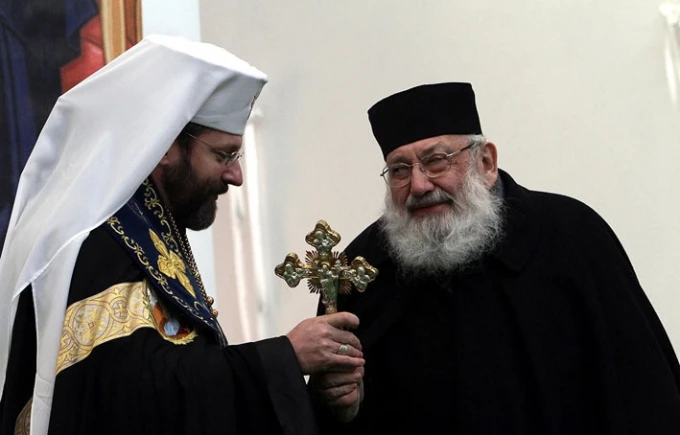
Kyiv, Ukraine, Jun 6, 2017 / 06:02 am (CNA/EWTN News).- Cardinal Lubomyr Husar, Major Archbishop Emeritus of Kyiv-Halych and former head of the Ukrainian Greek Catholic Church, died May 31 at the age of 84.

Among his many accomplishments as priest, bishop, and cardinal, he is well remembered for welcoming St. John Paul II on his visit to Kyiv and Lviv in Ukraine in 2001, when he was the first Pope to visit the former Soviet republic.

Cardinal Husar was born in 1933 in Lviv. He fled from the Soviets in Ukraine with his parents in 1944, first to Austria, and then to the United States in 1949. He studied at St. Basil’s College Seminary in Stamford, Conn. in the early 1950s, and continued his studies at the Catholic University of America in Washington and at Fordham University in New York.

He was ordained a priest of the Ukrainian Eparchy of Stamford in March 1958 and taught at St. Basil’s College Seminary until 1969. From 1966 to 1969 he was the pastor of Holy Trinity Ukrainian Catholic Church in Kerhonkson, N.Y.

He was secretly consecrated a bishop in 1977, and celebrated the 40th anniversary of his episcopal ordination in April of this year. His consecration was unacknowledged publicly until 1996 due to Blessed Paul VI’s Ostpolitik efforts at reaching out to the Russian Orthodox Church and the Eastern Bloc.

Bishop Husar returned to Ukraine in 1991 after the collapse of the Soviet Union and served as spiritual director of Holy Spirit Seminary in Lviv.

The Ukrainian Catholic synod of bishops elected him major archbishop – father and head of the Ukrainian Greek Catholic Church – in 2000, and St. John Paul II made him a cardinal the following month. He resigned his position as in February 2011 at the age of 77.

Pope Francis sent a letter to Cardinal Husar’s successor, Major Archbishop Sviatoslav Shevchuk ofKyiv-Halych, calling the late cardinal “one of the highest and most respected moral authorities of recent decades for the Ukrainian people,” and praising him for his love and warmth, especially the young.

He called Cardinal Husar a father and spiritual guide for his Church, “which he gathered from the ‘catacombs’ where she was forced to flee persecution, and to whom he restored not only the ecclesiastical structures, but above all the joy of her history, founded on faith through and beyond any suffering.”

The Pope expressed his desire to “be among those praying to the heavenly Father” for Cardinal Husar’s soul.

The Divine Liturgy for the cardinal’s burial was held June 5 at the Patriarchal Cathedral of the Resurrection.

Cardinal Husar is greatly admired in Ukraine, where signs have already appeared calling for his speedy canonization.

[…]