No Picture
News Briefs

Venezuelan bishops to meet with Pope Francis in Colombia

September 6, 2017 CNA Daily News 0

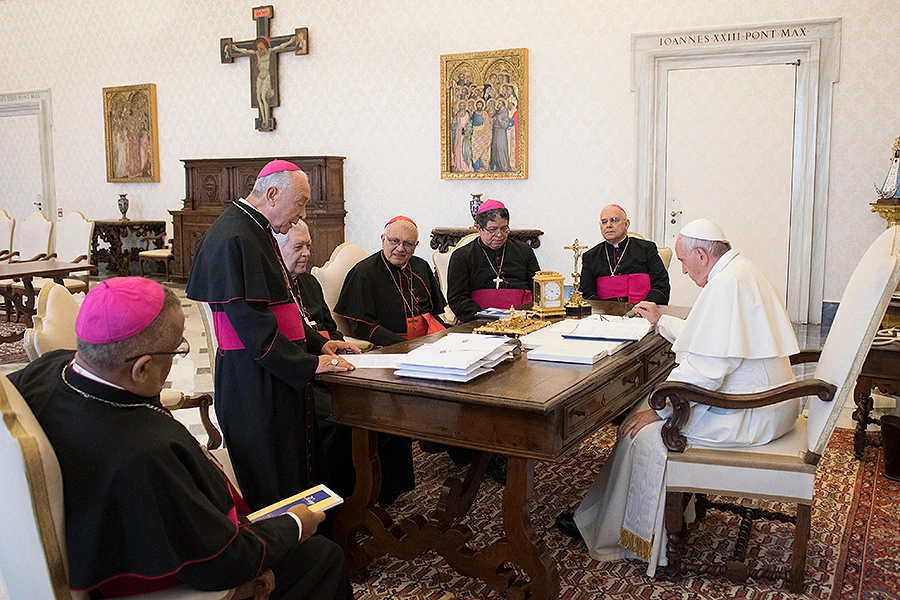
Bogotá, Colombia, Sep 6, 2017 / 02:29 pm (CNA/EWTN News).- Amid a dire political and human-rights crisis in Venezuela, Pope Francis will meet privately with “the bishops of Venezuela present in Colombia” during his trip to South America, according to the director of the Holy See’s Press Office, Greg Burke.

After his plane took off for Colombia Sept. 6, the Pope addressed the accredited journalists accompanying him on the flight and asked them to pray for peace in Colombia and for dialogue in Venezuela.

“I would like to tell you that during the flight we will fly over Venezuela,” Pope Francis said. “And so I’m asking you to pray so there can be dialogue, that there will be stability, with dialogue with everyone. Thanks for your work.”

The Pope also thanked journalists “for this work you’ll be doing to accompany me on this trip which is a little special because this is a trip to also help Colombia to go forward on its path of peace. I’m asking for your prayers for this during the trip.”

Cardinal Jorge Urosa Savino of Caracas told CNA the bishops of Venezuela would “express to the Pope the affection of the Venezuelan people for the successor of Peter.”

“Also, of course, we’re going to converse with the Pope, we’re going to thank him for the support he’s giving to the Venezuelan people in such difficult circumstances that we’re going through, and also we’re going to express our concerns regarding some problems of the current situation,” he said.

Cardinal Urosa noted that Venezuela is currently going through “an extremely serious situation, a situation of poverty, of great distress.”

“Those of us who are inside the country are living through extremely distressing circumstances and great political unrest, of difficulty because of the shortage of food. There are people who simply and quite frankly aren’t eating or are eating very poorly, and the shortage of medicine. It’s shameful that there there is no medicine in Venezuela.”

“But on top of that there is a situation of ongoing turmoil and angst over the trampling of the rights of a great many Venezuelans in various circumstances,” he said.

Venezuela is in the midst of escalating protests and violence, as President Nicolás Maduro has suppressed opposition and democracy activists, and moved to seize legislative power in the country. The results of a July 30 election convened by Maduro have been dismissed as illegitimate by the United States and several other nations, and a burgeoning economic crisis has led to widespread chaos.

Cardinal Urosa reflected on the fact that “a great many Venezuelans have had to migrate due to the adverse circumstances and that that is always something very painful.”

“But thanks be to God those Venezuelans are very concerned about the country, are praying for Venezuela and are united in asking God that we may be able to resolve our conflicts in a peaceful manner,” he stressed.

Despite the crisis Venezuela is facing, Cardinal Urosa encouraged the faithful to not lose hope.

“We have to hope against all hope. We have to certainly trust in God Our Lord and we have to act.”

The archbishop lamented that often “the people get discouraged and don’t feel like taking action anymore. I’m not talking about fomenting violence but about defending our rights and the rights of others.”

The cardinal encouraged the faithful to “organize ourselves, seek to express our discontent, support the people that are suffering, support those who are imprisoned, support the people who are toiling away. We’ve got to do all this and not start complaining in an absolutely ineffective and frustrating way.”

During his homily at a Mass celebrated this week, Cardinal Urosa stressed the critical role of the Venezuelan bishops in opposing government actions for years before the current crisis broke out.

“During 1999, 2000, there was silence, nobody was criticizing the government, no one way saying anything, we Venezuelan bishops pointed to a series of very serious failures by the government and that’s why the president [Hugo Chavez] attacked us,” he recalled.

“Our interest has always been in working for and defending our people,” he pointed out, since “we want to be good shepherds.”

The cardinal then told CNA that the Venezuelan bishops “fulfilled our duty as good shepherds. The good shepherd gives his life for the sheep, the good shepherd seeks the welfare of his sheep, the good shepherd does not want his sheep to be mistreated, and all this we’re doing and we will continue to do because that’s our duty.”

“May the Lord hear our prayers and may we be able to quickly resolve this terrible situation that we’re going through.”

[…]

No Picture
News Briefs

Simplicity and transparency are key to Pope Francis’ Colombia trip

September 6, 2017 CNA Daily News 2

Medellin, Colombia, Sep 6, 2017 / 03:04 am (CNA/EWTN News).- Simplicity and transparency have been key words in the preparations for Pope Francis’ visit to Colombia, according to the secretary general of the Colombian bishops’ conference.

Pope Francis is a “champion” of simplicity through his personal way of life and well as the requirements he makes for an apostolic voyage, Bishop Elkin Fernando Álvarez Botero, an auxiliary bishop of Medellin, told CNA.

“If we just begin with what the Pope asks for during an apostolic visit: a non-armored car, that there be no luxuries, that he’s not going to ride in a luxury car, these things. Even thinking about how to host his delegation and himself, that this not entail exorbitant expenses,” he emphasized.

“I have participated in the preparations and I can disclose … that we have really cut back a lot of things. You can’t cut everything back on everything, some things are required, but many situations in fact have been trimmed down,” Bishop Alvarez added.

The prelate also stressed the importance of transparency, since “this has special significance on a continent where corruption scandals occur every day. Our country is not the exception.”

“I know what goes on in other Latin American countries to a greater or lesser extent, but the issue of  financial management for the Pope’s visit has to be transparent. The accounting always clear and you can see where the resources are coming from,” he said.

“This has been a commitment and we’ve had to sacrifice, for example putting a cap on donations because it is necessary to exercise a certain control.”

A third important point, Bishop Alvarez emphasized, “is that we all feel responsible.”

“If we all work together from our limited means, we can accomplish it. That’s what we call in Colombia the dynamic of ‘everyone puts in.’ If all of us Catholics put in a  minimum amount, a dollar, we all feel responsible,” he pointed out.

The Colombian prelate emphasized that “as the days go by, as we get closer to the Holy Father’s arrival, our expectations are high, there is great hope. The same feeling one has when something important that you’ve been preparing for, all of a sudden it’s right there.”

“At this time we would have wanted to optimize a lot of things that we’ve been preparing in order to receive well the Holy Father’s message, but I believe we’re at a good point and therefore we’re going to receive it with an open heart, eager for his message and knowing that this is the visit of the Successor of Peter among us,” he said.

Bishop Álvarez emphasized that there is “widespread expectancy” in the Colombian people “for feeling the nearness of the Pope.”

“And this is an expectancy common to people of faith, of no faith, because they feel that the Pope interprets human aspirations,” he emphasized.

“This is a very Colombian term among us, colloquial: the Pope is arriving, which means the Pope is near, he is able to understand us, the way he and his audience connect.”

“The prevailing feeling here is that having the Pope close, is to have confidence, it’s to have security, it’s to receive a good message, and everyone wants to feel the nearness of the Pope,” said Bishop Alvarez.

“We should take advantage of this, experience more deeply the closeness not just of a human leader, it’s the closeness of the Successor of Peter, who invites us to strengthen our faith, that is to firm up our  faith and all that it involves. Not just from the liturgical point of view, but also the aspect of the practice of our faith.”

“I believe that the pope’s consistency is admired such that the same consistency ought to appear in the lives of all Christians,” he said.

In addition, Pope Francis’ visit to Colombia has a special repercussion among the bishops, since it brings with it “the strengthening of the faith and communion of the college of bishops as well.”

“I believe that this experience of communion among us and with the Holy Father on the part of the bishops, has been greatly heightened in this preparatory stage,” the prelate said.

Bishop Alvarez also stressed that “Pope Francis is a master of discernment, the discernment of situations. So let us say that the the bishops  place themselves at his side to discern the present time and to determine the pastoral direction that can help us, with all the implications of that discernment.”

“Let us say, before God, whose word, to use a biblical term, lays bare our lives, before him the Church has to mark out the way. And if the Pope goes out in front then we will most assuredly have the way,” he said.

[…]

No Picture
News Briefs

Ahead of Colombia visit, Pope says world needs builders of peace, dialogue

September 4, 2017 CNA Daily News 0

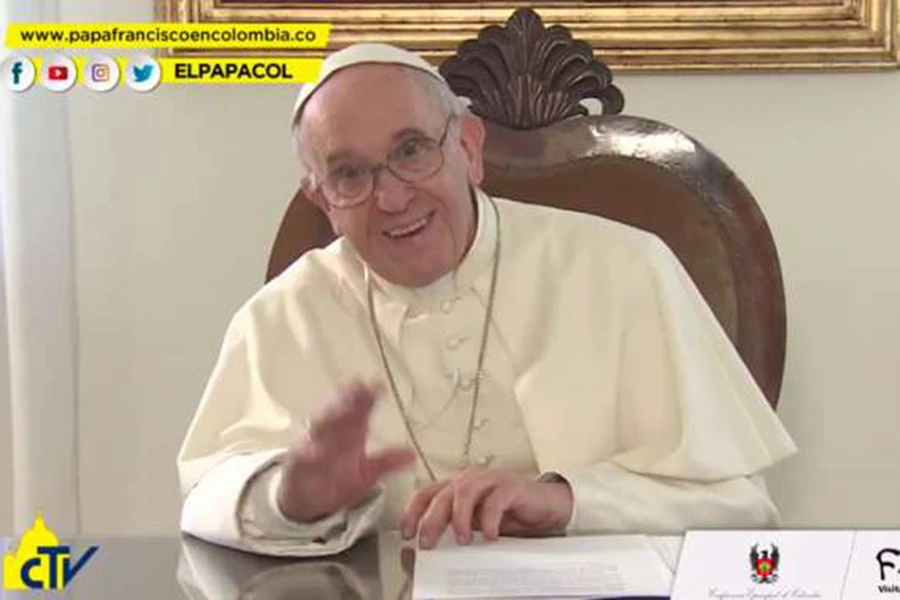
Bogotá, Colombia, Sep 4, 2017 / 01:44 pm (CNA/EWTN News).- Two days ahead of his symbolic visit to Colombia, Pope Francis sent a video message to the nation, telling citizens he comes as a pilgrim of hope, and urging them to continue working toward peace and dialogue in the nation.

“I feel honored to visit this land rich in history, culture, faith, and men and women who have worked with determination and perseverance so that it may be a place where harmony and brotherhood reign,” the Pope said in Spanish in his video message.

Colombians, he said, have worked so that their land might be a place “where the Gospel is known and loved, where to say brother and sister isn’t something strange, but a true treasure to defend and protect.”

Above all, especially given the country’s turbulent past, the Pope stressed that “the world today needs consultants of peace and dialogue.”

The message was published Sept. 4, just two days before the Pope is set to depart on a six-day trip to Colombia. The visit will include stops in four cities, including Bogotá, Villavicencio, Medellín, and Cartagena, and marks the Argentinian Pope’s third tour of South America since his election in 2013.

Pope Francis’ visit also comes just one year after a peace accord was signed between the Colombian government and the country’s largest rebel group, Revolutionary Armed Forces of Colombia (FARC), in August 2016.

After its initial rejection in an Oct. 2 referendum, a revised agreement was signed Nov. 24 and was subsequently approved by Colombia’s Congress on Nov. 30, this time bypassing a popular vote.

Since 1964, as many as 260,000 people have been killed and millions displaced in the civil war.

In his video message, the Pope said he will be coming to them “as a pilgrim of hope and peace, to celebrate with you the faith in our Lord and also to learn from your charity and your consistency in searching for peace and harmony.”

He offered thanks to the president of Colombia, Juan Manuel Santos, and to the nation’s bishops for the invitation to come. He also voiced gratitude to all those preparing for the trip and to the Colombian people themselves, who “welcome me into your land and into your hearts.”

Francis said the theme of the trip, “Let us take the first step,” serves as a reminder that “it’s always necessary to take the first step for any project or activity.”

“It also pushes us to be the first to love to create bridges, to create brotherhood,” he said, adding that to take the first step also “encourages us to go to the encounter of others and to extend a hand, and to give each other the sign of peace.”

Peace, he said, is something Colombia has been searching for and working at for many years. And it’s not just any peace, but “a stable, durable peace to see each other and treat each other as brothers, never as enemies.”

This peace also serves as a reminder that “we are all children of the same Father, who loves us and consoles us,” the Pope said, adding that the Church is also called to contribute to this task in promoting reconciliation with God, each other and with creation, “which we are exploiting in a savage way.”

Pope Francis closed his message voicing hope that his visit would be like “a fraternal embrace for each one of you and in which we feel the comfort and tenderness of the Lord.”

“Dear brothers and sisters in Colombia, I wish to live these days with you with animated joy and with gratitude to the Lord,” he said, and asked that God bless the people of Colombia, and that he “protect your country and give you peace.”

[…]

No Picture
News Briefs

Argentine pastoral letter: ‘Accompaniment’ in marriage must be faithful

August 30, 2017 CNA Daily News 3

San Luis, Argentina, Aug 30, 2017 / 02:10 pm (CNA/EWTN News).- A pastoral letter on Pope Francis’ apostolic exhortation Amoris laetitia by Bishop Pedro Daniel Martinez Perea of San Luis, Argentina is being welcomed as “great news” for its clarity and directness.

Bishop Martinez’ letter, issued on June 29 and sent to the priests of his diocese, is titled “Marriage, new unions, and the Eucharist in chapter 8 of Amoris laetitia.” It addressed confusion generated by some readings of the document and emphasized the importance of “helping married couples to follow God’s plans in their lives.”

“The text is very straightforward,” reflected Dr. Kurt Martens, a professor of canon law at The Catholic University of America. “It’s a very well done pastoral letter with a lot of teaching opportunity; he does use Pope Francis to emphasize the teaching of the Church. I think it’s great news.”

In his pastoral letter, Bishop Martinez called Amoris laetitia “a great catechesis on love in the family, which is the cell of society” and said it is “a great message of hope during our sojourn in this secularized and earthly world.”

He added that marriage has a divinely ordered nature and purpose, and that sacramental marriage is “a public good in the Church, a common good.”

While calling Amoris laetitia “a profound catechesis,” Bishop Martinez noted that “some readings of the exhortation have aroused disquiet, perplexity, and even confusion among the faithful, especially with regard to the possibility of persons united by a previous, valid, sacramental bond and who are currently living, more uxorio, with another person in a new non-sacramental union, accessing the sacraments, in particular Holy Communion.”

To address confusion, the bishop referred to revelation and the Magisterium as “irreplaceable foundations for theological reflection in the Catholic Church,” and the essential context for understanding Amoris laetitia. To explain the exhortation, he referred to the recent Magisterium of John Paul II, and and the writings of St. Vincent of Lerins, St. Thomas Aquinas, the First Vatican Council, the Roman Curia of the early 20th century, and popes from Leo XIII to St. John XXIII.

Bishop Martinez gave criteria for a theological and ecclesial reading of the argument given in his letter, referring extensively to the text of Amoris laetitia. He wrote that “the Holy Father does not intend to manifest a new moral doctrine on Christian marriage.”

The bishop recalled that the bond of a ratified and consummated sacramental marriage “cannot be dissolved by any human power, neither civil nor ecclesiastical, neither by the passage of time after separation (culpable or not; brief or elongated), nor because love no longer exists between the spouses, nor by a personal conviction in conscience, even in good faith. Certainty of personal opinion regarding the invalidity of marriage is not a cause of nullity.”

He explained that the indissolubility of marriage is based the nature of “the union made by God in the spouses…In this is clearly manifested the priority of the existence of the Christian marriage over moral acts and their consequences.”

Bishop Martinez also wrote on the “mysterious grandeur of Christian marriage” and to encourage spouses to be faithful to their vocation in the face of difficulties. He then explained the conditions for receiving Holy Communion, and the Magisterium of Amoris laetitia on the Eucharist, new unions, and pastoral conversion.

Pope Francis encourages a “renewed apostolic zeal” in confronting challenges to married life, he wrote, adding that the complexity of situations must be taken into account so that each person can be accompanied according to God’s plan, without judgement of their subjective imputability.

Before detailing possible modes of accompaniment, Bishop Martinez noted that in every case, the faithful who are separated should be helped “to do everything possible before God to try to reconcile, with an attitude of forgiveness, thus being able to re-establish the interrupted marital life.”

If reconciliation is not possible, the primary canonical solution is to seek a declaration from the Church that the presumed marriage was, in fact, invalid.

If a declaration of nullity is granted, those who are in new unions and who have no impediments may approach the sacrament of confession, contract a marriage,and receive Communion, he taught.

Bishop Martinez laid out three possible points on a path of “accompaniment” in cases when a tribunal does not grant a declaration of nullity.

Until a judgement is found, those who are cohabiting with another person are invited to separate. If they continue to live together they “would be in an objective state of sin,” he said. This makes the reception of Communion impossible, he said, because the state of life contradicts Christ’s union with the Church which the Eucharist signifies and makes present.

If the divorced-and-remarried cannot separate but are willing to practice continence, abstaining from sexual relations, pastoral accompaniment will help them to come to the sacrament of confession and receive absolution, which will open the way to reception of Communion. “To persevere in Christian chastity it is particularly recommended that they approach frequently the sacrament of reconciliation to be fortified by that sacrament’s grace, trusting ‘in the mercy of God which is not denied anyone’ if they have failed in the commitment they have taken on,” he wrote, quoting from Amoris laetitia.

If responding to the Church’s call to continence is not possible, then “although they cannot receive Holy Communion, we must accompany them and exhort them to cultivate a style of Christian life, since they continue to belong to the Church.” Bishop Martinez explained that such persons are not to be abandoned, but to be prayed for and encouraged. He repeated the invitation of St. John Paul II that they listen to God’s word, pray, and attend Mass.

Bishop Martinez encouraged those unable to live according to the Church’s call to adoration of the Blessed Sacrament, noting that the Diocese of San Luis has 12 adoration chapels which they could frequent, where they should be “accompanied to commence a path of growth in prayer, in adoration of the Eucharistic Jesus. The Sacred Heart of Jesus will work wonders in them, because he waits for everyone, to say to them as the Good Shepherd: ‘Come to me, all you who are heavy burdened, and I will give you rest’.”

In each of these ways of pastoral accompaniment, Bishop Martinez recalled that Pope Francis “encourages us to a paternal, pastoral dedication.” He wanted his priests to remember that “our accompaniment consists, precisely, in knowing at all moments that we are loved by God, who is Love and who desires that everyone be saved and come to the knowledge of the whole Truth and to eternal happiness through the Holy Spirit.” He added that it is a “a great work of spiritual mercy” to help form consciences well and in conformity with truth.

Martens told CNA that Bishop Martinez “basically says that Amoris laetitia doesn’t change anything of the previous teaching; and he gets back to the teaching of John Paul II in Familiaris consortio … he does use Pope Francis to emphasize the teaching of the Church. I think it’s great news.”

By omitting a “conscience ‘solution’”, and clarifying that a personal conviction in conscience that one’s marriage was invalid does not render that marriage invalid, Bishop Martinez is “on the same page” as Archbishop Charles Chaput of Philadelphia and the bishops of western Canada, Martens said.

“There is nothing in there in the sense of what you see in the Malta guidelines, or in what the bishops of the Buenos Aires province have said … I think it’s pretty significant that also from Argentina we’re hearing this voice.”

Most of the bishops of Argentina who have written on Amoris laetitia, have interpreted it as allowing the divorced-and-remarried, in some circumstance, to receive Communion without observing continence. The bishops of the Buenos Aires province, as well as Bishop Angel José Macin of Reconquista and Archbishop Victor Manuel Fernández, rector of the Pontifical Catholic University of Argentina, have all offered such interpretations.

Among Argentine bishops, Bishop Martinez is joined by one of his predecessors in the see of San Luis, Bishop Juan Rodolfo Laise, O.F.M. Cap. Bishop Laise was among the first signatories of a Declaration of Fidelity to the Church’s Unchangeable Teaching on Marriage and to Her Uninterrupted Discipline which was publicized Aug. 29, 2016.

Bishop Laise, who led the San Luis diocese from 1971 to 2001, signed the declaration, which reaffirms the Church’s teachings on marriage and morality. More than 879,000 persons have signed the document, among whom are eight cardinals.

In his pastoral letter, Bishop Martinez also reflected on the possible causes of the exhortation’s “distinct interpretations.” He suggested the theological reasons for an inadequate evaluation of the ordinary Magisterium; an erroneous understanding of divine, public Revelation which sees it as a continual unfolding in history,, in which the bishops can ‘constitute’ the deposit of faith, and not merely transmit, conserve, and defend it faithfully; and a dualistic conception of the Church, mistakenly perceiving a separation between dogma and morality, or between a visible institution and a “charismatic call.”

Martens commented to CNA that understanding the nature of Amoris laetitia’s teaching authority and intended purpose is critical to its interpretation.

“You can have infallible teaching proclaimed in a less solemn document,” Martens explained,” and in solemn documents you can have teaching of several levels. An example of this is Evangelium vitae, the encyclical of John Paul II: some of the teaching in there is put at a higher level, and it’s clear from the wording of the text.”

He noted that in Amoris laetitia‘s third paragraph, Pope Francis “says he doesn’t intend to exercise his authentic Magisterium.”

“So what is he doing there? Is he giving a road map to help people, rather than to teach and confirm what the Church has always taught? That’s an important and interesting question.”

Bishop Martinez concluded by exhorting his priests to preach Church teaching faithfully and to help married persons to follow God’s will for their lives.  “Let us remember that the Church, in her mission to announce the Gospel, both today and yesterday, does not resort to adaptation to the ‘spirit of the world’ or to the ‘voice’ of a certain ‘majority’, nor to purely human consensuses.”

“Do not yield to the temptation to give a ‘pastoral pseudo-solution without truth’, so that the faithful may feel understood. Nor should you give a kind of ‘poor, rigorous, and merciless recipe’, as though though the faithful were only a number and not a dear son of God whom, as ministers of grace, we must help by demonstrating the way to eternal Beatitude,” he exhorted them.

“Let us announce God’s Message of Love … with sincere fidelity to Revelation and the words of Jesus Christ. What we are asked to do is be faithful to the ministry which God, through the Church, has entrusted to us,” he stated.

[…]

No Picture
News Briefs

Venezuelan bishops’ conference headquarters ransacked

August 28, 2017 CNA Daily News 1

Caracas, Venezuela, Aug 28, 2017 / 02:19 pm (CNA/EWTN News).- Unidentified persons attacked the headquarters of the Venezuelan bishops’ conference on Friday, stealing several items.

The bishops’ conference reported in two tweets Aug. 25 that “the headquarters  of the Venezuelan Bishops’ Conference were the victim of the mob this morning.”

<blockquote class=”twitter-tweet” data-lang=”en”><p lang=”es” dir=”ltr”>Sede de la Confederación Episcopal Venezolana fue víctima del hampa la madrugada de hoy. <a href=”https://t.co/FNn8FTBfsU”>pic.twitter.com/FNn8FTBfsU</a></p>&mdash; CEV (@CEVmedios) <a href=”https://twitter.com/CEVmedios/status/901187405146882048″>August 25, 2017</a></blockquote>
<script async src=”//platform.twitter.com/widgets.js” charset=”utf-8″></script>

Though details of what happened have not been given, the pictures show the damage was not insignificant, and that various items were stolen from the offices of the Venezuelan bishops in Caracas.

<blockquote class=”twitter-tweet” data-lang=”en”><p lang=”es” dir=”ltr”>Sede de la Confederación Episcopal Venezolana fue víctima del hampa. <a href=”https://t.co/MjjSO8YoAS”>pic.twitter.com/MjjSO8YoAS</a></p>&mdash; CEV (@CEVmedios) <a href=”https://twitter.com/CEVmedios/status/901154413301178373″>August 25, 2017</a></blockquote>
<script async src=”//platform.twitter.com/widgets.js” charset=”utf-8″></script>

This is not the first time a place belonging to the Church in Venezuela has suffered such an attack.

In fact the pressure and aggression have also come down on important church leaders such as Cardinal Jorge Urosa of Caracas who in April this year had to confront a Chavista mob which wanted to attack him after he had said a Mass.

The aggression is also of a religious nature. In March this year, unknown persons entered a church to steal the Consecrated Hosts. The thieves took nothing else.

On Jan. 1, a group of criminals entered the headquarters of the Bishop of Maracay, and stole various equipment and cash kept in the administration’s safe.

Three days before, heavily armed unknown persons entered a Trappist monastery and stole everything they came across.

In July 2016, another group of thieves sacked an educational facility affiliated with the diocese and stole a large amount of equipment and other items and then went on to destroy everything in the place.

Frustration in Venezuela has been building for years due to poor economic policies, including strict price controls coupled with high inflation rates, which have resulted in a severe lack of basic necessities such as toilet paper, milk, flour, diapers, and medicines.

Venezuela’s socialist government is widely blamed for the crisis. Since 2003, price controls on some 160 products, including cooking oil, soap and flour, have meant that while they are affordable, they fly off store shelves only to be resold on the black market at much higher rates.

The country held elections one month ago for a constituent assembly charged with rewriting the constitution, at the behest of the President Nicolas Maduro. The bishops of the country, supported by the Vatican, have spoken out against potential fraud in the elections and to demand an immediate, peaceful, and democratic solution to the problem.

[…]

No Picture
News Briefs

Brazilian priest found stabbed to death in his home

August 26, 2017 CNA Daily News 0

Guarabira, Brazil, Aug 26, 2017 / 04:02 pm (CNA/EWTN News).- A priest in the northeastern Brazilian state of Paraiba was found dead in his rectory Thursday morning, with signs of having been stabbed, according to police.

The body of Fr. Pedro Gomes Bezerra, who was to have turned 50 at the end of this month, was discovered Aug. 24 in Borborema, about 20 miles northwest of Guarabira. His body was found wrapped in sheets in his residence, which was in shambles. According to the local press the investigation found some 29 punctures on his body.

The priest’s car was not in the garage, but there were no signs of the house having been broken into.

“Even though we are in mourning, let us stand united in prayer, professing our faith in the resurrection of the dead. And may the Lord grant eternal rest to Fr. Pedro Gomes,” read a statement from the Diocese of Guarabira, of which Fr. Bezerra was a priest.

The priest’s neighbors reported they did not notice any strange movements in the house. The police were notified by the parish secretary, who was surprised to see the doors closed when she came to work.

The Chief of Police of the Civil Police, Joao Alves, told Portal MaisPB an investigation of the crime will be initiated.

Fr. Bezerra’s death is being mourned by the city of Borborema and by Belem, where he worked from 1999 to 2007.

Belem’s mayor declared three days of mourning and recalled that Fr. Bezerra had left “an importance legacy of faith and social works, such as the Good Shepherd Shelter.”

“We pray to God to comfort his relatives, friends, and the Diocese of Guarabira in this moment of grief and of irreparable loss,” she said.

Fr. Pedro is being buried in Guarabira on Friday.

[…]

No Picture
News Briefs

From addiction to ordination: a homeless man’s journey to priesthood

August 25, 2017 CNA Daily News 3

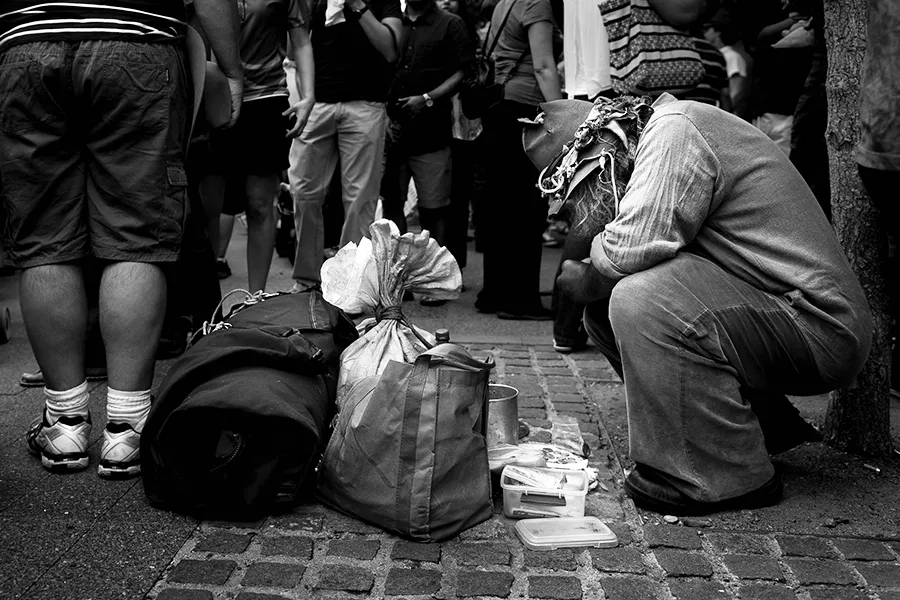
Montreal, Canada, Aug 25, 2017 / 03:25 am (CNA/EWTN News).- Claude Paradis was impoverished and homeless, living on the streets of Montreal, Canada. He struggled with addiction to both alcohol and drugs, with a future so bleak, he considered ending his own life.

He did not end his life, however, and today he is a priest who dedicates his time to serving the physical and spiritual needs of those trapped in poverty, prison and prostitution. 

“The street brought me to the Church and the Church in the end brought me back to the street,” the priest told the Journal Metro.

Last December, as a sign of his closeness and solidarity with the homeless, Fr. Paradis decided to sleep on the street for the whole month, to care for the homeless people there with solidarity and charity.

His hope was that he could accompany people in a difficult situation while also making the citizens of Montreal aware of the harsh reality faced by those living on the street.

Fr. Paradi founded an institution called Notre-Dame-de-la-rue (Our Lady of the Street). Each night, he goes out to bring food and shelter to those living on the streets. He also administers the sacraments, celebrates the Eucharist and even presides at funerals.

The priest is accompanied by one of his co-workers, Kevin Cardin, who also was addicted to drugs, but found help, changed his life and now has a family.

Notre-Dame-de-la-rue has the support of the Archbishop Christian Lépine of Montreal, who has described the initiative as “a presence of the Church to give encouragement.” It also has the support of the city.

“Our mission is especially to give encouragement. Unlike the shelters, we go out to the people, a bit like a door-to-door service. We talk to them, sometimes we pray together before they go back to face the harshness of the street.”

Fr. Paradis knows how hard life on the street is. After growing up in the Gaspé region and working in Cowansville as a nurse, he came to Montreal 25 years ago.

However, he was unable to find a job. “Isolation and despair took hold of me,” he said.

Living on the street, he thought about committing suicide. “I started doing cocaine and then crack,” he recalled.

In a letter posted on the website of La Victoire de l’Amour (the Victory of Love), Fr. Paradis tells how he met the Lord.

“I had the privilege of meeting God just at the moment I was doubting Him. On a little back street in Montreal, abandoned by people, there was nobody there. Passing by the old church, impelled by I don’t know what instinct, I turned back in there.”

At that moment, he had a deep and intense encounter with God. He realized he did not want to die, but rather wanted to become “a man of the Church.” 

Fr. Paradis went on to fight his addictions and now ministers to many people who face the same challenges he struggled with years ago.

The 57-year-old priest has dedicated the rest of his life to serving the poor, saying “on the street is where I want to be, until I die.”


This article was originally published on CNA Jan. 17, 2017.

[…]

No Picture
News Briefs

Chilean court sidesteps constitution, paves way for legal abortion

August 23, 2017 CNA Daily News 0

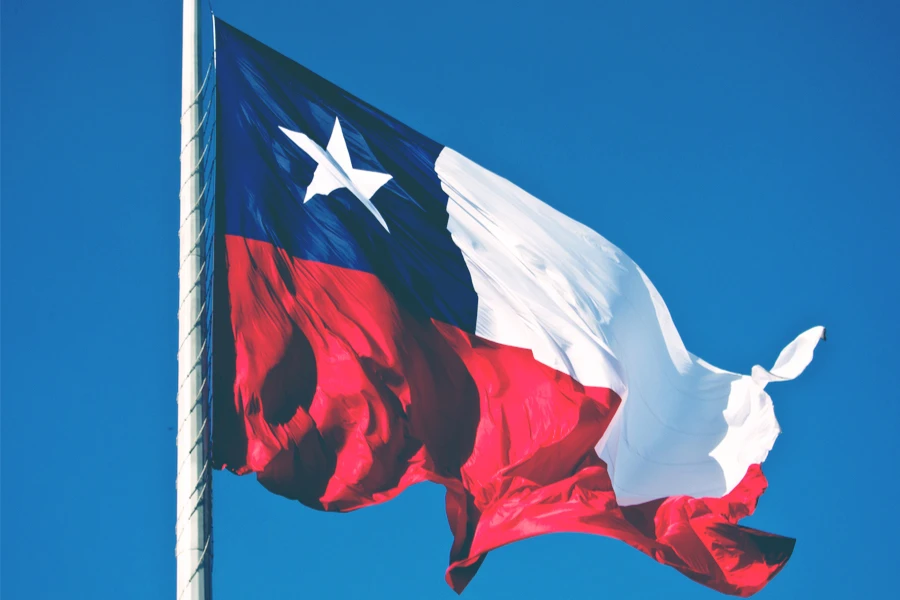
Santiago, Chile, Aug 24, 2017 / 12:25 am (CNA/EWTN News).- A Chilean court ruled this week in favor of a controversial bill that allows abortion in some cases, against the objections of pro-life advocates who pointed to the Constitution’s explicit protections for the unborn.

The bill allows for abortion in cases of rape, danger to the mother’s life, and when the baby is deemed to be “unviable.” The legislation had been promoted for years by President Michelle Bachelet and was recently passed by the Senate.

However, opponents of the bill had challenged it in court, arguing that it collides with the duty in the Chilean Constitution to “protect the life of the unborn.”

After a three-day debate, the Constitutional Court of Chile ruled in a 6-4 vote that the bill did not violate the Constitution. The court will issue its final report next week, allowing the bill to be signed into law.

The country, which is predominantly Catholic, had previously had some of the most pro-life laws of any country in the world.

Patricia Gonnelle, legislative coordinator for Chile is Life, told CNA that it is hard for pro-life organizations to “hold back the pain and grief” at the ruling, which she described as being partly due to political pressure.

“We lament that the court, which listened to all the most powerful medical testimony, did not accept what the doctors said. And there was no doctor in support of the bill who came to show up for that abortion bill, and that gives you a lot to think about, it’s worrisome,” she added.

Still, Gonnelle said, the pro-life movement is not giving up.

“Pro-life organizations will carry on as always, that is, supporting women in situations of conflict and much pain. They will not change their work, as they have always done for many, many years.”

“With an abortion law, it’s getting harder, but life will always win. It’s just a matter of time, and that fills our hearts with joy,” she said.

The standing committee of the Chilean Bishops’ Conference responded to the ruling by saying that “it is the entire society that loses with the legalization of abortion in Chile, even if it be under certain conditions.”

“We are facing a new situation in which some unborn human beings are left unprotected by the State in this basic and fundamental right.”

From a legal perspective, the ruling violates the Constitution’s protections of unborn human life, while from an anthropological perspective that sees human dignity as the “center of social coexistence,” it is “incomprehensible,” the bishops said.

Meanwhile, when viewed through the lens of the faith that a large segment of Chilean society professes, “the resolution that has just been adopted and that declares the abortion bill to be in conformity with the Constitution offends the conscience and the common good of citizens,” they added.

The bishops voiced their gratitude to all individuals, groups, and lawmakers who have worked to protect human life within the legal system.

They pledged to “continue supporting women going through difficult circumstances in their pregnancy, those that decide to continue the pregnancy and those who think that abortion is a solution.”

“The Church, the people of God at the service of all, particularly the weakest, always offers its hands and extends an embrace of service to all people who need peace, protection, support and consolation.”


[…]

No Picture
News Briefs

In Ontario, legal assisted suicide could kill conscientious objection

August 18, 2017 CNA Daily News 1

Toronto, Canada, Aug 18, 2017 / 02:54 am (CNA/EWTN News).- Conscience protections for Catholic hospitals and other organizations could soon come under fire in the Canadian province of Ontario, with one assisted suicide group saying they may challenge this legislation in court.

Deacon Larry Worthen, executive director of the Christian Medical and Dental Society of Canada, warned that it becomes very difficult to defend objections to assisted suicide once it becomes legal.

“Of course our position would be that there should be no requirement for faith-based institutions to be involved in assisted suicide or euthanasia,” the deacon said. “It’s appropriate that not only the institution, but the individuals should be protected as well.”

“I think that conscientious objection in Canada, unfortunately, hangs by a thread,” he told CNA Aug. 17. “There are many of us fighting for this right, but the concern is that in a society where killing a patient is seen to be a compassionate and merciful act, then those who refuse to do it are by definition uncompassionate and uncharitable.”

“When you legalize euthanasia, and killing becomes moral, then that quickly becomes the norm, and those who deviate from that are seen to be outliers and unprofessional in their approach,” he added.

More than 630 people have killed themselves in Ontario under legal assisted suicide, but not at Catholic hospitals, CBC News reports. In Ontario, the law requires hospitals, hospices and long-term care centers that will not take part in assisted suicide to transfer the patient to a facility that will.

But Shanaaz Gokool, CEO of pro-assisted suicide group Dying With Dignity Canada, claims that the current Ontario law “gave an opt-out to basic and essential health care to hospitals that don’t want to provide for the dying.” She said transferring patients may not be easy for people nearing the end of life, the older, the frail, and those already in pain.

Gokool’s group presently says individual doctors or nurses should be able to choose not to take part in assisted suicide, but organizations should not be able to do so.

For Deacon Worthen, however, the rights of individuals and of facilities are linked “very closely together.”

“Doctors, nurses, and other health professionals spend their whole lives being at the beds of the sick, with the point of view of helping them, supporting, them, helping them with their pain. To ask the same individuals then to participate in the deaths of those patients strikes me as being totalitarian and inhumane,” he said.

“No individual should be forced to go against their conscience, especially in something as personal and emotional as the taking of human life.”

Similarly, Deacon Worthen backed the right of faith groups to have facilities to provide health care according to their faith, culture and tradition.

“In order for that facility to have that ethos or mission, it needs to be able to be free to follow the tenets of its faith without any coercion from the state,” he said. “A diverse society would require that.”

Deacon Worthen added that there are good inherent reasons to oppose assisted suicide, dating back to the ancient physician Hippocrates.

When people find themselves wanting to end their lives, he said, “the doctor should be there to provide the support that that person needs, so that they can feel that life is worth living, as opposed to agreeing with them, and participating in ending their lives.”

Ontario health minister Eric Hoskins said he is confident there is sufficient access to assisted suicide.

“We’re obviously monitoring it very, very closely and currently don’t have those concerns in terms of access,” he said, noting that many assisted suicides take place outside an institutional setting. Hoskins said “about half of medical assistance in dying happens at home.”

Dying With Dignity Canada is also challenging rules against freedom-of-information officers releasing the names of facilities that do or do not assist in suicides. The present policy differs from the Alberta province, which requires public health institutions that do not assist in suicides to publish data each week showing how many patients are transferred for medically assisted suicide.

Deacon Worthen also warned of cases where physicians pressured patients into ending their lives, where they had not already made the decision to do so.

“We’ve heard stories where health care practitioners are already suggesting assisted suicide to patients, and even encouraging that, and discouraging family members from aiding the person continuing their lives,” the deacon said.

At least one Canadian medical school has incorporated the issue of conscientious objection to assisted suicide into its admission process. One applicant was asked by an actor to help them commit suicide. When the student recoiled from this, the actor continued to press until finally the student assented.

Some are reportedly advocating that conscientious objectors to assisted suicide should not be allowed in medical school.


[…]