No Picture
News Briefs

High court weighs constitutionality of Chile’s abortion bill

August 17, 2017 CNA Daily News 0

Santiago, Chile, Aug 17, 2017 / 02:47 pm (CNA/EWTN News).- After the recent passage of a bill that would allow some abortions in Chile, the country’s high court is considering whether or not the bill is a violation of the constitutional protections for unborn life.

Chile’s constitutional court began discussion Aug. 16 on the unconstitutionality petition filed by legislators of Chile Vamos, a coalition opposed to the government of President Michelle Bachelet.

Bachelet has made relaxing abortion restrictions a priority of her administration.

Abortion has been illegal in Chile for nearly 30 years. The bill would allow the procedure in cases of risk to the life of the mother, fatal congenital or genetic pathology in the unborn child, or rape. It would allow for objecting doctors to refuse to perform abortions, except in cases when the mother’s life is in danger and there are no other available physicians.

Chile Vamos’ petition against the bill maintains that it transgresses the constitution as well as penal and health regulations.

Angela Vivanco, the lawyer representing the 36 legislators before the high court, told La Tercera daily that one of the arguments presented refers to the personhood which characterizes the child in gestation, who therefore has “dignity, and merits constitutional protection.”

“There is a profound conviction by the legislators and in the constitutional history of Chile that here we are not protecting a mass of cells, but a person,” Vivanco said.

The constitutional court is hearing arguments for and against the bill Aug. 16 and 17, and is expected to hand down its decision Aug. 18.

The Chilean bishops’ conference has addressed a document to the court with five legal observations on the abortion bill.

The bishops stressed the intrinsic value of life, the duty to protect the weakest, the principle of equality and non-discrimination, and freedom of conscience and religion.

It also addressed parental rights, as under the bill a minor under the age of 14 who is seeking an abortion could obtain authorization from a legal representative of her choosing, without any parental involvement.

[…]

No Picture
News Briefs

How the Pope’s Paraguay trip inspired a children’s charity

August 16, 2017 CNA Daily News 2

Asunción, Paraguay, Aug 17, 2017 / 12:03 am (CNA/EWTN News).- In the wake of Pope Francis’ 2015 trip to Paraguay, a local charity was founded in order to help feed dozens of children whose parents struggle to make ends meet.

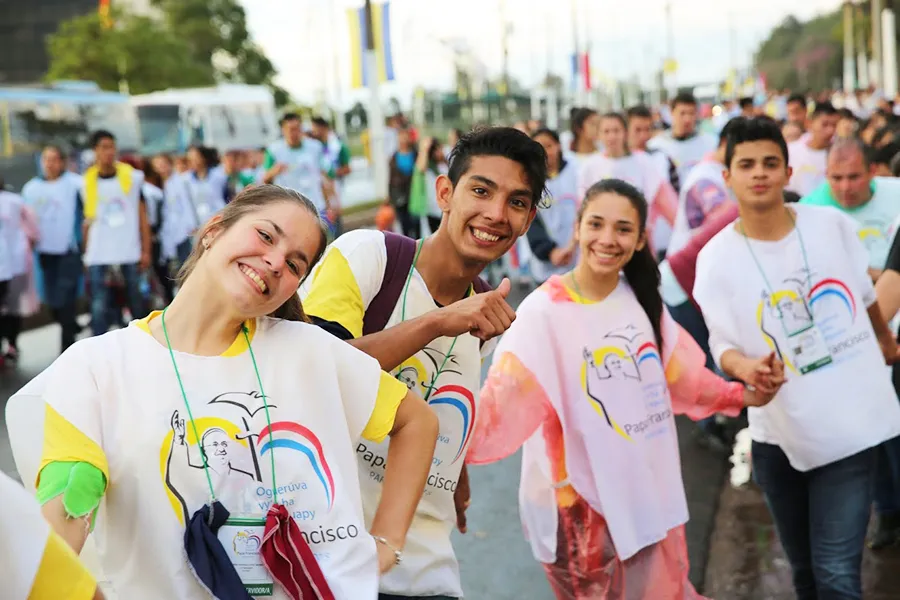
The “Pope Francis Children’s Dining Hall” belonging to the Virgin of the Rosary Parish in the Diocese of Villarrica del Espíritu Santo in Paraguay, marked their first anniversary feeding almost 100 children of people who work part-time; and they hope to have many more anniversaries, giving love and care to the littlest ones.

Both the creation of the dining hall on Aug. 8, 2016, and its name are the fruit of Pope Francis’ visit to Paraguay in July 2015, a tour in which he also visited Ecuador and Peru.

“Two years ago we had Pope Francis’ visit which was very moving for many people. Because of  his  closeness to the people, we wanted to put his name on the dining hall,” parish priest Fr. Claudio Figueredo told CNA.

“The pope with the children is even seen on the logo and we always keep him in our prayers, for his ministry.”

The dining hall is located in the rural town of Natalicio Talavera with a population of about 7,000 and lies 112 miles from Asuncion. Some people work in “changas” – sporadic jobs – and mostly in the country’s main crop, sugar cane.

“We started at zero. We had the house, but not pots, plates or utensils. Everything was borrowed. We started out with a stove and the first day five children came,” the priest said.

“There was a lot of leftover food. But already on the second day 30 children came and from there we steadily have between 60 and 90 children.”

Fr. Figueredo said that they began with the weekly lunches and two days with snacks. Today they are able to provide lunch and snacks every day and they also take care of the children while their parents work.

The children and adolescents cared for range from 1 to 15 years of age and their conditions include  malnutrition, respiratory illnesses, loneliness, and teen pregnancy; and so the social work provides medical care, catechesis, recreational activities and food assistance for families.

“The dining hall is a place where (the children) meet each other and feel good. We do everything possible to take care of their needs,” the priest said.

Fr. Figueredo, who belongs to the Saint Michael the Archangel Congregation of Polish missionaries, came to Peru in 1976. He explained that the dining hall is sustained by donations from the faithful, other organizations and the Secretariat for Social Action of the government of Paraguay.

The house where the Pope Francis Children’s Dining Hall is provided has been equipped little by little with what it needs to function. On other occasions contributions even come for recreation such as a portable pool used in summer or a projector for use throughout the year.

Fr. Figueredo explained that other income that helps pay for expenses is the sale of baked goods that they make in the same facility every afternoon.

“We struggle every day. Our parish is very poor. Every day it’s hard to have what’s needed, but by the grace of God and Providence, we never lack,” he told CNA.

With that enthusiasm and faith in God, the priest said that they are already thinking of developing some craft projects for the children they serve there, “something which could help them develop their talents.”

The Virgin of the Rosary Parish also supports the Virgin of the Rosary Home, where 12 elderly reside, as well as the Saint Anthony of Padua Soup Kitchen in Doctor Botrell town.

[…]

No Picture
News Briefs

El Salvador cardinal says Facebook account posting Romero rumors is not his

August 14, 2017 CNA Daily News 1

San Salvador, El Salvador, Aug 14, 2017 / 04:13 pm (CNA).- A cardinal from El Salvador says that a Facebook account attributed to him is fake, and that he did not post about Pope Francis’ intent to travel to El Salvador for the potential canonization of Archbishop Oscar Romero.

“This is Monsignor Gregorio Rosa Chávez to clarify that I don’t have an account either on Twitter or on Facebook,” the cardinal says in an audio recording released by the Archdiocese of San Salvador.

“There is an account that is being published under my name. I want you to know that it is an account that does not belong to me. So whatever is published there has nothing to do with me.”

Cardinal Rosa Chávez’s statement comes after reports that he had said on Facebook that Pope Francis is hoping to come to El Salvador for the possible canonization of Oscar Romero.

The Facebook post – in English – says, “Pope Francis has confirmed this evening his intention to come to [El Salvador] for the possible canonization of our blessed. I’ll give more information in the next few days. God bless you all.”

Several media outlets, including the Italian ANSA network, Crux, and America Magazine, cited the Facebook post in reporting the Pope’s intent to travel to El Salvador. These stories were later retracted.

Although rumors have been circulating for some time that the Pope will travel to El Salvador for the possible canonization, no trip has been confirmed by the Vatican.

Archbishop Romero was killed due to hatred of the faith on March 24, 1980, in the midst of the birth of a civil war between leftist guerrillas and the dictatorial government of the right. He was beatified in El Salvador on May 23, 2015. His canonization cause is open, however, the final steps necessary for him to be declared a saint have not taken place.


[…]

No Picture
News Briefs

Mexico City archdiocese counters allegations of sex abuse cover up

August 14, 2017 CNA Daily News 0

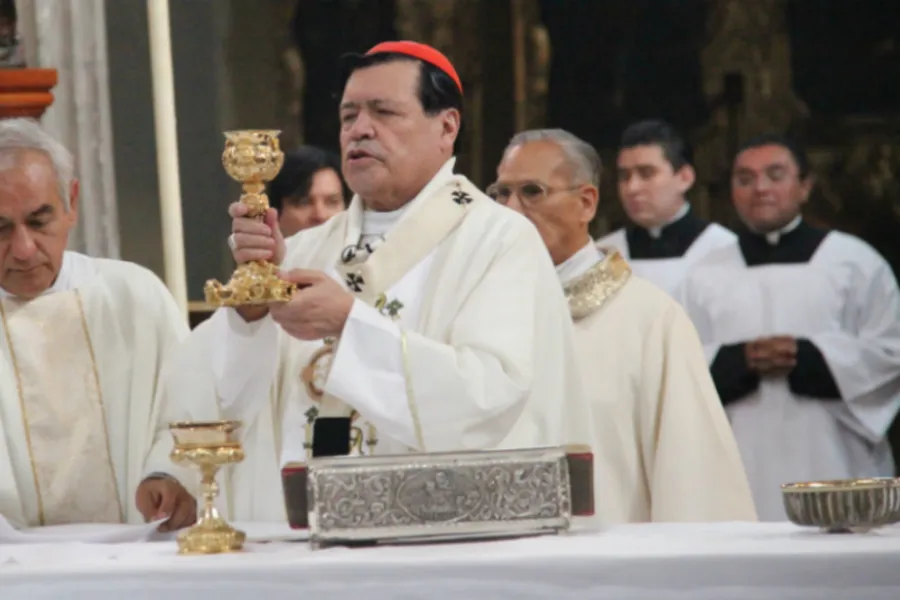
Mexico City, Mexico, Aug 14, 2017 / 02:35 pm (CNA/EWTN News).- The Archdiocese of Mexico has countered claims made by two former priests that Cardinal Norberto Rivera Carrera covered up the actions of pedophile priests, calling the allegations an “orchestrated farce.”

The communications office of the Mexico City archdiocese reported that Cardinal Rivera had spoken to a Public Ministry official July 26, in response to the June 2 complaint filed by  Alberto Athié and José Barba.

Athié and Barba filed their complaint with the Attorney General of the Republic’s Office, accusing Cardinal Rivera of the alleged cover-up of 15 pedophile priests. In the 1990s Athié had brought allegations against Fr. Marcial Maciel, founder of the Legion of Christ. Fr. Maciel was later removed from public ministry after it was verified he had committed sexual abuse and fathered several children.

The Archdiocese of Mexico indicated that Athié and Barba based their charges on a Dec. 19, 2016, news brief  published in El Universal “in which a meeting was made known that the cardinal had with journalists where the archbishop mentioned that during his administration as head of the Primatial Archdiocese of Mexico he had sanctioned 15 priests – not all for the crime of pederasty, but with other illicit acts classified in canon law.”

The archdiocese said that “the complaint against the Archbishop of Mexico was in the sense that he did not promptly report these cases to the authorities, for which they cavalierly accused him of covering up sexual abusers.”

It indicated that during his July 26  meeting with the Public Ministry agent, “the cardinal showed copies of the complaints filed by the Archdiocese of Mexico since 2010, as laid down by law, against alleged criminal acts within the Church.”

The archdiocese added that Cardinal Rivera “made it clear that from the time that Part 2 of Article 12 of the Law on Religious Associations went into effect Aug. 19, 2010, – which obliged ministers of worship and their representatives to inform the appropriate authority of the probable commission of crimes – he was aware, through some of his episcopal vicars, of the probable commission of six presumably criminal acts.”

According to the archdiocese, the cardinal instructed his episcopal vicars “immediately to notify the appropriate authorities, which was done, as attested by the copies he exhibited, and which demonstrated that he did not commit the crime of cover-up.”

The archdiocese also publicized the dates of the six complaints, along with the authorities to whom they were made, and the officials who made them.

Cardinal Rivera “explained that the other nine cases were prior to the cited law going into effect, and only one had to do with the crime of pederasty, and the accused is being criminally prosecuted with the information that the archdiocese provided to the authorities,” the Mexico City archdiocese stated.

“The other eight cases were for conduct penalized by canon law, such as financial fraud, mistreating an adult, breaking the seal of confession, and others that were made known to Church authorities,” it said.

The Archdiocese of Mexico stated that in response to “the express question of the Public Ministry agent, the Archbishop of Mexico acknowledged as his own the statement referred to in the news brief published by El Universal Dec. 19, 2016; clarifying that, however, since it was an impromptu interview, he failed to specify that not all the mentioned cases had to do with the crime of pederasty – as the former priests Alberto Athié and José Barba maliciously indicated.”

In addition, “he said that regarding the cases made known to the civil authorities, it was solely their responsibility to follow up on them, and of the ones the church authorities knew about, they were concluded with the suspension of priestly ministry, since in those cases the ecclesiastical sentence is given by the Pope and is made known through the Congregation for the Doctrine of the Faith.”

[…]

No Picture
News Briefs

Dominican Republic priest arrested on suspicion of killing teen

August 10, 2017 CNA Daily News 0

Santo Domingo, Dominican Republic, Aug 10, 2017 / 03:21 pm (CNA/EWTN News).- The National Police of the Dominican Republic have arrested a priest on suspicion of killing a teenager, who was allegedly sexually abused by the cleric while serving as an altar boy.

Fernely Carrión had been missing since Aug. 4, after a taxi driver dropped the 16 year-old boy off with Father Elvin Taveras.

The boy’s body was later found along the road of Los Mina, a sector located outside of Santo Domingo Este. Reports indicate the teen was stabbed several times.

The young man had lived in El Torito and Villa Mella, where the priest said Mass at Our Lady of Lourdes Parish. Carrión began altar serving for Father Elvin at 10 years-old.

Father Elvin has also been accused of molesting Carrión, who was allegedly being paid by the priest to remain silent.

According to a Aug. 8 statement by the Archdiocese of Santo Domingo, the priest will be suspended from his duties and the church will fully cooperate with the police.

The victim’s family was distraught over the news but relieved that the priest is in custody and that plans for legal action are underway, reported Hoy Digital. 

Freddy Carrión, the father of the victim, said “justice has been done, a person who does something like that is not a priest,” according to the news agency.

Prosecutor Olga Diná Llaverías said that both he and the victim’s family will be aiming for “the maximum sentence of 30 years” for the priest.

[…]

No Picture
News Briefs

Cardinal calls eviction of Venezuela’s legislature ‘unacceptable’

August 10, 2017 CNA Daily News 1

Caracas, Venezuela, Aug 10, 2017 / 10:57 am (CNA/EWTN News).- Cardinal Jorge Urosa Savino of Caracas expressed Tuesday his “astonishment and rejection” of a series of measures that violate the “will of the sovereign people” in Venezuela.

In an Aug. 8 statement, the cardinal denounced the eviction of the country’s legislature, the National Assembly, from the Federal Legislative Palace. The action was taken so that the constituent assembly, tasked with rewriting the constitution, could meet in the building.

“This is a measure astonishing for its violence and arbitrariness,” Cardinal Urosa said, adding that it “violates the will of the people who sovereignly elected the National Assembly in the December 2015 elections.”

The National Assembly is controlled by the opposition, while the constituent assembly was elected July 30 in a process that has been denounced as fraudulent by bishops, much of the international community, and the company in charge of the election’s electronic voting system. Pope Francis had spoken against the constituent assembly’s inauguration.

“In addition to being an invalidly constituted body, since it was not convened by the people, and whose election is suspected of fraud, the constituent assembly doesn’t have the right to appropriate the seat of the National Assembly. That is arbitrary and violent, and, therefore, unacceptable.”

The Archbishop of Caracas also denounced that “in recent weeks, we have seen how the Constitutional Chamber of the Supreme Court of Justice has levied very severe sanctions against several opposition mayors. Yesterday, the removal from office, imprisonment, and disqualification for the mayor of Chacao, Ramon Muchacho. And the mayor of El Hatillo, David Smolansky is summoned for tomorrow. Both, as well as the mayor of Lecheria, have been charged with contempt by the court.”

“Those sanctions go against the rights of those mayors and the will of the people who elected them to govern their towns,” he stated.

“The search for peace and understanding that President Maduro preaches is impeded by those measures. We ask that these actions be stopped and that an atmosphere of calm be created which will allow for finding solutions to the country’s current political, economic and social crisis,” the cardinal concluded.

The constituent assembly approved a decree Aug. 8 that it will control all the branches of the Venezuelan government.

The decree was issued a day after the National Assembly said it will ignore the decisions of the constituent assembly, and two days after a small group of soldiers and civilians from Carabobo state declared themselves in rebellion against Maduro’s government, seeking “to restore constitutional order” in the country.

Since April 1, more than 120 people have been killed in protest’s against Maduro’s government.

The countries of the Bolivarian Alliance for Latin America – which includes Ecuador, Bolivia, Cuba, and Nicaragua – met in Caracas recently to express their support for the constituent assembly, while another 17 nations of the Americas met in Peru to state that Maduro’s government is a dictatorship.

Among the signers of the ‘Lima Declaration’ are Argentina, Brazil, Chile, Colombia, Mexico, Costa Rica, Panama, Paraguay, Canada, and Uruguay.

The declaration states that its signatories do not recognize the constituent assembly; it fully supports the democratically elected National Assembly, only recognizing the acts that this body approves and validates; and it condemns the violation of human rights, the violence, and the repression occurring in Venezuela.

[…]

No Picture
News Briefs

Brazilian archbishop robbed at his residence

August 10, 2017 CNA Daily News 0

Maceio, Brazil, Aug 10, 2017 / 06:01 am (CNA/EWTN News).- While preparing to travel to Mass on Saturday morning, Archbishop Antonio Muniz Fernandes of Maceio was robbed at gun point, along with a deacon and a caretaker at his residence.

“I was targeted by a gun, but the assailants didn’t physically assault anyone. They took personal possessions and the little money that was in a wallet,” Archbishop Muniz said, according to the website of the Archdiocese of Maceio.

“I’m fine and tranquil. It is normal for anyone who goes through this to be surprised, but thanks be to God nothing serious happened.”

Archbishop Muniz was to be picked up at his house in the Farol neighborhood of the Brazilian city by Deacon Inaldo Pitta in order to celebrate Mass at Saint Goncalo parish. While the deacon was talking to the caretaker, three armed men approached them in a vehicle at around 5:40 am Aug. 5.

The robbers took the deacon and caretaker inside where the archbishop had also surrendered, and forced the caretaker onto the ground. While two men held the group at gun point, the third ran through the house looking for money and valuables.

The criminals stole scented oils, the men’s pocket money, and the archbishop’s cross and cell phone, but they broke the phone and left it in the street during their escape.

During a moment of distraction, the deacon was able to hide away in the bathroom, where he called the police. Once the robbers realized he was missing, they fled.

Security secretary Paulo Domingos Lima Junior reported the case is already under investigation, but no leads into the thieves’ identity have yet been reported. Colonel Marcos Sampaio, commander of Military Police, also visited Archbishop Muniz to offer his support on behalf of Lima and Governor Renan Filho.

[…]

No Picture
News Briefs

Venezuelan bishop confirms fraudulence of national elections

August 8, 2017 CNA Daily News 2

Barinas, Venezuela, Aug 8, 2017 / 03:40 pm (CNA/EWTN News).- The crisis in Venezuela continues to deepen following elections for a Constituent Assembly promoted by President Nicolás Maduro. In its wake, the bishops of the country, supported by the Vatican, have continued to speak out against potential fraud in the elections and to demand an immediate solution.

Bishop José Luis Azuaje Ayala of Barinas, vice president of the Venezuelan bishops’ conference, told CNA that “we are very concerned about the complexity of the situation,” above all “because of the moral degradation that has become present in the country”.

“There is large number of murders that, according to the national prosecution, number 121 deaths. Of these, 25 percent have been murdered by state security agencies and 40 percent by groups of armed civilians sympathetic to the regime. There are more than 1,500 wounded, with more than thousands of detainees, in little more than three months, give us a hellish picture that would make any person or institution worried about the lives of citizens at stake,” he said.

The United Nations Human Rights Office has warned the Venezuelan government over the use of excessive force against protesters.

This disorder and violence is compounded by the shortage of basic products such as food and medicines, which “is the result of dire governmental policies, of improvisation, of wanting to establish a socialism without humanist support, and in its place generating a permanent conflict plagued by corruption and violence,” Bishop Azuaje said.

Bishop Azuaje affirmed that all bishops of the country “hold the hope that every historical process has a beginning and an end” and “that what happens to us is not eternal, but is destroyed as time goes on.”

They hope this despite the fact that “every day we feel a greater repression of the government through different state agencies or feel the same because of fear of certain groups. It is forming anarchy in the national consciousness; that is to say, the government has lost its legitimacy and authority. “

Constituent Assembly and constraints

The prelate, like much of the international community, is convinced of fraud in the electoral process surrounding elections for a national Constituent Assembly. The process, initiated by president Maduro, will reform the constitution, which opposition members claim will allow Maduro to remain in power indefinitely.

The assembly has already removed from office attorney general Luisa Ortega Diaz, who had faulted the Supreme Court for stripping the National Assembly of its powers earlier this year.

Last week, the company Smartmatic, which is in charge of the electronic voting system for the election, confirmed manipulation of electoral results. The bishop said the revelation “did not surprise us.”

“On Sunday, (July) 30 we could see with our eyes the small amount of participation of the people in the elections. In this way a direct, informal, but experiential audit was made,” Bishop Azuaje explained.

“Before six o’clock in the afternoon, which was the official time of the closing of the tables, they sent to speak to one of the observers of the National Electoral Council to announce that there was an immense number of people remaining still in lines to vote, and the vote was extended for another hour. I looked at the school that is close to the diocesan see where there were several polling stations and it looked like a desert. They tried to make people believe that there were voters at that time. There’s nothing more false. It was like the official announcement of fraud. “

After the election it was also revealed that “before and during the electoral process for the Constituent Assembly, many people were coerced and threatened to attend to vote,” the bishop alleged. “There are stories of people who are Catholic, are part of our parishes and almost confess as if it was an unforgivable sin. They feel humiliated because their freedom was restricted, because they were threatened that they would lose their jobs or benefits received in government social programs.”

Dialogue with the Vatican

The representative of the bishops’ conference also addressed the Vatican-facilitated dialogue process that took place in Venezuela between the government and the opposition in 2016.

The bishop denounced the result, which, in his view, was “a feigned dialogue on the part of the government without any result.”

“Whenever this government has been at a disadvantage, it has asked to dialogue; but it is always the same script: dialogue is used to gain time and advance in the hegemonic project of totalitarianism and greater power of domination,” Bishop Azuaje stated.

“The Holy See has always been aware of what is happening in the country. Both Pope Francis and the Secretary of State, Cardinal Parolin, are well informed of the country’s problems. They have always been willing to mediate, and we thank them for that. But experiences teach. The failed dialogue from October to December has taught that governments like this should have something more than goodwill,” he said categorically.

He also explained that the Vatican “has reminded the government that to return to the table, they must meet what was agreed in October of last year, and recorded by Cardinal Parolin in the letter addressed to President Maduro on December 1, 2016.”

This agreement states that the government must commit to “setting an electoral calendar, the release of political prisoners, the opening of a humanitarian channel to let food and medicines enter the country, and return power to the National Assembly.”

In the bishop’s view, the real solution involves a “total change of government through general elections,” perhaps beginning with a “possible transitional national government.”

However, he noted that “we can not forget justice” because “there has been a lot of corruption and violence” and “those responsible for this can not be left uninvestigated.”

Regardless of how the political situation in Venezuela ends, however, Catholics must live and react to the crisis facing the country.

“A Catholic in the circumstances in which we live must be a permanent promoter of the common good, solidarity, and justice,” the bishop advised. “It is not a time of adornment, but of going to the essential, to what gives meaning to life.”

“We know that nothing will be easy when working for the good of the community, but Christians have a fundamental belief that the power of the Holy Spirit  not only animates us, but enlightens us in walking the narrow way. It offers us challenges, but it gives us its strength, ” Bishop Azuaje said.

“I want to go to the extreme of saying that a Catholic can not bend to exclusionary policies, much less the voracious corruption that exists in the country, nor raise his hand to strike the dignity of anyone,” he added.

“A committed Catholic should demand justice and work for the people with the sole interest of developing processes that lead to greater human development,” the bishop urged.


Alvaro de Juana contributed to this report.

[…]