No Picture
News Briefs

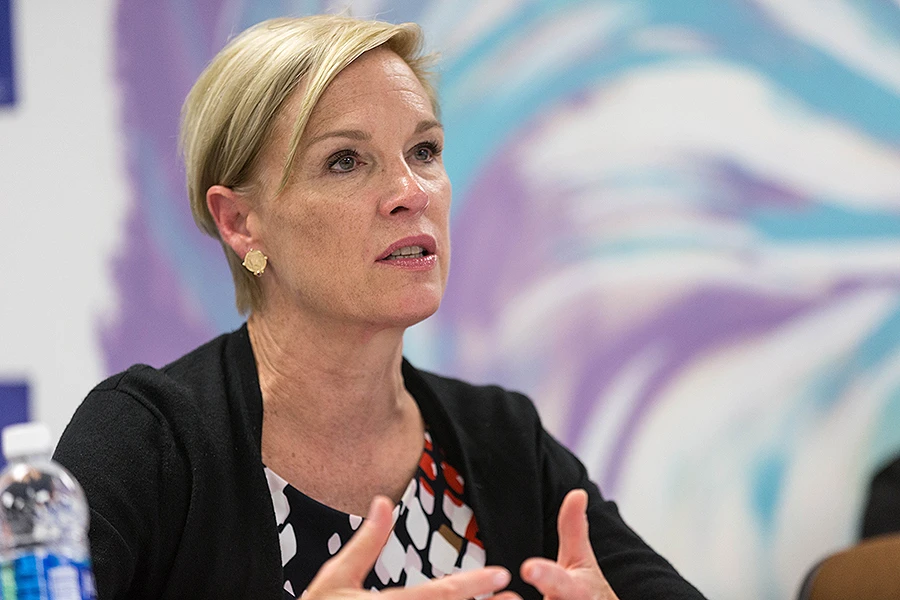
Cecile Richards reportedly stepping down from Planned Parenthood

January 24, 2018 CNA Daily News 1

Washington D.C., Jan 24, 2018 / 01:38 pm (CNA/EWTN News).- Cecile Richards, who has served as president of Planned Parenthood since 2006, will soon step down from her position, two sources told BuzzFeed News on Wednesday.

No official timetable has been reported, but a statement provided to BuzzFeed said that Richards “plans to discuss 2018 and the next steps for Planned Parenthood’s future” at next week’s board meeting.

During Richards’ tenure as president, Planned Parenthood increased the number of abortions performed each year by more than 10 percent. In 2006, Planned Parenthood performed 289,750 abortions. In the 2016-2017 report, that number had grown to 321,384.

On average, Planned Parenthood carried out 320,000 abortions each year during Richards’ tenure.

Despite increasing the number of abortions during her time as president, the overall number of patients treated by Planned Parenthood fell. In 2006, Planned Parenthood treated 3.1 million people. In 2016, that number had dropped to 2.4 million, yet the amount of federal funding received by Planned Parenthood had increased by over $200 million.

A total of 32 clinics closed during the last year alone.

During Richards’ time as president, a series of videos produced by the Center for Medical Progress alleged that Planned Parenthood was involved in the sale of aborted fetal parts for profit.

The Department of Justice is currently investigating Planned Parenthood due to these videos. Congress earlier launched several investigations.

It is not immediately clear what Richards plans on doing next, although her memoir, titled “Make Trouble,” will be released in April.

News of Richards’ departure was well-received from former Planned Parenthood clinic worker Abby Johnson. Johnson, who now leads the pro-life group “And Then There Were None,” comprised of former abortion clinic employees, said in a statement that she would enjoy hearing from Richards now that she’s left the industry.

“As an organization that helps abortion workers leave their jobs, we would love to hear from Cecile as she exits the industry and have her hear from former workers of her organization – and how leaving was the best choice they made,” said Johnson.

“As a powerful woman, she has the capability to stand up for women and their families without relying on the lie that abortion is good for them and empowers them, when in reality it does the opposite.”


[…]

No Picture
News Briefs

‘Rambo’ the hero: Dog saves nuns from fire

January 23, 2018 CNA Daily News 0

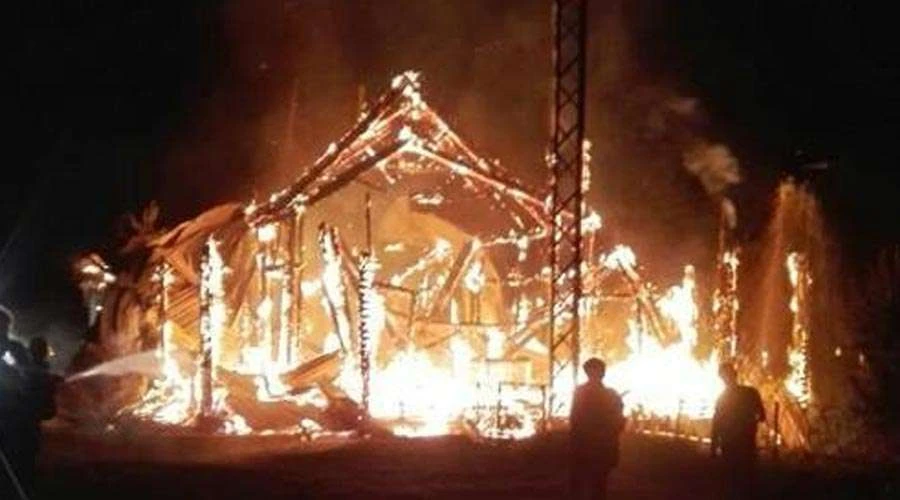
Santiago, Chile, Jan 23, 2018 / 07:00 pm (CNA).- A dog named Rambo lived up to his “action hero” name, when his barking alerted sleeping religious sisters that a chapel next to their convent was on fire.

In the early morning hours of Jan. 20, a fire destroyed the Virgen de la Candelaria Chapel in the town of Calafquen, Chile, next to the home of the Carmelite Missionary Sisters. Police suspect the fire was caused by arson.

Fr. Alejandro Gutiérrez is the pastor of San Sebastián Parish, which includes the chapel. The priest told Radio Bio Bio that the sisters’ house “is attached to the church. A much greater tragedy could have happened there. If  the dog’s barking hadn’t alerted them, the fire would have spread to the convent and we would be grieving over a much more serious incident.”

Gutiérrez explained that the chapel was 80 years old, and the sisters there worked mainly in education.”

“This just creates a new opportunity to continue serving Jesus Christ and to strengthen our faith,” he priest  said.

Sources told ACI Prensa that around 3:30 in the morning, a group of masked arsonists broke a window in the rear of the Church, and threw a fire bomb inside.

Four companies of firefighters arrived on scene to fight the flames. With the help of the neighbors they were able to keep the fire from spreading to the nuns’ convent.

The Panguipulli fire chief, Rodolfo Zúñiga, told Cooperativa Radio that the electricity to the church was shut off at the junction box, so the fire was probably caused by a third party.

“Unfortunately for our town, as residents of Panguipulli, [arson] is already becoming routine, the situation is lamentable, but once again today we had one of the most beautiful chapels in the area reduced to rubble,” the fire chief said.

The Carmelite superior, Sister Maria Daniela, told Radio Bio Bio that she believes the fire was intentional, though the sisters had not received any kind of threats.

“We are women of peace. This is an oasis of peace,” the religious explained. “I never would have imagined that people would come and do something bad.”

Sister Maria Daniela sent a message to those responsible: “you need to place yourselves in the presence of God. It’s sad to know that there are people dedicated to doing evil, because the world does not progress with evil.”

Two other churches in Panguipulli were also recently attacked and two received threats, including the town’s main church.

This article was originally published by our sister agency, ACI Prensa. It has been translated and adapted by CNA.


[…]

No Picture
News Briefs

Pope Francis: Final verdict on Sodalitium founder likely ‘unfavorable’

January 22, 2018 CNA Daily News 0

Vatican City, Jan 22, 2018 / 09:01 am (CNA/EWTN News).- On board the papal flight from Lima to Rome, Pope Francis said a final Vatican verdict on the founder of the Sodalitium Christianae Vitae, accused of serial sexual and psychological abuse, will soon be available, and likely won’t be in the founder’s favor.

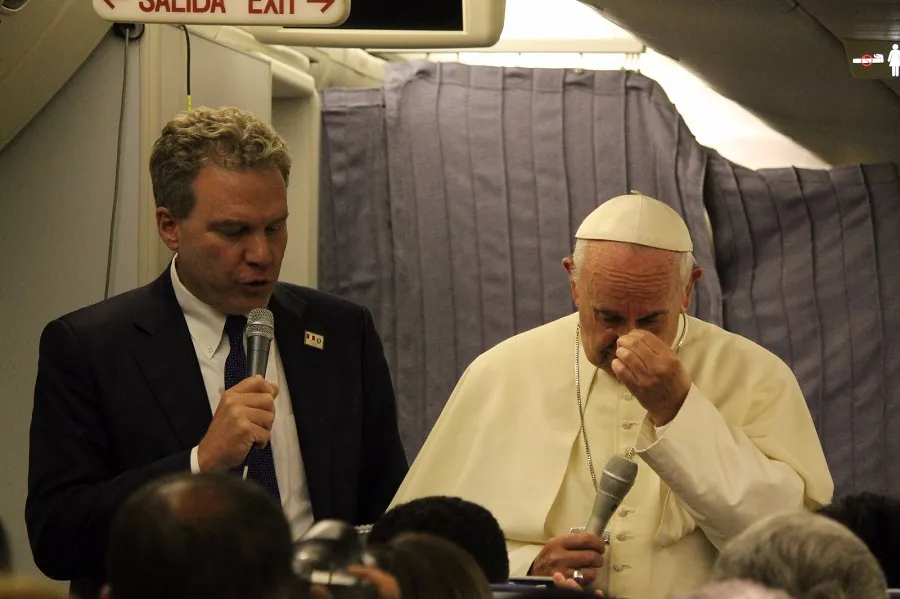
Speaking to the 70 some journalists on board his Jan. 21 LATAM flight, the Pope said the case of the founder, Luis Fernando Figari, is currently before the case of appeals in the Apostolic Signatura, and “will be released in less than a month.”

“I am not very informed, but the thing is very unfavorable for the founder,” he said.

Francis spoke during an inflight press conference on his return flight to Rome following a Jan. 15-21 trip to Chile and Peru.

Although the crisis in the Sodalitium did not come up in any of the Pope’s public speeches or audiences in Peru, it has had an enormous impact on the Church in the country since scandals involving Figari became publicly known in 2015.

When asked by a journalist about corruption in the Church, Pope Francis admitted that there are cases, saying “this has always been so. Men and women of the Church have engaged in the game of corruption.”

Regarding the Sodalitium in particular, the Pope noted that the group, a Catholic society of apostolic life, first began to experience scandals when it was discovered out that German Doig, a prominent member of the community who died and whose cause for canonization had been opened, had been leading a double life.

“This is the first chaos of the Sodalitium that I know of,” Francis said, explaining that scandals involving the founder came later with allegations “not only sexual, but of manipulation of the conscience.”

The Sodalitium Christianae Vitae was established by Figari in 1971 in Peru, and was granted pontifical recognition in 1997. Alejandro Bermúdez, executive director of CNA, is a member of the community.

In addition to founding the SCV, a community of men, Figari also founded the Marian Community of Reconciliation and the Servants of the Plan of God, a community of women and an order of women religious. In 2002, he was named a consultor to the Pontifical Council for the Laity, and served in subsequent consultative roles at the Vatican.  

Figari stepped down as superior general of the Sodalitium Christianae Vitae in 2010, after allegations of abuse surfaced in Peru. The current superior general is Alessandro Moroni Llabres.

The community gained attention after the publication of a 2015 book by journalists Paola Ugaz and Pedro Salinas, chronicling years of alleged sexual, physical and psychological abuse by members of the SCV.

In May 2016 the Pope named Archbishop Tobin as the pontifical delegate charged with overseeing the community’s handling of the investigation and their process of reform.

In February of 2017, a team of independent investigators commissioned by the Sodalitium reported that “Figari sexually assaulted at least one child, manipulated, sexually abused, or harmed several other young people; and physically or psychologically abused dozens of others.”

The Vatican’s Congregation for Institutes of Consecrated Life issued a decree the same month forbidding Figari from any contact with the religious community, and banning him from returning to Peru without permission from the current superior of the Sodalitium. Figari was also forbidden to make any public statements.

However, Figari has maintained his innocence, and following the decision of the Vatican’s congregation for religious institutes in 2017, made an appeal to the Apostolic Signatura, which is the Vatican’s supreme court.

In his comments, Francis said the initial trial and investigation were “the trigger for other victims of this person to make civil and ecclesial claims.”

“If the Apostolic Signature decides in favor of the appeal, it will not make sense,” he said, “because many, many serious cases are accumulating.”

Francis said that in addition to sexual and psychological abuse, Cardinal Tobin also found financial irregularities during his investigation that were linked to Figari, prompting him to name an official commissioner to oversee the order alongside Cardinal Tobin as they work to carry out reform.

Shortly before traveling to Peru, on Jan. 10, Francis named Colombian Bishop Noel Antonio Londoño Buitrago C.Ss.R. as papal commissioner for the Sodalitium.

In his role, Londoño, Bishop of Jericó, will oversee the community as they continue a process of reform. He will carry out his work alongside Cardinal Tobin, who will continue to be the group’s liaison with the Vatican’s Congregation for Institutes of Consecrated Life and Societies of Apostolic Life, and will focus primarily on reforming economic matters.

Pope Francis said the steps he is taking in the Sodalitium case are similar “to that of the Legionaries, which were carried out by Benedict XVI. And in this he was very strong. He didn’t tolerate these things, and I understood from him not to tolerate them.”

“The legal status is [that they are] under a custodian and the apostolic visit continues,” he said.

In 2006, with the approval of the Pope, the Congregation of the Doctrine of the Faith imposed upon Maciel “a retired life of prayer and penance, renouncing any form of public ministry.” Due to his advanced age, Maciel was not the subject of a formal canonical trial.
 
From that point on, Benedict XVI carried out a process of reform for the Legionaries, and in 2010 named then-Archbishop Velasio de Paolis as papal delegate to serve in a role similar to what Londoño will have for the SVC.

After his appointment, De Paolis formed a commission charged with drafting new constitutions for the Legionaries. He completed his mandate in 2014 when the new constitutions were approved by Pope Francis. The cardinal died in September 2017.


[…]

No Picture
News Briefs

Pope in Peru: ‘Be the saints of the 21st century’

January 21, 2018 CNA Daily News 0

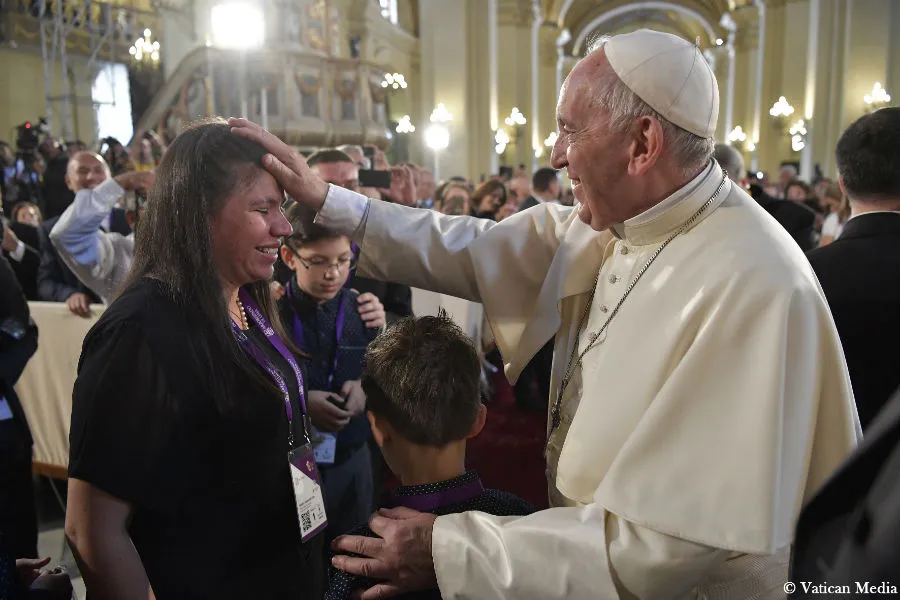
Lima, Peru, Jan 21, 2018 / 04:15 pm (CNA/EWTN News).- On his last day in Peru, Pope Francis encouraged Catholics to imitate Jesus, who embraces the poor and suffering, and brings hope.

The Pope urged Peru’s youth to look to their grandparents and elders in order to discover “the DNA that guided their great saints,” telling them “do not lose your roots! And you, grandparents and elders, keep passing on to the new generations the traditions of your people and the wisdom that charts the path to heaven.”

“I urge all of you not to be afraid to be the saints of the 21st century,” he said, telling Peruvians that there is no better way to protect their hope “than to remain united, so that these reasons for hope may grow day by day in your hearts.”

Pope Francis offered Mass at Lima’s Las Palmas Airbase on Jan. 21, his last day in Peru, bringing an end to his Jan. 15-21 tour of South America, which also included a three-day visit to Chile.

In his homily, he acknowledged the difficulties Catholics in Peru face. “Sometimes what happened to Jonah can happen to us. Our cities, with their daily situations of pain and injustice, can leave us tempted to flee, to hide, to run away,” the Pope said.

Jonah is an Old Testament prophet depicted in a scriptural book of the same name, who attempted to “flee the presence of the Lord” rather than follow a call from God.

Looking around, “Jonah, and we, have plenty of excuses to [flee],” Pope Francis said, noting that while Lima has many people who are well-off, it is also populated by the homeless: “’non-citizens,’ ‘the half-citizens’ or ‘urban remnants’” found on the streets, many of whom are children.

Faced with the desperation of people in extreme poverty, Francis said some Catholics can contract “Jonah syndrome” – which causes them to be indifferent, “deaf” and “cold of heart” to others.

Quoting his predecessor, Benedict XVI, Francis said “the true measure of humanity is essentially determined in relationship to suffering and to the sufferer.”

A society that is unable to accept the suffering of others and which is “incapable of helping to share their suffering and to bear it inwardly through ‘com-passion,’” he said, “is a cruel and inhuman society.”

The Pope noted that in the day’s Gospel reading, Jesus did the opposite of Jonah: rather than fleeing, he entered a city to encounter those who were desperate and suffering, and to bring them hope.

Francis encouraged Peruvians to respond with the attitude of Jesus, who entered Galilee “to sow the seeds of a great hope.”

A seed of hope, he said, had been passed down through the apostles and the great saints of Peru, and is present now “in order to act once more as a timely antidote to the globalization of indifference.”

“In the face of [Jesus’] love, one cannot remain indifferent,” he said.
 
“He begins to bring to light many situations that had killed the hope of his people and to awaken a new hope,” and calls new disciples, inviting them to walk at a different pace which allows them to notice “what they had previously overlooked, and he points out new and pressing needs.”

Jesus is involved in the lives of his people and is not afraid to get others involved too, Francis said, adding that he calls us and wants to anoint us so that “we too can go out to anoint others with the oil capable of healing wounded hopes and renewing our way of seeing things.”

The Pope said Jesus also wants to awaken in Catholics a hope which “frees us from empty associations and impersonal analyses,” and encourages faith to enter “like leaven” into every aspect of our daily lives.

God will never tire of going out to meet his children, he said, asking “how will we enkindle hope if prophets are lacking? How will we face the future if unity is lacking? How will Jesus reach all those corners if daring and courageous witnesses are lacking?”

“Today the Lord calls each of you to walk with him in the city, in your city,” he said. “He invites you to become his missionary disciple, so that you can become part of that great whisper that wants to keep echoing in the different corners of our lives: Rejoice, the Lord is with you!”

After Mass, Pope Francis thanked all those who helped organize his visit, including Peruvian President Pedro Pablo Kuczynski, the country’s civil authorities and the many volunteers who dedicated their time.

Francis noted that he began his trip by speaking of Peru as a land of hope, which he said comes from the country’s rich biodiversity, its various cultures and traditions, and because of its youth, “who are not the future but the present of Peru.”

[…]

No Picture
News Briefs

Don’t ‘photoshop’ your heart – be who you are, Pope tells young Peruvians

January 21, 2018 CNA Daily News 1

Lima, Peru, Jan 21, 2018 / 11:56 am (CNA/EWTN News).- On Sunday Pope Francis told Peruvian youth that Jesus doesn’t want disciples who have been “photoshopped” to perfection, but like the great saints of the past, God calls people to follow him with trust and enthusiasm, despite their weaknesses.

“When Jesus looks at us, he does not think about how perfect we are, but about all the love we have in our hearts to give in serving others,” the Pope said Jan. 21.

With technology it’s easy to digitally enhance photos to make them look the way we want, but this only works for pictures, he said. “We cannot ‘photoshop’ others, the world, or ourselves. Color filtering and high definition only function well in video; we can never apply them to our friends.”

These pictures might turn out nice, but they are “completely fake,” the Pope said, and assured the youth that their hearts “can’t be ‘photoshopped,’ because that’s where authentic love and genuine happiness have to be found.”

“Jesus does not want you to have a cosmetic heart,” he said. “He loves you as you are, and he has a dream for every one of you. Do not forget, he does not get discouraged with us.”

“Moses, he was not articulate; Abraham, an old man; Jeremiah, very young; Zacchaeus, small of stature; the disciples, who fell asleep when Jesus told them they should pray; Paul, a persecutor of Christians; Peter, who denied him,” and the list could go on, he said. “So what excuse can we offer?”

Jesus, Francis explained, wants youth who are “on the move. He wants to see you achieve your ideals and to be enthusiastic in following his instructions.”

This is a difficult path that can’t be walked alone, but must be one “as a team, where each member offers the best of his or her self,” he said, adding that “Jesus is counting on you” just as he counted on the many Peruvian saints who influenced society, including St. Rose of Lima, St. Turibius, St. Juan Macías and St. Francisco Solano, among others.

“Today (Jesus) asks if, like them, you are ready to follow him,” the Pope said, asking the youths “are you willing to follow him? To be guided by his Spirit in making present his Kingdom of justice and love?”

Pope Francis spoke to youth in Lima’s Plaza de Armas before reciting the Angelus on the last day of his Jan. 15-21 visit to Chile and Peru. Earlier in the day he prayed Terce, also called the prayer of the “Third Hour” in the Church’s Liturgy of the Hours, with contemplative sisters.

He also met with the country’s bishops, and after lunch will celebrate Mass at Lima’s “Las Palmas” airbase before returning to Rome.

In his speech to youth, Francis directed them to the example of one of his favorite Peruvian saints, Martin de Porres, who was a the son of a Spanish nobleman and a black slave woman. The saint had wanted to enter the Dominican order, but was initially prevented from becoming a brother due to a law at the time that prevented people of mixed race from joining religious orders.

“Nothing prevented that young man from achieving his dreams, nothing prevented him from spending his life for others, nothing prevented him from loving, and he did so because he had realized that the Lord loved him first,” the Pope said.

Because he was a “mulato,” meaning a person of mixed race, St. Martin had to endure many hardships, but he knew how to do one thing that was the secret to his ultimate happiness: “he knew how to trust.”

“He trusted in the Lord who loved him. Do you know why? Because the Lord had trusted him first; just as he trusts each of you and will never tire of trusting you,” the Pope said.

When we face similar difficulties in our lives, and are tempted to become negative or discouraged, “remember that Jesus is by your side,” Francis said. “Do not give up! Do not lose hope!”

The Pope told the young people to look to the saints for encouragement, but he also urged them ask for help from people they know can give them good advice, and to let these people accompany and guide them as they go forward in life.

“The Lord looks on you with hope,” he said, explaining that God is never discouraged with us, but it is we who get discouraged with ourselves.

Pope Francis closed his speech telling youth to turn to Mary, who will encourage and support them “lest you grow discouraged. And if you get discouraged by anything, do not worry, for she will tell Jesus. Just don’t stop praying, don’t stop asking, don’t stop trusting in her maternal protection.”


[…]

No Picture
News Briefs

The Church needs you, Francis tells contemplative sisters in Peru

January 21, 2018 CNA Daily News 0

Lima, Peru, Jan 21, 2018 / 08:49 am (CNA/EWTN News).- Speaking to contemplative women religious Sunday, Pope Francis said that they aren’t second-class, but a necessary part of the Church, and asked them to continue to pray on behalf of the Church and sinners.

“Sisters, know something: The Church doesn’t tolerate you, it needs you!” the Pope said in off-the-cuff remarks Jan. 21.

“Be beacons of light. And pray for the Church, for the shepherds, for those who hurt others, and those who exploit their siblings. And going on with the list of sinners, don’t forget to pray for me.”

Pope Francis spoke during a homily at the end of praying “Terce,” the prayer of the Liturgy of the Hours sung or said at 9a.m., with contemplative women religious in Lima’s Shrine of the Lord of Miracles.

The prayer took place on the last day of his Jan. 18-22 apostolic visit to Peru, which followed a three-day visit to Chile. He will return to Rome Jan. 22.

In his homily he quoted St. Therese of the Child Jesus, who once wrote in a letter: “I was certain that love subsumes in itself all vocations, that love is everything, encompassing all times and places, in a word, that love is eternal…in the heart of the Church, who is my Mother, I will be love.”

“To be love! This means being able to stand alongside the suffering of so many of our brothers and sisters,” Francis continued. “In this way, your cloistered life can attain a missionary and universal outreach and play ‘a fundamental role in the life of the Church.’”

“For this very reason, we can state that cloistered life neither closes nor shrinks our hearts, but rather widens them in our relationship with the Lord,” he explained. “May intercession for those in need be the hallmark of your prayer.”

The Pope also noted the words of St. Paul in his Letter to Romans, where he says that we have received a spirit of adoption, making us “children of God.”

“Those few words sum up the richness of every Christian vocation: the joy of knowing we are God’s children,” Francis said. This is the experience that nourishes our lives, that seeks always to be a pleasing response to God’s love. How important it is to renew this joy day by day!”

Following his meeting with women religious, Pope Francis made a stop at the Cathedral of Lima to pray in front of relics of five Peruvian saints.

During the stop he prayed in silence for a few minutes, before offering a prayer together with those present, stating his thanksgiving for the gifts the Lord has bestowed on the Church in Lima, especially the gift of holiness, “that has flourished in our land.”

“Our Archdiocesan Church has been made fruitful by the apostolic labors of Saint Turibius of Mogrovejo, enlarged by the prayer, penance and charity of Saint Rose of Lima and Saint Martin de Porres, adorned by the missionary zeal of Saint Francisco Solano and the humble service of Saint Juan Macías,” he prayed.

After the prayer and benediction, Francis met with the bishops of Peru in the chapel of Lima’s chancery.

In his speech to bishops he focused on the 16th century saint from Spain, St. Turibius of Mogrovejo, who served as the archbishop of Lima for 25 years, and is known for having upheld the rights of Peru’s indigenous peoples.

He was canonized in 1726, making him one of the first canonized saints of the Americas. During his time as archbishop, Turibius made three different visitations to the land of his diocese, crossing rugged and dangerous terrain.

“He went out to encounter everyone, along paths that, in the words of his secretary, were meant more for goats than for people,” Francis said.

“He knew that this was the one way to be a pastor: to be close to his own, dispensing the sacraments, and he constantly exhorted his priests to do the same,” not just with words, but as a witness “in the front lines of evangelization.”

The Pope noted that when St. Turibius was visiting and living with his people he learned to speak their languages so that they could really understand the Gospel, and it could touch their hearts.

This is a good lesson for bishops of the 21st century too, he pointed out, who not only sometimes need to learn new languages in the traditional sense, but also to learn the language of the digital age, in order to communicate well with young people, families and children.

St. Turibius also believed that “there could be no evangelization without charity,” Francis said. “He knew that the supreme form of evangelization is to model in our own lives the self-giving of Jesus Christ, out of love for every man and woman.”

“Dear brothers, work for unity,” Francis concluded. “Do not remain prisoners of divisions that create cliques and hamper our vocation to be a sacrament of communion.”

“Remember: what was attractive about the early church was how they loved one another. That was – and is and always will be – the best way to evangelize.”

At the end of the meeting, the Pope also held a lengthy question-and-answer session with the bishops.

[…]

No Picture
News Briefs

Do not become ‘professionals of the sacred,’ Pope tells Peruvian priests, religious

January 20, 2018 CNA Daily News 1

Lima, Peru, Jan 20, 2018 / 02:40 pm (CNA/EWTN News).- Pope Francis met with Peruvian priests and religious Saturday, telling them that a sense of humor is a good remedy for the temptation to clerical self-importance.

“John [the Baptist] embodies the awareness of a disciple conscious that he is not, and never will be, the Messiah, but only one called to point out the Lord’s presence in the life of his people,” the Pope said Jan. 20.

Pointing to the passage in John’s Gospel in which John the Baptist tells his disciples to “behold the Lamb of God” as he sees Jesus passing by, Francis noted that while John was a good and faithful disciple, he “was waiting for someone greater than himself.”

Those who are consecrated are not called to replace the Lord by their missions and activities, but rather, “to work with the Lord, side by side, never forgetting that we do not replace him.” Knowing they are not the Messiah, he said, frees clerics and religious “from thinking that we are overly important or too busy.”

While this temptation is real and is often present in in communities, Francis offered a remedy: laughter.

“Learning to laugh at ourselves gives us the spiritual ability to stand before the Lord with our limitations, our mistakes and our sins, but also our successes, and the joy of knowing that he is at our side,” he said.

“Laughter saves us from the self-absorbed promethean neopelagianism of those who ultimately trust only in their own powers and feel superior to others,” he said, and urged those present to conduct a “spiritual test” to see whether or not they are able to laugh at themselves.  

He told them to laugh in their community, but never “at the community or at others,” and to be “on guard against people so important that they have forgotten to smile in their lives.”

Pope Francis spoke to some 1,000 priests, seminarians and religious during a Jan. 20 trip to the Peruvian beach town of Huanchaco, where he traveled as part of his Jan. 18-21 visit to Peru, following a three-day visit to Chile.

He was greeted by Archbishop Jose Antonio Eguren Anselmi S.C.V., who oversees the dioceses of Piura and Tumbes.  Anselmi is a member of the Sodalitium Christianae Vitae, which earlier this month received a “Commissioner” from the Pope tasked with governing the community as they carry out reform following revelations of serial abuse by their founder, Luis Fernando Figari, in 2015.

The encounter with priests, religious and seminarians from all over Peru took place at the seminary college of Trujillo. According to statistics provided by the Holy See Press Office, there are currently some 3,361 priests in Peru, including diocesan and religious; 65 permanent deacons; 422 professed male religious and 5,568 professed women religious.

In his speech, Pope Francis told attendees that their vocation is one of “remembrance,” because it points to the fact that neither life, nor faith, nor the Church began with any one of them.

Rather, he said “remembrance looks to the past in order to discover the sap that nourished the hearts of disciples for centuries, and thus comes to recognize God’s presence in the life of his people.”

One of the virtues of this remembrance, he said, is a “joyful self-awareness” which recognizes, like John the Baptist, that Jesus is the Messiah and we are simply his servants, called to both follow Jesus’ example and continue his work of service to others, which is “the source of our joy.”

Another aspect of this remembrance is what Francis referred to as “the time of the call,” meaning the first moment in which God’s call to their vocation was felt.

In his Gospel, John remembers the exact hour in which his life changed by meeting Jesus, saying “it was about the tenth hour,” the Pope said, adding that a single encounter with Jesus “changes our lives, it establishes a ‘before’ and an ‘after’.

He urged attendees to remember the day when they first realized that “the Lord expected something more of us.”

If this moment is forgotten, “we forget our origins, our roots,” he said, “and by losing these basic coordinates, we lose sight of the most precious part of our lives as consecrated persons: the Lord’s gaze.”

“We do well to remember that our vocations are a loving call to love in return, and to serve,” he said, and quoting the Book of Deuteronomy, said that “if the Lord fell in love with you and chose you, it was not because you were more numerous than the others, for you are the least of peoples, but out of pure love!”

Pope Francis also pointed to the influence of popular piety on the vocational call, noting that in Peru, where colorful processions and large Masses marking special feast days are common, expressions of this piety “have taken on the most exquisite forms and have deep roots in God’s simple and faithful people.”

Because of this, he told those present “not to forget, much less look down on, the solid and simple faith of your people. Welcome, accompany and stimulate their encounter with the Lord.”

“Do not become ‘professionals of the sacred’ by forgetting your people, from whose midst the Lord took you. Do not lose your remembrance and respect for those who taught you how to pray,” he said, explaining that to remember the moment of one’s call is to celebrate Christ’s entry into their lives.

Remembrance, joy and gratitude, are the three “weapons” that best defend against “all vocational pretense,” he said, because “grateful awareness enlarges the heart and inspires us to service.”

Francis then reflected on the “contagious joy” of one’s vocation, which he said is another virtue of the “remembrance” he spoke of.

Pointing to the day’s Gospel, he noted that Andrew, who was one of the disciples of John the Baptist that followed Jesus on that first day, returned home after spending time with Jesus and told his brother Simon Peter what he experienced, saying “we have found the Messiah.”

“Faith in Jesus is contagious; it cannot be restrained or kept within,” he said, explaining that Andrew begins his mission with those closest to him by “radiating joy,” prompting those around him to also follow Jesus.

Joy, he said, “is the surest sign that we have discovered the Messiah” and is constantly present in the hearts of the apostles.

This joy is meant to be shared and so opens us to others, he said, adding that in the “the fragmented world in which we live, a world that can make us withdrawn, we are challenged to become builders and prophets of community.”

No one is saved alone, he said, stressing that isolation and fragmentation are not things that happen only “out there” in the world, but “divisions, wars and isolation are found within our communities, and what harm they bring us!”

Jesus sends his disciples to build communion and unity, however, often times the opposite happens, and “we go about this by displaying our disunity and, worse yet, trying to trip each other up,” Francis said, explaining that to build unity “does not mean thinking everyone is the same, or doing things always the same way.”

“It means discerning what everyone has to offer, respecting their differences, and acknowledging the gift of charisms within the Church, knowing that while each of us contributes what he or she has, we also need one another,” he said.

The Pope then cautioned against the temptation of the “only child,” who wants everything for themselves since there is no one to share with.

“Only the Lord has the fullness of the gifts; only he is the Messiah,” he said, and urged those in positions of authority to “please not…become self-referential.”

“Try to care for your brothers and sisters; try to keep them happy, because happiness is contagious,” he said. “Do not fall into the trap of an authority that turns into authoritarianism by forgetting that its mission is primarily one of service.”

Francis closed his speech thanking attendees for their presence, and prayed that “this ‘deuteronomic’ remembrance make us more joyful and grateful to be servants of unity in the midst of our people.”


[…]

No Picture
News Briefs

When storms come, have faith in Jesus, Pope tells Catholics in Peru

January 20, 2018 CNA Daily News 0

Huanchaco, Peru, Jan 20, 2018 / 07:55 am (CNA/EWTN News).- In a homily Saturday, Pope Francis spoke about the natural disasters Peru experienced over the last year, praising the way in which Peruvians joined together to help one another during these difficult moments.

“I know that, in the time of darkness, when you felt the brunt of the [storm], these lands kept moving forward,” the Pope said during Mass near Trujillo, Peru Jan. 20.

Like the five wise virgins in the parable in the day’s Gospel, the people of Peru were prepared with “the oil needed to go out to help one another like true brothers and sisters,” he continued. “You had the oil of solidarity and generosity that stirred you to action, and you went out to meet the Lord with countless concrete gestures of support.”

The Mass, which took place in Huanchaco, a beach town outside the city of Trujillo, was part of Pope Francis’ Jan. 18-21 visit to Peru.

In his homily he referred to the “Niño,” or “Coastal El Niño,” the name given to a weather phenomenon off the coast of Peru and Ecuador, which began in December 2016.

The pattern caused warmer-than-usual water temperatures off the coasts of the two countries, which in turn triggered heavy rainfalls in the mountains.

The excess run-off from the rains caused severe flooding and mudslides, devastating parts of Peru, particularly in the north. Trujillo, Peru’s third most populated city, was one of the worst hit after a period of heavy rains last March caused mudslides and flooding directly affecting around 800,000 people and killing almost 100.

Francis encouraged Peruvians not to lose heart during these times of trials, but to use this Eucharistic celebration as an opportunity to unite their suffering to Christ’s suffering on the cross.

“These times of being ‘buffeted,’” he said, “call into question and challenge our strength of spirit and our deepest convictions. They make us realize how important it is to stand united, not alone, and to be filled with that unity which is a fruit of the Holy Spirit.”

Many people are still suffering from the damage caused by “Coastal El Niño,” the Pope noted. And it’s possible these difficulties have caused their faith to waver.

If this is the case, “we want to unite ourselves to Jesus,” he said, because “[Jesus] knows our pain and our trials; he endured the greatest of sufferings in order to accompany us in our own trials. The crucified Jesus wants to be close to us in every painful situation, to give us a hand and to help lift us up.”

Like the story of the ten virgins in the Gospel reading, who were surprised by the bridegroom’s arrival in the middle of the night, the storms of life – both the physical storms as well as other difficulties – can catch us off-guard.

In the passage, we learn that five of the virgins were prepared with oil for their lamps and five were not. “At the appointed time, each of them showed what they had filled their life with,” Francis noted, and “the same thing happens to us.”

“There are times when we realize what we have filled our lives with. How important it is to fill our lives with the oil that lets us light our lamps in situations of darkness and to find the paths to move forward!”

He commended the Peruvians for being well-prepared with the grace of the Holy Spirit, so that “in the midst of darkness, you, together with so many others, were like living candles that lighted up the path with open hands, ready to help soothe the pain and share what you had, from your poverty, with others.”

“Fill your lives always with the Gospel,” he concluded. “I want to encourage you to be a community that lets itself be anointed by the Lord with the oil of the Spirit. He transforms, renews and strengthens everything.”
 

[…]

No Picture
News Briefs

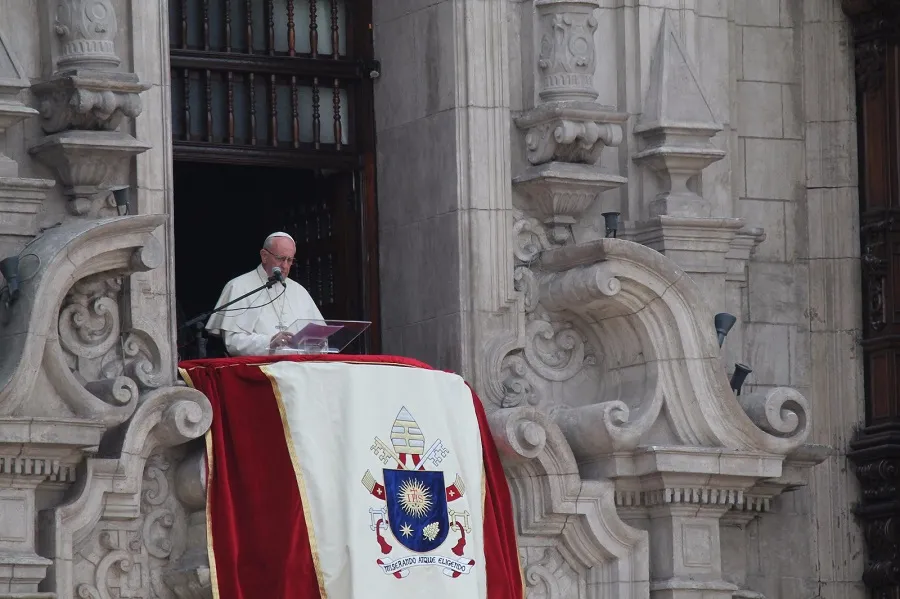
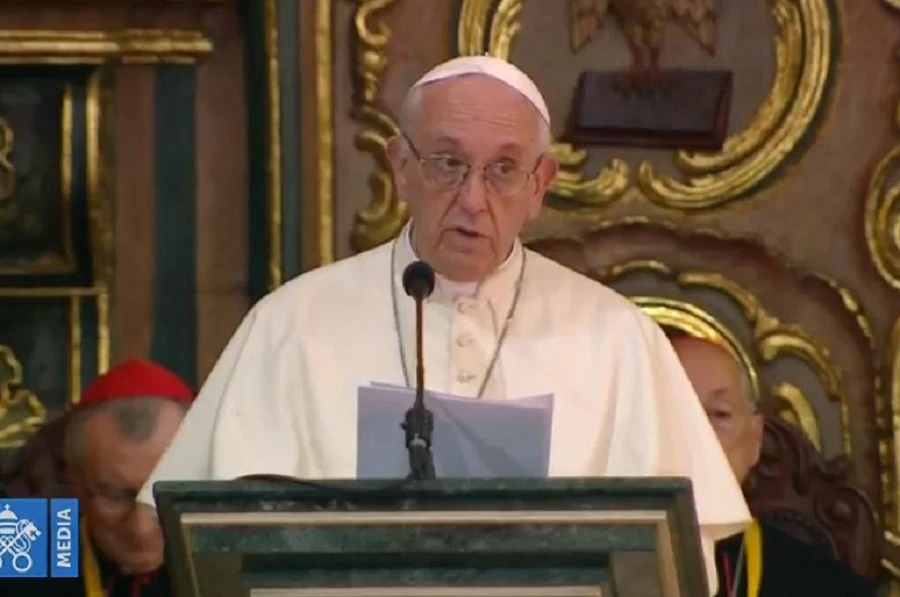
Pope Francis warns Peruvian leaders against ‘virus’ of corruption

January 19, 2018 CNA Daily News 2

Lima, Peru, Jan 19, 2018 / 03:33 pm (CNA/EWTN News).- Speaking to Peruvian authorities Friday, Pope Francis issued a stern warning against corruption, which he said has done significant harm, and snuffs out the hope offered by the country’s rich cultural and natural diversity.

“Peru is a land of hope that invites and challenges its people to unity,” the Pope said Jan. 19. However, he warned that despite the promise of the country’s many saints and the rich cultural and environmental diversity, “over this hope a shadow is growing, a threat looms.”

He warned against the destruction of natural resources and urged authorities to be “very attentive to that other, often subtle form of environmental degradation that increasingly contaminates the whole system of life: corruption.”

“How much evil is done to our Latin American people and the democracies of this continent by this social ‘virus’, a phenomenon that infects everything, with the greatest harm being done to the poor and mother earth.”

Pope Francis spoke to Peruvian President Pedro Pablo Kuczynski Godard and the country’s diplomatic corps. He spent the morning in Peru’s Amazonian region, visiting Puerto Maldonado before heading back to Lima for his meeting with civil authorities.

He will be in Peru until Jan. 21, following a three-day visit to Chile, marking his fourth tour of South America since his election.

The Pope’s visit comes after Kuczynski narrowly escaped an impeachment vote in December following revelations that a company he owned had businesses ties with the Brazilian construction firm Odebrecht, which is at the center of of one of Latin America’s biggest corruption scandals.

Odebrecht admitted in a 2016 plea bargain with the U.S. Department of Justice to paying around $800 million in bribes in 12 Latin American countries, the Guardian reports. Peru received some $29 million between 2009 and 2015.

Kuczynski is the latest Peruvian politician to get caught up in a scandal of this kind, with some former presidents currently sitting behind bars. The latest ex-president to be jailed was Ollanta Humala, who went to prison in July 2017 due to alleged money laundering in connection with Odebrecht.

In his speech, Pope Francis said efforts to fight the “social scourge” of corruption must be both recognized and supported, which is a task that involves everyone.

Hope must be defended, he said, which “requires a greater culture of transparency among public entities, the private sector and civil society. No one can be excluded from this process. Corruption is preventable and calls for commitment on the part of all.”

“I encourage and urge all those in positions of authority, in whatever sphere, to insist on this path in order to bring your people and your land the security born of feeling that Peru is a place of hope and opportunity for all, and not just for a few,” he said.

Francis praised the natural beauty and the vast biodiversity found in the country’s Amazonian region, which contains the largest tropical forest and the most extensive river system on the planet. He also drew attention to the many cultures present in Peru, which he said are the “soul of this people.”

He also noted that the country has a lot of young people, who are “the most vital gift that this society possesses,” and many saints, who have “blazed paths of faith for the entire American continent.”

Pointing to the theme of his trip, “United in Hope,” the Pope said Peru is a land of hope that invites its inhabitants to a unique unity, which he said is threatened not only by corruption, but also by environmental destruction.

Quoting his 2015 encyclical on care for our common home, Laudato si’, he said “never has humanity had such power over itself, yet nothing ensures that it will be used wisely, particularly when we consider how it is currently being used.”

“This is evident in the way that we are stripping the earth of its natural resources, without which no forms of life are possible,” he said, adding that the loss of jungles and forests means not only a loss of species and resources for the future, but also a loss of “vital relationships that could end up altering the entire ecosystem.”

To be united in hope, then, means both developing and promoting an integral ecology and listening to local populations and recognizing and respecting them as true partners in dialogue, since they know the land and the “the catastrophic effects produced, in the name of development, by many projects.”

Francis said environmental degradation is also linked to the moral degradation of communities, and pointed to black market mining as a practice which is “is destroying people’s lives.”

“This whole process of degradation brings with it and encourages organizations operating outside of legal structures; these debase so many of our brothers and sisters by subjecting them to human trafficking (a new form of slavery), irregular employment and crime … and to other evils that gravely affect their dignity and, at the same time, the dignity of the nation.”

Pope Francis closed his speech urging all those in positions of authority in every sphere “to bring your people and your land the security born of feeling that Peru is a place of hope and opportunity for all, and not just for a few.”

By doing this, a new Peru will be forged which “makes room for people of ‘all bloods’, a land in which ‘the promise of Peruvian life’ can be achieved,” he said, quoting from the Peruvian novelist José Maria Arguedas and the historian Jorge Basadre.

“I wish to renew in your presence the commitment of the Catholic Church, which has accompanied the life of this nation, in this joint effort to continue working so that Peru will continue to be a land of hope,” he concluded.

The Pope met privately with Kuczynski following his address.

[…]