No Picture
News Briefs

In Vancouver, Lunar New Year bumps Friday abstinence for Asian Catholics

February 15, 2018 CNA Daily News 0

Vancouver, Canada, Feb 15, 2018 / 01:02 pm (CNA/EWTN News).- The Archbishop of Vancouver has dispensed from the Friday Lenten abstinence Asian Catholics and their guests who are celebrating Lunar New Year Feb. 16.

“It is my pleasure to offer greetings and best wishes for a Happy New Year to all Asian Catholics in the Archdiocese of Vancouver, as well as to all who will join them in celebrating the Year of the Dog,” Archbishop John Miller wrote in his Lunar New Year Message.

“Although this year’s celebrations fall during the solemn season of Lent, it is certainly fitting that social celebrations among families and loved ones take place,” he said.

“As is customary in the Archdiocese of Vancouver, dispensation from the Lenten discipline of abstinence is granted to Asian Catholics and their guests celebrating the festival on Friday, February 16. Even so, I urge you to keep in mind the spirit of prayer and charity that we seek to practise during the Lenten season.”

Archbishop Miller concluded his message, saying: “May God’s abundant blessings be with you and your loved ones during this special time and through this entire year.”

He also asked for prayers regarding a rumored agreement in the works between the Chinese government and the Vatican on the appointment of bishops.

“I would also ask you to use this occasion to keep in your prayers current discussions between the Holy See and the People’s Republic of China as they work to better the relationship between them and improve the situation for Chinese Catholics.”

The communist government of China expelled foreign missionaries after 1949, and later established the “Chinese Patriotic Catholic Association,” a government-sanctioned Catholic Church. This has existed in opposition to the ‘underground’ Church, which is persecuted and whose episcopal appointments are frequently not acknowledged by Chinese authorities.

The archbishop’s message was written in both English and Chinese.

The Chinese, Korean, and Vietnamese people all observe a calendar in which the lunar new year falls this year on Feb. 16.

In the Vancouver archdiocese, five parishes offer Mass in Cantonese, three in Mandarin, four in Korean, and two in Vietnamese. In British Columbia (of which Vancouver is the largest city), more than 10 percent of respondents to the 2006 Canadian census identified as Chinese, and about one percent each as Korean and Vietnamese.

Dispensations like Archbishop Miller’s are common throughout East Asia.

In 2015, Chinese New Year coincided with Ash Wednesday, and dispensations from the day’s requirement of fasting and abstinence were granted by bishops across the Philippines and southeast Asia, or moved to a different day. Archbishop Miller also granted such a dispensation that year.

Lunar New Year, also called the Spring Festival, falls on the second new moon after the winter solstice; it will be celebrated until the Lantern Festival, observed this year March 2.

The event is celebrated culturally, and Catholics observe it with Masses of thanksgiving, blessings of cemeteries, agape meals, and sharing charitable gifts.

The festivities unite families in offering thanksgiving and in praying for their predecessors’ souls.

Abstinence from meat on Fridays of Lent is obligatory for Roman Catholics from the age of 14.

[…]

No Picture
News Briefs

‘Surf’s up’ for these Argentine priests

February 8, 2018 CNA Daily News 0

Buenos Aires, Argentina, Feb 9, 2018 / 12:00 am (CNA).- Fr. Santiago Arriola is convinced that “our entire life, in all its expressions and dimensions, calls for evangelization and can be evangelized.”

 With Fr. Pablo Etchepareborda, he has begun a surfing ministry on the beaches of Mar del Plata, Argentina.

Although their endeavor is “a work in progress,”  without all the details worked out, there have been two experiences that have encouraged the priests to continue this ministry.

The first effort was in the summer of 2016 when Fr.  Pablo Etchepareborda blessed surf boards, the sea, and a gathering of surfers in Mar del Plata.

And the pair recently held an “Aloha Encounter,” on a local beach.

“Surfers often say the Hawaiian word ‘aloha’ to each other, which has a multiplicity of meanings referring to wishing someone well,” Fr. Arriola told ACI Prensa, CNA’s Spanish language sister agency.

For two days,  18 surfers, body surfers, and stand-up paddlers, body surfing gathered for times of prayer, personal reflection and group sharing, as well as recreational activities.

Those attending included catechists and members of the Schoenstatt Movement (a Catholic secular institute devoted to defending family life and to venerating Mary), together with “young people who’ve had a faith experience and are involved in the Church in some way and others who have drifted away from the Church somewhat, but are still wrestling with their faith,” Fr. Arrila said.

“For surfers, surfing has a vital meaning, a meaning that transcends the mere sport itself. For many, it’s a time to get reinvigorated, to relax and get away from the frantic pace of daily life, to be with nature and have a kind of religious experience. So it seemed to us a beautiful opportunity to make
this vital meaning of surfing more explicit, and to do it in a community setting,” he explained.

The priest said that they will do other activities as Argentina’s summer, which is during the winter months of the Northern Hemisphere, continues, since the Aloha Encounter “is without a doubt a very positive, worthwhile and enriching experience for all of us who participated and it left our hearts yearning for more.”

This article was originally published by our sister agency, ACI Prensa. It has been translated and adapted by CNA.

[…]

No Picture
News Briefs

Bishop denies murdered Mexican priest had gang ties

February 8, 2018 CNA Daily News 0

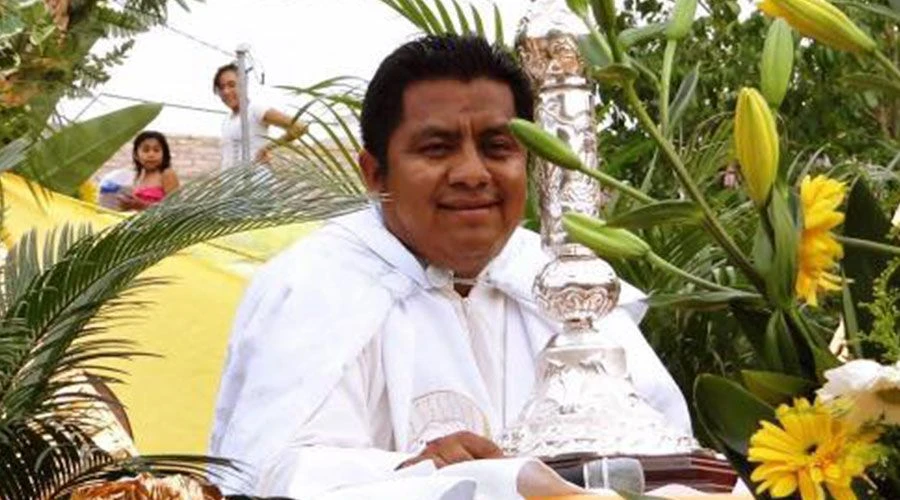
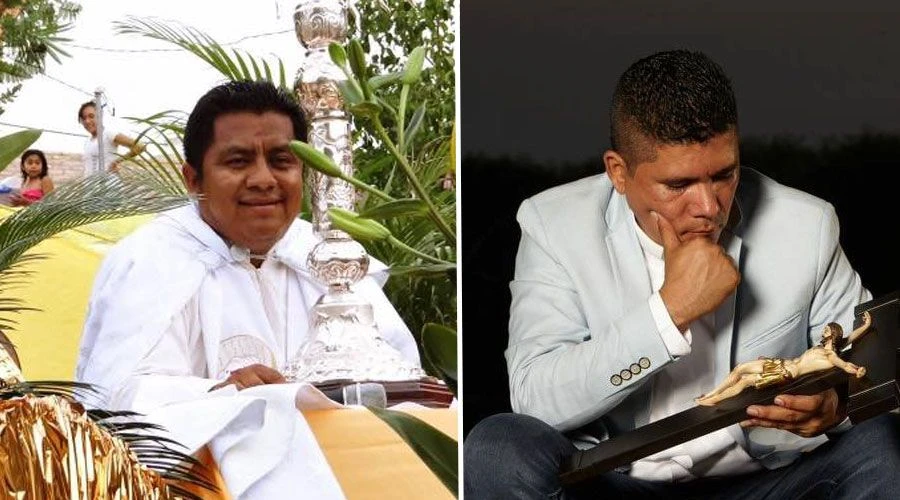
Acapulco, Mexico, Feb 8, 2018 / 07:00 pm (CNA).- The Bishop of Chilpancingo-Chilapa, Mexico denied that Fr.  Germain Muñiz Garcia, who was murdered on a Mexican highway Feb. 5 along with Fr. Iván Añorve Jaimes, had any connection to organized crime, as the Guerrero State Prosecutor’s Office has recently claimed.

In a statement released Feb 7, Bishop Salvador Rangel Mendoza said that Fr.  Muñiz Garcia “was never connected to any criminal gang.”

However, he said that the deceased priest “had knowledge, by the very nature of his pastoral work, of  some gangs operating in that area, since being a pastor and a public person he had to travel through the area where those gangs were based in order to to serve the different communities.”

The Mexican bishop responded in his statement to the accusations lodged by the Guerrero State Prosecutor’s Office, which claimed that the murdered priest belonged to “a criminal gang, by reason of the photographs and notes that circulated on the priest’s social media,” posted months prior, where he is seen with a rifle alongside masked criminals.  

According to the authorities, both priests were traveling to the town of Taxco de Alarcón to attend a party. According to the State Prosecutor’s Office, “it is known that many people belonging to different criminal gangs went there from Guerrero State as well as Morelos and Mexico States.”

“At said party there was no municipal, state or federal security, since preventative security support for  the party was not requested from any authority by the organizers.”

According to the Prosecutor’s Office, a conflict during the party “triggered the armed attack” which ended the lives of the Mexican priests.

Four people who survived the attack were also traveling in the vehicle in which the priests died,  including Fr. Germain’s sister.

Bishop Rangel Mendoza noted there are serious inconsistencies with the Prosecutor’s Office’s version of what happened.

“The Prosecutor’s statement seems strange to us, in that in the same place, Juliantla, in Guerrero, ‘members of criminal gangs from Morelos, Mexico and Guerrero States would have gotten together,’ without any reports of any confrontations between them or participants in the event. We also note the absence of municipal or state law enforcement, knowing the presence of the stated gangs,” the prelate stated.

The neighboring Archdiocese of Acapulco also expressed their criticism of the Prosecutor’s Office in a statement.

“It seems strange to us that people belonging to different criminal gangs, carrying weapons, could have gotten along with each other at the dance, without any incident. This does not seem to be their ordinary conduct,” they said.

In addition, they pointed out, the four survivors of the attack maintained “that there was no conflict at where the dance was held.”

“These four survivors report that coming back to Taxco they passed the assailants’ car which went after them, caught up with them, blocked their way and shot them,” the Archdiocese of Acapulco stated.

Regarding the photograph of the priest carrying a firearm alongside criminals, Bishop Rangel Mendoza told the press that although “it was extremely imprudent,” of him, and that he reprimanded the priest at the time, Fr. Muñiz Garcia “had to pass through the drug traffickers’ territories,” and he had to “greet them, he had to dialogue with them, he had to do it, because he had to pass through their territory, how else was he going to get through?”

The bishop said the priests went to the party “to offer their music and see if they would let them sing a few songs.”

In his statement, the prelate asked that “the investigations be objective, truthful and adhering to the law and the truth of the facts,” and that if the Prosecutor’s Office claims that the priest belonged to some criminal gang, “(I) urge them to specifically determine to which criminal gang he belonged to and not to limit themselves to making simple accusations.”

In addition, he demanded from the Guerrero State Prosecutor’s Office “a complete and certified copy of the file on the investigation that supports the said statements, since as the Prosecutor has the obligation to determine what actually happened, supporting the findings with reliable and truthful evidence.”  

This article was originally published by our sister agency, ACI Prensa. It has been translated and adapted by CNA.

[…]

No Picture
News Briefs

Two priests murdered in Mexico

February 6, 2018 CNA Daily News 0

Acapulco, Mexico, Feb 6, 2018 / 07:00 pm (CNA).- The Archdiocese of Acapulco, Mexico, reported that two priests were murdered early Monday morning, Feb 5.

Fr. Iván Añorve Jaimes, pastor of Holy Family Parish in the town of Las Vigas, and Fr.  Germain Muñiz Garcia, the pastor of Mezcala; were killed in an attack by unidentified individuals in Taxco township.

According to a press release from the Guerrero State Attorney General’s Office, the victims were traveling on the Iguala-Taxco highway when they were suddenly cut off by another vehicle, from which shots were fired. The assailants fled the scene.

“As a Church we are greatly troubled by this tragic event which is mourned by the entire archdiocesan community and that of the Diocese of  Chilpancingo-Chilapa. We call on the authorities, that once the truth is known, that justice be served,”  a statement from the Archdiocese of Acapulco reads.

After lifting up their prayers for the souls of the priests, the Archdiocese of Acapulco also asked prayers for “the conversion of those who, forgetting that we are brothers, commit this kind of crime, which injures the dignity of the human person so much, snatches away the sacred gift of life and sows pain and suffering in the family and in society.”

“Let us not relent in our efforts to build peace in our family, in our community, in our state, in our homeland. Let us ask the Lord for this peace every day,” the statement concludes.

This article was originally published by our sister agency, ACI Prensa. It has been translated and adapted by CNA.

[…]

No Picture
News Briefs

Chilean court dismisses case of bishop accused of abuse

February 1, 2018 CNA Daily News 1

Santiago, Chile, Feb 1, 2018 / 05:00 pm (CNA).- The Iquique Court of Appeals in northern Chile has officially closed an investigation against the Bishop Emeritus of Iquique, Marco Órdenes, accused of rape. A canonical investigation into the bishop is still ongoing.

“There is not probable cause to substantiate the charges made in December 2008,” stated a Jan 26. decision, which confirmed the findings of a five year investigation conducted by a lower court judge, Pedro Güiza Gutierrez.

Marco Antonio Órdenes Fernandez, 53, was Bishop of Iquique between 2006 and 2013. In December 2008, he was accused of abuse by Rodrigo Pino, 27.

In October 2012, Pino told ADN Radio that he met the priest in 1997 when he was 15 and an altar server at the Iquique cathedral.

The young man maintained that “at first it was forced” but later a consensual relationship developed. However, in 2008 he met another man who also was allegedly abused by Órdenes, which motivated him to report the incidents.

The Holy See began a canonical investigation in April 2012. The outcome of the investigation has not yet been determined.

In October 2012, Órdenes’ resignation as diocesan bishop was accepted. Immediately afterwards, the Chilean Bishops’ Conference made a statement on the “gravity of the inappropriate conduct that Bishop  Órdenes has publicly acknowledged” and offered its “full cooperation” in the investigation.

In a statement released Saturday Jan. 27, the Diocese of Iquique said that the “Church accepts and abides by the decisions” of the court.

However, they clarified that the Church’s investigation “has not concluded with a verdict.”

The current Bishop of Iquique, Guillermo Vera, asked the faithful “to take the news calmly and with prudence, always keeping uppermost, as the Holy Father asked us during his visit [Jan. 18] to our diocese, respect for individuals.”

This article was originally published by our sister agency, ACI Prensa. It has been translated and adapted by CNA.

[…]

No Picture
News Briefs

Venezuelan archbishop decries plan to change election date

January 29, 2018 CNA Daily News 0

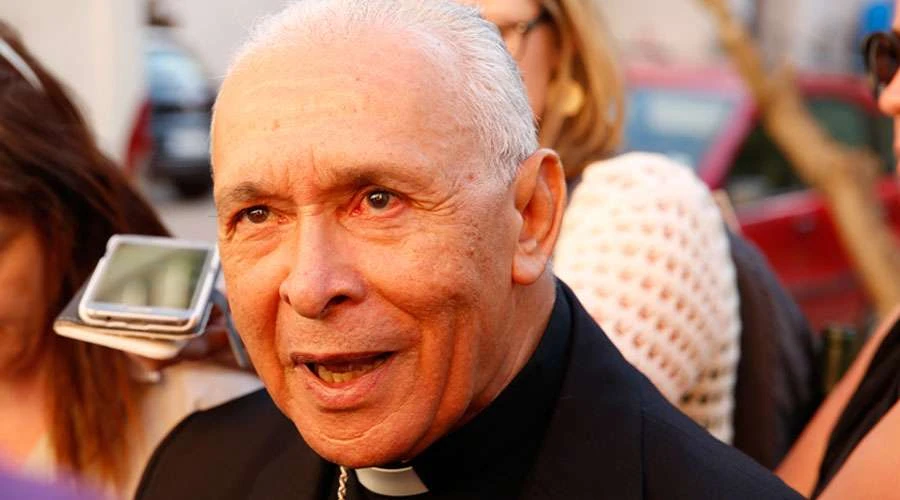
Caracas, Venezuela, Jan 29, 2018 / 04:34 pm (ACI Prensa).- Archbishop Diego Padrón of Cumaná, former president of the Venezuelan bishops’ conference, denounced plans to advance presidential elections in the country by more than seven months.

“In any country in the world, democracy operates with clarity, with transparency. Instead, [this] is a midnight ambush,” the archbishop told ACI Prensa, CNA’s Spanish-language sister agency, Jan 24.

The country’s National Constituent Assembly issued a decree on Jan. 23 to move up the elections that are usually held in December to no later than April 30, a measure that was “approved by acclamation” according to Delcy Rodriguez, the president of the assembly.

The Archbishop of Cumaná said that “as a Venezuelan, it is my opinion that moving up the date for elections has no legal basis.”

He added that the National Constituent Assembly “is very discredited because it is fraudulent in its origin and how it is run.”

Venezuela is currently in the midst of a severe economic crisis, with hyperinflation and chronic shortages of food and medicine.

The country’s socialist government is widely blamed for the crisis. Since 2003, price controls on some 160 products, including cooking oil, soap and flour, have meant that while the items are affordable, they fly off store shelves only to be resold on the black market at much higher rates. The International Monetary Fund has forecasted an inflation rate of 2,300 percent in Venezuela in 2018.

Socialist President Nicolas Maduro is due to run for re-election this year, as his term ends in 2019.

Last July, contested elections led to the formation of a National Constituent Assembly, which has superseded the authority of the National Assembly, Venezuela’s opposition-controlled legislature.

Mass protests against the Constituent Assembly were held, in which more than 120 people were killed by security forces.

Following the decree from the National Constituent Assembly, President Maduro asked the Board of Elections to set the closest day possible for voting, saying, “We’re going to get this over with as soon as possible.”  

Maduro also said that the elections will be held with or without the opposition.

According to the BBC, it is unknown whether any opposition candidate will run since the main leaders, Henrique Capriles and Leopoldo Lopez, have been disqualified from running for office.

Capriles was banned from running for office for 15 years by the Comptroller General’s Office for alleged irregularities in the state of Miranda where he was governor, the Associated Press reported last April.

In September 2015, El Confidencial news reported that Lopez was sentenced to 14 years in military prison for allegedly inciting violence at an anti-government demonstration the previous year.

Moving up the date of the election has been rejected by the Venezuelan opposition and the “Lima Group,” a coalition which is comprised of representatives from 14 countries of the Americas.

Chilean Foreign Minister Heraldo Muñoz read a statement on the matter emphasizing that “this decision makes it impossible to hold democratic, transparent and credible presidential elections.”

The text of the statement was approved by delegates from Argentina, Brazil, Canada, Chile, Colombia, Costa Rica, Guatemala, Guyana, Honduras, Mexico, Panama, Paraguay, Peru and Santa Lucía.

“We demand that the presidential elections be held with enough time to properly prepare for participation by all Venezuelan political actors and with all the corresponding guarantees,” the text adds.

This article was originally published by our sister agency, ACI Prensa. It has been translated and adapted by CNA.

[…]

No Picture
News Briefs

Chilean legislators pass gender-identity bill

January 26, 2018 CNA Daily News 0

Santiago, Chile, Jan 27, 2018 / 12:00 am (CNA/EWTN News).- The Chilean House of Representatives has passed a bill that “recognizes and gives protection to gender identity,” an initiative considered a priority by the government of President … […]

No Picture
News Briefs

Catholic bishops join with rabbis, imams in Canadian religious liberty fight

January 26, 2018 CNA Daily News 0

Toronto, Canada, Jan 26, 2018 / 03:01 am (CNA/EWTN News).- Interreligious leaders from across Canada came together Thursday to sign a statement urging the national government to respect their freedom of conscience by changing controversial new requirements to qualify for federal funding of youth summer jobs.

“The changes to the Canada Summer Jobs guidelines and application not only violate the fundamental freedoms of faith-based organizations, they also significantly impact the broader communities served by their programs, often the most vulnerable in Canadian Society,” reads the interreligious statement signed Jan. 25 by 87 religious leaders, organizations, and institutions.

Signatories included representatives of the Catholic Church and Orthodox Churches, as well as the Protestant, Jewish, and Muslim communities of Canada.

Federal funding requirements for the Canada Summer Jobs program were added Dec. 19, 2017 stipulating that “both the job and the organization’s core mandate respect individual human rights in Canada,” including “reproductive rights,” or the right to abortion access.

“An organization that has the explicit purpose of restricting women’s rights by removing rights to abortion and the rights of women to control their own bodies is not in line with where we are as a government, and quite frankly, where we are as a society,” said Canadian Prime Minister Justin Trudeau when he discussed the Canada Summer Jobs program Jan. 10.

Trudeau continued, “Women have fought for generations for the right to control their own bodies, to be able to choose for themselves what to do with their bodies … There are organizations that couch themselves in freedom of speech and freedom of conscience … when those beliefs lead to actions aimed to restrict a women’s right on what to do with her body, that’s where we draw the line.”

Diverse religious leaders came together in Toronto the afternoon of Jan. 25 and released the following statement:

“We … call on the Prime Minister and the Government of Canada to amend the Canada Summer Jobs guidelines and application process so that it does not compel agreement or belief, and allows religious organization to stay true to their communal identity and beliefs. The new application requires each organization to give non-negotiable and unqualified affirmation of certain beliefs held by the government.”

Cardinal Thomas Collins of Toronto was among the speakers at the statement’s release.

“Many organizations will be deemed ineligible because they are unable to or unwilling to attest that their core mandate and beliefs align with the current government’s self-identified values. These groups, though their views and actions are accepted by law and by the Charter of Rights and Freedoms are being denied access to a government benefit solely because of their religious beliefs or conscientious objection,” said Cardinal Collins.

The Canadian Conference of Catholic Bishops originally raised objections to changes in the federal funding requirements for the Canada Summer Jobs program in a Jan. 11 statement.

In response, the Canadian government issued “supplementary information” Jan. 23 about what situations would warrant a denial of funds. This clarification of the new policy emphasizes a distinction between the activities and the beliefs of an organization when the government determines who will receive funding.

The statement also includes five example of how eligibility is determined, with a hypothetical “faith-based organization with anti-abortion beliefs” among its examples.

“Example 1: An organization whose primary activities are focused on removing, or actively undermining existing women’s reproductive rights, applies for funding. This organization would not be eligible to apply,” begins the list.

The next example differentiates a situation in which “a faith-based organization with anti-abortion beliefs applies for funding to hire students to serve meals to the homeless. The organization provides numerous programs in support of their community. The students would be responsible for meal planning, buying groceries, serving meals, etc. This organization would be eligible to apply,” according to the Employment and Social Development department of Canada.

However, a summer camp that “does not welcome LGBTQ2 young people” would not be eligible to apply for funding to hire students as camp counselors, while “a faith-based organization that embraces a traditional definition of marriage” could hire students for the primary purpose of assisting the elderly “regardless of sexual orientation, gender identity or expression,” according to other examples.

The examples thus hinge on whether the core mandate, which is defined as the “the primary activities undertaken by the organization,” respect the “established individual human rights of Canada,” rather than the beliefs or values of the organization.

Father Raymond de Souza, a priest of the Archdiocese of Kingston, commented on this distinction saying, “It is embarrassing that the employment minister seems unaware a basic element of political liberty, freedom of expression and religious liberty is that the state does not determine what the “core mandate” of a citizen is,” in an opinion piece at the National Post.

Patty Hajdu, the Canadian Minister of Employment, Workforce, and Labour, wrote on Twitter Jan. 23 that “Canadians expect us to defend their hard-won rights. Canada Summer Jobs funding will no longer support activities that seek to remove individual rights, like a woman’s right to choose or LGBTQ2 rights.”

The Canadian Conference of Catholic Bishops told CNA Jan. 24 that they remain “seriously concerned that the beliefs and practices of Catholics and other faith traditions will exclude them from receiving funding through the Canada Summer Jobs Program.”

“The attestation and examples still amount to the government’s coercion on matters of conscience and religious belief. They foreclose the possibility of wide ranging views and even healthy disagreement,” the bishops explained.

“In the Archdiocese of Toronto alone, we know that at least 150 summer jobs will be impacted by the new application requirements,” Cardinal Collins said at the interreligious press conference.

[…]