No Picture
News Briefs

New complaints of abuse among Good Samaritan Sisters in Chile

July 26, 2018 CNA Daily News 0

Talca, Chile, Jul 26, 2018 / 05:21 pm (ACI Prensa).- Former nuns of the Congregation of the Good Samaritan in Chile reported a series of sexual abuses committed by priests visiting the community, which belongs to the Diocese of Talca and is dedicated to caring for the sick.

The new accusations come amid a growing sexual abuse scandal rocking the Church in Chile that led Pope Francis to summon the bishops to the Vatican in May to address the crisis, their resignation en masse, and the pope accepting some of the resignations.

Currently this diocese in Southern Chile has as apostolic administrator Bishop Galo Fernandez Villaseca, after Pope Francis accepted the resignation of the local bishop, Horacio Valenzuela.

In a report broadcast July 24 by Televisión Nacional de Chile, five former nuns said that there was sexual abuse and the abuse of authority inside the congregation. They added that they were mistreated when they reported the incidents to the superior.

“My silence stings my conscience. We have more than 23 sisters who in one year were expelled from the congregation because they were sexually abused, there was abuse of authority,” said Yolanda Tondreaux, who in the report charged that she was harassed by a priest.

Without mentioning names, the women charged that at least three priests sexually abused the nuns. They were able to deliver their testimonies to Archbishop Charles Scicluna and Msgr. Jordi Bertomeu when they came to Chile the second time to gather information on abuse cases.

Another of the complainants, Eliana Macías, said she was abused by a priest who during the night “would go into the nuns’ rooms.”

Consuelo Gómez charged that she was the victim of sexual abuse by nuns of the same community:

The former nuns said that when they related the incidents to the superior, Patricia Ibarra Gómez, she mistreated them until they were expelled from the community.

The complainants maintained that the then local bishop Horacio Valenzuela was aware of these events but did nothing.

Tondreaux, who also served in the Apostolic Nunciature of Chile, said in addition that Bishop Valenzuela and the priest Fernando Karadima – found guilty of sexual abuse by the Vatican in 2011 – received checks with huge amounts of money, without specifying from whom.

On May 29 the diocesan congregation issued a statement acknowledging one case of abuse, that of Consuelo Gómez, and asked forgiveness. However, when the journalist doing the television interview  consulted them regarding the new complaints they provided no comment.

Bishop Galo Fernández responded in the report, saying: “You see the pain there, where there’s a lot of pain and situations that merit being investigated with an openness to find the truth and to listen.”

He also added that the former religious need to be listened to “not only in the framework of a criminal investigation in order to verify or not, but to listen so that the situations and pain they have experienced can hit home.”

The Apostolic Administrator stressed that the congregation of the Sisters of the Good Samaritan “have a beautiful history, but that does not necessarily mean  that there could not have been situations that were clearly out of line.”

Regarding the total lack of support the women were left in after they were expelled from the community, Bishop Galo said that “A congregation clearly has a duty to care for the people that leave as well as examining the conditions under which they left. It’s a duty.”

Finally, concerning the poor reception given to the victims by the Church authorities, the bishop said that “there’s a new sensitivity today in the culture and also by the Church.”

“There are things that are not normal, that aren’t right, and it’s our responsibility to face them, correct them and where there has been a crime there certainly ought to be sanctions.”


This article was originally published by our Spanish language sister agency, ACI Prensa. It has been translated and adapted by CNA.

[…]

No Picture
News Briefs

Walking, biking pilgrimage to Our Lady of Guadalupe draws 60,000

July 25, 2018 CNA Daily News 0

Mexico City, Mexico, Jul 25, 2018 / 04:20 pm (ACI Prensa).- By foot and by bicycle, some 60,000 people arrived at the Guadalupe Basilica in Mexico City on July 22, for a pilgrimage that covered more than 185 miles from Querétaro state.

The pilgrims came in three groups, arriving at the basilica after 17 days of travel. The first to arrive, at around 6:00 a.m. on Sunday, were 300 cyclists, followed by 23,000 women at noon, and then 34,600 men, known as “soldiers of Our Lady of Guadalupe.”

Bishop Faustino Armendáriz Jiménez of Querétaro accompanied the faithful for more than 185 miles of the pilgrimage.

In the first of three Masses he celebrated with the pilgrims, Bishop Armendáriz Jiménez encouraged them to not be afraid “to give our time to Christ.”

“Let’s not be afraid to spend our free time with Jesus and to have a time shared with him! Yes, let us open up our time to Christ so he can illuminate and direct it,” he said.

At the Mass he celebrated for the women who made the pilgrimage, the bishop stressed that only by resting with Jesus “can you find true and complete peace, the fruit of reconciliation within yourself, in all your relationships: with God, with others and with the world.”

To the men’s pilgrimage that arrived shortly afterwards, the bishop lamented that “many of our adolescents and young adults go about like sheep without a shepherd.” However, he cautioned that “if we don’t have our hearts renewed in Christ and on fire with the Spirit, it will be impossible to feel compassion for them and sadly we will thus be unable to do anything.”

“Let’s not say that it’s harder today; it’s different. But let’s learn from the saints who have preceded us and faced their own difficulties in their times,” he encouraged.

In a video posted on the Facebook page of the Diocese of Querétaro after the pilgrimage was over, Bishop Armendáriz Jiménez highlighted that it was “an extraordinary experience of faith, that certainly strengthens us.” 

He said that accompanying people on the pilgrimage allowed him to “interact and especially to get to know [them] better and more personally.”

“Knowing our people makes us love them more,” he emphasized.

Bishop Armendáriz Jiménez congratulated the Diocese of Querétaro “for this treasure that we have,” and assured that God will continue blessing this community “with many spiritual fruits.”


[…]

No Picture
News Briefs

Two churches desecrated in Nicaraguan diocese

July 25, 2018 CNA Daily News 0

Jinotega, Nicaragua, Jul 25, 2018 / 03:31 pm (ACI Prensa).- Two churches in the Diocese of Jinotega in northern Nicaragua have been desecrated in the past week, amid rising tensions between the Church and the government of president Daniel Ortega.

At a pro-government celebration July 20, Ortega accused the bishops of Nicaragua of plotting a coup, as they have proposed early elections in response to widespread protests against the government.

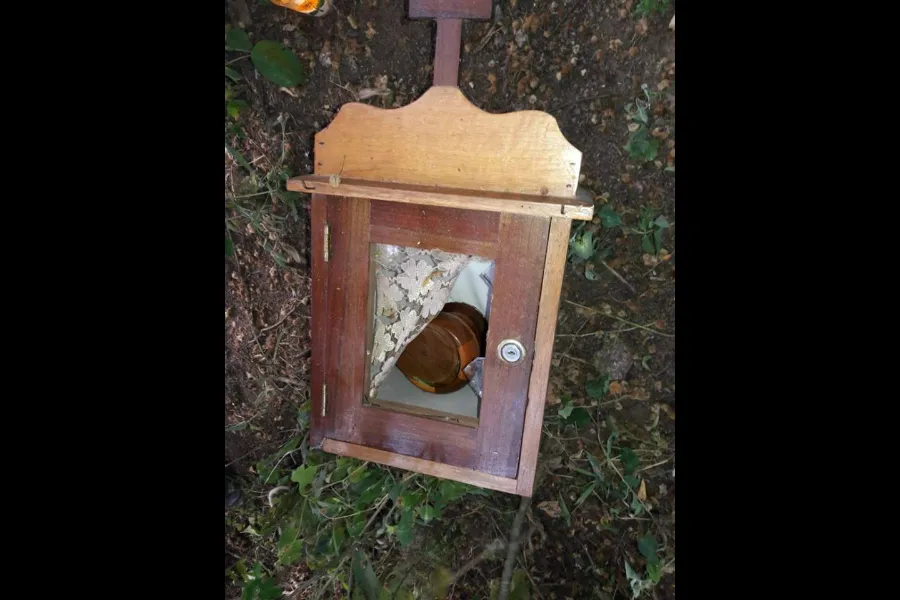
The Jinotega diocese announced on Facebook that the night of July 22, uknown persons forced open the window of the Sacred Heart chapel of St. Mark the Evangelist parish in San Rafael del Norte, about 15 miles northwest of Jinotega.

They took the tabernacle containing the Blessed Sacrament, without touching anything else, reported Fr. Noé Armando Flores, the parish priest.

The tabernacle was found later in the day of July 23 in an abandoned field.

And in Jinotega, the chapel of Our Lady of Mt Carmel at Most Precious Blood parish was profaned the night of July 20.

The Blessed Sacrament was desecrated, and the diocese showed photos of a broken window and sacred objects strewn on the ground. Sound equipment and a collection box were stolen.

At least eight Catholic churches have been desecrated in Nicaragua during the country’s three months of political and social unrest.

Protests against president Ortega which began April 18 have resulted in more than 300 deaths, according to local human rights groups. The country’s bishops have mediated on-again, off-again peace talks between the government and opposition groups.

Barricades and roadblocks are now found throughout Nicaragua, and clashes frequently turn lethal. Bishops and priests across the country have worked to separate protesters and security forces, and have been threatened and shot.

Nicaragua’s crisis began after Ortega announced social security and pension reforms. The changes were soon abandoned in the face of widespread, vocal opposition, but protests only intensified after more than 40 protestors were killed by security forces initially.

Anti-government protesters have been attacked by “combined forces” made up of regular police, riot police, paramilitaries, and pro-government vigilantes.

The Nicaraguan government has suggested that protestors are killing their own supporters so as to destabilize Ortega’s administration.

The Church in Nicaragua was quick to acknowledge the protestors’ complaints.

The pension reforms which triggered the unrest were modest, but protests quickly turned to Ortega’s authoritarian bent.

Ortega has been president of Nicaragua since 2007, and oversaw the abolition of presidential term limits in 2014.

The Church has suggested that elections, which are not scheduled until 2021, be held in 2019, but Ortega has ruled this out.

Ortega was a leader in the Sandinista National Liberation Front, which had ousted the Somoza dictatorship in 1979 and fought US-backed right-wing counterrevolutionaries during the 1980s. Ortega was also leader of Nicaragua from 1979 to 1990.

[…]

No Picture
News Briefs

Chilean bishops express concern over number of sex abuse victims

July 25, 2018 CNA Daily News 0

Santiago, Chile, Jul 25, 2018 / 10:04 am (ACI Prensa).- After the Chilean prosecutor’s office announced that it has compiled a list of 266 victims of sexual abuse by Church figures, a spokesman for the bishops’ conference said the figure is ‘alarming’.

“The temptation would be to dwell on the number of those accused, but what the Church is asking of us today is to first of all consider the individual victims. That number is alarming and is what concerns us the most,” Jaime Coiro said at a July 24 press conference.

According to the National Prosecutor’s Office July 23, the list identified 144 cases which occurred from 1960 to date. It also indicated some 266 victims, of which 178 are minors. It said 158 members of the Church are being investigated as possible perpetrators of sexual abuse or for covering it up.

Among those who possibly perpetrated or covered up abuse are bishops, priests, deacons, religious, and laypeople.

Prosecutor Luis Torres stated that the vast majority of complaints “entail sex crimes committed by priests, parish pastors or persons associated with educational institutions.”  

“There are also five cases of cover up or obstruction of justice against the superiors of congregations or bishops in charge of a given diocese,” he added.

The Rancagua Regional Prosecutor’s Office summoned July 23 the Archbishop of Santiago, Cardinal Ricardo Ezzati, to testify Aug. 20 regarding possible cover up on his part.

Coiro said that “we have learned that besides the number (of victims), each one of these persons has had to go through an extremely painful process, many of them have had to recount time and time again in different instances before different people what happened to them.”

Ana María Celis, a member of the National Council for Abuse Prevention of the Chilean Bishops’ Conference, said that in cases of sexual abuse the action of both the civil and well as canonical jurisdiction is required, “because what one does the other cannot do.”

“We are going to do everything possible so that person has recourse to both jurisdictions,” she stated.

In another case, the Archdiocese of Santiago announced July 13 a new preliminary investigation against Fr. Jorge Laplagne Aguirre,  pastor of San Crescente and Our Lady of Luján parishes, in addition to working in a Marist Congregation school.

A complaint was filed June 27 for an incident alleged to have taken place in 2005. The archdiocese noted that in 2010 the same case was investigated but the accusations could not be determined to be credible.

The priest was prohibited from publicly exercising priestly ministry or acting as pastor during the investigation, which has a maximum duration of 60 days.


This article was originally published by our sister agency, ACI Prensa. It has been translated and adapted by CNA.
[…]

No Picture
News Briefs

Night of terror: Inside the Catholic church attacked by Nicaragua’s paramilitary

July 24, 2018 CNA Daily News 0

Managua, Nicaragua, Jul 24, 2018 / 03:06 am (CNA).- A fire in the church. Bullet holes in the tabernacle. Students fleeing for their lives.

Father Raul Zamora, who serves as parish priest at Divine Mercy parish in Nicaragua, told CNA about his decision to take in 150 university students after paramilitary opened fire on their protest earlier this month – and how prayer sustained them through the more than 15 hours of gunfire that followed.

On July 13, students at the National Autonomous University of Nicaragua in Managua were protesting President Daniel Ortega’s pension reforms and increasingly authoritarian rule – part of larger, national protests that had been ongoing since April.

When the Nicaraguan government forces’ repression of the student protests turned violent that day, some students were on their cell phones calling their parents to say goodbye because they were sure that they were going to die. Others called Fr. Zamora.

“That university is actually under my pastoral care,” said Zamora. “It is right next to our parish. I am in charge of attending to those students spiritually. I knew the students personally.”

“I told them, ‘Come to the parish. Come to the parish. Don’t stay there,’” said the priest.

Students began to arrive at Divine Mercy Church in groups, and Zamora and other church staff drove over to the university to search for the wounded. They drove back and forth six or seven times. Police and paramilitary were continuing to attack the campus.

“Every time the students tried to go into the parish cars, they would start shooting,” said Zamora.

He thought that the students would be safe once they were in the church, but then the paramilitary gunfire was directed at the parish itself.

Joshua Partlow, a Washington Post reporter who had been covering the protests, ended up taking refuge along with the students in Divine Mercy Church.

The students “carried the wounded into the Rev. Raul Zamora’s rectory and put them on chairs or on the blood-spattered tile floor,” wrote Partlow.

“Not long after 6 p.m., with several high-pitched cracks, the mood took a dark turn. The faraway shooting was suddenly nearby. The paramilitaries had appeared, cutting off the only exit from Divine Mercy and firing at the remaining barricade just outside the church. It became clear that everyone inside . . . would not be going anywhere,” he explained.

They remained in the church overnight, sustaining more than 15 hours of gunfire, until Cardinal Leopoldo Brenes Solorzano and Archbishop Waldemar Sommertag, the apostolic nuncio, were able to negotiate the student’s release on Saturday morning. Fr. Zamora had been on the phone with them throughout the night explaining the situation.

Throughout the night, Zamora led students in prayer in the divine mercy chaplet and the rosary.

At one moment, when the shooting was particularly intense and everyone was lying on the ground, Partlow remembers some of the prayers Zamora said quietly with the students.

“Lord, we ask you to protect us in this moment,” he said.

“We believe in you, Lord, those of us who have no strength against this great army,” he murmured. “Help us, Lord.”

“The whole night we had a lot of time to pray. The bullets were non-stop,” Zamora told CNA.

He noted that many of the protesting students who took refuge in the church were not practicing Catholics.

“There were students with me in that moment from different religions, different denominations, atheists. In some way, it was very moving to me to see some of those students, who didn’t believe in anything, come over and hug me, crying and say, ‘If I were to believe in a God, I would believe in your God.’ That was, for me, very powerful,” said the priest.

“This is a moment when the Church gives witness and really shines forth the face of Christ in us,” he continued.

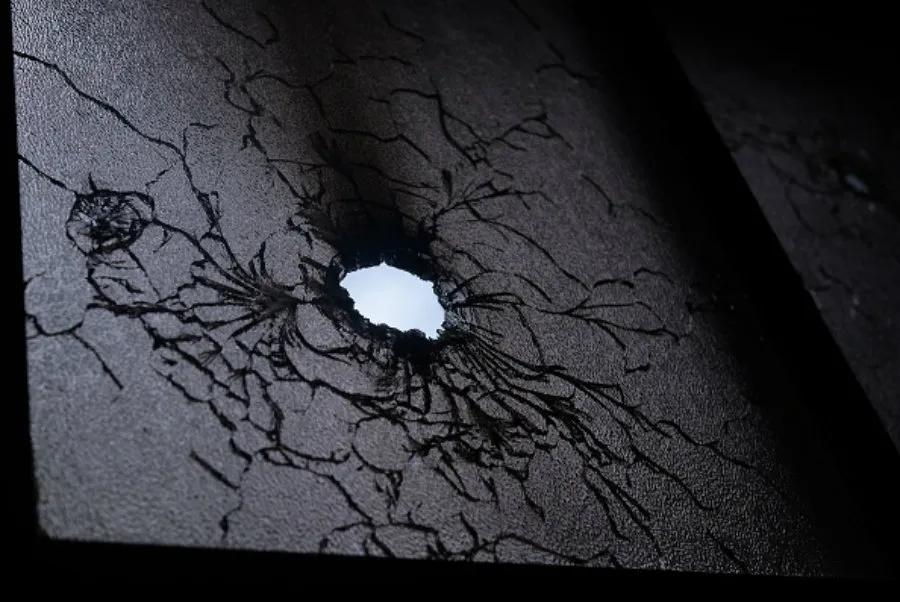
At one point late in the night, a part of the church caught fire, and a student called Father Zamora over from the rectory as it was put out. That is when he saw the bullet holes in the church’s divine mercy image and in the tabernacle. The student did not know what a tabernacle was, so the priest had to explain. He noted that the Blessed Sacrament was unharmed in the attack.

Two students were killed and at least 10 were injured by the paramilitary forces on July 13. More than 300 people have been killed since the protests began in April.

Zamora reflected on what he considers the lessons of the “persecuted church” in Nicaragua both now and in past decades:

“If the cross is not in our life, if we are not willing to suffer for love, then our religion just stays as something that is exterior. Just trying to do what is ritually appropriate. Our faith starts when we have that deep conviction in Jesus and his message. This is what we learned.”

[…]

No Picture
News Briefs

Nicaraguan priest appeals for intervention to prevent massacre of protesters

July 20, 2018 CNA Daily News 0

Managua, Nicaragua, Jul 20, 2018 / 06:09 pm (CNA/EWTN News).- A Nicaraguan priest has called on the international community to intervene to prevent the massacre of protesters by the country’s government and its paramilitary supporters.

Protests against president Daniel Ortega which began April 18 have resulted in more than 300 deaths, according to local human rights groups. The country’s bishops have mediated on-again, off-again peace talks between the government and opposition groups.

Fr. Augusto Gutierrez, a parish priest in the Monimbó neighborhood of Masaya, fewer than 20 miles southeast of Managua, was recently interviewed by the Spanish radio network COPE. Masaya has been at the center of the country’s protests.

Due to government pressure, the priest is in hiding since he has received numerous threats.

“We’ve gotten death threats because they say we’re the ringleaders of this situation, but we have been out in public because what the government of Daniel Ortega is doing is unjust. This is a genocide because there’s no other name for it,” Fr. Gutierrez said.

The priest appealed: “Don’t let us die. Please, intervene, do something.”

On July 17 the indigenous neighborhood of Monimbó was attacked by paramilitaries with ties to president Daniel Ortega.

In the interview, the priest said that the paramilitaries carried out a four hour attack in Monimbó: “with heavy military weapons, they’re desecrating churches and destroying lives.”

The priest explained that the Monimbó neighborhood is made up of simple people and that “for three months the government has lashed out against the population all over Nicaragua, including Monimbó, which has remained steadfast with great courage. But now they’re killing us.”

With regards to statements made by the Archbishop of Managua, Cardinal Leopoldo Brenes, during another interview with the COPE radio network, Fr. Augusto said that “he supports everything that the Church and the bishops are saying. But they (Ortega’s government) no longer want to listen to  reason, so there has to be international support to intervene and save the country.”

“This is not war because the people are defending themselves with what they can, roadblocks, stones, makeshift mortars. They (the government) are determined to celebrate July 19 over the blood of the people. And they can’t keep on governing over the dead and ordering to kill,” he stated.

July 19 marked the 39th anniversary of the ouster of the Somoza dictatorship by the Sandinista National Liberation Front, of which Ortega is the leader.

La Vanguardia news reported July 20 that at a pro-government celebration attended by thousands of supporters that day, Ortega charged the Nicaraguan Bishops’ Conference with complicity in a coup attempt. He based his accusation on the bishops’ proposal that he hold early presidential elections in March 2019.

The president challenged the Organization of American States and called on his followers to “not let down your guard” and to exercise“self-defense” in the midst of the grave crisis rocking the country.

Ortega said that he is the victim of “a conspiracy armed and financed by internal and external forces,” and disqualified the bishops as mediators in the crisis because they have “taken sides.”

In a July 14 statement, the Nicaraguan Bishops’ Conference denounced “the lack of political will by the government to dialogue” and seek real processes that would lead the country to a true democracy.

Finally, Fr. Gutierrez stated that Nicaragua is “in a state of emergency,” and that an “anti-terrorist” law was recently passed such that “all those who support the men at the roadblocks, or according to [the government] are collaborating against them, they’re going to put on trial.”

Barricades and roadblocks are now found throughout Nicaragua, and clashes frequently turn lethal. Bishops and priests across the country have worked to separate protesters and security forces, and have been threatened and shot.

Nicaragua’s crisis began after Ortega announced social security and pension reforms. The changes were soon abandoned in the face of widespread, vocal opposition, but protests only intensified after more than 40 protestors were killed by security forces initially.

Anti-government protesters have been attacked by “combined forces” made up of regular police, riot police, paramilitaries, and pro-government vigilantes.

The Nicaraguan government has suggested that protestors are killing their own supporters so as to destabilize Ortega’s administration.

The Church in Nicaragua was quick to acknowledge the protestors’ complaints.

The pension reforms which triggered the unrest were modest, but protests quickly turned to Ortega’s authoritarian bent.

Ortega has been president of Nicaragua since 2007, and oversaw the abolition of presidential term limits in 2014. He was also leader of Nicaragua from 1979 to 1990.

[…]