No Picture
News Briefs

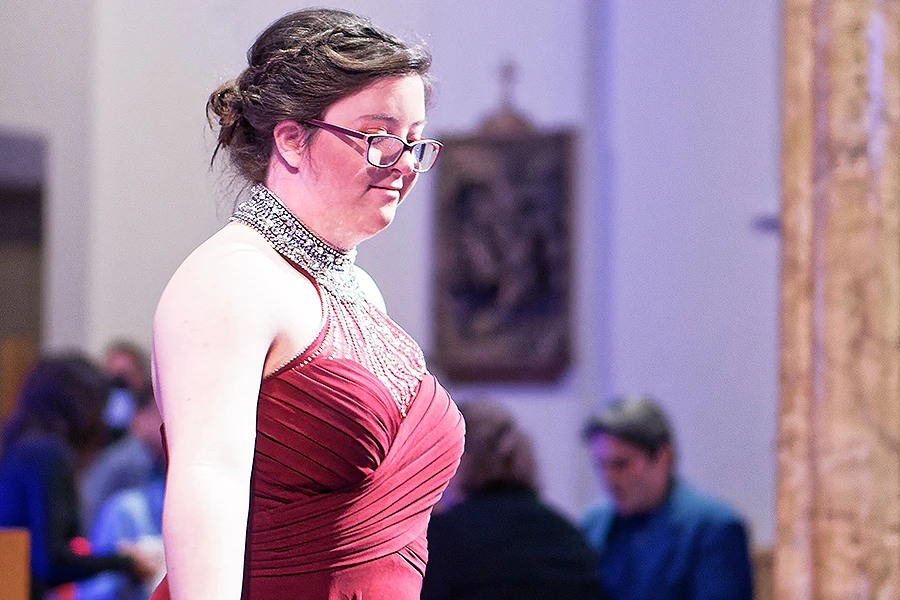
Youth with special needs rock runway in NYC church

December 12, 2017 CNA Daily News 1

New York City, N.Y., Dec 12, 2017 / 05:00 pm (CNA/EWTN News).- Last Friday night, more than 200 people gathered for a Times Square fashion show in New York City.  It wasn’t in a fashion house or theater. Instead, the models walked in a unique venue: a Church. The special venue was only fitting: the models have special needs, and they modeled adaptive clothing brands and styles, raising money for charities that help children with disabilities.

“Organizing a fashion show for those with special needs reminds us that true beauty lies in our dignity as unique children of God” said Sean O’Hare, fashion show organizer, in a statement.

The show was held at St. Malachy’s Church on the West Side of Manhattan, and all proceeds from the show went to benefit the Special Needs Activity Center for Kids and Adults. Models, who have a variety of special needs, modeled outfits from dress designer Jovani, fashion brand Thursday Boots, and adaptive clothing brand Independence Day Clothing.

Because some of the models have sensitivities to loud music, shouting, or clapping, the show chose a novel soundtrack for its show: a live choir. The St. Joseph’s Choir, a Catholic choir based at the university parish at New York University, sang pop and praise songs as the models walked.

Along with O’Hare, former Miss America 2008 and Fox News Contributor Kirsten Haglund co-hosted the event.

Any fashion show, one of the most important elements, besides the clothes themselves, is the audience reception. At St. Malachy’s the models were met with overwhelmingly positive reviews.  

“What a terrific night!” said Tracy Nixon, a mother and founder of a non-profit for those with Down syndrome, Gigi’s Playhouse NYC. “My daughter and everyone from GiGi’s Playhouse NYC had the best time tonight!”

The positive reception of the show has even inspired organizer O’Hare to plan other fashion shows like this around the country under the name, “100 Million Strong.”

“According to the UN there are approximately 100 million severely disabled individuals around the world,” O’Hare explained. “We want to demonstrate that this a large community, but one with strength, fortitude and joy!”  
He hopes these shows can help to raise money for local special needs charities, encourage other designers to consider adaptive clothing solutions for people with unique physical needs, and celebrate the special needs community around the nation.


[…]

No Picture
News Briefs

These Dominican brothers are releasing a folk album

December 12, 2017 CNA Daily News 0

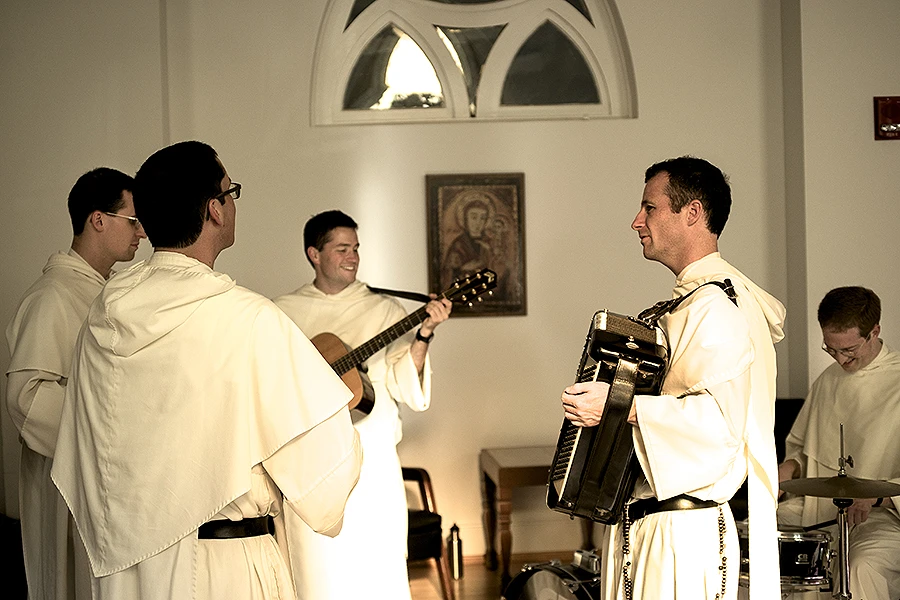
Washington D.C., Dec 12, 2017 / 12:09 pm (CNA).- Folk music is known for its foot-tapping, hand-clapping, barn-raising style – but now, a group of Dominican brothers is giving the genre a theological twist.

Meet the Hillbilly Thomists, a group of Dominican brothers who have a new album coming out on Dec. 12, which they describe as an authentic human and religious experience.

“Music can be sacred, but it can also be simply human – which is also sacred, just in a less explicit way with lyrics and themes,” Brother Timothy Danaher, one of the vocalists, told CNA in an interview with four of the band members.

“The New Evangelization needs all kinds of music, both the sacred and the human, to get the attention of people going about their daily lives.”

The band consists of 10 members from the Dominican House of Study and St. Dominic’s Priory in Washington D.C. It began as a lighthearted project with a focus on traditional Celtic music.

“The band itself was started by a couple of friars in our province,” said Brother Jonah Teller, who sings and plays guitar in the band. It grew out of a group of brothers who would get together to play Irish tunes, he said.

At first, the project was a fun excuse for the brothers to get together weekly and enjoy music. But as it grew from Irish tunes to more folk and bluegrass, the band began to perform publicly, receiving gigs for Catholics venues outside of the house.  

The name “Hillbilly Thomists” comes from a line delivered by Catholic author Flannery O’Connor. After her novel Wise Blood was released, she said people had identified her as a “hillbilly nihilist,” to which she responded that she was more like a “hillbilly Thomist.”

The album is eponymous – named after the band – and consists of 12 songs featuring instruments including the guitar, washboard, fiddle, banjo, and the bodhrán, an Irish drum. Eleven of the songs are covers of old-timey spirituals like “Poor Wayfaring Stranger,” “Amazing Grace,” and “St. Anne’s Reel.” The album also includes an original song, “I am Dog,” written by Brother Justin Bolger.

When asked how music corresponds to evangelization, the band emphasized that humans are both spiritual and physical beings, and that their spirits are lifted by beautiful images and sounds, especially when accompanied by Scripture-based lyrics.

“I do think music can enhance evangelization if done right. We’re bodily beings, so beautiful images and sounds can be good for us, can help lift our minds to God,” said Brother Peter Gaustsch, who plays mandolin, piano, and guitar.

The Dominican order has released several albums of choir music, but the band hopes that this project reaches hearts of its listeners in a different way.

“There are so many great old songs in this tradition that speak of God’s love, his mercy, his grace, and our hope in him,” said Brother Justin Bolger, who sings and also plays piano, accordion, bass, and guitar.

Among the songs on the album is “Poor Wayfaring Stranger” – an American spiritual which has been covered by artists including Johnny Cash and Emmylou Harris.

The wayfarer – or traveler – is an important image in Catholic theology, one of the brothers said, and cited examples from St. Thomas Aquinas and St. Augustine.

“The poor wayfaring stranger is all of us,” said Gautsch. “There’s a strong theme in the history of Christian spirituality of our lives as a kind of pilgrimage to our heavenly homeland.”

“There’s a loveliness and beauty that carries with it the longing for our heavenly home and the trials that can face us as we make our way towards the Lord, hopeful because of the promise of his love and mercy,” added Teller.

Gautsch said the song depicts the struggle that is part of carrying our individual cross and learning to rely on the graces Christ provides for the journey.

“Sometimes the way is hard and steep, as the song says – in fact, it inevitably involves the cross – but the path has already been trod by Christ, who goes before us to prepare a place for us.”


[…]

No Picture
News Briefs

Pope: ‘La Guadalupana’ shows that everyone has a place in the Church

December 12, 2017 CNA Daily News 1

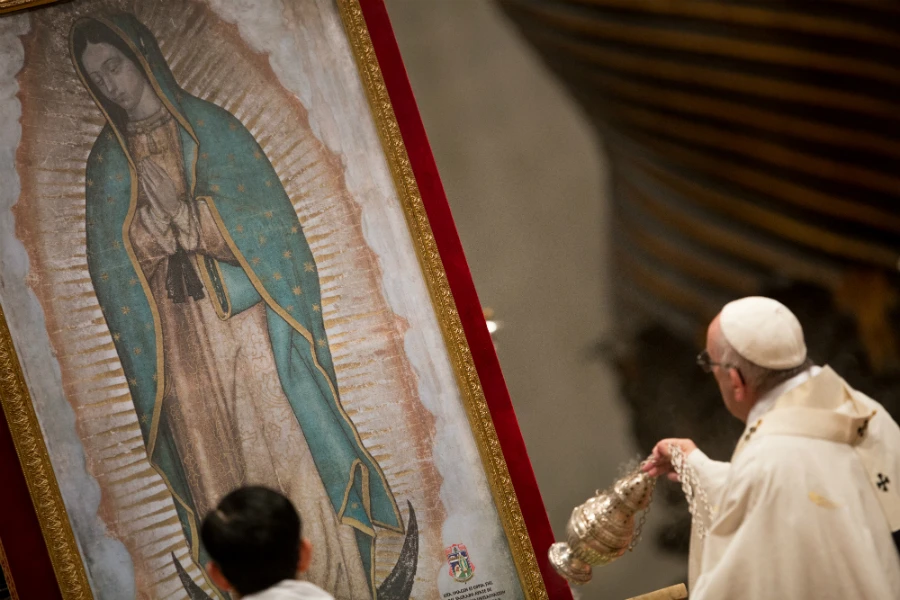
Vatican City, Dec 12, 2017 / 11:28 am (CNA/EWTN News).- Pope Francis marked the feast of Our Lady of Guadalupe Tuesday saying the “mestizo” Virgin is a concrete sign that the Church is for everyone, especially the poor and marginalized.

Noting how Juan Diego, when Mary first appeared to him, had said that he was no one and wasn’t worthy, the Pope said this sentiment can often be felt today in Latin America’s indigenous and Afro-American communities, “which, in many cases, are not treated with dignity and equality of conditions.”

This feeling of shame and unworthiness, he said, is also shared by many women “who are excluded because of their gender, race or socioeconomic situation,” and by youth who “receive a low-quality education and don’t have opportunities to progress in their studies nor enter the field of work in order to develop themselves and build a family.”

It is also the feeling of the many poor, unemployed, migrants, and displaced people “who try to survive in the informal economy,” and is also the shame felt by young boys and girls who are subjected to child prostitution, which Francis noted is “often linked to sexual tourism.”

However, Mary, the Mother of God, is the image of the Church, he said, and from her we learn how to be a Church “with a ‘mestizo’ face, with an indigenous, African-American face, the face of a peasant,” just like Our Lady of Guadalupe, he said.

In her, we see the face of the poor, the unemployed, of the young, and the old, “so that nobody feels sterile or infertile, so that no one feels ashamed or that they are nothing.”

Pope Francis celebrated Mass in St. Peter’s Basilica marking the Dec. 12 feast of Our Lady of Guadalupe.

Veneration of Our Lady of Guadalupe dates back to the 16th century when a “Lady from Heaven” who identified herself as the Mother of the True God appeared to Saint Juan Diego, a poor Indian from Tepeyac, on a hill northwest of Mexico City.

She instructed Juan Diego to have the bishop build a church on the site of the apparitions. As a sign, the now-famous image of Our Lady of Guadalupe was imprinted miraculously on his tilma, or cloak. Both the image and the tilma remain intact after more than 470 years.

Pope Francis centered his homily for the celebration around the Gospel reading from Luke, in which Mary visits her cousin Elizabeth shortly after the Annunciation.

The Pope noted how when Mary arrives, one of the first thing Elizabeth says is “how does this happen to me, that the mother of my Lord should come to me?”

Elizabeth, who had previously been marked by the sign of sterility, is now singing praise “under the sign of fertility and amazement,” Francis said.

He pointed to the two states of Elizabeth before and after her encounter with Mary: first her sterility and then her fertility and amazement.

The religious mentality at the time viewed sterility “as a divine punishment” for a personal sin or the sine of one’s spouse, he said, noting that it was “a sign of shame she carried in her own flesh because she considers herself guilty of a sin that she did not commit or because she felt like nothing since she was not able to live up to what was expected of her.”

This type of sterility, the Pope said, is one “that goes deep and ends up paralyzing all life,” and which takes on “the many names and forms of every time a person feels in their flesh the shame of being stigmatized or feeling like nothing,” much like Juan Diego.

However, after meeting Mary, Elizabeth becomes fertile and filled with wonder, he said. She is the first one to recognize her cousin as the Mother of God, and she also experiences in her own flesh the fulfillment of God’s word, because she now carries the “precursor to salvation.”

In Elizabeth, Francis said, we understand that “God’s dream is neither sterility nor to stigmatize or shame his children,” but is rather “to bring forth in them and from them a song of blessing.”

The same goes for Juan Diego, he said, noting that it was precisely he, and no one else, that carried the image of the Virgin in his tilma: “the Virgin of brown skin and a ‘mestizo’ face,” he said, referring to the fact that she was of a mixed indigenous race. The term “mestizo” was used at the time to describe the children born to Spanish and Aztec parents.

By appearing this way, Our Lady, he said, is a mother who is capable of taking on the various traits of her children “in order to make them feel part of her blessing.”

In thinking about the themes of sterility and fertility or fruitfulness, Francis said we can also relate these to the richness of the cultural diversity in Latin American and the Caribbean.

This diversity, he said, is “a sign of the great richness that we are invited not only to cultivate, but, especially in our time, to courageously defend from all attempts to homogenize which end up imposing – under attractive slogans – a singular way of thinking, of being, of feeling, of living.”

In the end, these efforts at uniformity end up “making either invalid or sterile everything inherited from our elders.” They make people, and especially the youth, “feel like nothing because they belong to this or that culture.”

Pope Francis said the diversity and fruitfulness of Latin America makes it a requirement “to defend our peoples from an ideological colonization” which seeks to cancel out what makes these cultures rich and unique, “be they indigenous, African-American, mestizo, peasants or suburban.”

On the contrary, everyone is called to be like Elizabeth and Juan Diego, feeling that they are “the bearer of a promise, of a hope,” but as one people, without canceling out the features of one or another.

The Pope closed his homily encouraging faithful to echo the song of Elizabeth, and, like so many who never tire of repeating it, say together: “blessed are you among women, and blessed is the fruit of your womb, Jesus.”

[…]

No Picture
News Briefs

Vatican conference highlights role of laity in addressing modern challenges

December 11, 2017 CNA Daily News 1

Vatican City, Dec 11, 2017 / 03:12 pm (CNA/EWTN News).- Leading lay experts and top Vatican officials have joined forces this week to talk about how they can collaborate in addressing key areas of modern concern, placing a special emphasis on the role of laypeople.

“Even before the (Second) Vatican Council, the conviction of the Church was that lay involvement in certain spheres of life, particularly political and social, was absolutely indispensable,” Archbishop Paul Gallagher told CNA Dec. 11.

The importance of the laity “is quite clear even more today,” he said, explaining that without their activity and social and political advocacy, the Church would lose its voice.

“It is absolutely key, crucial, for the future of the Church’s engagement with society that laypeople should be prepared to do this, should be courageous in doing it, and should have this great will to bring the voice of Christ now in the political sphere and social sphere, on a local level and an international level,” he said.

“I think they can do a great service to the Church and to the world in this way,” he said, adding that “any form of engagement” is encouraged.

Msgr. Gallagher, Vatican Secretary for Relations with States, spoke before celebrating Mass on the opening night of a Dec. 11-13 conference organized by the Forum of Catholic-inspired NGOs, titled “Promoters of Humanity in a Transforming World.”

The conference, which drew a slew of representatives from various NGOs around the world, including non-Catholics, focused on how Catholic-inspired organizations can help safeguard core values such as family and religious freedom, and ensure the that a proper integral human development is achieved in the context of a rapidly changing global society.

In his speech for the conference, Gallagher said the Holy See and Catholic-inspired NGOs can work together to achieve “the ideal of human fraternity and a means for its greater realization.”

He stressed that the Holy See isn’t “controlling” the forum, but that rather, the members and leaders of the NGOs are the real protagonists, since they bring “real life experiences and expertise” to the table through their work.

Among those “protagonists” present for the conference was Helen Alvare, a professor of family law, law and religion, and property law at Antonin Scalia Law School, George Mason University. She is also the cofounder of the “Women Speak for Themselves” organization, the president of “Reconnect Media” non-profit communications group, and an adviser to the U.S. Conference of Catholic Bishops.  

In comments to CNA, Alvare also stressed the importance of the role of laity, specifically women and the poor, in advocating key issues in the Church, especially in regards to the family.

Through the organizations she is involved with, Alvare focuses on giving voice to people on the grassroots level and empowering them to have a greater role in the push for both religious freedom and the family values lost in the sexual revolution. The hope is to show that questions on sexuality “cannot be separated from issues about economic well-being and poverty and human happiness.”

Pope Francis has been a leading voice advocating for women and the poor, Alvare said.  However, while the Pope has set “a wonderful tone” on these issues, she believes that “one of the signs of the times is that it cannot come from top down in the Church.”

“No matter how lovely a tone Pope Francis sets on empowering women and the poor, when the subject matter turns to sex, marriage and parenting, the powers that be don’t want to hear from him or the Church in any level,” she said.

Rather, the argument needs to come from those who have supposedly been empowered by the sexual revolution – laity, and especially lay women.

When the Church hierarchy joins forces with laity and religious on the ground, they can have a powerful effect, Alvare said, and this includes reaching the people taken in by the agenda of the sexual revolution.

Speaking of the partnership the Holy See can have with NGOs and the people who run them, Gallagher in his speech highlighted several key areas of collaboration, the first being to advance the 2030 sustainable development goals, which Pope Francis has called “an important sign of hope” and which in large part are aimed at ending poverty, protecting the environment, and promoting education.

He also pointed to the issues of forced migration and displacement resulting in “unprecedented population shifts,” giving specific mention to the 2018 U.N. global compacts on migration and refugees.

Other major areas of concern, he said, are climate change and the promotion of an integral human ecology; the freedom of thought, conscience and religion, which includes concern for religious discrimination and persecution; and freedom of expression, as well as the freedom to convert.

While the global landscape in light of these issues might seem “immense and complex,” Gallagher said it is also promising, because the efforts that appear to be small are capable of “developing and achieving ends for the benefit of the common good of all.”

In a brief Q&A after his talk, Gallagher encouraged members of NGOs to be active and involved in the debate on relevant issues in their competence, keeping the papal representatives in the loop on the discussion and seeking advice or input from the Holy See when needed.

“Part of the thing about autonomy, is one shouldn’t be waiting for instructions,” he said. “It’s about working together, its about collaborative ministry together,” he said, adding that it’s not about “a voice coming from on high saying, ‘Do a,b,c’.”  

Responding to a question on his advice for Catholic doctors and medical personnel who work with Catholic-inspired medical organizations, Gallagher said the most important traits needed today are “great courage and sacrifice.”

Part of this courage also means exercising the right to follow their conscience. “We expect you to assert the rights of your conscience and that of your more vulnerable colleagues,” he said, adding that the role of the conscience for those working in the medical field right now “is absolutely fundamental.”

[…]