No Picture
News Briefs

Swedish cardinal laments attacks on nation’s Jewish community

December 15, 2017 CNA Daily News 2

Stockholm, Sweden, Dec 15, 2017 / 10:01 am (CNA/EWTN News).- Multiple attacks against the Jewish community in Sweden have sparked outcry from leaders who have spoken out against the violence. The Bishop of Stockholm sent a personal letter to an affected community expressing his solidarity with them.

“It’s with deep sorrow that I have heard about the detestable attack on your parish. I just want to express my sympathy in this difficult situation. I pray that God will help and protect all of you,” read the note sent by Cardinal Anders Arborelius to a Jewish community which was attacked recently.

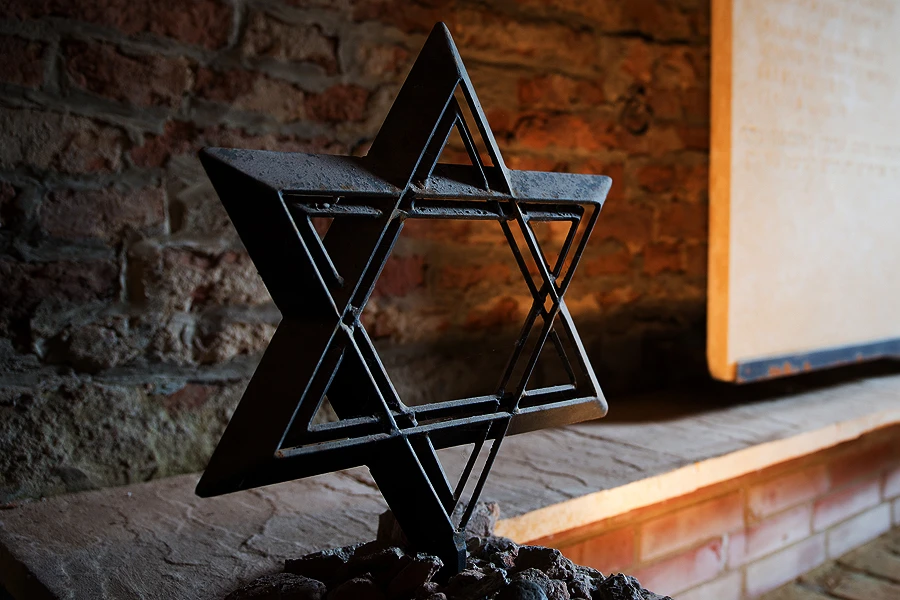
Over the weekend, bottle bombs had been thrown at a chapel on the grounds of a Jewish cemetery in Malmo, the country’s third largest city. This was the second time in recent years that the Jewish chapel had been attacked, following an arson attempt in 2009.

Additionally, a group of men attacked a synagogue in Gothenburg with firebombs last week. Three men were arrested on suspicion of attempted arson.

Hundreds of protestors gathered in Malmo last week, publicly shouting for violence against the Jewish community, saying, “we want our freedom back, and we will shoot the Jews,” according to the local public radio station. The next day, protestors also publicly burned an Israeli flag in Stockholm.

While there were no reported injuries or damages sustained by the recent anti-Semitic attacks, Malmo’s Jewish community sees the recent events as “extremely serious.”

“We strongly emphasize that we can never accept being subjected to threats and attacks,” the Jewish assembly said, according to the Times of Israel.

The attacks came ahead of the Jewish celebration of Hannukah, which began the evening of Dec. 12 and lasts through Dec. 20, and in the wake of U.S. President Trump’s recognition of Jerusalem as the capital of Israel.

“There is no place for anti-Semitism in Swedish society,” said the country’s Prime Minister Stefan Lofven in a recent statement, according to the Times of Israel.

Sweden’s Interior Minister for Justice Morgan Johansson noted the increased security around Jewish buildings in the country and said that they have a strong relationship with the police, who have been patrolling for anti-Semitic activity.

“It is always possible to do more,” Johansson said, according to the Local.

“But we have a high level of alert and have allocated more money to the police and security services. We have given them better resources to gain more control over groups that can present a threat.”

Antje Jackelen, the Lutheran Archbishop of Uppsala, said that “I would like to assure you of the solidarity of the Swedish church in the fight against anti-Semitism and violence in the name of religion,” the Local reported.

[…]

No Picture
News Briefs

That time a priest was reprimanded by a saint

December 15, 2017 CNA Daily News 0

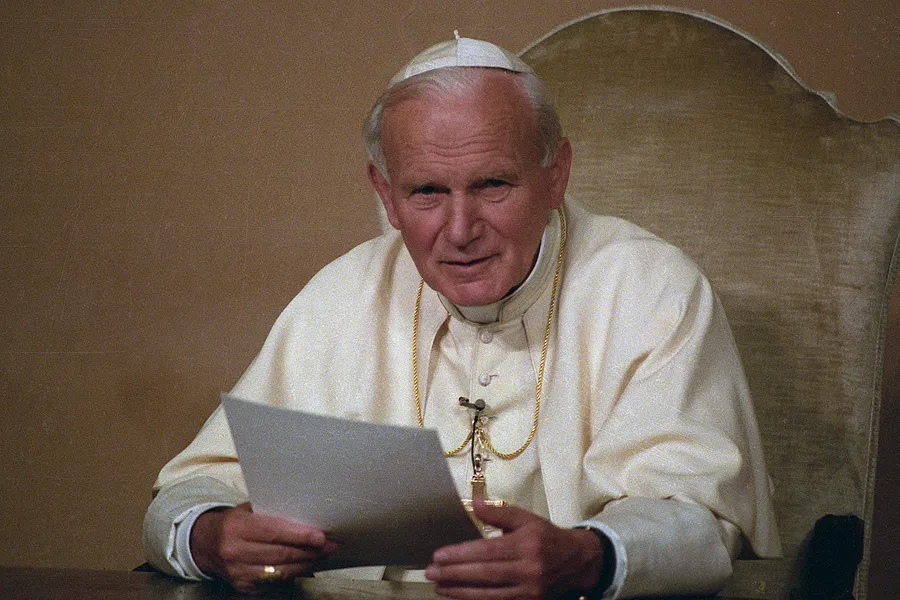
Vatican City, Dec 15, 2017 / 09:28 am (CNA/EWTN News).- When white smoke poured out of the chimney of the Sistine Chapel on October 16, 1978, Fr. Eamon Kelly, a seminarian studying in Rome at the time, couldn’t have known that he was witnessing the election of a future saint.

Nor did he know that more than a dozen years after that election, he would be reprimanded by that same future saint, John Paul II, during one of his Wednesday general audiences.

It was Holy Week of 1992, and Fr. Kelly, a priest with the Congregation of the Legion of Christ, was on his annual pilgrimage to Rome.

But this year was different.

His youth group had brought along eight Russian young people, the tension of the dissolution of the Soviet Union and the end of the Cold War just barely in the rearview mirror of history.

Fr. Kelly had done some strategizing to make sure the Russian youth got a good seat.

“We had our tickets and we went in early, and we did get positions up against the barrier of the corridor,” Fr. Kelly said. “So that was fantastic, we were going to see Pope John Paul II.”

His German students gave up all of the seats closest to the aisle, so that the Russian young people would get to shake the Pope’s hand as he walked through the Paul VI audience hall.

“I had the kids observe how he did it – he’d shake hands but by that he’d already moved on to talking to the next person, greeting them,” Fr. Kelly recalled.

“So I told them this pope knows Russian, and you need to greet him politely when he’s two or three people away; say some nice greeting in Russian.”

They did, and it worked: sure enough, the Pope’s ears perked up when he heard the Russian greetings. As soon as he got to the group, he stopped walking.

“He started talking to them in Russian, and there was a tremendous chemistry going on, and everybody was super excited. Our six rows of kids had assimilated into about two,” Fr. Kelly said.

Eventually the Pope asked, in Russian, how the group was able to make it to Rome. All the Russian students turned and pointed at Fr. Kelly.

He was a head taller than most of the students, so Fr. Kelly suddenly found himself in straight eye contact with John Paul II.

“There was so much joy and appreciation and gratitude in his eyes that these kids were there,” Fr. Kelly said.

“But then, his look turned like a storm with a critical question – ‘Why didn’t you tell me before they came?’” the Pope demanded of the priest.

“You know, like I could call up the Pope and tell him we’re coming,” Fr. Kelly recalled with a laugh.

“I tried to give an excuse, I said it was hanging by a thread that it was going to happen, I just fumbled my way through it. What are you going to do when the Pope is asking you for accountability?” Fr. Kelly said.

In hindsight, Fr. Kelly said he maybe could have called an office in the Vatican to alert them of the Russian students, but he didn’t realize that this visit would be so important for the Pope.

But Russia was dear to St. John Paul II’s heart, as he had played a critical role in the peaceful fall of communism and the Soviet Union. Just a few years prior, he had met for over an hour with President Mikhail Gorbachev, who later said the peaceful dissolution of the USSR would have been impossible without the Roman Pontiff.

Perhaps their meeting in 1989 had also softened Gorbachev’s heart prior to World Youth Day 1991, when the leader allowed some 20,000 Russian youth to attend the event in Poland for the first time ever. The conciliatory move was the whole reason the Russian students were now meeting John Paul II in Rome.

“He said to me, ‘This is the first group of Russians I’ve ever greeted in the audience hall’,” Fr. Kelly said.

It’s possible that it may have been the first youth group from Moscow to visit Rome ever, Fr. Kelly said.

“I don’t want to claim that title, because there may have been others, but it’s unlikely that anyone would have been able to come before the start of communism,” he said.

He said the Pope was visibly moved by the Russian students.

“He was happy, he was happy. He said if he would have known that they were there, he would have greeted them formally from the stage.”

And the Russian students?

“They were elated.”


This article was originally published on CNA Oct. 22, 2016.

[…]

No Picture
News Briefs

Keep internet neutral, U.S. bishops say

December 14, 2017 CNA Daily News 1

Washington D.C., Dec 14, 2017 / 04:00 pm (CNA/EWTN News).- On Thursday, the Federal Communication Commission voted to repeal net neutrality regulations, which the U.S. bishops have called essential to fair use of the internet by for nonprofits and individuals.

“Without open internet principles which prohibit paid prioritization, we might be forced to pay fees to ensure that our high-bandwidth content receives fair treatment on the internet,” said Bishop Christopher Coyne, Chairman of the USCCB’s Committee on Communications.

“Non-profit communities, both religious and secular, cannot afford to pay to compete with profitable commercialized content.”

The bishop’s statement was released on Nov. 28, after the FCC announced a proposal to repeal the protections, which were created in 2015. The rule was officially repealed on Dec. 14.

Net neutrality rules require internet service providers, like Comcast or AT&T, to provide equal access to the internet. This means internet providers cannot block, slow down, or charge for content from particular websites or web-based services.

For example, in 2007 Comcast was accused of providing slower internet service to subscribers who were using peer-to-peer file-sharing services. People using BitTorrent, which is a file-sharing network, claimed they had slower or blocked access when uploading files.

Net neutrality advocates have expressed concern that content providers who pay more money will be given better access to internet users, placing smaller companies and nonprofits at a disadvantage.

Bishop Coyne argued that fair access to the internet is critical for the Church to fulfill its mission in the modern world.

“Strong net neutrality protections are critical to the faith community to function and connect with our members, essential to protect and enhance the ability of vulnerable communities to use advanced technology, and necessary for any organization that seeks to organize, advocate for justice or bear witness in the crowded and over-commercialized media environment,” he wrote

Dioceses, schools, parishes, and other religious institutions, must have access to high speed internet to not only to communicate internally, but also to spread the Gospel through media, he said.  

Strong internet protections help the Church “to share religious and spiritual teachings, to promote activities online, and to engage people – particularly younger persons – in our ministries,” he said.  
According to NPR, the FCC’s new chairman, Ajit Pai, said the regulations prevented companies from improving the internet by stifling investments, but net-neutrality advocates have said that ending the regulations will give too much power to internet providers.

“I have heard from innovators, worried that we are standing up a ‘mother-may-I’ regime, where the broadband provider becomes arbiter of acceptable online business models,” said Democratic FCC Commissioner Mignon Clyburn, according to NPR.


[…]

No Picture
News Briefs

MLK’s niece: Pro-life work continues my uncle’s legacy

December 13, 2017 CNA Daily News 1

Rome, Italy, Dec 14, 2017 / 12:03 am (CNA/EWTN News).- Alveda King, the niece of Dr. Martin Luther King Jr. and longtime pro-life advocate, has it in her blood to fight for the causes she believes in, one of which is to promote “civil rights” for the unborn.

King, 66, grew up in the heat of the civil rights battle led by her uncle, and surrounded by the sexual revolution of the 1960s.

Eager to stand for a cause she believed would liberate women, she joined the budding “pro-choice” movement at a young age.

But after experiencing the crushing physical and emotional effects of two abortions, and receiving what she believes was a prophetic intervention from her grandfather, Rev. Martin Luther King Sr., she had a change of heart. She became pro-life and committed herself to carrying forward what she feels is a mission to defend the rights of the unborn.

King spoke to a small group of journalists, including CNA, after arriving in Rome for a Dec. 11-13 conference organized by the Forum of Catholic-inspired NGOs, titled “Promoters of Humanity in a Transforming World.”

The event drew a swath of representatives from various NGOs around the world, including non-Catholics, to discuss how Catholic-inspired organizations can help safeguard core Christian values and ensure that a proper integral human development is achieved in the context of a rapidly changing global society.

King was present on behalf of her project “Civil Rights for the Unborn,” which she directs in partnership with Priests for Life. She is also in charge of Priests for Life’s African-American outreach branch, and is involved with various other pro-life entities, including Rachel’s Vineyard.

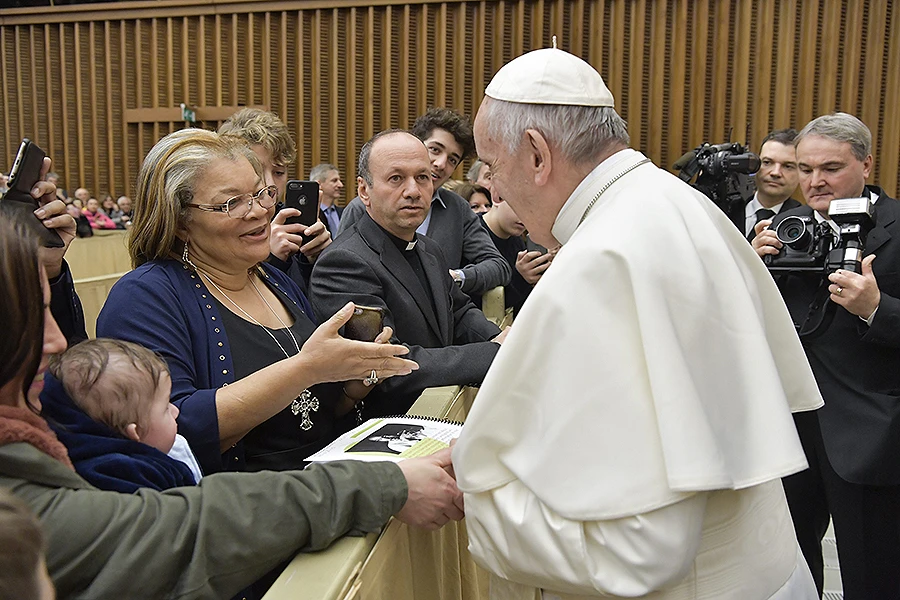
On the last day of the gathering, King had the chance to meet Pope Francis, who often cites her uncle in his speeches.

She told CNA that she was honored to meet the Pope, and when she told him that she was related to Martin Luther King Jr., his face lit up and “he seemed very happy.”

She was also moved by the fact that Pope Francis asked her to pray for him, saying it was “a delightful moment,” and that she was “very blessed to of course do that. I do pray for him and for all who are in authority, that we can live a peaceful life.”

Although King is Protestant, she is a firm believer in working with the Catholic Church, which she sees as a “natural ally.” She said that she is inspired by the Pope’s spontaneous spirit, engagement with everyone he meets, and defense of life at all stages.

Francis, she said, “doesn’t take one issue and make that his issue, he seems to be able to connect it and see that it all belongs together…I appreciate his work.”

“The Catholics were very supportive of the civil rights movement (of the) 20th century,” she said, adding that her uncle and father both “worked very closely with the Catholic community.”

When it comes to her own advocacy, life issues have always hit home for King, whose parents in 1950 became pregnant with her before they were married.

At the time, The Negro Project launched by Margaret Sanger in 1939 was continuing to gain steam. Among other things, the project worked to promote contraception and abortion in the black community.

King said her parents had considered getting an abortion until her grandfather, Martin Luther King Sr., “prophetically” intervened. Though they didn’t have ultrasound machines at the time, King said her grandfather had strongly rejected the claim that the fetus was “just a lump of flesh.” He said that the baby was a granddaughter whom he had seen in a dream three years prior.

After hearing Martin Luther King Sr. describe how his granddaughter would look, Alveda King’s parents decided against the abortion and she was born in 1951.

Despite hearing this story many times in her youth, King took a different path after her father and uncle died. She had been married, divorced, and no longer had the support system she once did, so when the pro-choice women’s movement began to grow, “I joined it because I’m a freedom fighter.”

However, she said, following the birth of her first child, she was coerced into having two abortions. When she became pregnant again, and was planning to have another abortion, her grandfather gave her the same message he had given her mother: “That’s not a lump of flesh, that’s my great-grandchild.”

She decided to keep the baby. Seeing her baby’s heartbeat on the sonogram confirmed that decision.

“I heard with new ears,” she said, explaining that her uncle’s words, “injustice anywhere is injustice everywhere,” began to take on a new meaning in her mind.

“He also said the Negro cannot win if he’s willing to sacrifice the future of his children for immediate comfort and safety,” she said, and recounted how, after being “born again” in 1983, she immediately began advocating for life.

In addition to her famous family ties, King had a career in law, was a college professor and served in the Georgia State House of Representatives. In law classes she taught, King said she would bring up the abortion issue and make the argument that “a woman has the right to choose what she does with her body, but the baby’s not her body. Where’s the lawyer for the baby?”

“It began to rock everything,” she said, explaining that she began to face resistance from Sanger’s Birth Control Clinical Research Bureau, which had been re-named as “Planned Parenthood.” The organization objected to her pro-life views, arguing that her uncle had received the group’s “Maggie Award” in 1966.

However, King said that Martin Luther King Jr. had never supported the organization’s agenda. He declined to attend the award ceremony, she noted. It was his wife and secretary – both of whom were more sympathetic to the cause at the time – who attended and wrote a thank you note to the group instead.

“Martin Luther King Jr. never accepted the agenda of Planned Parenthood,” Alveda King said. “They lie. They lie today. They put their abortion mills on or near streets that are named after Martin Luther King, and they want to attach that to the civil rights movement of the 20th century, (but) it doesn’t belong.”

Part of why the Negro Project grew as fast as it did, she said, is that it funded scholarships and grants for the black community that were tied to support for the abortion movement.

Additionally, the organization promoted abstinence, while also handing out condoms and advertising abortions, she said.

“If you tell a kid…yeah, be abstinent, but let’s give you Cosmo magazine with teens having sex and let’s give you free condoms, then they knew they were going to get all those abortions,” she said.

“So that’s how you ended up with a whole culture of abortion-minded people. It was slick, very slick. Evil.”

She added that the target group was initially the black community, “then it became the Latinos and then…the Caucasians with the money became a big target because they could pay.”

King said that if her uncle were alive today, she has no doubt that he would be adamantly pro-life. And while she works most directly with the African-American community in the United States, “its not just a black and white issue, its a human issue.”

“With one blood God made all people. Regardless of our color…we all bleed red,” she said. “So where’s the lawyer for the little ones, where’s the lawyer for the sick or the elderly?”

Looking ahead, King is encouraged by the millennial generation, whom she sees as being able to speak to modern society in a direct, passionate, and fresh way.

“The millennials get it,” she said, adding that “the (pro-life) fight has had a shot in the arm (from) millennials.”

She also noted the importance of fertility awareness and care for post-abortive women, two issues that she would like to see receiving more attention.

Several movie stars from her youth “went to their death” with the regret of abortion, she said, giving the example of singer Kenny Rogers, whose music voices regret over an abortion he and a former girlfriend decided to have.

Despite obstacles, King is hopeful that the level of awareness and resistance in the United States could indicate a turning point on the issue of abortion.

“Do I believe there’s going to be an end to the barbaric practices of killing our weakest, which are the babies and the sick, elderly and poor? I do,” she said, pointing to the March for Life events held across the globe, often filled with young people.

These events show the strength of the pro-life community, she said. “The world is taking note.”


[…]

No Picture
News Briefs

Pennsylvania governor promises veto of 20-week abortion limit

December 13, 2017 CNA Daily News 0

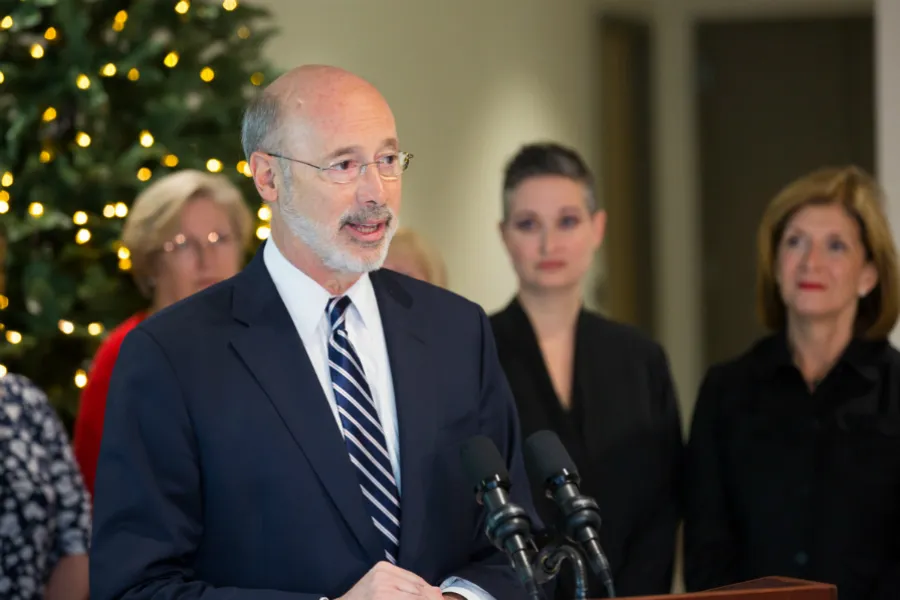
Harrisburg, Pa., Dec 13, 2017 / 04:01 pm (CNA/EWTN News).- The Pennsylvania House of Representatives passed a bill Tuesday that would limit abortions to 20 weeks into pregnancy and ban dismemberment abortion, but Gov. Tom Wolf intends to veto it.

Marjorie Dannenfelser, president of the Susan B. Anthony List, criticized the governor’s pledge to veto.

“His extreme pro-abortion stance is radically out of step with Pennsylvanians as he prepares to face the voters in 2018,” she said Dec. 13.

The Susan B. Anthony List cited a 2013 Harper Polling survey that said 82 percent of Democratic primary voters in the state think abortion should be illegal in all or most circumstances.

The Republican-controlled House of Representatives passed the legislation, Senate Bill 3, by a vote of 121-70 on Dec. 12. Six Republicans opposed the bill, while 12 Democrats voted in favor.

The bill passed the Senate by a vote of 32-18 in February. There are likely not enough votes to override a veto.

Wolf opposed the bill, saying it violated the doctor-patient relationship. He objected to its lack of exceptions for abortion in cases of pregnancy by rape or incest.

<blockquote class=”twitter-tweet” data-lang=”en”><p lang=”en” dir=”ltr”>I will veto <a href=”https://twitter.com/hashtag/SB3?src=hash&amp;ref_src=twsrc%5Etfw”>#SB3</a> because I stand with every woman in Pennsylvania who deserves to make her own health decisions. <a href=”https://t.co/QHoKydPy9a”>https://t.co/QHoKydPy9a</a></p>&mdash; Governor Tom Wolf (@GovernorTomWolf) <a href=”https://twitter.com/GovernorTomWolf/status/940739354355519488?ref_src=twsrc%5Etfw”>December 13, 2017</a></blockquote>
<script async src=”https://platform.twitter.com/widgets.js” charset=”utf-8″></script>

“These women deserve our support, not to be maligned by politicians in Harrisburg for making medical decisions about their bodies for their families with their doctors,” the Democratic governor said in a statement.

Dannenfelser had another view.

“The Pennsylvania legislature just took a bold step to protect unborn children and their mothers,” she said. “We are encouraged by the legislature’s action and look forward to the day when all unborn children are protected under the law.”

The state currently bars abortions 24 weeks or later into pregnancy.

Backers of the bill cited progress in medicine that allows premature babies to survive earlier in pregnancy than before.

The bill would preserve current exemptions for when a mother’s life is at risk, or if she is at risk of a serious permanent injury, the Associated Press reports. It would not allow exemptions for rape, incest, or fetal abnormalities.

Dawn Keefer, R-York, said the issue should not be framed only in terms of women’s rights. Rather, she asked, “what about the rights of those pre-born women in the womb being exterminated?”

Rep. Mary Jo Daley, D-Montgomery, characterized the bill as an attempt to control women “by imposing the views of some legislators on women, and I think that’s wrong – that’s morally wrong.”

The dismemberment abortion ban would in effect ban dilation-and-evacuation abortion, the most common method of abortion in the second trimester of pregnancy.

“Dismemberment abortion is completely inhumane, it’s barbaric,” said Rep. Kristin Phillips-Hill, R-York.

Federal legislation to bar abortion after 20 weeks has made some progress. On Oct. 3 the U.S. House of Representatives passed the Pain-Capable Unborn Child Protection Act late by a vote of 237 to 189, largely along party lines. It was expected to fail in the Senate.

Dannenfelser, however, claimed, “Momentum is building to pass a national ban on late-term abortion more than halfway through pregnancy.”

[…]

No Picture
News Briefs

Peruvian prosecutor requests jail for Sodalitium founder

December 13, 2017 CNA Daily News 0

Lima, Peru, Dec 13, 2017 / 03:08 pm (CNA).- Criminal prosecutors in Peru have requested that Luis Fernando Figari be incarcerated by a court order, while he is investigated for charges of psychological and sexual abuse.

Figari is the founder of the Sodalitium Christianae Vitae, a religious community of men, and the Marian Community of Reconciliation, a community of women.  In 2002, he was named a consultor to the Pontifical Council for the Laity, and served in subsequent consultative roles at the Vatican.  

He has been the subject of abuse allegations since 2011.

According to local press reports, the Peruvian prosecutor requested that other former members of the SCV also be incarcerated while they are subject of abuse. Virgilio Levaggi, Jeffery Daniels and Daniel Murguia are also suspected of sexual and psychological abuse of Sodalitium members, and of collusion with Figari in covering-up abuse.

The prosecutor also requested that Ricardo Treneman and Oscar Tokumura, members of the Sodalitium, be subject to travel restrictions.
 
Peruvian law permits judges to remand suspects of criminal activity to incarceration while they are being investigated, if they are considered flight risks, or to pose grave danger. A criminal investigation against the men began in January 2017.

A judge must decide within 48 hours whether to grant the prosecution’s request for temporary incarceration.

In February of this year, a team of independent investigators commissioned by the Sodalitium reported that  “Figari sexually assaulted at least one child, manipulated, sexually abused, or harmed several other young people; and physically or psychologically abused dozens of others.”

The investigative team included a former FBI agent, and several experts on sexual abuse. All details of the independent investigation were given to the media and to Peruvian authorities.

The report concluded that “between 1975 and 2000 and once in 2007, five members of Sodalitium, including Figari, sexually abused minors.”

The five members alleged to have committed sexaul abuse are Figari, German Doig, who died in 2001, Virgilio Levaggi, Jeffrey Daniels and Daniel Murguía.

Of these five, only Figari remains a member of the Sodalitium. In February 2017, the Vatican’s congregation for religious life issued a decree forbidding him from any contact with the religious community, and banning him from returning to Peru without permission from the current superior of the Sodalitium. Figari was also forbidden to make any public statements.

The executive director of CNA and ACI Prensa, Alejandro Bermudez, is a member of the Sodalitium Christianae Vitae.

This story was originally published by our sister agency, ACI Prensa. CNA has adapted it and provided additional reporting.

[…]