No Picture
News Briefs

Pope Francis’ three Christmas ingredients: joy, prayer, gratitude

December 17, 2017 CNA Daily News 0

Vatican City, Dec 17, 2017 / 12:05 pm (CNA/EWTN News).- With Christmas just eight days away, Pope Francis said three simple attitudes can help prepare us to welcome Jesus Christ.

“Saint Paul invites us to prepare for the coming of the Lord by assuming three attitudes: constant joy, persevering prayer and continual thanksgiving,” the Pope said. “Joy, prayer and gratitude are three attitudes that prepare us to live Christmas in an authentic way.”

Pope Francis’ remarks to the crowds gathered in St. Peter’s Square came ahead of the Angelus for Gaudete Sunday, the Third Sunday of Advent, which this year coincided with Pope Francis’ 81st birthday, Vatican News reports.

He said the liturgy in recent Sundays has focused on how to be vigilant and how to prepare for the way of the Lord. For Gaudete Sunday, the liturgy invites Christians to joy.

The Pope cited St. Paul’s First Letter to the Thessalonians, “always be happy.”

“That is to say, always remain in joy, even when things do not go according to our desires,” Francis explained. “Anxieties, difficulties and sufferings permeate our lives, and so many times the reality around us seems to be inhospitable and arid, like the desert in which the voice of John the Baptist resounded, as the Gospel of today recalls.”

John the Baptist’s voice in the desert reveal that Christian joy rests on “the certainty that the desert is inhabited.”

This is Jesus, who in the words of the Prophet Isaiah comes “to bring the good news to the poor, to bind the wounds of broken hearts, to proclaim the freedom of slaves, the release of prisoners, to promulgate the year of grace of the Lord.”

Jesus’ mission in the world consists of “liberation from personal and social sin and the slavery that it produces.”

“He came to earth to give back to men the dignity and freedom of the children of God, which only He can give,” said Pope Francis.

Unceasing prayer helps us enter into relationship with God, the source of true joy.

“The joy of the Christian comes from faith and from the encounter with Jesus Christ, the reason for our happiness,” the Pope continued. “The more we are rooted in Christ, the more we find inner serenity, even in the midst of everyday contradictions.”

The Christian who has met Jesus cannot be “a prophet of misfortune” but must be “a witness and a herald of joy,” said Francis. This is “a joy to share with others; a contagious joy that makes life’s journey less tiring.”

St. Paul also stressed “the grateful love of God,” his generosity, mercy, patience and goodness. Christians are to be “living in an endless state of thanksgiving.”

Pope Francis closed his remarks before the Angelus by entrusting the congregation to the intercession of the Virgin Mary.

“She is ‘the cause of our joy,’ not only because she is the Mother of Jesus, but because she continually leads us to Him,” he said.

After the Angelus, the Pope called for the release of six women religious kidnapped in Iguoriakhi in Nigeria’s southern Edo State.

On Nov. 13 gunmen abducted the sisters, three professed women and three aspirants, from their convent. There have been no claims of responsibility for the crime in a country where kidnapping for ransom has become common.

“I unite my heart to the appeal of the bishops of Nigeria for the liberation of the Sisters of the Eucharistic Heart of Christ,” he said.

“I pray with insistence for them and for all the other persons who find themselves in this painful condition,” he continued, adding “may they all, on the occasion of Christmas, finally return to their homes.”

[…]

No Picture
News Briefs

Let clarity and compassion define sexual identity debates, bishops say

December 15, 2017 CNA Daily News 1

Washington D.C., Dec 15, 2017 / 03:07 pm (CNA/EWTN News).- In a time of cultural conflict and mistaken ideas about sexual identity, religious leaders have put forth their preferred approach.

Several leading Catholic bishops and other religious leaders have backed the Dec. 15 letter “Created Male and Female” published on the website of the U.S. Conference of Catholic Bishops.

The letter stressed two themes: male and female are God-given differences that must be publicly acknowledged, and those who are confused about their own identity deserve authentic support.

“We hope this letter communicates to the public our shared understanding of the goodness of the creation of humanity as male or female and underscores our commitment to service of this truth with both clarity and compassion,” said Bishop James Conley of Lincoln, chair of the bishops’ Subcommittee for the Promotion and Defense of Marriage.

The letter said it is important to acknowledge the reality of sexual identity.

“We hope for renewed appreciation of the beauty of sexual difference in our culture and for authentic support of those who experience conflict with their God-given sexual identity,” it said.

Other signers of the letter include leaders in various Christian denominations and Churches, including Orthodox, Anglican, Lutheran, Presbyterian, Pentecostal, and Baptist. Another signer is Imam Faizal Khan, a founder of the Islamic Society of the Washington Area.

“The movement today to enforce the false idea – that a man can be or become a woman or vice versa – is deeply troubling,” the letter continued. “It compels people to either go against reason – that is, to agree with something that is not true – or face ridicule, marginalization, and other forms of retaliation.”

The religious leaders’ letter affirmed that all human beings are created by God and have a God-given dignity.

“We also believe that God created each person male or female; therefore, sexual difference is not an accident or a flaw – it is a gift from God that helps draw us closer to each other and to God. What God has created is good,” they said, citing the Book of Genesis on the creation of humankind: “male and female he created them.”

The desire to be identified as the opposite sex is “a complicated reality that needs to be addressed with sensitivity and truth,” continued the letter. Their concerns deserve a response of “compassion, mercy and honesty.”

“As religious leaders, we express our commitment to urge the members of our communities to also respond to those wrestling with this challenge with patience and love,” they advised.

The letter also voiced concern about how children are affected by current trends in sexual identity.

“Children especially are harmed when they are told that they can ‘change’ their sex or, further, given hormones that will affect their development and possibly render them infertile as adults,” said the letter. “Parents deserve better guidance on these important decisions, and we urge our medical institutions to honor the basic medical principle of ‘first, do no harm’.”

Voicing a desire for the health and happiness of all men, women and children, the religious leaders called for policies that “uphold the truth of a person’s sexual identity as male or female, and the privacy and safety of all.”

In addition to Bishop Conley, Catholic signers of the letter include Archbishop Charles Chaput of Philadelphia, who chairs the U.S. bishops’ Committee on Laity, Marriage, Family Life and Youth; Archbishop Joseph Kurtz of Louisville, chair of the bishops’ Committee for Religious Liberty; and Bishop Joseph Bambera of Scranton, who chairs the Committee on Ecumenical and Interreligious Affairs.

The U.S. bishops’ conference said the latest letter follows three previous letters: a Dec. 6, 2010 letter “The Protection of Marriage: A Shared Commitment”; “Marriage and Religious Freedom: Fundamental Goods That Stand or Fall Together,” from Jan. 12, 2012; and “The Defense of Marriage and the Right of Religious Freedom: Reaffirming a Shared Witness,” dated April 23, 2015.

[…]

No Picture
News Briefs

Apostolic nuncio to US speaks with EWTN News Nightly

December 15, 2017 CNA Daily News 1

Washington D.C., Dec 15, 2017 / 02:45 pm (CNA/EWTN News).- <iframe width=”560″ height=”315″ src=”https://www.youtube.com/embed/dXoCmKN2XHo” frameborder=”0″ gesture=”media” allow=”encrypted-media” allowfullscreen></iframe>


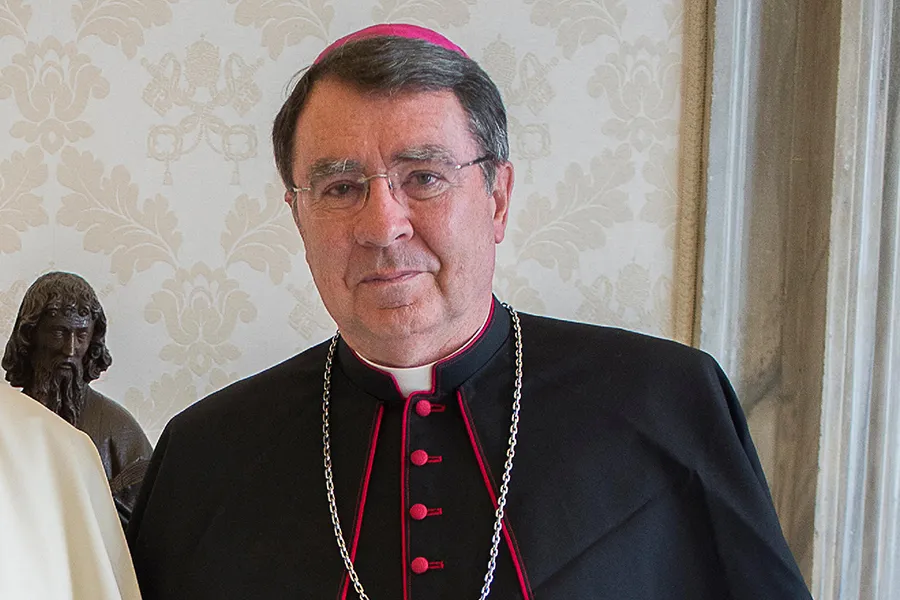
Archbishop Christophe Pierre, apostolic nuncio to the US, spoke with EWTN News Nightly’s Lauren Ashburn on Wednesday, discussing Pope Francis, his background, and his reception within the Church.

He mentioned the recently published work Jorge Mario Bergoglio: Una biographia intellettuale (Jorge Mario Bergoglio: An Intellectual Biography) by Massimo Borghesi, which discusses the influence on Pope Francis of Fr. Gaston Fessard, among others,.

Fr. Fessard was a French philosopher of the 20th century who has been called “a penetrating critic of Marxism.” He was central to the revival of Hegelian thought on history in France, and sought to be in dialogue with Hegel, considering his widespread influence in modern philosophy. Fr. Fessard was also active in the French Resistance and a critic of the collaborationist Vichy government.

Please read excerpts from the first half of Archbishop Pierre’s conversation with Ashburn, edited for clarity and length. The first half aired Dec. 14, and the second will air Dec. 15 on EWTN News Nightly.


Lauren: Archbishop Christophe Pierre, thank you so much for joining us this evening.

Archbishop Pierre: Thank you for the invitation.

Lauren: Archbishop, in the fast-moving four and a half years Pope Francis has been Pope, much has been written about him – his “option” for the poor, his evident pastoral approach, the reform of the Vatican. Now we seem to be witnessing a new phase of his interest: the intellectual and cultural roots that drive him. What are they?

Archbishop Pierre: Well, your observation is very interesting, you know, because we have to recognize that the coming of this Pope has created wonder, and a lot of questions. And if you allow me, I would say, during my one year and a half presence in this country, I’ve noticed this sense of wonder. Especially from the people themselves. They are happy to see this Pope. They feel that he is near them. They feel that he understands their problems. And I think this is one of the characteristics of the Pope. But may I say, many of us, a lot of people say, ‘Who is he? Where is he coming from?’ I would say there are two directions. One direction is coming from South America. This is his background. I’ve been living in four countries, and working in countries in South America.

(Lauren: Including Mexico) Including Mexico. And I arrived in Mexico at the time of the famous Aparecida conference of the Latin American bishops of the last century. This conference is very important to understand Pope Francis, because he was one of the main actors, because he was the Archbishop of Buenos Aires. But he was one of the main actors. So this is one aspect. The second one is intellectual background. And precisely a couple of weeks ago, an Italian author, Massimo Borghesi, published a book.

Lauren: That would be this book. (Laughter)

Archbishop Pierre: Ah, you read it.

Lauren: It’s in Italian, however, so you are going to have to tell me what it says. Let me talk to you about this book. It claims that behind this simplicity lies a “deep and original thinking,” based largely on French philosophers and theologians. That comes as a surprise to the Argentinian and populist stereotype of Francis. You are a Frenchman, who has spent years serving many different countries worldwide. What is this “deep and original thinking”?

Archbishop Pierre: Well first and foremost this Pope has been educated in our own time. The book tells us that maybe the first important author having contributed to his formation is the Jesuit Gaston Fessard. Maybe Gaston Fessard is not well known in the United States. I happened, when I was pursuing my master’s in theology in the French Catholic Institute of Paris, to make a credit on Gaston Fessard. [sic] So I was very happy when I read this book; I said, ‘My God!’

Lauren: You both are following after Gaston Fessard.

But there is unease among bishops over his approach. How can that be that be rectified?

Archbishop Pierre: I have read the Pope is not very precise. The Pope is not, eh, not a great intellectual, he is more pastoral than dogmatic. I would say these things are stereotypes. And maybe also prejudice. So I think there is a great — we especially with the bishops — we have a great responsibility, to try to understand our Pope. And to understand him in all aspects of his personality before making a judgment. And I think this is precisely what we should try to do. And not to remain with a superficial judgement of who he is or what he is supposed to be according to our own judgement. And by the way, he is also the Pope.


Lauren: Archbishop Christophe Pierre, thank you for joining us.

Archbishop Pierre: Thank you.


[…]

No Picture
News Briefs

Catholic Church in Australia commits to ensuring justice for sex abuse victims

December 15, 2017 CNA Daily News 2

Canberra, Australia, Dec 15, 2017 / 02:12 pm (CNA/EWTN News).- In a wide-ranging report released Friday, Australia’s royal commission found serious failings in the protection of children from abuse in the Catholic Church and other major institutions.

The commission recommended Dec. 15 that priests should be legally obligated to disclose details of sexual abuse revealed in the confessional and that priestly celibacy should be made optional.

The Vatican responded by saying the report should be “studied seriously”, reiterating its commitment to hearing and accompanying victims of child sex abuse in the pursuit of healing and justice.

Church officials in Australia apologized for the suffering caused and pledged their commitment to ensuring justice, while also noting the impossibility of violating the secrecy of sacramental confession.

The report was the result of an investigation in which the commission reviewed thousands of accounts of child abuse from figures in major institutions. The Royal Commission into Institutional Responses to Child Sexual Abuse was established in 2013 to investigate the handling of child sex abuse allegations by religious groups, schools, government organizations, and sporting associations.

Of the institutions examined, the most accusations were brought against the Catholic Church, in which more than 4,000 cases of child abuse reportedly occurred, making up 61.8 percent of all reported child abuse cases from religious entities.

In a previously released portion of the report, the commission found that seven percent of Catholic priests in Australia serving between 1950 and 2009 have been accused of child sex crimes.

“Tens of thousands of children have been sexually abused in many Australian institutions. We will never know the true number,” the report said.

“It is not a case of a few ‘rotten apples’. Society’s major institutions have seriously failed.”

Archbishop Denis Hart of Melbourne, president of the Australian bishops’ conference, said the report reveals a “shameful past, in which a prevailing culture of secrecy and self-protection led to unnecessary suffering for many victims and their families.”

He also reiterated his “unconditional apology for this suffering and a commitment to ensuring justice for those affected.”

Sister Ruth Durick OSU, president of Catholic Religious Australia, added that religious orders across Australia are will continue their recent work of reforming orders to better protect children.

“We acknowledge with gratitude the courage of all those survivors who have come forward to the Royal Commission,” Sr. Ruth said. “We will be taking very seriously the Royal Commission’s report and have commissioned an initial assessment of its findings by the Truth, Justice and Healing Council.”

As part of the report, the commission made numerous recommendations, such as changes to Australia’s criminal justice system and various recommendations for the Catholic Church, “many of which will have a significant impact on the way the Catholic Church operates in Australia,” the bishops said in their statement.

However, among some of the controversial recommendations are that priests should be legally obligated to disclose details of sexual abuse revealed in the confessional, and that they should face criminal charges if they refuse to do so.

In a statement in August, Hart stressed the importance of maintaining the confidentiality of confession while also ensuring that children are protected.

“Confession in the Catholic Church is a spiritual encounter with God through the priest,” Hart said in an Aug. 14 statement.

Confession “is a fundamental part of the freedom of religion, and it is recognized in the Law of Australia and many other countries,” he said. “It must remain so here in Australia…(but) outside of this, all offenses against children must be reported to the authorities, and we are absolutely committed to doing so.”

Additionally, the report recommended that the Catholic Church make celibacy an optional requirement of the priesthood, rather than a mandatory one, because while celibacy is not a cause of child abuse, the commission considered it a contributing factor when combined with other risk factors, according to the BBC.

Archbishop Anthony Fisher of Sydney told the Guardian that changing the celibacy requirement is not the solution to the abuse crisis.

“We know very well that institutions who have celibate clergy and institutions that don’t have celibate clergy both face these problems. We know very well that this happens in families that are certainly not observing celibacy,” he said.

The Holy See also responded to the report, saying in a statement on Friday that it “deserves to be studied seriously.”

“The Holy See remains committed to being close to the Catholic Church in Australia – lay faithful, religious, and clergy alike – as they listen to and accompany victims and survivors in an effort to bring about healing and justice,” the Vatican statement said.

“In his recent meeting with the Pontifical Commission for the Protection of Minors, Pope Francis said the Church is called to be a place of compassion, especially for those who have suffered, and reaffirmed that the Church is committed to safe environments for the protection of all children and vulnerable adults.”

At the end of the statement from the Australian bishop’s conference, the Church leaders restated their commitment to making amends for past abuse, and called on state governments to aid them in this task.

“Both leaders said the Church will continue to push for the introduction of a national redress scheme for the survivors of child sexual abuse in which the Church will participate.”

Philip Freier, the Anglican Archbishop of Melbourne, apologized for “the shameful way we sometimes actively worked against and discouraged those who came to us and reported abuse.”

[…]

No Picture
News Briefs

Hartford auxiliary bishop resigns at age 72

December 15, 2017 CNA Daily News 1

Hartford, Conn., Dec 15, 2017 / 12:02 pm (CNA/EWTN News).- The Holy See announced Friday that Pope Francis has accepted the resignation of Auxiliary Bishop Christie Macaluso from his position in the Archdiocese of Hartford at the age of 72.

Macaluso w… […]