No Picture
News Briefs

EWTN’s Warsaw: Network can be a ‘lifeline’ during pandemic
March 28, 2020 CNA Daily News 1

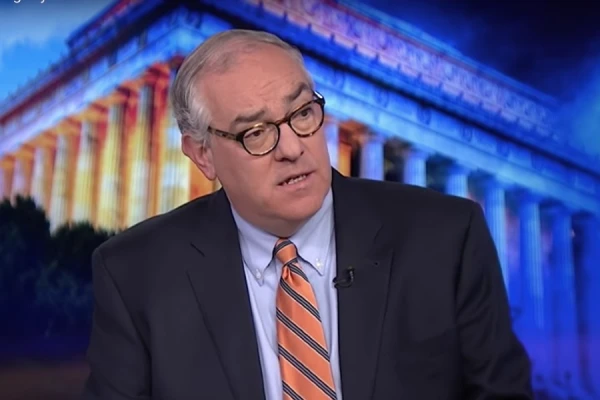
CNA Staff, Mar 28, 2020 / 07:00 am (CNA).- The chairman and CEO of EWTN said Thursday that the media network will remain open and on the air during the coronavirus pandemic. In a March 26 interview, EWTN’s Michael Warsaw said that the organization’s ministry is more urgent than ever.

“I think there’s so much anxiety. There’s so much fear. People feel untethered. And I think one of the things that EWTN provides is a place that people can turn to ground themselves, to connect themselves with the faith and really to find reassurance that God is there for them in this really difficult time,” Warsaw said on EWTN News Nightly.

Warsaw stressed that although the global pandemic has affected the lives of everyone, including EWTN employees, policies are in place to ensure that news and catechetical output will continue. He said that as the virus spread from the Asia-Pacific region, through Europe – and especially Italy – before arriving in the United States, the global media group adapted to the changing circumstances. 

“Most of our employees are working remotely. And we have essential staff who are still on duty in their posts in Irondale and here in Washington and elsewhere,” Warsaw said. “And we’re certainly prepared if we need to do more restrictions.” 

“The bottom line of that is that we will continue to air our channels. We will continue to produce programming, particularly the Mass, news, other key programming that will continue, and we’re prepared for that to continue.”

Warsaw stressed that, in addition to its news outlets, EWTN’s pastoral and catechetical content is an important resource for Catholics, and that with shelter-in-place orders active in many parts of the United States and the world, it is vital to serve as a link with the Church and with the wider communion of the faithful.

In response to the coronavirus, all Latin rite dioceses in the United States have suspended public Masses, with many bishops ordering the total closure of church buildings. Bishops have encouraged Catholic to watch livestreamed liturgies, and to use the media of television, radio, and the internet to foster prayer and spiritual communion. In these circumstances, Warsaw said, many Catholics have told him that EWTN’s output serves as a “lifeline.” 

“One of the things that I think we’ve heard so much about is, with all of the churches closed and the inability of people not just in this country, but globally, really to be able to attend Mass on Sunday, people tying into our Mass and participating remotely in our Mass, has been really a lifeline for many people to the practice of their faith, the ability to watch the Mass on EWTN, both on our linear channels, but also online on EWTN.com,” Warsaw said.

“From its founding, Mother Angelica always wanted EWTN and its audience to be a family. And I think in this time and in this moment we are very much a family for one another,” he added.

During the interview, Warsaw encouraged “three things that our EWTN family can do” together. 

“One is, certainly, pray. We need to pray for one another. Pray for the network, as we pray for them. I think, secondly, share what they have in the gift of EWTN. This is a great opportunity to evangelize. If people are benefiting by EWTN, they need to share that with their friends, share that with their family. That’s a very effective way of helping others and evangelizing in this moment.” 

Third, Warsaw said, “keep us between your gas and electric bill, as Mother Angelica would always say.” 

“It’s very important that we have the resources to be able to continue our mission and to continue to execute our mission to a much, much larger audience of people that are turning to us at this time.” 

“Financial support is critical for us in this moment as well,” Warsaw said. “And we’re always obviously very grateful to our EWTN family for that.”

“So many people have commented how much that has meant to them and how meaningful that has been to them — to be able to have that opportunity to pray and to know that when they are praying, when they are participating in and watching, that they’re doing so with people all over the world who are part of that EWTN family.” 

Warsaw said that, at a time when so many are looking for meaning and answers in the face of a pandemic, EWTN is “really trying to be a resource for people, and to give people hope, and to remind people that in this moment, what’s most important is that we need to keep our eyes fixed on Christ.”

“They’re looking for hope and they’re looking for answers. And I think them coming to EWTN is a beautiful thing and a way for them to find those answers and to find that hope that they’re looking for,” he said.

EWTN Global Catholic Network is the largest religious media network in the world. EWTN’s 11 global TV channels are broadcast in multiple languages 24 hours a day, seven days a week to over 300 million television households in more than 145 countries and territories.

EWTN platforms also include radio services transmitted through SIRIUS/XM, iHeart Radio, and over 500 domestic and international AM & FM radio affiliates; a worldwide shortwave radio service; one of the largest Catholic websites in the U.S.; electronic and print news services, including Catholic News Agency, The National Catholic Register newspaper, and several global news wire services; as well as EWTN Publishing, its book publishing division.
[…]

No Picture
News Briefs

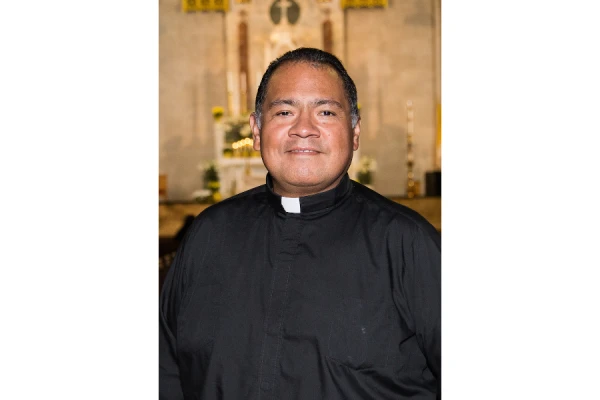
Brooklyn pastor is first Catholic priest in US known to die of coronavirus

March 27, 2020 CNA Daily News 2

CNA Staff, Mar 27, 2020 / 10:21 pm (CNA).- A Brooklyn parish announced the death of its pastor, Fr. Jorge Ortiz-Garay, who died of coronavirus at approximately 6 p.m Friday evening. The priest is the first in the U.S. known to have died from the virus.

Journalist Rocco Palmo was the first to report that the priest died from the virus, which is the cause of a global pandemic.

On March 24, the Diocese of Brooklyn announced that a priest at St. Brigid’s Parish in Brooklyn, where Ortiz was pastor, had contracted the coronavirus. On the same day, the parish posted on its Facebook page that Ortiz was “under observation in the hospital” and requested prayers “for his speedy recovery.”

On March 27, the parish posted on its Facebook page again:

“With a very sad heart, we inform you of the death of our dearest pastor, Father Jorge Ortiz Garay. We ask for your prayers for his eternal rest. We also ask you in a special way to pray for his parents, siblings, nieces and nephews who have lost a very special and loved person by his family, our community and many people around the country.”

Ortiz was born in Mexico City, and, according to his parish website, “At age 18, he joined the communities of the Neocatechumenal Way. It was through the involvement with this group that he felt his calling for the priesthood.”

He was ordained a priest in 2004 in Newark, and served parishes, along with missions of the Neocatechumenal Way, in New Jersey and New York City. He became pastor at St. Brigid’s in 2019.

In addition to his parish and missionary work, Ortiz led Hispanic ministry initiatives in the Diocese of Brooklyn. He is remembered by friends as a fervent evangelist.

The first cleric in the U.S. known to have died of the virus was Deacon John-Sebastian Laird-Hammond, OFM, who died March 20. Worldwide, more than 60 priests and at least one bishop have died of the virus.

More than 100,000 people have tested positive for coronavirus in the US, and more than 1,700 have died. In the state of New York, which has become the epicenter of the pandemic of the virus in the US, more than 600 people have died.


[…]

No Picture
News Briefs

Mass. bishop ‘suspends’ sacramental anointing while rescinding controversial policy

March 27, 2020 CNA Daily News 6

Washington D.C., Mar 27, 2020 / 08:51 pm (CNA).- After rescinding a controversial policy concerning sacramental anointing of the sick, the bishop of Springfield, Massachusetts told priests Friday afternoon that anointing of the sick is “suspended” within the Diocese of Springfield.

Earlier this week, Bishop Mitchell Rozanski authorized a change to norms for the sacrament of the anointing of the sick, permitting a nurse, rather than a priest, to conduct the physical anointing, which is an essential part of the sacrament.

“I am allowing the assigned Catholic hospital chaplains, standing outside a patient’s room or away from their bedside, to dab a cotton swab with Holy Oil and then allow a nurse to enter the patient’s room and administer the oil,” Rozanski told priests in an email March 25.

On Friday afternoon the diocese told CNA it had rescinded that policy.

In fact, Rozanski emailed Springfield priests Friday afternoon explaining that “After further discussion and review, I am rescinding my previous directive and temporarily suspending the Anointing of the Sick in all instances.” 

The sacramental anointing of the sick is conferred upon those Catholics who are in danger of death.
 
“The first grace of this sacrament is one of strengthening, peace and courage to overcome the difficulties that go with the condition of serious illness or the frailty of old age. This grace is a gift of the Holy Spirit, who renews trust and faith in God and strengthens against the temptations of the evil one, the temptation to discouragement and anguish in the face of death,” according to the Catechism of the Catholic Church.

“This assistance from the Lord by the power of his Spirit is meant to lead the sick person to healing of the soul, but also of the body if such is God’s will. Furthermore, ‘if he has committed sins, he will be forgiven,’” the catechism adds.

The catechism explains that “as soon as anyone of the faithful begins to be in danger of death from sickness or old age, the fitting time for him to receive this sacrament has certainly already arrived.”

According to the Church’s canon law, parish pastors “have the duty and right of administering the anointing of the sick for the faithful entrusted to their pastoral office. For a reasonable cause, any other priest can administer this sacrament with at least the presumed consent of the priest mentioned above.”

Canon law specifies certain circumstances under which the sacrament is expected to be administered, among them are cases “of doubt whether the sick person has attained the use of reason, is dangerously ill, or is dead,” and when a sick person has “at least implicitly requested it when they were in control of their faculties.”

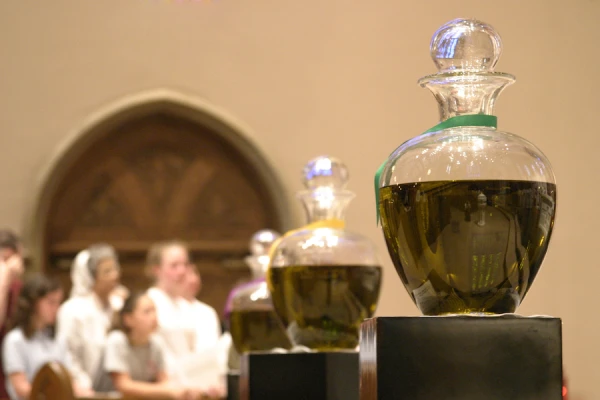
In his Friday email to priests, Rozanski noted that the diocesan Chrism Mass would be postponed, and told priests that “Should you run out of either the Oil of the Sick or Oil of the Catechumen, you may bless these oils to replenish your stock.”

The Church’s canon law says that bishops and their equivalents in law can bless the oil to be used in anointing of the sick, while other priests may do so “in a case of necessity, but only in the actual celebration of the sacrament.”

The Diocese of Springfield did not respond to questions regarding the intended length of Rozanski’s temporary suspension.

The bishop’s Friday announcement came as the chairman of the U.S. bishops’ conference liturgy committee issued a memo to U.S. bishops, informing them that “with regard to the Anointing of the Sick, it is not possible for the anointing with oil to be delegated to someone else, such as a nurse or doctor.” That memo seemed to refute the liceity of Rozanski’s March 25 policy.

[…]

No Picture
News Briefs

How CRS is helping refugees amid coronavirus

March 27, 2020 CNA Daily News 0

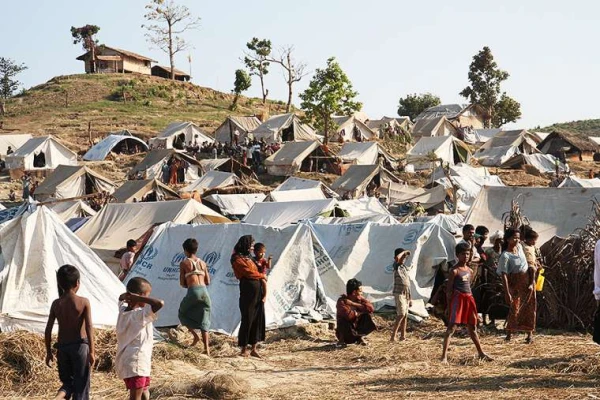
Dhaka, Bangladesh, Mar 27, 2020 / 04:11 pm (CNA).- There are nearly 700,000 refugees living in close quarters in the world’s largest refugee settlements in Bangladesh, making them vulnerable as the coronavirus (COVID-19) pandemic spreads. 

Caroline Brennan, Catholc Relief Services’ emergency communications director, told CNA that in areas where CRS is serving refugees, such as in Bangladesh, they are adapting their programs as quickly as possible so they are still relevant and safe during the pandemic.

“In this case, when we’re looking at a virus like the coronavirus…there is such a heightened vulnerability in these settlements, where you have very large populations in extremely congested environments, and where multi-generational family members are living in really tight quarters,” Bennan said.

Many countries have adopted stay-at-home orders and strict social distancing measures in response to the virus. For the Rohingya refugee population in Bangladesh, Brennan said, and in many other areas where refugees are, it can be almost impossible for people to distance themselves from others in this way.

There may be up to ten people living in a small space with nowhere else to go, she said, which means access to safe space is a problem, as well as access to the means for refugees to keep clean.

In addition, Bangladeshi authorities fear that the coming cyclone season will cause sewage to overflow into flimsy shelters and possibly spread the coronavirus, the New York Times reported this week.

Brennan said CRS, along with local partners, has been providing hygiene and sanitation supplies to the camps, as well as training and materials for local health institutions.

One of the biggest priorities, Brennan said, is simply communicating information about how to protect oneself from the virus, but doing so in the camps in a safe way.

“Obviously, we don’t want to bring people together in large groups,” she said.

“And often times, that’s how you conduct programming— bringing people together for a training or bringing children together in a classroom.”

CRS has had to adapt to using large posters, printed in several languages, to get the word out rather than gathering people in groups to convey information about how to keep themselves safe from the virus, Brennan said. 

Food in the refugee camps is often distributed in large groups, too, she said. CRS has adapted by doing more food distributions, but with smaller numbers of people, spread further apart, and with handwashing stations provided to lessen the chance of infection.

In some areas, refugees have regarded humanitarian workers with suspicion as possible carriers of the disease. Brennan said she is grateful that CRS has been present in many refugee areas for a while, which helps to build trust and allows CRS to communicate more effectively.

“We can convey information which can be received with credibility, and that’s crucial,” she said.

[…]

No Picture
News Briefs

Diocese permits nurses to anoint during sacrament of the sick

March 27, 2020 CNA Daily News 1

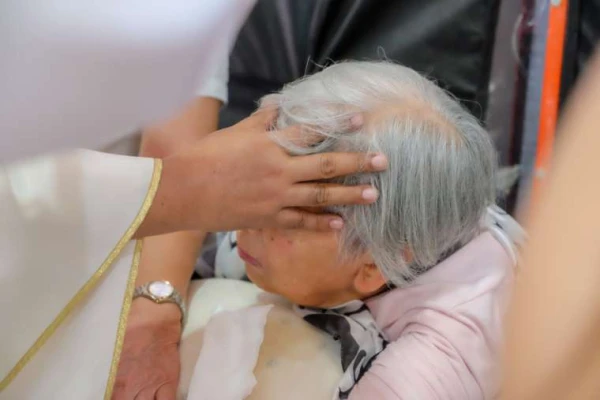
Washington D.C., Mar 27, 2020 / 02:54 pm (CNA).- A Massachusetts diocese has authorized a change to norms for the sacrament of the anointing of the sick, permitting a nurse, rather than a priest, to conduct the physical anointing, which is an essential part of the sacrament.

“Effective immediately I am allowing the assigned Catholic hospital chaplains, standing outside a patient’s room or away from their bedside, to dab a cotton swab with Holy Oil and then allow a nurse to enter the patient’s room and administer the oil. If the patient is alert, the prayers may be provided via telephone,” Bishop Mitchell Rozanski of Springfield, Mass., told priests in a March 25 message.

“The hospitals need to control bedside access to patients so as to reduce transmission of COVID-19 as well as to preserve very limited supplies of masks and other personal protection equipment(PPE),” Rozanski explained, noting that the policy was devised in consultation with “pastoral services at both Mercy Medical and Baystate Medical centers.”

Mercy Medical Center is a Catholic hospital, and a part of Trinity Health, a Catholic healthcare system.

The Church teaches that only a priest may validly perform the sacrament.

A spokesman for the Diocese of Springfield told CNA March 27 the permission reflects diocesan policy “for now.” The spokesman said the policy was proposed by the Trinity Health system, and has also been proposed to other dioceses.

Trinity Health has not responded to questions from CNA. 

According to the Church’s canon law, “the anointing of the sick, by which the Church commends the faithful who are dangerously ill to the suffering and glorified Lord in order that he relieve and save them, is conferred by anointing them with oil and pronouncing the words prescribed in the liturgical books.”

“The celebration of the sacrament includes the following principal elements: the ‘priests of the Church’ – in silence – lay hands on the sick; they pray over them in the faith of the Church – this is the epiclesis proper to this sacrament; they then anoint them with oil blessed, if possible, by the bishop,” the Catechism of the Catholic Church explains.

“Only priests (bishops and presbyters) are ministers of the Anointing of the Sick,” the catechism adds.

The minister of the sacrament, who must be a priest for its valid celebration “is to perform the anointings with his own hand, unless a grave reason warrants the use of an instrument,” according to canon 1000 §2 of the Code of Canon Law.

The Congregation for Divine Worship and Sacraments has spoken on related questions regarding the sacrament of baptism. In a letter published in 2004 by the Canon Law Society of America, Cardinal Francis Arinze, then prefect of the congregation, explained that “if a minister administering the Sacrament of Baptism by infusion pronounces the words of the sacramental form but leaves the action of pouring the water to other persons, whoever they may be, the baptism is invalid.”

With regard to the anointing of the sick, in 2005, the Congregation for the Doctrine of the Faith explained “the Church has identified down the centuries the essential elements of the Sacrament of the Anointing of the Sick…a) subject: the seriously ill member of the faithful; b) minister: “omnis et solus sacerdos”; c) substance: the anointing with blessed oil; d) form: the minister’s prayer; e) effects: salvific grace, the forgiveness of sins, the relief of the sick person.”

“The Sacrament is not valid if a deacon or a layman attempts to administer it. Such an action would be a crime of simulation in the administration of a sacrament, to be penalized in accordance with can. 1379, CIC,” the congregation added.

Canon law establishes that a person who “simulates” a sacrament, or celebrates it invalidly, is subject to ecclesiastical discipline.


Ed Condon contributed to this report.


[…]

No Picture
News Briefs

As dioceses face coronavirus money woes, Knights of Columbus offer line of credit

March 27, 2020 CNA Daily News 0

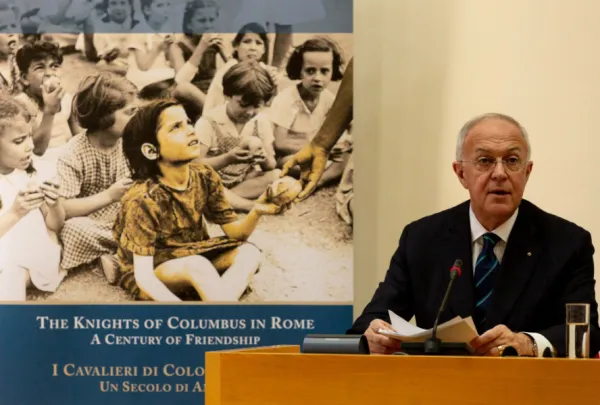
CNA Staff, Mar 27, 2020 / 02:17 pm (CNA).- The Knights of Columbus have offered a $1 million line of credit to Catholic dioceses to help dioceses and parishes suffering from the financial effects of the coronavirus pandemic.

“It is critical for us to support the Catholic Church in the United States at this time, so that the Church can continue to provide irreplaceable spiritual and charitable support, and can keep the staff supporting its mission and outreach employed,” Knights of Columbus CEO Carl Anderson said March 26. “Our fund is designed specifically to help dioceses and their parishes weather this pandemic financially so that they can continue their important work – now and after the pandemic.”

The $100 million fund allows up to $1 million line of credit per Catholic diocese. The program will open March 30 and will be available for 60 days following.

The Knights of Columbus say the interest rate is “very competitive,” equal to the rate of a one-year Treasury bill plus 2.25%.

The line of credit will have a two-year term. At the end of the term, dioceses may convert the line of credit into a Knights of Columbus church loan fully amortized at the prevailing rate for a five, 10 or 20 year period.

These are the same terms offered by the Knights of Columbus’ present ChurchLoan program

“The Knights of Columbus has been a key lender to parishes and dioceses for more than a century, and the ChurchLoan program remains a key source of financing for Catholic parishes and institutions,” the Knights of Columbus said.

The Knights of Columbus is a Catholic fraternal organization with nearly 2 million members in more than 15,000 local councils worldwide. Its members worked 76 million service hours in 2019 and helped donate more than $185 million in charitable causes.

Its life insurance branch claims about $109 billion life insurance in force. The insurance program helps fund the knights’ charitable work and other efforts to support the Catholic Church.

The Knights have many grassroots initiatives responding to the needs of the COVID-19 pandemic. The organization has asked members to help provide food and other essentials to those in need. It has also urged members to take part in blood drives. The Knights of Columbus helped pioneer nationwide blood drives in the 1930s.

With churches closed to help prevent the spread of the coronavirus, parishes face dwindling cash flow from collections. It is doubtful whether churches will open for the crowds who typically attend Mass on Easter, as some models project the virus will peak at the time.

Some parishes and dioceses have tried to expand online giving. Catholic charitable outreach also faces shortages of funds at a time of great need.

At the same time, the coronavirus has prompted massive layoffs. About 3.3 million Americans filed for unemployment and the unemployment rate could have already risen to 5.5%, the highest since 2015, the Washington Post reports.

[…]