

The founding of America was not a single event. It was a process that began long before the documents that broke us away from Great Britain and the documents that established our government. Long before we had this new and remarkable government, we were a people, a nation.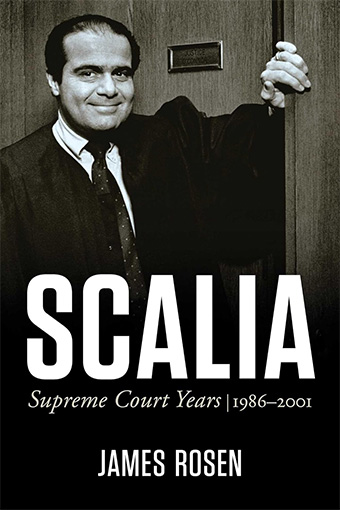
Nations begin with families that band into clans, which band into a tribe that evolves into a nation. It has to do with common understanding, common protection, and common identity. We become a people distinct from whence we came. In this process, there comes a moment when the tribe establishes a formal government, which is the next step in nationhood. But the founding goes on in remembrance, traditions, norms, and laws. And sometimes this founding is misused, forgotten, or ignored, and must be remembered, so the founding will go on.
The work of founding
We speak of the Founders—Washington, Jefferson, Adams, and all the rest—but the work of founding did not start with them, and neither does it end with them. This is not to argue for a “living” constitution or anything like that, but a recognition that this “founding” did not end with the Declaration in 1776, the Articles of Confederation in 1781, or the U.S. Constitution in 1788. It continues with our embrace of America and through the work of certain men who are the equal of those men from ’76, ’81, and ‘88.
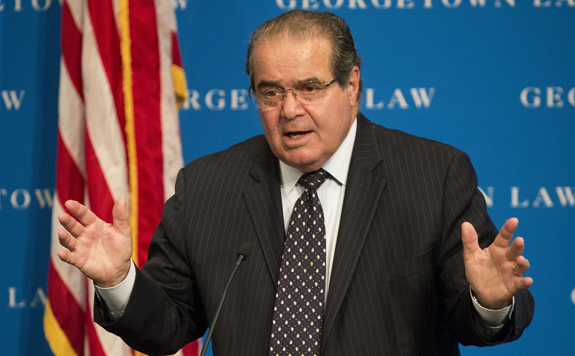
One of them is Supreme Court Justice Antonin Scalia, whose story is continued by James Rosen in the masterful second volume of his life story, recently published by Regnery/Skyhorse.
I believe Scalia was a Founder of America because he practically alone reconnected a proper understanding of those founding documents and made known among a whole generation of Americans—lawyers, judges, laymen—what the Constitution really means and how to view it as the original Founders did, and it does not mean whatever the fashion of the moment says.
It is a monumental task to get your arms around the life and work of the herculean Antonin Scalia, that massive intellect, robust argumentarian, and large lover of life. So, you can understand why Rosen’s one-volume assignment years ago has turned into a projected three. It would not surprise anyone and delight many if the third volume turned into a fourth. But here we are in the second, the period of Scalia’s rise and rise to the Supreme Court, his thirty terms on the court, which began with his investiture on 26, 1986.
And almost immediately, the battle was on. How could it not be on? Scalia was a proud, sometimes irascible man with very firm and fearless convictions about how statutory law ought to be understood, chiefly through a reading of the actual text, and how the Constitution ought to be interpreted, with an understanding of what it originally meant.
At the time he joined the court, only two Justices—Thurgood Marshall and Byron White—had been appointed by Democrats—Kennedy and Johnson. All the rest were appointed either by Eisenhower, Nixon, Ford, or Reagan. And yet, none of them could be considered originalists, as we have come to know Scalia, nor textualists. These justices tended toward horse-trading and three-tiered tests that allowed lots of wiggle room. There was a tendency toward policy outcomes and what has become, thanks to Scalia and those who came after, the anathema of a “living constitution.”
Unlike volume one, this volume is more about the law than it is about Scalia’s life, though there is plenty of his life here. This volume is about key cases that explain Scalia’s views and Scalia’s fights, both public and those traded in memos office to office in what some call The Marble Palace.
Scalia and Originalism
Originalism looms large in Scalia’s legal and intellectual life, and is one reason we can consider him a New Founder. There is a tendency in the minds of modern men to think they might know better than those who came before, particularly the generation of political, cultural, and legal giants who created our governmental structure, including, and perhaps especially, the separation of powers, where there is a unique tension among the three branches.
Early in his Supreme Court career, there came a case on a topic that has bedeviled the three branches since the disaster of the Watergate years. It involved the idea of an independent council given practically unlimited power to investigate and prosecute executive branch officers, but not appointed or controlled by the executive branch, which has exclusive power under the Constitution to make executive branch appointments. You can see the powerful vestiges of this today in those who claim the Justice Department itself is independent of the president’s executive power.
The bottom line in this case was whether such appointments violated the separation of powers. In an 8-1 vote, the Court decided it did not. Scalia’s lonely dissent, considered by many to be his masterpiece, was based robustly on originalism, that the text of the Constitution means what it says. In this case, it means the executive branch appoints its own officers, not some “star chamber” created by an act of Congress.
One of Scalia’s reddest lines was the court’s reliance on or reference to so-called legislative history as a way for Justices to understand what the drafters meant. He knew this was a mug’s game, three-card monte played on the streets of Times Square that he would have known back in the 1950s. The idea is that the intent of this text can be found hidden in a memo that a mid-level Senate staffer added to the legislative history, just so you might find it and include it in your decision today. There is a story from volume one in which Scalia sits down to lunch with his friend Michael Uhlmann, and Uhlmann says that he was late because he was in his Senate office writing legislative history. Guffaws all around. The majority opinion in the Olson case, upholding the independent counsel, cited legislative history twice.
Rosen says Scalia closed his dissent “with a flourish of sarcasm and textualist fervor.”
“The ad hoc approach to constitutional adjudication has real attraction, even apart from its work-saving potential,” he snapped. “It is guaranteed to produce a result, in every case, that will make a majority of the Court happy with the law. The law is, by definition, precisely what the majority thinks, taking all things into account, it ought to be. I prefer to rely upon the judgment of the wise men who constructed our system, and of the people who approved it, and of two centuries of history that have shown it to be sound. Like it or not, that judgment says, quite plainly, that ‘The executive Power shall be vested in a President of the United States.'”
Textualism and Dictionaries
Because of his preference for textualism, which is related but distinct from originalism, Scalia strongly believed in the plain meaning of words as they were known to those who actually used them in statutory law. Scalia loved dictionaries.
In a search-and-seizure case, we see Scalia fighting over the meaning of the word “seize.” Is a subject seized when a cop yells “stop”, or is he seized when the cops lay hands on the guy? In another case, pitting Kmart against Cartier, the question arose about the meaning of “foreign”. In a case about the expansion of rules under the FCC and telephone carriers, Justices debated the meaning of the word “modify.” That sent Scalia into the “Random House Dictionary of the English language (1987), Webster’s Third New International (1981), Oxford English (1989), Black’s Law (1990)—to find general agreement that “to modify” means implementation of changes of a limited nature.” The case became known as the “dictionary case”. Scalia even went after Webster’s for their “ignorant use” of “modify.” Scalia was not afraid of the idea of going after dictionaries, his opponents, and sometimes his friends.
There is a Borkean feast in this book about cases and relationships. You can see Scalia trying his best to get along with Harry Blackmun, who wrote the Roe decision and who disliked Scalia and all he stood for long before Scalia arrived at the Court. Blackman, who considered himself the light, saw a kind of darkness creep in around the arrival of Scalia. This was Blackmun speaking in the context of a right to abortion, but could also be viewed as his understanding of the overall Scalian advance on the Court. Rosen has the nasty memos and asides. Blackmun and his clerks truly despised the Federalist Society crowd that arrived with Scalia.
Scalia’s relationship with Sandra Day O’Connor is fascinating. He disdained her reasoning in certain cases, wrote blistering dissents against them, and probably did not like certain aspects of her personality. He may even have considered that she did not intellectually belong on the Court, at least, in the words of Mrs. Scalian, that O’Connor’s specialty was not constitutional law.
As for cases, Rosen gives long and detailed takeouts on important ones including Planned Parenthood V. Casey where we see Scalia appalled by the majority opinion agreed to by those Rosen refers to as the “three amigos” who came onto the court as “conservatives” invoking what Scalia later referred to as the “sweet mystery of life” passage: “At the heart of liberty is the right to define one’s own concept of existence, of meaning, of the universe, and of the mystery of human life.” In his dissent, he said the majority relies on “…a new mode of constitutional adjudication that relies not upon text and traditional practice to determine the law, but upon what the Court calls ‘reasoned judgment,’ which turns out to be nothing but philosophical predilection and moral intuition.”
Then there is the story of the Romer decision out of Colorado on whether homosexuals could have special rights and protections in local law and whether the state could overrule local statutes granting such special rights. Again, Scalia was appalled at the lack of reasoned distinctions demonstrated by the majority that a few years before, in the Bowers v. Hardwick decision, had upheld laws against homosexual sodomy, yet now said, through referenda, that the citizens of Colorado could not limit special protections for homosexuals in Aspen.
The book has something for everyone, layman and lawyer alike. There are wonderful stories about Scalia’s family life and the Church. And for lawyers, a deep understanding of cases that have changed America.
Rosen is a remarkable historian, reporter, writer, stylist, and thinker. He puts one in mind of the historian Robert Caro, who was taught early in his journalism career to “turn every page,” which means, literally, to first find and then turn every dusty page. Do not assume anything, but examine every document, because crucial facts are often hidden. The truth can be found in those dusty pages.
Rosen has turned every dusty page in the remarkable story of Antonin Scalia. More to come.
• Related at CWR: “The Rise and Rise of Antonin Scalia” (March 17, 2023) by Austin Ruse and “Justice Scalia’s Faith” (April 21, 2026) by James Rosen.
Scalia: Supreme Court Years, 1986 to 2001
By James Rosen
Hardcover, 528 pages
Skyhorse / Regnery Publishing, 2026
If you value the news and views Catholic World Report provides, please consider donating to support our efforts. Your contribution will help us continue to make CWR available to all readers worldwide for free, without a subscription. Thank you for your generosity!
Click here for more information on donating to CWR. Click here to sign up for our newsletter.

Is Scalia describing the actions of the current SCOTUS or his desire to guide the court to a brighter day? Scalia’s character and proper balance in his relationship with Sandra Day O’Connor displayed that bipartisanship. Unfortunately, he failed to overcome the direct influence of the majority, 6/3 driven in many cases by politics. How so?
Justice Thomas:
Casts his votes almost exclusively to the Right. Voted to give President Trump “absolute immunity”.
>Gun Rights Expansion: Thomas supported rulings that broadened the interpretation of the Second Amendment, impacting gun control laws.
>Campaign Finance: Favored decisions that weakened restrictions on campaign contributions, raising concerns about political corruption.
Justice Alito:
>Destroying one of the last pillars of the 1965 Voting Rights Act (VRA), voter suppression, and the expansion of gerrymandering.
>He voted that the fifth major Supreme Court decision was authored by the two justices who have slowly but surely strangled efforts to protect the democratic rights of Black and other minority Americans.
Scalia really needed to expand on other critical flaws…
Term limits, influence of presidential appointments, and calendars.
Judge Robert Bork cautioned about “Slouching toward Gehenna.”