


Scrupulosity over moral matters is not a common problem in our world today. After all, today one is more likely to be treated like a social pariah for failing to recycle trash than for committing adultery.
That difference in modern attitudes can help us understand the problem of scrupulosity. For example, because of our culture’s emphasis on the value of recycling, it is reasonable to feel a twinge of guilt if we throw an aluminum can in a trash can rather than into a recycling bin. We have all been trained to imagine how that little aluminum can will make an ugly, smelly landfill even bigger. Then we feel guilty.
On the other hand, our culture does not train us to imagine how our sins against morality offend God, harm other people, and prepare us to spend eternity in a place far worse than a garbage dump. But those who are scrupulous do imagine that fate.
Scrupulosity, according to the Modern Catholic Dictionary, is the “habit of imagining sin where none exists, or grave sin where the matter is venial.” Scrupulous people may fear that their words, actions, or omissions have seriously offended God and feel stuck, paralyzed, and overwhelmed by thoughts of spiritual separation from Him.
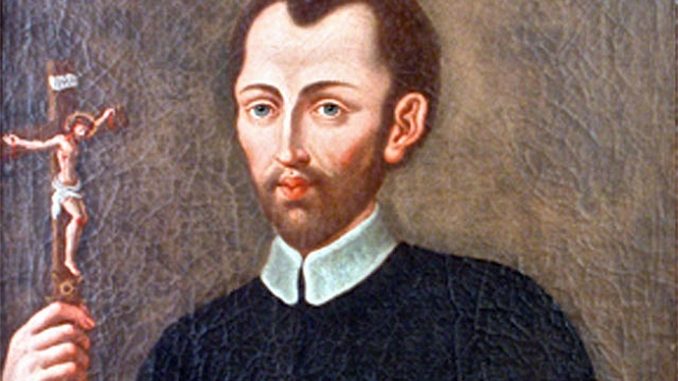
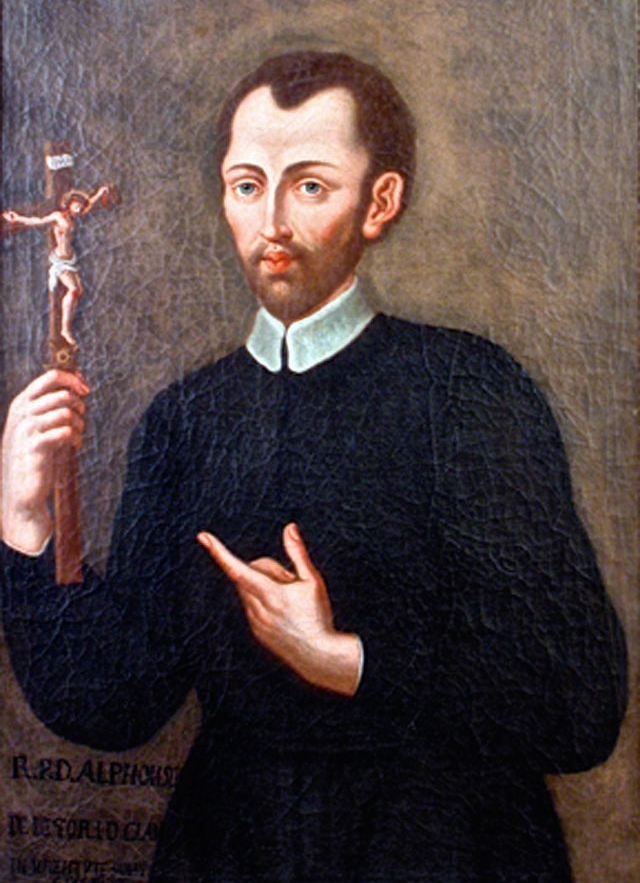
Scrupulosity is not an easy habit to overcome. However, a great Catholic saint suffered from it throughout his life, and his life story can show us how God’s grace used his weakness to help him become a saint.
A promising young lawyer
Alphonsus de Liguori (1696-1787)1 was born into a noble family in the city of Naples, Italy. While his mother was a refined, sensitive woman, his father could be hot-tempered and demanding. Since Alphonsus suffered from asthma and was nearsighted, he was educated for a career in law, not military service like his father.
Alphonsus was a brilliant student and earned a degree in civil and canon law by the time he was sixteen years old. He had a highly successful career and never lost a case. He was so feted by the rich and powerful that it is not surprising that his spiritual fervor began to wane a bit. His faith did revive after he attended a spiritual retreat.
Then one day, when Alphonsus was twenty-seven years old, he entered a courtroom to defend his client. He gave a vigorous defense and sat down. The opposing lawyer stood up and simply pointed out one piece of evidence that Alphonsus had overlooked. Alphonsus knew immediately that he had lost his case.
Losing his first case after practicing law for eight years might have been an opportunity for Alphonsus to grow in humility. But he was a sensitive and scrupulous man. He worried that the other lawyer—and the entire city of Naples—would conclude that he had lied on purpose to cover up the weakness of his case.
Alphonsus spent hours weeping and praying about this event. A few weeks passed, and his father confronted him about resuming his legal career and re-entering Neapolitan social life. When Alphonsus refused to do either, his father was furious.
Alphonsus had always been scrupulously careful to treat his parents with respect, and he was torn over his inability to please his father. He realized that God was calling him to the priesthood, which ignited another serious argument with his father.
Alphonsus’ father eventually accepted that Alphonsus’ mind was made up, but he was not happy about it.
A missionary priest in his own hometown
After three years of study, Alphonsus was ordained a priest. Unlike most priests of the time, Alphonsus did not preach in an artificial, pompous style and instead preached naturally and simply about Jesus Christ. One day, by an act of divine providence, Alphonsus’ father happened to be passing a church where Alphonsus was preaching a mission. He stopped in to listen to his son, was moved by his proclamation of the Good News, and then (finally) thanked Alphonsus for becoming a priest.
At first, Alphonsus devoted his priestly ministry to serving the poor of the city, but his preaching missions became popular, and he began to speak in rural areas of the archdiocese as well. As he became aware of the spiritual needs of Catholics living in the Italian countryside, the idea of a religious congregation began to form in his mind.
It all started when a bishop asked Alphonsus to help him discern whether the visions of a nun in his diocese should be judged favorably. Alphonsus carefully examined the nun and her statements, and he approved her visions. He was thus instrumental in the formation of an order of nuns. That experience led him to establish his own religious order of priests and brothers focused on missionary work, which was eventually named the Congregation of the Most Holy Redeemer.
For most people, the work of founding a religious order—establishing community guidelines, training novices, founding new communities, begging for donations, writing a Rule of life—would completely fill one’s days. But the scrupulous Alphonsus had promised himself that he would never waste a moment of his priestly life. So he began writing books.
Never a wasted moment
Some of Alphonsus’ books were dogmatic works. For example, he wrote short works to respond to popular errors, but he also wrote a huge three-volume history of heretical teachings.
Other works written by Alphonsus concerned Catholic morality. The most famous of these books was his Moral Theology, a 1500-page work that went through nine editions in his lifetime and addressed the moral questions of his day. This work eventually led him to be declared a Doctor of the Church.
But the bulk of Alphonsus’ 110 books were spiritual works written to help ordinary Catholics practice their faith. Many of them—including Visits to the Blessed Sacrament, The Glories of Mary, and Way of the Cross—can be found in Catholic bookstores today. He also wrote books of novenas, books explaining how to pray, books for priests, books about the Mass, books reminding the reader how much God loves us, and books about how to prepare for death. One short book, which he was eminently qualified to write, was titled Peace for Scrupulous Souls.
Alphonsus was sixty-two years old and was certain that his life was drawing to its close. (He was wrong. He had twenty-five years of life left.) A messenger from the pope arrived and told him that the pope had nominated him to be bishop of the diocese of Saint Agatha of the Goths. Alphonsus was shocked. He immediately wrote back to the pope and politely explained that he suffered from asthma, headaches, partial blindness, deafness, and other infirmities. Surely, he suggested, the pope wanted someone else to fill this important office.
But the pope knew that this diocese needed a strong shepherd. When Alphonsus received his second letter from the pope, he first knelt down and prayed. Then he read it, looked up to heaven, and told his companions, “Glory be to the Father, since the Pope wishes me to be a bishop, then I wish to be a bishop.”2
A reforming bishop
Immediately after he was ordained bishop, Alphonsus gave a conference to his priests. He sought to inspire them to a greater fervor in their priestly ministry. For many of them, his sermon worked. Even some of the less worthy priests of his diocese were moved to repentance.
But not all of them. When Alphonsus learned that one of his priests was behaving in a scandalous manner, he talked to the man privately. When that did not bring about an improvement in the priest’s life, Alphonsus reported him to secular authorities, and the priest was arrested. This approach had a salutary effect on the behavior of other unworthy priests in his diocese.
During his years as a bishop, Alphonsus organized preaching missions to be held throughout his diocese. He arranged for regular times of Eucharistic Adoration at his cathedral and personally spent an hour each day before our Lord. He examined each candidate to his seminary to make sure the man was qualified. He visited parishes throughout his diocese, traveling on a donkey and not in a fancy carriage. When a famine swept through the area, he went into debt to provide food for those who were starving.
After thirteen years as a bishop, Alphonsus was finally allowed to retire. His physical health had deteriorated even further, and he had been close to death three times. Rheumatism left him partially paralyzed, unable to walk unaided, and with his neck so badly bent that his chin was in constant contact with his chest. For this reason, he had to receive special permission to say Mass since he was forced to sit in a chair to consume the Precious Blood. Though he probably expected to enter semi-retirement during his declining years, his religious order was about to face a grave crisis.
His final trial
Governments through history, not just in the twenty-first century, have tried to control the activities of religious orders. The Redemptorist order had continued to spread in kingdoms throughout Italy even during Alphonsus’ tenure as a bishop. But in the kingdom of Naples, where Alphonsus lived and directed the order for many years, there was constant tension between the Redemptorists and the king’s court. The Redemptorist order had been repeatedly threatened by lawsuits and other attacks, but Alphonsus’ legal acuity kept them on the winning side with judges. Alphonsus began negotiations with the Neapolitan royal court, hoping to finally gain permission for the Redemptorists to exist as a true religious order in Naples.
Remember, Alphonsus was in his eighties, was somewhat deaf, was partially blind, and suffered from recurrent headaches. He and his closest advisors had carefully discussed the wording to be used in a legal document, which would be submitted to the king’s court. One of Alphonsus’ priests wrote up the document, but he secretly amended it. He removed the essence of the Redemptorists’ Rule and its order of common life so as to placate the king. For some reason, this priest failed to tell Alphonsus he had made this dramatic change. Alphonsus read part of the legal document but, because of his headaches and his trust of the priests who assisted him, he signed the document without reading it in its entirety.
The document was easily approved by the court of Naples. But to everyone else, it was a disaster.
Pope Pius VI, who was already upset over government interference in religious matters in other countries, was furious. He assumed that Alphonsus had consented to these changes, accused him of capitulating to the king, and removed him as superior of his own order. The Redemptorist order split in two, and many members of the Naples branch, convinced that Alphonsus had intentionally destroyed the foundation of their religious life, abandoned the order or left Naples.
Astonishingly, Alphonsus never held a grudge against the friends who had (almost) destroyed the Redemptorists3 and caused him to be vilified by members of his own order. Instead, he forgave his betrayers and continued to treat them with kindness. He blamed himself for failing to read the document and probably for other reasons which a good priest would have told him were mere scruples. Alphonsus, who had spent a lifetime trying to overcome his scrupulous worrying, suffered a major crisis of confidence when he was punished by the pope.
For those of us who are more apt to blame other people than ourselves when authority figures treat us harshly, or when we make an inadvertent mistake, or when friends betray us, such behavior may be hard to understand. But for those who do struggle with scrupulosity, Alphonsus’ reaction makes perfect sense. For those who are scrupulous, even a mistake caused by physical weakness can appear to be a serious sin, one that can lead to perpetual separation from God, or, to put it another way, to the pain of spending eternity in the garbage dump called hell.
Through prayer, Saint Alphonsus de Liguori was able to recover his peace with God before his death. His lifelong struggle with scruples, however, is not just an encouraging story for those who suffer from scrupulosity. His example proves that one man can fight his besetting sin for his entire life, whatever that sin might be, and yet, by God’s grace, become a saint.
Endnotes:
1 His full name, demonstrating both his family’s Catholic faith and noble pedigree, was Alphonsus Mary Anthony John Cosmas Damian Michael Gaspard de’ Liguori.
2 Fr. D. F. Miller, C.SS.R. and Fr. L. X. Aubin, C.SS.R., Saint Alphonsus Liguori (Rockford: TAN Books and Publishers, 1987), 241-242.
3 Six years after Alphonsus’ death, the congregation was reunited and has since spread all over the world.
If you value the news and views Catholic World Report provides, please consider donating to support our efforts. Your contribution will help us continue to make CWR available to all readers worldwide for free, without a subscription. Thank you for your generosity!
Click here for more information on donating to CWR. Click here to sign up for our newsletter.

St. Alphonsus is one of my favorite saints.
A biography about him related how he found his bishop’s pectoral cross in a second hand store. That’s always impressed me about his humility.
“Scrupulosity, according to the Modern Catholic Dictionary, is the “habit of imagining sin where none exists, or grave sin where the matter is venial” (Beutner).
I’ve wondered about the Apostle Paul’s thorn in his side permitted by God for sake of his humility following Paul’s heavenly revelations.
Aquinas believed Paul’s alleged sin or thorn was moral. Another example where an ongoing severe temptation caused anguish, perhaps scrupulosity. And precipitated sanctity.
Insofar as personal experience, my antidote is acceptance of God’s love, which is greater than my willingness to admit.
It doesn’t seem an exaggeration to say that scrupulosity was the main cause of both the Protestant Reformation in the person of Martin Luther, and the Catholic Counter-Reformation in the person of St. Ignatius of Loyola — and also that, in the person of St. Therese of Lisieux, scrupulosity is the ultimate redemption of Luther and the possible reconciliation of Protestants with Catholics.
If this is even approximately true, it may be well to grant the gift of patience and compassion to those of us who are scrupulous in these days — as eccentric and exasperating as we can admittedly be at times.
To briefly elaborate on my above theory of scrupulosity as a critical dynamic in the history of Catholicism and indeed Western Civilization, I’ll note that Therese forged her incredibly fruitful Little Way of spirituality through the crucible of what she termed the “martyrdom” of scrupulosity.
Considering that both Luther and Loyola we’re driven to the brink of suicide by this insidious disorder, it seems we can rightfully put forth the real possibility that the greatness of Therese was brought forth out of the tortures of scrupulosity.
I would humbly request that any Catholic theologians and confessors out there please consider a relevant work of Dr. Ian Osborn: “Can Christianity Cure Obsessive-Compulsive Disorder: A Psychiatrist Explores the Role of Faith in Treatment.”
Although imperfect, Dr. Osborn’s effort yet seems a masterpiece of integrating religion with medicine, and as an aid to recovering psychiatry for the benefit of Catholics suffering from mental illness.
He actually sees religion as an aid to psychiatry, instead of a hindrance. Among so much else of great value, he writes of OCD/scrupulosity as resulting from real physical damage to a part of the brain called the basal ganglia.
To be somewhat self-indulgent, we ought to care for the scrupulous with the same efforts we would grant to those with cancer. (I also mention that in 2020 I was also diagnosed at the Mayo Clinic in Minnesota with chronic fatigue syndrome (CFS/ME) — with the takeaway that we’re still learning about the workings of the brain.)
***
I would also sincerely refer my case to the good people of Opus Dei for the true betterment of their seemingly beleaguered apostolate.
This would especially apply to my old and dear and long-lost friend, Tom Bohlin, from my senior year at Northwestern University way back in 1984.
It was Tom who earnestly told me just after my graduation that he thought I had a vocation to Opus Dei as a numerary, at a time when I had no such inclination. Looking back, I had been recruited by him and other members of Opus Dei for months as though I was a star quarterback — although to me it was nothing more, and indeed nothing less, than a wonderful opportunity of Catholic camaraderie for the first time in my life.
After I had genuinely devoted a couple of years of my life to Opus Dei as a numerary in their center of Oak Park, Illinois — to the consternation and alienation of my family and the separation from of my friends — I was cast adrift by Opus Dei without the benefit of support from anyone. It was the beginning of long years of loneliness and impoverishment and misunderstanding.
It was due to my OCD/scrupulosity that I had begun to struggle severely during my days with Opus Dei, although at the time I was familiar with neither of these related afflictions. It seems mind boggling to me that no one in Opus Dei was apparently able to provide any insight into my situation, and instead seemed rather relieved to get rid of me as a nuisance to them and a hindrance to more promising recruits.
That the founder of Opus Dei himself seems to have been rather indifferent to the sufferings of scrupulosity seems rather curious in that it was such a torment to a fellow Spaniard in St. Ignatius Loyola. Also, I just read very recently that in the early days of Opus Dei, Father Josemaria Escriva stressed the writings of St. Therese of Lisieux as an aid to advancing his mission — an astonishing revelation to me, as I don’t remember her name ever being mention during my long immersion into the ways of Opus Dei.
***
Now that Msgr. Thomas Bohlin has become perhaps the most prominent member of Opus Dei in America, perhaps it would be good for both of us to talk. I could sure use the healing, but also I would like to use my pain for the benefit of Opus Dei (if it is indeed a ministry blessed by God and thus still recommended by the Catholic Church as a major force for the renewal of the Catholic laity in the midst of the world).
I would be glad to talk to Father Tom if he is at all interested in my insights for the possible improvement of Opus Dei, or even if he just wants to reach out as a former friend who greatly disappointed me but whom I still hold in high regard.
Perhaps the editors at Catholic World Report would grant that this comment is allowed to be published in this place — or at least pass along this note to Father Tom.
I can be reached through my Facebook page of The Catholic Difference or my Substack site of The Catholic Advantage. The editors of CWR may or may not include these outlets of mine in my comment, as they see fit. Both places feature my attempts to be a Catholic writer, for the love of God and neighbor.
In her book, “Touched with Fire,” Kay Refield Jamison includes an appendix of famous artists of times past who seem to have also suffered from mental illness, specifically bi-polar disorder. Even if I’m nowhere near that level of artistic genius, I may have something to say that is worth hearing. and may actually be a blessing to others.
In conclusion, I hope that this my plea may find some receptivity somewhere with the help of CWR and possibly its readership. I’ll be okay if it doesn’t happen. However, it does seem permissible, perhaps even appropriate, for a hurting member to appeal to the Body of Christ.
P.S. Just to be clear, I would be glad for this comment to be published in whole or in part at CWR beneath the article about St. Alphonsus Liguori and his challenge of scrupulosity. It would be helpful if there is included a way for anyone interested in my comment to reach me through my sites at Facebook and Substack — or, if the editors at CWR would prefer, I can contact you privately with my email and phone number. Thanks for any consideration.
What a nice surprise to see that this comment made it through. I am truly grateful to the editors at Catholic World Report for allowing it to be printed.
As I said above, I’ll be okay if nothing comes of this — as I have for the past four decades, with the help of God. I’m blessed with a very good wife, and our mostly delightful cat, Peaches.
However, it does seem fitting for us as Catholics to ask for help from time to time, when an opportunity seems to present itself.
I try to appreciate that all of us as Catholics have our crosses to bear in this life, and I pray for all of my brothers and sisters in Christ with all my heart.
We try to persevere with trust in Jesus to see us through the day, and eventually into heaven. We try to stay close to the Catholic Church as the Body of Christ, and thus the source of truth and healing and consolation. We try to be fair in our interactions with others who may have hurt us, and to always have good will toward them — to pray the best for all of the people in our lives past and present.
My thanks to anyone who has read all of these words of mine, which I had actually intended to be brief.
God bless to all.
Stephen: There is one Person who does know your pain and struggle most intimately – that Person is a Divine Person.
Thank you for the kind words, Deacon Edward. They are wise and much appreciated.
Stephen: There is one Person who does know your pain and struggle most intimately – that Person is a Divine Person..
The holy man of prayer inspired countless fellow mortals to grow in piety and fidelity to one’s prayer life. Saint Alphonsus de Liguori – Pray for us.
I suffered from the horrors of scruples for many years. Dear St. Therese of Liseaux said that no one could possibly imagine how terrible scruples are unless they actually suffered from them.
If you or someone you know suffers with scruples, don’t ever let anyone try to tell you it is psychlogical. Rather it is a psychiatric affliction, and it can be effectivly treated with drugs. Some priests would tell afflicted persons the problem was due to pride. Bishop Fulton Sheen was the first person I heard say that. Pride has nothing whatsoever to do with scruples.