

 By
By Fifty‑four people have died in ICE custody since the start of fiscal 2025.
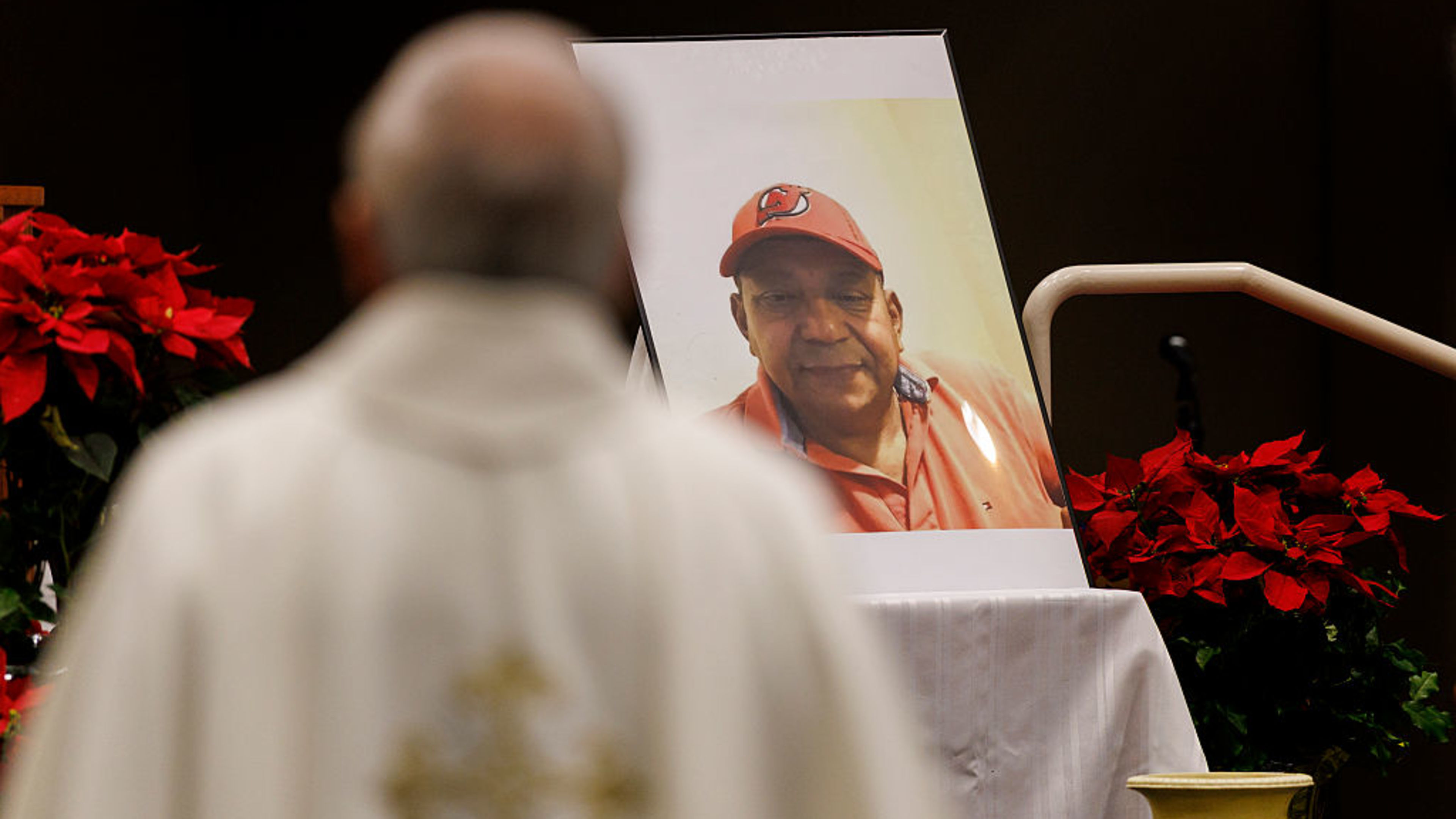
The U.S. Conference of Catholic Bishops (USCCB) is urging Congress to include immigration reform in the budget reconciliation package that is being negotiated by lawmakers.
The bishops seek protection of the pastoral needs of detainees and changes to enforcement practices.
“We encourage members of both parties to reject partisan appropriations funding and instead rededicate yourselves to a collaborative process that pursues the common good and promotes human dignity and flourishing,” they wrote in a letter to Republican and Democratic lawmakers.
The letter was signed by Oklahoma City Archbishop Paul Coakley, president of the USCCB, and Victoria, Texas, Bishop Brendan Cahill, chair of the USCCB Committee on Migration.
In the letter, the bishops acknowledge “the legitimate role of the state to regulate immigration, including by bringing to justice those among us who seek to inflict harm,” but raise concerns about enforcement practices.
“Enforcement of immigration laws cannot truly advance the common good without reasonable conditions that ensure respect for the God-given dignity of each person, inherent in which is the exercise of certain fundamental rights,” they wrote.
The bishops asked for enforcement to be better aligned with “the moral order,” such as avoiding enforcement near sensitive locations like churches when there are not extreme circumstances and “mandating consistent access to religious and pastoral services” for detainees.
“Rather than pursuing such measures through a bipartisan process, Congress now risks setting a concerning precedent — one in which furthering the common good is undermined for the sake of political expediency,” they wrote.
Under President Donald Trump’s administration, the Department of Homeland Security (DHS) rescinded a rule that put limits on immigration enforcement at “sensitive locations” like churches. DHS officials still urge officer discretion and contend such enforcement would be rare.
DHS also says it encourages clergy to reach out for accommodations to ensure spiritual needs are met for detainees, although officials denied faith leaders’ requests to bring the sacraments to an immigration processing facility in Illinois until a federal lawsuit was filed in November 2025 following repeated denials.
DHS recently emerged from a prolonged fiscal 2026 funding impasse, the longest DHS shutdown on record. Congress passed a bill that funded most DHS components, but Immigration and Customs Enforcement (ICE) and Customs and Border Patrol (CBP) funding was left unresolved, requiring separate legislative action. The ongoing complexity may influence the fiscal 2027 appropriations timeline, and Republicans have proposed giving ICE and CBP $70 billion in additional funding, on top of $170 billion Congress already allocated last year.
The bishops requested lawmakers “limit additional funding increases for immigration enforcement after the unprecedented amounts provided through last year’s reconciliation bill.” They expressed concern over “an enforcement-only approach to immigration,” which they said “can never meet the demands of the moral law.”
“Nor does such an approach truly support the welfare and prosperity of American communities,” the bishops said.
Fifty‑four people have died in ICE custody since the start of fiscal 2025, which is 125% more detainee deaths than occurred during all four previous fiscal years combined (24 deaths), according to ICE detainee death reporting data.
In their letter to Congress, the bishops quoted a speech by Pope Leo XIV on Jan. 9 in which the Holy Father said: “To be authentic, democratic processes must be accompanied by the political will to pursue the common good, to strengthen social cohesion, and to promote the integral development of every person.”
The bishops asked Congress to follow that guidance when putting together the budget bill.
“Through this reconciliation effort and the circumstances that gave rise to it, we see the unfortunate absence of that will and therefore the failure to achieve reasonable and necessary reforms to current immigration enforcement practices,” they said.
If you value the news and views Catholic World Report provides, please consider donating to support our efforts. Your contribution will help us continue to make CWR available to all readers worldwide for free, without a subscription. Thank you for your generosity!
Click here for more information on donating to CWR. Click here to sign up for our newsletter.

Our Catholic Church hierarchy i.e. the bishops ought to stay out of politics.
They are like piglets at the sow, squealing for milk they’re so dependent upon.
I cannot, as a CPA, opine on an entity if I receive one red cent from it. I asked AI how much money the USCCB receive(d) from the feds for immigration. Here is a part of the answer.
“how much money has the united states conference of catholic bishops received from the federal government for immigration programs”
The US Conference of Catholic Bishops (USCCB) has received hundreds of millions of dollars in federal grants over the past decade-plus for refugee resettlement, unaccompanied migrant children services, and related migration programs, primarily through the State Department’s Bureau of Population, Refugees, and Migration (PRM) and HHS’s Office of Refugee Resettlement (ORR).
Recent Annual Amounts (from USCCB Audited Financials)
2023: ~$129.6 million in federal grants (out of $134.2 million spent on these services).
2022: ~$122.6–123 million in federal grants (out of ~$127.4 million spent).
Earlier years were lower: ~$67.5M (2021), ~$47.8M (2020), ~$52.7M (2019), ~$48.5M (2018), and ~$72.3M (2017). Funding fluctuated with refugee admissions and policy priorities.
In recent peak years, federal grants covered the large majority (often >95%) of USCCB spending on these programs, with the organization supplementing the rest via private donations (typically a few million dollars more spent than received each year).
That, boys and girls is what we call an “independence impairment”.
Thank you for this research, Pitchfork. These are obscene amounts of taxpayer money. No wonder the bishops protect and want more illegal aliens. Once more the old dictum works: follow the money!
U.S. should follow the compassionate example of the Vatican:
Vatican Promises Stiff Penalties for Illegal Aliens Crossing its Border
https://www.breitbart.com/europe/2025/01/16/vatican-promises-stiff-penalties-for-illegal-aliens-crossing-its-border/
Unfortunately, many bishops are endangering us, our families and our children.
They protect people whose first moral act in the U.S. is to disregard and violate our laws by entering illegally; then lowering wages for Americans, crowding schools, overtaxing health systems (notice how much longer it takes now to get an appointment with your doctor), raising rents and housing costs, WITH 50% OF ILLEGAL ALIEN FAMILIES ON WELFARE, far higher than the average for non illegals (see below the information), not to mention the STEALING OF BILLIOS of taxpayer dollars as in Minnesota and california (see information below),
or “non-violent crimes” such as DWI, fraud, theft, identity theft, drug trafficking, child pornography possession, and some forms of human trafficking and child molestation
or the horrible crimes, such as:
“THE OFFICE OF THE TENNESSEE DISTRICT ATTORNEYS GENERAL CONFERENCE HAS RELEASED ITS ANNUAL STATE IMMIGRATION REPORT REVEALING THAT IN 2025, ILLEGAL MIGRANTS COMMITTED 2,183 VIOLENT OFFENSES, INCLUDING 41 HOMICIDES, 145 SEXUAL OFFENSES, 11 CHILD RAPES, AND MORE.” Tennessee Releases Staggering Stats on Migrant Crime
https://www.breitbart.com/immigration/2026/02/02/tennessee-releases-staggering-stats-migrant-crime/
ICE Arrests Illegal Alien Accused of Raping 5-Year-Old Girl in Long Island, New York
https://www.breitbart.com/politics/2026/03/25/ice-arrests-illegal-alien-child-rape-long-island/
Taxpayers Footed Housing Costs and Tuberculosis for Illegal Alien Accused of Murdering Sheridan Gorman in Sanctuary City Chicago. Immigration and Customs Enforcement (ICE) officials say Medina-Medina was apprehended crossing the southern border on May 9, 2023, but was released into the U.S. interior under former President Joe Biden and Alejandro Mayorkas’s expansive catch and release policy. ICE officials have confirmed that Medina-Medina was first apprehended at the southern border on May 9, 2023, and that, as a result of the Biden administration’s expansive catch and release policy, he was released from Border Patrol custody into the United States interior, where he made his way to Chicago. A month later, in June 2023, Medina-Medina was arrested in Chicago for shoplifting, but ICE was not contacted about his arrest, thanks to the city and state’s sanctuary policies, and therefore, he was not turned over to federal agents to face deportation.
https://www.breitbart.com/politics/2026/03/25/report-taxpayers-footed-housing-costs-for-illegal-alien-accused-of-murdering-sheridan-gorman/
An illegal alien accused of raping and murdering 13-year-old Oscar Hernandez last year in the sanctuary state of California has been hit with additional child rape charges involving two other teen boys.
https://www.breitbart.com/politics/2026/02/12/sanctuary-california-illegal-alien-hit-with-more-child-rape-charges-after-allegedly-murdering-boy/
414 Illegal Alien Child Sex Offenders Arrested in Houston During President Trump’s First Year
ICE: 414 Illegal Alien Child Sex Offenders Arrested in Houston
LEXINGTON, Ky. (FOX 56) — The Department of Homeland Security (DHS) issued a plea for authorities to keep a Lexington inmate in custody on Wednesday, April 1. Jorge Luis Martinez Ulloa, 31, was arrested on March 28 following the reported kidnapping, rape, and strangulation of a minor. He faces kidnapping of a minor, first-degree strangulation, two counts of first-degree rape of a victim under 12, two counts of first-degree sodomy of a victim under 12, and two counts of first-degree sexual abuse of a victim under 12 charges. This child predator should have NEVER been in our country, but illegally entered our nation 4 TIMES under the Obama and Biden administrations,” DHS wrote on X, formerly known as Twitter.
https://fox56news.com/news/local/lexington/homeland-security-pleads-to-keep-sick-monster-accused-of-lexington-kidnapping-rape-in-custody/
Illegal Alien Arrested for Sexually Assaulting 14-Year-Old Girl in Swank Utah Ski Town
24-year-old arrested, accused of sexually assaulting Park City High School student
Nearly Half of Immigrant Households in U.S. Are on Welfare
Analysis: Nearly Half of Immigrant Households in U.S. Are on Welfare
https://www.breitbart.com/politics/2026/03/19/analysis-nearly-half-of-immigrant-households-in-u-s-are-on-welfare/
An illegal alien, released into the United States by the Biden administration, is now charged with murdering 18-year-old Sheridan Gorman, a freshman at Loyal University in the sanctuary city of Chicago, Illinois.
Five Biden Illegals Wanted for Homicide in Their Home Countries Arrested by ICE Boston
https://x.com/EROBoston/status/2041492701984551040
ICE Agents Find Illegal Alien Wanted for Murdering Woman in Mexico Hiding Out in Arizona
https://www.breitbart.com/politics/2026/04/08/exclusive-ice-agents-find-illegal-alien-fugitive-hiding-out-in-arizona-after-allegedly-murdering-woman-in-mexico/
Florida Attorney General James Uthmeier says the horrific murder of a woman who was bludgeoned to death at a Fort Myers gas station on April 3 was totally preventable, pointing to the fact that the suspect is a Haitian national in the U.S. illegally who benefited from former President Joe Biden’s open border policies.
https://www.breitbart.com/politics/2026/04/08/florida-attorney-general-james-uthmeier-another-horrific-illegal-alien-murder-this-was-preventable/
An 18-year-old illegal alien student at Fairfax County High School in Virginia has been convicted on nine counts of groping girls in the hallways. On Friday, Israel Flores Ortiz, an illegal alien from El Salvador who crossed the United States-Mexico border in 2024 and was released into the United States by the Democrat administration, was convicted after he groped girls at the high school.
https://www.breitbart.com/politics/2026/04/10/illegal-alien-convicted-nine-counts-groping-girls-virginia-high-school/
ICE Arrests Illegal Alien Killers, Child Predators, Sexual Abusers on Anniversary of Victims Unit for Angel Families
https://www.breitbart.com/politics/2026/04/10/exclusive-ice-arrests-illegal-alien-killers-child-predators-sexual-abusers-anniversary-victims-unit-angel-families/
ICE Arrests Trio of Criminal Illegal Aliens Convicted of Child Sex Crimes in Minnesota in One Day
Release Date: April 16, 2026
https://www.dhs.gov/news/2026/04/16/ice-arrests-trio-criminal-illegal-aliens-convicted-child-sex-crimes-minnesota-one
Officials in New York City are reportedly refusing to hand over an illegal alien accused in a deadly arson attack that killed four, including a 3-year-old boy. The U.S. Department of Homeland Security (DHS) told Fox News the city is refusing to hand over 38-year-old Mexican national Roman Ceron Amatitla to immigration officials, the outlet reported Thursday.
https://www.breitbart.com/immigration/2026/04/17/report-nyc-refuses-ice-detainer-illegal-alien-charged-arson-killed-4-including-3-yr-old/
JD Vance Exposes $15 Million in Medicaid Theft by Single Migrant in Maine
https://www.breitbart.com/immigration/2026/05/15/jd-vance-exposes-15-million-in-medicaid-theft-by-single-migrant-in-maine/
Decmocrat-Released Illegal Alien Accused of Repeatedly Raping 12-Year-Old Girl in Florida
https://www.breitbart.com/immigration/2026/05/18/biden-released-illegal-alien-accused-repeatedly-raping-12-year-old-girl/
Every death is a tragedy for someone’s family whether they’re here illegally or not. Detainees should be held safely & treated humanely. And I believe that’s overwhelmingly been the case but something like 130,000. Mexicans have disappeared in the past 10 years of cartel violence.
I wish our bishops would connect the dots between an unsecured US border & hundreds of thousands of deaths & disappearances in Latin America.