Vatican City, Nov 20, 2019 / 09:40 am (CNA).- The Holy See on Wednesday reaffirmed its support of a two-state solution for Israel and Palestine, after recent shifts in U.S. policy threatened to derail hopes of an agreement.
“In the context of recent decisions that risk undermining further the Israeli-Palestinian peace process and the already fragile regional stability, the Holy See reiterates its position of a two-state solution for two peoples, as the only way to reach a complete solution to this age-old conflict,” the Vatican press office stated on Wednesday.
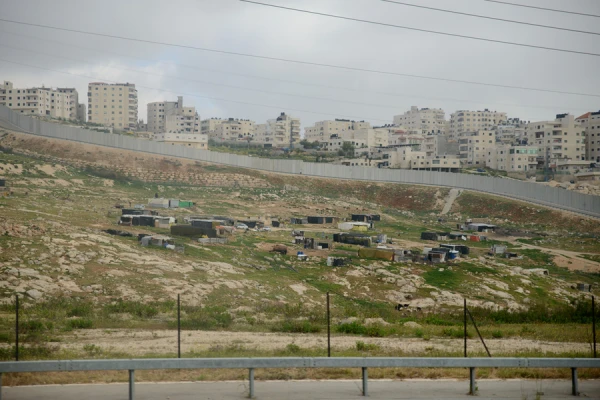
The Holy See’s statement was issued two days after the Trump administration announced a reversal of U.S. opposition to Israeli settlements in the West Bank; the administration now said they did not violate international law.
The settlements are viewed as a significant obstacle to the Israeli-Palestinian peace process and to hopes for a two-state solution.
Previous U.S. administrations have taken varying stances on the legitimacy of the settlements, and the Trump administration reverted to the Reagan administration’s position that the settlements were not illegal. The announcement was a reversal of the Obama administration’s 2016 decision not to veto a UN resolution against the settlements.
“The establishment of Israeli civilian settlements in the West Bank is not per se inconsistent with international law,” U.S. Secretary of State Mike Pompeo told reporters on Monday.
Pompeo’s announcement contradicted the UN’s position of the settlements being in violation of international law. In December of 2016, the United Nations Security Council passed a resolution—with the United States abstaining as a member country—that reaffirmed its existing opposition to the Israeli settlements in occupied Palestinian territory.
Internationally, the U.S. move this week was viewed as a significant blow to hopes for a two-state solution. The UN’s Special Rapporteur on the situation of human rights in the Palestinian Territory, Michael Lynk, called it “the very last nail in the coffin of the two-State solution.”
On Wednesday, the Holy See recognized the legitimacy of the State of Israel within boundaries “recognized by the international community” while also upholding “the same right that belongs to the Palestinian people.”
Both Israel and Palestine, the Vatican said, should settle on an agreement respecting both sides “with the support of the international community and in compliance with United Nations resolutions.”
In 1967, Israel began occupying the West Bank territory after the Six-Day War. Around 400,000 Israelis and 2.8 million Palestinians live in the West Bank and East Jerusalem, which includes the Christian Quarter of the Old City.
Israel’s Prime Minister Benjamin Netanyahu supported Israeli sovereignty over existing settlements in the West Bank during his campaign for re-election earlier this year.
The transfer of a hotel in the Christian Quarter of the Old City of Jerusalem to Israeli settlers has also made international news for the possible consequences for the future of the city.
Patriarchs and heads of local churches warned in a statement this summer that a disputed 2005 land deal transferring ownership of the hotel would undermine both the status quo agreement and the integrity of the Christian Quarter of the city, which is home to some of the holiest pilgrim sites in Christianity.
If you value the news and views Catholic World Report provides, please consider donating to support our efforts. Your contribution will help us continue to make CWR available to all readers worldwide for free, without a subscription. Thank you for your generosity!
Click here for more information on donating to CWR. Click here to sign up for our newsletter.
St. John Paul II in the popemobile amid the enthusiasm of 2 million young people at World Youth Day in 2000. / Credit: Vatican Media/Osservatore Romano
Vatican City, Jul 28, 2025 / 08:00 am (CNA).
Twenty-five years have gone by since St. John P… […]
Bishops process into St. Peter’s Basilica for the closing Mass of the first assembly of the Synod on Synodality on Oct. 29, 2023. / Vatican Media
Rome Newsroom, Jul 9, 2024 / 06:00 am (CNA).
The guiding document for the final part of the Synod on Synodality, published Tuesday, focuses on how to implement certain of the synod’s aims, while laying aside some of the more controversial topics from last year’s gathering, like women’s admission to the diaconate.
“Without tangible changes, the vision of a synodal Church will not be credible,” the Instrumentum Laboris, or “working tool,” says.
The six sections of the roughly 30-page document will be the subject of prayer, conversation, and discernment by participants in the second session of the 16th Ordinary General Assembly of the Synod of Bishops, to be held throughout the month of October in Rome.
Instead of focusing on questions and “convergences,” as in last year’s Instrumentum Laboris, “it is now necessary that … a consensus can be reached,” said a FAQ page from synod organizers, also released July 9, answering a question about why the structure was different from last year’s Instrumentum Laboris.
The guiding document for the first session of the Synod on Synodality in 2023 covered such hot-button topics as women deacons, priestly celibacy, and LGBTQ outreach.
By contrast, this year’s text mostly avoids these subjects, while offering concrete proposals for instituting a listening and accompaniment ministry, greater lay involvement in parish economics and finances, and more powerful parish councils.
“It is difficult to imagine a more effective way to promote a synodal Church than the participation of all in decision-making and taking processes,” it states.
The working tool also refers to the 10 study groups formed late last year to tackle different themes deemed “matters of great relevance” by the Synod’s first session in October 2023. These groups will continue to meet through June 2025 but will provide an update on their progress at the second session in October.
The possibility of the admission of women to the diaconate will not be a topic during the upcoming assembly, the Instrumentum Laboris said.
The new document was presented at a July 9 press conference by Cardinals Mario Grech and Jean-Claude Hollerich, together with the special secretaries of the synodal assembly: Jesuit Father Giacomo Costa and Father Riccardo Battocchio.
“The Synod is already changing our way of being and living the Church regardless of the October assembly,” Hollerich said, pointing to testimonies shared in the most recent reports sent by bishops’ conferences.
The Oct. 2-27 gathering of the Synod on Synodality will mark the end of the discernment phase of the Church’s synodal process, which Pope Francis opened in 2021.
Participants in the fall meeting, including Catholic bishops, priests, religious, and laypeople from around the world, will use the Instrumentum Laboris as a guide for their “conversations in the Spirit,” the method of discussion introduced at the 2023 assembly. They will also prepare and vote on the Synod on Synodality’s advisory final document, which will then be given to the pope, who decides the Church’s next steps and if he wishes to adopt the text as a papal document or to write his own.
The third phase of the synod — after “the consultation of the people of God” and “the discernment of the pastors” — will be “implementation,” according to organizers.
Prominent topics
The 2024 Instrumentum Laboris also addresses the need for transparency to restore the Church’s credibility in the face of sexual abuse of adults and minors and financial scandals.
“If the synodal Church wants to be welcoming,” the document reads, “then accountability and transparency must be at the core of its action at all levels, not only at the level of authority.”
It recommends effective lay involvement in pastoral and economic planning, the publication of annual financial statements certified by external auditors, annual summaries of safeguarding initiatives, the promotion of women to positions of authority, and periodic performance evaluations on those exercising a ministry or holding a position in the Church.
“These are points of great importance and urgency for the credibility of the synodal process and its implementation,” the document says.
The greater participation of women in all levels of the Church, a reform of the education of priests, and greater formation for all Catholics are also included in the text.
Bishops’ conferences, it says, noticed an untapped potential for women’s participation in many areas of Church life. “They also call for further exploration of ministerial and pastoral modalities that better express the charisms and gifts the Spirit pours out on women in response to the pastoral needs of our time,” the document states.
Formation in listening is identified as “an essential initial requirement” for Catholics, as well as how to engage in the practice of “conversation in the Spirit,” which was employed in the first session of the Synod on Synodality.
Pope Francis and delegates at the Synod on Synodality at the conclusion of the assembly on Oct. 28, 2023. Credit: Vatican Media
The document says the need for formation has been one of the most universal and strong themes throughout the synodal process. Interreligious dialogue also is identified as an important aspect of the synodal journey.
On the topic of the liturgy, the Instrumentum Laboris says there was “a call for adequately trained lay men and women to contribute to preaching the Word of God, including during the celebration of the Eucharist.”
“It is necessary that the pastoral proposals and liturgical practices preserve and make ever more evident the link between the journey of Christian initiation and the synodal and missionary life of the Church,” the document says. “The appropriate pastoral and liturgical arrangements must be developed in the plurality of situations and cultures in which the local Churches are immersed …”
How it was drafted
Dubbed the “Instrumentum Laboris 2,” the document released Tuesday has been in preparation since early June when approximately 20 experts in theology, ecclesiology, and canon law held a closed-door meeting to analyze around 200 synod reports from bishops’ conferences and religious communities responding to what the Instrumentum Laboris called “the guiding question” of the next stage of the Synod on Synodality: “How to be a synodal Church in mission?”
After the 10-day gathering, “an initial version” of the text was drafted based on those reports and sent to around 70 people — priests, religious, and laypeople — “from all over the world, of various ecclesial sensitivities and from different theological ‘schools,’” for consultation, according to the synod website.
The XVI Ordinary Council of the General Secretariat of the Synod, together with consultants of the synod secretariat, finalized the document.
According to the working tool, soliciting new reports and feedback after the consultation phase ended is “consistent with the circularity characterizing the whole synodal process.”
“In preparation for the Second Session, and during its work, we continue to address this question: how can the identity of the synodal People of God in mission take concrete form in the relationships, paths and places where the everyday life of the Church takes place?” it says.
The document says “other questions that emerged during the journey are the subject of work that continues in other ways, at the level of the local Churches as well as in the ten Study Groups.”
Expectations for final session
According to the guiding document, the second session of the Synod on Synodality can “expect a further deepening of the shared understanding of synodality, a better focus on the practices of a synodal Church, and the proposal of some changes in canon law (there may be yet more significant and profound developments as the basic proposal is further assimilated and lived.)”
“Nonetheless,” it continues, “we cannot expect the answer to every question. In addition, other proposals will emerge along the way, on the path of conversion and reform that the Second Session will invite the whole Church to undertake.”
The Instrumentum Laboris says, “Synodality is not an end in itself … If the Second Session is to focus on certain aspects of synodal life, it does so with a view to greater effectiveness in mission.”
In its brief conclusion, the text states: “The questions that the Instrumentum Laboris asks are: how to be a synodal Church in mission; how to engage in deep listening and dialogue; how to be co-responsible in the light of the dynamism of our personal and communal baptismal vocation; how to transform structures and processes so that all may participate and share the charisms that the Spirit pours out on each for the common good; how to exercise power and authority as service. Each of these questions is a service to the Church and, through its action, to the possibility of healing the deepest wounds of our time.”
Vatican City, Oct 12, 2017 / 09:37 am (CNA).- On Wednesday, Pope Francis told a gathering in Rome that the Catechism of the Catholic Church should significantly revise its treatment of the death penalty.
It’s no surprise that Francis proposed a stronger theological condemnation of capital punishment. He’s criticized the practice throughout his papacy, as did his most immediate predecessors, Pope St. John Paul II and Pope Benedict XVI. All three popes have pled for clemency when the execution of condemned prisoners is imminent, and all three have linked capital punishment to the “culture of death” and the “throwaway culture” they’ve criticized. All three have called for nations to abolish the death penalty.
The Church’s official position on the death penalty is nuanced. The Catechism of the Catholic Church explains that the “Church does not exclude recourse to the death penalty,” assuming a criminal’s guilt is sufficiently established, and only when execution seems to be the only just way of protecting public safety.
In his landmark encyclical Evangelium Vitae, issued in 1995, John Paul wrote that the punishment of criminals should focus on rehabilitation, while also ensuring the common good – public order and safety. He opposed capital punishment “except in cases of absolute necessity,” when a community would have no other means to protect itself.
Because of the resources available for modern and secure penal systems, John Paul said that today, “such cases are very rare, if practically non-existent.”
In fact, the Catechism was formally revised in 1997 to reflect the teaching of Evangelium Vitae.
The gist of the Church’s current teaching on the death penalty is this: the state has the right to execute criminals, if there is no doubt about that the crime was grave and the offender is guilty. The state cannot justly execute a criminal if it can protect the common good and public safety equally well through non-lethal means. It is the job of the state to judge its own civil conditions and capacity for punishment, in order to determine how to apply those principles, but, when doing so, it should take seriously the moral direction of popes and bishops who have repeatedly said that the death penalty seems unnecessary in the context of developed nations.
On Wednesday, Francis proposed a strikingly different vision. He said that the death penalty “is in itself contrary to the Gospel.” For many theologians, this language, and the idea that the death penalty “in itself” is contrary to the Gospel, has evoked the theological concept of “intrinsically evil acts,” a group which includes torture, rape, lying, abortion, and sexual immorality.
The distinction is important. Intrinsically evil acts are understood to be wrong in all cases, regardless of the circumstances, intention, or rationale. The morality of other kinds of acts is judged, in part, by circumstances. The traditional teaching on the death penalty puts it in the latter category; the morality of a particular execution is partially determined, as the Catechism explains, by the state’s ability to secure the common good in other ways.
Classifying capital punishment as an intrinsically evil act would say that there are no circumstances, in any time and place, in which it can be justified.
Francis’ speech recognized this distinction. He explained that thinking about the death penalty in a new way is the result of the development of social doctrine.
“We are not in the presence of some contradiction with the teaching of the past,” he explained, “because the defense of the dignity of human life from the first moment of conception until natural death has always been found in the teaching of the Church.
“The harmonious development of doctrine, however, requires that we [now] leave out arguments which now appear decisively contrary to the new understanding of Christian truth,” namely, the circumstantial qualifiers which guide current moral reasoning about executions.
Francis proposes that because the Church has gradually developed a deeper understanding of human dignity, over time, we are now able to recognize that execution is always immoral.
The development of doctrine is a thorny theological concept. Theologians have already begun asking whether Francis’ proposal represents a development of prior positions, or a rupture from them. This debate will be complex, likely contentious, and not quickly resolved. But given increased attention to the death penalty in the last half-century, it is an important question to resolve.
Francis did not announce which Vatican offices would be responsible for the reforms he proposed. Past revisions have included the Congregation for the Doctrine of the Faith, which is likely to take a lead role in this process. But the Holy Father has a penchant for involving voices beyond traditional structures, so consultation may include some unexpected figures.
There is an additional factor of interest for American readers. In 2014, Pope Francis said that the use of long-term solitary confinement is a kind of torture. This position is also held by many psychologists, who have noted that solitary incarnation can have a profoundly negative impact on mental health. Long-term solitary confinement is the most prominent alternative to the death penalty proffered by American corrections officials, especially for habitual unmanageable inmates.
If long-term solitary confinement is a kind of torture, and thus an intrinsically evil act, it can never be morally justified. If execution also begins to be classified as an intrinsically evil act, Catholics will have to think carefully and creatively about very different approaches to criminal justice in the United States. Spurring that thinking may be a part of what Pope Francis has in mind.
Death penalty opponents across the world have cheered Pope Francis’ comments on capital punishment. But his remarks on Thursday might also reveal something about the Pope’s understanding of doctrine’s development, a theological issue with effect on many other elements of the pontiff’s teaching, including the already controversial Amoris Laetitia. That conversation will probably make fewer headlines, but for the Church, its implications could be significant.





Leave a Reply