

 By
By If a bill passed by the state House eliminating the tax credits becomes law, scholarship organizations would lose their funding source and students would lose tuition assistance.

Tens of thousands of Pennsylvania Catholic school students could lose scholarship funding if a bill passed by the state House eliminating a key tax-credit program is signed into law.
“The recent passage of House Bill 2632 by the Pennsylvania House of Representatives poses a serious threat to school children and families throughout the Commonwealth of Pennsylvania,” Archbishop Nelson Pérez of Philadelphia said in a June 23 statement. If passed, the bill would eliminate the Educational Improvement Tax Credit (EITC) and the Opportunity Scholarship Tax Credit (OSTC) programs, a change he described as “devastating for school children and their families.”
State Rep. Nikki Rivera, D-Lancaster, introduced the bill, which the Pennsylvania House passed on June 22. Senate consideration is next.
Rivera said in a statement: “A $680 million annual scholarship tax program should be transparent and include detailed reporting. This bill would ensure that everyone can see how well EITC programs are working, whom they are helping, and whether students in private and parochial schools are receiving tuition relief.”
“This bill would not cut one penny from the $680 million EITC program,” she said.
While Rivera said the bill would only change reporting and oversight requirements, not the program’s funding authorization, Catholic education leaders said eliminating the statutory framework for EITC and OSTC effectively ends the programs.
“If enacted into law, this bill would negatively impact tens of thousands of students across Pennsylvania who currently rely on these scholarship programs. EITC and OSTC scholarships are funded by companies and individuals who see value in providing families with educational choice,” Pérez said. “These programs are vibrant, successful, and reduce taxpayer burdens when it comes to educating our young people, particularly those who come from challenging financial circumstances and live in underserved communities.”
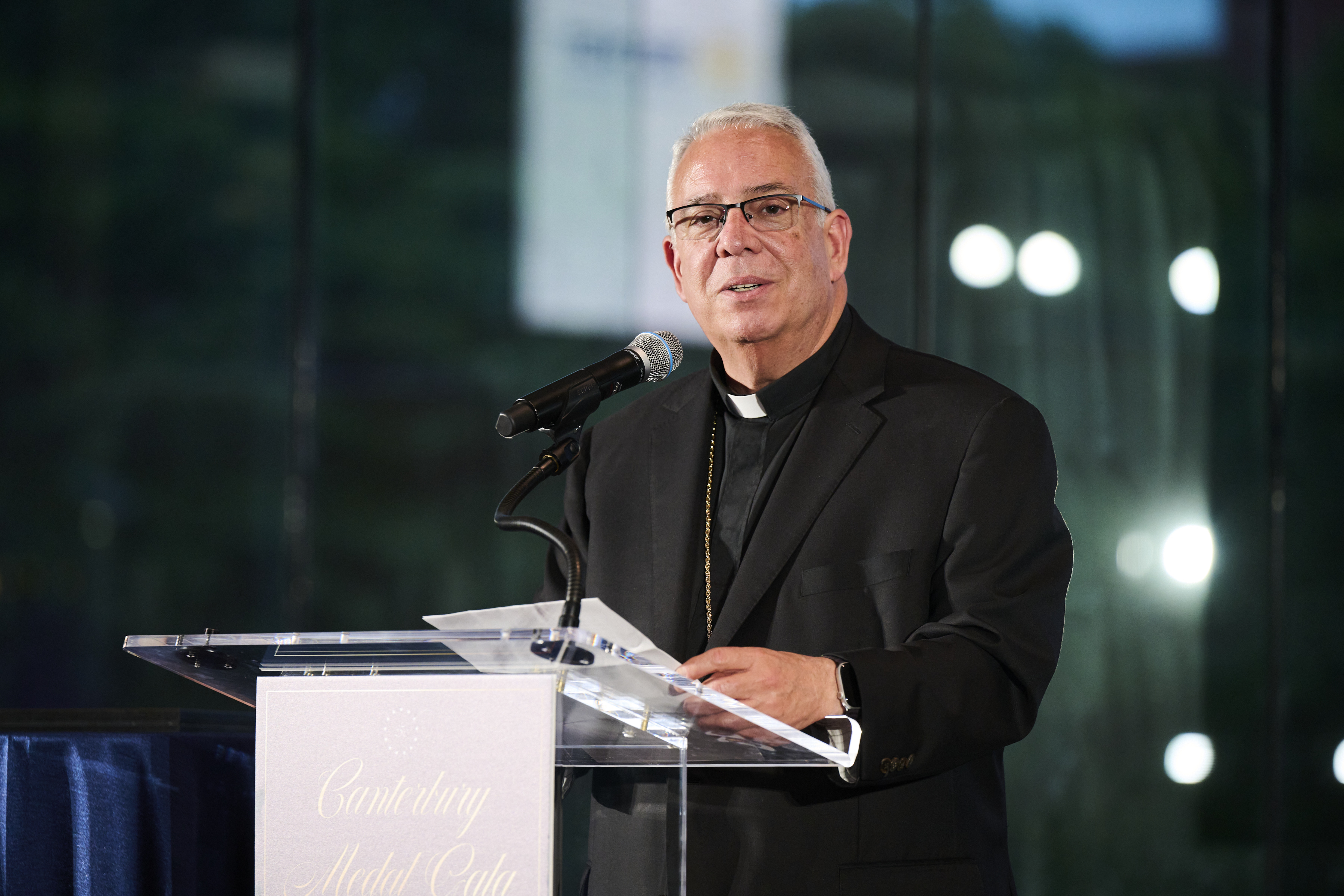
The archbishop called on elected officials to preserve the programs, saying they are “vital” and that “no one can afford to see them disappear.”
Victor D’Ascenzo, vice president for development at the Foundation for Catholic Education, which partners with the archdiocese and the Office of Catholic Education in advancing the mission of Catholic education, said his office has reached out to state representatives in Philadelphia “but have received very little response.”
Noting that while he does not have statewide figures, D’Ascenzo said the Foundation for Catholic Education supports the 102 elementary schools in the Archdiocese of Philadelphia and the approximately 33,000 students who attend them. About one-third of those students receive EITC funds for tuition assistance, he said.
“We are hopeful that any resolution that is passed in Harrisburg will have as little negative effect [as possible] on those wishing to pursue a Catholic education in the Archdiocese of Philadelphia,” he said.
If you value the news and views Catholic World Report provides, please consider donating to support our efforts. Your contribution will help us continue to make CWR available to all readers worldwide for free, without a subscription. Thank you for your generosity!
Click here for more information on donating to CWR. Click here to sign up for our newsletter.

Leave a Reply