

 By
By 
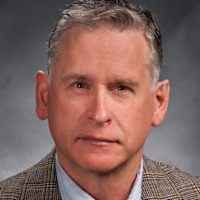
ANN ARBOR, Michigan — Catholics should be proud of their contributions to the United States, especially for the intellectual tradition inherited from philosophers, theologians, and saints who contributed to the ideas leading to the Declaration of Independence and the Constitution, author and Hillsdale College Professor Matthew Mehan told EWTN News leading up to the 250th anniversary of the nation.
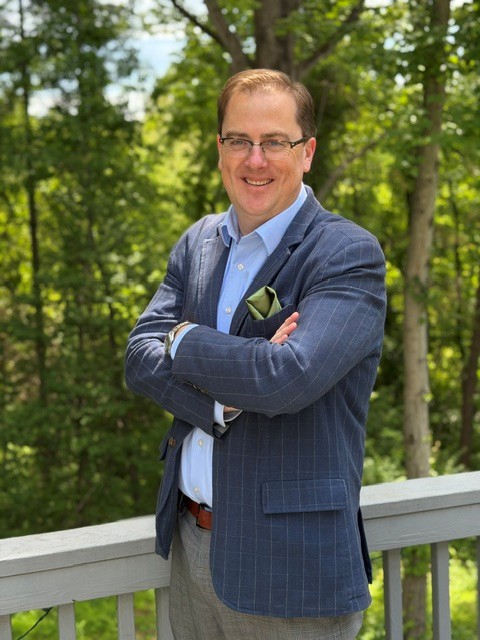
Mehan is associate dean and professor of government studies at Hillsdale College’s Washington, D.C. campus. He holds a doctorate in literature from the University of Dallas and recently authored The American Book of Fables, a book for all ages that reflects Mehan’s desire to contribute to national renewal.
The fables are set in the American landscape, framed by the Declaration of Independence, and accompanied by historical documents illustrating the country’s history, complexity, and geographical regions.
In interviews with EWTN News, the author and scholar said the book grew out of his broader efforts to promote culture renewal through educational reform.
“In a sense, it is an unsurprisingly Catholic endeavour of ‘fides et ratio,’” he said. “I wanted something like in church, where there is a papal flag and an American flag, representing faith, morals, love of country, and love of neighbor.”
“I’ve always thought that way. I’ve also thought a lot about a combination of those things, with beautiful images and beautiful moral sentiments, and how those come together. So when the semiquincentennial was coming up, I thought it would be a great gift to the country.”.
Mehan won the America 250 Innovation Prize from the Heritage Foundation for the work.
The educator and father of eight said he shares the concerns of many teachers and parents dismayed by the current culture and how education has failed to cultivate virtue, civic pride and responsibility.
He and his wife founded a school cooperative in Reston, Virginia that now has 38 participating families. He has also designed curricula for schools across the country.
The role of educators is essential, Mehan said, while noting that doctorates are now the equivalent of 19th-century master’s degrees in terms of academic formation.
“Catholic academics don’t know their own traditions very well,” he argued. “They know Greek philosophers, and the moderns who reject the Greco-Roman, Judeo-Christian, and Catholic vision of Western civilization and human nature, and may know the Summa Theologica and St. Augustine. But what they don’t know is the poetical and rhetorical tradition which moves people toward a common vision, which is an indispensable part of good letters and a healthy citizenry.”
“And they don’t know the Romans,” he added. Drawing on the classical tradition, Mehan noted that Roman thinkers such as Cicero and Seneca prepared the “good soil,” the intellectual antecedents that inspired America’s founders.
“Cicero, for instance, was taught in all seminaries until the 1900s,” while Seneca was praised by St. Jerome, he said. And ideas found in Cicero were the underpinnings of the theory of natural rights that informed later Catholic philosophers.
Seneca’s De Clementia, for example, contributed to concepts of constitutional democracy and rights that shaped the American experiment in government. These classical authors, he argues, still have relevance and deserve renewed attention in universities and seminaries.
Asked about the future of Catholic education and how it can play a role in a national renewal, despite the closing of Catholic parishes and schools, Mehan said: “Catholic education is displaying a nascent energy.”
“It’s very dynamic and full of people who have reoriented education towards what the Christian humanists of the Catholic tradition understood as their goal, which is to help students have a clean conscience and thus have the most joyful life possible in this life and the next,” he said.
For Mehan, moral formation must take precedence over the mere transmission of information. He argues that Catholic education drifted from this mission in the 20th century as it increasingly followed secular models of education.
Subjects such as calculus, computer coding, and the sciences are valuable, he said, but they should not be the primary focus of Catholic schools.
“If you aim at them, ironically, you won’t get them. If you aim high, you’ll get the high and the low. If you aim for the low, you’ll get nothing. That is why education has collapsed except where the moral life is, ideally, centered around Christ.”
Catholics holding doctorates who complain that tenured positions at colleges and universities are scarce should look to K-12 schools to make national renewal a reality, Mehan said.
The renewal of Catholic education, and how it can contribute to national renewal, depends on placing Christ at the center and embracing the universal call to holiness emphasized by the Second Vatican Council, he argued.
Movements such as Opus Dei and the Neo-catechumenal Way serve as “an enormous engine,” Mehan said, to plant holiness in students and encourage teachers themselves to be saints. It will change “how people teach, how they design curricula, and how they bring forward the richness of the Catholic faith and tradition.”
“Actually, I’m very hopeful,” he said.
To Catholics who may think of themselves as strangers in the United States, Mehan said, “No, brother, you built this too.”
“Your people, your religious tradition, are at home here,” he said. “And you are meant for republican self-government. Augustine’s City of God laid the groundwork, St. Thomas Aquinas built the scaffolding, and St. Thomas More made it shine. American Catholics built this country with sweat, blood, and their arms.”
“This is your patrimony too,” he said.
If you value the news and views Catholic World Report provides, please consider donating to support our efforts. Your contribution will help us continue to make CWR available to all readers worldwide for free, without a subscription. Thank you for your generosity!
Click here for more information on donating to CWR. Click here to sign up for our newsletter.

The mentioned ST. THOMAS MORE gave us this counsel for navigating in the world:
“…Suppose wrong opinions cannot be plucked up by the root, and you cannot cure, as you would wish, vices of long standing, yet you must not on that account abandon ship of state and desert it in a storm, because you cannot control the winds. But neither must you impress upon them new and strange language, which you know will carry to weight with those of opposite conviction, but by indirect approach and covert suggestion you must endeavor and strive to the best of your power to handle all things well, and what you cannot turn to good, you must make as little bad as you can. For it is impossible that all should be well, unless all men are good, which I do not expect for a great many years to come” (Utopia).
I don’t think I can trust a “scholar” who doesn’t think the transfer of information is essential to education.
I can’t trust a “scholar” who doesn’t think the transfer of information is essential to education.
“I can’t trust a “scholar” who doesn’t think the transfer of information is essential to education.”
“For Mehan, moral formation must take precedence over the mere transmission of information”.
Exactly how did you leap from the author of the article’s view of PRIORITY, to your idea that Mehan doesn’t believe the transmission of information is “ESSENTIAL”?
Did you read the list of things he believes are missing from modern curricula, such as Cicero and Seneca?
Arguments for classical education always remind me of George Elliott’s novel, The Mill on the Floss. Tom Tulliver finds himself ill-prepared, or even not even remotely prepared, for life and work in the modern world. His “classical education” was a total waste.
We possess a rich treasure to share with a Nation now in desperate need, the Red wave of socialism, amorality sweeping from coast to coast. Do we possess that treasure in numbers to be effective? Most Catholics have drifted from access to that wealth of treasure.
Dreams can come to be, Mehan possesses the enthusiasm to make a dent. Will the intellectual pursuit of the educator spark the minority Catholic populace? It may require appeal to all comers. The Nation’s at a dangerous place.
A spark can ignite a fire. Those of us focused on the spiritual realize our Catholic faith has the potential to revitalize. Personally, I believe we should keep that marvelous possibility in mind and intent. After all, why is it that we write and preach, witness to that possible flourish of truth, if not to transform what languishes in deformity.
Hope is a theological virtue. And with faith and charity great things are possible.