

 By
By Two experts analyze the state of the Catholic faith among Spanish youth today, noting that while Spain is increasingly secularized, the faith is growing among young people.

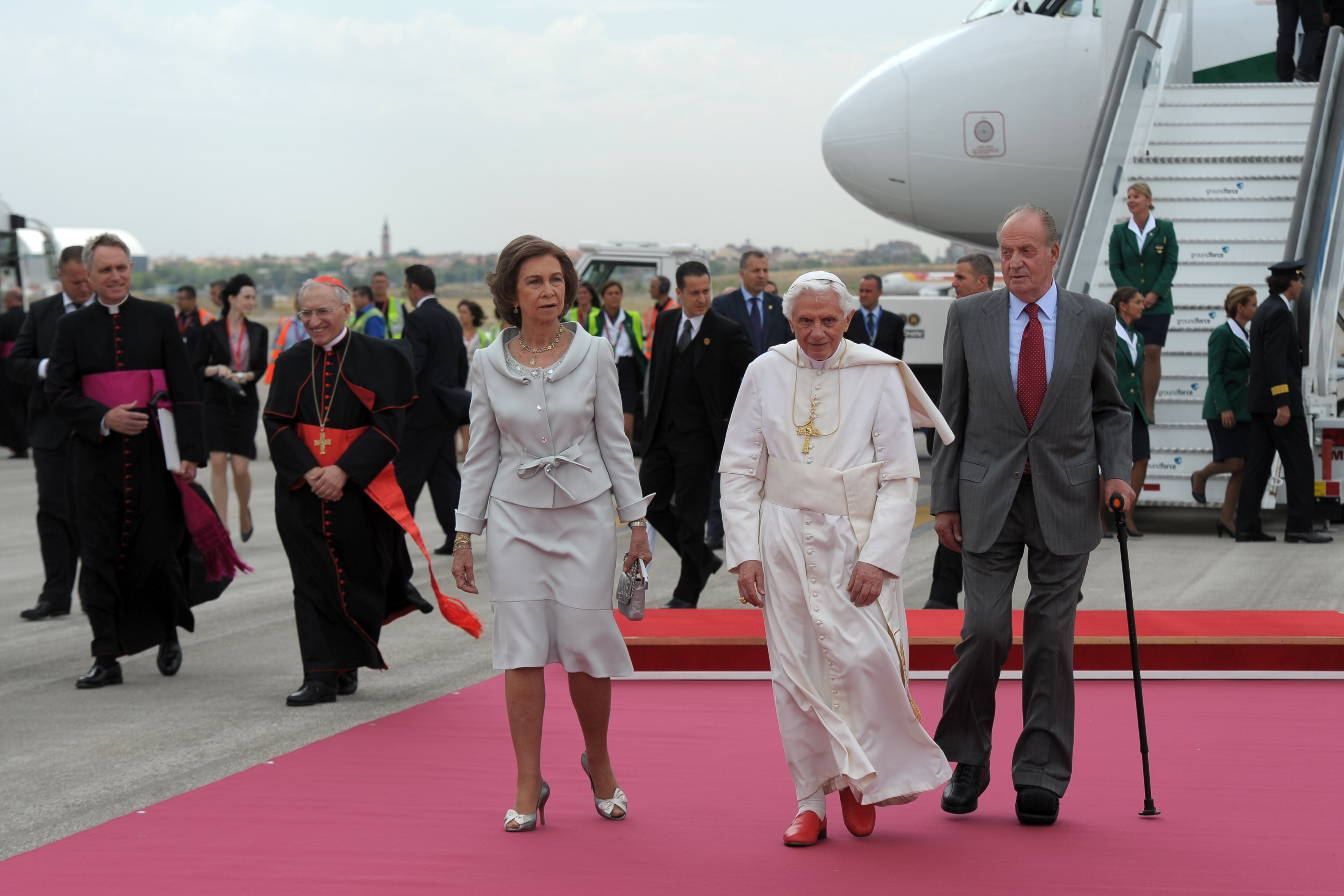
Pope Benedict XVI drew more than a million young people to World Youth Day 2011 in Madrid, an event that left its mark on an entire generation. Fifteen years later, Spain is preparing to welcome a new pontiff, Leo XIV, in a profoundly different religious landscape.
Over this period, the faith and religious practice of Spanish society have undergone significant changes. Ahead of the popeʼs upcoming visit in June, two experts reflected on this development and the spiritual reality that Leo XIV will encounter upon his arrival in Spain.
A less religious society
Rafael Ruiz Andrés, a professor who holds a doctorate in sociology from the Complutense University of Madrid, explained to ACI Prensa, the Spanish-language sister service of EWTN News, that Benedict XVI arrived in Spain during what he called “the third wave of secularization” since the beginning of the 21st century.
He noted that in today’s society and especially among young people, this secularization has accelerated and intensified: “Undoubtedly, we are in a less religious society,” he stated.
According to the latest data released by the Pluralism and Coexistence Foundation in its 2025 Barometer on Religion and Beliefs in Spain, nearly half of all Spaniards (42%) no longer identify with any religion, while the percentage of religious individuals — predominantly Catholic — stands at around 50% to 56%.
Ruiz noted that just a few decades ago, the majority of the Spanish population identified as Catholic, a fact that in his view also underscores “our sense of secularization.” Nevertheless, he emphasized that half the population still represents a significant number of people.
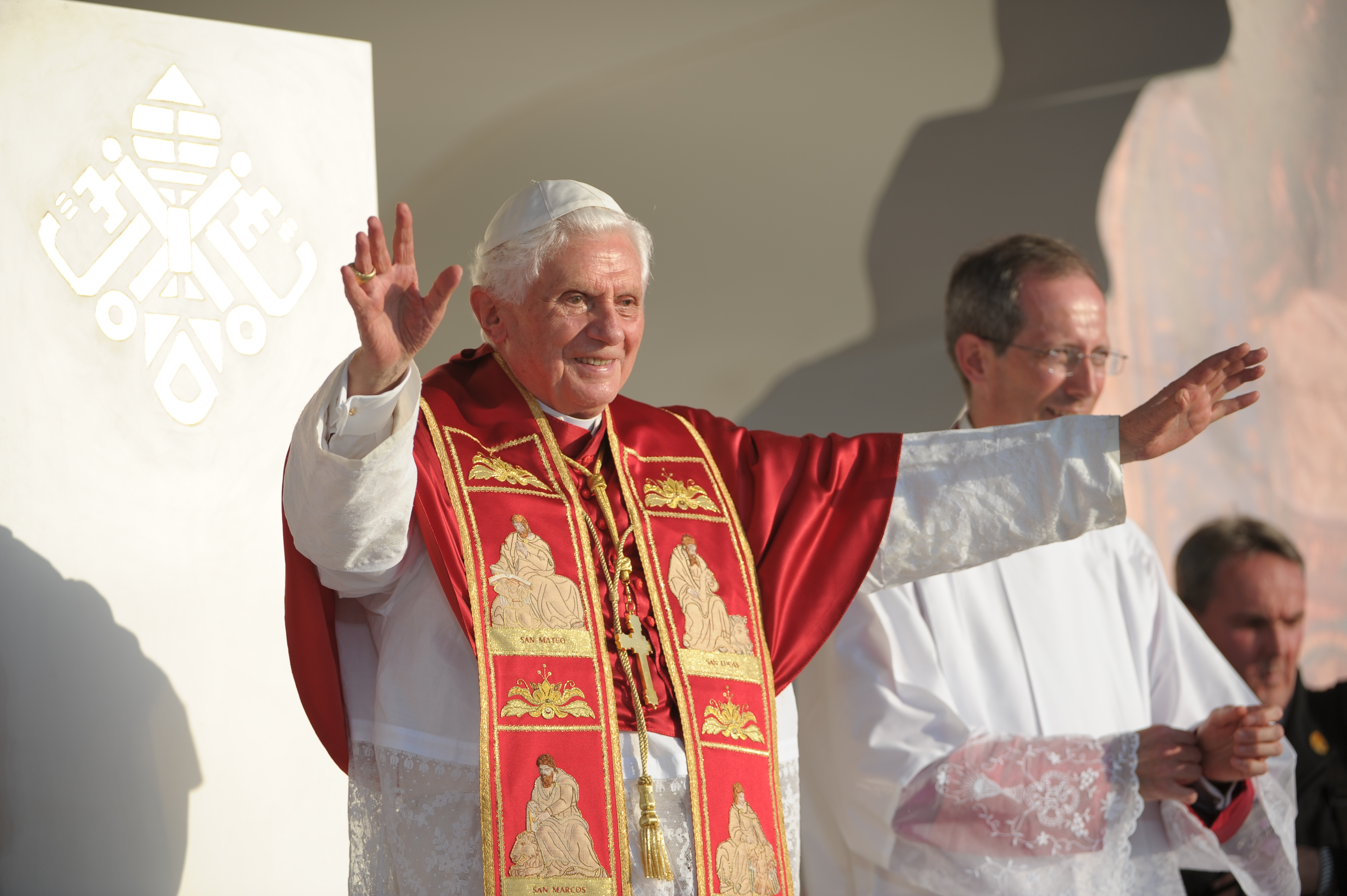
Catholic youth in 2011 and today
Though there are currently fewer young Catholics than in 2011, Ruiz emphasized that among the youth of 2026, there are signs “that Catholicism once again interests and challenges them.”
Reflecting this trend are the findings of the “Young Spaniards 2026” report by the SM Foundation, which reveals an increase in the importance young people attach to religion: 38.4% state that it is “quite or very important” in their lives.
The number of young people who identify as Catholic has also grown notably: In 2020, it stood at 31.6%, and by 2025, it had risen to 45%.
Bishop Emeritus César Augusto Franco Martínez of Segovia was responsible for coordinating Pope Benedict XVI’s World Youth Day as well as writing the lyrics for the hymn “Firmes en la Fe” (“Firm in the Faith”), which was composed for the event.
The prelate noted the similarities between the two generations. “They are young people who wish to live happily, who desire to achieve the goals they may have set for themselves, and who possess faith,” he said in a conversation with ACI Prensa.
Reflecting on young people’s faith, the prelate alluded to World Youth Day (WYD) in Lisbon in 2023: “There, I thought that even though time has passed, it seems that young people have not changed.”
“In Lisbon, too, there were a million and a half young people, and their conduct, their dedication, generosity, and joy was truly spectacular,” he said.
Young people living out their faith without inhibitions
Ruiz said the Catholic youth of 15 years ago were marked by polarization surrounding debates on sexual and reproductive rights, abortion, or same-sex marriage legislation. “One could say that at that time the Church had a more marginalized position with respect to young people.”
“I believe that the young person of 2026 is, generally speaking, less inhibited when discussing their faith and religiosity with their peers. The current generation takes being Catholic more naturally. It has become more normalized and, consequently, is also more visible,” he noted.
He also emphasized that the phenomena of youth apostolates such as Hakuna, Effetá, and their extensive impact on social media “point to that increased visibility in 2026 compared to 2011.”
Ultimately, he stated that although the number of young Catholics in 2026 is lower than in 2011, “a new dialogue is now opening up between the Catholic Church and Spanish youth, one that moves beyond those polarizations and is in fact fostered by the very context of secularity.”
Ruiz emphasized that religion continues to be “a very important issue” in Spain as well as tradition, culture, spirituality, and the search for meaning — elements that have not disappeared despite secularization.
The professor also said that secularization in Spain “is not an inevitable destiny.”
Catholic ‘awakening’ needs maturity and depth
According to the bishop emeritus of Segovia, today’s youth are marked by a “tsunami” culture; that is, “they seek to live somewhat through their senses, through whatever impacts them immediately, enjoying the present day without harboring many expectations for tomorrow, even though the future also worries them.”
“Faith,” he added, “is not a fleeting sentiment that is here today and gone tomorrow; faith is something far more profound; it is entering into a relationship with Christ in a vital, existential way. This requires depth, requires personal engagement, requires prayer, requires living in community, and not letting oneself be carried away solely by trends that may end up being more or less passing.”
He said that many young people express their religious yearnings, even if they do not know how to articulate them or put them into practice. “We also live in a multicultural and multireligious society … many say they believe in God, yet they also believe in reincarnation and in other trends coming from Asia.”
The prelate emphasized that man “is a religious being by nature, even if he denies it, because imprinted within his very being is a yearning for transcendence that only God could have put there: a yearning for the infinite, for boundless happiness, for beauty, and for truth; and that’s something that young people have.”
He also pointed to the increase in adult baptisms: “It’s a phenomenon that must be examined closely, without allowing oneself to be carried away by facile slogans.”
A message of hope for Spanish youth
Ruiz emphasized that Pope Leo XIV’s visit to Spain could serve as a “compass for Catholicism in Spain.” He highlighted in particular the pope’s trip to the Canary Islands as a gesture of solidarity with the migration situation in the country: “The social dimension is one of the challenges facing certain sectors of the Church,” he noted.
He emphasized that the pope’s dialogue with contemporary society will differ from the one maintained by Benedict XVI. “I believe it will be post-secular in nature, that of a religious leader belonging to a denomination of immense significance in our country, yet one who speaks to a diverse, pluralistic society and who offers a vital message capable of being heard by audiences wider than the Church itself.”
He said he hopes his visit will “encourage young people and everyone to follow Christ with fidelity and to love the Church without prejudice, despite the failings that we Christians may have.”
“For me, this is a trip filled with hope, and I am certain that it will encourage us to be better Christians and to live in today’s world as witnesses to the Gospel,” he added.
This story was first published by ACI Prensa, the Spanish-language sister service of EWTN News. It has been translated and adapted by EWTN News English.
If you value the news and views Catholic World Report provides, please consider donating to support our efforts. Your contribution will help us continue to make CWR available to all readers worldwide for free, without a subscription. Thank you for your generosity!
Click here for more information on donating to CWR. Click here to sign up for our newsletter.

“Secular” = Man is more important than God. We worship what and who we hold in importance. We worship more than with words. We worship with deeds as well.
That’s all you need to know.
There’s that word again – post-secular.
We live in interesting times.