

 By
By Iran’s retaliation to U.S. and Israeli strikes on Feb. 28 quickly spilled beyond Israel, with missiles and drones aimed at multiple countries hosting U.S. forces.
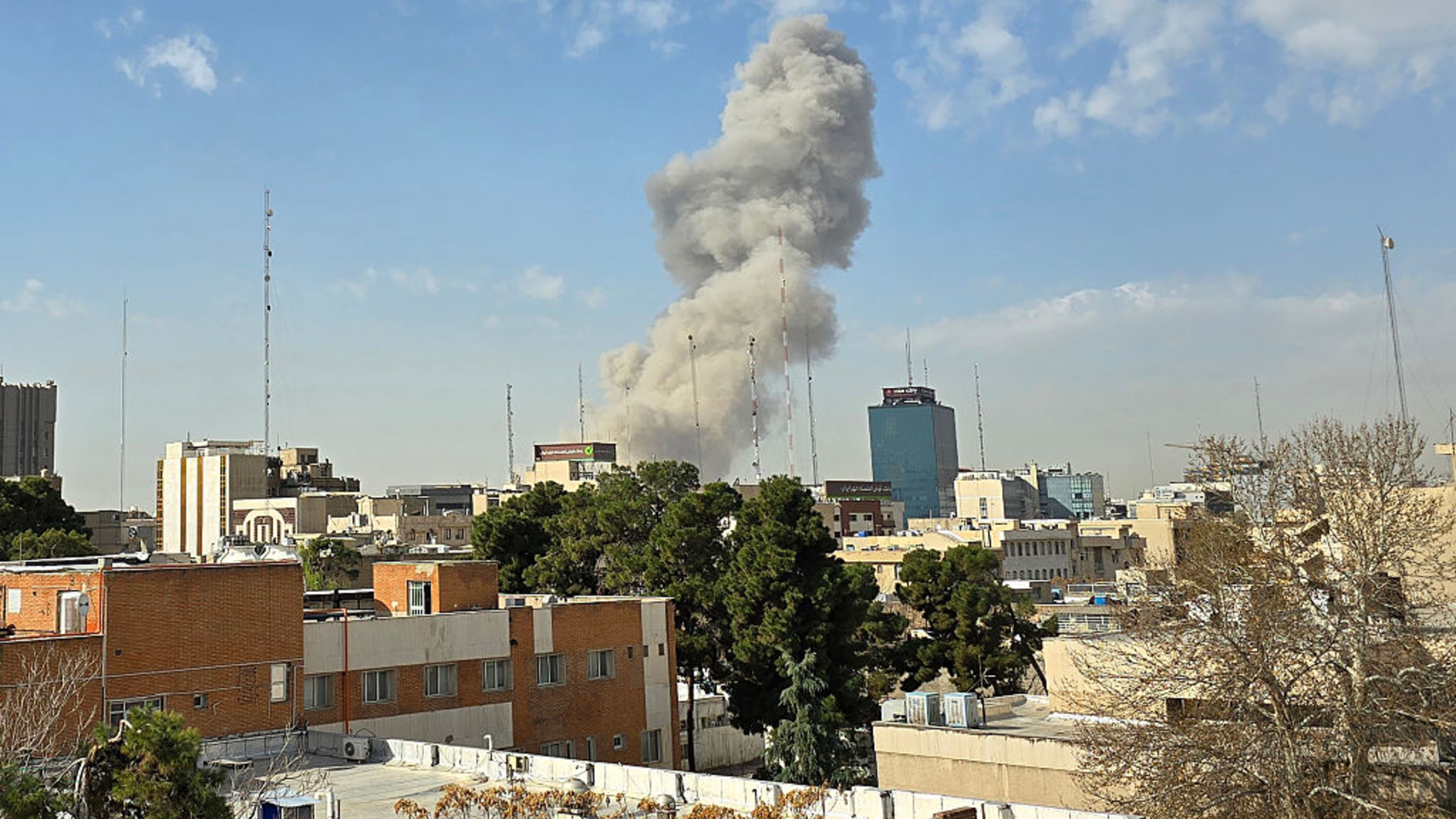
Iran’s retaliation to U.S. and Israeli strikes on Feb. 28 quickly spilled beyond Israel, with missiles and drones aimed at multiple countries hosting U.S. forces and key regional infrastructure as the Middle East braced for a wider confrontation.
Reuters reported strikes or attempted strikes involving Kuwait, Qatar, the United Arab Emirates, Bahrain, and Jordan, with most incoming projectiles intercepted.
In the UAE, Reuters said loud booms were heard in Abu Dhabi, blasts were reported in Dubai, and one of the city’s “plush hotel districts” was hit, bringing the conflict into heavily populated civilian areas as residents reported shock and confusion during the holy month of Ramadan.
In Bahrain, authorities said a service center linked to the U.S. Fifth Fleet came under attack, and video footage showed smoke rising near the coastline.
Kuwait’s official news agency reported that a drone targeted Kuwait International Airport, causing minor injuries to several employees and limited damage to a passenger terminal, underscoring the spillover risks to civilian aviation facilities.
Beyond this, Saudi Arabia’s Foreign Ministry said air defenses intercepted projectiles targeting the Riyadh region and the Eastern Province, condemning what it described as Iranian attacks.
In Iraq, regional and local reporting said drones attempted to target Erbil International Airport in the Kurdistan Region and were intercepted, an indication that the alert zone has widened even where independent confirmation differs by outlet.
Earlier Saturday, Israel said it had launched a “pre-emptive” strike on targets in Iran, with U.S. action reported alongside it. Reuters reported that the Pentagon named the U.S. strikes “OPERATION EPIC FURY.”
A pastoral appeal from the Gulf: “Remain calm and serene”
As regional anxiety rose, the Apostolic Vicariate of Southern Arabia, which serves Catholic communities in the United Arab Emirates, Oman, and Yemen, circulated an urgent message signed by Bishop Paolo Martinelli, OFM Cap.
In the statement, the bishop appealed to the faithful to “remain calm and serene” and to “carefully follow” the instructions issued by civil authorities.
He also urged Catholics to respond spiritually to the crisis, calling it a time to remain “united in prayer for peace,” and inviting the faithful to pray the rosary daily for peace and reconciliation, with intentions for peace included at Masses across the vicariate.
According to the vicariate’s published statistics, the Catholic population under its care totals 1,122,659, reflecting a large and diverse community, many of them expatriates, watching developments unfold with heightened concern.
If you value the news and views Catholic World Report provides, please consider donating to support our efforts. Your contribution will help us continue to make CWR available to all readers worldwide for free, without a subscription. Thank you for your generosity!
Click here for more information on donating to CWR. Click here to sign up for our newsletter.
If the goal is regime change, bombing alone will not suffice. Regime change will require an invasion. Boots on the ground and lots of them. We will be on our own, having alienated our NATO allies.
The Shiite Mullahs are fanatics and many will fight to the death. American casualties could be significant. An invasion and subsequent occupation could take years and hundreds of thousands of troops. It will not be quick and easy as White House staffers are likely telling each other. Remember W Bush and the Iraqi “cakewalk?” This will be Iraq all over again,but bigger. A mistake of historic dimensions like Vietnam and Iraq.
I think things so far are working out for the best in Iran and for the entire region. All proactive interventions come with risks. An Iranian regime armed in the future with nuclear weapons would have been a far greater risk.
How about waiting to see what happens before predicting the end of the world?
“The Shiite Mullahs are fanatics”
Which is just one reason this is a stupid and perilous venture. Other than the idiots that follow the great armchair general Mark Levin, who in their right mind looks at Korea, Vietnam, Iraq and Afghanistan and says military action achieves the stated objectives and doesn’t produce unintended consequences.
I wish these bishops would stay in their own lane. Last I looked, their expertise was shepherding Christ’s flock and proclaiming the Gospel. Geopolitics is not their area of rxpertise.