

 By
By The Vatican’s message for Vesak calls Buddhists and Christians to promote an “unarmed and disarming” peace rooted in truth, compassion, and mutual trust.
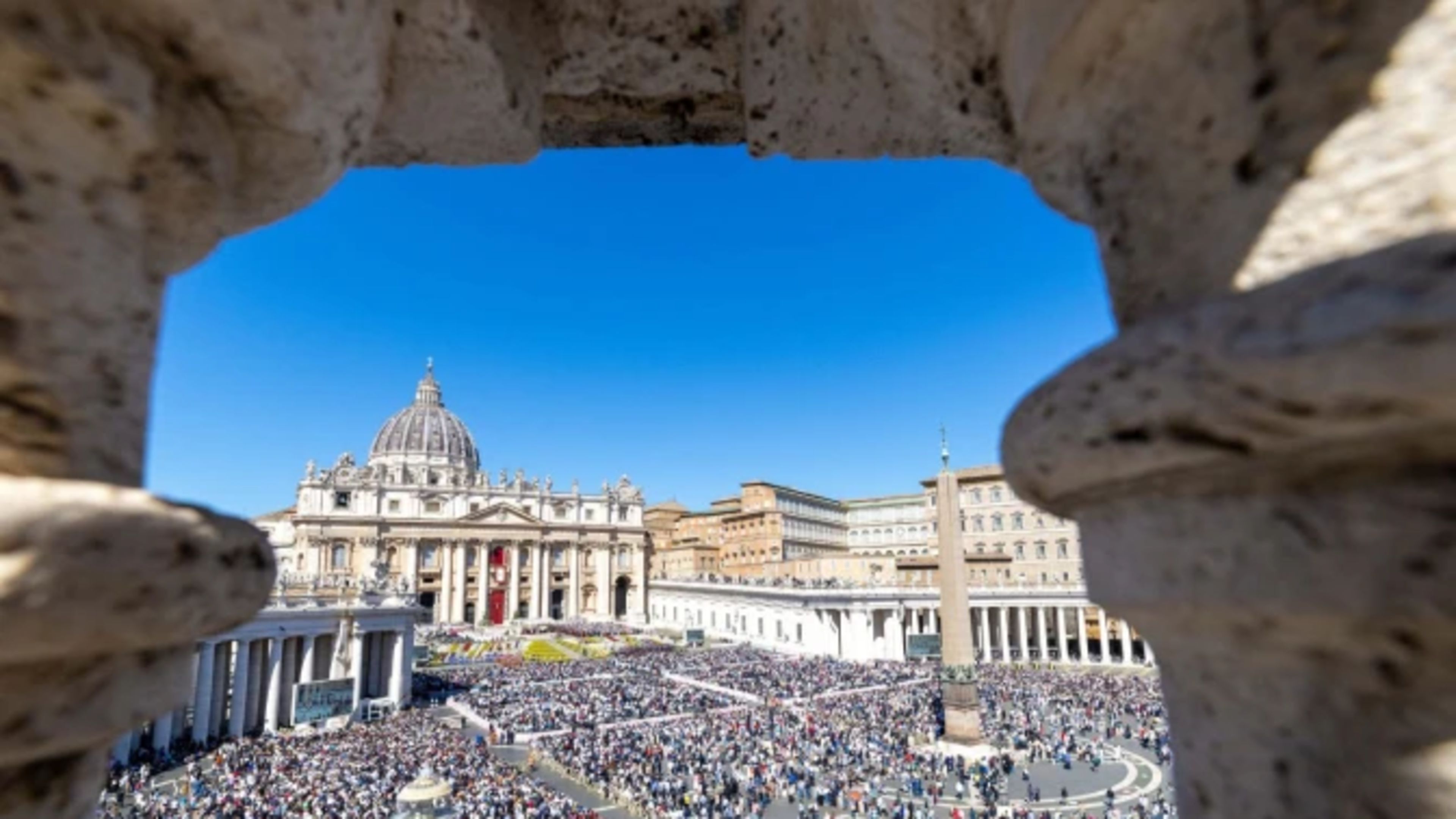
The Vatican has called on religious leaders around the world to take an active role in promoting peace and urged them not to become “complicit through silence or fear” in the face of those who fuel division and confrontation.
The appeal is contained in the message “Buddhists and Christians for an ‘Unarmed and Disarming’ Peace,” signed by Cardinal George Jacob Koovakad, prefect of the Dicastery for Interreligious Dialogue, and Monsignor Indunil Janakaratne Kodithuwakku Kankanamalage, secretary of the dicastery, for the Buddhist feast of Vesak.
In the message, addressed to the Buddhist community and published Monday, May 11, the Vatican said religious leaders “are called to be authentic partners in dialogue and true agents of reconciliation.”
The text stressed that a passive attitude is not enough. Together with all believers, it said, “we are invited to become artisans of peace — not passive observers but courageous witnesses capable of fostering encounter, healing wounds, and rebuilding trust.”
“As citizens and believers, we share a responsibility to promote peace, challenge injustice, and urge those in positions of authority not to inflame division but to pursue dialogue over confrontation,” the message said. “We must also guard against becoming complicit through silence or fear.”
A peace born in the heart
The message, issued for Vesak — which commemorates the birth, enlightenment, and passing of the Buddha — reflected on the meaning of peace, defining it not merely as the absence of war but as “a gift that seeks to dwell within the human heart” and “a quiet yet powerful presence that enlightens and transforms.”
The message cited Pope Leo XIV’s words for the 2026 World Day of Peace: “Peace exists; it wants to dwell within us. It has the gentle power to enlighten and expand our understanding; it resists and overcomes violence. Peace is a breath of the eternal: While to evil we cry out ‘Enough,’ to peace we whisper ‘Forever.’”
Even when peace appears fragile, the Vatican message said, it “must be protected and nurtured.” It described this peace as “an unarmed and disarming peace that does not rely on force but flows from truth, compassion, and mutual trust.”
Facing the world’s shadows
The Vatican did not ignore the gravity of the current international context, marked by conflicts and growing tensions.
“We cannot ignore the shadows weighing upon the world,” the message said. “Wars, violence, rising ethno-religious nationalism, and the manipulation of religion continue to wound our common humanity.”
In response, the Vatican emphasized the irreplaceable role of religious traditions, which it said “can offer a vital contribution.”
“Goodness is truly disarming,” the message said. “It breaks the cycle of suspicion and opens paths where none seemed possible.”
Buddhism and Christianity converge
The message highlighted the deep harmony between Buddhist and Christian teachings on peace.
It recalled the Buddha’s teaching: “Hatred is never appeased by hatred; by non-hatred alone is hatred appeased. This is an eternal law.” It also cited Jesus’ command to “love your enemies and pray for those who persecute you” and his proclamation “Blessed are the peacemakers.”
Both traditions, the document said, point toward “a peace that is lived — one that disarms hearts before it disarms hands.”
A concrete, daily commitment
The message concluded with a call to translate these principles into concrete action, noting that peace is “lived daily — in gestures of kindness, in patience, in the refusal of hatred and vengeance, and in the courage to hope.”
Far from being a utopia, the Vatican said, “peace is not an illusion or a distant ideal; it is a real possibility already placed within our reach, waiting to be welcomed and shared.”
With that spirit, the Vatican expressed hope that Buddhists and Christians may “increasingly become witnesses of this disarming peace — one that heals wounds, restores relationships, and opens new horizons for humanity.”
“May your celebration of Vesak be filled with serenity and joy, and may it inspire all of us to walk together on this path,” the message concluded. “We wish you a blessed and fruitful celebration of Vesak!”
This story was first published by ACI Prensa, the Spanish-language sister service of EWTN News. It has been translated and adapted by EWTN News English.
If you value the news and views Catholic World Report provides, please consider donating to support our efforts. Your contribution will help us continue to make CWR available to all readers worldwide for free, without a subscription. Thank you for your generosity!
Click here for more information on donating to CWR. Click here to sign up for our newsletter.

Must the “Vatican” comment about everything under the sun? Guess what? No one’s listening anymore.
Personal “coeur ad coeur loquitur” (Newman) yes, surely, but is this level of witnessing to peace quite identical with the “convergence” of religions as such?
Rather, are the mentioned fruits of the Holy Spirit (“kindness, patience”) signs of God’s gratuitous presence among us more as persons?
We read: “The text stressed that a passive attitude is not enough. Together with all believers, it said, ‘we are invited to become artisans of peace — not passive observers but courageous witnesses capable of fostering encounter, healing wounds, and rebuilding trust’.”
Perhaps rather than what some see as glossy syncretism, the text is really an invitation for some Buddhists to reconsider their presuppositions about the very nature of peace…. Are we even reminded of a broad generalization by St. John Paul II:
“[….] Buddhism is in large measure an ‘atheistic system.’ We do not free ourselves from evil through the good which comes from God; we liberate ourselves only through detachment from the world, which is bad. The fullness of such a detachment is not union with God, but what is called nirvana, a state of perfect indifference with regard to the world. ‘To save oneself’ means, above all, to free oneself from evil by becoming ‘indifferent [passive?] to the world, which is the source of evil. This is the culmination of the spiritual process” (“Crossing the Threshold of Hope,” 1994, p. 86).
So, the same invitation—toward personal “encounter…and rebuilding trust”—for any Quietists possibly to be found even within the incarnational/non-passive Church….About “unarmed and disarming”…also the realism of “trust but verify” (Reagan)?