Mar Awa III presents a Chicago Cubs jersey to Pope Leo XIV on Oct. 27, 2025. / Credit: Vatican Media
ACI Prensa Staff, Oct 29, 2025 / 16:29 pm (CNA).
His Holiness Mar Awa III, Catholicos-patriarch of the Assyrian Church of the East, traveled to Rome this week to participate in a ceremony commemorating the 60th anniversary of Nostra Aetate, the Church’s declaration on building relations with non-Christian religions.
During his stay in the Eternal City, Mar Awa III, born David Royel to Assyrian immigrant parents, met Oct. 27 with Pope Leo XIV in a private audience. The two share the same hometown of Chicago.
However, it seems that this communion does not extend to the realm of sports.
The leader of the Assyrian Church is a fan of the Chicago Cubs, while the Roman pontiff supports their eternal rivals, the White Sox.
In his luggage, Mar Awa III made sure to include a Cubs jersey, which he presented to Pope Leo XIV as a gift at the end of his audience at the Vatican.
During the gift exchange, the Cubs fan wore a satisfied smile, while the Holy Father, with an expression of resignation, held up the dark blue jersey with the name “Leo” and the number 14 printed in red.
Mar Awa III posted a photo of the moment on his Instagram profile, where he wrote: “During the exchange of gifts, I presented the pope with a customized Cubs jersey and hat (in honor of all our North Side Chicagoans). Needless to say, the pope loved the gift,“ he recounted with evident irony.
null
Pope Leo XIV has demonstrated his love for baseball on several occasions. During one of his usual tours through St. Peter’s Square in the popemobile before a general audience, he surprised onlookers by spontaneously joining a group of pilgrims in chanting “White Sox!”, making it clear which team he supports.
Chicago’s North Side Cubs have annually played the city’s South Side White Sox in the interleague “Crosstown Classic.” As of July of this year, the Cubs have an all-time edge of 77-75 over the White Sox since the series began, Yahoo News reported.
This story was first published by ACI Prensa, CNA’s Spanish-language news partner. It has been translated and adapted by CNA.
If you value the news and views Catholic World Report provides, please consider donating to support our efforts. Your contribution will help us continue to make CWR available to all readers worldwide for free, without a subscription. Thank you for your generosity!
Click here for more information on donating to CWR. Click here to sign up for our newsletter.
Pope Francis presides over the funeral Mass for Pope Emeritus Benedict XVI in St. Peter’s Square on Jan. 5, 2023. / Vatican Media
Rome Newsroom, Jan 15, 2023 / 11:00 am (CNA).
It was widely anticipated that a major reform of the Diocese of Rome was coming, as Pope Francis has been thinking about it for some time.
But no one expected it to come when it did: On Jan. 6, one day after the funeral of Francis’ predecessor as Bishop of Rome, Pope Emeritus Benedict XVI.
With the reform, Pope Francis firmly took over the reins of the vicariate, or hierarchy, of the diocese. Everything is centralized, and everything must pass, at least formally, under the control of the pontiff.
Cardinal Angelo de Donatis, the pope’s vicar for the diocese, sees his role deeply diminished. The diocese’s auxiliary bishops strengthen their direct link with the pope. In the end, the pope has made it clear that he is the one who also formally presides over the Episcopal Council, a new body established as an “expression of synodality.”
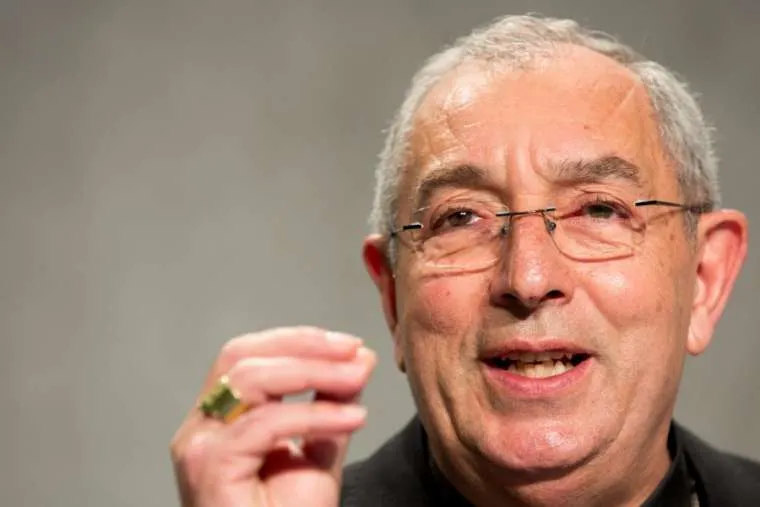
Cardinal Angelo De Donatis. . Daniel Ibanez/CNA
The backstory
Before going into some details of the new decree, however, some background is necessary.
The last reform of the structure of the Vicariate of Rome was outlined by John Paul II in 1908, with the apostolic constitution Ecclesia In Urbe. For the new reform, Pope Francis copied and pasted several passages from that document. In some cases, these have been minimally rewritten to emphasize some details instead of others. In other cases, greater changes were made but these do little to alter the basic substance of things.
The reform presents two general characteristics of Pope Francis’ way of legislating: using councils or commissions and requiring those bodies to report directly to him.
It is clear that the pope is the bishop of Rome and that the pope’s vicar for the diocese is his auxiliary. Pope Francis, however, in this case, goes further, including with the constitution a decree that directly defines the areas of competence of the auxiliary bishops.
Pope Francis shows, in this way, a willingness to exercise greater personal control over everything that happens in the vicariate. At the same time, this choice also testifies to a “break” in the relationship of trust with his vicar, Cardinal de Donatsi.
Although Francis called de Donatis to preach retreats to the Roman Curia in 2014, he was never the pope’s candidate to succeed Cardinal Vallini as vicar. That was Cardinal Paolo Lojudice.
Pope Francis, however, wanted to first consult the parish priests of Rome, 80% of whom preferred de Donatis. It was impossible, therefore, for the pope not to listen to them. He appointed De Donatis vicar (and cardinal) and made Lojudice archbishop of the prestigious Diocese of Siena, and a cardinal, as well.
Last May, at the general assembly of the Italian Episcopal Conference, it seemed clear that Pope Francis preferred the appointment of Cardinal Lojudice as the new president of the CEI.
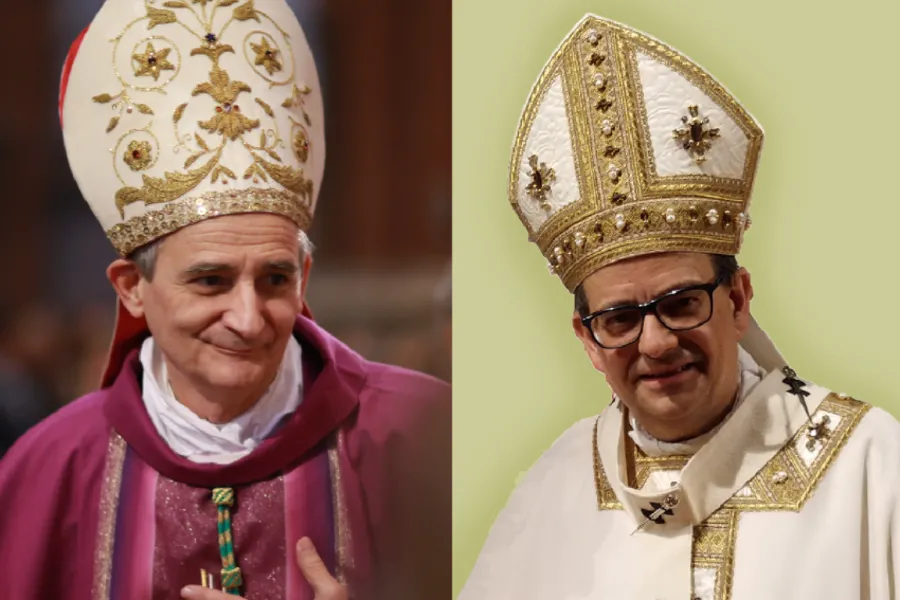
Cardinal Matteo Zuppi and Cardinal Augusto Paolo Lojudice. Francesco Pierantoni via Wikimedia (CC BY 2.0)/Pufui PcPifpef via Wikimedia (CC BY-SA 4.0).
The plan was to appoint Lojudice vicar of the Diocese of Rome to succeed Cardinal de Donatis, who had finished his five-year term, which would then have made Lojudice the primary contact person for the pope both in Rome and among the Italian bishops. De Donatis would have been appointed the new Penitentiary in place of Cardinal Mauro Piacenza, who has now turned 78.
The Italian bishops, however, preferred Cardinal Matteo Zuppi, archbishop of Bologna, who was not unwelcome to Pope Francis.
Lojudice didn’t become vicar for the Rome Diocese, either, as everyone assumed would happen. Meanwhile, the relationship of trust between de Donatis and the pope seemed to have been interrupted in 2020, when, at the beginning of the lockdown for COVID-19, de Donatis decided to close the churches of Rome. When Pope Francis later highlighted the inadvisability of closing churches, de Donatis withdrew the decree but announced that every decision had been made in agreement with the pope. There also have been other moments of friction in recent years.
The pope, however, now seems intent on changing the vicar this year when de Donatis’ mandate expires. An indication of this is the fact that in the decree in which the Pope defines the area and pastoral competencies of the auxiliary bishops, de Donatis is not mentioned as vicar. One might take his presence for granted, of course, but the general interpretation is that the change will be made.
What’s new
What are the novelties introduced by Pope Francis? First, the figure of the prelate general secretary disappears, while the vicegerente (or the deputy of the vicar) manages the offices of the General Secretariat. The prelate secretary also had the function of the moderator of the Curia. In this case, everything is entrusted to the vicegerente, who thus sees his functions and weight increase.
The pope chose the vicegerente from among the auxiliary bishops, and in this case, Baldassare Reina was selected. Bishop Reina does not come from the Diocese of Rome but was called from Agrigento. The pope’s logic is to break possible power chains by bringing in fresh and foreign forces.
The choice of a new parish priest is entrusted to a lengthy procedure which must then, in any case, be submitted to the pope, who acts as the true and proper bishop of Rome without relying on the vicar, who is left with the appointment of assistant parish priests.
Article 20 of the Constitution requests a report for each candidate for the priesthood or diaconate to be submitted before ordination. Also, in this case, the candidates must be presented by the cardinal vicar to the pope, and only after obtaining the Episcopal Council’s consent. Therefore, the vicar seems to be practically a commissariat: He does not choose the candidates but submits them to the pope and can submit them only after the Episcopal Council has endorsed the choice.
The council is defined as the “first organ of Synodality” and must meet “at least three times a month,” presided over by the pope. Only in the absence of the pope can the cardinal vicar preside over the council, which is made up of the vicegerent and the auxiliary bishops. However, the pope wants to receive “the agenda for each meeting as soon as possible.”
Finally, there is also the establishment of an Independent Supervisory Commission. This will have a regulation that must be “approved by the Pope” and six members appointed by the pope who can remain in office for a maximum of two five-year terms.
The service for the protection of minors and vulnerable people is also added, which “reports to the Episcopal Council, through the auxiliary bishop appointed by me,” the pope has decreed.
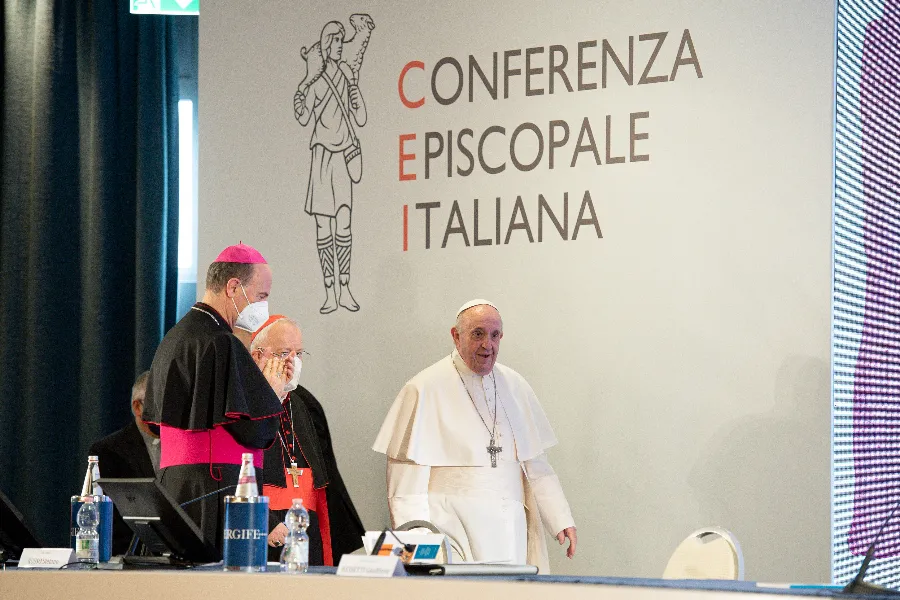
Pope Francis attends the Italian bishops’ plenary assembly in Rome on May 24, 2021. Vatican Media.
The effects of the reform
The constitution also redistributes the areas and offices of the Vicariate’s Curia, and the accompanying decree gives each auxiliary bishop a specific task.
Beyond the reorganization, it should be noted how the pope enters into action as the actual bishop of Rome. Everything must pass through the decisions of the pope, while before, the cardinal vicar enjoyed trust and discretion. For the first time, however, the pope’s vicar is defined as an “auxiliary.” He is, therefore, an auxiliary among the auxiliaries, with a considerable reduction in his weight.
With this centralization, Pope Francis probably wants to overcome the risk of having “abuses” within the Vicariate.
It is worth remembering that in June 2021, Pope Francis ordered an inspection of the Vicariate itself. It was an audit entrusted to the Auditor General of the Holy See, Alessandro Cassinis Righini. It was the first time the Vicariate sifted through the accounting books, registers, and cooperative societies.
However, the Pope, as a matter of practice, has sent an inspection to all the dicasteries of the Curia every time there is a reform or a new mandate. The review, therefore, already predicted the change of pace in the Vicariate, one that has led Pope Francis to be increasingly alone in command.
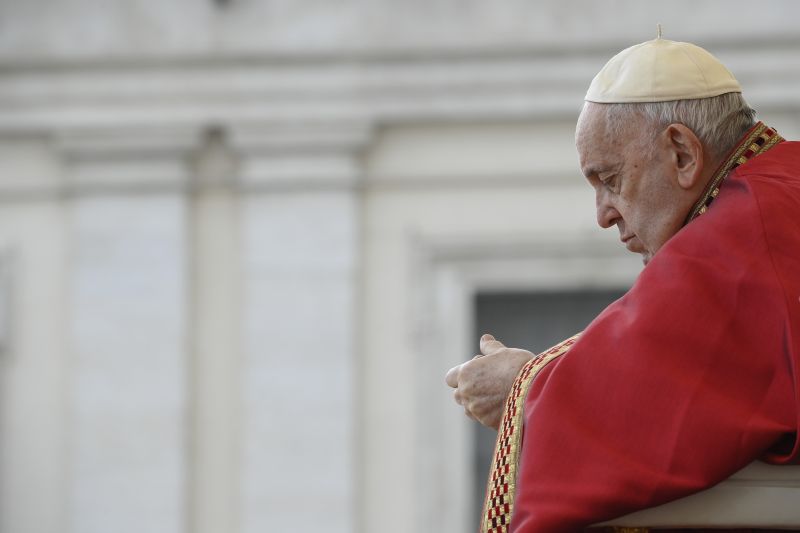
Pope Francis speaks to the crowd assembled in St. Peter’s Square on Aug. 15, 2023, for the recitation of the Angelus on the solemnity of the Assumption of the Blessed Virgin Mary. / Vatican Media
CNA Staff, Aug 15, 2023 / 07:41 am (CNA).
Pope Francis on Tuesday urged the faithful to adopt a “spirit of service,” pointing to the example of the Blessed Mother who went in haste to help her expectant cousin Elizabeth.
The pope spoke to a crowd gathered in St. Peter’s Square for the recitation of the Angelus on the feast of Mary’s assumption into heaven.
In his reflection before leading the Marian prayer, Pope Francis drew on the day’s Gospel reading — Luke’s account of Mary’s Visitation — which the Holy Father said shows the Mother of God to be a “woman of service” to her neighbor.
“Our Lady, who had just conceived, travels almost 150 kilometers [about 93 miles] from Nazareth to reach Elizabeth’s house,” Pope Francis noted. “Helping is costly, to all of us! We always experience this in the fatigue, patience, and worries that taking care of others entails.”
Pilgrims carry a sign in St. Peter’s Square on Aug. 15, 2023, during Pope Francis’ Angelus reflections on the solemnity of the Assumption of the Blessed Virgin Mary. Vatican Media
The pope warned, however, that “service risks being barren without praise to God.”
“Indeed, when Mary enters the home of her cousin, she praises the Lord,” the pope said. “She does not talk about her weariness from the journey, but rather a song of jubilation springs from her heart. Because those who love God know praise.”
“Let us try to ask ourselves: Do I live my work and daily occupations with a spirit of service, or with selfishness?” the pope said. “Do I devote myself to someone freely, without seeking immediate advantages? In short, do I make service the ‘springboard’ of my life?”
He continued: “And thinking about praise: Do I, like Mary, exult in God? Do I pray, blessing the Lord? And, after praising him, do I spread his joy among the people I meet? Each one of you, try to answer these questions.”
Following the recitation of the Angelus, Francis also offered a customary blessing of the crowd.
“Today, we entrust to Mary assumed into heaven our supplication for peace in Ukraine and in all war-torn regions: There are so many of them, unfortunately,” he said.
“The clamor of weapons drowns out attempts at dialogue; the law of force prevails over the force of law,” he continued. “But let us not be discouraged, let us continue to hope and to pray, because it is God, it is he who guides history. May he listen to us!”
Vatican City, Aug 13, 2019 / 10:45 am (CNA).- Pope Francis wrote a heartfelt letter Tuesday to an Italian community still suffering one year after a bridge collapse. His message: “Know that you are not alone.”
“Jesus passed before us through suffering and death. He has taken upon us all our sufferings. He was despised, humiliated, beaten, nailed to the cross and brutally killed. God’s response to our pain was closeness, a presence that accompanies us, that does not leave us alone,” Pope Francis wrote in a letter published Aug. 13.
Pope Francis’ letter was published in a local newspaper in Genoa to mark the one year anniversary of the collapse of the Morandi Bridge, which killed 43 people.
“Jesus made himself like us, and for this reason, we have Him next to us, to cry with us in the most difficult moments of our lives. We look to Him, we entrust our questions to Him, our pain, our anger,” the pope continued.
“Today I want to tell you one thing first of all: know that you are not alone. Know that you are never alone. Know that God our Father has answered our cries and our questions, not with words, but with a presence that accompanies us, that of His Son,” Francis said.
“I would also like to tell you that Jesus on the cross was not alone,” he said. “Beneath that scaffold was his mother, Mary. Stabat Mater, Mary was under the cross, to share the suffering of the Son.”
“We are not alone, we have a Mother who from Heaven looks at us with love and is close to us. Let us cling to her and say to her: ‘Mother,’ as child does when it is afraid and wants to be comforted and reassured,” he added.
Pope Francis said that the collapse of the Morandi Bridge inflicted a wound on the heart of Genoa, and encouraged solidarity with the local Catholic community.
“The more we are aware of our weakness, of the precariousness of our human condition, the more we rediscover the beauty of human relationships, of the bonds that unite us, like families, communities, civil society,” he said.
“I know that even after a great tragedy that has hurt your families and your city, you have been able to respond, to get up, to look forward,” he said. “Don’t lose hope, don’t let it be stolen! Continue to stand by those most affected.”
“We are men and women full of defects and weaknesses, but we have a Merciful Father to whom we can turn, a crucified and Risen Son who walks with us, the Holy Spirit who assists and accompanies us. We have a Mother in Heaven who continues to spread her mantle over us without ever abandoning us,” Pope Francis said.
“I would also like to tell you that you are not alone because the Christian community … is with you and shares your sufferings and your difficulties,” he said.
Pope Francis wrote a heartfelt letter Tuesday to an Italian community still suffering one year after a bridge collapse. His message: “Know that you are not alone.”
“Jesus passed before us through suffering and death. He has taken upon us all our sufferings. He was despised, humiliated, beaten, nailed to the cross and brutally killed. God’s response to our pain was closeness, a presence that accompanies us, that does not leave us alone,” Pope Francis wrote in a letter published Aug. 13.
Pope Francis’ letter was published in a local newspaper in Genoa to mark the one year anniversary of the collapse of the Morandi Bridge, which killed 43 people.
“Jesus made himself like us, and for this reason, we have Him next to us, to cry with us in the most difficult moments of our lives. We look to Him, we entrust our questions to Him, our pain, our anger,” the pope continued.
“Today I want to tell you one thing first of all: know that you are not alone. Know that you are never alone. Know that God our Father has answered our cries and our questions, not with words, but with a presence that accompanies us, that of His Son,” Francis said.
“I would also like to tell you that Jesus on the cross was not alone,” he said. “Beneath that scaffold was his mother, Mary. Stabat Mater, Mary was under the cross, to share the suffering of the Son.”
“We are not alone, we have a Mother who from Heaven looks at us with love and is close to us. Let us cling to her and say to her: ‘Mother,’ as child does when it is afraid and wants to be comforted and reassured,” he added.
Pope Francis said that the collapse of the Morandi Bridge inflicted a wound on the heart of Genoa, and encouraged solidarity with the local Catholic community.
“The more we are aware of our weakness, of the precariousness of our human condition, the more we rediscover the beauty of human relationships, of the bonds that unite us, like families, communities, civil society,” he said.
“I know that even after a great tragedy that has hurt your families and your city, you have been able to respond, to get up, to look forward,” he said. “Don’t lose hope, don’t let it be stolen! Continue to stand by those most affected.”
“We are men and women full of defects and weaknesses, but we have a Merciful Father to whom we can turn, a crucified and Risen Son who walks with us, the Holy Spirit who assists and accompanies us. We have a Mother in Heaven who continues to spread her mantle over us without ever abandoning us,” Pope Francis said.
“I would also like to tell you that you are not alone because the Christian community … is with you and shares your sufferings and your difficulties,” he said.






Leave a Reply