



National Catholic Register, Jul 29, 2025 / 15:59 pm (CNA).
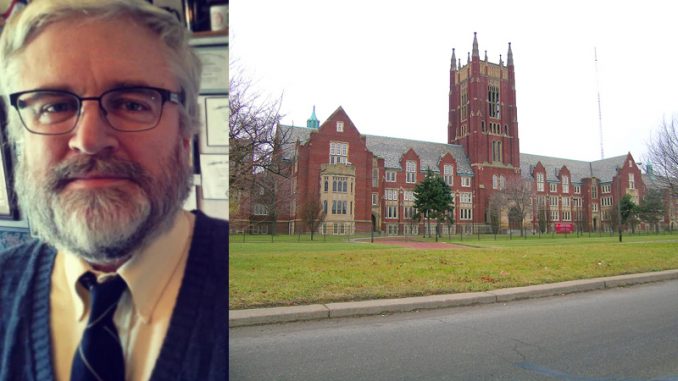
Canon law professor Edward Peters is the third faculty member at Detroit’s seminary to announce that he has been fired by Archbishop Edward Weisenburger in recent days.
Peters, 68, had taught at Sacred Heart Major Seminary since 2005.
“My Sacred Heart Major Seminary teaching contract was terminated by Abp. Weisenburger this week. I have retained counsel,” Peters wrote in a social media post Friday night.
“Except to offer my prayers for those affected by this news and to ask for theirs in return, I have no further comment at this time,” Peters said.
A representative of the Archdiocese of Detroit declined to comment Monday, telling the National Catholic Register, CNA’s sister news partner, by email on Monday that “the Archdiocese of Detroit does not comment on archdiocesan or seminary personnel matters.”
Peters is an adviser to the Apostolic Signatura, which is the Holy See’s highest administrative tribunal. He was appointed by Pope Benedict XVI to that position in May 2010, “becoming the first layman so appointed since the reconstitution of Signatura over 100 years ago,” according to an online biography.
Peters earned a doctorate in canon law from The Catholic University of America in 1991.
He published an English translation of the 1917 Code of Canon Law in 2001 and a textual history of the 1983 Code of Canon Law in 2005.
Two theologians — Ralph Martin, 82, and Eduardo Echeverria, 74 — were fired from Detroit’s seminary on July 23, they told the Register last week.
Martin told the Register the firing was “a shock” and that he didn’t get a full explanation for it.
“When I asked him for an explanation, he said he didn’t think it would be helpful to give any specifics but mentioned something about having concerns about my theological perspectives,” Martin said in a written statement, as the Register reported last week.
One thing all three now-former faculty members have in common is that they criticized Pope Francis publicly during the late pope’s pontificate.
In Peters’ case, he chided Pope Francis in his canon law blog, called “In Light of the Law.”
In April 2016, he described what he called “writing flaws” in Pope Francis’ encyclical Amoris Laetitia, keying in on Francis’ interest in allowing divorced and civilly remarried Catholics “in certain cases” to have “the help of the sacraments,” including the Eucharist.
Peters wrote that the encyclical makes what he called “a serious misuse of a conciliar teaching” of Vatican II when it conflates the periodic abstinence from sexual intercourse that a married couple may make with what he called “the angst” that “public adulterers experience when they cease engaging in illicit sexual intercourse.”
In August 2018, Peters criticized Pope Francis’ statements condemning the death penalty, referring to what he called “serious magisterial issues that I think Francis’ novel formulation has engendered” and saying he had “grave concerns” about Pope Francis’ “alteration” of the Catechism of the Catholic Church on that issue.
Weisenburger, who was installed March 18 as archbishop of Detroit after serving as bishop of Tucson, Arizona, for a little more than seven years, is an admirer of Pope Francis, as he made clear during a press conference on April 21, the day Pope Francis died. The archbishop called Francis “the perfect man at the right time” and suggested he was “a saint,” as the Register reported last week.
This story was first published by the National Catholic Register, CNA’s sister news partner, and has been adapted by CNA.
If you value the news and views Catholic World Report provides, please consider donating to support our efforts. Your contribution will help us continue to make CWR available to all readers worldwide for free, without a subscription. Thank you for your generosity!
Click here for more information on donating to CWR. Click here to sign up for our newsletter.



I think it’s time for Pope Leo to fire the Archbishop of Detroit.
And perhaps rehire the (former) Bishop of Tyler, TX? And while he’s at it, rescind Traditionis Custodes and Fiducia Supplicans — all for starters.
Ken T, add to your list the correct and proper consecration of Russia to our Lady.
Amen!
. . .with the excuse that it wouldn’t be helpful to give any specific reason.
Agreed. The Pope put the pallium on the Archbishop of Detroit, so he can take it off. Am not holding my breath.
Since the pallium was placed this month, it is reasonable to think that Pope Leo wants Archbishop Weisenburger to be the Ordinary in Detroit. Everyone, including Cardinal McElroy, looks plenty happy here: https://www.detroitcatholic.com/archbishop-stories/receiving-the-sacred-pallium-from-pope-leo-xiv-in-rome
Ah well, It took several decades after Pope Honorius to get the necessary corrections. Jesus Christ is Lord. He was crucified and we follow Him. Witness the thousands of recent martyrs. https://www.opendoors.org/en-US/persecution/persecution-trends/
Pray and stay Catholic.
Appeal to Rmeu
No, Diogenes: a tit for a tat leads to the domino effect!
Br. Jaques, no! When injustice, abuse of power and a lack of charity are clearly demonstrated, a disciplinary response is called for. You’re correct, though, that retaliatory acts are uncalled for from any Christian . I’d classify the bishop’s acts as retaliatory.
I agree.
The “Spirit-of-Vadigun-Too” wages unrelenting war against The Word of Truth.
Perhaps it would deemed “unjust” if the Bishop Weisburger of Detroit should be relieved of his position without explanation by Leo XIV?
We shall see…
I don’t know this Bishop Weisenburger from a hole in the wall. I don’t know what his educational background is. I don’t know if he has the highest credentials in theological study or whether he’s like too many of our bishops in recent years who have graduate degrees in fields sociology and the like. I do know that bishops are like the rest of us i.e. given to one kind of sin over all the rest. Some of us are prone to the sin of avarice. Some of us to sins of lust. Some of us to the sin of sloth and some of us to the sin of envy. These alone do not exhaust the smorgasbord of sin to which man is prone.
But, I have begun to wonder whether about the motivation behind the bishop’s seemingly arbitrary, uncharitable and monomaniacal exercise of his episcopal office. I have begin to wonder whether the bishop here isn’t envious of the academic achievements of the three theologians involved in these seminary firings. I am wondering whether this relatively newly-appointed bishop isn’t a bit insecure in his role, eager to exercise power in his archdioese and just a bit envious of these highly-accomplished, well-published and well-regarded Catholic theologians. I don’t know the answer to these questions of mine since the answers lay wholly within the conscience of the bishop. It might be something that the bishop might want to address with his confessor the next time he meets with him.
DeaconEdwardPeitler have you ever heard of a well documented psychological condition know as Pathological Narcissism? If you haven’t, look it up and the scales might fall from your eyes about this Archbishop and a good few others of dubious reputation in the upper echelons of the Church.
My guess is that the skids were greased to fire these guys ahead of time through Cardinals Cupich and McElroy who sought Pope Leo’s approval.
Call me: I agree with your assessment that Cupich and McElroy are running the Church of Woke in America. In fact, they’re running the Catholic Church into the ground.
Weisenberger has also severely restricted the Trad Latin Mass is Detroit and forbade ad orientem posture by priests at Novus Ordo Masses. He also proposed Canton canonical penalties for Catholic ICE agents. He sounds very much like clerics Stowe, Cupich, and McElroy.
The Church has been wrong in the past (Saints – Joan ,Padre Pio . John of the Cross, to name only a few) but it is still the Church and we must accept its teaching and authority. Our leaders are human and they will sin and make mistakes, and we can question their motives and decisions; but at the end of the day we must either swallow our pride and go along with them or else jump ship and find another church.
I remember reading about the trials St. Louis de Montfort went through with his bishop.
Obedience is a very tough thing but necessary. Even when it doesn’t appear to make any sense.
not in today’s day and age of instant communication; you don’t have to live against the Gospel because the higher church authorities tell you it’s okay
James Connor: According to your warped thinking, it was fit and proper that those seminarians in the Metuchen and Newark dioceses should follow their bishop’s summons to his bed at the New Jersey beach house. Hmmm! It seems like we have a McCarrick apologist on our hands.
Make no mistake about it, we have a good many current bishops of the Bergoglian ilk who are followers of McCarrick and not followers of Christ. The Catholic Church is in dire trouble.
Believers are under no obligation to follow false, narcissistic, or sinful shepherds.
Thanks, dear ‘Athanasius’. This was always true . . .
The Holy Spirit of GOD, inspiring Saint Paul, warned us all:
” . . fierce wolves will invade you and will have no mercy on the flock. Even from your own ranks [that is bishops] there will be men coming forward with a travesty of the truth on their lips to induce the disciples to follow them. So be on your guard . .” Acts 20:30 see, also, Ezekiel 3 . . .
Thank you for this article; now we have a glimpse about the “theological perspectives” now in play, and with this glimpse the added knowledge that the controversy is not confined to “seminary personnel matters” as claimed by the Archdiocese of Detroit.
Two points:
FIRST, Bishop Wiesenburger is mimicking “saint” Francis I who not long ago forced Cardinal Muller (then the Prefect for the CDC which is now demoted as one dicastery among many) to fire three of his subordinate priests in Rome. When asked for a reason, the saint responded: “I don’t need a reason; I’m the pope!” So, now, what chance do three (“rigid, bigoted and backwardist”) peasant laymen have in forwardist Detroit?
SECOND, Detroit, the scene of the nationwide and orchestrated Call to Action crescendo in October 1976 (repudiated by the American bishops a few years later) and about which Rev. Vincent Miceli SJ wrote later that same year:
“[….] The radicals demanded: 1) Divorced, remarried couples to receive Holy Communion while still living in adulterous unions. 2) Ordained women priests and bishops. 3) Women given the power to preach the Gospel with authority. 4) A reversal on the doctrine of artificial birth control. 5) A mitigation of the doctrine on abortion. 6) A teaching approving Marxism, Socialism and pacifism as doctrinally true and morally good practice. 7) A denial of the right to property and to reasonable profit. 8) The creation of a new Church, democratic, non-hierarchical in structure, a classless church” https://www.catholicculture.org/culture/library/view.cfm?recnum=4544
SUMMARY: Sound familiar? “What has been will be again, what has been done will be done again; there is nothing new under the sun” (Ecclesiastes 1:9).
Beautiful. I was wondering who had been urging Weisenburger prior to his decision, eg., who from among the charismatics that Martin was working with and to whom he was making presentations in the last couple of years or so.
Feedback that is getting stopped up is not dialogue or openness or accompaniment, etc., it’s something else. Back in the day they were just speaking out and acting out, now they’re controlling and harnessing information.
Which could mean also that in the case of Martin (for example) it could be he had gotten set up and it then is impossible to clear the air on it.
There are now three vacancies at the Seminary that will have to be filled and so far we are able to identify only maybe a couple or maybe a handful of Weisensplainers.
These unjustified terminations were preceded by a full frontal attack on the liturgy in Detroit parishes, not only the Traditional Latin Mass but also any practice during a Novus Ordo Mass that would promote the teachings of the Catholic Faith. This tells you all you need to know about this Bishop Weisenburger. I suspect Pope Leo will do nothing. In everything but style, he is Francis 2.0.
“One thing all three now-former faculty members have in common is that they criticized Pope Francis publicly during the late pope’s pontificate” (McDonald for CNA).
During that period of darkness it was an obligation for the informed Catholic to underline the errors of Francis I – for sake of the salvation of souls including their own.
Our present concern is where will Pope Leo, who calls himself a disciple of Francis I – stand on this issue. Most US cardinals are either Pope Francis appointees or have similar leanings on doctrine.
Interesting that neither side is giving any full explanations. On the surface, it appears that the Archbishop is basically saying “my way or the highway”. But we don’t know that. If the three fired men pursue lawsuits, maybe then the full story will be revealed. Good or bad.
Having talked to one of the three professors, I’m quite certain that there is nothing to explain from their side. They were fired and were given no explanation why they were fired, even when they directly asked the question. So, yes, this will likely have to come out via legal channels.
Oh yes, you can trust that the full story will be revealed.
All three of these guys were too old. Time to retire and prepare for the Kingdom.
Kevin, would you mind telling us just how old you are?
Nope.
Conversely, it is likely that the Bishop Weisenburger is not too Christian.
Then give them a gold watch, a party and a pat on the back. No, these firings are a message to all at the seminary.
Don’t be a tall poppy…
At root in all of these firings is a willingness boldly teach seminarians the full Truth of Christ and proclaim everywhere the Gospel, especially: Humanae Vitae, pro-life, Heaven/Hell, sexual morality, and other unpopular teachings of Christ.
Aside from the issues Pope Leo appears an amiable, welcoming kind, as some say refreshing compared to the previous. We’ve about reached the one hundred day mark. Although there remain monumental unresolved issues for the ordinary Catholic. Leo seems impervious.
Perhaps, in a benevolent sense he has a laissez faire attitude, as many hold God is in charge, things will work themselves out in good time. But did Christ not institute the papacy for his vicar to defend the faith, or to simply be a smiling, quiet, nice guy? If so, we may as well have elected the old cigar store wooden Indian.
I do happen to agree with your thoughts on this matter.
I also remember the early days of the Bergoglian Papacy when the Faithful bent over backwards to give Francis the benefit of the doubt. But after awhile, even the most tolerant threw up their hands and said we’ve had enough of this guy running Holy Mother Church into the ground. As for me, I am happy that Bergoglio has vacated the See of Peter. That said, I doubt many of us will be as forebearing of Leo if he does not act more decisively in defending the Body of Christ against bad shepherds. Until then, we are sheep without shepherds.
Like that of most of right wing conservative Catholic media platforms, CWR’s framing and most subsequent readers’ comments about the firings at Sacred Heart Major Seminary take a narrow, sympathetic narrative that omits key context and consequences. While Canon Law professor Edward Peters’ credentials and academic contributions are notable, his and his colleagues’ public, sustained criticisms of Pope Francis, delivered not only in academic settings but in media interviews and blogs, crossed from scholarly discourse into disloyal and disrespectful ideological opposition. This pattern of dissent, cloaked in theology, contributed significantly to a toxic culture of “popebashing” within sectors of the U.S. Church – like here in CWR!
Critics may accuse defenders of these firings of “popesplaining,” but when Church unity and clerical formation are undermined by those tasked with upholding them, accountability is not censorship—it’s leadership. Archbishop Edward Weisenburger, newly installed in Detroit, acted not rashly but necessarily to restore order to a seminary long regarded as a bastion of anti-Francis sentiment. His actions reflect fidelity to the Church’s ecclesiology: that clergy and educators must uphold communion with both bishop and pope.
Though Peters has indicated legal action, the U.S. Supreme Court’s Hosanna-Tabor decision (2012) affirms the wide latitude religious institutions hold in hiring and dismissing ministers and educators. His case, therefore, is unlikely to gain legal traction.
Ultimately, Archbishop Weisenburger did not create a scandal, he ended one. His firm action affirms that the Church must not be hijacked by culture war factions, but instead be defined by fidelity to the Gospel, unity with the pope, and a mission rooted in mercy and compassion. With the election of Pope Leo XIV, who is committed to continuing Pope Francis’s reforms, it is clear that the Church’s direction favors communion over division, and pastoral care over ideological rigidity. These dismissals, while regrettable on a personal level, were essential to preserve the integrity of priestly formation in Detroit.
Thank you, Michael Sean Winters, for your comment. I suspect it will not age well.
About legal action, what about Canon 221:1?
Dr. Peters did an excellent job castigating Mary McAleese, the ex Irish president who gained a JCD at the Gregorian and subsequently used it to attack the faith, Well done Dr Peters!
Bishop Hamburgler should be investigated for covering up, or committing, sexual abuse against minors. The worst heretics are always the worst perverts as well.
Diogenes: No Catholic (or Christian) is obliged to obey an immoral act requested by a superior, this also applies in the military. In this case it IS The bishop’s prerogative to make staff decisions and changes in his diocese. It’s my understanding that the Sacred Heart seminary is a diocesan seminary and is under the bishops jurisdiction. Make no doubt about it, I am and have been for many years and admirer of Ralph Martin and his work and he has been in my and is in my daily prayers. I also was delighted with the seminary and the numerous of exemplary priests that they helped to form and I am saddened that they can no longer teach there. That said,however, it was the bishop’s decision and clearly within his administrative right. We don’t need to agree with him, but we must accept his decision. Not being in his diocese, I don’t feel that I am in a position to express my opinions to him. If I lived in Detroit I may have second thoughts. I hope this clears up any misunderstandings you may have about what I stated previously. God bless , James
If anyone was disloyal and disrespectful it was Francis, him and his Liberation Theology so-called Catholics cronies. Just a truly sorry excuse for a Pope.
The Deacon Dom comment is the National Catholic Reporter set of talking points.
Praise the Lord, I think my little itsy Detroit points here and there cut deep when they got to it.
In this case, I learned more from comments than the “firings” per se. Thank you, and now due to the news, I (and others) have three more persons to explore regarding perspectives on the Papacy of Pope Francis (though I had previously known a bit of Edward Echeverria’s writings). Cannot make a full omelet without cracking some eggs. All will be good in the end, and Truth will prevail.