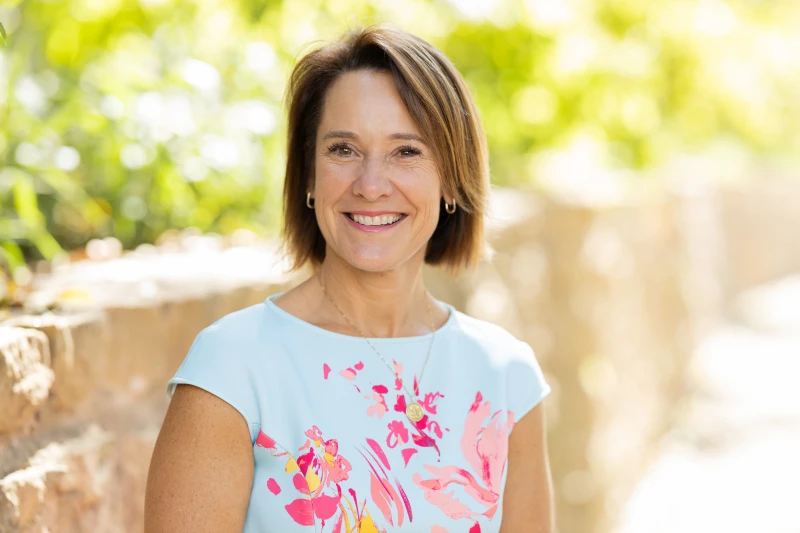
Attorney and columnist Andrea Picciotti-Bayer (above) was named the winner of the Religious Freedom Impact Award by the Religious Freedom Institute on July 2, 2025. / Credit: Courtesy of Andrea Picciotti-Bayer
CNA Newsroom, Jul 4, 2025 / 12:00 pm (CNA).
Andrea Picciotti-Bayer is the 2025 recipient of the Religious Freedom Impact Award, the Religious Freedom Institute (RFI) announced on July 2.
The Religious Freedom Impact Award honors leaders who demonstrate “consistent, effective, and innovative leadership in advancing religious freedom” through law, policy, or culture. It will be presented at the RFI Annual Dinner on November 6 in Washington, D.C.
Picciotti-Bayer is an accomplished attorney, policy expert, political commentator, and mother who has spent her career defending the conscience rights and religious liberty of individuals and institutions, particularly in the areas of education, parental rights, and health care.
A Catholic mother of 10, Picciotti-Bayer told CNA that she sees God’s hand in her life and credits him with her success, saying Christians, especially young women navigating careers and motherhood, should trust that “we can never outdo God in generosity.”
She said motherhood has played a vital role in informing her work.
“Having children made me a better lawyer,” she told CNA. “It allowed me to understand firsthand the concerns of parents fighting for their ability to raise their children according to their consciences.”
After more than a decade focused on raising her children, she returned to the legal world “ready to roll up my sleeves.”
Picciotti-Bayer is the director of the Conscience Project, where she works with intellectuals and legal scholars to craft public arguments and file amicus briefs in significant religious freedom cases at the appellate level as well as at the U.S. Supreme Court.
She fights against government overreach, helping individuals and institutions to exercise their faith without unjust interference.
“Andrea Picciotti-Bayer is a tenacious advocate for religious Americans threatened by government intrusion into their public and private lives,” said Religious Freedom Institute President David Trimble. “Her voice brings clarity to the confusion that so often surrounds some of the most charged religious freedom conflicts in American law and culture today.”
Picciotti-Bayer began her career in the Civil Rights Division of the U.S. Department of Justice, where she served as a trial and appellate attorney.
She later advised the Catholic Association and worked as a strategic consultant for the Institute for Human Ecology at the Catholic University of America, authoring amicus briefs in pivotal religious freedom and free speech cases before the U.S. Supreme Court and federal appellate courts.
Beyond the courtroom, Picciotti-Bayer is a prominent voice in the media, serving as a legal analyst for EWTN News and a weekly guest on “Ave Maria in the Afternoon.” She also writes a column for the National Catholic Register, CNA’s sister news partner, and has been published in multiple other news outlets.
If you value the news and views Catholic World Report provides, please consider donating to support our efforts. Your contribution will help us continue to make CWR available to all readers worldwide for free, without a subscription. Thank you for your generosity!
Click here for more information on donating to CWR. Click here to sign up for our newsletter.
Leon is a baby boy cared for and loved at Mary’s Shelter, a pro-life maternity home in Fredericksburg, Virginia. / Courtesy of Mary’s Shelter
Washington, D.C. Newsroom, May 24, 2022 / 13:15 pm (CNA).
Amid a shortage of baby formula in the U.S., experts recommend parents scour smaller drug stores, check online, and join social media groups sharing information.
But here’s another, perhaps lesser-known, option they can also turn to for help: pregnancy resource centers.
Nearly 3,000 pro-life pregnancy centers serve millions of people each year in the United States. They offer women and parents in need everything from health care and material assistance to educational classes and job support — at little to no cost. Right now, for many of these centers, their work also includes connecting struggling families to baby formula.
One center in Michigan, an affiliate of Heartbeat International, a pro-life pregnancy resource center network, revealed to CNA that it has a surplus of formula.
“At this time, we haven’t heard of formula shortages at the pregnancy centers,” Andrea Trudden, vice president of communications and marketing at Heartbeat International, told CNA. “Quite the contrary, actually!”
Trudden recommended families turn to their local pregnancy help organizations for assistance and use OptionLine.org as a tool to find the center closest to them.
“Since pregnancy centers are equipped to help pregnant women and new families with practical resources such as diapers and formula,” Trudden said, “they have been able to step into that gap during this time.”
Some pro-life maternity homes in states such as Virginia and North Carolina said mothers are in desperate need and exploring all of their options, including feeding their babies with formula samples. But, these homes tell CNA, they are walking with mothers in their search, every step of the way.
What is this shortage about?
The nationwide baby formula shortage was caused, and then exacerbated, by a series of factors: supply-chain issues, recalls, the closure of a major production plant in February, and even U.S. trade policy. The result, data-firm company Datasembly found, is that more than 40 percent of baby formulas were out of stock in early May.
Babies with special needs and allergies rely on formula, along with babies in general. According to data from the Centers for Disease Control and Prevention (CDC), 63.3% of infants were exclusively breastfeeding seven days after birth in 2018. Three months after birth, only 46.3% of infants exclusively breastfed. Six months after birth, that percentage changed to 25.8%
The trouble with formula began partially with the Covid-19 pandemic. Parents stockpiled baby formula at the beginning, which increased production, only to later discover that they had a surplus to use up, which decreased production.
After consuming formula from an Abbott plant in Sturgis, Michigan, four babies became sick, including two who died, from bacterial infections. This led to a recall and the plant shutting down in February.
These incidents exposed the formula market as one not structurally prepared for emergencies, with just four companies largely in control of supply in the United States. U.S. and regulatory trade policy only added to the problem, restricting the exchange of formula internationally, The Atlantic reported.
Months into the shortage, the Food and Drug Administration (FDA) has reached an agreement with Abbott, one of the largest U.S. baby formula manufacturers, to reopen its Sturgis plant in the coming weeks. President Joe Biden invoked the Defense Production Act to prioritize the production of formula. And, in the meantime, the U.S. military has begun importing formula from Europe.
Members of Congress on both sides of the aisle have called for action. Senate Democrats are pushing a bill that would send $28 million in emergency funding to the FDA. Congress passed, and Biden signed into law, a bill to expand access to formula for lower-income families during emergencies.
In the meantime, before the shelves are fully stocked once more, pregnancy centers and maternity homes around the country are helping parents in need.
“I have never seen this much formula. We have an overflow!” Lois Stoll, a volunteer who manages the formula supply at the center, said in a press release. The center, one of Heartbeat International’s 1,857 affiliate locations, accumulated its surplus over the last two years, during the pandemic.
“It really is the result of an unexpected set of circumstances,” Bryce Asberg, the executive director, added in the release. “During the COVID-19 pandemic, the number of clients fell but donations continued to come in.”
Baby formula is stored on shelves at Helping Hands Pregnancy Resource Center in Hillsdale, Michigan. Courtesy of Helping Hands
Asberg told CNA that the center has been running a material assistance program for several years where it provides mothers and families with baby clothes, diapers, wipes, and baby food or formula.
“We still offer all those items to clients who come in, but recently we have noticed a surge of interest in formula,” he said. “God has been building our supply of formula for many months, and we didn’t know why we had so much. Now we do!”
Washington, D.C.
In Washington, D.C., Janet Durig, the executive director of Capitol Hill Pregnancy Center, said that her center also has baby formula on hand.
“We’ve had some phone calls seeking help and we’ve had formula to give them,” she told CNA. But, she emphasized, the supply is limited because they rely on donations.
“We have it to help people on a limited basis and are helping people on a limited basis,” she said, adding that the center welcomes donations of unopened bottles or cans of formula as long as they have not expired.
Connecticut
Leticia Velasquez, executive director and co-founder of Pathways Pregnancy in Norwich, Connecticut, encouraged moms and families to reach out if they need formula.
She told CNA that the three-year-old center is there for any woman or mom in need.
“We just say, ‘How can we fill the need? That’s what we’re here for,’” she said. “We definitely stand with them in any crisis, whether it be a formula shortage or an unplanned pregnancy.”
Parents in eastern Connecticut looking for baby formula can text the center at (860) 222-4505.
North Carolina
Debbie Capen, the executive director of MiraVia, said that the baby formula shortage is affecting her group’s work in supporting and providing resources to new moms in need. The Catholic nonprofit runs an outreach center in Charlotte and a free college residence at nearby Belmont Abbey College where a pregnant student — from any university or college — can stay until her child turns two years old.
“Yes, the mothers we serve are very concerned about the baby formula shortage,” Capen told CNA. “We always encourage breastfeeding for our expectant mothers, but for those who cannot breastfeed, they usually rely on vouchers for baby formula through the USDA’s WIC program.”
The U.S. Department of Agriculture’s WIC program, also known as the “Special Supplementation Nutrition Program for Women, Infants and Children,” offers federal grants to states for supplemental foods, health care referrals, and nutrition education for low-income pregnant and postpartum women, and young children at nutritional risk.
Capen highlighted that WIC only covers one specific brand of formula, which means that moms must pay full price for any other label. Formula is at a premium price right now, she added, which only puts more stress on their limited resources.
In each state, baby formula manufacturers bid for exclusive rights to provide formula to WIC participants in that state. In return, they offer the state discounts, or rebates. For those who rely on WIC, this means that they face limited options.
In response to the scarcity, the mothers at MiraVia are turning to alternatives: food pantries and the MiraVia community.
“They communicate with our staff and each other when they find formula at a certain location, as well as contact stores to find out when shipments are expected,” Capen said. “They substitute with generic brands when possible and reach out to their pediatricians for recommendations and even free samples.”
Capen listed some ways that people can help during this shortage, beginning with communication and the sharing of resources.
“For example, you can help by searching posts on social media and community apps like NextDoor or OfferUp to find those with formula and suggest where it can be donated,” she said. “Remind friends and family not to stockpile so that the supply of formula can flow to those in most urgent need. If you are pregnant and have received free samples of formula, donate what you won’t use to food pantries or programs for new mothers.”
Virginia
Kathleen Wilson, the executive director of Mary’s Shelter, a faith-centered maternity home in Fredericksburg, Virginia, agreed that “our moms have had many difficulties.”
She told CNA about one of their mothers who gave birth to her fourth baby three months ago. At first, she used a formula brand called Enfamil Reguline. After it became unavailable, she began switching between brands and using whatever she can find, Wilson said. The mother has also tried ordering on Amazon and turned to her pediatrician for samples.
Yaretzi is a baby girl cared for and loved at Mary’s Shelter, a pro-life maternity home in Fredericksburg, Virginia. Courtesy of Mary’s Shelter
“This is a mom who is trying to hold down a job, with an infant and other children to tend to,” Wilson stressed the “very difficult” situation.
Wilson said that two of the other mothers spent days driving around at one point to try to find formula for their babies. When necessary, they are also turning to sample packets of baby formula.
“Our staff and volunteers have been assisting with this and picking up and delivering formula when they can get their hands on it,” Wilson said, adding that donors have also pitched in.
“We are blessed with wonderful donors,” she said. “A friend just stopped in this morning with two cans of formula that he was able to find.”
“If donors are willing and can find formula, we would be thrilled to take their donation,” she said, concluding that she is “praying this comes to an end soon.”
Washington D.C., Mar 23, 2020 / 03:01 pm (CNA).- The worldwide outbreak of coronavirus (COVID-19) is beginning to touch one of the populations in the United States most vulnerable to disease: the incarcerated.
A growing number of prisons in the US have confirmed cases of COVID-19, and most have suspended visits for inmates.
In the face of such precautions, prison chaplains throughout the country have had to adapt their ministry.
Joe Cotton, director of prison ministry in the Archdiocese of Seattle, told CNA that all of his chaplains are currently blocked from entering the facilities where they normally minister.
Seattle has one the highest rates of infection in the United States, with more than 1,600 confirmed cases and more than 90 deaths. Washington State was also the site of the first confirmed case of COVID-19 in the US.
“So we’re trying to be as creative as we can— some of our chaplains are doing things like developing their reflections and Communion services and programming, working from home and getting ahead, and using this time for getting things ready for when we can go back in, so that they’re well ahead of the game,” Cotton told CNA.
He said his team that normally ministers at a juvenile facility got especially creative, setting up a telephone answering service to forward calls from inmates directly to chaplains’ cell phones, depending on a schedule of chaplains’ availability throughout the week that they set up.
“Tonight’s my night, for example. So between five and nine, I’ll have my cell phone on me, and if the answering service calls me, it means someone on the inside wants to talk to a chaplain over the phone. So that’s one of the creative things that we’re doing to at least make chaplains still available…although that’s not happening in every facility.”
Art Alvarez, who has ministered at Twin Towers Correctional Facility in Los Angeles for the past 14 years, told CNA that for now, he is still able to go into the facility to minister to the men, but must keep a safe distance to avoid bringing in the virus.
In L.A., chaplains are still able to enter county jails, though that may soon change. In state prisons, all the chaplains’ operations have been canceled.
Alvarez said he has had to adapt to speaking to the men through the doors of their cells through food slots that are no longer used for food, but which are once again serving a purpose.
He said the inmates are able to have access to the news and have a pretty good idea what is going on.
“They’re concerned about their families on the outside. But on the inside, with the deputies, they feel pretty safe,” he said.
At at least one major prison— Rikers Island in New York— authorities have released dozens of inmates over fears that they may have contracted the virus. Many county jails are doing the same.
At least 38 people at Rikers Island have contracted COVID-19 and dozens more have likely been exposed to it, the Associated Press reports.
Prison officers and staff in states including California and Michigan have tested positive for the virus, and in Wisconsin, 18 inmates at a prison were quarantined last week after a facility doctor tested positive for the virus, according to reporting from the AP.
In Los Angeles county, which has the largest prison population of any county in the United States, prisoners with non-violent criminal records and who have between two and three months left of their sentences are being released.
Alvarez said he is also continuing to assist with what are known as “extractions”— per state policy, if an inmate refuses to leave his cell, a doctor, a nurse, or a chaplain must be brought in and try to talk the inmate out of his cell before the deputies are allowed to use force.
He said he was recently asked to assist with an extraction whereby the inmate was informed that he was being released, but he didn’t believe that it was really happening.
“This guy didn’t want to go home. He didn’t want to leave,” Alvarez said.
Alvarez said the jail has prepared two entire floors for quarantine, but as of March 21, no inmates are there.
He said the inmates’ attitudes are mixed during this time of uncertainty, and he said the chaplains are trying to reassure the inmates that they are in many ways safer inside than jail
“Some want to stay in, some want to go home and be with their families and protect their families,” he said.
But:
“There’s nothing more that they can say or do.”
In at least two states, Arizona and Minnesota, prison officials have waived copays charged to inmates for medical visits and waived fees for personal hygiene supplies, NPR reports. A California senator is advocating that all low-risk inmates be released nationwide.
In California, prison officials announced that a prisoner at California State Prison, Los Angeles County, has tested positive for COVID-19, and in addition, at least five prison workers have the disease, the LA Times reports.
California Governor Gavin Newsom issued a statewide, mandatory stay at home order on March 19 that workers in critical sectors should go to work. Grocery stores, pharmacies, banks and more will stay open, the governor said.
Gonzalo de Vivero, director of the Archdiocese of Los Angeles’ Office of Restorative Justice, told CNA that he has been getting calls constantly from his chaplains, asking whether they can continue to do their ministry.
Every jail makes its own rules, he said, and for now the county jails are still allowing chaplains in.
“The mayor [of Los Angeles] is asking everybody to stay home, unless your work is essential. Well, the work of a chaplain is extremely essential. But on the other hand, we have families…and that’s very hard. And the uncertainties are very hard.”
Even before the governor’s order, a lot of the chaplains’ services have had to be reduced, de Vivero said.
As of last week, they could not have more than 10 people in their services in the jails, including the minister; a chaplain last week held a communion service that normally has 35 people, but this time had only nine, de Vivero said.
In Los Angeles County in 2019, de Vivero said, the archdiocesan prison ministry said over 2,000 Masses in jails, with over 25,000 attendants.
de Vivero said he worries that switching to virtual chaplaincy during this time could cause the jails they serve in to be reluctant to allow chaplains into the jails in person after the pandemic ends. He said many of his chaplains are against broadcasting Mass by videoconferencing, and he called it a “dangerous route.”
“The institutions will be very happy to say that all Masses should be via video from now on,” he warned.
“People need people. We cannot replace going to Church with watching Mass on TV.”
de Vivero related a story of one of his chaplains, who was determined to continue to go and serve inmates in the jails during the pandemic, and whose boss at work threatened to fire him if he continued to do so.
Above all, he said, this situation highlights how difficult it is for Catholics to serve the underprivileged, even in non-crisis times.
“We have two pandemics: the virus, and the fear. And I don’t know which one is more dangerous,” he mused.
“I am very concerned about the long-term effects in our jails, because people are going to get extremely sensitive, be more prone to violence…the enemy would like to use this opportunity to fuel disagreements, arguments, and they turn into altercations, and then fights, and we have more problems that nobody needs right now.”
CNA Staff, Jul 30, 2020 / 03:30 pm (CNA).- Leading U.S. Catholic bishops on Thursday criticized the Trump administration’s decision to consider ending DACA.
The Department of Homeland Security had announced on Wednesday that it would still consi… […]
Congratulations to Andrea Picciotti-Bayer.
