Boston, Mass., Nov 9, 2017 / 05:57 am (CNA/EWTN News).- When Brother Jim Peterson, OFM Cap., was in middle school and high school, he felt like every time someone prayed for vocations, they were praying for him.
“It was always kind of like, they’re talking about me,” he told CNA.
That was his first inclination that he had a religious vocation, though at first, he assumed he was being called to be a priest.
Although the call was always somewhere in his heart, Peterson said that he finished high school, and then college, and was struggling to find a job when he wondered if he should answer that call.
“But at the same time, I wasn’t sure if it was just me running away from something, so I decided to see if I could make my way in the world before making a decision like that,” he said.
It wasn’t until he finished law school, and worked for a few years as a lawyer in Pennsylvania, that he decided he couldn’t ignore God anymore.
Today, Peterson is a Capuchin brother with the Capuchin Franciscans of the St. Mary Province, which encompasses New England and New York. He spoke with CNA about the vocation of a religious brother during Vocations Awareness Week, an annual week-long celebration sponsored by the United States bishops’ conference, dedicated to promoting vocations to the priesthood, diaconate and consecrated life through prayer and education.
Becoming a Brother
It was during his time in law school and as a lawyer that he really wrestled with his faith, and what God could be asking of him, Peterson said.
Working as a lawyer, he had several “a-ha” moments that made him realize he might be called to a different life.
“One moment was when…I was given the task of evicting somebody from a piece of property that one of our clients owned. And so I got a phone call from the guy I had to evict and he said, ‘Don’t worry, you don’t have to go to court. I’m leaving, you can have your property back’,” he recalled.
“So I went and told my partner and he said, ‘Well, let’s just hope all of our problems aren’t solved so quickly.’ And this was a good guy and a good partner, but what he was saying was that we’re making money based on other people’s problems.”
“I realized then that there are a million lawyers in the country, anybody can take my place, but not everybody could respond to the call that the Lord has put before them,” he said.
Peterson decided to talk to a priest who was a good friend of his family, and who also happened to be a Capuchin friar, about this call he had been experiencing. They met and talked for two hours about the life of Capuchin friars, and afterwards, Peterson decided to attend a vocation retreat the next month, where he got to see the life of the friars firsthand.
“At the beginning of the weekend I was like this is crazy, what am I doing here,” he said.
But after seeing the friars in action, “by the end of the weekend…I said this is what I want to do with the rest of my life.”
The difference between priesthood and brotherhood
Peterson said that over the years, the call from God had evolved from what he thought was a call to the priesthood into a call to be a Capuchin brother. Part of the reason for this, he said, was that he felt that he was also called to continue being a lawyer, and Capuchin friars often continuing working in the fields in which they were working before they joined the order.
“In the Franciscan world, when St. Francis started the order, you did what you did before, you just did it now as a religious,” Peterson said. “So the priests who were already priests were now Franciscan priests, and the carpenters who came in were now Franciscan carpenters…so now I’m a Franciscan lawyer,” he said.
“I don’t feel called, and frankly my gifts don’t mesh well, with presiding at the sacraments, so while I love the sacraments, I love participating in them, I don’t feel called to lead them. But at the same time I do feel called to the Capuchin Franciscan life, the life of a brother,” he added.
One of the main components of being part of a religious order is living in community, Peterson said, which can be both a challenge and a grace.
“You’re living with people that you don’t get to choose, so you’re talking about different generations of folks, different interests, and the little things like people leaving crumbs behind and not picking up after themselves – things that I think any family struggles with,” he said.
“And so it has its challenges, but there’s also some really neat things,” he said, like the rivalry between the Yankees fans and the Red Sox fans within his own community. Another gift of community life is the universality of the community – there are about 11,000 Capuchin friars all over the world.
“The idea that you have something in common with people you don’t even share a language with is something I’m kind of still in awe of,” he said. “You find ways to share that commonality despite all the differences.”
Together, the community shares common prayer times, including Mass and meditation, in the morning. During the day, each brother serves in his particular ministry, which might take place outside of the friary, as is the case for Peterson, who works as a canon lawyer for the Archdiocese of Boston.
Other brothers serve within the order, either in forming younger friars or other ministries. In the evening, the brothers return home and again have dinner and additional prayer time together.
“Priests are a little bit more independent, they don’t have to live common life, they don’t take the three vows that a religious takes of poverty, chastity and obedience. They promise obedience to their bishop, but they don’t take vows of poverty. They are called to perfect continence but they don’t vow that, although it is one of their obligations,” he said.
“A lot of people will ask me why aren’t you a priest? You’re smart enough, and so on,” Peterson said.
Ultimately, he said, it comes down to the call from the Lord, who knows what will make each person happy.
“I’d rather be a happy brother,” Peterson said. “I think the world is better served by a happy brother than an unhappy priest.”
What to do if you’re discerning
Peterson said that if he could advise other young people discerning religious life, he would tell them to take their time.
“I think too often we accept people who aren’t ready – they’re either too young or they’re not mature enough yet or they haven’t found their way in life,” Peterson said.
He encouraged young discerners to learn how to be independent, in order to better learn how to be interdependent within a community.
“That was an interesting part of the journey for me. My whole life I’m learning to break away from my family and support myself, and now I have to ask permission to take a car, or I’m given a limited amount of money for the month, things like that,” he said. “So it’s learning to become dependent on others, but in a healthy way, not in a childish way.”
Furthermore, he said, maturity and independence are important in order for new members of a community to be able to contribute to the community.
“They often come looking for something rather than being ready to offer something,” Peterson said. “It’s ok to be looking for something but you have to be able to put your gifts and talents at the service of the community.”
He also encouraged anyone discerning to attend vocation weekends, or to read more about the saint or the charism in which they’re interested, to see if it is a good fit for them.
“Once I started reading about St. Francis, it was clear to me that this was the guy I wanted to follow, he understood what religious life was about and was following what Christ was about,” he said.
Ultimately, though, he said he would offer encouragement to those discerning, because following God’s call is the key to happiness in life.
“You can really find fulfillment,” he said. “Obviously if you’re called to something else then that’s where your fulfillment is. I’ve told people before that your happiness and fulfillment is tied up in your vocation, the two are interchangeable.”
“That’s not to say that there won’t be challenges, it’s definitely not going to be easy, but I don’t think the Lord would call us to something where you’d be unhappy,” he said.
He said the life of a brother has been a pleasant surprise, in terms of the freedom he has experienced in what he thought would be a more limited way of life.
“Being a celibate, you have much more freedom to interact with a wide variety of folks, you don’t have that one person that you’re tied to, and as a result, I’m able to be with a lot of different people, and I’ve met some amazing people along the way,” he said.
“It’s a blessed life.”
 […]
[…]




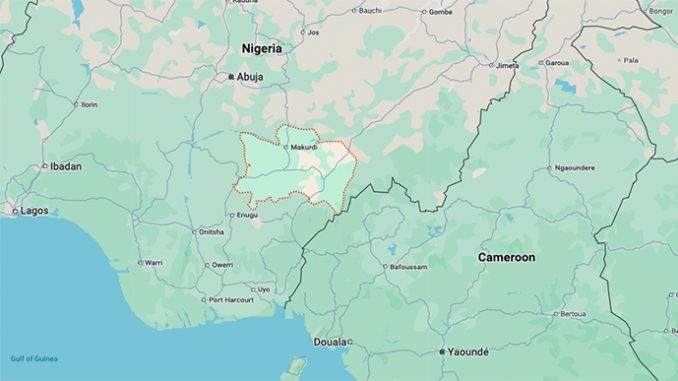


Praying for the victims and their families, that the hostages will be released unharmed, that those who are responsible for this heinous crime will be held accountable, and that there will be a lasting Peace in Nigeria.🙏
But isn’t Islam a religion of peace?
Diogenes- and the Crusades?
The Crusades were 700 years ago. Hopefully some minds have been opened in that time frame??? There is no excuse for this sort of UNPROVOKED behavior in the modern era. Let people worship as they will. But tolerance is not a quality that Islamists value. The era when Islam conquered an held a large chunk of Europe have been too soon forgotten.
Give it a rest “Br.Jaques”.
That was my first thought too, Br. Jacques. Not to mention the St. Bartholomew Day massacre, countless pogroms right into the 20th century, Northern Ireland, etc., etc.
We can look at most religions & find examples of violence committed. It’s more about the darkness in our hearts than the doctrines of our faith.
First thoughts often are not the best ones. Familiarize yourself better with the meaning of Jihad and the history of Islam. Armed belligerence against the infidels characterizes Islam from the Mohammed’s time until the present. Unlike many other religions, and specifically Christianity, Islam provides the justification for the violence that its adherents have engaged in.
My first thought wasn’t about Islam but about what all human beings share in their hearts. Christians need to be honest about their own past also.
Let’s remember that the Catholic Church has not institutionaled violence against others. It is NOT a tenet of our faith. On the other hand, fatwas ARE institutionalized in Islam. It is essential to their faith. So is jihad. No recognized mullah or imam has stood up and condemned violence. Violence is a central part of the religion of Islam.
The New Testament surely doesn’t advocate violence & neither does Christ. It’s not a tenet of our Faith. But the Church is comprised of broken human beings like you & me & Church authorities have had a hand in instances of sectarian violence in the past.
Sectarian violence is not built into the Church but it’s definitely escaped a few times.
The Crusades were a belated response to Islamic aggression against and persecution of Christians.
The Crusades were a perfectly justifiable and moral response to over 850 Muslim attacks in Western Europe. Your ignorance of history is appalling.
Several scholars have debunked the long-peddled untruth about the Crusades. See for example, this debunking by military historian R. Ibrahim in
https://www.raymondibrahim.com/2015/02/12/the-truth-about-the-crusades/
And in this interview https://www.raymondibrahim.com/2024/10/04/video-the-truth-about-the-crusades/
Ibrahim observes, “The truth, of course, is very different from the Fake History being peddled by the NYT and friends. The Crusades were a militant response to more than four centuries of jihadist aggression that saw three-quarters of the Christian world swallowed up by Islam. The particular Muslim invasions (between 1071 and 1095) that occasioned the First Crusade were actually motivated by noble — indeed, altruistic — sentiments. During that period and in the decades before it, hundreds of thousands of Eastern Christians (Armenians, Greeks, Syrians, etc.) were killed or enslaved, and tens of thousands of churches were ritually desecrated, torched, and/or turned into mosques. Think what “ISIS” did to Christians and other minorities in Iraq and Syria in the 2010s, but times a hundred, and for decades.
Nor were atrocities limited to Asia Minor or its indigenous Christians: “As the Turks were ruling the lands of Syria and Palestine, they inflicted injuries on [European] Christians who went to pray in Jerusalem, beat them, pillaged them, [and] levied the poll tax [jizya],” writes Michael the Syrian, a contemporary. Moreover, “every time they saw a caravan of Christians, particularly of those from Rome and the lands of Italy, they made every effort to cause their death in diverse ways.” Such was the fate of one German pilgrimage to Jerusalem. According to one of the pilgrims:
Accompanying this journey was a noble abbess of graceful body and of a religious outlook. Setting aside the cares of the sisters committed to her and against the advice of the wise, she undertook this great and dangerous pilgrimage. The pagans captured her, and in the sight of all, these shameless men raped her until she breathed her last, to the dishonor of all Christians. Christ’s enemies performed such abuses and others like them on the Christians.”
See also this scholarly interview by CWR of a professor on the subject of Christian Slavery under Islam which covers the origins of the Crusades as the Christian Greek Roman Emperor Alexius I Comnenos called for help from the West against the Muslim attacks against the Christian Roman Empire and how Pope Urban II gave him this help by organizing the First Crusade:
https://www.catholicworldreport.com/2020/12/16/the-forgotten-history-of-christian-slavery-under-islam/
https://www.thepostil.com/author/dario-fernandez-morera/
There was enslavement of Christians and all sorts of other people by the Berbers, Arabs, and Ottomans.
Over a million Europeans were kidnapped into slavery but many times more Africans were marched into slavery on the Trans Sahara route. Some were sold to Christians as well as to Muslims and Jews. Slavery was an equal opportunity venture.
Please continue to pray for us it is our mother land.
I prayed for Africa just this morning.
🙂
Islam is incompatible with civilized society. To expect anything else is a fool’s errand.
See this scholarly interview on Christian Slavery under Islam by Father Connolly of CWR, with a contemporary illustration of the slave market in Islamic Constantinople:
https://www.thepostil.com/christian-slavery-under-islam-a-conversation-with-dario-fernandez-morera/
and historian R. Ibrahim account of just now another atrocity vs Christians in Egypt:
https://www.raymondibrahim.com/2025/05/29/video-nightmarish-attack-on-egypts-christians-oh-world-do-you-see/?jetpack_skip_subscription_popup
Video Nightmarish Attack on Egypt Christians “Oh World—Do You See?!”
Didn’t US Congressman Scott Perry tell the world that USAID was the main sponsor of terrorism in Sub-Saharan Africa. Why is everyone pretending about it? What is General Langley and his men in Africom doing in the midst of the genocide going on in Nigeria and the rest of the region. You can tell that the US does not want Africa to grow. Imagine that Gen Langley lied against Ibrahim Traore( the only good news from that region) in order to find reason to invade BurkinaFaso and destroy the little good the young man has done. What a shame!
It’s hard for me to understand exactly what’s going on in Burkina Faso today but it does seem there’s more alliance with Russia & less with France. Very sad overall health & well being situation there. I wish more was being done to alleviate that.
It is absurd and a traversed reply on the martyrdom of Christians by their brothers from Ibrahim’s son Ishmael.The article under scrutiny is between the two faiths not nations. Was Scott Perry advancing a religious issue or a state’s interest? In the so-called Holy Quran, some Ayas expressly recommend the slaying of non-believers, refer to others as infidels not worthy of living,recommend the enslaving of non believers!
Islam is divided between those that engage in terrorism and those that support terrorism. To denounce terrorism in the public domain is to sign a death warrant.