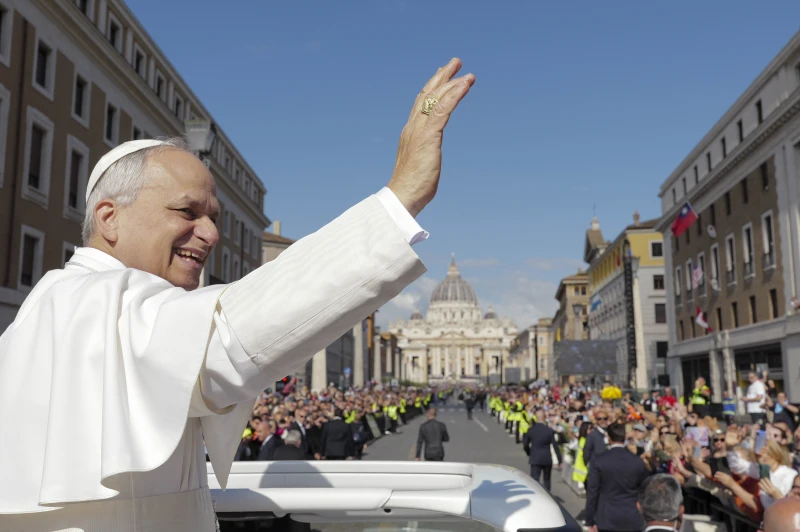
From the popemobile, Pope Leo XIV greets thousands of people lined up along Via della Conciliazione on the morning of his inaugural Mass, Sunday, May 18, 2025. / Credit: Vatican Media
Vatican City, May 22, 2025 / 14:18 pm (CNA).
Pope Leo XIV has appointed Sister Tiziana Merletti as secretary of the Dicastery for Institutes of Consecrated Life and Societies of Apostolic Life.
According to the Vatican Press Office, the 66-year-old consecrated religious previously served as superior general of the Franciscan Sisters of the Poor for nine years.
She will report directly to another nun, Sister Simona Brambilla, whom Pope Francis appointed in January as prefect of the Vatican department, responsible for all matters concerning the government, discipline, studies, assets, rights, and privileges of institutes of consecrated life.
Under the late Argentine pontiff, women’s leadership increased significantly. According to data maintained by the Vatican on its website, the female presence increased from almost 19.2% to 23.4% during Francis’ pontificate. With the 2022 apostolic constitution Praedicate Evangelium, Francis decreed that laypeople, in addition to women, could lead a dicastery and become prefects, a position previously reserved for cardinals and archbishops.
Doctorate in canon law, experience in Church government
Born Sept. 30, 1959, in Pineto in the Teramo province of Italy, Merletti made her first religious profession in 1986 at the Institute of the Franciscan Sisters of the Poor. She holds a degree in civil law from the then-Libera Università Abruzzese degli Studi “Gabriele d’Annunzio” in Teramo (1984) and obtained her doctorate in canon law in 1992 from the Pontifical Lateran University in Rome.
From 2004 to 2013, she served as superior general of her congregation. Currently, Merletti is a professor in the canon law department of the Pontifical Antonianum University in Rome and collaborates as a canon lawyer with the International Union of Superiors General, the organization representing women religious of apostolic life worldwide.
This story was first published by ACI Prensa, CNA’s Spanish-language news partner. It has been translated and adapted by CNA.
If you value the news and views Catholic World Report provides, please consider donating to support our efforts. Your contribution will help us continue to make CWR available to all readers worldwide for free, without a subscription. Thank you for your generosity!
Click here for more information on donating to CWR. Click here to sign up for our newsletter.
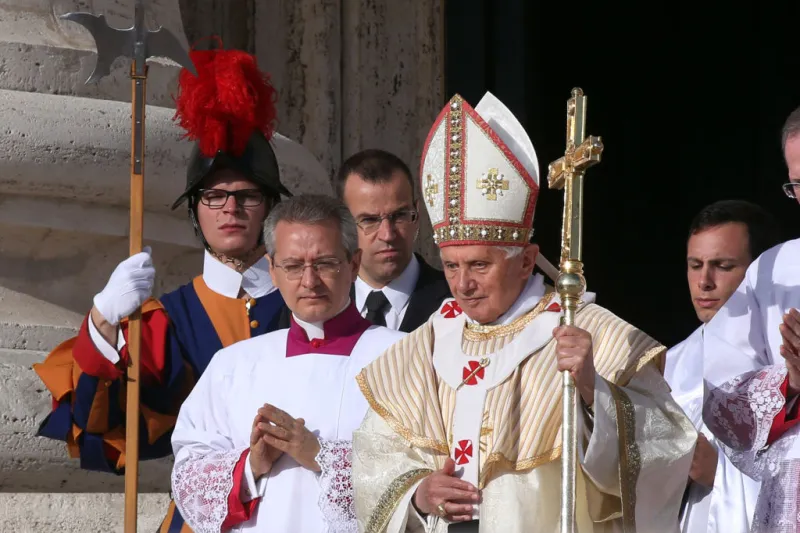
Pope Benedict XVI arrives in St. Peter’s Square in the Vatican for the Oct. 21, 2012, canonization ceremony for Jacques Berthieu, Pedro Calungsod, Giovanni Battista Piamarta, Maria Carmen Salles y Barangueras, Marianne Cope, Caterina (Kateri) Tekakwitha, and Anna Schaffer. / Photo by Franco Origlia/Getty Images
Washington, D.C. Newsroom, Jan 2, 2023 / 14:00 pm (CNA).
During his pontificate, Pope Benedict XVI beatified 870 people and canonized a total of 45 saints. Though his papacy was relatively short, spanning from 2005 to 2013, the 45 people whom he declared saints are models of faith and holiness, celebrated by Catholics all over the world.
Here are seven of the best-known saints Pope Benedict XVI canonized:
St. Kateri Tekakwitha
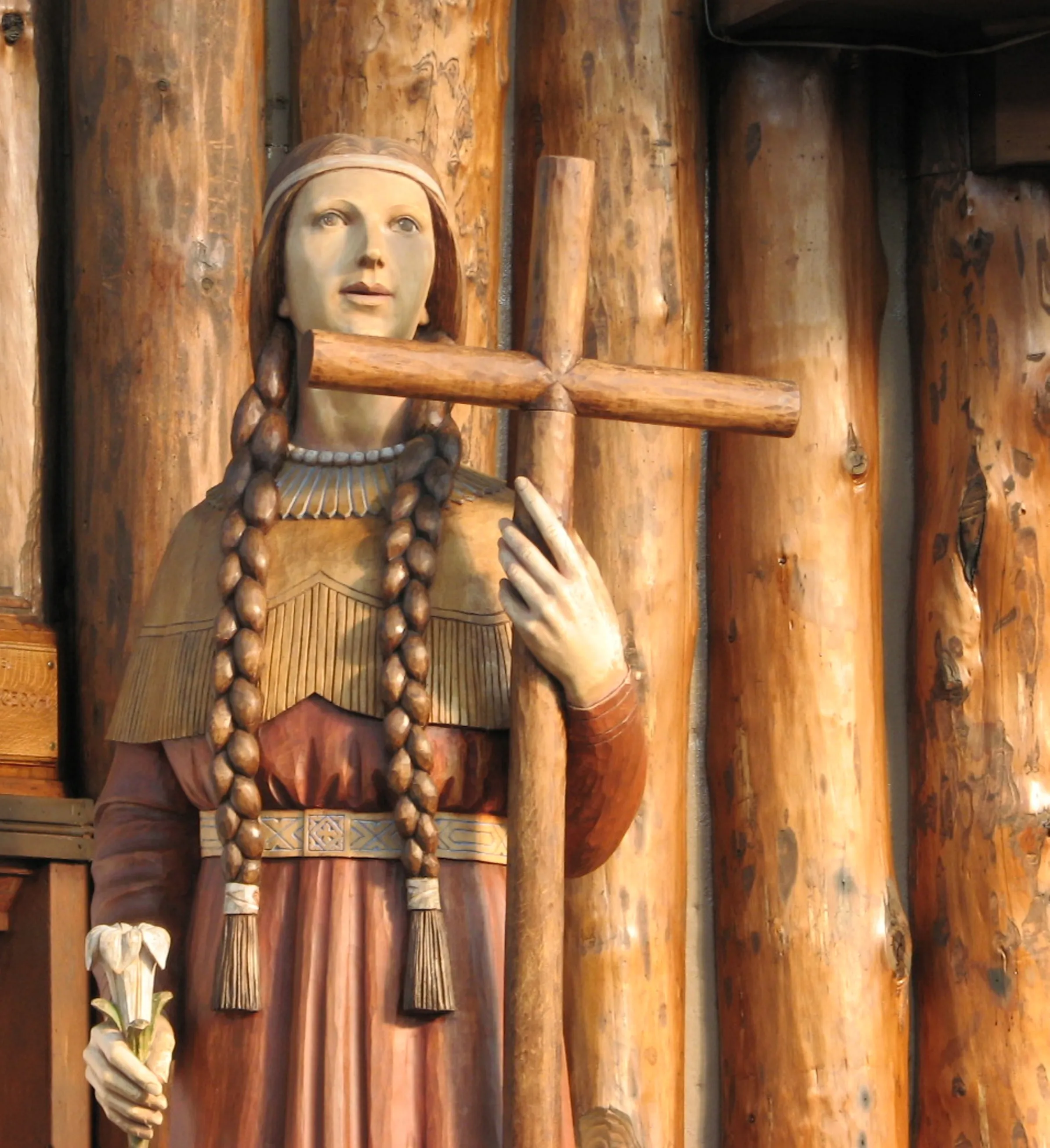
St. Kateri Tekakwitha, or “Lily of the Mohawks,” was the first Native American saint to be canonized. Born in what is today New York state, she was the daughter of a Mohawk father and a Christian Algonquin mother. She was baptized at age 21 and fled persecution to St. Francis Xavier Mission near Montreal, Canada, joining a community of Native American women who had also converted to Christianity. She is remembered for her suffering, devout faith, courage, and her purity. St. Kateri died on April 17, 1680, at age 24.
Statue of St. Kateri Tekakwitha with lily. Shutterstock
She was canonized by Benedict XVI on Oct. 21, 2012. He said: “Kateri impresses us by the action of grace in her life despite the absence of external help and by the courage of her vocation, so unusual in her culture. In her, faith and culture enrich each other! May her example help us to live where we are, loving Jesus without denying who we are.”
St. Hildegard of Bingen
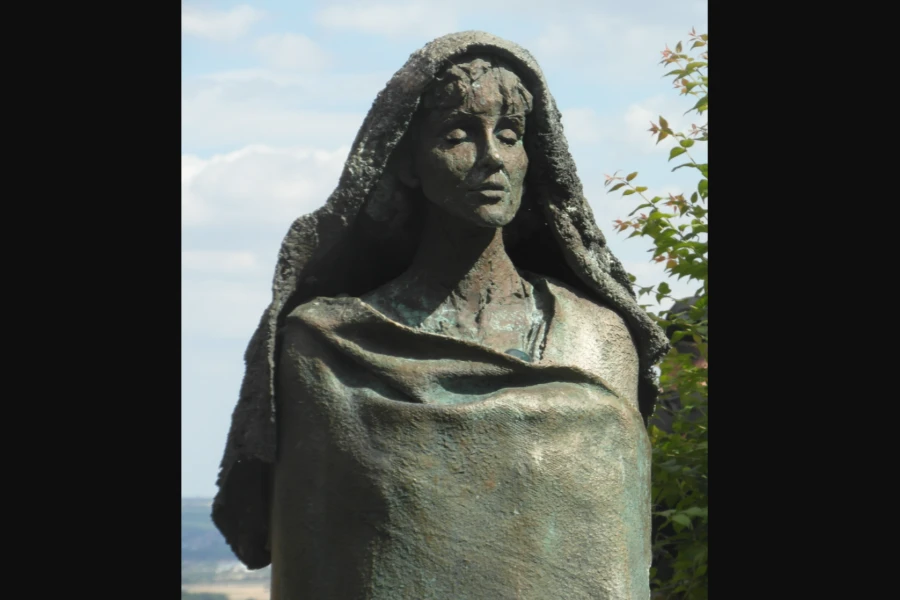
St. Hildegard of Bingen was an abbess, artist, author, composer, mystic, pharmacist, poet, preacher, and theologian from Germany. Born in 1098, in her late teens she became a Benedictine nun at the Monastery of Saint Disibodenberg. From the age of 3, she experienced visions of God and was asked by her confessor to write them down in what became the influential illustrated book “Scivias.”She founded two monasteries and was a prolific writer of poetry, theology, and sacred music. She died on Sept. 17, 1179.
A sculpture of Hildegard of Bingen by Karlheinz Oswald at Eibingen Abbey in Hesse, Germany. . Gerda Arendt (CC BY-SA 3.0).
St. Hildegard was canonized on May 10, 2012, and declared a Doctor of the Church by Benedict XVI on Oct. 7, 2012. He said: “In Hildegard are expressed the most noble values of womanhood: hence the presence of women in the Church and in society is also illumined by her presence, both from the perspective of scientific research and that of pastoral activity.”
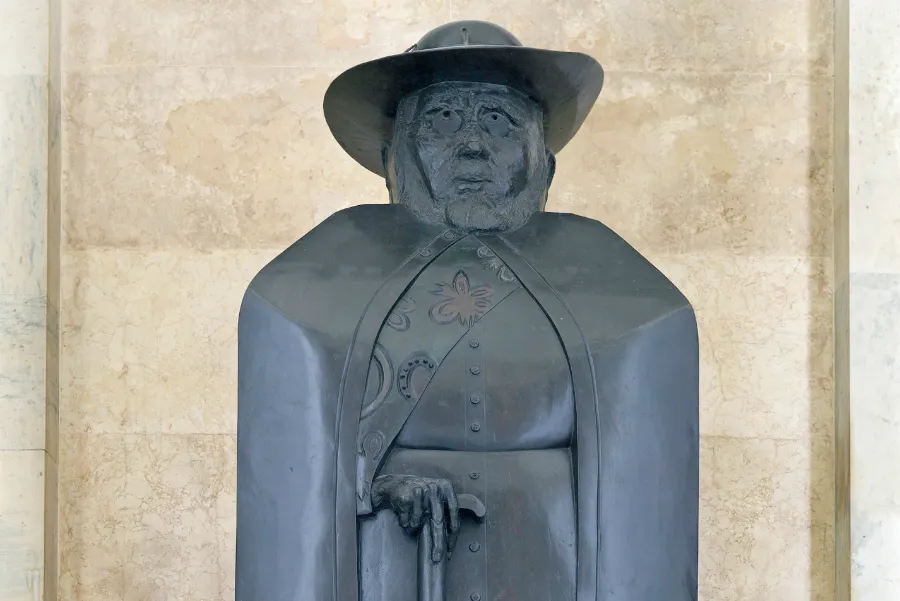
St. Damien of Molokai
The bronze cast of Marisol Escobar’s ‘Father Damien’ in the National Statuary Hall (detail). public domain.
Joseph de Veuster, later to become St. Damien of Molokai, was born in 1840 in rural Belgium. At the age of 13, he was forced to leave school to work on a farm but later decided to pursue a religious vocation with the Congregation of the Sacred Hearts of Jesus and Mary. As a priest, he served victims of leprosy quarantined on the Hawaiian island of Molokai. He eventually contracted the disease, losing his eyesight, speech, and mobility. St. Damien died of leprosy on April 15, 1889. Benedict XVI said of St. Damien, whom he canonized on Oct. 11, 2009: “Following in St. Paul’s footsteps, St. Damien prompts us to choose the good warfare, not the kind that brings division, but the kind that gathers people together. He invites us to open our eyes to the forms of leprosy that disfigure the humanity of our brethren and still today call for the charity of our presence as servants, beyond that of our generosity.”
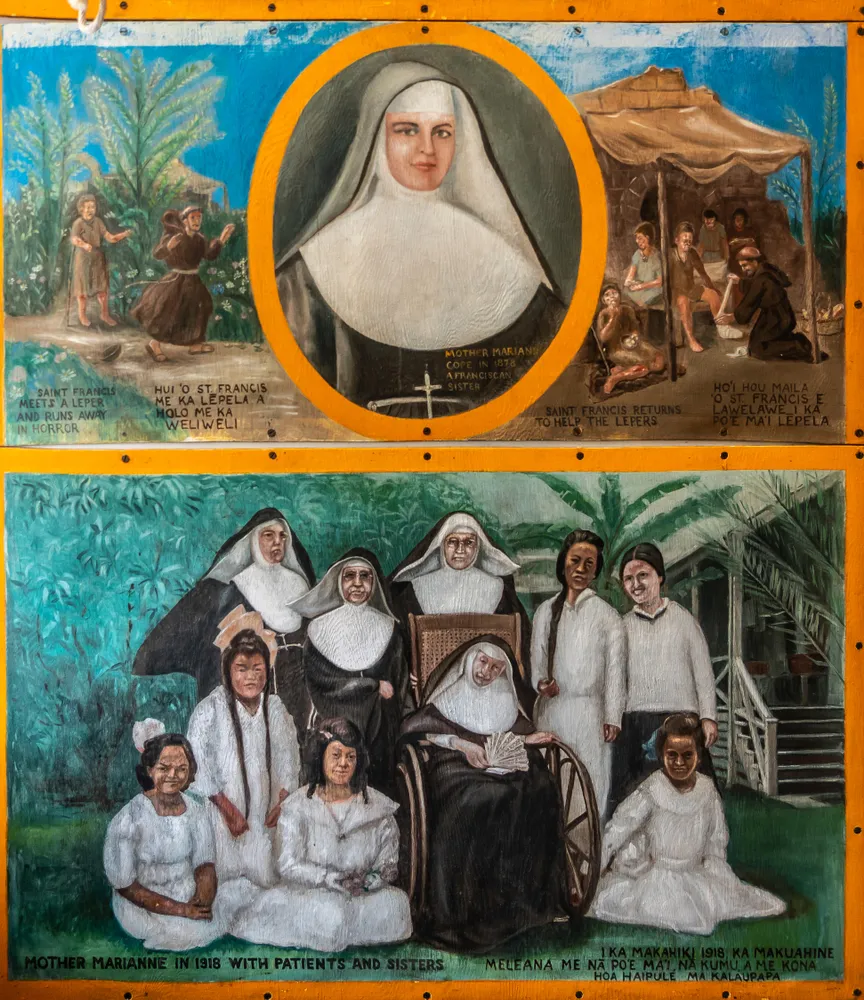
St. Marianne Cope
St. Marianne Cope was born in Germany in 1838 and entered religious life with the Sisters of the Third Order of St. Francis in Syracuse, New York, in 1862. Mother Marianne served as an educator and opened two of central New York’s first hospitals. She was sent to Kalaupapa on the island of Molokai in Hawaii at age 45 to care for leprosy patients and established an education and health care system for them in the years she was there.
Painting of nun Saint Marianne Cope and images with lepers and her team on Molokai Island at Mary, Star of the Sea, Catholic Church, Kalapana, Hawaii. Claudine Van Massenhove / Shutterstock
Benedict XVI canonized St. Marianne Cope on Oct. 21, 2012. Of her legacy, he said: “At a time when little could be done for those suffering from this terrible disease, Marianne Cope showed the highest love, courage, and enthusiasm. She is a shining and energetic example of the best of the tradition of Catholic nursing sisters and of the spirit of her beloved St. Francis.”
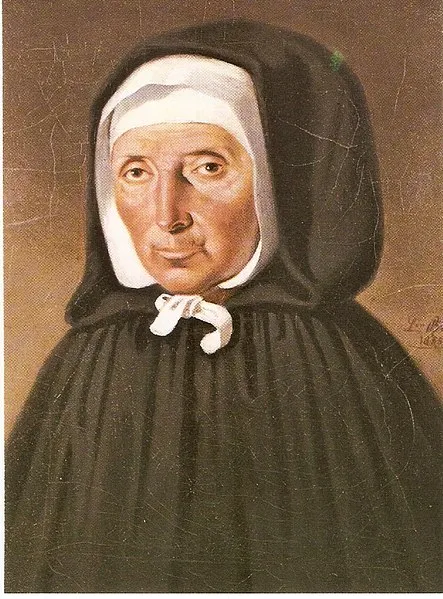
St. Jeanne Jugan
St. Jeanne Jugan was born on Oct. 25, 1792, during the French Revolution. At age 25, she joined the Third Order of St. John Eudes, a religious association for laypersons. After some time serving as a nurse caring for elderly women, she acquired an unused convent building that would hold 40 people and established the Little Sisters of the Poor. At the time of her death on Aug. 29, 1879, 2,400 members were serving internationally.
Portrait of St. Jeanne Jugan (1792–1879), foundress of the Little Sisters of the Poor, by Léon Brune 1855. Public domain
At St. Jeanne Jugan’s canonization on Oct. 11, 2009, Benedict said: “Jeanne lived the mystery of love, peacefully accepting obscurity and self-emptying until her death. Her charism is ever timely while so many elderly people are suffering from numerous forms of poverty and solitude and are sometimes also abandoned by their families.”
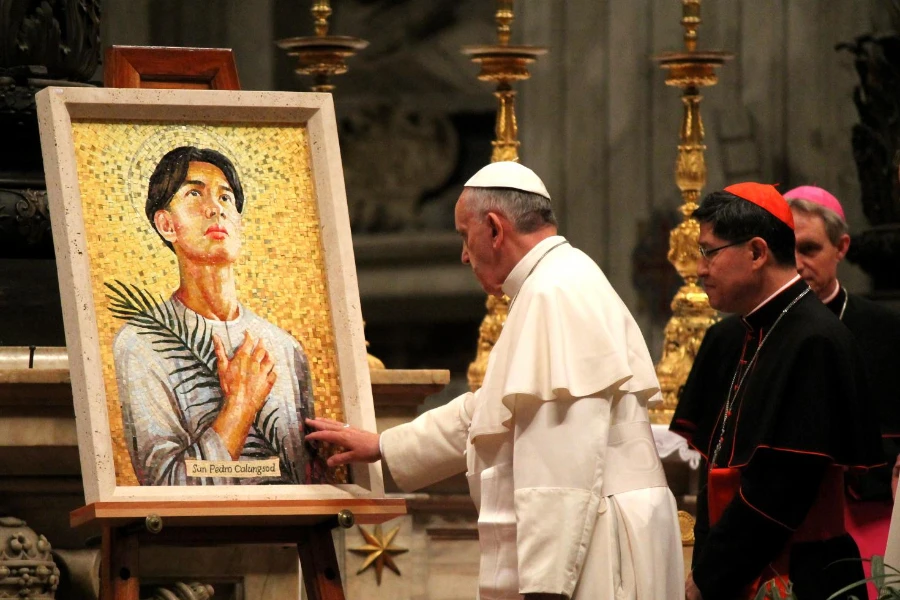
St. Pedro Calungsod
St. Pedro Calungsod was born in 1654 in the Philippines. In 1668, at the age of 14, he was among the young catechists chosen to accompany Spanish Jesuit missionaries — among them Blessed Diego Luis de San Vitores — to the Marianas Islands to spread the Catholic faith. St. Pedro was responsible for converting many people, especially through the sacrament of baptism. On April 2, 1672, he was killed, along with San Vitores, while they were conducting a baptism. He is now recognized as a martyr.
Pope Francis and Cardinal Luis Antonio Tagle before a mosaic of catechist St. Pedro Calungsod in St. Peter’s Basilica on Nov. 21, 2013. Credit: Kerri Lenartowick/CNA.
He was canonized on Oct. 21, 2012. Of St. Pedro’s hardships, while visiting the Marianas Islands, Benedict said: “Pedro, however, displayed deep faith and charity and continued to catechize his many converts, giving witness to Christ by a life of purity and dedication to the Gospel. Uppermost was his desire to win souls for Christ, and this made him resolute in accepting martyrdom.”
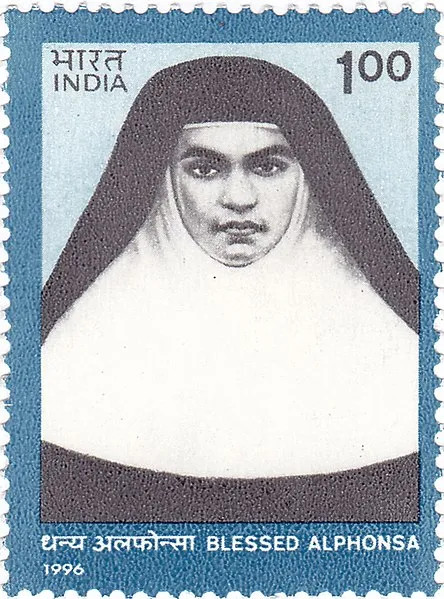
St. Alphonsa
St. Alphonsa was born in Kerala, India, on Aug. 19, 1910. As a young woman, she rejected all suitors who came her way, as she was determined to enter religious life. In 1923, she suffered an accident that left her burned, disabled, and partially disfigured. She joined the Franciscan Clarist Congregation, and until her death suffered from physical ailments and problems associated with her disability. In her love for God, she embraced her sufferings until her death on July 28, 1946.
1996 stamp of India with photo of St. Alphonsa. India Post, Government of India via Wikimedia Commons
St. Alphonsa was canonized by Benedict XVI on Oct. 12, 2008. She is the first Indian woman to become a saint. In a Vatican statement released on the day of her canonization, she is described as “a victim for the love of the Lord, happy until the final moment and with a smile of innocence always on her lips.”
Vatican City, May 9, 2018 / 11:14 am (CNA/EWTN News).- After a two-day meeting in Rome, the governing council of the Vatican office for the Synod of Bishops approved the text to be used as the working document for the upcoming October gathering dedicated to youth.
The May 7-8 meeting of the governing council was presided over by Pope Francis and centered on finalizing the text.
A compilation of ideas and thoughts from five sources, the document includes information from answers to a questionnaire sent out to bishops conferences; answers to an online questionnaire for youth; an international seminar on youth that took place in Rome in September 2017; contributions and suggestions from both individuals and groups; and the concluding document of the March 19-24 pre-synod meeting in Rome, which gathered some 300 youth from around the world.
According to a May 9 communique on the Synod of Bishops’ council meeting, a draft of the working document was presented which generated “an interesting exchange of opinions.”
Suggestions were made for changes to the text. Once the changes were incorporated, the document was approved by each of the council members participating.
Participants also discussed how the October synod will be organized. The meeting was closed by Pope Francis, who thanked the council for their contributions and for “the spirit of fraternal communion in which the meeting took place.”
A preparatory document for the October synod released in January 2017 insisted on the need for a global approach and stressed that the voices of youth needed to be heard, and that they would be protagonists in the discussion leading up to the synod.
In the final document written by youth during the pre-synod meeting in March, young people urged the Church to be more authentic, more modern, and more creative in the way it interacts with young people, specifically in how it addresses controversial issues.
The youth, who included Catholics and non-Catholics, largely said they felt left out and that they wanted to be taken seriously, as leaders and contributors to important discussions happening in the Church.
They also said they didn’t want the Church to shy away from talking about hard or controversial topics, such as sexuality and women’s roles in the Church, but wanted people who could speak with them openly and honestly. They also asked for mentors who could help them navigate the tough issues and listen patiently to their questions.
Pope Francis gives the Angelus address on Dec. 19, 2021 / Vatican Media.
Vatican City, Dec 19, 2021 / 06:00 am (CNA).
A good way to get out of a cycle of self-pity or a negative mood is to help others, following the example of the Virgin Mary, … […]
4 Comments
I don’t think “nun” in this case reflects what it means in reference to this person. Religious sister is more accurate.




I don’t think “nun” in this case reflects what it means in reference to this person. Religious sister is more accurate.
Diogenes above – Explain, please.
Even a “religious sister” is not in any sense a member of the ordained priesthood, not even an intermediate category. Rather, a layperson under permanent vows. https://www.catholic.com/qa/are-nuns-female-non-ordained-members-of-the-clergy
As for the Dicastery for Institutes of Consecrated Life and Societies of Apostolic Life, this MIGHT BE the list: https://en.wikipedia.org/wiki/List_of_religious_institutes
Wishing the Reverend Sister Tiziana Merletti divine blessings.