God doesn’t get reported in the news, and the experts in the media question or deny him and everything about him. So how do we get people—how do we get ourselves—to feel that He is more real than anything else?
The obvious answer is that they would help most if they became saints. If you as a Catholic want to “make a difference,” cultivate sanctity and wholehearted love of God and neighbor.
A better world needs better people, and we all know where that has to start. That is why G.K. Chesterton said the right answer to the question “what is wrong” is “I am wrong.” As he noted, “Until a man can give that answer his idealism is only a hobby.”
That should give all of us enough to keep busy. But the advice raises the question of what, specifically, we should keep busy doing. In other words, what leads to sanctity?
That can vary a great deal. Saint Paul, Saint Louis, and Saint Benedict all lived very differently. So, the first answer that comes to mind is “whatever works for you.”
That seems pretty much the same as “whatever you are called to.” But few of us have a Road to Damascus moment that lays out the course we should follow. What do the rest of us do, as sanctity can seem far off and hard to reach?
There are pitfalls. Human inertia and other weaknesses are problems, but trying too hard can also be a problem. That was the point of Simone Weil’s (characteristically extreme) comment: “We should do only those righteous actions which we cannot stop ourselves from doing.” The Chinese philosopher Laozi put it more moderately: “He who strains his strides does not walk well.”
Most of us muddle along. We look at what has helped others, and pursue the practices that seem rewarding. Some ask for spiritual guidance, but for many of us even that seems beyond our energy level. The best we can think of is to keep on trying, and get up again when we fall down.
We must all make our own way. Even so, a larger perspective can be helpful. We are dependent on each other, and love of our fellow man is part of saintliness. So we should pay attention to how people affect each other.
As St. Paul noted, “Evil communications corrupt good manners” (1 Cor 15:33). If we live among unholy people most of us will be dragged down, and if we act badly we will drag others down. So we should ask about what leads to sanctity not only for ourselves but for the rest of the world, and become part of whatever that might be.
Love of God seems most immediately connected to worship, love of neighbor to active charity. What to do about these things has been a point of contention in recent decades. The arguments often become mixed up with arguments over the Second Vatican Council: what its documents say, what it intended, and how we should understand it as times change and experience accumulates.
Some issues are outward-turning. When we deal with non-Catholics, should we concentrate on what we have in common or what we add that they don’t already have? Which should we emphasize: the authority of doctrine, individual subjectivity (“lived experience”), or common action with others to build a better society? And on the last point, what promotes a better society?
All this is too complex to discuss in a single column, so I’ll just make a few remarks on something people think is more inward-turning: worship.
Disputes about worship have become surprisingly bitter. Is the New Mass better? Or the Old Mass? Some people complain about the former, others think the latter should be crushed, especially if it looks like more and more people are becoming attached to it. Are traditional devotions helpful, or are they distractions—manifestations of a “self-absorbed promethean neopelagianism” that substitutes form and ritual for love of God and neighbor?
Current disputes over such things remind me of nothing so much as the struggle over icons and iconoclasm in the eighth and ninth centuries. I don’t think anyone was canonized for defending icons. Even so, those who did so defended the Church on an important point.
Then, as now, a basic question was whether we should strip the Faith down to its essentials. Does attachment to particular images, rituals, and observances lead us to forget God in favor of substitutes? Or do they work together to remind us constantly of God and neighbor by giving the Faith a concrete enduring presence in our lives?
Today’s experts mostly like abstractions and simple systems, so they usually prefer a stripped-down faith. People should concentrate on the basic points—immediate love of God and neighbor. So, why make a fuss over things that might be distractions?
The argument would be a good one if we knew that people’s attention could somehow be guaranteed. But it cannot. That is one reason secondary things matter a great deal for people who are not already saints. We need reminders.
To some extent it’s a matter of personal gifts. There are people who don’t need to be reminded about love of God and neighbor, and want only the freedom to express them. Some were born to become hermits in the desert, far from bells and incense, or to become medieval Cistercians, praying in plain unornamented churches in remote valleys. Others, with no special flourishes, become everyday saints who redeem life in the world.
But that’s not everyone. Emerson noted: “It takes a great deal of elevation of thought to produce a very little elevation of life.” With that in mind, it seems that constant reminders of the highest things are something most of us need very much. Rites and observances matter.
Most of us live in the world immersed in its sights, sounds, incidents, and temptations. All those things are part of the world God made, and to a saint would likely appear in that light, but to most of us they do not.
For such people the Faith isn’t likely to remain present spiritually unless it maintains a solid and established physical presence, with its own sights, sounds, and observances. That’s especially true in our commercialized, bureaucratized, and media-drenched age.
People have come to believe that if something isn’t reported in the news and affirmed by experts it’s not real. God doesn’t get reported in the news, and the experts in the media question or deny him and everything about him. So how do we get people—how do we get ourselves—to feel that He is more real than anything else?
That is a question that traditional liturgies and devotions help answer. In a world that is too much with us, they point stubbornly to things that are neither of this time nor of this world, and they insist that those are the things that matter most of all.
Many point out that assiduous devotions can conceal hypocrisy and hard-heartedness. That’s true, of course, but so can denouncing neopelagianism. There are many forms of virtue-signaling hypocrisy. And failure to make any gesture at all in the direction of God and the Good, Beautiful, and True also has drawbacks.
Today, when people forget the Faith altogether, and visible Catholic piety is hardly a route to social advancement, the dangers of devotion to rosaries, scapulars, eucharistic devotions, and ancient forms of the liturgy seem minimal. They speak to an obvious need—and attraction to them is far more likely to be a good than bad sign.
With that in mind, it’s shocking that there are pastors of the Church who want to suppress such things. If some of the faithful want to put their faith in the Real Presence on display to the world through public eucharistic adoration, or they find they best connect to God and the Church throughout eternity through the traditional form of the Mass, why wouldn’t it be pastoral to encourage them?
If you value the news and views Catholic World Report provides, please consider donating to support our efforts. Your contribution will help us continue to make CWR available to all readers worldwide for free, without a subscription. Thank you for your generosity!
Click here for more information on donating to CWR. Click here to sign up for our newsletter.
Colloquium “The Source of the Future” (“Quelle der Zukunft”) on the occasion of the 10th anniversary of the publication of the Motu proprio Summorum Pontificum by Pope Benedict XVI March 29 – April 1, 2017 […]
Dale Ahlquist is President of the American Chesterton Society, and publisher of its flagship publication, GILBERT. Dale is also the creator and host of the popular EWTN series The Apostle of Common Sense, and he is the […]
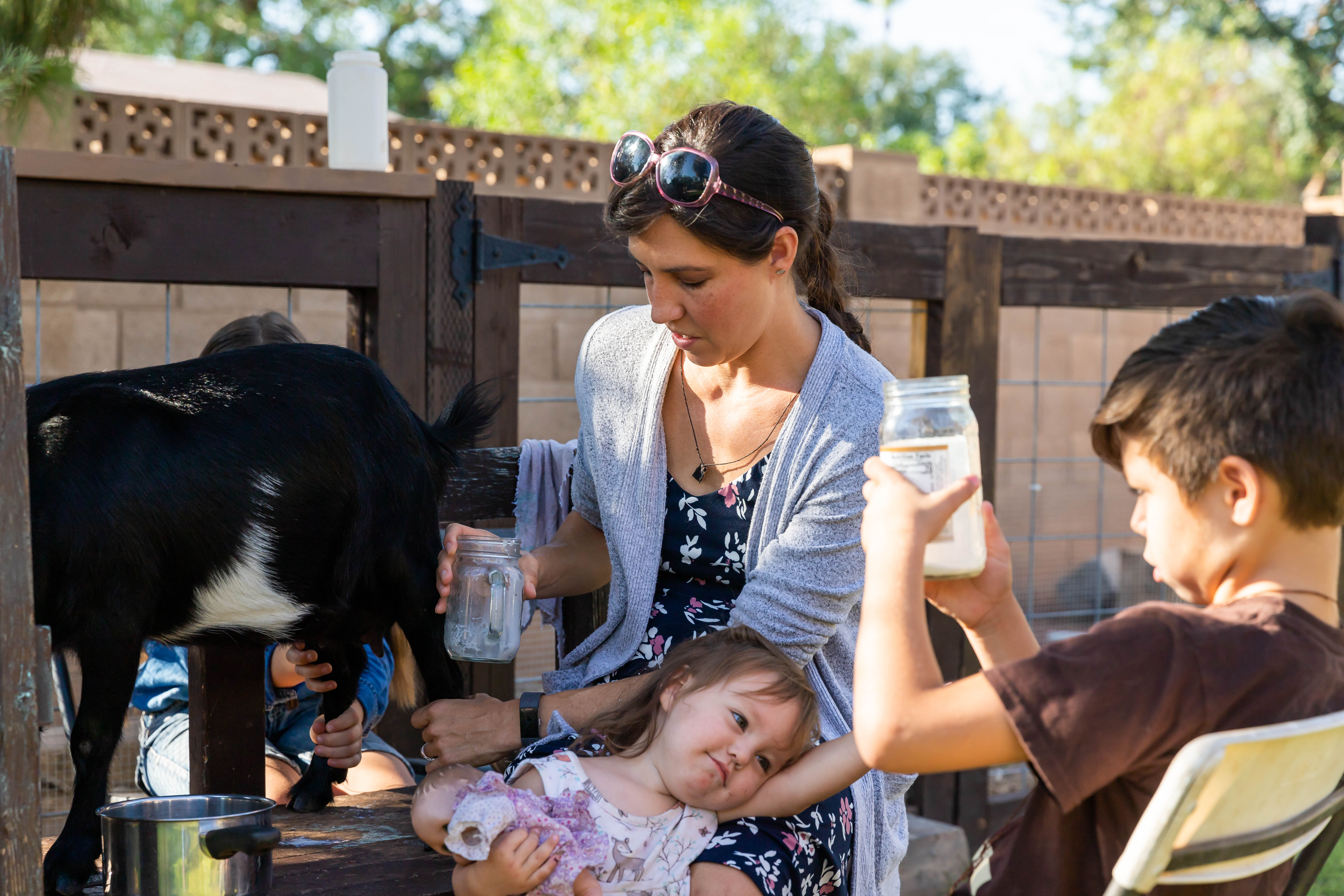
Maureen McKinley milks one of her family’s goats in their backyard with help from three of her children, Madeline (behind), Fiona and Augustine on Monday, Aug. 2, 2021. McKinley and her family own two goats, chickens, a rabbit, and a dog. / Jake Kelly
Denver Newsroom, Aug 10, 2021 / 16:32 pm (CNA).
With five children ages 10 and under to care for, and a pair of goats, a rabbit, chickens and a dog to tend to, Maureen and Matt McKinley rely on a structured routine to keep their busy lives on track.
Chores, nap times, scheduled story hours – they’re all important staples of their day. But the center of the McKinleys’ routine, what focuses their family life and strengthens their Catholic faith, they say, is the Traditional Latin Mass.
Its beauty, reverence, and timelessness connect them to a rich liturgical legacy that dates back centuries.
“This is the Mass that made so many saints throughout time,” observes Maureen, 36, a parishioner at Mater Misericordiæ Catholic Church in Phoenix.
“You know what Mass St. Alphonsus Ligouri, St. Therese, St. Teresa of Avila and St. Augustine were attending? The Traditional Latin Mass,” Maureen says.
“We could have a conversation about it, and we would have all experienced the exact same thing,” she says. “That’s exciting.”
Recent developments in the Catholic Church, however, have curbed some of that excitement. On July 16, Pope Francis released a motu proprio titled Traditiones custodis, or “Guardians of the Tradition”, that has cast doubt on the future of the Traditional Latin Mass (TLM) – and deeply upset and confused many of its devotees.
Pope Francis’ directive rescinds the freedom Pope Benedict XVI granted to priests 14 years ago to say Masses using the Roman Missal of 1962, the form of liturgy prior to Vatican II, without first seeking their bishop’s approval. Under the new rules, bishops now have the “exclusive competence” to decide where, when, and whether the TLM can be said in their dioceses.
In a letter accompanying the motu proprio, Pope Francis maintains that the faculties granted to priests by his predecessor have been “exploited to widen the gaps, reinforce the divergences, and encourage disagreements that injure the Church, block her path, and expose her to the peril of division.”
Using the word “unity” a total of 15 times in the accompanying letter, the pope suggests that attending the TLM is anything but unifying, going so far as to correlate a strong personal preference for such masses with a rejection of Vatican II.
Weeks later, many admirers of the “extraordinary” form of the Roman rite – the McKinleys among them – are still struggling to wrap their minds and hearts around the pope’s order, and the pointed tone he used to deliver it.
Maureen McKinley says she had never considered herself a “traditionalist Catholic” before. Instead, she says she and her husband have just “always moved toward the most reverent way to worship and the best way to teach our children.”
“It didn’t feel like I became a particular type of Catholic by going to Mater Misericordiæ. But since the motu proprio came out, I feel like I have been categorized, like I was something different, something other than the rest of the Church,” she says.
“It feels like our Holy Father doesn’t understand this whole group of people who love our Lord so much.”
McKinley isn’t alone in feeling this way. Sadness, anger, frustration, and disbelief are some common themes in conversations among those who regularly attend the TLM.
They want to understand and support the Holy Father, but they also see the restriction as unnecessary, especially when plenty of other more pressing issues in the Church abound.
Eric Matthews, another Mater Misericordiæ parishioner, views the new restrictions as an “attack on devout Catholic culture,” citing the beauty that exists across the rites recognized within the Church. There are seven rites recognized in the Catholic Church: Latin, Byzantine, Alexandrian or Coptic, Syriac, Armenian, Maronite, and Chaldean.
“It’s the same Mass,” says Matthews, 39, who first discovered the TLM about eight years ago. “It’s just different languages, different cultures, but the people that you have there are there for the right reasons.”
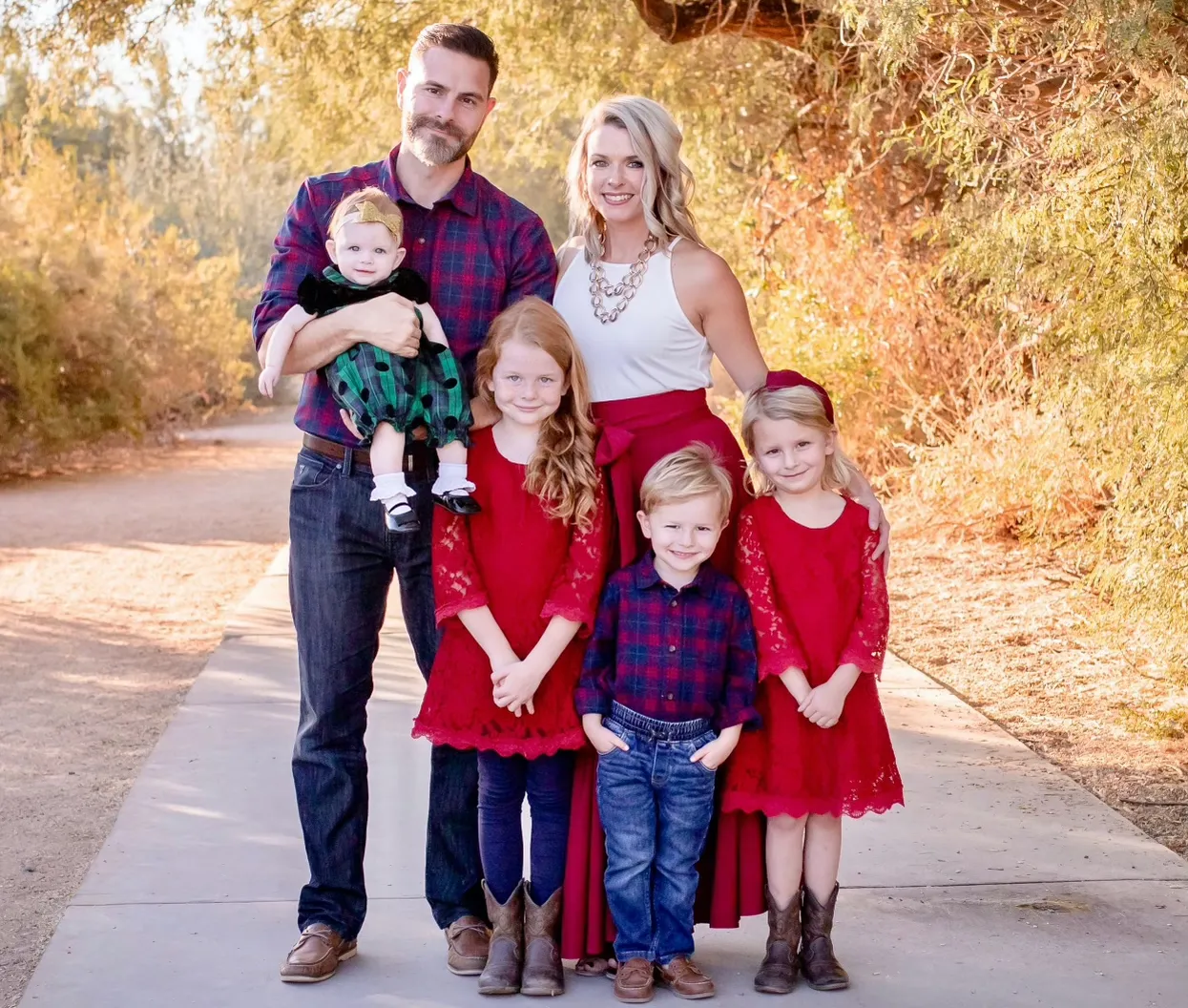
Eric and Geneva Matthews with their four children. / Narissa Lowicki
Different paths to the TLM
The pope’s motu proprio directly affects a tiny fraction of U.S. Catholics – perhaps as few as 150,000, or less than 1 percent of some 21 million regular Mass-goers, according to some estimates. According to one crowd-sourced database, only about 700 venues – compared to over 16,700 parishes nationwide – offer the TLM.
Also, since the motu proprio’s release July 16, only a handful of bishops have stopped the TLM in their dioceses. Of those bishops who have made public responses, most are allowing the Masses to continue as before – in some cases because they see no evidence of disunity, and in others because they need more time to study the issue.
But for those who feel drawn to the TLM – for differing reasons that have nothing to do with a rejection of Vatican II – it feels as if the ground has shifted under their feet.
Maureen McKinley wants her children to understand the importance of hard work, of which they have no shortage when it comes to their urban farm. After morning prayer, Maureen milks the family’s goats with the help of the children. Madeline (age 10) feeds the bunny; Augustine (7) exercises the dog; John (6) checks for eggs from the chickens; and Michael (4) helps anyone he chooses.
With a noisy clatter in the kitchen, the McKinleys eat breakfast, tidy up their rooms, and begin their daily activities. They break at 11 a.m. to head to daily Mass at Mater Misericordiæ, an apostolate of the Priestly Fraternity of Saint Peter (FSSP), where they first attended two years ago.
Matt, 34, wanted to know how the early Christians worshipped.
“The funny thing about converts is they’re always wanting more,” says Maureen, who was, at first, a little resistant to the idea of attending the TLM because she didn’t know Latin. “Worship was a big part of his conversion.”
Maureen agreed to follow her husband’s lead, and they continued to attend the TLM. What kept them coming back week after week was the reverence for the Eucharist.
“Matt had a really hard time watching so many people receive communion in the hand at the other parish,” says Maureen. “He says he didn’t want our kids to think that that was the standard. That’s the exception to the rule, not the rule.”
Reverence in worship also drew Elizabeth Sisk to the TLM. A 28-year-old post-anesthesia care unit nurse, she attends both the Novus Ordo, the Mass promulgated by St. Paul VI in 1969, and the extraordinary form in Raleigh, North Carolina, where her parish, the Holy Name of Jesus Cathedral, offers the TLM on the first Sunday of the month.
Sisk has noticed recently that more people in her area — especially young people who are converts to Catholicism — are attending both forms of the Mass. While the Novus Ordo is what brought many of them, herself included, to the faith, she feels that the extraordinary form invites them to go deeper.
“We want to do something radical with our lives,” Sisk says. “To be Catholic right now as a young person is a really radical decision. I think the people who choose to be Catholic right now, we’re all in. We don’t want ‘watered-down’ Catholicism.”
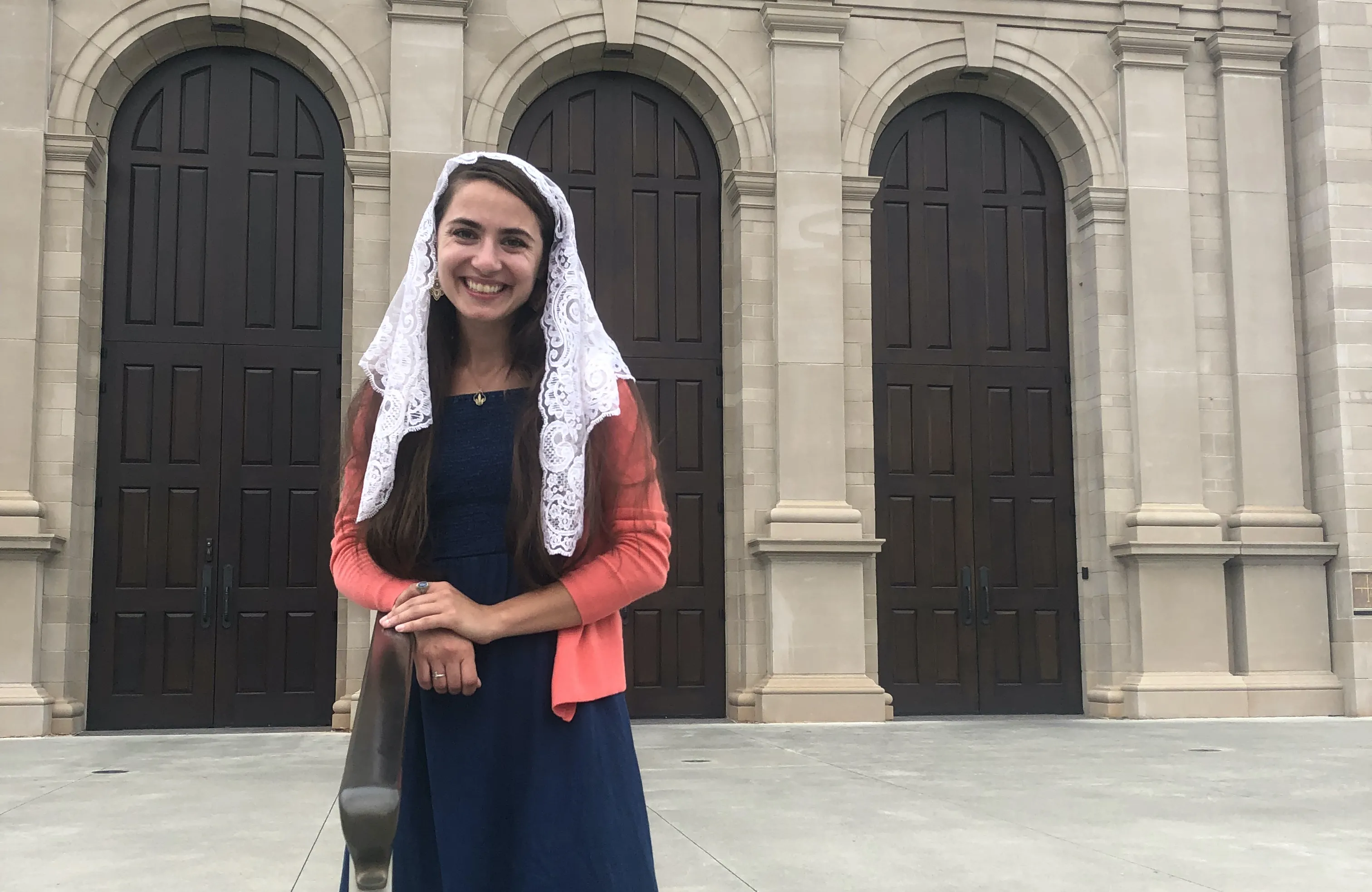
Elizabeth Sisk stands in front of Holy Name of Jesus Cathedral in Raleigh, North Carolina.
With the lack of Christian values in the world today, Sisk desires “something greater,” which she says she can tell is happening in the TLM.
Many TLM parishes saw an increase in attendance during the pandemic, as they were often the only churches open while many others shut their doors or held Masses outside. This struck some as controversial, if not disobedient to the local government. For others, it was a saving grace to have access to the sacraments.
The priests at Erin Hanson’s parish obtained permission from the local bishop to celebrate Mass all day, every day, with 10 parishioners at a time during the height of the COVID pandemic.
“We were being told by the world that church is not necessary,” says Hanson, a 39-year-old mother of three. “Our priest says, ‘No, that’s a lie. Our church is essential. Our salvation is essential. The sacraments are essential.’”
Andy Stevens, 52, came into the Church through the TLM, much to the surprise of his wife, Emma, who had been a practicing Catholic for many years. Andy was “very adamantly not going to become Catholic,” but was happy to help Emma with their children at Mass. It wasn’t until they attended a TLM that Andy began to think differently about the Church.
“He believed that you die and then there is nothing, and he never really spoke to me about becoming a Catholic,” says Emma, 48, who was pregnant with their seventh child at the time.
Andy noticed an intense focus among the worshippers, which he recognized as a “real presence of God” that he didn’t see anywhere else. After the birth of their 7th child, he joined the Church.
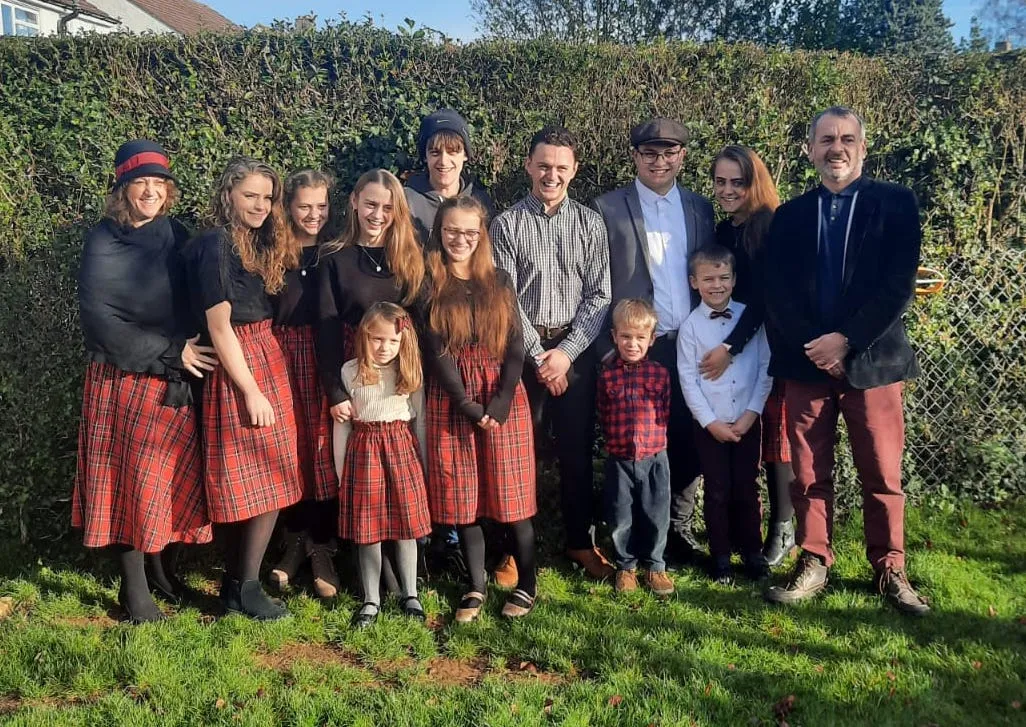
All 12 of the Stevens’ children prefer the TLM to the Novus Ordo.
Emma and Andy Stevens with their 12 children in Oxford, England.
“It’s a Mass of the ages,” says their eldest son, Ryan, 27. “I can feel the veil between heaven and earth palpably thinner.”
A native of Chicago, Adriel Gonzalez, 33, remembers attending the TLM as a child, which he did not particularly like. It was “very long, very boring,” and the people who went to the TLM were “very stiff and they could come off as judgmental” towards his family, he says.
Gonzalez, who also attended Mass in Spanish with his family, didn’t understand the differences among rites, since Chicago was a sort of “salad bowl, ethnically,” he says, and Mass was celebrated in many languages and forms.
He took a step back from faith for some time, he says, noting that he had a “respectability issue” with the Christianity he grew up with. He watched as some of his friends were either thoughtless in the way they practiced their faith, or were “on fire,” but lacked intentionality. When he did come back to the faith, it was through learning about the Church’s intellectual tradition.
He spent time in monasteries and Eastern Catholic parishes with the Divine Liturgy because there was “something so obviously ancient about it.” He decided to stay within the Roman rite with a preference for a reverent Novus Ordo.
When he moved to Ann Arbor, Michigan, Gonzalez committed to his neighborhood parish, which had a strong contingent of people who loved tradition in general. The parish instituted a TLM in the fall of 2020, when they started having Mass indoors again after the pandemic.
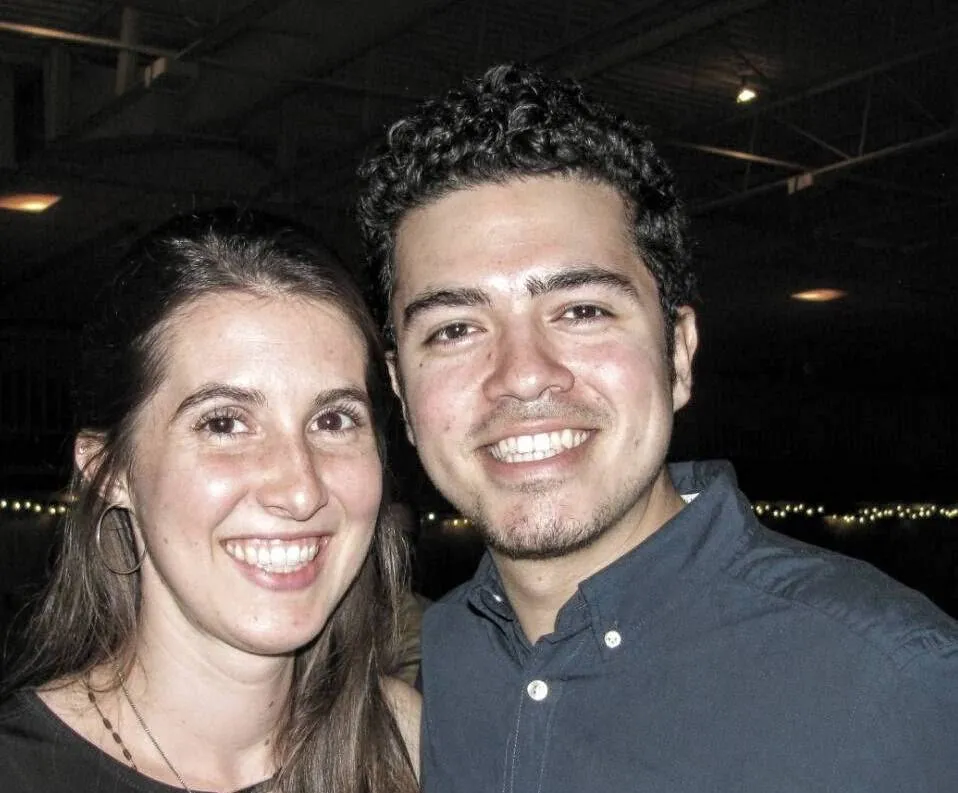
Hallie and Adriel Gonzalez.
“If I’m at a Latin Mass, I’m more likely to get a sense that this is a time-honored practice, something that has been honed over the millennia,” he says. “There is clearly a love affair going on here with the Lord that requires this much more elaborate song and dance.”
For Eric Matthews, the TLM feels a little like time travel.
“It could be medieval times, it could be the enlightenment period, it could be the early 1900s, and the experience is going to be so similar,” he says.
“I just feel like that’s that universal timeframe – not just the universal Church in 2021 – but the universal Church in almost any time period. We’re the only church that can claim that.”
What happens now?
The motu proprio caught Adriel Gonzalez’ attention. He sought clarity about whether his participation in the extraordinary form was, in fact, part of a divisive movement, or simply an expression of his faith.
If it was a movement, he wanted no part of it, he says.
“As far as I can tell, the Church considers the extraordinary form and the ordinary form equal and valid,” says Gonzalez. “Ideally, there should be no true difference between going to one or the other, outside of just preference. It shouldn’t constitute a completely different reality within Catholicism.”
With this understanding, Gonzalez says he resonated with some of the reasoning set forth in the motu proprio because it articulated that the celebration of the TLM was never intended to be a movement away from the Novus Ordo or Vatican II. Gonzalez also emphasized that the extraordinary form was never supposed to be a “superior” way of celebrating the Mass.
Gonzalez believes the Lord allowed the growth in the TLM “to help us to recover a love for liturgy, and to ask questions about what worship and liturgy looks like.” He would have preferred if what was good was kept and encouraged, and what was potentially dangerous “coaxed out and called out.”

Mater Misericordæ Catholic Church in Phoenix, Arizona. / Viet Truong
Erin Hanson, of Mater Misericordiæ, agrees.
“If [Pope Francis] does believe there is division between Novus Ordo and traditional Catholics, I don’t think he did anything to try to fix that division,” she says.
Hanson would like to know who the bishops are that Pope Francis consulted in making this decision, sharing that she doesn’t feel that there is any of the transparency needed for such a major document. If there are divisions, she says, she would like the opportunity to work on them in a different way.
“This isn’t going to be any less divisive if he causes a possible schism,” Hanson says.
According to the motu proprio and the accompanying letter, the TLM is not to be celebrated in diocesan churches or in new churches constructed for the purpose of the TLM, nor should new groups be established by the bishops. Left out of their parish churches, some are worried their only option to attend Mass will be in a recreation center or hotel ballroom.
Eric Matthews hopes that everyone is able to experience the extraordinary form at least once in their life so they can know that this is not about division.
“I can’t imagine someone going to the Latin Mass and saying, ‘This is creating disunity,’” he says. “There’s nothing to be afraid of with the Latin Mass. You’re just going to be surrounding yourself with people that really take it to heart.”
Maureen McKinley was home sick when her husband Matt found out about the motu proprio. He had taken the kids to a neighborhood park, where he ran into some friends who also attend Mater Misericordiæ. They asked if he had heard the news.
“I felt disgust at a document that pretends to say so much while actually saying so little and disregards the Church’s very long and rich tradition of careful legal documents,” Matt McKinley says.
Bishop Thomas Olmsted of Phoenix stated that the TLM may continue at Mater Misericordiæ, as well as in chapels, oratories, mission churches, non-parochial churches, and at seven other parishes in the diocese. Participation in the TLM and all of the activities of the parish are so important to the McKinleys that they are willing to move to another state or city should further restrictions be implemented.
For now, their family’s routine continues the same as before.
At the end of their day, the McKinleys pray a family rosary in front of their home altar, which has a Bible at the center, and an icon of Christ and a statue of the Virgin Mary. They eat dinner together, milk the goat again, and take care of their evening animal chores. After night prayer, the kids head off to bed, blessing themselves with holy water from the fonts mounted on the wall before they enter their bedroom.
“The life of the Church springs from this Mass,” Maureen says. “That’s why we’re here—not because the Latin Mass is archaic, but that it’s actually just so alive.”
“It is idle to talk about the wreck of Western civilization. It is already a wreck from within. That is why we can hope to do little more now than snatch a fingernail of a saint from the rack or a handful of ashes from the faggots, and bury them secretly in a flowerpot against the day, ages hence, when a few men begin again to dare to believe that there was once something else, that something else is thinkable, and need some evidence of what it was, and the fortifying knowledge that there were those who, at the great nightfall, took loving thought to preserve the tokens of hope and truth.”
(Whittaker Chambers [Quaker convert from communism, and author of “Witness,” Random House, 1952], in a letter to William Buckley, August 5, 1954, in “Cold Friday,” Random House, 1964).
James, I think that Catholic Religiosity was more profoundly palpable when the age old enemies of salvation were clearly identified: the world, the flesh and the devil. The church embarked on a new mission in the mid-1960’s one of “accommodating” modern man (as if a reference to the times makes some kind of profound change to the essence of mankind). The church has lost sight of its enemies. As a consequence, it is suffering an identity crisis of monumental proportions. The Traditional Mass helps keep the proper focus – that focus being ON GOD. There is just too much “horizontal” in the modern N.O. Church and not enough transcendence. God bless your work and your endeavors!
“The TLM helps keep the proper focus …on God.”(?) When you attend the Novus Ordo are you there to adore, worship, love and unite with Christ Jesus, the source of love and mercy made present on the altar? Or are you busy looking for negatives, critics, offenses and condemnation because your heart is not in it? At VatII the Church Fathers desired to opt for the “holy sacred Simplicity” for the two most urgent issues of Unity of Christians and evangelization; a holy Simplicity like the last supper and the early church. Both proofed successful in the world. The Church is not alone European or American but global. From Adam offering burnt sacrifices to God, to David’s kingdom where he was singing and dancing before the holy Arc, we are made to praise God and to bring Him glory. Why do traditional mass goers always condemn the New Mass? If the TLM lifts your heart to the Prince of Love and Life what a gift. My heart is set on fire in the new mass and I know it is global to reach many souls, and we also have many rites within the Church. We live in the great apostacy, and as John Paul II the Great Pope put it: “This is the time of the Christ and the Antichrist, the gospel and the anti-gospel.” Satan’s last battle is raging against the Church, the family and creation itself. June is the month to honor the Sacred Heart of Jesus; may the Prince of Love and Life increase in us love and charity for Him and each other. God bless!
“At VatII the Church Fathers desired to opt for the ‘holy sacred Simplicity’ for the two most urgent issues of Unity of Christians and evangelization; a holy Simplicity like the last supper and the early church. Both proofed [sic] successful in the world.” Good heavens! What is your definition of success? Empty churches? A collapse of vocations? Vanishing religious orders? The wholesale apostasy of Catholic teaching institutions? The embrace of contraception and abortion by the overwhelming majority of Catholics? You must be living in a parallel universe.
Timothy, I was talking about the past 60 years – the 25 years of JPII who visited over 100 countries, and the 7 years of Benedict XVI teachings. We went from 500 million to 1.3 billion members of the Catholic Church. I am looking at a global church and I am enjoying all the great contributions of converts from other denominations that enriched the church. Looking at the Western church loss of faith and truth is staggering. What hurts the Church most is the disunity.
Mention of St. John Paul II brings to mind a key ambiguity in the Novus Ordo Mass…
As one who does value and always attends the Novus Ordo, I still do notice the adequate-but-deficient wording that the Mass is a “memorial” of the passion Christ. Memorial? Not to “condemn the new Mass,” but in his “Prayer before Mass” St. John Paul II recognized more clearly that the Mass is the “renewal and extension [!]” of the one sacrifice on Calvary: “…we all join in offering this Holy Sacrifice of the Mass, this unbloody renewal and extension of Christ’s Sacrifice on the Cross for the following intentions…”
How many of the current generation even know the absolute difference between this and an easily misunderstood “memorial”? If they did (CCC 1374), would the low percentage getting to Mass then be less weakly that it is, and more weekly?
good point! This generation barely knows that the mass is a sacrifice and not only that but that we are asked to unite to the sacrifice of Christ made present on the altar. And Saint Franci added: “and hold nothing back”.
I read it in different commentaries and Signs and Symbols of Catholicism. To tell you the truth I have read little of the documents but I was an attentive reader and listener of JPII and Benedict XVI and their strong belief in VatII and the preferred Holy Sacred Simplicity of the holy mass with unity of Christians always in the forefront of necessities. Bergoglio is a disaster for the Catholic Church. I am praying for a holy pope filled with the Holy Spirit to accomplish “HOLY UNITY. God bless!





About relics as “visible Catholic piety”:
“It is idle to talk about the wreck of Western civilization. It is already a wreck from within. That is why we can hope to do little more now than snatch a fingernail of a saint from the rack or a handful of ashes from the faggots, and bury them secretly in a flowerpot against the day, ages hence, when a few men begin again to dare to believe that there was once something else, that something else is thinkable, and need some evidence of what it was, and the fortifying knowledge that there were those who, at the great nightfall, took loving thought to preserve the tokens of hope and truth.”
(Whittaker Chambers [Quaker convert from communism, and author of “Witness,” Random House, 1952], in a letter to William Buckley, August 5, 1954, in “Cold Friday,” Random House, 1964).
That is the point. Tradition is a gesture that carries forward what we have lost, so that some day the dry bones may once again live.
The dry bones of civilization might not live until “some day”, but the dry bones of the individual can begin to live immediately.
James, I think that Catholic Religiosity was more profoundly palpable when the age old enemies of salvation were clearly identified: the world, the flesh and the devil. The church embarked on a new mission in the mid-1960’s one of “accommodating” modern man (as if a reference to the times makes some kind of profound change to the essence of mankind). The church has lost sight of its enemies. As a consequence, it is suffering an identity crisis of monumental proportions. The Traditional Mass helps keep the proper focus – that focus being ON GOD. There is just too much “horizontal” in the modern N.O. Church and not enough transcendence. God bless your work and your endeavors!
“The TLM helps keep the proper focus …on God.”(?) When you attend the Novus Ordo are you there to adore, worship, love and unite with Christ Jesus, the source of love and mercy made present on the altar? Or are you busy looking for negatives, critics, offenses and condemnation because your heart is not in it? At VatII the Church Fathers desired to opt for the “holy sacred Simplicity” for the two most urgent issues of Unity of Christians and evangelization; a holy Simplicity like the last supper and the early church. Both proofed successful in the world. The Church is not alone European or American but global. From Adam offering burnt sacrifices to God, to David’s kingdom where he was singing and dancing before the holy Arc, we are made to praise God and to bring Him glory. Why do traditional mass goers always condemn the New Mass? If the TLM lifts your heart to the Prince of Love and Life what a gift. My heart is set on fire in the new mass and I know it is global to reach many souls, and we also have many rites within the Church. We live in the great apostacy, and as John Paul II the Great Pope put it: “This is the time of the Christ and the Antichrist, the gospel and the anti-gospel.” Satan’s last battle is raging against the Church, the family and creation itself. June is the month to honor the Sacred Heart of Jesus; may the Prince of Love and Life increase in us love and charity for Him and each other. God bless!
“At VatII the Church Fathers desired to opt for the ‘holy sacred Simplicity’ for the two most urgent issues of Unity of Christians and evangelization; a holy Simplicity like the last supper and the early church. Both proofed [sic] successful in the world.” Good heavens! What is your definition of success? Empty churches? A collapse of vocations? Vanishing religious orders? The wholesale apostasy of Catholic teaching institutions? The embrace of contraception and abortion by the overwhelming majority of Catholics? You must be living in a parallel universe.
Timothy, I was talking about the past 60 years – the 25 years of JPII who visited over 100 countries, and the 7 years of Benedict XVI teachings. We went from 500 million to 1.3 billion members of the Catholic Church. I am looking at a global church and I am enjoying all the great contributions of converts from other denominations that enriched the church. Looking at the Western church loss of faith and truth is staggering. What hurts the Church most is the disunity.
Mention of St. John Paul II brings to mind a key ambiguity in the Novus Ordo Mass…
As one who does value and always attends the Novus Ordo, I still do notice the adequate-but-deficient wording that the Mass is a “memorial” of the passion Christ. Memorial? Not to “condemn the new Mass,” but in his “Prayer before Mass” St. John Paul II recognized more clearly that the Mass is the “renewal and extension [!]” of the one sacrifice on Calvary: “…we all join in offering this Holy Sacrifice of the Mass, this unbloody renewal and extension of Christ’s Sacrifice on the Cross for the following intentions…”
How many of the current generation even know the absolute difference between this and an easily misunderstood “memorial”? If they did (CCC 1374), would the low percentage getting to Mass then be less weakly that it is, and more weekly?
good point! This generation barely knows that the mass is a sacrifice and not only that but that we are asked to unite to the sacrifice of Christ made present on the altar. And Saint Franci added: “and hold nothing back”.
Does the phrase “holy sacred simplicity” actually show up in the documents of Vatican 2 anywhere?
I read it in different commentaries and Signs and Symbols of Catholicism. To tell you the truth I have read little of the documents but I was an attentive reader and listener of JPII and Benedict XVI and their strong belief in VatII and the preferred Holy Sacred Simplicity of the holy mass with unity of Christians always in the forefront of necessities. Bergoglio is a disaster for the Catholic Church. I am praying for a holy pope filled with the Holy Spirit to accomplish “HOLY UNITY. God bless!
Sacrosanctum Concilium calls for “noble simplicity” and the expression has been used pretty often otherwise.