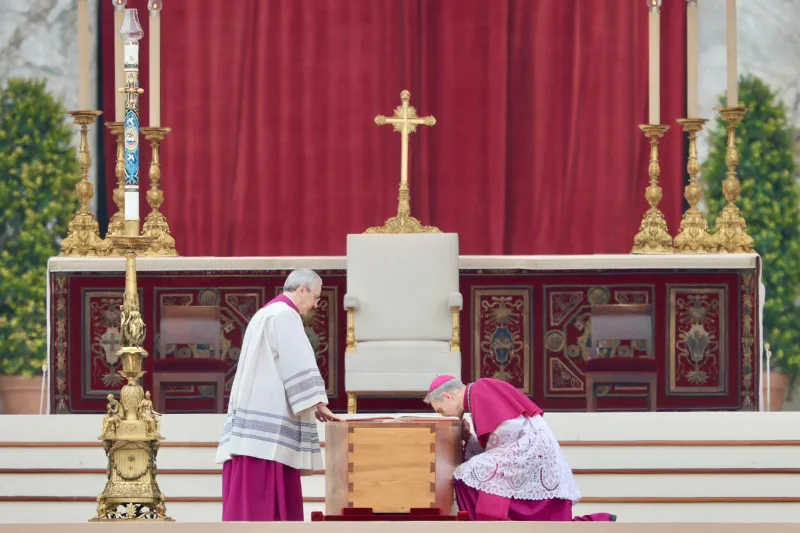
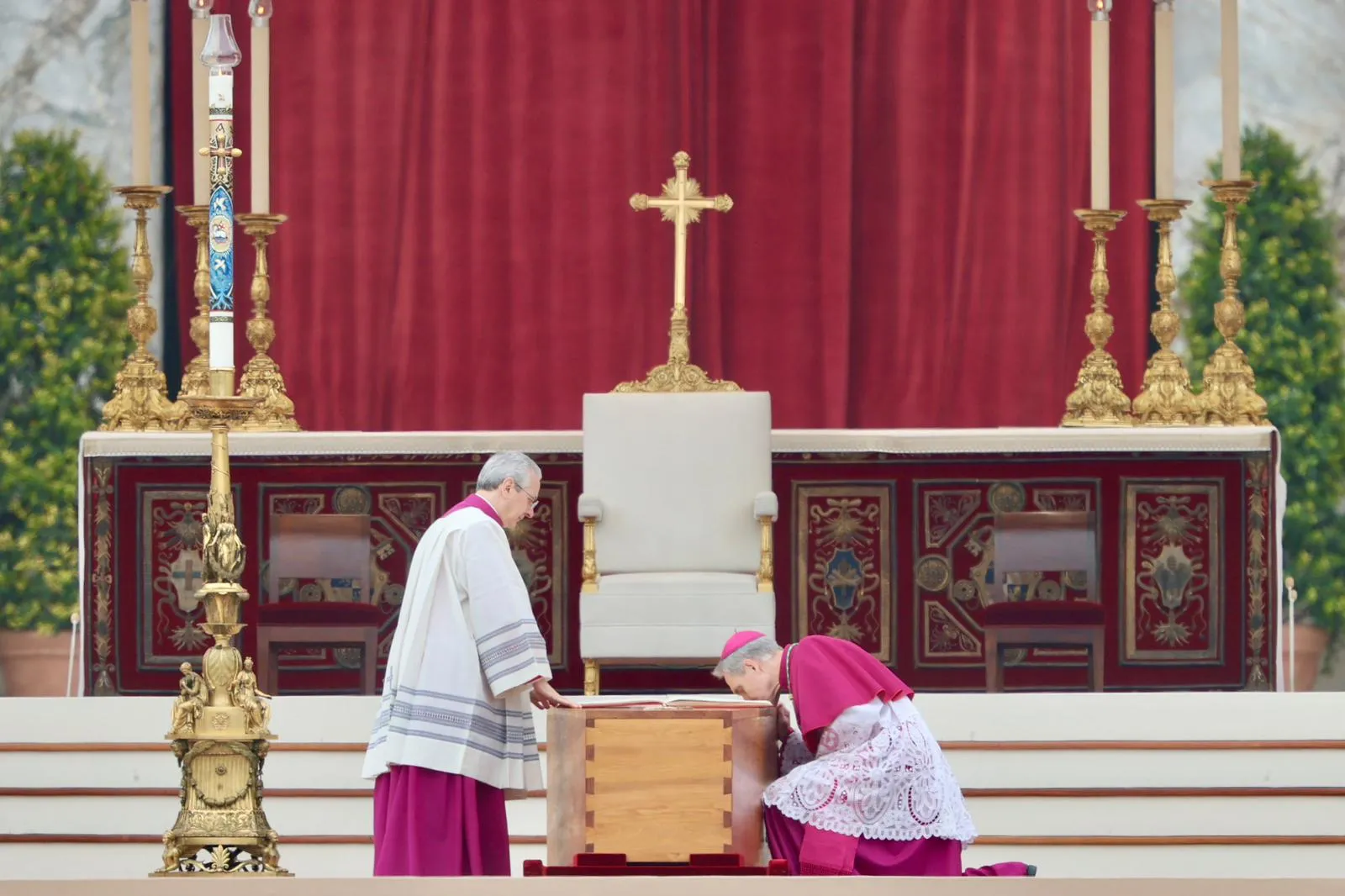
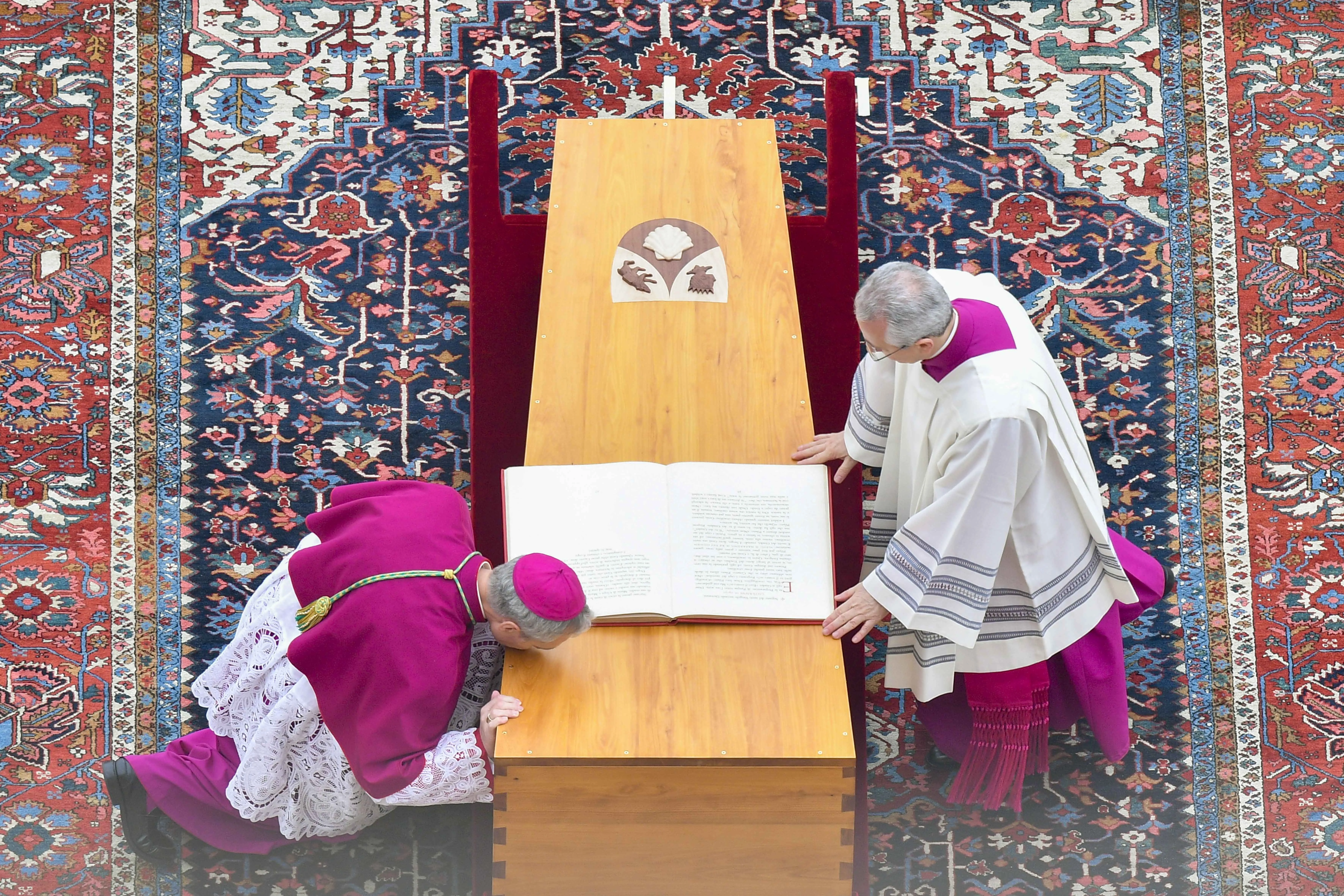
Archbishop Georg Gänswein (right), the longtime personal secretary for Benedict XVI, kneels to kiss the book of the Gospels atop the coffin of the pope emeritus on Jan. 5, 2023, in St. Peter’s Square / Daniel Ibañez/CNA
Vatican City, Jan 5, 2023 / 08:35 am (CNA).
Pope Emeritus Benedict XVI, one of the foremost theologians of the 20th century and the first pontiff in nearly 600 years to resign from the papacy, was laid to rest Thursday following a funeral Mass attended by tens of thousands of people.
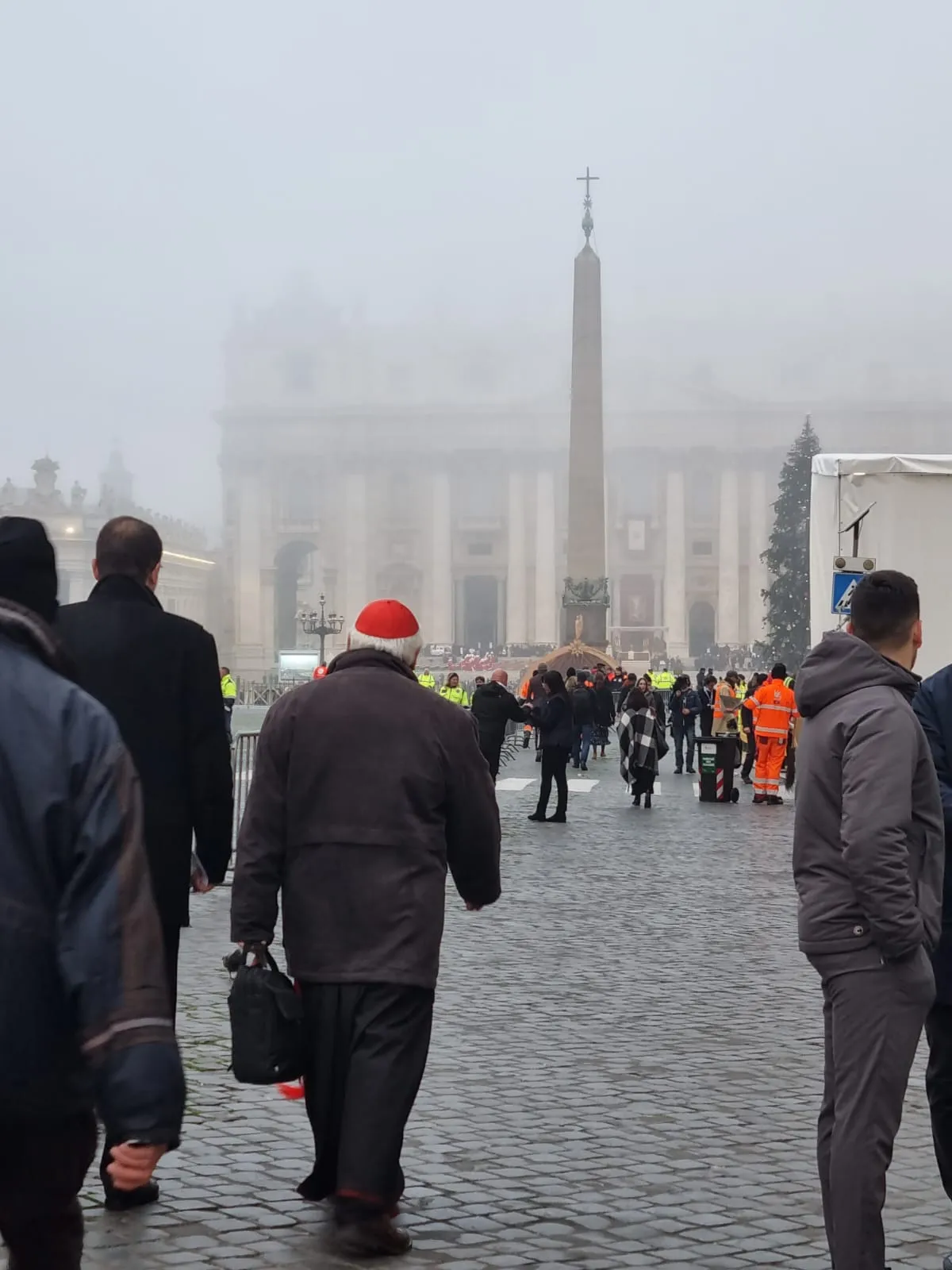
Here are scenes from the funeral, held outside in St. Peter’s Square at the Vatican on a cold, foggy morning in Rome:
On a foggy morning in Rome, pilgrims make their way to St. Peter’s Square on Jan. 5, 2023 for the funeral of Pope Emeritus Benedict XVI. Daniel Ibañez/CNA
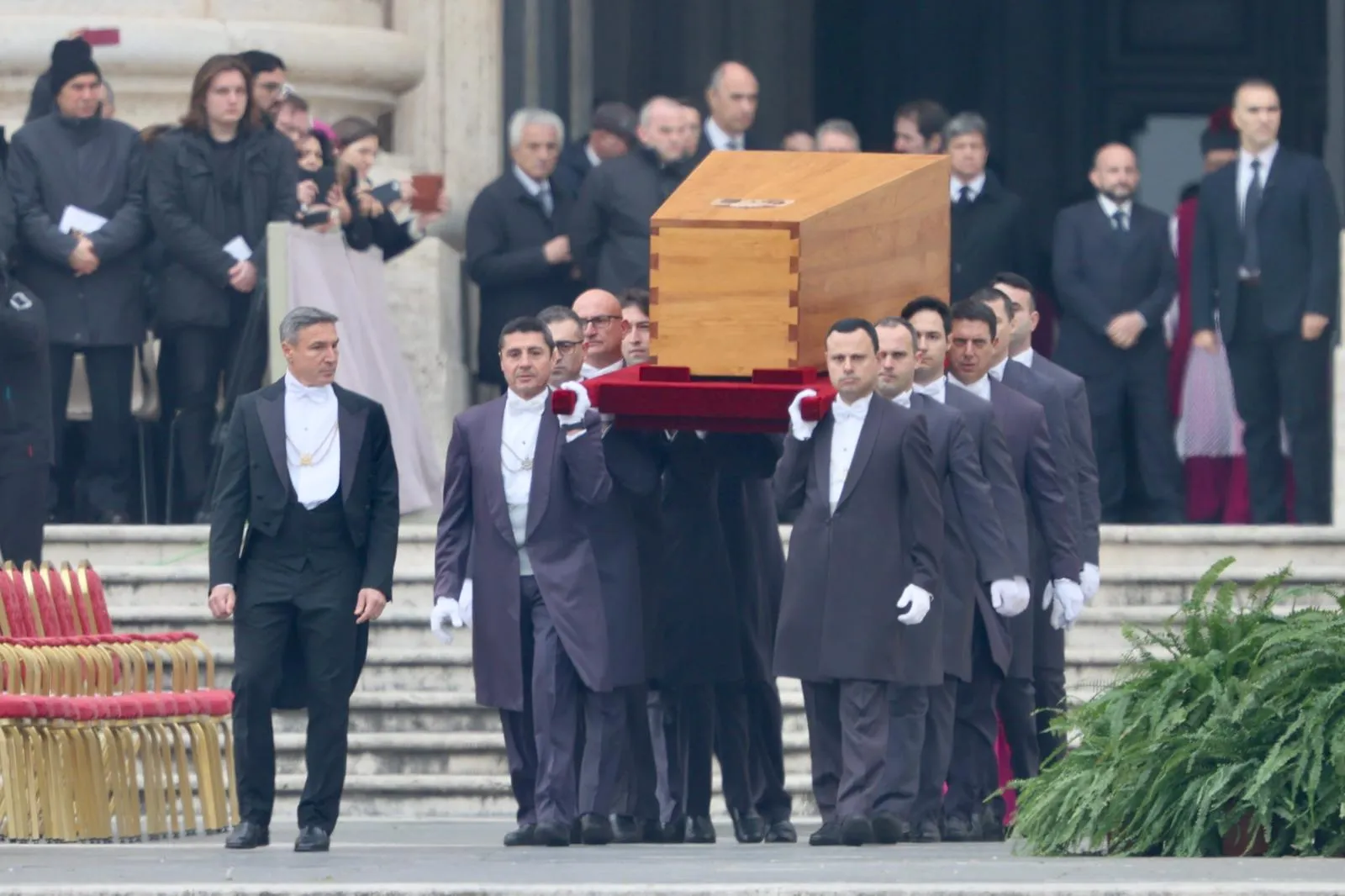
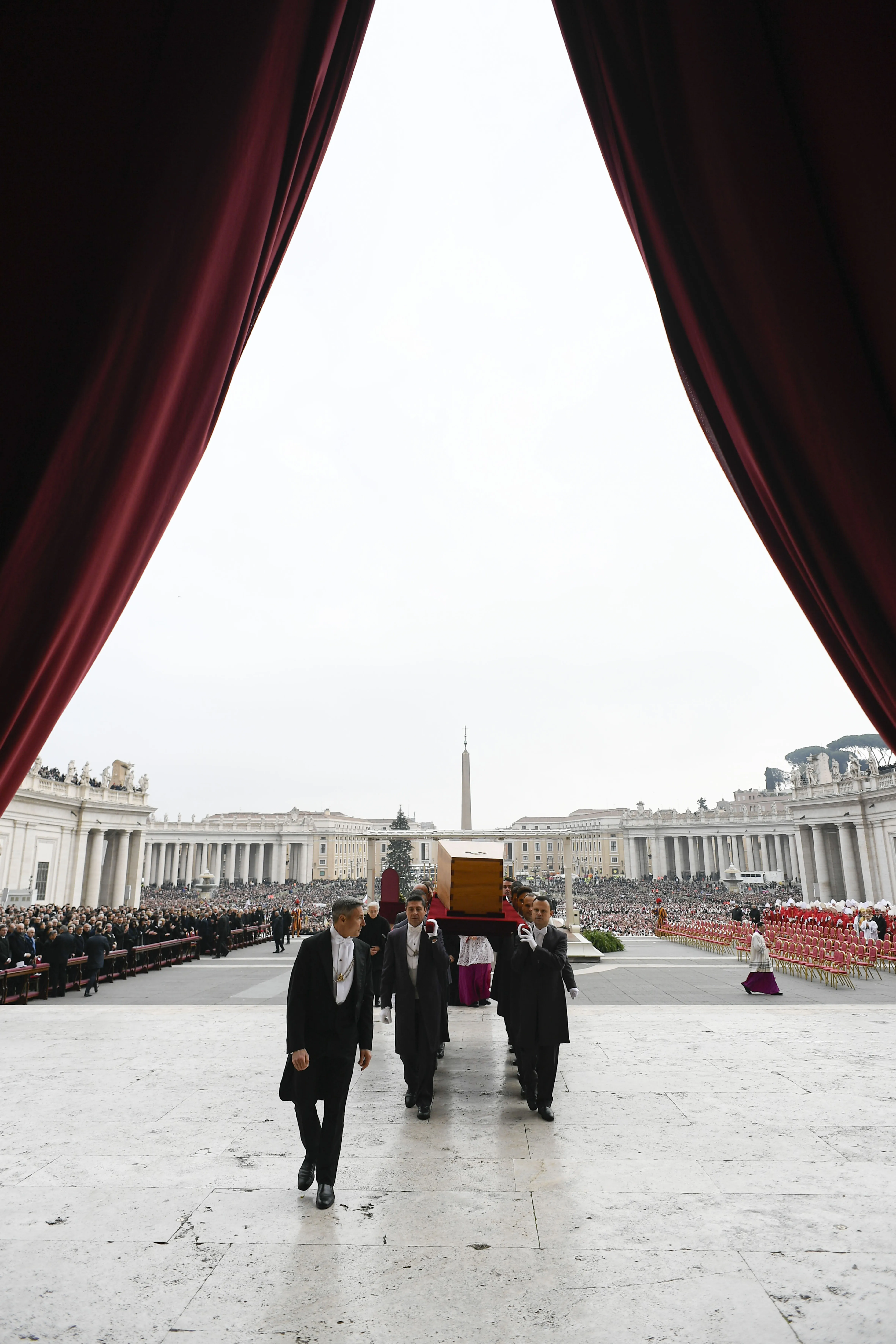
The coffin of Pope Emeritus Benedict XVI is carried into St. Peter’s Square prior to his funeral Mass on Jan. 5, 2023. Daniel Ibañez/CNA
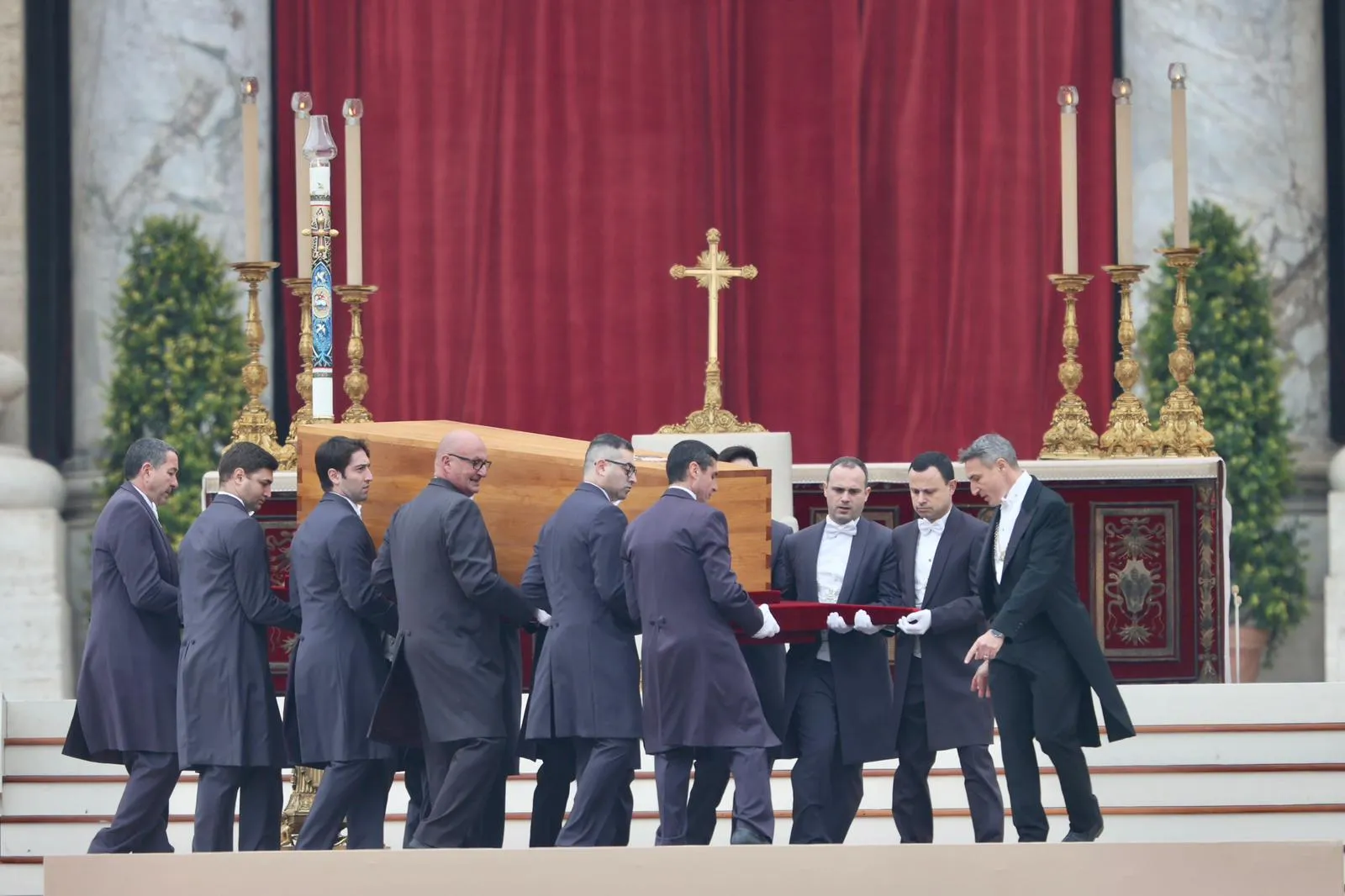
Pallbearers carry the coffin of Pope Emeritus Benedict XVI before his funeral Mass in St. Peter’s Square on Jan. 5, 2023. Daniel Ibañez/CNA
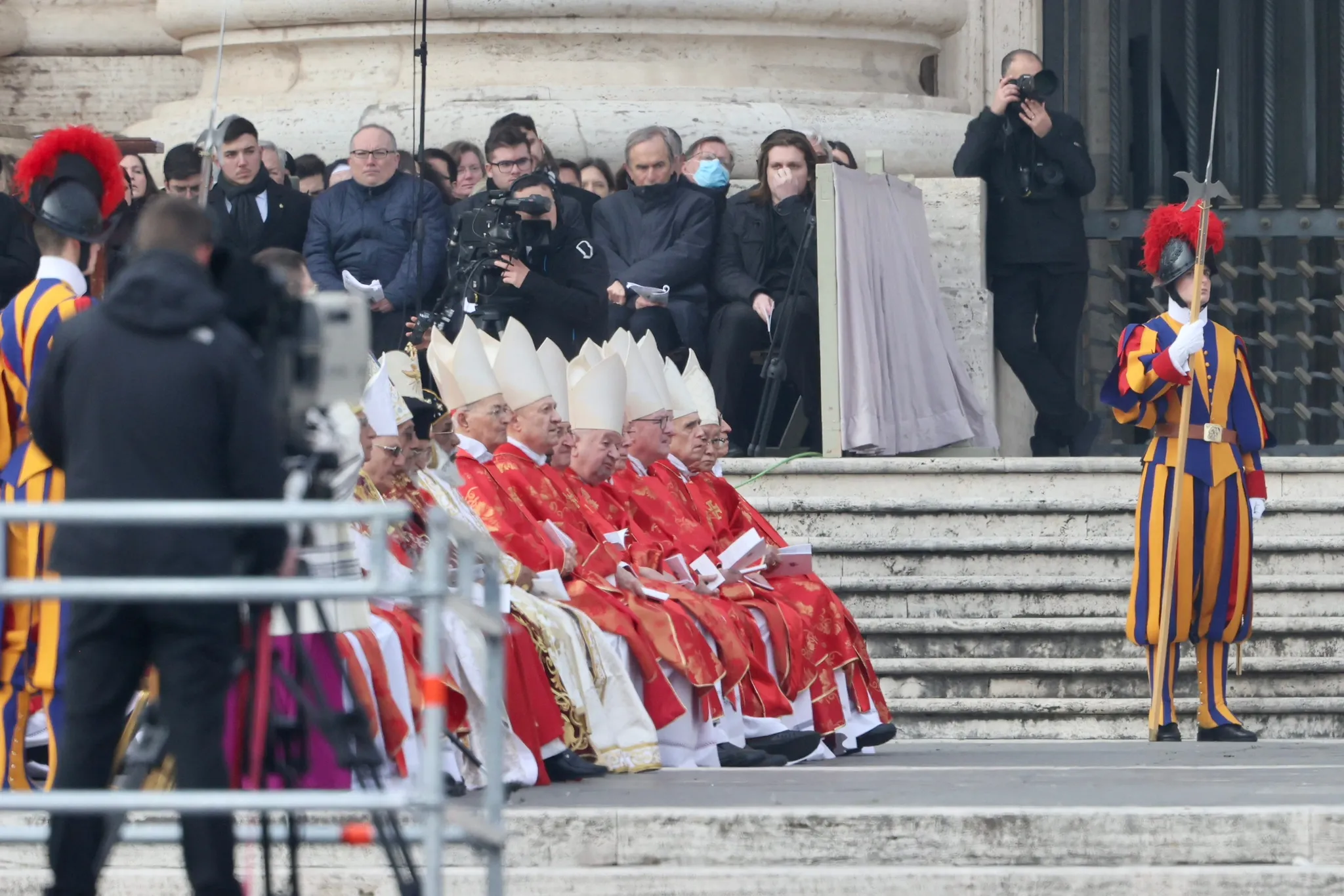
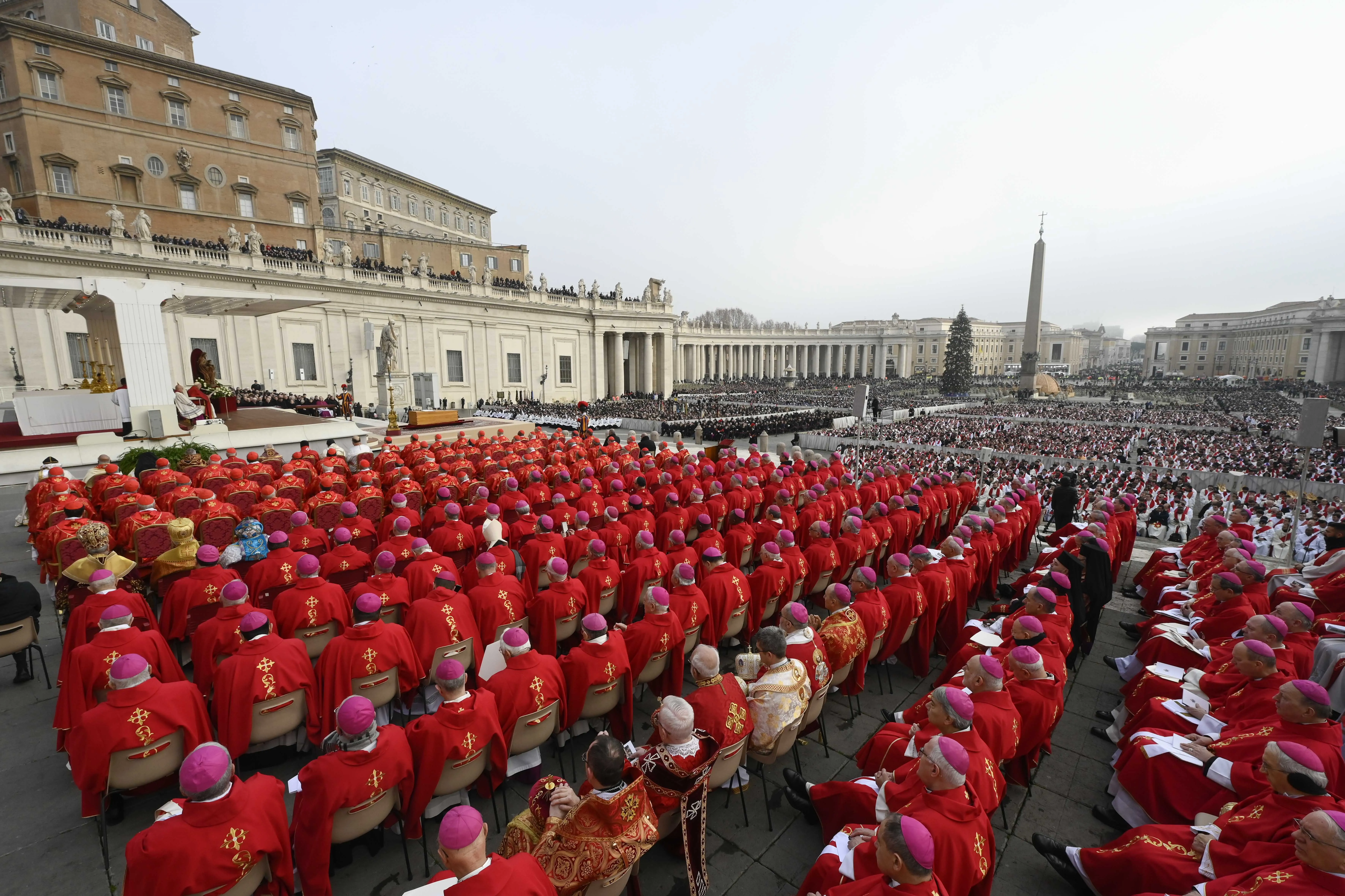
Cardinals seated in St. Peter’s Square on Jan. 5, 2023 for the funeral Mass for Pope Emeritus Benedict XVI. Daniel Ibañez/CNA
Archbishop Georg Gänswein (right), the longtime personal secretary for Benedict XVI, kneels to kiss the book of the Gospels atop the coffin of the pope emeritus on Jan. 5, 2023, in St. Peter’s Square. Daniel Ibañez/CNA
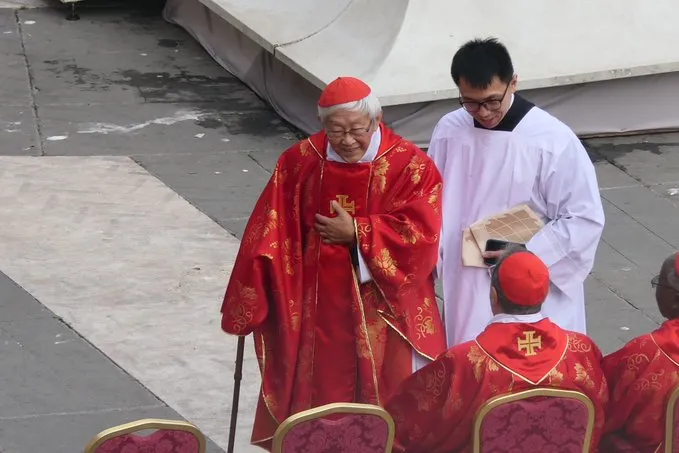
Cardinal Joseph Zen, former bishop of Hong Hong, attends the funeral Mass for Pope Emeritus Benedict XVI on Jan. 5, 2023, in St. Peter’s Square. Credit: Diane Montagna
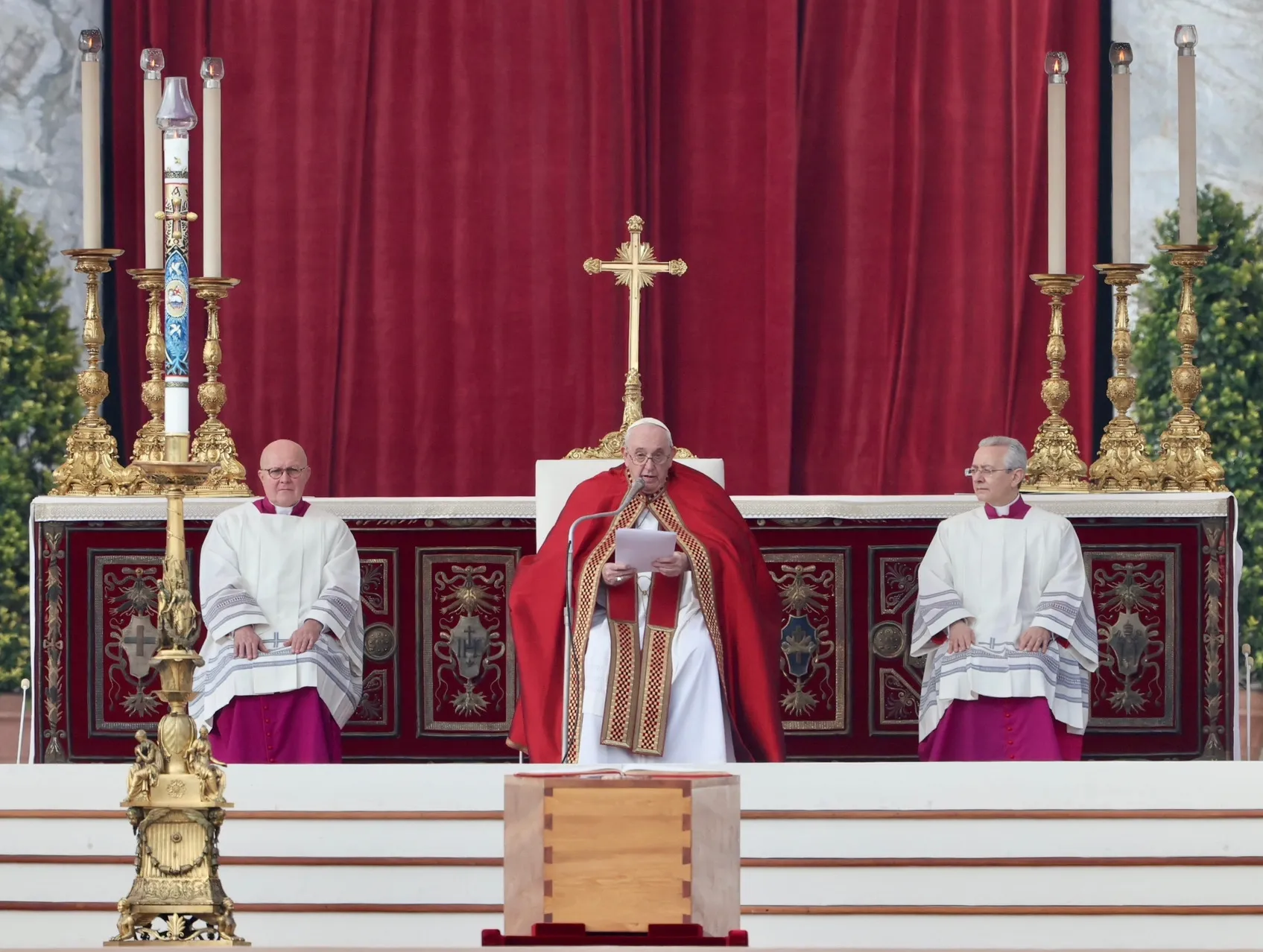
Cardinal Joseph Zen, former bishop of Hong Hong (second from left), attends the funeral Mass for Pope Emeritus Benedict XVI on Jan. 5, 2023, in St. Peter’s Square. Alan Koppschall/EWTNPope Francis delivers the homily at the funeral Mass for Pope Emeritus Benedict XVI in St. Peter’s Square on Jan. 5, 2023. Daniel Ibañez/CNA
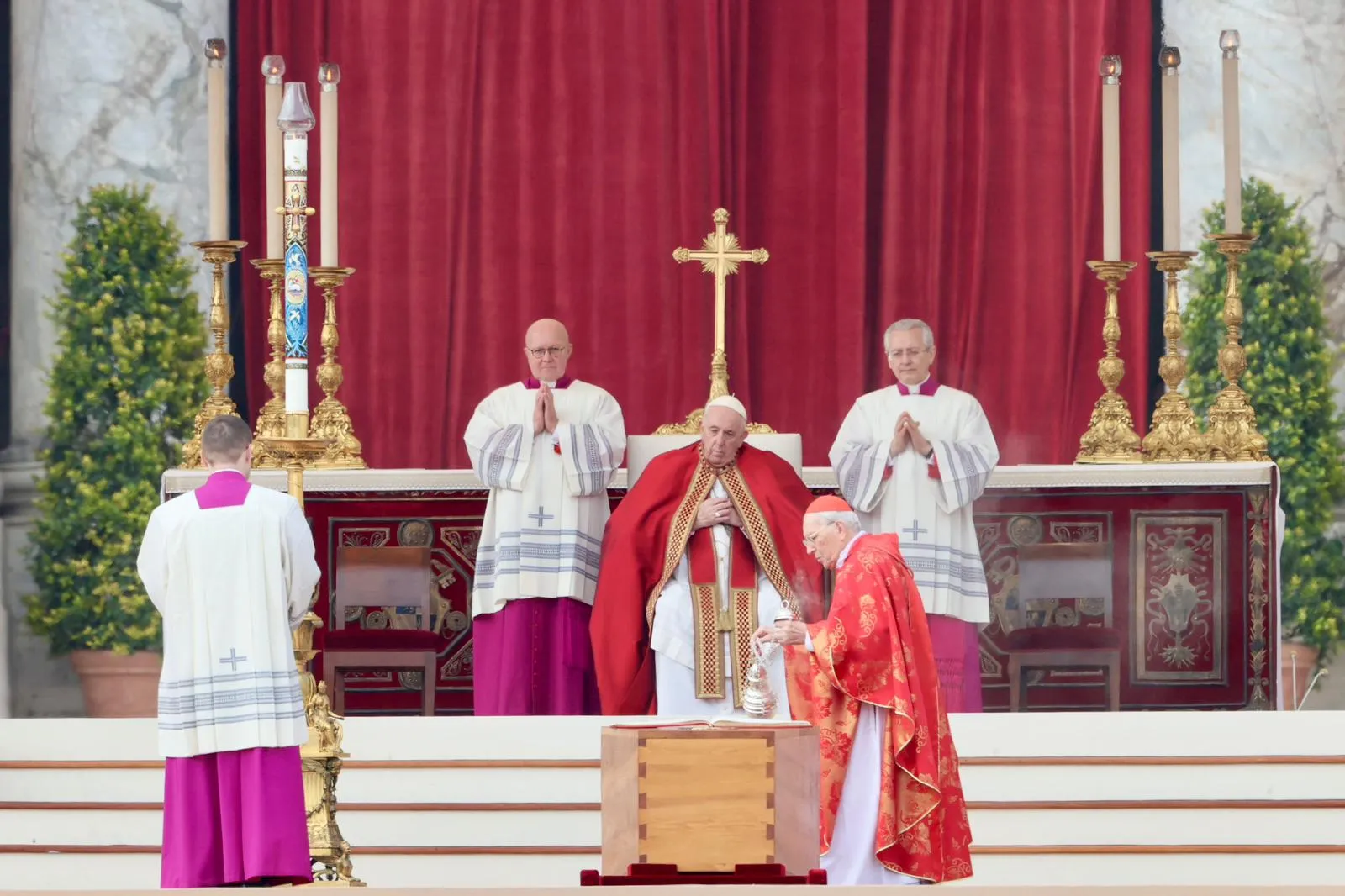
The coffin of Pope Emeritus Benedict XVI is incensed during his funeral Mass in St. Peter’s Square on Jan. 5, 2023, as Pope Francis looks on. Daniel Ibañez/CNA
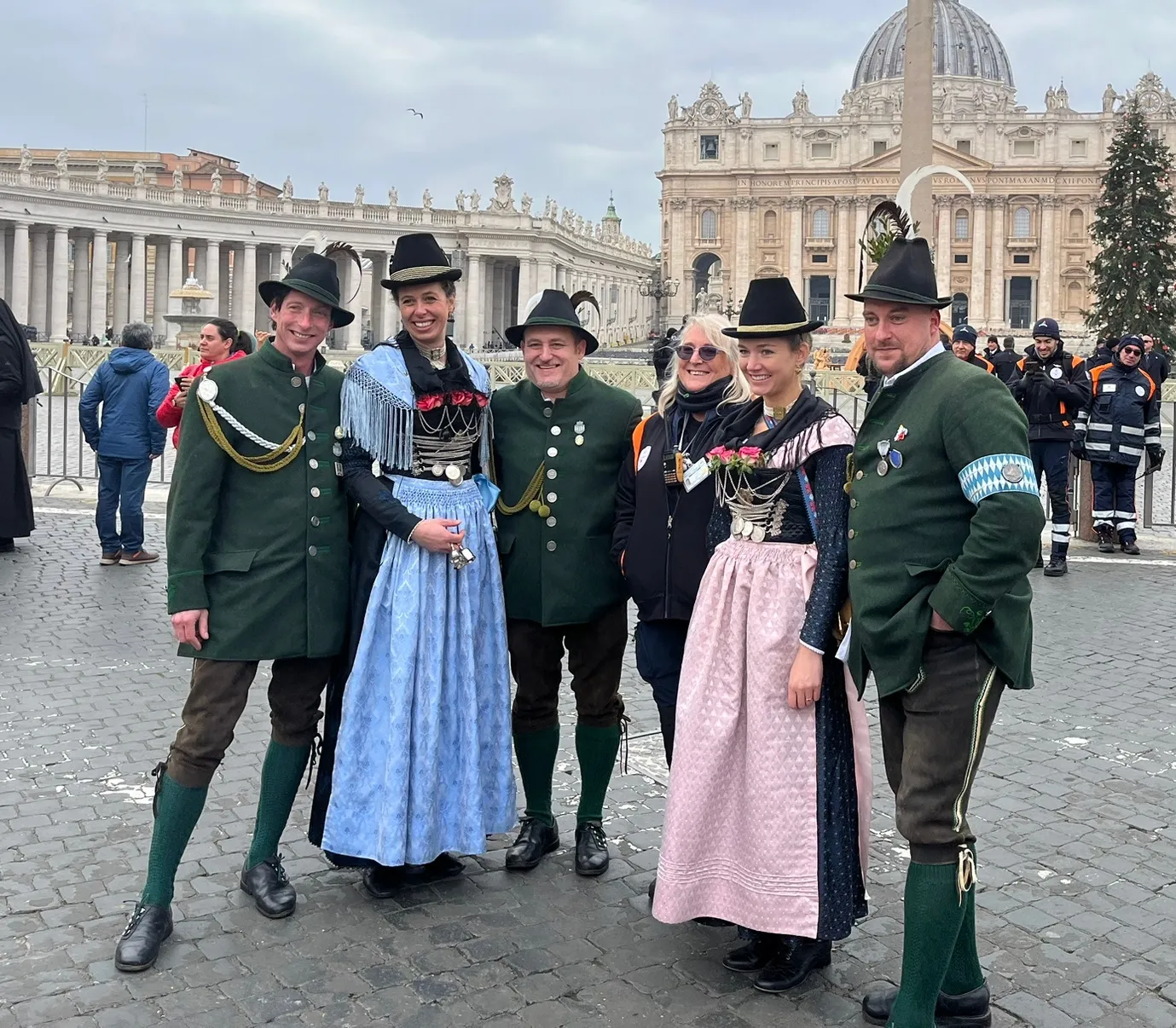
Pilgrims from Bavaria pose at St. Peter’s Square where the funeral Mass for Pope Emeritus Benedict XVI, a native Bavarian, took place on Jan. 5, 2023. Courtney Mares/CNA
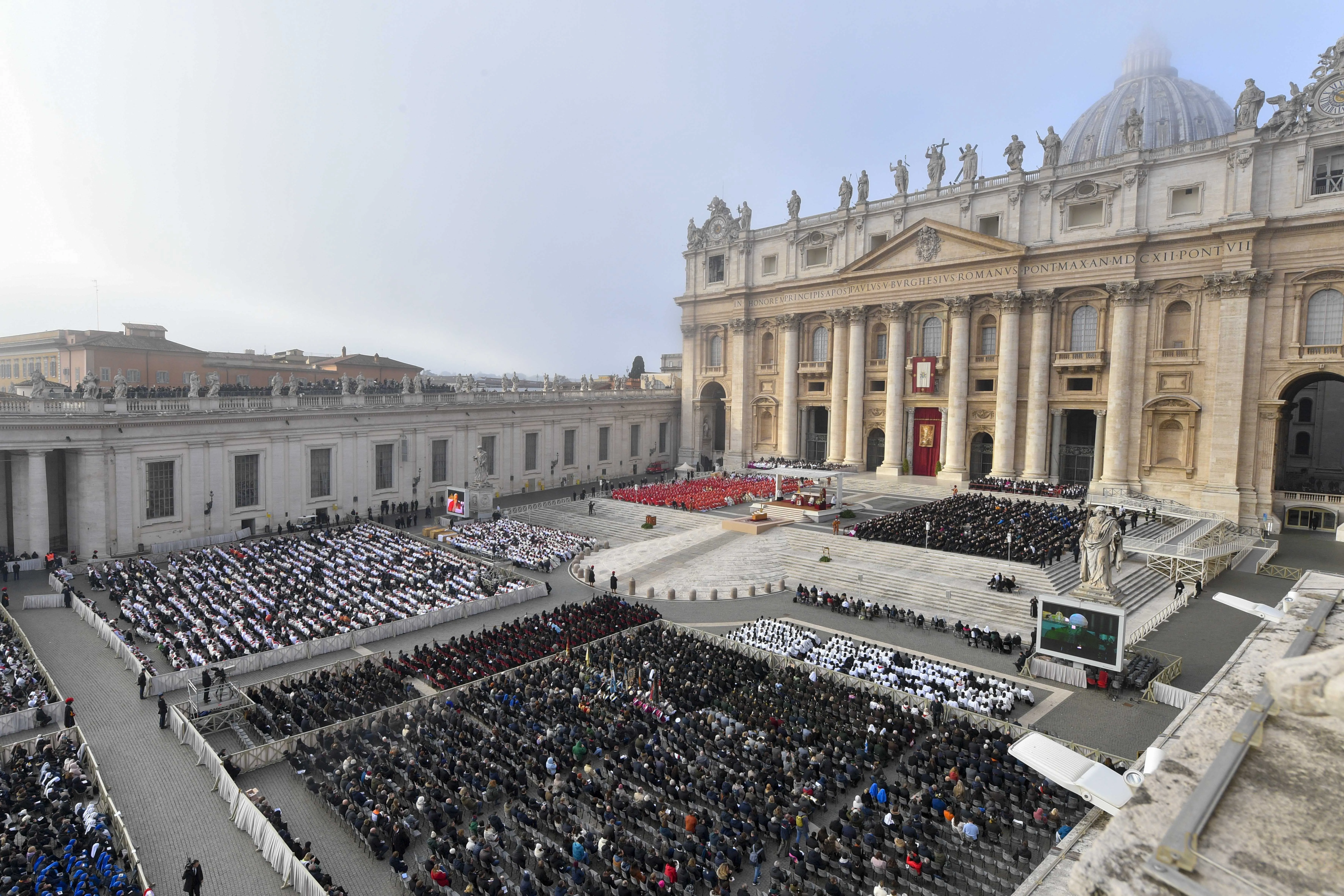
The funeral for Pope Benedict XVI on Jan. 5, 2023, at the Vatican. Vatican Media
Archbishop Georg Ganswein (left), longtime personal secretary of Pope Benedict XVI, kisses the coffin of friend and mentor at his funeral on Jan. 5, 2023, at the Vatican. Vatican Media
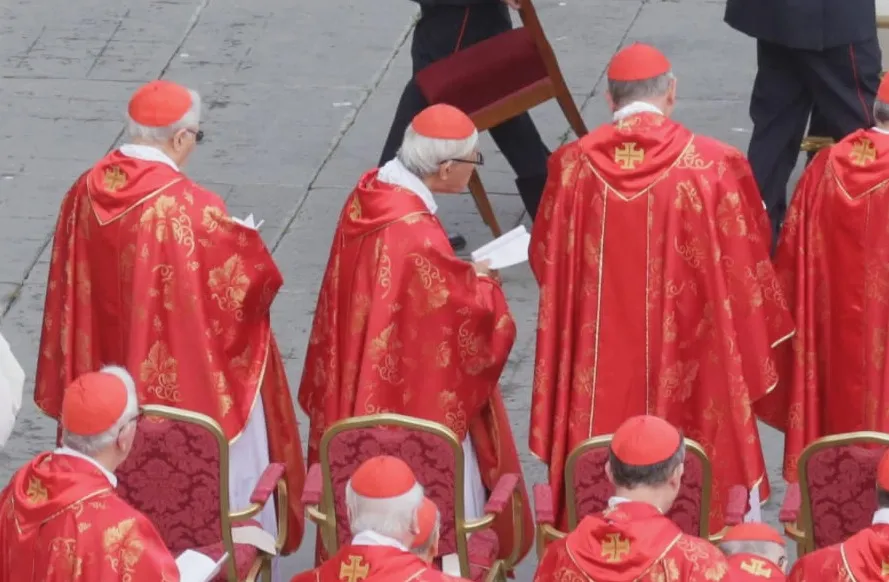
Cardinals attend the funeral of Pope Benedict XVI on Jan. 5, 2023. Vatican Media
The coffin of Pope Benedict XVI is carried at his funeral Mass on Jan. 5, 2023, at the Vatican. Vatican Media
If you value the news and views Catholic World Report provides, please consider donating to support our efforts. Your contribution will help us continue to make CWR available to all readers worldwide for free, without a subscription. Thank you for your generosity!
Click here for more information on donating to CWR. Click here to sign up for our newsletter.
Lisbon, Portugal, Feb 19, 2021 / 02:01 pm (CNA).- Portugal’s president on Thursday requested a constitutional review of a recently-passed bill to legalize euthanasia and assisted suicide in the country.
Marcelo Rebelo de Sousa wrote Feb. 18 to the country’s Constitutional Court, laying out concerns that the proposed law, passed late last month, is vague enough as to not be in accord with the Portuguese constitution, which describes human life as “sacrosanct.”
The bill would apply to patients over 18 who are “in a situation of extreme suffering, with an untreatable injury or a fatal and incurable disease.”
He pointed to the bill’s provision that allows terminally ill adults experiencing “intolerable suffering” to end their own lives, and noted that it “seems to inculcate a strong dimension of subjectivity” and wondered how physicians were expected to measure pain as “intolerable.”
The question is not over the constitutionality of euthanasia, he wrote, but whether the specific regulation is in conformity with the constitution.
“It does not seem that the legislator provides the physician involved in the procedure with a minimally secure legislative framework that can guide his performance,” Rebelo de Sousa wrote.
“This insufficient normative densification does not seem to comply with the constitutional requirement regarding the right to life and human dignity, nor with the certainty of the Law.”
Rebelo de Sousa, a Catholic who was reelected in a landslide vote Jan. 24, is a former law professor who helped to draft Portugal’s constitution in 1976.
Portugal’s parliament passed the bill to legalize euthanasia and assisted suicide Jan. 29 by a vote of 136-78-4.
Upon a bill’s passage the president has three options: giving the bill assent, sending it for review to the constitutional court, or employing his veto. Parliament can override a presidential veto by backing legislation a second time.
Portugal’s bishops expressed “sadness and indignation” at the bill’s passage.
They criticized both the content and the timing of the bill; the bishops were recently forced to suspend public Masses amid a surge in COVID-19 deaths.
“It is a contradiction to legalize death in this context, rejecting the lessons that this pandemic has given to us on the precious value of human life, which the community in general and health professionals in particular are trying to save with extraordinary efforts,” the bishops said Jan. 29.
If the bill is signed into law, Portugal will become the fourth country in Europe to legalize euthanasia, alongside the Netherlands, Belgium, and Luxembourg. Around 81% of Portugal’s 10 million population are baptized Catholics.
The bishops said that accepting the law would “convey the erroneous idea that life marked by illness and suffering no longer deserves protection and becomes a burden to oneself, to those around them, to health services and to society as a whole.”
They added: “The response to illness and suffering should rather be the protection of life, especially when it is more fragile, by all means, and especially by access to palliative care, which the majority of the Portuguese population is still deprived of.”
Portugal, while still a Catholic-majority country, has legalized same-sex marriage and abortion in the past several decades.
The Socialist Party, one of the left-of-center parties leading the charge to push the euthanasia legislation in Portugal, also led proposals to permit same-sex marriages and abortion in Portugal, the AP reports.
Portugal’s parliament failed to pass several proposals to legalize euthanasia and assisted suicide in mid-2018.
When lawmakers began debating five pieces of legislation in February 2020 to decriminalize euthanasia and assisted suicide, doctors in the country joined with the Catholic Church in opposing the potential change.
The Portuguese Doctors’ Association says the legislation violates key principles of the medical profession.
“Doctors learn to treat patients and save lives. They are not prepared to take part in procedures leading to death,” PDA president Miguel Guimaraes said after meeting with President Rabelo de Sousa.
Pro-life groups protested the euthanasia bills in the weeks leading up to the vote in Lisbon, where they held signs saying, “We demand palliative care for ALL” and “Euthanasia is a recipe for elder abuse.”
Pope Francis presides at the Vatican’s chrism Mass on Holy Thursday, March 28, 2024. / Credit: Daniel Ibanez/CNA
Vatican City, Mar 28, 2024 / 09:30 am (CNA).
On Holy Thursday, Pope Francis presided over a chrism Mass at which more than 1,880 priests, bishops, and cardinals renewed the promises made at their ordinations.
Pope Francis encouraged the priests to turn their gaze upon the crucified Lord and to weep over their sins in repentance, saying that tears can “purify and heal the heart.”
“Once we recognize our sin, our hearts can be opened to the working of the Holy Spirit, the source of living water that wells up within us and brings tears to our eyes,” Francis said on March 28.
Pope Francis speaks at the Vatican’s chrism Mass on Holy Thursday, March 28, 2024. Credit: Daniel Ibanez/CNA
“The Lord seeks, especially in those consecrated to him, men and women who weep for the sins of the Church and the world and become intercessors on behalf of all,” he added.
Forty-two cardinals, 42 bishops, and 1,800 priests living in Rome concelebrated the Mass with the pope in St. Peter’s Basilica.
Holy Thursday marks the institution of the Eucharist and institution of the sacrament of the priesthood at the Last Supper. Pope Francis will also preside over a Mass of the Lord’s Supper on Thursday evening at a women’s prison in Rome.
The 87-year-old pope arrived in St. Peter’s Basilica on Thursday morning in a wheelchair. Before giving his more than 20-minute homily, the pope took a sip of water and put on his reading glasses.
Pope Francis reflected in his homily on Peter’s tears after denying the Lord three times as recorded in the Gospel of Luke: “Peter remembered the word of the Lord … and went out and wept bitterly.”
Cardinal Angelo De Donatis presides at the altar during the Vatican’s chrism Mass on Holy Thursday, March 28, 2024. Credit: Daniel Ibanez/CNA
“Dear brother priests, the healing of the heart of Peter, the healing of the apostle, the healing of the pastor, came about when, grief-stricken and repentant, he allowed himself to be forgiven by Jesus. That healing took place amid tears, bitter weeping, and the sorrow that leads to renewed love,” he said.
Compunction
Pope Francis said that he wanted to speak to the priests about the importance of compunction — an awareness of guilt due to sin — which the pope admitted is a “somewhat old-fashioned” term and “an aspect of the spiritual life that has been somewhat neglected, yet remains essential.”
The pope added that compunction “is not a sense of guilt that makes us discouraged or obsessed with our unworthiness, but a beneficial ‘piercing’ that purifies and heals the heart.”
“Compunction demands effort but bestows peace. It is not a source of anxiety but of healing for the soul, since it acts as a balm upon the wounds of sin, preparing us to receive the caress of the heavenly physician, who transforms the ‘broken, contrite heart,’” Pope Francis said.
Clergy assembled at the Vatican’s Chrism Mass on Holy Thursday, March 28, 2024. Credit: Daniel Ibanez/CNA
The pope said that through compunction “the natural tendency to be indulgent with ourselves and inflexible with others is overturned and, by God’s grace, we become strict with ourselves and merciful toward others.”
“Weeping for ourselves … means seriously repenting for saddening God by our sins … It means looking within and repenting of our ingratitude and inconstancy, and acknowledging with sorrow our duplicity, dishonesty, and hypocrisy — clerical hypocrisy, dear brothers, that hypocrisy which we slip into so much — beware of clerical hypocrisy,” Francis said.
“How greatly we need to be set free from harshness and recrimination, selfishness and ambition, rigidity and frustration, in order to entrust ourselves completely to God and to find in him the calm that shields us from the storms raging all around us,” he added.
“Let us pray, intercede, and shed tears for others; in this way, we will allow the Lord to work his miracles. And let us not fear, for he will surely surprise us.”
During the Vatican’s chrism Mass, the pope, as the bishop of Rome, blessed the oil of the sick, the oil of catechumens, and the chrism oil, which will be used in the diocese during the coming year. Cardinal Angelo De Donatis served as the celebrant at the altar.
The oils were processed up the main altar of St. Peter’s in large silver urns as the hymns of the Sistine Chapel Choir filled the basilica.
Urns of oil are displayed at the Vatican’s Chrism Mass on Holy Thursday, March 28, 2024. Credit: Daniel Ibanez/CNA
Pope Francis prayed over the oil of the sick: “O God, Father of all consolation, who through your Son have willed to heal the infirmities of the sick, listen favorably to this prayer of faith: Send down from heaven, we pray, your Holy Spirit, the Paraclete, upon the rich substance of this oil, which you were pleased to bring forth from vigorous green trees to restore our bodies, so that by your holy blessing this oil may be for anyone who is anointed with it a safeguard for body, mind, and spirit, to take away every pain, every infirmity, and every sickness.”
The blessed oil will be used for the anointing of the sick in Rome throughout the year.
Pope Francis thanked the priests gathered in St. Peter’s Basilica for all they do to bring “the miracle of God’s mercy” to the world today.
“Dear priests, thank you for your open and docile hearts; thank you for your labors and thank you for your tears; thank you because you bring the miracle of mercy … you bring God to the brothers and sisters of our time,” he said. “Dear priests, may the Lord console you, confirm you, and reward you.”
Leave a Reply