As California’s three-year window to file child sex abuse lawsuits past the statute of limitations nears its conclusion, 66 Catholic clergy and religious have been named in 116 lawsuits in Alameda County, which covers the area between San Francisco and San Jose.
Additionally, 14 of the clergy members and religious identified in the lawsuits are named for the first time, the law firm of Jeff Anderson & Associates announced Nov. 28.
The law firm said that the 116 lawsuits may be a small percentage of the total number of suits filed under the California Child Victims Act, which was passed in 2019.
The legislation allowed a three-year period in which victims of child sex abuse could come forward with claims that would have expired under the previous statute of limitations. The window began Jan. 1, 2020, and will expire in less than a month. The bill was signed by Democrat Gov. Gavin Newsom.
The legislation allows one to file a civil lawsuit for child sexual abuse up to the age of 40, or within five years from the date that the plaintiff “discovers or reasonably should have discovered that psychological injury or illness occurring” after the age of 18 was caused by the abuse.
Previously, claims had to be filed by age 26, or within three years of discovering damages from the abuse. Dec. 31 is the last day to file a lawsuit before the window closes.
“The California Child Victims Act has helped hundreds of survivors seek justice and healing,” attorney Jeff Anderson said in a statement. “This law is a major advancement in the child protection movement, and we applaud all of the survivors who have come forward. But time is running out. Survivors must act before the Dec. 31 deadline.”
“Ultimately, our hope is that all victim-survivors of childhood sexual abuse in all institutional settings will be able to have their pain and suffering addressed and resolved and so our prayers are that AB 218 will be a step forward in that direction,” Rivas said.
“The Catholic Church has confronted this issue of child sexual abuse for more than two decades now,” he said. “It is a legacy of shame for all of us in the Church, and we are aware that nothing can undo the violence done to victim-survivors or restore the innocence and trust that was taken from them.”
According to the law firm, the lawsuits allege that the abuse occurred within the Archdiocese of Los Angeles, the Archdiocese of San Francisco, the Diocese of Fresno, the Diocese of Monterey, the Diocese of Oakland, the Diocese of Sacramento, the Diocese of San Jose, and the Diocese of Santa Rosa.
Brother Salvatore Billante and Father Stephen Kiesle were accused most frequently, according to the law firm. Billante was accused at least 11 times and Kiesle was accused at least nine times, the law firm said. Billante’s alleged abuse took place at locations in the Archdiocese of San Francisco. Kiesle’s alleged abuse took place at locations in the Diocese of Oakland.
Fourteen of the allegations named clergy members for the first time. Their names, reported by the law firm, are Father James Corley, Father Sidney Hall, Father John A. Lynch, Father John Francis Scanlon, Father William Dodson, Father Henry Hall, Sister M. Rosella McConnell, Father Joseph Watt, Father Elwood Geary, Father Domingos S. Jacque, Brother U Benedict Reams, Father Robert Gemmet, Father Robert H. Lewis, and Father Christian Sandholdt.
It’s unclear whether the 66 accused clergy and religious are living or deceased, and where they are living, the law firm said. The names of the 66 accused clergy and religious can be seen here.
“The vast majority of claims against these individuals have not been fully evaluated in a civil or criminal court,” the law firm said.
“The allegations should not be considered proven or substantiated in a court of law. All individuals should be considered innocent until proven guilty.”
Several other states, such as New York, New Jersey, Louisiana, Arizona, Montana, Hawaii, Vermont, and North Carolina have also passed legislation opening windows for lawsuits past the statute of limitations.
If you value the news and views Catholic World Report provides, please consider donating to support our efforts. Your contribution will help us continue to make CWR available to all readers worldwide for free, without a subscription. Thank you for your generosity!
Click here for more information on donating to CWR. Click here to sign up for our newsletter.
Pro-abortion graffiti at Bethlehem House in Easthampton, Mass., Aug. 18, 2022 / Pam Hibbard
Springfield, Mass., Aug 19, 2022 / 15:53 pm (CNA).
When Pam Hibbard saw red paint on the steps at Bethlehem House, the pro-life pregnancy center that sh… […]
Seminarians at Good Shepherd Major Seminary in Nigeria’s Kaduna state where four students were kidnapped and one, Michael Nnadi, was killed in 2020. / Credit: Good Shepherd Major Seminary Kaduna/ Facebook
ACI Africa, Jan 26, 2024 / 11:40 am (CNA).
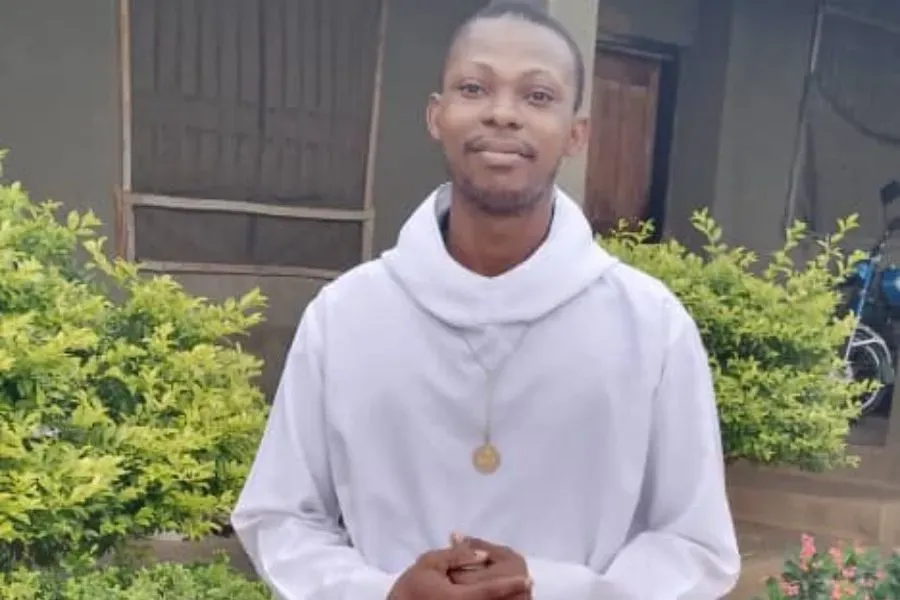
Last year, 2023, was a difficult year for Brother Peter Olarewaju, a postulant at the Benedictine monastery in Nigeria’s Ilorin Diocese who was kidnapped alongside two others at the monastery. Olarewaju underwent different kinds of torture and witnessed the murder of his companion, Brother Godwin Eze.
After his release, Olarewaju said his kidnapping was a blessing, as it had strengthened his faith. He even said that he is now prepared to die for his faith.
“I am prepared to die a martyr in this dangerous country. I am ready any moment to die for Jesus. I feel this very strongly,” Olarewaju said in an interview with ACI Africa, CNA’s news partner in Africa, on Nov. 26, 2023, days after he was set free by suspected Fulani kidnappers.
The late Brother Godwin Eze who was kidnapped from the Benedictine monastery in Nigeria’s Ilorin Diocese and murdered by his kidnappers in October 2023. Credit: Benedictine monastery, Eruku
The monk’s testimony is not an isolated case in Nigeria, where kidnapping from seminaries, monasteries, and other places of religious formation has been on the rise. While some victims of the kidnappings have been killed, those who survived the ordeal have shared that they have come back stronger — and ready to die for their faith.
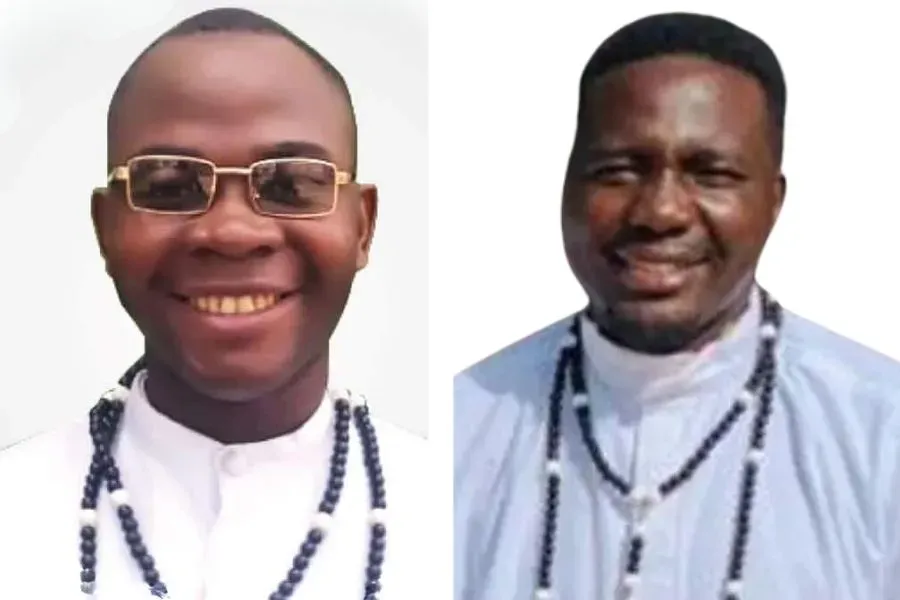
Seminarian Melchior Maharini, a Tanzanian who was kidnapped alongside a priest from the Missionaries of Africa community in the Diocese of Minna in August 2023, said the suffering he endured during the three weeks he was held captive strengthened his faith. “I felt my faith grow stronger. I accepted my situation and surrendered everything to God,” he told ACI Africa on Sept. 1, 2023.
Father Paul Sanogo (left) and Seminarian Melchior Maharini (right) were kidnapped from their community of Missionaries of Africa in Nigeria’s Diocese of Minna. Credit: Vatican Media
Many other seminarians in Nigeria have been kidnapped by Boko Haram militants, Fulani herdsmen, and other bandit groups operating in Africa’s most populous nation.
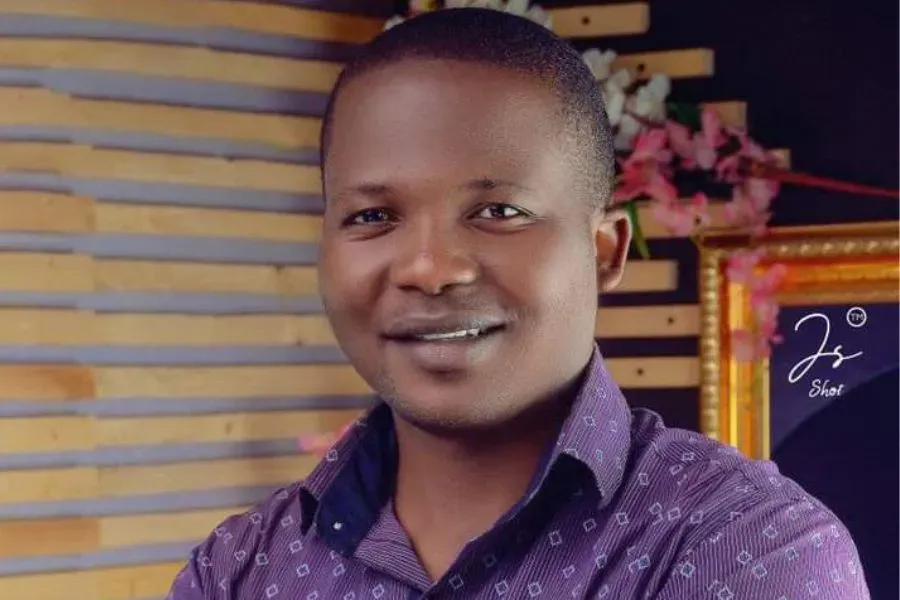
In August 2023, seminarian David Igba told ACI Africa that he stared death in the face when a car in which he was traveling on his way to the market in Makurdi was sprayed with bullets by Fulani herdsmen.
Seminarian Na’aman Danlami died when the Fulanis attacked St. Raphael Fadan Kamantan Parish on the night of Sept. 7, 2023. Credit: Photo courtesy of Aid to the Church in Need
In September 2023, seminarian Na’aman Danlami was burned alive in a botched kidnapping incident in the Diocese of Kafanchan. A few days earlier, another seminarian, Ezekiel Nuhu, from the Archdiocese of Abuja, who had gone to spend his holidays in Southern Kaduna, was kidnapped.
Two years prior, in October 2021, Christ the King Major Seminary of Kafanchan Diocese was attacked and three seminarians were kidnapped.
Seminarian David Igba during a pastoral visit at Scared Heart Udei of the Catholic Diocese of Makurdi. Credit: David Igba
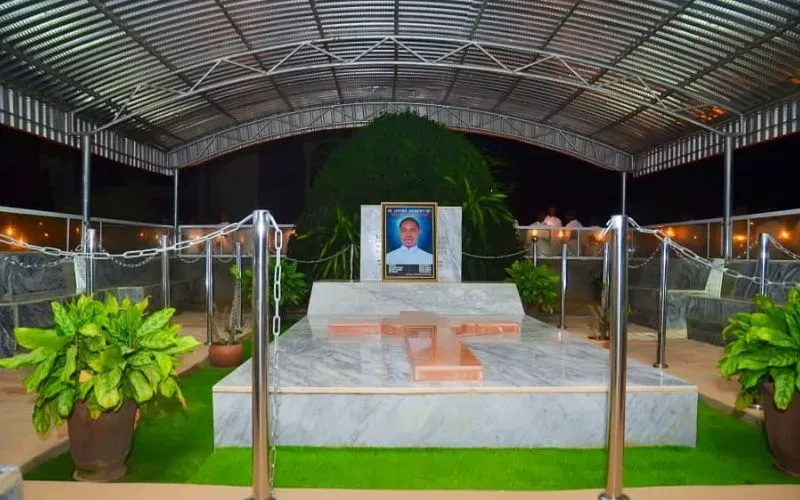
In one attack that attracted global condemnation in 2020, seminarian Michael Nnadi was brutally murdered after he was kidnapped alongside three others from Good Shepherd Major Seminary in the Diocese of Kaduna. Those behind the kidnapping confessed that they killed Nnadi because he would not stop preaching to them, fearlessly calling them to conversion.
After Nnadi’s murder, his companions who survived the kidnapping proceeded to St. Augustine Major Seminary in Jos in Nigeria’s Plateau state, where they courageously continued with their formation.
The tomb of seminarian Michael Nnadi, who was brutally murdered after he was kidnapped alongside three others from the Good Shepherd Major Seminary in the Catholic Diocese of Kaduna in 2020. Credit: Father Samuel Kanta Sakaba, rector of a Good Shepherd Major Seminary in Kaduna
As Christian persecution rages in Nigeria, seminary instructors in the country have shared with ACI Africa that there is an emerging spirituality in Nigerian seminaries that many may find difficult to grasp: the spirituality of martyrdom.
They say that in Nigeria, those who embark on priestly formation are continuously being made to understand that their calling now entails being ready to defend the faith to the point of death. More than ever before, the seminarians are being reminded that they should be ready to face persecution, including the possibility of being kidnapped and even killed.
Father Peter Hassan, rector of St. Augustine Major Seminary in the Archdiocese of Jos, Plateau state, said that seminaries, just like the wider Nigerian society, have come to terms with “the imminence of death” for being Christian.
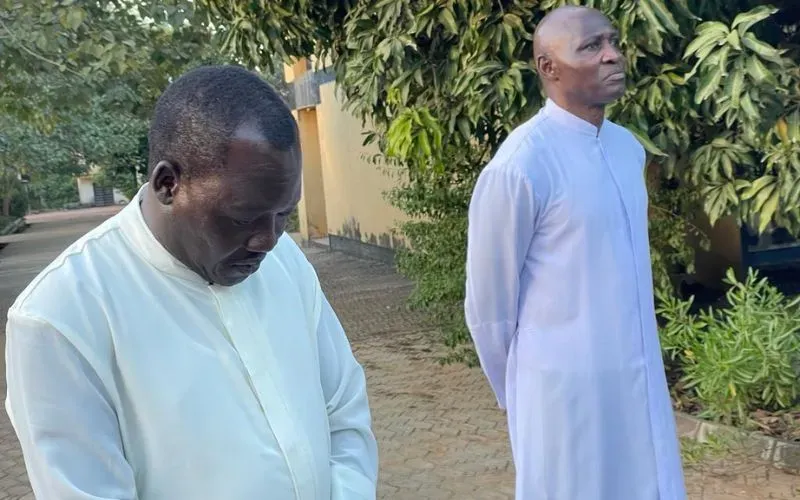
Father Peter Hassan, rector of St. Augustine Major Seminary in Jos, Nigeria, walks with an unnamed companion. Credit: Father Peter Hassan
“Nigerian Christians have been victims of violence of apocalyptic proportions for nearly half a century. I can say that we have learned to accept the reality of imminent death,” Hassan said in a Jan. 12 interview with ACI Africa.
He added: “Nevertheless, it is quite inspiring and comforting to see the many young men who are still ready to embrace a life that will certainly turn them into critically endangered species. Yet these same young men are willing to preach the gospel of peace and embrace the culture of dialogue for peaceful coexistence.”
Shortly after Nnadi’s kidnapping and killing, St. Augustine Major Seminary opened its doors to the three seminarians who survived the kidnapping.
Hassan told ACI Africa that the presence of the three former students of Good Shepherd Major Seminary was “a blessing” to the community of St. Augustine Major Seminary.
“Their presence in our seminary was a blessing to our seminarians, a wake-up call to the grim reality that not even the very young are spared by those mindless murderers,” Hassan said.
Back at Good Shepherd, seminarians have remained resilient, enrolling in large numbers even after the 2020 kidnapping and Nnadi’s murder.
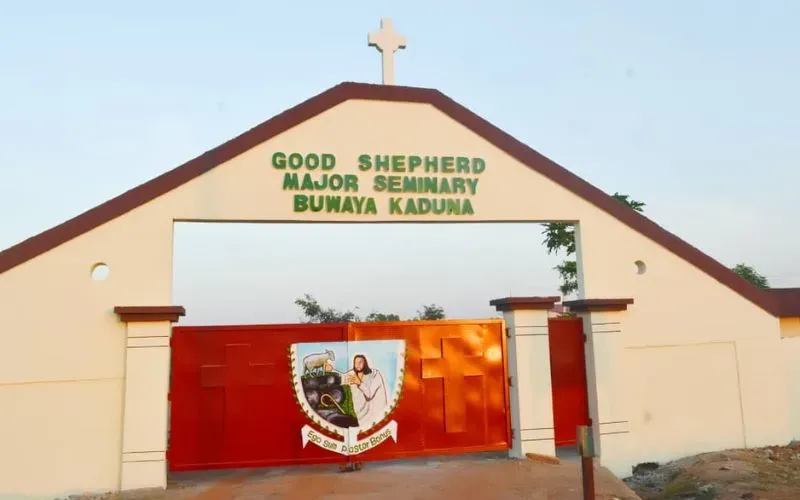
Good Shepherd Major Seminary in Kaduna, Nigeria. Credit: Father Samuel Kanta Sakaba, rector of a Good Shepherd Major Seminary in Kaduna
In an interview with ACI Africa, Father Samuel Kanta Sakaba, the rector of Good Shepherd Major Seminary, said that instructors at the Catholic institution, which has a current enrollment of 265 seminarians, make it clear that being a priest in Nigeria presents the seminarians with the danger of being kidnapped or killed.
ACI Africa asked Sakaba whether or not the instructors discuss with the seminarians the risks they face, including that of being kidnapped, or even killed, to which the priest responded: “Yes, as formators, we have the duty to take our seminarians through practical experiences — both academic, spiritual, and physical experiences. We share this reality of persecution with them, but for them to understand, we connect the reality of Christian persecution in Nigeria to the experiences of Jesus. This way, we feel that it would be easier for them to not only have the strength to face what they are facing but to also see meaning in their suffering.”
“Suffering is only meaningful if it is linked with the pain of Jesus,” the priest said. “The prophet Isaiah reminds us that ‘by his wounds, we are healed.’ Jesus also teaches us that unless the grain of wheat falls on the ground and dies, it will remain a single grain, but that it is only when it falls and dies that it yields a rich harvest. Teachings such as these are the ones that deepen our resilience in the face of persecution.”
Seminarians and their instructors at St. Augustine Major Seminary in Jos, Nigeria. Credit: Father Peter Hassan
Sakaba spoke of the joy of those who look forward to “going back to God in a holy way.”
“Whatever happens, we will all go back to God. How joyful it is to go back to God in a holy way, in a way of sacrifice.” he said. “This holiness is accepting this cross, this pain. Jesus accepted the pain of Calvary, and that led him to his resurrection. Persecution purifies the individual for them to become the finished product for God. I believe that these attacks are God’s project, and no human being can stop God’s work.”
However, the rector clarified that those who enroll at the seminary do not go out seeking danger.
“People here don’t go out putting themselves in situations of risk,” he said. “But when situations such as these happen, the teachings of Jesus and his persecution give us courage to face whatever may come our way.”
Sakaba said that although priestly formation in Nigeria is embracing the “spirituality of martyrdom,” persecution in the West African country presents “a difficult reality.”
“It is difficult to get used to pain. It is difficult to get used to the issues of death … to get familiar with death,” he said. “No one chooses to go into danger just because other people are suffering; it is not part of our nature. But in a situation where you seem not to have an alternative, the grace of God kicks in to strengthen you to face the particular situation.”
Sakaba said that since the 2020 attack at Good Shepherd Major Seminary, the institution has had an air of uncertainty. He said that some of the kidnappers who were arrested in the incident have been released, a situation he said has plunged the major seminary into “fear of the unknown.”
“It hasn’t been easy for us since the release,” Sabaka told ACI Africa. “The community was thrown into confusion because of the unknown. We don’t know what will happen next. We don’t know when they will come next or what they will do to us. We don’t know who will be taken next.”
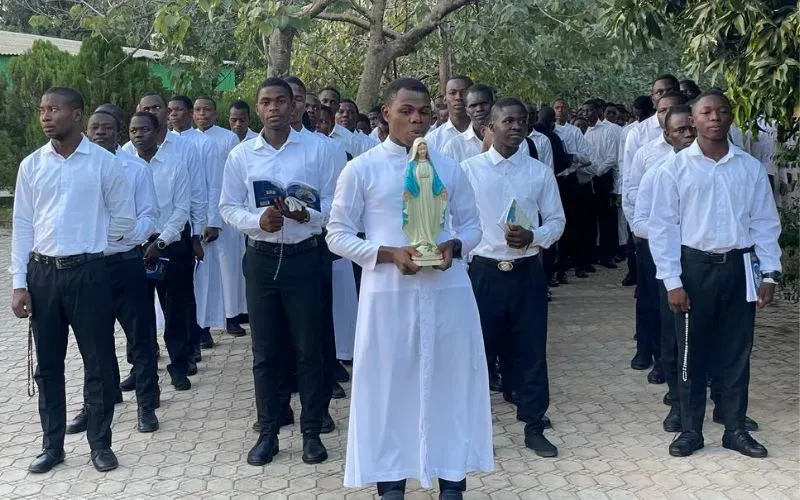
Seminarians at St. Augustine Major Seminary in Jos, Plateau state, Nigeria, during a Marian procession. Credit: Father Peter Hassan
In the face of that, however, Sabaka said the resilience of the seminary community has been admirable. “God has been supporting, encouraging, and leading us. His grace assisted us to continue to practice our faith,” he said.
The jihadist attacks, which continue unabated in communities surrounding the seminary, do not make the situation easier.
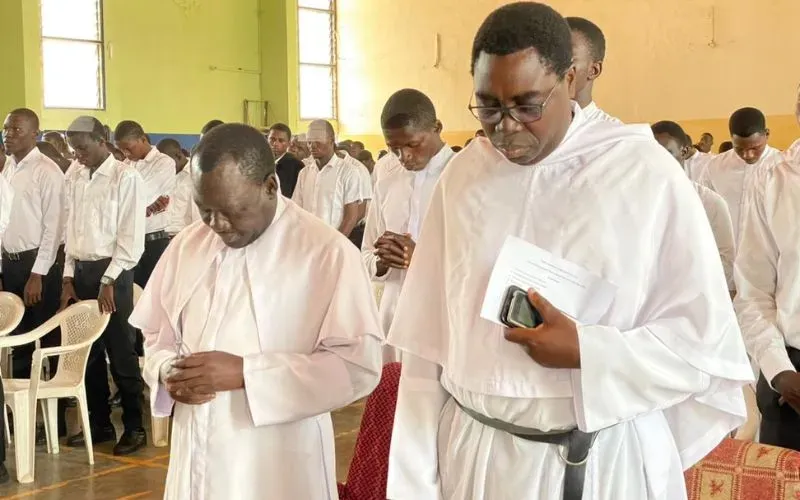
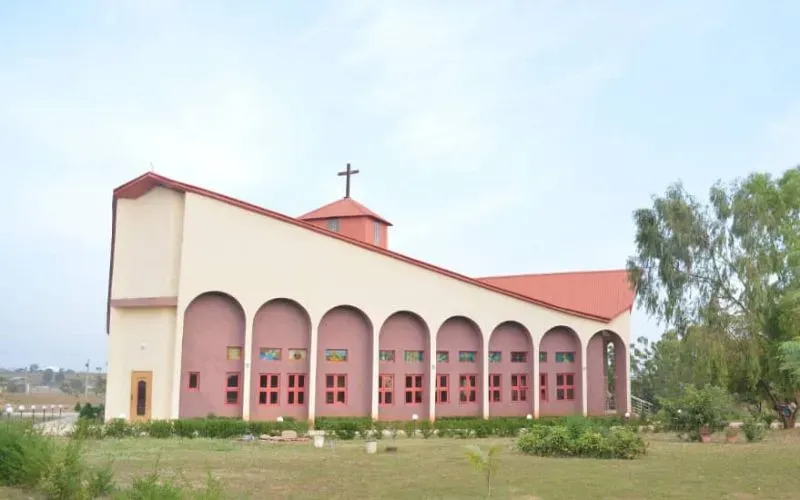
Church at the Good Shepherd Major Seminary in Kaduna, Nigeria. Credit: Father Samuel Kanta Sakaba, rector of Good Shepherd Major Seminary in Kaduna
“Every attack that happens outside our community reminds us of our own 2020 experience. We are shocked, and although we remain deeply wounded, we believe that God has been leading us,” he said.
This story was first published by ACI Africa, CNA’s news partner in Africa, and has been adapted by CNA.
Washington D.C., Jun 24, 2019 / 11:12 am (CNA).- On Saturday US President Donald Trump announced he would delay immigration raids meant to begin that weekend, and the US bishops stated their opposition to the planned deportations.
“We recognize the right of nations to control their borders in a just and proportionate manner. However, broad enforcement actions instigate panic in our communities and will not serve as an effective deterrent to irregular migration,” Bishop Joe Vásquez of Austin said June 22.
“Instead, we should focus on the root causes in Central America that have compelled so many to leave their homes in search of safety and reform our immigration system with a view toward justice and the common good,” said the bishop, who chairs the US bishops’ migration committee.
He added: “We stand ready to work with the Administration and Congress to achieve those objectives.”
Trump had announced upcoming immigration raids June 17, but on Saturday said he would delay the action two weeks, to allow Congress to modify US asylum law.
The Trump administration is eager to reduce the number of illegal immigrants in the US.
Earlier this month, Mexico agreed to take measures to reduce the number of migrants to the US, in order to avoid the imposition of tariffs.
Some 6,000 National Guard troops will be assigned to Mexico’s southern border with Guatemala, and some asylum seekers in the US will be sent to Mexico to wait while their claims are processed.
In the US, the House passed a bill June 4 that would provide a citizenship path for some brought to the US illegally as children, as well as for qualified holders of Temporary Protected Status or Deferred Enforced Departure.
Bishop Vásquez commented that “Dreamers, TPS and DED holders are working to make our communities and parishes strong and are vital contributors to our country. We welcome today’s vote and urge the Senate to take up this legislation which gives permanent protection to Dreamers, TPS and DED holders.”
The bill, the American Dream and Promise Act of 2019, would grant qualifying childhood arrivals 10 years of legal residence, after which they could receive permanent legal residence with two years of higher education or military service, or three years of employment. Those with TPS or DED could apply for lawful permanent residence if they have been in the country for at least three years and have passed background checks. After five years of lawful permanent residence, they would apply for citizenship.
In May, Bishop Vásquez and Cardinal Daniel DiNardo of Houston, president of the US bishops’ conference, voiced concern over a separate immigration plan from the Trump administration which prioritizes immigration status based on merit rather than family ties.
“We oppose proposals that seek to curtail family-based immigration and create a largely ‘merit-based’ immigration system,” they said. “Families are the foundation of our faith, our society, our history, and our immigration system.”







Leave a Reply