No Picture
News Briefs

Archbishop of Tokyo: ‘Collapse of traditional family system’ a challenge for irreligious Japan

November 20, 2019 CNA Daily News 1

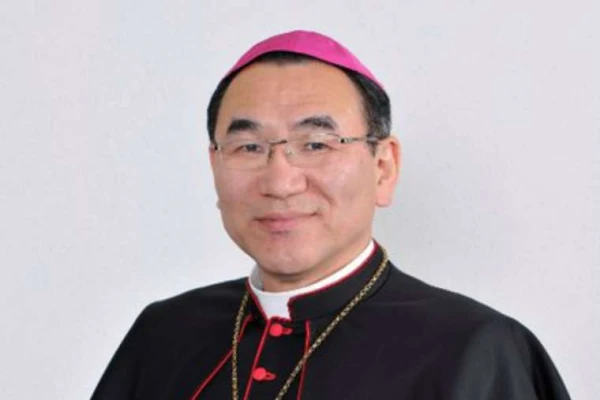
Tokyo, Japan, Nov 20, 2019 / 04:00 am (CNA).- The Archbishop of Tokyo, Isao Kikuchi, spoke with CNA about the challenge for Japanese Catholic churches to keep Catholics engaged, in the face of ongoing population decline and growing religious apathy from Japanese youth.

“Population decline due to the low birth rate and the aging population is not just a problem for the church but a problem for the entire Japanese society.”

The archbishop’s remarks came shortly before Pope Francis is due to visit Japan Nov. 23-26.

The “birthrate crisis,” as the Japanese call it, is indeed considered one of the most dangerous threats facing Japan’s short-term future.

Each successive generation since the economic bubble has dropped in population, with many Japanese going unmarried or remaining childless. Even among young parents who do conceive, the average amount of children is between one and two.

Families with three children are not very common, and families with more than three are extremely rare.

This ongoing collapse in the national population has negatively affected all sects of Japanese society. Young men and women now face a future in a country with an economy expected to drastically worsen. Elderly generations are finding it difficult to survive on the government’s retirement budget as the gap between the number of elderly retirees and the number of working citizens gradually shrinks.

“For example, when we look at the situation in convenience stores, many of those who work there are either elderly Japanese people or young foreigners,” Archbishop Kikuchi told CNA.

Until recently, foreign convenience store clerks had been a rarity in Japan. Now, close to 60,000 foreigners are employed at convenience stores throughout the country. Many are students seeking part-time work while living abroad.

“The same scenario is reflected in the church today, and since it is no different from the situation of the Japanese society, I do not feel that it is in a dangerous level as it is,” Kikuchi said.

“Rather, since the church is a small community accounting only to less than 1% of the population, I see it as an opportunity for the Good News to be preached everywhere, a potential to yet expand evangelization activities.”

According to the most recent available data, approximately 35% of Japanese claim Buddhism as their religion, while around 3-4% claim strict adherence to Shinto or associated folk religions. Only 1-2% of Japanese claim Christianity as their religion, and only around half of Japanese Christians are Catholic.

“I acknowledge however that the Catholic faith not being passed on by the parents to their children is a big problem. This is due primarily to the collapse of the traditional Japanese family system in the context of our present society.”

The Japanese sense of the “traditional family system” to which the archbishop refer is straightforward: a hard-working father who puts bread on the table; a mother dedicated to keeping the wallet, house, and kids in check; the children, who spend time between the home, school, and community groups such as sports teams; and the grandparents, typically parents of the mother, who help raise the children and maintain the house as best they can.

This style of family has also been called a “multi-generational household,” and is becoming increasingly rare in Japan, especially in major metropolitan areas such as Tokyo.

“The collapse is caused by the situation in the workplace that goes along with the changing Japanese economic situation (non-regular employment, overtime, working parents),” said Archbishop Kikuchi.

“And the excessive activities in the education of children,” the archbishop added, noting that extracurricular activities are held on Saturdays, Sundays and holidays, and students are often tied up for extra hours in “cram schools” due to the deterioration of the quality of education.

Japan’s ruthless work culture is hardly unknown. The image of the exhausted salaryman working unpaid overtime deep into the night is a symbol that is recognizably Japanese in countries around the world, and one of the most enduring stereotypes of the Japanese people.

In recent generations, women have also more frequently entered the workforce – willingly or sometimes without a choice due to the economic pressures of raising children.

Less well known, however, are the strict expectations put on middle school and high school students to join and participate in after-school groups with their peers. More than just the competitive sports teams –  clubs for music, art, and dance prove to be highly demanding of children’s time.

Just as their parents are burdened with work expectations, children often spend more time out of the house than in it.

“From abroad, we even hear voices pointing out that school and community events held on Saturdays and Sundays are silently persecuting religion,” laments the archbishop.

Many athletic groups demand members to practice on Saturday and Sunday – the time when most families should be going to mass.

“In addition, such a collapse in the traditional Japanese family system has caused marriages to break down, with single mothers raising their children in poverty,” said the archbishop.

“Under such circumstances, it has become difficult to find time to bring children to church on Sundays, and likewise difficult to find time to share the faith at home.”

While club participation isn’t mandatory, it is expected. Failing to join a sports team or interest-based group can severely handicap a student socially.

And while couples are financially rewarded for creating larger families, the government has been unable to give young Japanese a sufficient push to make them comfortable with the traditional idea of family-making.

Free kindergarten and child-care have recently been established after a recent bill passed – the legislation was offered as a way to encourage more children, taking the burden of early care off of the mother and father.

But monthly stipends and free nursery school are not enough to pull the tide of Japanese population decline in the other direction.

“Merely admonishing people to bring back the traditional home is not a solution. The problem concerns not only the church, but must be tackled by the entire society. Should this situation continue on, I am afraid not only the home but also the local community will collapse and disappear from the whole Japanese society.”

[…]

No Picture
News Briefs

Federal judge allows Christian school’s suit to go forward in voucher case

November 19, 2019 CNA Daily News 0

Baltimore, Md., Nov 19, 2019 / 05:01 pm (CNA).- A federal district court judge on Thursday denied Maryland’s motion to dismiss a suit by a Christian school against the state superindentent of schools. The school complains it was barred from a voucher program because of its religious beliefs.

Bethel Ministries, an ecclesial community that runs Bethel Christian Academy, filed a suit in June against the Maryland Department of Education.

The education department last year disqualified the academy from participating in the state’s Broadening Options and Opportunities for Students Today voucher program, which benefits low-income students.

The department had previously requested to see the student handbooks of schools in the program. Bethel’s handbook includes a statement of Christian beliefs about marriage and sexuality.

In making its decision, the Department of Education cited a state law forbidding BOOST schools from discriminating in the admissions process on sexual orientation.

“Bethel has plausibly alleged that Defendants violated several of its First and Fourteenth Amendment rights in the course of deeming the school ineligible for BOOST,” Stephanie Gallagher, a judge of the US District Court for the District of Maryland, wrote in her Nov. 14 ruling allowing Bethel’s suit to go forward.

“Bethel has consistently maintained that the school does not discriminate in student admissions on the basis of sexual orientation,” she noted, adding that in correspondence with the BOOST advisory board, Bethel explained “that it does not consider sexual orientation or sexual attraction when evaluating applications for admission.”

“In fact, Defendants have not identified any student that Bethel has discriminated against in admissions on the basis of sexual orientation. As such, Bethel alleged in its complaint – which this Court accepts as true at this stage – that it ‘has not, and will not, discriminate against a student in admissions based on an applicant’s sexual orientation.’”

Gallagher wrote that Bethel “has plausibly alleged” that the education department “infringed upon several of its constitutional rights. Namely, Bethel has presented a plausible case that the Advisory Board’s determination of ineligibility was motivated by the school’s religious affiliation.”

“Bethel has plausibly alleged that Defendants deemed it ineligible for BOOST not because of evidence of discrimination in admissions, but because of [its] Christian identity. In other words, it is plausible that the Advisory Board, in determining that Bethel violated the nondiscrimination provision, unjustly conflated the school’s religious beliefs with discriminatory behavior.”

The judge concluded that “in ruling on Defendants’ Motion to Dismiss, this Court must take as true that Bethel has not discriminated in admissions on the basis of sexual orientation, and thus, must reasonably infer that Bethel has complied with the nondiscrimination provision enforced by Defendants.”

Bethel families were notified that they could no longer use the voucher at the academy just a few weeks before the start of the 2018-2019 school year. At least six students were forced to leave the school because of the disqualification and its resulting lack of funding. One in five students at Bethel relies on some kind of financial aid.

In revoking Bethel’s eligibility, the Department of Education also told the school that it must repay $102,600 it had already received from the voucher program.

Christiana Holcomb, a legal counsel with Alliance Defending Freedom, said after Gallagher’s ruling that “we’re pleased that the court has rejected Maryland’s attempt to shut down this case. Bethel Christian Academy offers an academically rigorous and caring Christian education in a diverse environment, but Maryland has refused to play by its own rules, expelled Bethel from a neutral government voucher program without just cause.”

“Maryland’s families deserve better; that’s why we’re grateful Bethel’s lawsuit can move forward,” she added.

Gallagher was appointed to the Maryland district court by President Donald Trump, and had been nominated to the same position by Barack Obama.

[…]

No Picture
News Briefs

Bishop Flores: With respect to migration, uphold both law and compassion

November 19, 2019 CNA Daily News 0

Brownsville, Texas, Nov 19, 2019 / 03:05 pm (CNA).- In an interview earlier this month, Bishop Daniel Flores of Brownsville urged that US immigration law be respected, but that that law also consider the reality facing immigrants.

“The United States has the responsibility to vet those who come into the country and to make sure the laws of the country are respected, but the laws ought to look at the human reality,” Bishop Flores told Border Report Nov. 7.

“We can be a nation of laws and still be a nation of compassion,” he added.

The Diocese of Brownsville comprises four Texas counties on or near the US-Mexico border, where the Rio Grande empties into the Gulf of Mexico. It has for years seen a rise in migrants and asylum seekers.

When the number of unaccompanied minors attempting to cross the border rose sharply in 2014, the diocese’s prison ministry expanded to become “more of a detention center ministry,” Flores has said.

The diocese opposed a federal government plan to survey the land around a historic chapel which could lead to the construction of a portion of a border barrier between the United States and Mexico. A judge ruled in February that the surveying could go ahead, but the diocese has vowed to continue fighting the project.

Bishop Flores was among the 10 candidates nominated for president or vice president of the US bishops’ conference. The Nov. 12 vote elected Archbishop José Gomez of Los Angeles as president, and Archbishop Allen Vigneron of Detroit as vice president.

In the interview with Border Report, Bishop Flores noted that “the U.S. bishops have been asking for a number of decades in terms of re-calibrating how we have written our laws to more adequately reflect the current reality on the ground.”

He added: “In my view, sometimes immigration rhetoric in the country is fairly distant from the reality on the ground.”

The bishop said that “not all immigrants are the criminal element. The reality is the innocent immigrant is the one who is fleeing that reality. And right now the law does not have a way and we need to distinguish that.”

Bishop Flores said it is “heartbreaking to hear there’s a breakdown in society in other countries that’s causing people to move.”

He added that the Church “has the responsibility to call on governments of all kind to address the humanitarian [need] in a cooperative fashion because people deserve to be treated better than they’re being treated, no matter who they are and it really is beyond tragic.”

“There’s violence all over the world but the immigrant is a victim of violence in a particularly consistently brutal way. … We can’t pretend it’s not there,” he stated.

In recent months, the Trump administration restricted protections granted to asylum seekers in the US, cutting in half the time allotted them to prepare for their interviews.

It has also limited asylum eligibility to those who had already applied and been rejected for asylum in any third-party country passed through on their way to the US.

In August, the administration announced its intent to deny green cards and a path to citizenship to immigrants in the country legally who use public benefits.

And in January the Department of Homeland Security announced Migrant Protection Protocols providing that migrants arriving illegally or without proper documentation “may be returned to Mexico and wait outside of the U.S. for the duration of their immigration proceedings, where Mexico will provide them with all appropriate humanitarian protections for the duration of their stay.”

[…]

The Dispatch

A Talk on the Hill

November 19, 2019 Bishop Robert Barron 7

A couple of weeks ago, I had the distinct privilege of addressing an audience of Senators, Representatives, and Capitol Hill staffers in a beautiful room at the Library of Congress. This event was made possible […]