No Picture
News Briefs

Bolivian bishops: ‘Enough violence! Enough death!’

November 22, 2019 CNA Daily News 0

La Paz, Bolivia, Nov 22, 2019 / 06:05 pm (CNA).- The Bolivian Bishops’ Conference called for an end to violence, as protests continue in the wake of former president Evo Morales’ resignation.

“We raise our voices to call on everyone: Enough death! Enough violence! Enough suffering and pain!” the bishops said in a statement entitled “Spiral of Violence and Death.”

“We condemn the violence wherever it comes from. We once again remind that it is irrational and irresponsible, and it is not a solution for conflicts between human beings.”

The bishops warned that the “growing spiral of irrationality and violence” will continue bringing injury, death, and mourning to the country unless demonstrators can express their demands peacefully and law enforcement can refrain from the use of excessive force.

Morales resigned Nov. 10 after weeks of protest regarding a disputed Oct. 20 election. The socialist leader had been in power since 2006.

According to the electoral commission, Morales won on the election’s first round, but the opposition claimed fraud. The Organization of American States said Nov. 10 that there was “clear manipulation” in the election, and that it was statistically improbable that Morales had won by the margin needed to avoid a runoff.

Within hours of the OAS report, Morales resigned, after being encouraged to do so by the head of the Bolivian armed forces.

The deputy head of the Senate, Jeanine Anez, is serving as interim president until elections are held. Morales has been offered asylum by Mexico.

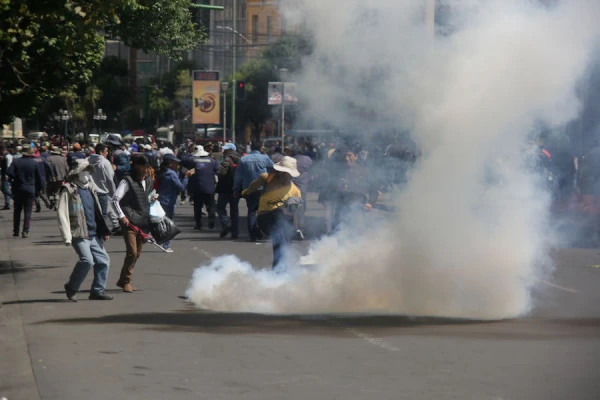
In some cities, Morales’ supporters have clashed with police, and dozens have reportedly been killed. According to reports, blockades by Morales’ supporters have cut off food and fuel in some areas. Demonstrators in El Alto blockaded a gas plant on the route to La Paz. The military broke through, in an operation that left one dead and two injured.

On Friday, the interim government filed a criminal complaint against Morales. It accuses the former president of sedition and terrorism.

Interior Minister Arturo Murillo has presented an audio recording in which he says Morales is heard directing his supporters to create blockades to destabilize the interim government, Reuters reports.

In their statement, the bishops appealed to those in power: “Don’t call for confrontation and violence, let words of peace and reconciliation come forth from your mouths.”

“Let us all be builders of peace and ask the God of life who never desires the death of the brothers to inspire our hearts and our minds to adopt the ways of peace among all Bolivians.”

The Catholic bishops are among those working to promote peace in the country. The Archdiocese of Cochabamba was part of a commission on peace with various civil organizations earlier this week.

“We citizens of Cochabamba and Bolivia reaffirm our right to peaceful coexistence, regardless of any differences,” said the Archbishop Óscar Aparicio of Cochabamba, according to Infodecom.

An 8:00 p.m. Mass was held Nov. 21 in the Sucre cathedral to pray for peace in the country.


This article was originally published by our sister agency, ACI Prensa. It has been translated and adapted by CNA.


[…]

No Picture
News Briefs

Pa. Catholic conference: Gov. Wolf failed to protect ‘humanity’s most vulnerable lives’ with Down syndrome abortion veto

November 22, 2019 CNA Daily News 1

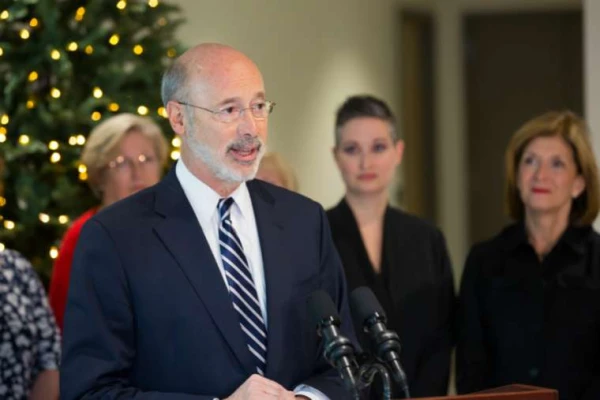
Harrisburg, Pa., Nov 22, 2019 / 04:00 pm (CNA).- Pennsylvania governor Tom Wolf this week vetoed a bill that would have banned the abortion of children prenatally diagnosed with Down syndrome. The state Catholic conference condemned the decision. 

“Gov. Wolf’s veto will prevent all children with Down’s syndrome from going on to live happy and fulfilled lives,” executive director Eric Failing said in a Nov. 21 statement.

“Had Gov. Wolf signed this legislation, he would’ve ensured the protection of humanity’s most vulnerable lives,” he said in Nov. 21 statement.

Wolf vetoed the bill on Thursday, stating that the legislation would have hindered the medical decisions between a woman and her doctor.

“This legislation is a restriction on women and medical professionals and interferes with women’s health care and the crucial decision-making between patients and their physicians,” Wolf said in an online statement.

“Physicians and their patients must be able to make choices about medical procedures based on best practices and standards of care,” he further added.

Under the current Pennsylvania law, abortion is permissible for any reason, besides gender selection, until the 24th week of pregnancy. If the bill passed this week had been signed into law, it would have prohibited abortions chosen after a diagnosis of Down syndrome, except in cases of rape, incest, and medical emergencies.

Even though the bill was vetoed, the Pennsylvania Catholic Conference applauded the efforts of Democratic and Republican lawmakers who supported the effort.

The bill had passed through the Pennsylvania Senate, 27-22, on Wednesday. It passed through the state’s House of Representatives 117-76, in May.

“We thank all legislators who came together in a bi-partisan fashion to support this common-sense legislation, and PCC looks forward to working with them again to protect the sanctity of life,” Failing said.

Up to 75% of babies diagnosed prenatally with Down syndrome in the U.S. have been aborted in recent decades, according to research conducted between 1995 and 2011.

Opponents of the bill have claimed the legislation would violate women’s reproductive rights.

According to Penn Live, Sen. Maria Collett said the bill would not help people with disabilities. She said legislators should instead focus on laws that benefit the caregivers and those already born with disabilities.

“This bill does nothing to improve the lives of people with Down syndrome,” said Collett. “Instead, it uses them to advance a political agenda.”

Sen. Scott Martin disagreed, saying abortion of children diagnosed with Down syndrome is “not health care” but an act of “eugenics.”

“These are parents who actually want to have children, who are presented as if this child will actually be a burden, who cannot live a productive life. … These children have the ability to live long, productive lives, even past the age of 60,” he said, during floor debate on the bill.


[…]

The Dispatch

The thought and work of C.S. Lewis

November 22, 2019 Carl E. Olson 1

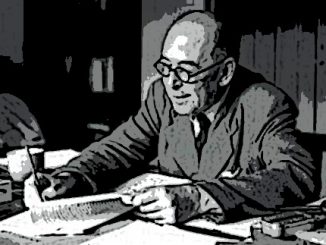
Today marks the 56th anniversary of the deaths of three famous and intriguing men: the author and agnostic Aldous Huxley; the 35th President of the United States, John F. Kennedy; and the author and apologist, […]

No Picture
News Briefs

What is Advent, anyway? A CNA Explainer

November 22, 2019 CNA Daily News 3

Denver, Colo., Nov 22, 2019 / 11:30 am (CNA).- Advent starts this year on Sunday, Dec. 1. Most Catholics, even those who don’t often go to Mass, know that Advent involves a wreath with some candles, possibly a “calendar” of hidden chocolates, and untangling strings of Christmas lights.

But Advent is more than that. Here are a few points that might help you have a great Advent this year:

What is Advent?

The people of Israel waited generations for the promised Messiah to arrive. Their poetry, their songs and stories, and their religious worship focused on an awaited savior, whom God had promised, over and over, would come to them to set them free from captivity, and to lead them to the fulfillment of all that God had chosen for them.

Israel longed for a Messiah, and John the Baptist, who came before Jesus, promised that the Messiah was coming, and could be found in Jesus Christ, God’s son, the “Lamb of God who takes away the sins of the world.”

Advent is a season in the Church’s life intended to renew the experience of waiting, and longing, for the Messiah. Though Christ has already come into the world, the Church invites us to renew our desire for the Lord more deeply into our lives, and to renew our desire for Christ’s triumphant second coming into the world.

Advent is the time in which we prepare for Christmas, the memorial of Jesus Christ being born into the world. Preparations are practical, like decorating a tree or stringing lights, but they’re also intended to be spiritual.

During Advent, we’re invited to enter more frequently into silence, into prayer and reflection, into Scripture, and into the sacramental life of the Church, all to prepare for celebrating Christmas.

The Catechism of the Catholic Church says the goal of Advent is to make present for ourselves and our families the “ancient expectancy of the Messiah…by sharing in the long preparation for the Savior’s first coming.”


Cool. So, it’s like 4 weeks long?

Advent is a slightly different length each year. It starts four Sundays before Christmas. But because Christmas is on a fixed date, and could fall on different days of the week, Advent can be as short as four weeks and a day, or as long as five weeks. Christmas is on a Wednesday in 2019, so Advent will be 4 weeks and two days long.


Ok, my priest keeps talking about Advent being the “new year.” But Advent is before Christmas. What’s the deal?

The Church’s feasts and celebrations run on a year-long cycle, which we call the “liturgical year,” because it’s a year of liturgy. The “liturgical year” starts on the first Sunday of Advent. So it’s a new liturgical year when Advent starts. But the Church also uses the ordinary calendar, so it would probably be a bit weird to have a “New Year’s Eve” party the night before Advent starts.

Still, though, Catholicism has a lot of weird feasts, so if you have a “New Liturgical Eve” party, invite me.


And, Advent wreaths. Where do they come from? Is it true that they’re just pagan wreaths borrowed by the Church?

The Catholic Church has been using advent wreaths since the Middle Ages. Lighting candles as we prepare for Christmas reminds us that Christ is the light of the world. And the evergreen boughs remind us of new and eternal life in Christ, the eternal son of the Father. 

It is definitely true that Germanic people were lighting up candle wreaths in wintertime long before the Gospel arrive in their homeland. Because, well, candle wreaths in winter are beautiful and warm. That a Christian symbol emerged from that tradition is an indication that the Gospel can be expressed through the language, customs, and symbols of cultures that come to believe that Christ Jesus is Lord.


One candle is pink. Why?

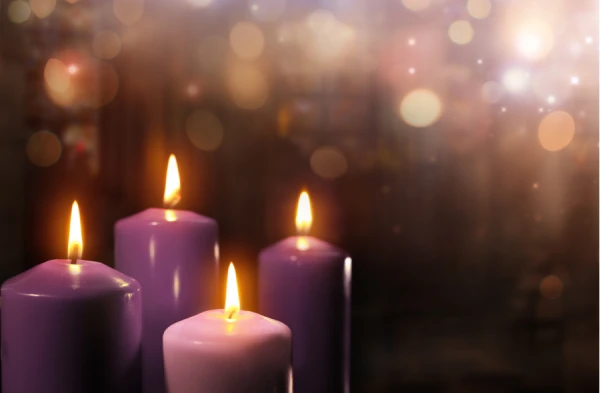
There are four candles on the Advent wreath. Three are purple, and they are first lit on the first, second, and fourth Sundays of Advent. The pink candle is lit on the third Sunday of Advent, which we call Gaudete Sunday. On that Sunday, in addition to the pink candle, the priest wears a pink vestment, which he might refer to as rose. But rose, from this writer’s perspective, is a shade of pink.

Gaudete is a word that means “Rejoice!” and we rejoice on Gaudete Sunday, because we are halfway through Advent. Some people have the custom of throwing “Gaudete” parties, and this is also a traditional day on which Christmas carolers begin caroling door-to-door.

The three purple candles are sometimes said to represent prayer, fasting, and almsgiving, the three spiritual disciplines that are key to a fruitful Advent.


I like the Advent calendars that have chocolate in them. Do you know where they come from?

No. But I like them too. The chocolate is usually pretty waxy, but still. I think the idea is to build up anticipation by having only one little treat each day. But sometimes I eat them all in the first week. Oops.


Is it wrong to sing Christmas songs during Advent?

Wrong? No, not immoral or anything. Liturgically inappropriate? Totally. Plus, there are a lot of great Advent hymns and songs: “O Come O Come Emmanuel,” “Come Thou Long Expected Jesus,” “O Come Divine Messiah,” “Come Thou Fount,” “Hark! A Thrilling Voice is Sounding”

Wouldn’t you rather sing those than Rudolph? Or the theologically insufferable “Mary, Did you know?”


When should we put up our tree?

Look, when to put up the tree is a decision that families should decide on their own, through time-honored holiday traditions like, say, arguing about when to put up the tree. I’m not getting in the middle of that.

Some people put up their tree and decorate it on the first Sunday of Advent, to make a big transformation in their home and get them into “preparing for Christmas mode.” That seems cool.

Some people put up the tree on the first Sunday of Advent, put on lights the next Sunday, ornaments the next, and decorate it more and more as they get closer to Christmas. That seems cool.

Some people put up the tree on Gaudete Sunday, as a kind of rejoicing, and decorate it in the weeks between Gaudate and Christmas. That seems cool

Basically, as you can tell, I’m not going to take a side on that question.


What does the word Advent mean?

Oh right. I forgot to mention that, I’m glad you asked. Advent comes from the Latin ad+venire, which means, essentially “To come to,” or “to come toward.” Ad+venire is the root of the Latin “Adventus” which means “arrival.”

So Advent is the season of arrival: The arrival of Christ in our hearts, in the world, and into God’s extraordinary plan for our salvation.


[…]

No Picture
News Briefs

Missing Zanchetta not in ‘rebellion’ over court proceedings, spokesman claims

November 22, 2019 CNA Daily News 0

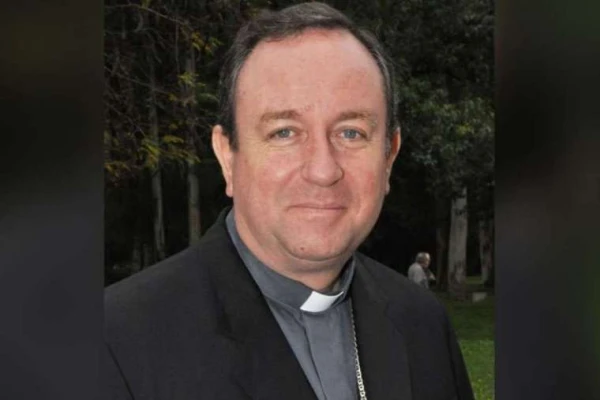
Vatican City, Nov 22, 2019 / 11:00 am (CNA).- Bishop Gustavo Zanchetta has denied that he is avoiding a return to Argentina, where he is being prosecuted for “aggravated continuous sexual assault” and fraud. The bishop’s whereabouts remain unknown.

In a statement to members of the press released on Thursday, a spokesman for Zanchetta said the bishop was not in “rebellion” over a Nov. 20 request by prosecutors for his arrest, after the bishop allegedly failed to cooperate in his own ongoing trial.

On Wednesday, a prosecutor of sexual crimes in the Argentine city of Orán, María Soledad Filtrín Cuezzo, requested international assistance in Zanchetta’s arrest, saying he had not responded to repeated telephone calls or emails addressed to the contact information provided by his lawyer.

On Thursday, Associated Press quoted the statement released on Zanchetta’s behalf by Javier Belda, saying that the bishop had not received any order from a judge to surrender himself or return to Orán, and that he remained committed to cooperating with the court proceedings. 

The spokesman said that the bishop had only received an email from prosecutors which did not ask for a response.

The letter also said that continued leaks and breifings to the press by local prosecutors had damaged Zanchetta’s presumption of innocence.

The statement to the media did not address Zanchetta’s whereabouts. The bishop is believed to by living at the Domus Santa Marta in Vatican City after he was allowed by the court to leave Argentine having presented a document showing that he is employed within Vatican City.

Zanchetta is alleged to have sent sexually explicit selfies from his cell phone, harassed seminarians, and mismanaged the finances of the Diocese of Orán, which he led from 2014 to 2017. 

After being allowed to resign as Bishop of Orán for “health reasons” in 2017, Pope Francis named Zanchetta to the specially created position of assessor at the Administration for the Patrimony of the Apostolic See (APSA), the body which acts as the Holy See’s central reserve bank and sovereign wealth fund.

Argentine media has reported that the bishop was first accused of sexually inappropriate behavior as early as 2015.

According to a report from El Tribuno, one of the Zanchetta’s secretaries alerted authorities after accidentally finding sexually explicit images sent and received on Zanchetta’s cell phone in 2015. The complaint says that some of the images depict “young people” having sex, in addition to lewd images of Zanchetta himself.

Pope Francis summoned Zanchetta to Rome for five days in October 2015. The bishop claimed his phone and computer had been hacked, and that the accusations were motivated by ill feeling towards the pope. Francis reportedly accepted the bishop’s excuse that his cell phone had been hacked, and took no further action.

Fr. Juan José Manzano, the former vicar general of the Diocese of Orán has claimed publicly that he first reported Zanchetta in 2015, after the pornographic images were found on his phone. Manzano says he also reported him again in 2017.

In January, 2019, the Holy See confirmed Zanchetta was the subject of a canonical investigation and had been suspended from his role at APSA. It is unclear what, if any, active role he currently has in the curia following his presentation of a letter of employment to the Argentine court.

The Holy See authorities have not confirmed if Zanchetta is currently in Vatican City, or if they would respond favorably to a request from the Argentine court to extradite him should an arrest warrant be issued.

[…]