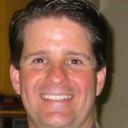
Bishop Alexander Sample, 50, is celebrating the fifth anniversary of his ordination and installation as bishop of Marquette, on Michigan’s upper peninsula. At the time of his episcopal ordination, he was the youngest Catholic bishop in the US, and the first to be born in the 1960s.
Sample was born in Montana and grew up in Las Vegas, Nevada, and attended Catholic schools there. Although he had thought about a vocation to the priesthood while growing up, he initially decided to pursue a career in engineering.
His family moved to Michigan, where he attended college. “I immediately fell in love with the upper peninsula of Michigan,” he recalled. “I loved the beautiful country and the people.”
After earning his BS and MS degrees in engineering, Sample opted to go to seminary. “I was more prayerful than many of my peers,” he remarked. “That opened me up to the action of the Holy Spirit.”
He was ordained a priest for the Diocese of Marquette in 1990, and filled a variety of diocesan positions, including serving simultaneously as pastor of three small parishes, before being ordained bishop of the diocese.
Marquette is a rural diocese; surrounded by three of the Great Lakes, much of it is wooded, and it is known for its cold winters. It has 50,000 Catholics, 94 parishes and missions, and 53 priests, many of whom must serve multiple parishes. Local industries include mining, lumber, and tourism, but much of the area is economically depressed, especially in the current recession.
Although a young bishop, Bishop Sample has been outspoken in his defense of Church teaching. In 2009, for example, he asked Bishop Thomas Gumbleton, retired auxiliary bishop of Detroit, not to speak in the Marquette diocese because of his dissenting views on such issues as homosexuality and the ordination of women. He also condemned the University of Notre Dame’s decision to honor President Barack Obama, calling the move “unconscionable” and “completely out of step with the Catholic Church’s teaching.”
Bishop Sample recently spoke to CWR.
You’ve said that when you made the decision to enter the seminary and pursue ordination to the priesthood, you never doubted your vocation, but others close to you did.
Bishop Sample: I never doubted my call to the priesthood. From the time I decided to enter the seminary, I felt a great peace. There were those who opposed my decision, including my father and my college professors. And, since I was ordained a priest, I have loved and enjoyed my life ever since.
My father knew I had pondered the idea of a vocation, but wanted me to become an engineer. He was proud of me, as were my college professors, and he thought I’d put the idea of a vocation out of my head.
Also, I was his only son. My grandfather was Alexander I, my father Alexander II, and I was Alexander III. He wanted me to carry on the family legacy, and hoped there would be an Alexander IV.
When I announced my decision to him, he was unpleasantly surprised. He was cool to the idea. I had been living and studying at home, so we went through some rough months.
But he had a spiritual experience that led him to change his mind. He loved boats, and had one on Lake Superior. He was out boating, and enjoyed a beautiful sunrise. As he watched it, he realized that God had given him many good things in life. He had a good family, enjoyed financial success, and survived his first battle with cancer.
He realized that God had blessed him in many ways. He also realized that God was asking him, in return, to give him his only son as a priest. He returned from the trip and immediately called me down to the dock to talk to him. He shared his experience and said, “If this is what you believe God is calling you to do in your life, then I’m behind you 100 percent.”
From that moment on, he became my biggest supporter. He’d write me every week in the seminary to encourage me. His cancer returned, unfortunately. He made it to my ordination to the diaconate in 1989. In fact, he skipped a chemotherapy treatment to be there. I think he knew he wouldn’t make my ordination to the priesthood, however. He died a couple of months later.
Although he couldn’t be with us physically for my ordination to the priesthood in 1990, since he was with God, I like to say he had the best seat in the house.
What sort of growth has the Diocese of Marquette experienced in recent years?
Bishop Sample: Sadly, our Catholic population has been declining. The number of those regularly going to Mass has declined, and so has the income we’ve received in our parishes. We struggle to keep some of our small parish communities going.
There are two reasons why this has happened. The first is demographics in our region; there is a decline in the number of young people in the Upper Peninsula, especially due to the poor economy in Michigan. Young people can’t find work, so they leave the area in search of jobs to support their families.
Additionally, here in Marquette we’ve experienced what they’ve experienced in other parts of the country: some of our Catholic people are drifting away from the faith. They are not well formed in the faith and have been swayed by a secular culture. They don’t see religious values as important.
Is the use of contraception a factor?
Bishop Sample: Absolutely. Not everyone wants to talk about it, but that is a clear factor in the decline of the Catholic community. When I speak to my pastors, I hear them ask, “Where are the children?” We’re struggling to keep our Catholic school population up. This is true in our public schools as well.
My pastors want to have flourishing schools, but the children just aren’t there to fill them. Couples are using artificial contraceptives to limit the size of their families, and sterilization is also becoming a common practice. Families think they have the number of children they want, and then close off any further openness to life that God might want to bring into their family.
You’ve said that, to your pleasant surprise, scandalous behavior by a few members of the clergy, rather than being the end of the priesthood, has led to a time of transformation and renewal. Can you explain?
Bishop Sample: I’ve been involved in priest personnel work for many years. For nearly a decade, I was Marquette’s chancellor and director of ministry personnel services. I was the point-man when it came to dealing with issues of clerical sexual abuse. In 2002, when the priestly scandals were erupting, we were already struggling with vocations. I thought—this is going to be the death blow for vocations. What young man in this climate is going to give his life to the priesthood?
I was completely surprised. Many young men—wholesome, faith-filled, zealous men—stepped forward to become a part of the solution, to rebuild the Church. They wanted to be a part of the renewal of the priesthood. That’s remarkable. It’s a work of the Holy Spirit.
I think we’re on the verge of a new Pentecost, which has to start with the priesthood. In the parish, it is the pastor that sets the tone. I tell my priests—as goes the head, so goes the body. The priest ministers to the Church in persona Christi capitis, in the person of Christ, the head.
Jesus is the head of his body, the Church. The priest ministers in the person of Christ, the head. And if the head is holy, strong, zealous, and fervent, strong in faith, hope, and love, then that will help lead and guide the rest of the body, the Church.
I’m excited. I recently ordained two fine young men to the priesthood. They’re excited. They’re ready to go. They want to be priests and serve Christ and his people. All the men we have in the seminary are an inspiration to me for the future of the Church.
Who are some priests you especially admire?
Bishop Sample: I consider myself a John Paul II priest and bishop. Blessed John Paul II was a great influence on and inspiration to me.
As I was discerning my vocation, I thought about the direction in which the Church was heading. I lived through the late 60s and 70s when there was so much confusion, upheaval, and experimentation, both in our culture and in the Church. I needed to know where the Church was going before I could climb onboard and give my life as a priest.
Pope John Paul II burst on the scene. He was a dynamic and personable leader for the Church. I confess—I’m half Polish, and I took great pride that he was from Poland. He had great zeal and enthusiasm, and spoke boldly on matters of faith and morals in the face of a culture that rejected the very moral values that the Church had always upheld. I was pleased to attend his beatification in Rome earlier this year.
I also admire Pope Benedict. While serving as a cardinal he was unfairly portrayed as harsh. Anyone who knows Pope Benedict knows him to be a humble, spiritual, and kind man.
I am pleased with what Pope Benedict is doing in regards to liturgy. I agree with the Holy Father’s efforts to bring about a “reform of the reform.”
I am also inspired by other bishop leaders, such as Archbishop Timothy Dolan of New York and Archbishop Charles Chaput [now of Philadelphia]. Archbishop Dolan has a great love for the Church and the priesthood; Archbishop Chaput has been courageous in asserting that the Church has a right to have a voice in the public square. Cardinal Raymond Burke is also an inspiration. Like Pope Benedict, he has been unfairly characterized in the media as harsh, but what he does comes from a deep faith. He loves the Lord and loves the people. He wants to help us all on the road to salvation.
You’ve described yourself as a member of “the first lost generation of poor catechesis,” which “raised up another generation that is equally uncatechized.” What’s wrong with catechesis and what have you done to help solve the problem?
Bishop Sample: My generation was the first in the wake of Vatican II. While I certainly don’t blame the Council, much upheaval occurred in the Church in its aftermath. Culturally, society was experiencing the sexual revolution, the women’s liberation movement, and the anti-war movement, among others. There was an anti-authoritarian spirit.
In this time of great confusion, catechesis suffered. We booted the Baltimore Catechism out the door, but there wasn’t anything to replace it. I was taught the faith in Catholic schools using materials that were weak and insubstantial. I wasn’t being taught my faith. The liturgy suffered from experimentation as well.
When I speak about this publicly, invariably people of my generation come up to me to agree with what I’m saying. This includes many bishops.
My generation raised up the next generation. Since we weren’t taught the faith, we raised children who weren’t either.
We need a renewal in catechesis. I feel passionately about this. In my Diocese of Marquette, I directed the development of a diocesan curriculum for faith formation for grades K-8. It is a solid, substantive, systematic, and sequential curriculum, which builds from one year to the next. It is topical, based on the pillars of the catechism. Every parish is expected to follow this curriculum.
Now I’m turning my attention toward adult faith formation. If we can get catechesis and the liturgy right, we’ll be well on our way to the renewal and growth of the Church for which we hope.
You recently released a pastoral letter on the diaconate. What concerns led you to write such a letter?
Bishop Sample: I didn’t have a concern about the permanent diaconate, but a great interest in seeing the program prosper and grow in a way would help build up the Body of Christ. There needed to be a clear, common understanding of what the ministry of the permanent deacon is.
I formed a study group, which included many deacons, and the fruit of the study was summarized in the pastoral letter. I’m disappointed that the media chose to focus on one small part of the letter, the question of the deacon preaching at Mass [he should preach rarely, according to the letter].
The basic point of the letter is that the deacon, through his sacred ordination, is configured to Christ sacramentally as Christ the servant. The priest or bishop through ordination is configured to Christ the priest. The deacon isn’t ordained unto priesthood, but unto service. He is configured to Christ as the servant of all.
What concerns do you have regarding the Church and the public square?
Bishop Sample: I have two grave moral concerns, in the areas of the protection of innocent human life and the defense of traditional marriage. As a society, we must take steps to protect the unborn, and also the elderly and handicapped. And, since marriage and family are the basic unit of society, the health of society rests on the health of marriage and family life. Anything which threatens either of these is seriously destructive.
What is a basic program of spirituality you recommend to the faithful?
Bishop Sample: That is a good and important question. I emphasize the importance of a strong sacramental life, especially participation in the Holy Sacrifice of the Mass. I recommend frequent reception of the sacrament of penance; the fall-off in its use worries me greatly. We priests and bishops need to preach often about the importance of confession and be available to hear confessions.
It’s important that we learn to pray on a deep level, not just vocal but mental prayer and contemplation. We’re so busy in our lives and the world is so noisy; we need to learn to be quiet and listen. We need to develop a personal, deep relationship with the Lord and pour our hearts out to him in prayer.
And, we need to stay close to the Lord as part of the Body of Christ, the Church. This means being part of the local Church under the diocesan bishop, being docile to the word of God and humbly accepting the teachings of the Church.
If you value the news and views Catholic World Report provides, please consider donating to support our efforts. Your contribution will help us continue to make CWR available to all readers worldwide for free, without a subscription. Thank you for your generosity!
Click here for more information on donating to CWR. Click here to sign up for our newsletter.