No Picture
News Briefs

Church must convert from cultural, ecological sins, Amazon synod concludes

October 26, 2019 CNA Daily News 3

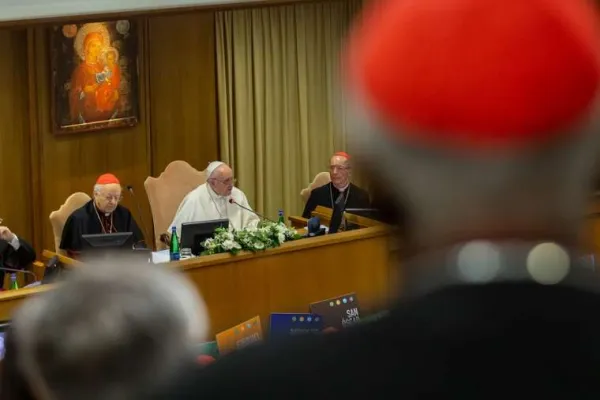
Vatican City, Oct 26, 2019 / 03:45 pm (CNA).- The Amazon synod final document, published Saturday, laid out the need to define “ecological sins” while calling the Church to walk new paths of “integral conversion.”

“We propose to define ecological sins of commission or omission against God, one’s neighbor, the community and the environment,” paragraph 82 of the final document states. “They are sins against future generations and are manifest in acts and habits of pollution and destruction of the harmony of the environment.”

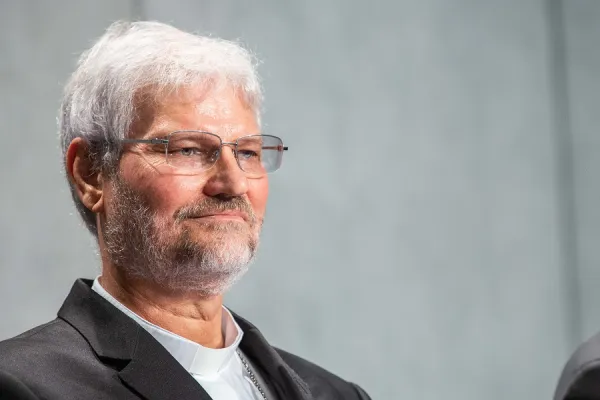
“No believer, no Catholic can live their life of faith without listening to the voice of the earth,” Bishop David Martínez de Aguirre Guinea, apostolic vicar of Puerto Maldonado, Peru explained at a press conference to present the final document Oct. 26.

“If we are going to face the problem, then we have to change,” Cardinal Michael Czerny, special secretary for the synod, added.

Czerny, who also serves as under-secretary of the Migrants and Refugees Section of the Dicastery for Promoting Integral Human Development, warned that the “good news” will not necessarily reach people in the Amazon “if we continue doing what we have been doing.”

The final document for the Synod of Bishops on the Pan-Amazon region calls for a new four-fold expression of “integral conversion” for the Church in the Amazon: pastoral, cultural, synodal, and ecological. These are framed in terms of “new paths of conversion” in the chapter titles for each of the subjects.

“New paths” are a way of saying “change,” Czerny said. “Without conversions, we are repeating what we have done before …but there is no real change.”

“We have brought our tradition into play so that we can find a way forward,” he said. For the pope, the most important necessary change is “pastoral change.”

The 33-page document, was approved article by article by a two-thirds majority vote on Oct. 26. It is the result of a three-week meeting in Rome during which the synod’s 181 voting members, together with representatives from indigenous communities, religious orders, lay groups and charities, discussed a range of issues concerning the region, spread across nine countries.

In ordinary sessions of the Synod of Bishops, delegates are elected by the world’s bishops conferences. In the special session for the pan-Amazonian region, all attendees were by special invitation.

The document was drafted by a committee of experts and special secretaries, assisted by a drafting committee elected from among the synod fathers. The draft text was presented to the assembly on Friday night, and various amendments were proposed and debated during the approval process.

The final synodal document has no teaching or binding authority of its own.

Pope Francis said in his closing remarks in the synod hall on Saturday that he will write a post-synodal exhortation, to hopefully be published before the end of the year.
 
Ecological Conversion

In addition to the synod document’s proposal to change universal Church discipline on clerical celibacy and create new roles for women, it also contains strong exhortations on environmental issues and the rights of indigenous peoples.

On the topic of integral ecology and the environment, the document references the threat of exploitation of the Amazon and its peoples.

It also criticizes as “scandalous” the criminalization of Amazonian ethnic communities whose rights are threatened, it says, by public policies favoring the exploitation of natural resources.

These projects “exert pressure on ancestral indigenous territories” and are accompanied by “widespread impunity throughout regarding human rights violations.”

The document notes the Church’s teaching on the inviolability of the human person, which is created in the image and likeness of God.

The synod fathers propose giving support to “fair” sustainable development initiatives, though it does not name specific initiatives.

“The Amazon is in the hands of us all, but it depends mainly on immediately abandoning the current model that is destroying the forest, not bringing well-being and endangering this immense natural treasure and its guardians,” the report states.

It goes on to say it is “incumbent” on the Church to help protect the Amazon by being an “ally” of the local communities, “who know how to take care of the Amazon, how to love and protect it.”

The indigenous peoples are “asking the church to become their ally and the answer of the church is yes,” Czerny said.

“With the Amazon burning, many more people are realizing that things have to change. We cannot keep repeating old responses to urgent problems,” Czerny said. “The ecological crisis is so deep that if we don’t change we won’t make it.”

Czerny said that environmental scientists and other experts who audited the synod helped the bishops to understand “the planet suffering” because “they drove scientific facts home in a way that we can feel them.”

The Canadian cardinal said that people want “a plastic solution” that is not going to affect their lives and not require them to change, but he stressed that it does not exist and conversion is required.

The synod document also condemns the theft of the “traditional wisdom” of the Amazonian peoples as “biopiracy” and a “form of violence.”

“The Church chooses to defend life, the land and the native Amazon cultures,” including in the Amazon peoples’ “registration, processing and dissemination of data and information about their territories and their legal status,” it states.

The report says the Church must guard itself against “the power of neo-colonialism” and  “unlearn, learn and relearn” in order to overcome any tendency toward “colonizing models.”

The synod reaffirms a “commitment to defend life seamlessly from conception to natural death and the dignity of each and every person.”

Pastoral service to the indigenous, it says, “obliges us to proclaim Jesus Christ and the Good News of the Kingdom of God.”

Pope Francis announced in his closing speech to the synod that he would create a new section in the Dicastery for the Promotion of Integral Human Development dedicated to the Church in the Amazon.

The synod final document also called for a “socio-environmental and pastoral office” to work in alliance with the Latin American church organizations REPAM, CELAM, CLAR, and other non-ecclesial actors representing indigenous peoples.

Cultural Conversion

The synod document states that “inculturation is the incarnation of the Gospel in indigenous cultures… and at the same time the introduction of these cultures into the life of the Church.”

The Amazon culture and spirituality already have a rich “indigenous theology, Amazonian face of theology and popular piety,” it says, adding that they “reject a colonial style of evangelization.”

“The evangelization that we propose today for the Amazon is the inculturated proclamation that generates processes of interculturality, processes that promote the life of the Church with an Amazon identity and face,” the report states.

Czerny said that it is very important for the Church to learn how to be “interculturally respectful.”

“Not to assume that the way I am or the way we are is definitive, is the norm, is the way it has to be … differences have to be embraced,” he said.

“The church is not an inflexible structure in which your cultures and traditions will find no place … it is the opposite,” Bishop Guinea said.

“A Church with an Amazonian face,” the document states, “needs its communities to be infused with a synodal spirit, supported by organizational structures of this dynamic, as authentic organisms of ‘communion.’”

“The Church’s research and pastoral centres, in alliance with the indigenous peoples, should study, compile and systematize the traditions of the Amazon’s ethnic groups in order to favor an educational effort that starts from their identity and culture…”

Synodal Conversion

The synod document also calls for “new paths for synodal conversion.”

Cardinal Czerny said that this process involved “an unprecedented process of listening” before the Amazon synod.

“You know that synodality is working when you find yourself voting for something that you knew before the synod that you disagreed with,” Czerny said.

When asked what was the working definition of “synodality” understood among the synod fathers, Czerny replied, “Everyone had a sense of what it meant because we were doing it. Could we explain that in words … does it matter?”

A synod is a consultative assembly, convened by the pope or a bishop, to advise on a particular topic of interest to the local, regional, or universal Church.

The Synod of Bishops for the Pan-Amazonian region will conclude Oct. 27 with a closing Mass in St. Peter’s Basilica.

[…]

No Picture
News Briefs

Pope asks for focus on ‘diagnosis’ of Amazon synod report; warns against “elite Christians” focusing on the “little things”

October 26, 2019 CNA Daily News 6

Vatican City, Oct 26, 2019 / 01:10 pm (CNA).- In his closing remarks for the Amazon synod Saturday, Pope Francis urged the media not to give undue attention to aspects of the assembly’s final report addressing Church discipline  while ignoring the assembly’s “diagnoses” of cultural, social, pastoral and ecological issues in the Pan-Amazonian region.

It’s “in small disciplinary things, which have their significance but that would not do the good that this synod has to do,” he said Oct. 26, “that society takes care of the diagnosis we have made in the four dimensions.”

“There is always a group of elite Christians who like to take up this kind of diagnosis as if they were universal,” he continued, “however small, or in this kind of more inter-ecclesiastical disciplinary resolutions.”

There is a danger, the pope said Oct. 26, of only looking to see “what they decided on this disciplinary issue, what they decided on another, making of the world who won this game, lost this…”

“No, we all win with the diagnoses we made and as far as we arrive in the pastoral and inter-ecclesiastical issues, but don’t get locked in on that.”

“Thinking today about these Catholic and Christian elites sometimes, but especially Catholics who want to go to the little things and forget the big things, I remembered a phrase from Péguy and went to look for it, I try to translate it well, I think it can help when describing these groups that want the little thing and forget about the thing: ‘Because they don’t have the courage to be with the world, they believe they are with God. Because they don’t have the courage to compromise on man’s options, on man’s life options, they believe they are fighting for God. Because they don’t love anyone, they believe they love God,’” said the Holy Father.

The Vatican synod hall responded to the pope’s remark with long applause.

Pope Francis spoke inside the synod hall at the end of the final session of the Synod of Bishops on the Pan-Amazonian Region, which will officially end with a closing Mass Oct. 27.

During the session, the Amazon synod’s final report was presented, and voted on paragraph by paragraph by the 185 synod members.

In his remarks, Pope Francis said, based on a request in the final report, he will re-open the Church’s study of the possibility of women deacons.

He said he will re-open his 2016 commission on the study of the possibility of having a female diaconate, possibly adding new members and having it operate within the Congregation for the Doctrine of the Faith.

He noted that the commission ended its work without a consensus on the topic, but he had heard the request by some on this topic and would “pick up the gauntlet.”

In May, the pope said the commission he opened in August 2016 to study the possibility of a female diaconate, with or without the sacrament of ordination, had been unable to reach a consensus, though further study would continue to take place.

In his speech, Francis noted that there were three issues which are ideas for the “next synod” and received a majority of votes, one of which is synodality.

“I do not know if that will be chosen or not, I have not yet decided, I am reflecting and thinking,” he said. “But I can certainly say that we have walked a lot and we have to walk more on this path of synodality. Thank you very must for this company.”

He said he would like to write a post-synodal exhortation on the Amazon synod “before the end of the year so that not much time passes,” adding that “it all depends on the time you have to think.”

Francis praised tradition as not a “museum of old things,” but “safeguarding the future.”

In his speech, he also praised another proposal he had received, that young priests who are studying to enter the Holy See’s diplomatic corps could first spend one year serving alongside a bishop in a mission territory.

The creation of an “Amazonian rite” of liturgy, the pope said, would fall under the competency of the Congregation for Divine Worship.

He proposed the creation of a regional bishops’ group for the Amazon and said he would ask Cardinal Peter Turkson, the head of the Dicastery for the Promotion of Integral Human Development, to open a new section on the Amazon within his Vatican department.

He said the main dimension of the synod, which includes everyone, is the proclamation of the Gospel. This is the “pastoral dimension,” he said. “But that is understood, that is assimilated, that is understood by those cultures.”

“And there was talk of how lay people, priests, permanent deacons, religious men and women have to point to that point, and they talked about what they do and to strengthen that.”


[…]

No Picture
News Briefs

‘A path is open for the ordination of women’ synod bishop claims 

October 25, 2019 CNA Daily News 1

Vatican City, Oct 25, 2019 / 10:20 am (CNA).- A Brazilian bishop has called for the ordination of women to the diaconate for service in the Amazon region. The bishop said that 2009 revisions to canon law could allow for the ordination of women deacons, but a leading canon lawyer in the Vatican has disputed that idea.

Bishop Evaristo Pascoal Spengler, OFM leads the territorial prelature of Marajó in Brazil and is participating as a member of the Synod on the Pan-Amazonian region in Rome.

During a press conference on Oct. 25, Spengler said that “there is a path that is open for the ordination of women,” citing a 2009 document from Pope Benedict XVI.
 
While referencing the role of women leaders, saints, and teachers in the history of the Church in making, Spengler did not account for the theological and sacramental impediments to such a development.
 
“We know that in the history of the Church there are women deacons. A role that should be expanded on.”

Spengler said a canonical possibility for the ordination of women was created by Pope Benedict in 2009.

“In 2009 the pope made a change in canon law according to which the bishop, the priest and the deacon receive their mission and the faculty to act in the name of Christ. But this was changed by Pope Benedict, who changed this paragraph [which] said that, from that moment onward, that deacons were no longer linked to Christ but be able to serve the people of God in the diaconate in the liturgy of the word and in charity,” Spengler said.

“So, we realize that there is a path that is open for the ordination of women.”

The bishop was referencing Benedict’s 2009 motu proprio Omnium in mentem, which revised canons 1008 and 1009 of the Code of Canon Law.
 
Benedict’s document noted that some language in canon law did not fully reflect the teaching of Vatican Council II on the nature of the diaconate, and that Pope John Paul II had already updated the Catechism of the Catholic Church to address the same issue. Benedict’s document revised the law to emphasize the distinction between diaconal and priestly ministry.

“Those who are constituted in the order of the episcopate or the presbyterate receive the mission and capacity to act in the person of Christ the Head, whereas deacons are empowered to serve the People of God in the ministries of the liturgy, the word and charity,” the revised canon 1009 says.
 
While the new wording reflects that deacons do not act in the person of Christ through the celebration of Mass, Benedict left intact canonical wording which reflects the unity of the sacrament of orders at all three grades of deacon, priest and bishop.
 
Canon 1008 states that “By divine institution, some of the Christian faithful are marked with an indelible character and constituted as sacred ministers by the sacrament of holy orders. They are thus consecrated and deputed so that, each according to his own grade, they may serve the People of God by a new and specific title.”
 
Benedict’s reforms left intact the essential provision of canon 1024, which states that “A baptized male alone receives sacred ordination validly.”

Bishop Juan Ignacio Arrieta Ochoa, secretary of the Pontifical Council for Legislative Texts, told CNA that Benedict made revisions to canon law to “better distinguish the ministry of priests and deacons.”

“The canon was changed to reflect the Catechism,” he added.

“Nothing is said or mentioned regarding women,” Arietta said.

Arrieta mentioned that Pope Francis established in 2016 a commission to study the female diaconate which has thus far reached no definitive conclusion Earlier this year, the pope said that while there is no consensus on questions related to the issue, the matter will continue to be studied.

Spengler also said that “we know that in the history of the Church there are women deacons. A role that should be expanded on – deaconess – and how to include this in the Church.”

In May, the pope said that the deaconesses described by St. Paul in the New Testament, and referenced by Spengler on Friday, can not be understood as equivalent to the modern sacramental notion of the diaconate.

A 2002 document published by the International Theological Commission concluded that female deacons in the early Church did not have the same functions as male deacons, and had “no liturgical function,” nor a sacramental one. It also said that even in the fourth century “the way of life of deaconesses was very similar to that of nuns.”

“The formulas of female deacons’ ‘ordination’ found until now, according to the commission, are not the same for the ordination of a male deacon and are more similar to what today would be the abbatial blessing of an abbess,” Francis said May 7 during an in-flight press conference returning from North Macedonia and Bulgaria.

“For the female diaconate, there is a way to imagine it with a different view from the male diaconate,” said the pope while insisting that the issue needed further study.

Bishop Spengler did not mention either Pope Francis or the commission for the study of women deacons on Friday.

During the press conference, several journalists groaned when Spengler was asked about the Church’s sacramental theology and its restriction of ordination to men alone.

Earlier in the session, applause broke out among some journalists after Paulo Ruffini, Prefect for the Vatican Dicastery of Communications, intervened to correct a question from veteran Vatican correspondent Sandro Magister.
 
Magister had made reference to an earlier event held in the Vatican gardens, during which a group of participants knelt in a circle around several carved items arranged around a controversial statue, variously identified as an earth mother figure or fertility symbol.

Ruffini insisted that the event was not an “official” synod event, and that questions about such events did not have to be answered. He also said that “there was no ritual” and “no prostration,” to applause from several journalists present at the press conference.


[…]

No Picture
News Briefs

‘Our faith is stronger than their bombs’: A Sri Lankan priest in Rome

October 24, 2019 CNA Daily News 0

Rome, Italy, Oct 24, 2019 / 11:00 am (CNA).- As the pastor of a parish in which many families lost a mother, father, or child in a bombing on Easter Sunday, Fr. Jude Raj Fernando has seen how healing from loss can be a long, difficult journey of faith.

Fr. Fernando is the rector of St. Anthony’s shrine in Colombo, Sri Lanka — one of the churches bombed during the Easter attacks by a group affiliated with Islamic State that killed 258 people in April. He spoke of his painful pastoral experience Oct. 24 at an Aid to the Church in Need event in Rome on the ongoing persecution of Christians.

“I had never heard a sound like that. My first words after the blast were ‘Father forgive them, they know not what they do,’” Fernando said, beginning to weep as he remembered the parishioners at Mass the day of the bombing. 

“There was a young couple married eight months before together at Easter Sunday Mass … and a man who had given an older lady his seat … a pregnant mother who lost her husband.” He noted that this woman gave birth to a healthy baby last week and she is now a single mother. 

Along with offering trauma counseling at the parish, Fernando said that the local Church remains committed to aiding the religious education of the children who lost parents and occupational training for households that lost their breadwinner. 

People at the parish are still asking, “Why did God allow this to happen to us?” he said. A young child asked him ‘why did God take my mother from me at church?’

“We priests walked this difficult journey with our victims,” Fernando said. “It is a long journey of faith.” 

“Please continue to pray for us … we can overcome evil with the love in our hearts,” he said. “Our faith is stronger than their bomb.”

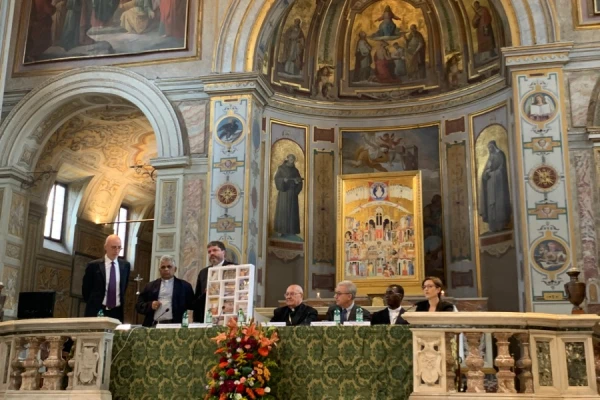
Fr. Fernando spoke in the Basilica of St. Bartholomew on Tiber Island, a basilica devoted to the Church’s modern martyrs and home to 120 relics of persecuted Christian communities around the world. 

The Sri Lankan priest presented the basilica with items from St. Anthony’s church in Colombo that survived the bombing during the Aid to the Church in Need event “Persecuted more than ever.”

“This place, the Basilica of St. Bartholomew on Tiber Island, is a testimony,” said Cardinal Leonardo Sandri, Prefect of the Congregation of Oriental Churches, “to this dimension of the Church’s today … surrounded by innumerable signs, coming from the various continents, men and women who gave their lives for the Lord Jesus.” 

“They make us sure that the passion of Christ continues in the children of the Church, as He tells us in the Gospel ‘If they persecuted me, they will persecute you too,’ but they also ask us to purify our heart and our eyes, learning to live all these experiences in faith,” the cardinal said.

The Aid to the Church in Need report on Christian persecution 2017-2019 defined Iraq, Syria, Iran, Egypt, Saudi Arabia, Nigeria, Cameroon, Burkina Faso, Central African Republic, Sudan, Eritrea, North Korea, China, Indonesia, Sri Lanka, Philippines, Pakistan, India and Myanmar as countries with the most severe persecution of Christians.

Cardinal Sandri said that an awareness of this ongoing persecution should also always be framed by the victory of Christ, who tells us “take courage, I have conquered the world.”

The cardinal said that he learned during his diplomatic service to the Holy See to look for and recognize the signs of victory that the Lord grants over time. He pointed to the example of a Eucharistic procession that took place in Zocalo Square in Mexico City after Cardinal Posadas Ocampo was assassinated.

“It was a historic fact after the prohibition of public acts of faith that had lasted since the time of the anticlerical and anti-religious persecutions that gave the country many glorious martyrs and witnesses to the faith, Christ returned to physically tread the streets of the city in the Blessed Sacrament,” he said.

Sandri stressed that, while circumstances were growing more difficult for Christians in different ways across the globe, the whole Church was rediscovering the early Church’s understanding of bearing witness to the faith.

“In different geographical and social contexts, witnessing will take on a different meaning,” Sandri said.

“In some places it will be giving life, even physically, in blood; in others it will require the courage of parresia; in others, isolation, misunderstanding or derision.” 

“In any case,” the cardinal said, “it will require a willingness to pay a high and true price, as happened in the first centuries.” 

“Being a Christian cost life, but this did not prevent the Gospel from spreading. Modern times have given us back the ancient meaning of the word witness.”

[…]

No Picture
News Briefs

Cardinal Koch: the Gospel must incorporate and purify culture

October 24, 2019 CNA Daily News 2

Vatican City, Oct 24, 2019 / 05:10 am (CNA).- The head of the Vatican’s Christian unity office says inculturation of the Gospel is a necessary part of evangelization, but also requires discernment of what in that culture may need “purification.”

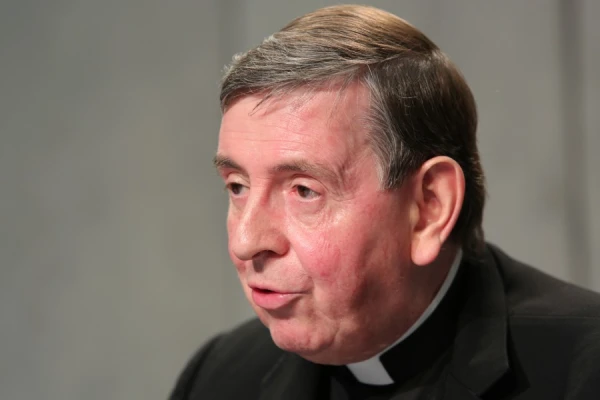
“Evangelization always needs inculturation, so that the Gospel will be understood in different cultures,” Cardinal Kurt Koch told EWTN News Oct. 23.

“But I think we must see two things,” he continued, “first of all, inculturation, and on the other side purification of the culture, because not all things in other cultures are good.”

“We have different challenges and different problems and we must have a clear discernment of spirit of what we can accept and receive from these cultures for the better understanding of the Gospel; and on the other hand we must purify something in this culture.”

The Swiss cardinal previously served as bishop of Basel from 1996 to 2010, when he was appointed president of the Pontifical Council for Promoting Christian Unity, the Vatican’s office dedicated to ecumenism. 

Koch is participating in this month’s Synod of Bishops on the Pan-Amazonian region because of his position as head of a Vatican dicastery. The Amazon synod, a three-week long meeting on the Church’s life and mission in the region, will end Oct. 27.

Koch said he has had the impression during the Amazon synod that “bishops speak above all about inculturation and not much about purification.”

The cardinal added that he has asked the group what are the elements of the native Amazonian cultures which need purified but “I haven’t received a clear answer.” 

The need for inculturation has been one of the prominent topics of the Amazon synod. 

The Catechism of the Catholic Church states that inculturation is a necessary step on the Church’s mission of evangelizing the world.

“Missionary endeavor requires patience. It begins with the proclamation of the Gospel to peoples and groups who do not yet believe in Christ, continues with the establishment of Christian communities that are ‘a sign of God’s presence in the world,’ and leads to the foundation of local churches. It must involve a process of inculturation if the Gospel is to take flesh in each people’s culture,” paragraph 854 states.

In paragraph 1207, the Catechism explains that “it is fitting that liturgical celebration tends to express itself in the culture of the people where the Church finds herself, though without being submissive to it.”

“Enculturation,” or “inculturation” when in reference to Christianity, means having a deference in Church practice, specifically in the liturgy, to the local circumstances of a culture.

The Catechism also says, in paragraph 1149, that “the liturgy of the Church presupposes, integrates and sanctifies elements from creation and human culture, conferring on them the dignity of signs of grace, of the new creation in Jesus Christ.”

Fr. Mark Morozowich, the dean of the School of Theology and Religious Studies at the Catholic University of America, explained to CNA in March the principles that govern such “inculturation.”

“The Church has always enculturated the liturgy,” he said.

“This is something we’ve done through the centuries in every single place from the very beginning.”

Starting with the first ministry of the apostles, he said, “the Church lived Jesus Christ, proclaimed his cross, death, and resurrection. The Church proclaimed Jesus Christ being present body and soul in the elements of the Eucharist.”

He said that there have been, and continue to be, some regional differences in the matter used in the celebration of the Eucharist, but those differences are limited by the Church’s doctrinal teaching.

The Mass is not, Morozowich said, about enacting an exact historical recreation of the last supper, “but at the same time the Church has said there are some core elements of this reality of the presence of this way the [Christian] community has celebrated throughout its lifetime.”

[…]

No Picture
News Briefs

Hospital loan and Papal Foundation controversy land Vatican bank in regulatory spotlight

October 24, 2019 CNA Daily News 0

Vatican City, Oct 24, 2019 / 04:00 am (CNA).- The head of the Vatican’s central bank appeared to admit this week to a transaction that could be a violation of European regulatory commitments, namely a loan of 50 million euros to finance the purchase of a struggling Italian hospital.

Sources say a controversial grant from the U.S.-based Papal Foundation was requested in order to balance the central bank’s books after the hospital was unable to repay the money.

In a statement Tuesday, Bishop Nunzio Galantino, head of the Administration of the Patrimony of the Apostolic See (APSA), acknowledged that the Vatican’s central bank loaned 50 million euros to finance the purchase of the Italian hospital, the Istituto Dermopatico dell’Immacolata (IDI), even though APSA is prohibited from making loans that finance commercial transactions, by policies put in place to exempt it from external oversight.

The loan was made in 2015 to the non-profit Fondazione Luigi Maria Monti, a partnership between the Vatican Secretariat of State and the Congregation of the Sons of the Immaculate Conception, the hospital’s previous owners, under whose management the hospital was driven to bankruptcy following a series of embezzlement scandals that led to multiple prosecutions and debts of more than 800 million euros.

The hospital was purchased by the foundation while it was in state-administered insolvency. When it became clear that the APSA loan could not be repaid by hospital income, Vatican efforts were made to secure a $25 million grant from the U.S.-based Papal Foundation to the IDI, which would be used to cover the hospital’s debt to APSA.

Although the grant was requested to ease a short-term cash shortage at the hospital, multiple sources in Rome and the United States told CNA that the money was actually intended to help replace the funds loaned to finance the acquisition, removing the loan from the APSA balance sheet and avoiding more attention on the deal.

Lay members of the Papal Foundation had reportedly raised issues with the conferral of the grant, largely because details about the use and final destination of the funds were scant. Approval of the grant was ultimately pushed through the foundation’s board, over the objections of lay members, but dispersal of the funds was slowgoing as conflict enveloped the foundation’s board.

In April, a spokesman for the Papal Foundation told First Things magazine that “As The Papal Foundation Board responded to the grant request, a variety of interpretations of the true financial condition of the IDI and its sponsoring entities were presented.” 

“Among the elements of the discussion was the still unclear relationship of the religious congregation that originally sponsored IDI, the recently formed Fondazione Luigi Maria Monti, that was now considered responsible for what have been the properties of the religious congregation, and the IDI itself. Sorting out who was responsible for what part if any of the bankruptcy assessment was also a part of the Papal Foundation’s discussion. All of this discussion was made more difficult by conflicting interpretations.”

“At the December 2017 Board meeting, Cardinal [Donald] Wuerl presented the information made available to the public and that provided by the Holy See. Other interpretations were also offered. The Board voted to make the requested grant,” the spokesman said.

When the grant money stalled, APSA was forced to write off 30 million of the 50 million euro loan, wiping out APSA’s profits for the 2018 financial year.

Galantino was compelled to acknowledge the loan and the write-off following the Oct. 21 publication of a book that alleged that the Vatican was nearly insolvent.

The book, “Universal Judgment,” published by Italian journalist Gianluigi Nuzzi, claims to be based on more than 3,000 pages of leaked Vatican documents. It alleged that in 2018 APSA had failed to make a profit from the Holy See’s property and investment portfolio for the first time in its history.

Galantino, who has been president of APSA since June 2018, said the book did not reflect the real situation.

“In fact,” he said, “the ordinary management of the APSA in 2018 closed with a profit of over 22 million euros.”

He attributed reported losses on “an extraordinary intervention aimed at saving the operation of a Catholic hospital and the jobs of its employees,” in an apparent reference to the IDI loan and purchase.

While Galantino defended the project as an effort to preserve the hospital and save jobs, APSA’s involvement to underwrite a commercial acquisition appears to violate a 2012 commitment to stop acting as a private or commercial financial institution.

That commitment was the result of an on-site inspection by Moneyval, the Council of Europe’s Committee for combating money laundering and terrorist financing.

After the inspection, APSA agreed to stop providing services to individuals or taking part in commercial transactions, with these functions being transferred to the Institute for Religious Works (IOR), often referred to as the Vatican Bank, which maintains accounts for Vatican employees, individuals and religious groups. APSA was to be limited to administering the sovereign assets of the Holy See, meeting payroll and operational costs, and functioning as the national reserve bank of the Vatican.

In exchange for agreeing to step back from commercial activity, APSA was exempted from annual inspections by the Vatican’s Financial Intelligence Authority (AIF), whose efforts are assessed by Moneyval.

Following the changes to APSA’s remit, only the IOR, and not APSA, has been listed as a financial institution under the oversight of the Vatican’s Financial Intelligence Authority (AIF), whose efforts are assessed by Moneyval.

In 2014, Pope Francis issued new norms, transferring oversight and control of APSA’s remaining investment functions to the Prefecture for the Economy, then headed by Cardinal George Pell.

The AIF’s 2015 annual report concluded that since it is no longer an “entity that carries out financial activities on a professional basis,” “APSA stopped being a part of AIF’s jurisdiction at the end of 2015” – but in the same year APSA made the loan to purchase the IDI out of insolvency.

The 2015 AIF report which exempted APSA from further scrutiny said that “If APSA were to carry out financial activities on a professional basis, it would fall again under the jurisdiction of AIF which… must publish and update the list of subjects who must comply with the requirements set forth in [relevant law].”

The acknowledgement by Galantino that APSA was in 2015 engaged in prohibited lending activity casts doubt over reported progress in combating financial corruption in the Vatican, and suggests that it has been operating out of sight of Vatican and European financial watchdogs.

In 2016, Pope Francis partially reversed some of the 2014 reforms, returning control of its investment activity to APSA from the Prefecture for the Economy.

In his book released Monday, Nuzzi also claimed that, despite the 2012 commitment to Moneyval, APSA still has private numbered accounts for individuals on deposit. Such accounts at APSA have been linked to previous money laundering accusations and scandals in the Vatican, and their elimination was crucial to its exemption from AIF oversight.

Galantino denied these claims, saying that no funds were held, managed or invested for anyone or any body except Vatican departments and the Vatican City State.

“APSA has no secret or encrypted accounts” Galantino insisted on Tuesday, “anyone is welcome to prove the contrary.”

Definitive proof is unlikely to emerge, barring a decision by the AIF to reapply Moneyval’s anti-money laundering regulations and inspections to APSA – something which is itself highly unlikely in the current climate.

Three weeks ago, Tomasso Di Ruzza, head of the AIF, was himself suspended following raids carried out by Vatican police. On Oct. 23, the AIF issued a statement announcing his return to duty and insisting that an internal investigation had been conducted following the raid and that no wrongdoing had been discovered.

“Neither the Director nor any other employee of AIF improperly exercised his authority or engaged in any other wrongdoing,” the statement said.

“Accordingly, the Board of Directors reaffirms its full faith and trust in the professional competence and honorability of its Director and, moreover, commends him for the institutional work carried out in the handling of this particular case.”

The statement concluded by saying the AIF hoped any “potential misapprehensions” to the contrary would “soon be clarified.”

[…]