No Picture
News Briefs

Death in the modern age – and how to prepare as a Catholic

November 2, 2017 CNA Daily News 0

Washington D.C., Nov 2, 2017 / 03:03 pm (CNA/EWTN News).- Death. It’s a subject seen as sad, morbid and fearful, something that people would rather not think about, and certainly not discuss.

Yet for Catholics, death is an essential part of the faith.

“For those who die in Christ’s grace it is a participation in the death of the Lord, so that they can also share his Resurrection,” reads the Catechism of the Catholic Church.

The celebration of the sacraments hearken for a kind of death: death to self, death as a consequence of sin, a remembrance of Christ’s death and entrance into eternal life.

As the 20th century priest Fr. Henri Nouwen remarked, “Dying is the most general human event, something we all have to do.”

The question, he asks, is “Do we do it well?”

Hiding from death

Advances in medicine and technology have drastically increased life expectancies in the past century. In 1915, most people would not expect to live past age 55. A child born in the US in 2017 is expected to see their 85th birthday.

As a result, death has become something distant and even foreign, argues Julie Masters, a professor and chair of the Department of Gerontology at the University of Nebraska, Omaha.

“We get lulled into thinking death doesn’t hit us very often, because it waits until people are very old,” she told CNA. “We know that younger people do die, that middle aged people do die, but in this country, the majority of people who die are going to be older people.”

The average American in the 21st century simply doesn’t have the experience with death that previous generations had, she said. And this lack of experience can lend itself to fear and a tendency to ignore the uncomfortable unknown of the future.

“So we’ll put it off until we have to talk about it, and when we do talk about it, then we get in a pickle because we’re not sure what people want,” Masters said.

Hiding from death can have other consequences, as well. Cultural unease and inexperience with death can affect how we approach loved ones as they die.

“If we’re uncomfortable with death, if someone is dying, we may be unwilling to visit them because we don’t know what to say, when in reality we don’t need to say anything,” Masters said. “We may be less available to comfort them.”

Avoidance of death can also impact vulnerable members of society who are not actively dying, Masters warned.

“Our uncomfortableness with dying may be symptomatic of our desire to control dying and death,” she said. When that control or the fear of becoming a “burden” gives way to conversations about physician-assisted suicide, she continued, “we look at the most vulnerable and say ‘are they really worthy of living, think of all the resources they’re taking up?’”

“Each step in that slope, it gets easier to get rid of people who are no longer valuable or are vulnerable. Yet don’t we learn from the vulnerable?” she questioned. “They’re the ones who teach the strong what’s most valuable in life.”

But Masters also sees a desire to move towards a broader discussion of how to die well. She pointed to the spread of Death Cafes and other guided discussion groups that encourage conversations about death, dying and preparation for the end of life.

Churches can offer a similar kinds of programming, she suggested: “People want to talk about it, they just need the place to do that.”

What does it mean to have a ‘happy death’?

While a person may plan for their death, ultimately the circumstances of one’s passing will be out of their control. However, everyone can aspire to a “good” or “happy” death, said Fr. Michael Witczak, an associate professor of liturgical studies at The Catholic University of America.

He told CNA that the essential qualities of a happy death are being in a state of grace and having a good relationship with God.

The idea of a happy death, or at the very least the aspiration of it, gained popular consideration in the Ars Moriendi – a collection of 15th Century Catholic works laying out the “Art of Dying,” he noted.

The texts elaborate on the temptations – such as despair – that face the dying, questions to ask the dying, advice for families and friends, how to imitate Christ’s life, and prayers for the bedside.

Resources such as these, from ages of the Church that had a more daily experience of death, Fr. Witczak suggested, can be a good resource for beginning to live “intentionally” and to think more about death and how to die well.

Masters agreed that intentionality is key in shifting the cultural mindset on death and dying.
“What if people approached death with the same joy that they greet the birth of a new baby?” she asked.

It’s a fitting analogue, she argues. Both processes – birth and death – are the defining markers of human life, and natural processes that all the living will experience. Both processes also open the door to a similar set of unknowns: What comes next? What will it be like afterwards? How will we cope?

She added that the modern tendency to view death with suspicion and trepidation – or to ignore it altogether – reflects something about the culture.

“If we’re so afraid of death and dying, I have to wonder if we’re also afraid of life and living.”

Last wishes

Discussing death is the first step in making practical preparations for it.

Without planning, Masters said, loved ones may not know a person’s preferences for treatment, finances, or funeral preparations, which can lead to sometimes sharp divides between friends and family. “When we get comfortable talking about death,” she noted, “we can let people know what our wishes are, so that hopefully our wishes are followed.”

Thorough planning includes setting advanced directives and establishing a power of attorney who can make medical decisions on one’s behalf if one is unable to do so.

It is also important to be aware of different care options in an individual’s geographic location. These include palliative care, which focuses on improving quality and length of life while decreasing the need for additional hospital visits. Not just limited to end-of-life situations, palliative care is available for a range of long-term illnesses, and seeks to relieve pain rather than cure an underlying condition.

Hospice care is also an option when the end of life approaches. At this point, the goal is no longer to extend the length of life, but to prepare for death, trying to alleviate pain and offer comfort, while also helping mentally, emotionally, and spiritually to prepare for death.

Funeral planning and creating a will are also important steps in the preparation process. Even for the young or those without material possessions, planning for one’s death can be useful for grieving friends and family members, Masters said. She explained that the idea of creating an “ethical will” is a Jewish tradition in which a person writes a letter or spiritual autobiography, leaving behind the values and morals they found important in their life to pass on to the next generation.

The practice, which is growing in popularity, is available to anyone “to put down into words what’s given their life meaning,” and can have special meaning for those who “feel, because they don’t have a lot of wealth or a lot of possessions, that they have nothing to leave their family.”

Masters pointed to a student of hers who wrote an ethical will shortly before passing away in college and the example of her own grandparents instilling the recitation of the Rosary as people who left behind some of their most meaningful gifts to their loved ones.

“It’s a testament to what that person believed in. What a gift that is!”

Paul Malley, president of the non-profit group Aging with Dignity, stressed that planning the more specific details of end-of-life care can help respect a person’s dignity during illness or on the deathbed.

“Those who are at the end of life, whether they may be suffering with a serious illness or disability, tend to have their dignity questioned,” he told CNA.

The sick and dying are often isolated, receiving care from medical professionals, he explained. And while advanced care planning often focuses on decisions regarding feeding tubes, ventilators, and other medical treatment options, that discussion “doesn’t tell your family anything about what dignified care means to you.”

“It’s important not to just talk about caregiving in terms of medical issues,” Malley stressed. “That’s a small fraction of a day – the rest of the day plays out at the bedside.”

Aging with Dignity promotes planning for acts of comfort, spiritual issues and family relationships in order to make the time surrounding death easier and more dignified for all involved.

“These issues were never talked about when it came to end-of-life care or advanced care planning.” Among some of the requests participants make, he elaborated, are small acts of comfort like cool cloths on a forehead, pictures of loved ones in a hospital room, favorite blankets on a bed, or requests for specific family or friends to come visit.

Planning to incorporate what Malley calls “the lost art of caregiving,” was important to his own family when his grandmother died. “One of the most important things for her was that she always wanted to have her feet poking out of the blanket because her feet were hot,” he recalled.

Although nurses and care providers would often bundle her feet up to try to keep her warm, her family was able to untuck her feet afterwards so she could stay comfortable.

“That might be something that sounds very trivial, very small, but for her, for my grandmother, laying in that bed where she couldn’t get up and couldn’t reach down to pull up her own blanket, having her feet stick out at the edge of the blanket was probably the most important thing to her all day long,” Malley said.

The end of the earthly pilgrimage

For Catholics, spiritual preparation for death should always include the sacraments, Fr. Witczak said.

The Sacrament of Reconciliation, important for all the faithful throughout their lives, is a particularly important spiritual medicine for those nearing death.

Additionally, Anointing of the Sick should be sought for those who have begun to be in danger of death due to sickness or old age, and it can be repeated if the sick person recovers and again becomes gravely ill, or if their condition becomes more grave.

“The Church wants people to celebrate the sacrament as often as they need to,” Fr. Witczak said.

The Eucharist can also be received at the end of life as “viaticum,” which means “with you on the way.”

“It’s receiving the Lord who will be with you on the way to the other side,” said Fr. Thomas Petri, O.P., vice president and academic dean at the Pontifical Faculty of the Immaculate Conception at the Dominican House of Studies.

He added that the Eucharist can be received as viaticum more than once, should a person recover, and can also be given even if someone has already received the Eucharist earlier during the day.

A good death is a gift

Prayer, reception of the sacraments, and seeking forgiveness from God and one another can mark death as a time of peace, Fr. Petri said. Death can also be a time of surprise, as it “either amplifies the way a person has lived their life or it causes a complete reversal,” with some people undergoing profound conversions or surprising hardenings of the heart during their last days.

“Much of it really does really on the will of God,” he reflected, adding that we should all pray for the grace of a holy death.

Dying a happy death is not only a blessing for the person dying, but can be a gift to others as well, Fr. Petri said, noting that family and friends can be drawn closer to one another and to God as the result of a holy death.

Masters agreed, adding that “the dying can serve as examples or role models,” by teaching others how to die without fear.

Ultimately, Fr. Witczak said, Christians “do” death differently because Christians “do” life differently.

“I think as human beings, death is a topic we’re afraid of and we’re told not to think about, and the Christian tradition keeps trying to bring it before people, not to scare people, but rather to remind people of their ultimate destiny,” he said.

“This is not simple and it’s something people ultimately have to learn for themselves, but it’s the important task of life. I think what the Church tries to do is to help people live their life fully and even live their death as an entryway into the life that is promised to us by Jesus Christ.”

Looking toward death and the vulnerability that surrounds it can be a vital way of encountering death – and overcoming the fear of it, he said.

Masters agreed, noting that those who have had encounters with death or profound suffering often “look at life differently.”

“They understand it is so fleeting. But because they know how close death is they look at life in a different way.”

For many people, this different approach to life includes an increased focus on family, friends and service, she said. “That’s how you’re remembered at the end of the day: what did you do for other people?”

Starting with even the most basic conversations about death, she added, can be beneficial for those wanting to confront mortality.

“When you can acknowledge that you’re going to die, you can begin to live your life.”

[…]

No Picture
News Briefs

What society can learn from the Catholic Church regarding child protection

November 1, 2017 CNA Daily News 4

Denver, Colo., Nov 2, 2017 / 12:02 am (CNA/EWTN News).- One month after an avalanche of sexual assault accusations were lobbed against Hollywood producer Harvey Weinstein, another Hollywood scandal broke.

This week, actor Anthony Rapp accused actor Kevin Spacey of sexually assaulting him as a minor. Spacey apologized, but said he didn’t remember the encounter, and also took the opportunity to come out as gay.

In the early 2000s, the Catholic Church in the United States was also reeling from a sex abuse crisis when the Boston Globe broke the story of a former priest who was accused of molesting 130 minors, mostly young boys, over the course of more than 30 years. This led to a large-scale uncovering of thousands more allegations of abuse in dioceses throughout the country.

Since then, the Church has put into place numerous policies and practices to protect children from sexual abuse, including the United States Conference of Catholic Bishops’ (USCCB) Charter for Child and Youth Protection.

The charter, implemented in 2002, obligates all compliant dioceses and eparchies to provide resources both for victims of abuse and resources for abuse prevention. Each year, the USCCB releases an extensive annual report on the dioceses and eparchies, including an audit of all abuse cases and allegations, and recommended policy guidelines for dioceses.

Dr. Elizabeth A. Heidt Kozisek is a psychologist and the director of the Child Protection Office for the Diocese of Grand Island, which is in compliance with the charter.

Her diocese, like most throughout the country, has an abuse prevention program called Safe Environment training that is required for all adult employees and volunteers within the diocese, which trains them in preventing abuse, recognizing warning signs, and reporting incidents of abuse.

They also provide children in the diocese with education on appropriate relationships, Kozisek said.

“We educate children and youth in the qualities of right relationships and what to do when a relationship isn’t right; and provide continuing education for youth and adults with a goal of helping all experience right relationships throughout their lifespan,” she said.

“We strive to create a culture of healing and protection, where fostering right relationships, building resilience, and promoting healing are an integral part of who and how we are with children and youth, rather than merely a series of programs.”

Kozisek added that the USCCB charter provides the basic guidelines and principles for child protection in the U.S. dioceses, which then implement them with some specific considerations for their individual communities and the resources available within them.

When abuse allegations are reported, Kozisek said the protocol is first to report the abuse to local law enforcement authorities and to Child Protective Services. The accused person is immediately suspended from ministry pending a legal and internal investigation.

If someone is legally charged, they are immediately barred from ministry. Even if an accused individual is not legally charged, but the internal investigation still finds them “unfit for ministry”, they are removed from their employment or volunteer position, Kozisek said.

The Archdiocese of New York is also compliant with the USCCB charter, and has trained more than 100,000 people in providing a safe environment for children.

Edward Mechmann, director of public policy for the New York archdiocese, told CNA that the local Church has a “zero tolerance” policy when it comes to sexual abuse of minors, and that they also follow the protocol of having both legal and internal investigations of each allegation of abuse.

“At the conclusion of our investigation, if the accused is a cleric we submit the case to the Advisory Review Board for evaluation,” he said.

“If they determine that the allegation is substantiated, then a recommendation is made to the cardinal that the cleric be permanently removed from ministry. If the accused is a layperson, and we determine that the allegation is substantiated, then they are discharged from employment or volunteer service and permanently barred from any ministry. As a result, we have a zero tolerance policy that applies equally to clergy and laity.”

Last year, the USCCB found widespread compliance throughout the country in their annual report on the implementation of the charter.

The report, carried out by the bishops’ Secretariat of Child and Youth Protection and the National Review Board, found that 189 dioceses and eparchies were compliant with the charter and one diocese was partially compliant, specifically with Articles 12 and 13, which require proof that training programs are in place and that background checks are conducted on employees, clerics, and volunteers.

The one diocese not fully compliant is that of Lincoln, though according to the report the diocese plans to fully participate in the audit next year.

According to the 2016 report, 386 out of the 838 people who reported past abuse as minors accepted diocesan outreach and healing, and continued support was provided to 1,646 victims.

Mechmann said the key to combating abuse is combating a culture of abuse, which the Church has worked hard to do since the scandal of the early 2000s. The Church continuously reviews and updates recommended abuse prevention and reporting procedures and strives for full disclosure and a zero-tolerance policy of abuse.

“In the area of child protection, the corporate culture is the most important element. In the Church, we have successfully made child protection a key part of our regular course of business and we have made it unequivocally clear that any kind of sexual sin against minors is utterly unacceptable,” he said.

“We have put into place strong policies that are aimed to prevent any abuse. These policies are taken very seriously by the leadership of the Church (laity and clergy alike) who have all demonstrated repeatedly that they are committed to the program. We have demonstrated over and over again that we are open to receiving complaints, we take all allegations seriously, we vigorously investigate them, and we are firm in correcting any problem,” he said.

Hollywood, he noted, could learn from the Church’s work in combating a culture of abuse.
“The contrast with the entertainment industry couldn’t be more stark – there is clearly a corporate culture of sexual vice, there is no commitment to cleaning out the bad elements, and they are doing little or nothing to prevent further abuse.”

The USCCB declined to comment on this story.

[…]

No Picture
News Briefs

Theologian resigns from USCCB committee after publishing letter to Pope Francis

November 1, 2017 CNA Daily News 6

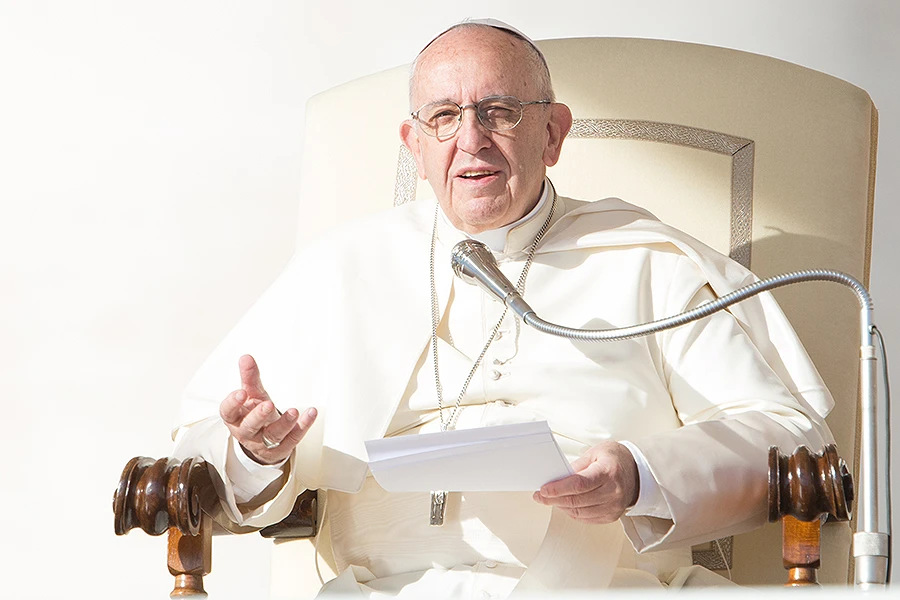
Washington D.C., Nov 1, 2017 / 05:14 pm (CNA/EWTN News).- A member of the Vatican’s International Theological Commission has resigned his position as a consultant to the USCCB’s Committee on Doctrine, following the publication of a letter written to Pope Francis asking the Pope to correct the “chronic confusion” of his pontificate, which he says “fosters within the faithful a growing unease.”

Father Thomas Weinandy, OFM, Cap., who previously served as Executive Director of the USCCB’s Secretariat for Doctrine, sent the five-page letter to Pope Francis July 31, the feast of St. Ignatius of Loyola. Weinandy told Crux that he sent the letter after a powerful experience of discernment convinced him that “Jesus wanted me to write something” that would “be of help to Pope Francis, to the Church, and to the faithful.”

In a statement released Wednesday afternoon, James Rogers, Chief Communications Officer of the USCCB, said that “after speaking with the General Secretary of the Conference today, Father Thomas Weinandy, OFM, Cap., has resigned, effective immediately, from his position as consultant to the USCCB Committee on Doctrine. The work of the Committee is done in support of, and in affective collegiality with, the Holy Father and the Church in the United States. Our prayers go with Father Weinandy as his service to the Committee comes to a close.”

Weinandy’s letter, published by Crux on Wednesday, addressed five points. Weinandy told the Pope that his pontificate had fostered confusion, diminished the importance of doctrine in the Church’s life, appointed bishops who teach and act in harmful ways, fostered a culture of fear among bishops, and caused faithful Catholics to lose confidence in the papacy.

The letter also expressed Weinandy’s “love for the Church and sincere respect” for the office of the Pope. The priest expressed hope that by recognizing “darkness, the Church will will humbly need to renew herself, and so continue to grow in holiness.”

Father Thomas Petri, OP, academic dean of the Pontifical Faculty of the Immaculate Conception at the Dominican House of Studies in Washington, DC, told CNA that Weinandy “is a theologian of the highest caliber,” and that the “letter to His Holiness is quite obviously written with a deep filial piety and loyalty to both our Holy Father Pope Francis and to the Church.”

“There is no need to continue to litigate theological points in the public square and so Father Weinandy says directly but, I think, charitably what he believes is on many people’s minds. Many priests are confronted daily by members of the lay faithful expressing confusion and concern in reports they read or hear about Pope Francis and his advisors,” Petri added.

Chad Pecknold, professor of theology at the Catholic University of America, agreed. Weinandy “is arguably the most distinguished Franciscan theologian working in the English language today,” Pecknold told CNA. “He is a theologian centered in the Church, and not at all at her outermost fringe. So his letter carries the weight of the center.”

“Rather than presume to correct, Father Weinandy describes the current situation, and informs the Holy Father that what seems to many like ‘intentionally ambiguous’ teaching has led to confusion, leading some of his own advisors to publicly advance error….There is something admirable about the impassioned plea of a son of St. Francis writing to Pope Francis, in truth and love, as a son to a father. His love for the pope is evident throughout his appeal.”

While Pecknold called Weinandy’s letter “deferential,” he told CNA “it is certainly reasonable to ask whether it should have been published in the media.”

Jacob Wood, theology professor at the Franciscan University of Steubenville, raised similar concerns. “If Father Weinandy’s intention is fraternal correction, publishing his letter might not be the best way to go about it,” Wood told CNA. “It is easy for our intentions to get warped when treated in the mass media by people who don’t share the perspective of faith. There does exist some danger of scandal.”

Weinandy told Crux that he published the letter because it “expresses the concerns of many more people than just me, ordinary people who’ve come to me with their questions and apprehensions,” adding: “I wanted them to know that I listened.”

RR Reno, editor of First Things magazine, and formerly a professor of theology at Creighton University, told CNA that publishing letters like Weinandy’s can be helpful to Catholics.

“Weinandy’s letter is an attempt to clearly state problems we face,” Reno said.

“Everyone in the Church has a role – priests laity and bishops – and each of us is going to have to make a discernment how best to serve the Church in the current climate. We have to discuss how to move forward in this pontificate as loyal members of the Church,” he said, adding that Weinandy’s letter is a helpful catalyst for such discussion.

Reno also said that publicizing letters like Weinandy’s “aids people who are in positions of responsibility,” in the Church, “providing some support for those who want to address the challenges the Church is facing.”

Cardinal Daniel DiNardo, president of the USCCB, issued a statement Wednesday afternoon, “on the nature of dialogue within the Church,” which he said was occasioned by the publication of Weinandy’s letter and his resignation. DiNardo said that theological debates are often the subject of media attention, which “is to be expected and is often good.”

DiNardo added that theologians and bishops should make every effort to interpret the Holy Father’s teaching charitably, and that all Catholics should “acknowledge that legitimate differences exist” among Catholics, “and that it is the work of the Church, the entire body of Christ, to work towards an ever-growing understanding of God’s truth.”

Father Charles L. Sammons, OFM Cap, told CNA that he lived with Weinandy in 2015. “I experienced Fr. Thomas as an uncomplicated and earnest person who simply loved the Lord and his Church, and didn’t seem to have many concerns apart from that. I remarked to myself more than once that this seemed like a blessed way to live,” Sammons told CNA.

Sammons said that time with Weinandy “had been given to me as a grace of good example, for my own religious life as a Capuchin friar.”

[…]

No Picture
News Briefs

Notre Dame to cut birth control coverage for faculty, students

November 1, 2017 CNA Daily News 1

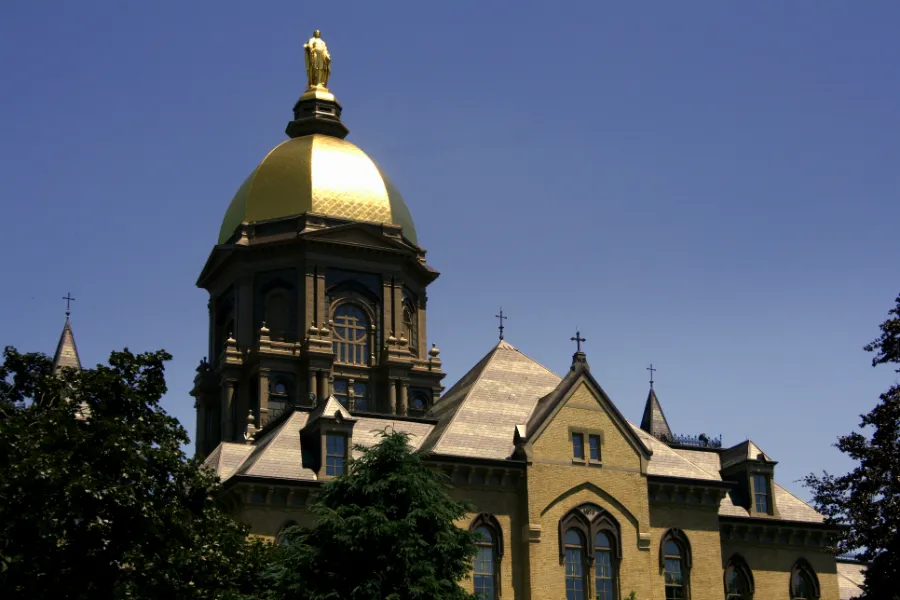
South Bend, Ind., Nov 1, 2017 / 04:55 pm (CNA/EWTN News).- The University of Notre Dame has announced to its employees and students that it plans to end birth control coverage in 2018, following broad religious exemptions recently added to the federal contraceptive mandate.

According to Indiana Public Media, the University sent out letters to staff and students Oct. 27 informing them of the coming changes, which will go into effect in January 2018 and August 2018 respectively.

Notre Dame is taking advantage of recently-added religious exemptions to the contraceptive mandate of the Affordable Care Act, which were announced by the Department of Health and Human Services Oct. 6.

Father John Jenkins, president of the university, welcomed the changes because “critical issues of religious freedom were at stake.”

“For that reason, we welcome this reversal and applaud the attorney general’s statement that ‘except in the narrowest circumstances, no one should be forced to choose between living out his or her faith and complying with the law,'” he said in an Oct. 6 statement.

Previously, the Catholic university was one of several organizations that sued the government over the federal contraceptive mandate, which required most organizations to provide birth control coverage either directly or through a third party service.

As a Catholic institution, Notre Dame objected to this mandate on the grounds that all forms of contraception are against Catholic moral teaching. The university, along with dozens of other Catholic institutions, argued in the lawsuit that the third party option would still make them cooperate in an act to which they were morally opposed.

A federal judge ruled that the mandate did not infringe on the university’s religious freedom, and Notre Dame was legally obligated to allow for contraceptive coverage through the third party service.

Now, the new broadening of exemptions to the contraceptive mandate on religious or moral grounds will allow the university to drop all coverage of birth control.

Notre Dame will still cover birth control medications or procedures if they are being used as a treatment for other medical problems, such as endometriosis.

The American Civil Liberties Union has filed a lawsuit against the Trump administration, challenging the new religious exemptions.

The recent expansion of religious and moral exemptions to the contraceptive mandate was issued the same day that U.S. Attorney General Jeff Sessions outlined new principles of religious freedom that federal agencies and departments were to adopt.

Speaking to CNA Oct. 6, Archbishop William Lori of Baltimore said the new religious freedom protections, including the contraception exemptions, were a “victory for the First Amendment, and a victory for all Americans, even those who don’t agree with the Church’s” teaching on contraception.

“I think it restores a balance that was lacking,” said the archbishop, who is chair of the U.S. bishops’ Committee on Religious Liberty. “It permits us to do our ministries” without violating Catholic moral principles, he added.

[…]

No Picture
News Briefs

Pro-lifers laud US Senate’s confirmation of judicial nominee

November 1, 2017 CNA Daily News 2

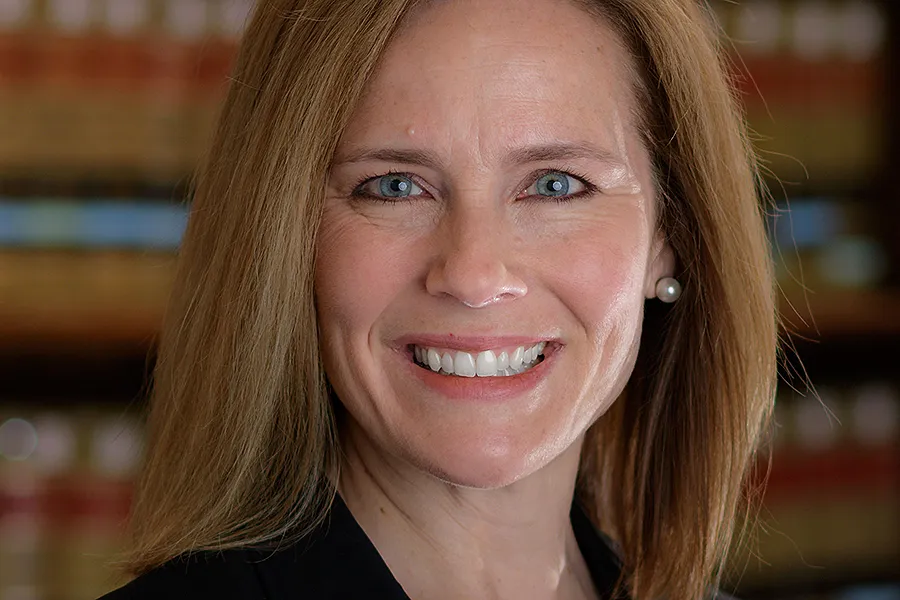
Washington D.C., Nov 1, 2017 / 11:53 am (CNA/EWTN News).- Catholic and pro-life groups are welcoming the Senate’s confirmation on Tuesday of Amy Coney Barrett to the US Court of Appeals for the 7th Circuit. Barrett had faced hostile questions about her Catholic faith during her confirmation hearing.

“Amy Coney Barrett will make an excellent judge and we welcome her confirmation despite unprecedented and unconstitutional attacks on her faith,” Ashley McGuire, senior fellow with The Catholic Association, said Oct. 31. “Catholics were alarmed by the anti-Catholic bigotry on display from Democrats during her hearings, but her confirmation is a testament to the enduring constitutional principle that there can be no religious test for office.”

President Trump’s nominee was confirmed by a 55-43 vote, largely along party lines.

Barrett, a professor at Notre Dame Law School, was pointedly questioned by Democratic senators on the Judiciary Committee in September on how her Catholic faith would influence her decisions as a judge on cases of abortion and same-sex marriage.

Sen. Dianne Feinstein (D-Calif.), ranking member of the committee, told Barrett outright that her Catholic beliefs were concerning, as they may influence her decisions as a judge on abortion rights.

“I think in your case, professor, when you read your speeches, the conclusion one draws is that the dogma lives loudly within you. And that’s of concern,” Feinstein stated.

Reacting to Barrett’s confirmation, Americans United for Life said it is “especially encouraged,” and added that her scholarship has “demonstrated her dedication to preserving the originalist legacy of her former boss, the late Justice Antonin Scalia.”

Pro-life group the Susan B. Anthony List also welcomed the confirmation, calling it “a victory for the pro-life movement as well as for the fundamental freedom of all Americans to live out their faith in the public square.”

SBA List’s president, Marjorie Dannenfelser, added that “We thank President Trump for keeping his promise to nominate judges who will respect the Constitution and not impose a pro-abortion agenda from the bench. We also thank Leader McConnell and Senator Grassley for their commitment to getting these excellent judges confirmed.”

During her confirmation hearings Barrett repeatedly said that as a judge, she would uphold the law of the land and would not let her religious beliefs inappropriately alter her judicial decisions.

She told Senator Chuck Grassley (R-Iowa) that “it’s never appropriate for a judge to impose that judge’s personal convictions, whether they derive from faith or anywhere else, on the law.”

In 1998, Barrett co-authored an article in the Marquette Law Review with then-Notre Dame law professor John Garvey, now president of The Catholic University of America. The article focused on Catholic judges in death penalty cases.

Catholic judges, if their consciences oppose the administering of the death penalty, should, in accordance with federal law, recuse themselves from capital cases where a jury recommends a death sentence, Garvey and Barrett wrote. They should also recuse themselves from cases without a jury where they have the option of granting a death sentence, they wrote.

During her confirmation hearing Barrett said she continues to uphold “that if there is ever a conflict between a judge’s personal conviction and that judge’s duty under the rule of law, that it is never, ever permissible for that judge to follow their personal convictions in the decision of a case rather than what the law requires.”

Barrett has twice been honored as “Distinguished Professor of the Year” at Notre Dame, and had clerked for Supreme Court Justice Antonin Scalia.

The Senate also confirmed, on Nov. 1, the confirmation of Joan Larsen to the US Court of Appeals for the 6th Circuit, by a 60-38 vote. Larsen is also a former clerk for Scalia, and her confirmation was also welcomed by SBA List.

[…]

No Picture
News Briefs

Bishop calls on Congress to consider tax reform’s impact on ‘the least of these’

October 31, 2017 CNA Daily News 0

Washington D.C., Oct 31, 2017 / 07:30 pm (CNA/EWTN News).- With House lawmakers set to release their tax reform bill on November 1, one U.S. bishop has laid out moral principles encouraging Congress to care for the poor, families, and the common good.

“You are urged to recognize the critical obligation of creating a just framework aimed at the economic security of all people, especially the least of these,” wrote Bishop Frank J. Dewane of Venice, Florida in a letter addressed to Congress.

The letter outlines moral principles to be considered alongside the “Unified Framework for Fixing Our Broken Tax Code,” the Trump administration’s template for rewriting and simplifying federal taxes.

“Care for the poor” is first among the bishop’s principles, which also include avoiding cuts to poverty programs to finance the tax reform.

Bishop Dewane, who serves as chairman of the U.S. bishops’ Committee on Domestic Justice and Human Development, cited the U.S. bishops’ commitment to evaluating the tax system in terms of its impact on the poor. He emphasised that the burden of tax reform should not fall upon those struggling to meet their daily needs.

One possible impact of the proposed tax changes could be a reduction in charitable giving, Dewane warned.

Although the simplification of the tax code in the “Unified Framework” retains tax incentives for charitable contributions, the elimination of the estate tax and increase in the overall standard deduction could reduce incentives to give, leaving the poor vulnerable, he said.

While particularly concerned about the reform’s potential impact on the poor, Dewane’s letter affirmed that some proposed tax changes in the “Unified Framework” could be instrumental in strengthening and encouraging families. An increase in the Child Tax Credit and Earned Income Tax Credit could be of particular benefit to families, especially if the “marriage penalty” in the existing tax credit is removed, he said.

The pending overhaul of the current tax system, if passed, is likely to leave a lasting impact on U.S. tax revenues and public spending for years to come. The U.S. bishops’ Committee on Domestic Justice and Human Development seeks to ensure that these changes secure a positive future for the poor and for families, DeWane said.

Quoting the “Compendium of the Social Doctrine of the Church,” Bishop Dewane’s letter reminded lawmakers that “the goal to be sought is public financing that is itself capable of becoming an instrument of development and solidarity.”


[…]

No Picture
News Briefs

This Native American is officially on the path to sainthood

October 31, 2017 CNA Daily News 0

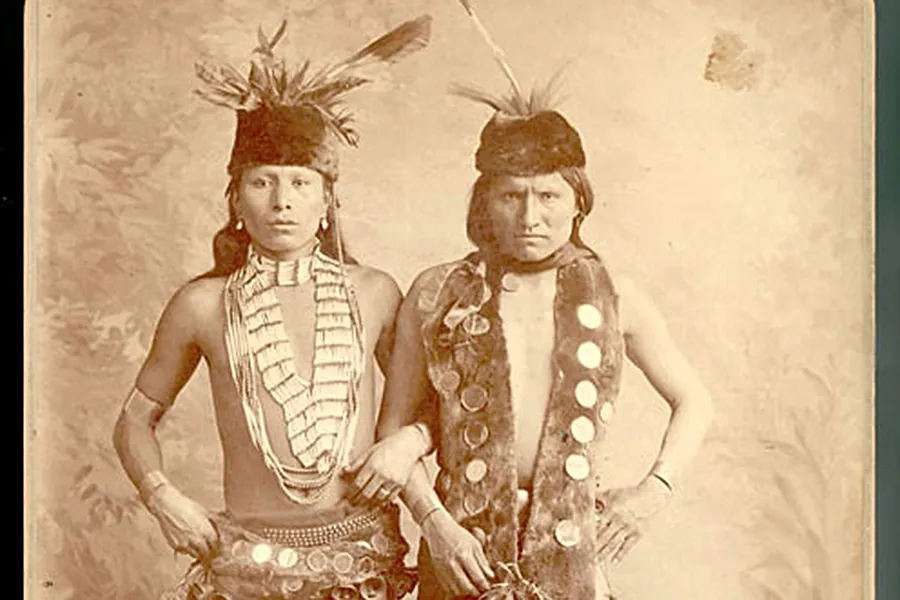
Rapid City, S.D., Oct 31, 2017 / 06:57 pm (CNA/EWTN News).- Lakota medicine man turned Catholic catechist Nicholas Black Elk has begun the path to potential canonization with a Mass in South Dakota opening his cause for sainthood.

“From a very young age, there was an openness to the Spirit of God in his life,” Bishop Robert Gruss of Rapid City, S.D. said at an Oct. 21 Mass. “God used a personal invitation from a Jesuit priest to lead this child of God, Black Elk, down a new path to becoming this great disciple in the Catholic faith for the Lakota people.”

The Mass, which opened Black Elk’s cause for canonization, was celebrated at Holy Rosary Church near Pine Ridge, S.D. Family members of Black Elk were in attendance.

“For 50 years, Black Elk lived this mission in leading others to Christ,” said the bishop, crediting his love for God and Sacred Scripture for motivating him to become a catechist. In that role, he brought hundreds of people to the Catholic faith.

The bishop cited Black Elk’s own words from his missionary letter: “I spoke mainly on Jesus – when he was on earth, the teachings and his sufferings. I myself, do a lot of these things. I suffer, and I try to teach my people the things that I wanted them to learn.”

If Black Elk is canonized, he will be the first official saint from the Diocese of Rapid City, according to his biography on the diocese website.

He was born sometime between 1858 and 1866. Like many of his ancestors, he served as a medicine man, which combined the roles of medical doctor, spiritual adviser and counselor.

Despite the promises of the Great Sioux Treaty of 1868, gold-seeking settlers and prospectors began moving into Dakota Territory in 1874. This led to the Great Sioux War of 1876-77. Black Elk was at the Battle of Little Big Horn in 1876.

The following year, he joined Buffalo Bill’s Wild West Show, which toured Europe, including a performance before Queen Victoria. Black Elk continued to tour the continent with another Wild West show, encountering the cultures of England, France, Germany and Italy. He learned to speak some English and returned to the U.S. in 1889.

In 1890, he was injured at the Wounded Knee Massacre, where a bullet grazed his thigh.

Two years later, he married Katie War Bonnet. They had three children. After she converted to Catholicism, all three children were baptized.

The year after she died, Black Elk converted to Catholicism and was baptized on Dec. 6, 1904, the Feast of St. Nicholas. He took Nicholas as his baptismal name because he admired the saint’s generosity.

He married again in 1905. His second wife, Anna Brings White, was a widow with two children. They had three children together and she passed away in 1941.

The practice in the Diocese of Rapid City was for Jesuit priests to select Lakota Catholic men to teach the faith as catechists. They taught the faith, prayed and prepared converts in the Lakota language, traveling by foot or by horseback until automobiles became available.

Black Elk became a catechist in 1907, chosen for his enthusiasm and his excellent memory for learning Scripture and Church teaching. His work brought more than 400 people into the Catholic Church.

The medicine man became prominent through “Black Elk Speaks,” John G. Neihart’s biographical work. The work covers his Lakota upbringing, though not his adulthood as a Christian.

Black Elk passed away Aug. 19, 1950 at Pine Ridge.

Bishop Gruss reflected on the possible saint’s life.

“He embraced the mission to which he had been called – to help others live in the balance of the Lakota and Catholic culture leading to a deeper life in Jesus,” the bishop continued. “He melded whatever he could from his Lakota culture into his Christian life. This enculturation can always reveal something of the true nature and holiness of God.”

“He challenged people to renew themselves, to seek this life that Christ offers them,” he said.

“Of course, Christ’s work is never done,” said the bishop, adding that all Christians have been called into the missionary field.

“Our baptism leads us there. Like Black Elk, if we are docile to the Lord’s will, devoting our lives to Him, we will be out working for His Kingdom of mercy, love, and peace.”

Bishop Gruss stressed the need to continue to gather more information and testimony about the life of Black Elk and to pray that his cause merits advancement.

Bill White of Porcupine, S.D., is the diocesan postulator for the cause. He is an enrolled member of the Oglala Sioux Tribe on the Pine Ridge Reservation. White is being assisted by Fr. Joe Daoust, S.J., of Pine Ridge.

Deacon Ben Black Bear from St. Francis Mission is translating some of Black Elk’s writings from the Lakota language to English, the diocese said.


[…]