No Picture
News Briefs

Be missionary disciples of Christ, apostolic nuncio encourages US bishops
November 13, 2017 CNA Daily News 0

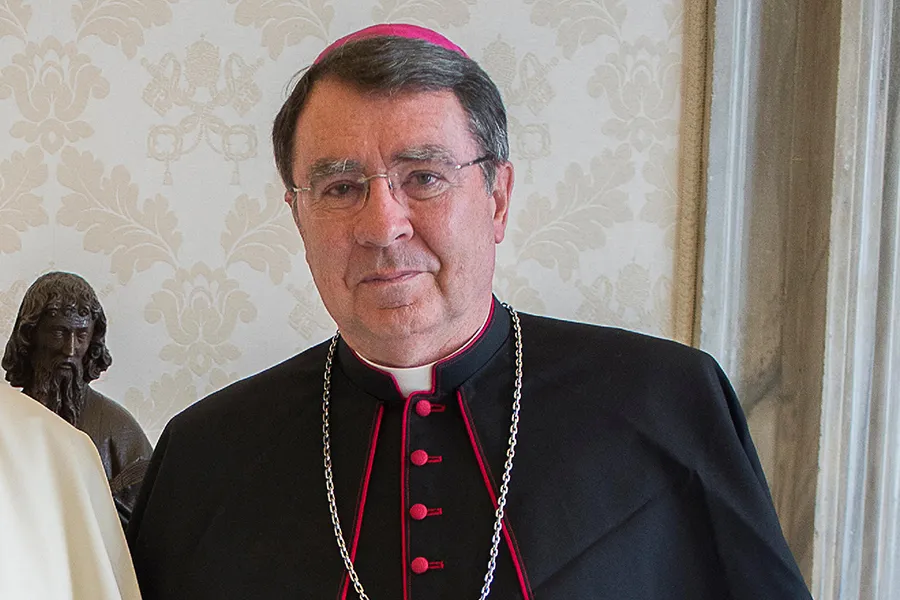
Baltimore, Md., Nov 13, 2017 / 09:20 am (CNA/EWTN News).- On the opening day of the US bishops’ plenary assembly, Archbishop Christophe Pierre addressed the gathering, encouraging them to prioritize youth, the mission of evangelization, and Christ himself.

“I offer you the example of the patroness of your country, the Blessed Virgin Mary, as someone who went forth with a sense of urgency” to share the joy of Christ with her cousin, Elizabeth, the apostolic nuncio to the US said Nov. 13 in Baltimore, Md.

The archbishop noted that the US Conference of Catholic Bishops is celebrating its 100th anniversary, and urged that in addition to remembering the past, they must look to the forward, avoiding “small-mindedness” and recommending three things about which to be passionate: the youth, the mission of evangelization, and the Lord himself.

Archbishop Pierre mentioned the importance of the upcoming Synod of Bishops which will focus on young people, “to learn from them and to help them to discover the path the Lord has chosen for them.”

He addressed “the difficulties of transmitting the faith in our day,” especially in the face of the rise of the number of people not identifying with any religious tradition. The youth, he said, are faced “not only with existential questions” such as finding work, but above all with spiritual problems.

Turning to the importance of evangelization, Archbishop Pierre recommended four characteristics of a “new evangelist”: boldness, connectedness, urgency, and joy.

“The statistics alone should give us a sense of urgency; but is it an urgency motivated by fear of loss, or is it the joy of sharing the gospel?” he asked, offering the example of the Virgin Mary’s Visitation: “having conceived of the Holy Spirit, she could not keep her joy to herself. Similarly, we cannot keep our joy to ourselves.”

An essential aspect of evangelization, he said, is “building a culture of encounter,” as Pope Francis is so fond of saying. He again pointed to Mary, who “was so passionate about bringing her Son to the world.”

It is critical to have a clear sense of mission, he stated, pointing out that many Americans, “including the young and those who do not know Christ … need to hear the basic kerygma,” the passion and resurrection of Christ “and the life he offers.”

The nuncio gave as examples the great evangelizers of the American past: St. Frances Xavier Cabrini, St. Junipero Serra, Bl. Stanley Rother, and Ven. Solanus Casey, who will be beatified next weekend. These were all exemplars of a “permanent state of mission,” he stated.

Being in a permanent state of mission is to be a faithful follower of Christ “who is in passionate love with his flock.” Returning to the youth, he said it is important to show them that “the Church is not self-referential but is there for them.”

Amid declining numbers, Archbishop Pierre told the bishops to “take courage,” for “there are signs of growth in the Church in the south and the west.” He recalled the recent dedication of a cathedral, attended by many Latinos, an experience which “confirmed for me the importance of the Fifth National Encuentro,” being held to assess and improve Hispanic ministry in the US. The Encuentro will be important for an “authentic renewal of the mission of evangelization,” he proclaimed.

The archbishop then turned to the prime importance of the person of Jesus, saying, “although we are pastors, we are first disciples.” As shepherds, the bishops are called to set an example of having a personal relationship with Christ based in prayer: “The time spent in prayer and adoration can renew us for the work of evangelization.”

In Christ “we find our true friend, who does not abandon us, so that we set out on mission with him and in him.”

“We are called first to be with Jesus,” he said, so that we can then go with him to his beloved flock, “to draw close to them, to be with them, to listen to them … and speak to them with the gentleness of Jesus.”

Going on mission without having spent time with Christ in prayer “would be going for a long drive without much fuel,” he reflected.

To enter into this life of prayer “we must empty ourselves of the many distractions of modern life,” he said, urging that each of the bishops “must ask himself: am I really passionate about Jesus? Do I convey that enthusiasm for the Lord?”

Archbishop Pierre concluded saying that despite demographic changes and the dictatorship of relativism, their ministry can bear fruit, recalling the missionary and apostolic zeal of the Spanish missionaries, the French Jesuits, and the early bishops of the United States, “who labored for the flock in the wilderness.”

This is a time of “opportunity for adventure, the adventure of faith,” a time “to be bold, trusting that the Lord will never abandon us.”

“For this reason, rather than to give into discouragement, we have every reason to be filled with hope and joy, because Jesus is in our midst … once more I repeat this can be a great moment for the Church in America.”
[…]

No Picture
News Briefs

Cardinal Parolin invokes God’s wisdom on the US bishops

November 12, 2017 CNA Daily News 3

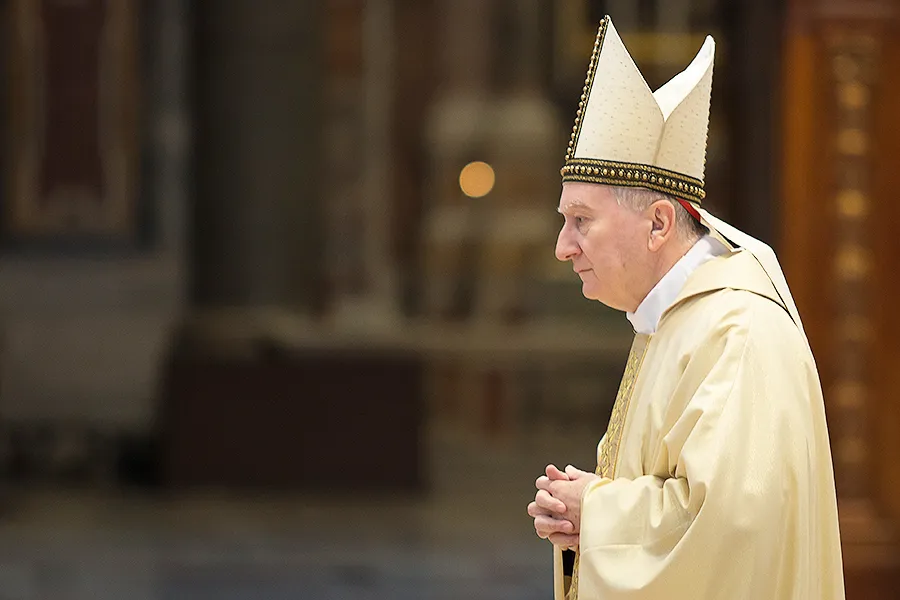
Baltimore, Md., Nov 12, 2017 / 07:38 pm (CNA/EWTN News).- Speaking to the US bishops gathered for the opening Mass of their plenary assembly on Sunday, the Vatican Secretary of State encouraged them to continue their prophetic witness in the face of the challenges facing the country.

Recalling the first reading from the Book of Wisdom, Cardinal Pietro Parolin said this “divine wisdom is a gift of the Holy Spirit,” which “enables us to serve God by doing his will.”

“May the fire of God’s love inspire you as a body to make wise decisions free of all partisan spirit,” he added.

The US bishops were gathered for Mass Nov. 12 at the Basilica of the National Shrine of the Assumption of the Blessed Virgin Mary in Baltimore for their fall assembly. This year’s assembly marks the centenary of the US Conference of Catholic Bishops, which was founded in 1917 as the National Catholic War Council.

The conference “originated in a Spirit-filled and wise response to the human suffering and displacement of the First World War,” Cardinal Parolin noted.

The bishops’ conference began as America’s bishops cared for those who were “forced from their homes and came to the new world in search of security and a new life.”

The cardinal invoked this past “as the Church in your country seeks to provide healing, comfort, and hope to new waves of migrants and refugees.”

Turning to the Gospel reading of the wise and foolish virgins, Cardinal Parolin urged the bishops to a prophetic witness and “to be a source of wisdom and strength,” saying that “the oil with which the Lord asks us to fill our lamps is above all purity and an authentic personal conversion.”

As olives had to be pressed to produce the olive oil for the virgins’ lamps in Christ’s parable, so must we stamp out whatever “stands in the way of our growth in Christ: our worldliness, our desire for human respect.”

He applauded the charitable institutions of the Church in the US, and encouraged the bishops to always bring people to relationship with Christ, “which alone brings true joy and satisfies the desires of the human heart.”

The Vatican Secretary of State looked forward to the series of “Encuentros” which are being held to assess and improve Hispanic ministry in the US.

“In this way you are seeking to foster that heightened sense of missionary discipleship which Pope Francis considers the heart of the new evangelization.”

“In the century prior to the founding of your conference, the challenge facing the Church in this country was to foster communion in an immigrant Church to integrate the diversity of peoples, languages, and cultures in the one faith, and to inculcate a sense of responsible citizenship and concern for the common good.”

“At the same time the Catholic community is called under your guidance to work for  a more just and inclusive society by dispelling the shadows of polarization, divisiveness, and societal breakdown by the pure light of the gospel ” he said. He praised the bishops particularly for “defending the right to life of the unborn” and for their concern for ensuring access to health care.

“I cannot fail to mention the contribution made by the USCCB to the discussion of important social issues and political debates, above all, when this involved the defense of moral values and the rights of the poor, the elderly, the vulnerable, and those who have no voice.”

He also discussed the importance of pastoral care, saying that “in this process of accompaniment may you continue to exercise your prophetic office.”

He gave thanks for the Spirit’s gift of wisdom shown in the bishops’ conference, and concluding, prayed that “you make keep the lamp of faith burning brightly.”

The bishops’ fall assembly meetings begin Monday, and will continue through Wednesday.


[…]

No Picture
News Briefs

Decision to axe US migration program endangers minors, bishops warn

November 11, 2017 CNA Daily News 4

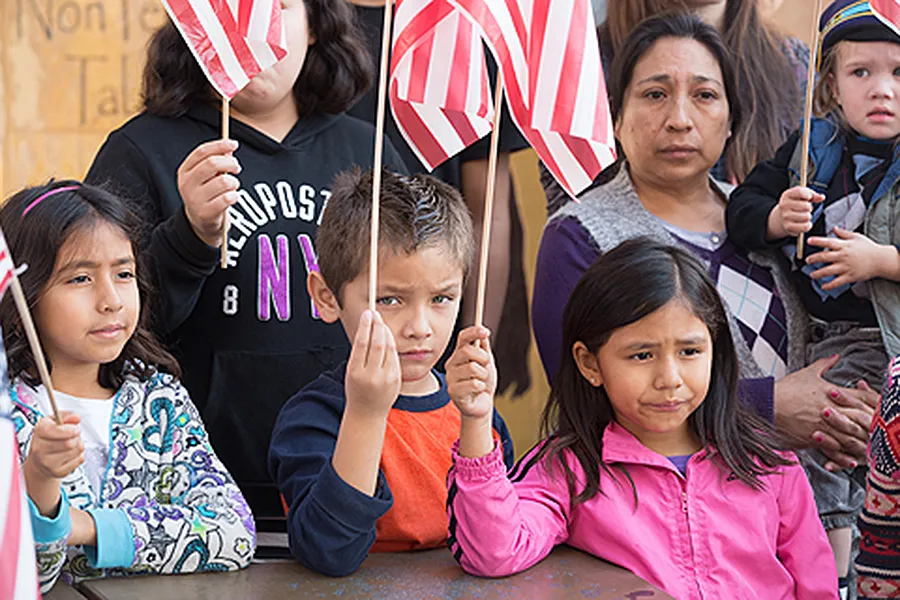
Washington D.C., Nov 11, 2017 / 06:04 am (CNA/EWTN News).- The Trump administration’s ending of a program that helped reunite Central American minors with their parents in the U.S. has drawn strong objections from the U.S. bishops.

The administration decided to end refugee processing in Honduras, El Salvador, and Guatemala for those who apply for U.S. entry through the Central American Minors program. The program had allowed some parents legally present in the U.S. to request a refugee resettlement interview for their children and other family members like the child’s other parent, a caregiver, or a grandchild, ABC News reports.

“This decision of the administration unnecessarily casts aside a proven and safe alternative to irregular and dangerous migration for Central American children,” said Bishop Joe Vasquez of Austin, head of the U.S. bishops’ Committee on Migration. Terminating the entire program will “neither promote safety for these children nor help our government regulate migration,” he said Nov. 9.

“Pope Francis has called on us to protect migrant children, noting that ‘among migrants, children constitute the most vulnerable group’,” the bishop continued.

The Central American Minors program was established in 2014, at the height of the surge of unaccompanied migrant children coming to the U.S.-Mexico border from Central America, primarily El Salvador, Guatemala, and Honduras.

There were about 14,000 applications to the program, with 8,000 having been processed. A total of 3,328 children and family members were admitted as refugees and parolees. Another 6,000 people’s applications are still under consideration.     

Vasquez offered prayers for those affected.

“We continue to pray and express our support for parents who endure anxiety and emotional hardship knowing their children will continue to languish in violence; and to the children themselves, who will not be able to reunite and embrace their parents,” he said.

A U.S. State Department official told ABC News the program was ended “as part of the overall U.S. government review of the U.S. Refugee Admissions Program” for fiscal year 2018.

Some critics of the program said many applicants did not meet the legal definition of a refugee because they were fleeing violent conflict, but not persecution of some kind.

Vasquez said the program, which had previously included both refugee and parole options, should have been maintained “precisely because it provided a legal and organized way for children to migrate to the United States and reunify with families.”

Vasquez cited the August decision to end the program’s parole option for Central American migrants. That decision caused “heartbreaking family separation for families who have learned that their child has no safe means of arriving to the U.S.”

Ending the overall program will “sadly perpetuate more of the same family breakdown,” he said.

The bishop was “deeply disappointed” that the administration decided to terminate the program in its entirety. He said it was “especially troubling” to have a short cutoff date for accepting applications to the program.

There was barely a day’s advance notice to those who provide services, he said.

The State Department recently ended temporary protected status for Nicaraguans, meaning about 2,500 Nicaraguans must leave before January 2019 or face deportation. Many of them have been living in the U.S. for years and have children. Protected status for Hondurans has been extended another six months.

[…]

No Picture
News Briefs

At the Met, Catholic-inspired fashion now in style

November 9, 2017 CNA Daily News 0

New York City, N.Y., Nov 9, 2017 / 03:30 pm (CNA/EWTN News).- Can the Catholic imagination dream up beautiful and compelling clotheswear?

That’s one of the questions behind an exhibit collection set to open next year through New York City’s Metropolitan Museum of Art

“The Roman Catholic Church has been producing and promoting beautiful works of art for centuries,” Greg Burke, director of the Holy See’s press office, told the New York Times. “Most people have experienced that through religious paintings and architecture. This is another way of sharing some of that beauty that rarely gets seen.”

Heavenly Bodies: Fashion and the Catholic Imagination,” set to launch in 2018, was organized through the Met’s Costume Institute. The exhibit brings together Church garments borrowed from the Vatican, religious art from the Met collection, and 150 designer fashion pieces that were intended to pay homage to Catholicism, taking inspiration from Catholic iconography, the liturgy, or other parts of the faith tradition.

The exhibition will run May 10 – Oct. 8, 2018.

The church garments, many of which are still in use for liturgies, will be displayed separately from the fashion exhibit out of respect, the New York Times reports. There will be about 50 items in this separate exhibit. They come from the Sistine Chapel sacristy’s Office for the Liturgical Celebrations of the Supreme Pontiff and range in age from the mid-1700s to the pontificate of Saint John Paul II.

The exhibits will be hosted at the Anna Wintour Costume Center, the medieval rooms at the Met on Fifth Avenue, and the Met Cloisters in uptown New York City. The three exhibit spaces total 58,600 square feet. It will be the Costume Institute’s largest show yet.

Andrew Bolton, the curator in charge at the institute, suggested the exhibit may have more potential than any other previous exhibit.

Explaining the exhibit’s vision, he said: “the focus is on a shared hypothesis about what we call the Catholic imagination and the way it has engaged artists and designers and shaped their approach to creativity, as opposed to any kind of theology or sociology. Beauty has often been a bridge between believers and unbelievers.”

Bolton had consulted with several Catholic groups and Cardinal Timothy Dolan of New York to avoid any controversy in the fashion selections. The Church was receptive to the idea, but he had to travel to Rome eight times to discuss the show.

Bolton, who is Catholic, said he had initially intended to include the five world religions that are represented in the museum’s collections, but narrowed his focus after realizing that most Western designers were interacting artistically with Catholicism. He suggested this was because so many designers were raised Catholic.

<blockquote class=”twitter-tweet” data-lang=”en”><p lang=”en” dir=”ltr”><a href=”https://twitter.com/hashtag/MetHeavenlyBodies?src=hash&amp;ref_src=twsrc%5Etfw”>#MetHeavenlyBodies</a>—at The Met and The Met Cloisters—will feature a dialogue between fashion and religious artworks. <a href=”https://t.co/XocffAD1T0″>https://t.co/XocffAD1T0</a> <a href=”https://t.co/thIwx437Qu”>pic.twitter.com/thIwx437Qu</a></p>&mdash; The Met (@metmuseum) <a href=”https://twitter.com/metmuseum/status/928282958334701568?ref_src=twsrc%5Etfw”>November 8, 2017</a></blockquote>
<script async src=”https://platform.twitter.com/widgets.js” charset=”utf-8″></script>

The “Heavenly Bodies” exhibit will include a Chanel wedding gown inspired by First Communion dresses and the fashion designer Valentino’s couture gowns that draw on the style of the paintings of monk’s robes by the 16th century Spanish painter Francisco di Zurbarán.

One artistic rendering of an Elsa Schiaparelli evening dress, made for the summer of 1939, appears to evoke the keys of St. Peter and the color scheme of Christian iconography.

Versace and Dolce & Gabbana will contribute art in the style of mosaics, including mosaics of Sicily’s Cathedral of Monreale.

A 1983 exhibit of Vatican liturgical garments at the museum was the third-most visited exhibit in its history, with nearly 900,000 visitors.

The “Heavenly Bodies” exhibit will have such sponsors as the media company Condé Nast and the Italian luxury designer Versace, as well as patrons such as Christine and Stephen A. Schwarzman.

The New York Times reporter Vanessa Friedman suggested that the exclusive, expensive opening night gala for the Costume Institute’s exhibit, as well as the exhibit’s luxurious clothing, appear to contradict the priorities of Pope Francis and Christian humility.

The opening night gala’s honorary chairs include the Schwarzmans, Condé Nast artistic director Anna Wintour, the pop star Rhianna and the prominent lawyer Amal Clooney, wife of actor George Clooney.

Cardinal Timothy Dolan of New York has been invited to the gala, but it was unclear whether he would accept.+

[…]

No Picture
News Briefs

How to evangelize like Bishop Barron

November 9, 2017 CNA Daily News 0

Los Angeles, Calif., Nov 9, 2017 / 03:24 pm (CNA/EWTN News).- Facebook headquarters might be a surprising place to find a Catholic bishop giving a talk.

Nevertheless, earlier this fall, Bishop Robert Barron, auxiliary bishop of the Archdiocese of Los … […]

No Picture
News Briefs

What is it like to be a religious brother?

November 9, 2017 CNA Daily News 0

Boston, Mass., Nov 9, 2017 / 05:57 am (CNA/EWTN News).- When Brother Jim Peterson, OFM Cap., was in middle school and high school, he felt like every time someone prayed for vocations, they were praying for him.

“It was always kind of like, they’re talking about me,” he told CNA.

That was his first inclination that he had a religious vocation, though at first, he assumed he was being called to be a priest.

Although the call was always somewhere in his heart, Peterson said that he finished high school, and then college, and was struggling to find a job when he wondered if he should answer that call.

“But at the same time, I wasn’t sure if it was just me running away from something, so I decided to see if I could make my way in the world before making a decision like that,” he said.

It wasn’t until he finished law school, and worked for a few years as a lawyer in Pennsylvania, that he decided he couldn’t ignore God anymore.

Today, Peterson is a Capuchin brother with the Capuchin Franciscans of the St. Mary Province, which encompasses New England and New York. He spoke with CNA about the vocation of a religious brother during Vocations Awareness Week, an annual week-long celebration sponsored by the United States bishops’ conference, dedicated to promoting vocations to the priesthood, diaconate and consecrated life through prayer and education.

Becoming a Brother

It was during his time in law school and as a lawyer that he really wrestled with his faith, and what God could be asking of him, Peterson said.

Working as a lawyer, he had several “a-ha” moments that made him realize he might be called to a different life.

“One moment was when…I was given the task of evicting somebody from a piece of property that one of our clients owned. And so I got a phone call from the guy I had to evict and he said, ‘Don’t worry, you don’t have to go to court. I’m leaving, you can have your property back’,” he recalled.

“So I went and told my partner and he said, ‘Well, let’s just hope all of our problems aren’t solved so quickly.’ And this was a good guy and a good partner, but what he was saying was that we’re making money based on other people’s problems.”

“I realized then that there are a million lawyers in the country, anybody can take my place, but not everybody could respond to the call that the Lord has put before them,” he said.

Peterson decided to talk to a priest who was a good friend of his family, and who also happened to be a Capuchin friar, about this call he had been experiencing. They met and talked for two hours about the life of Capuchin friars, and afterwards, Peterson decided to attend a vocation retreat the next month, where he got to see the life of the friars firsthand.

“At the beginning of the weekend I was like this is crazy, what am I doing here,” he said.

But after seeing the friars in action, “by the end of the weekend…I said this is what I want to do with the rest of my life.”

The difference between priesthood and brotherhood

Peterson said that over the years, the call from God had evolved from what he thought was a call to the priesthood into a call to be a Capuchin brother. Part of the reason for this, he said, was that he felt that he was also called to continue being a lawyer, and Capuchin friars often continuing working in the fields in which they were working before they joined the order.

“In the Franciscan world, when St. Francis started the order, you did what you did before, you just did it now as a religious,” Peterson said. “So the priests who were already priests were now Franciscan priests, and the carpenters who came in were now Franciscan carpenters…so now I’m a Franciscan lawyer,” he said.

“I don’t feel called, and frankly my gifts don’t mesh well, with presiding at the sacraments, so while I love the sacraments, I love participating in them, I don’t feel called to lead them. But at the same time I do feel called to the Capuchin Franciscan life, the life of a brother,” he added.

One of the main components of being part of a religious order is living in community, Peterson said, which can be both a challenge and a grace.

“You’re living with people that you don’t get to choose, so you’re talking about different generations of folks, different interests, and the little things like people leaving crumbs behind and not picking up after themselves – things that I think any family struggles with,” he said.

“And so it has its challenges, but there’s also some really neat things,” he said, like the rivalry between the Yankees fans and the Red Sox fans within his own community. Another gift of community life is the universality of the community – there are about 11,000 Capuchin friars all over the world.

“The idea that you have something in common with people you don’t even share a language with is something I’m kind of still in awe of,” he said. “You find ways to share that commonality despite all the differences.”

Together, the community shares common prayer times, including Mass and meditation, in the morning. During the day, each brother serves in his particular ministry, which might take place outside of the friary, as is the case for Peterson, who works as a canon lawyer for the Archdiocese of Boston.

Other brothers serve within the order, either in forming younger friars or other ministries. In the evening, the brothers return home and again have dinner and additional prayer time together.

“Priests are a little bit more independent, they don’t have to live common life, they don’t take the three vows that a religious takes of poverty, chastity and obedience. They promise obedience to their bishop, but they don’t take vows of poverty. They are called to perfect continence but they don’t vow that, although it is one of their obligations,” he said.  

“A lot of people will ask me why aren’t you a priest? You’re smart enough, and so on,” Peterson said.

Ultimately, he said, it comes down to the call from the Lord, who knows what will make each person happy.

“I’d rather be a happy brother,” Peterson said. “I think the world is better served by a happy brother than an unhappy priest.”

What to do if you’re discerning

Peterson said that if he could advise other young people discerning religious life, he would tell them to take their time.

“I think too often we accept people who aren’t ready – they’re either too young or they’re not mature enough yet or they haven’t found their way in life,” Peterson said.

He encouraged young discerners to learn how to be independent, in order to better learn how to be interdependent within a community.

“That was an interesting part of the journey for me. My whole life I’m learning to break away from my family and support myself, and now I have to ask permission to take a car, or I’m given a limited amount of money for the month, things like that,” he said. “So it’s learning to become dependent on others, but in a healthy way, not in a childish way.”

Furthermore, he said, maturity and independence are important in order for new members of a community to be able to contribute to the community.

“They often come looking for something rather than being ready to offer something,” Peterson said. “It’s ok to be looking for something but you have to be able to put your gifts and talents at the service of the community.”

He also encouraged anyone discerning to attend vocation weekends, or to read more about the saint or the charism in which they’re interested, to see if it is a good fit for them.

“Once I started reading about St. Francis, it was clear to me that this was the guy I wanted to follow, he understood what religious life was about and was following what Christ was about,” he said.

Ultimately, though, he said he would offer encouragement to those discerning, because following God’s call is the key to happiness in life.

“You can really find fulfillment,” he said. “Obviously if you’re called to something else then that’s where your fulfillment is. I’ve told people before that your happiness and fulfillment is tied up in your vocation, the two are interchangeable.”

“That’s not to say that there won’t be challenges, it’s definitely not going to be easy, but I don’t think the Lord would call us to something where you’d be unhappy,” he said.

He said the life of a brother has been a pleasant surprise, in terms of the freedom he has experienced in what he thought would be a more limited way of life.

“Being a celibate, you have much more freedom to interact with a wide variety of folks, you don’t have that one person that you’re tied to, and as a result, I’m able to be with a lot of different people, and I’ve met some amazing people along the way,” he said.

“It’s a blessed life.”


[…]