No Picture
News Briefs

Pittsburgh bishop announces Year of Repentance

September 12, 2018 CNA Daily News 2

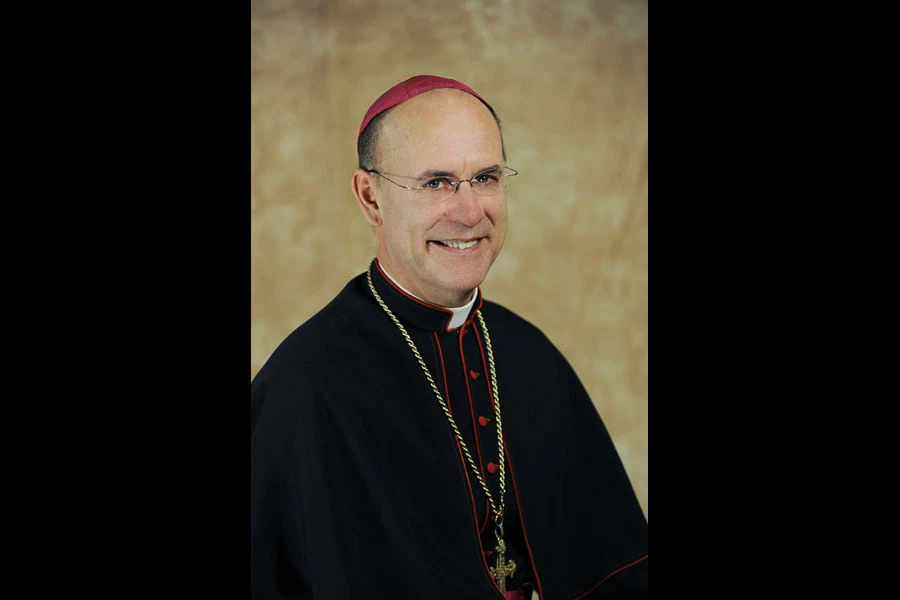
Pittsburgh, Pa., Sep 12, 2018 / 11:01 am (CNA/EWTN News).- In the wake of recent sex abuse scandals, Bishop David Zubik of Pittsburgh has announced a Year of Repentance in the diocese.

He has asked all the clerics to fast and pray for the purification of the Church, and invited all Catholics to join the initiative.

“Faced with the sinful actions of the members of our own ranks of the clergy, who are called to manifest the example of Christ, we feel both shame and sorrow, and are reminded of our own sinfulness and the need for mercy,” Bishop Zubik wrote in a Sept. 10 letter to the clerics and seminarians of the diocese.

“I invite the faithful to join with the clergy as they desire in our acts of prayer and penance. The year is open to individuals to go beyond what I am requesting as we continue to pray that the Lord come to our aid.”

The Year of Repentance will include the observance of the Ember Days, which were traditionally days of fast and abstinence.

Bishop Zubik has asked that on each of the 12 Ember Days in the coming year, clerics of the Diocese of Pittsburgh fast, abstain from meat, and make a Holy Hour.

Ember Days are tied to the seasons of the year, and are held on the Wednesday, Friday, and Saturday of four weeks: the third week of September, the third week of Advent, the first week of Lent, and the octave of Pentecost.

In the Pittsburgh diocese’s Year of Repentance, the Ember Days fall Sept. 19, 21, and 22, 2018, Dec. 19, 21, 22, 2018, March 13, 15, 16, 2019, and June 12, 14, 15, 2019.

Bishop Zubik will inaugurate the Year of Repentance Sept. 23 with Vespers and a Holy Hour at the cathedral.

The year will close with a Mass for the Assumption Aug. 15, 2019 to serve “as a sign of hope and healing for victims and for renewal in the Church through the intercession of Mary.”

In his letter, Bishop Zubik also encouraged the clerics of Pittsburgh to consider restoring the recitation of the prayer to St. Michael after all Masses.

[…]

No Picture
News Briefs

How a priest and teams of homeless people are transforming Detroit

September 12, 2018 CNA Daily News 1

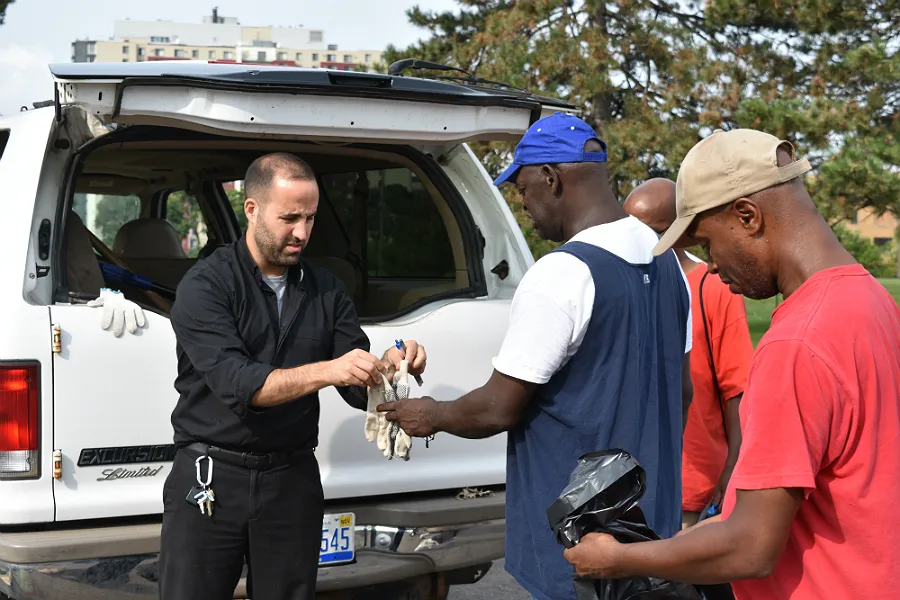
Detroit, Mich., Sep 12, 2018 / 03:01 am (CNA/EWTN News).- Many homeless people of Detroit already recognize Father Marko Djonovic’s white Ford Excursion.

When Djonovic rolls up with his friend Marcus Cobb, it’s probably because they’ve got a job to offer, in exchange for lunch and some pay.

“Word is getting out on the street about us,” Djonovic said of his new ministry, which he dubbed Better Way Detroit.

“So when they see the white Ford Excursion they come up to us, asking, are you going to pick us up for work?” he told CNA.

Djonovic and Cobb are the two-man crew behind Better Way Detroit, and since May they have been teaming up with the city of Detroit and willing homeless workers to clean up the city’s parks, overgrown alleys, and vacant lots.

They drive around three days a week, stopping at shelters and other homeless hangouts, offering several hours of work for pay. The van can hold up to six people besides Djonovic and Cobb, and they typically take workers on a first come, first serve basis.

While he never worked with the homeless in any official capacity prior to starting this ministry, Djonovic said he was inspired by the individual interactions he had had with people on the streets.

After helping a mentally ill man get off the streets and into housing, he said he realized that while the homeless agencies are a “well-polished machine, there are gaps in that sometimes they can’t go out on the streets and find people and meet these people.”

He said he also discovered that many of the homeless had a strong work ethic and a desire to work for pay.

“When I see the homeless I don’t see hopeless objects of pity, but I see persons…with a sincere desire to work. They want to work. And there’s a great need in the city of Detroit, so putting those two things together moved me to to do this project,” he said.

Djonovic is also part of the newly-formed Congregation of the Oratory of St. Philip Neri at Our Lady of the Rosary parish in Detroit.

The spirit of service found in St. Philip Neri was an inspiration behind Better Way Detroit, Djonovic said.

“We serve following his spirit,” Djonovic said of the members of the Oratory. That service manifests itself in three ways: evangelization to youth, the cultivation of the spiritual life among the people through the sacraments, and service to the poor.

“I believe it’s what St. Philip would have done, he wasn’t afraid to out on the streets and preach the Gospel, to engage people, which included the homeless. St. Philip Neri was known as the apostle of Rome just because of that,” he said.

In the beginning, Better Way Detroit partnered with the City of Detroit Parks and Recreation Department to clean up parks through their Adopt a Park program. They now also help the city clear out overgrown alleys and vacant lots that can pose safety problems to neighborhoods.

Cobb provides much need insight to the ministry for how to work with the homeless because he was once a homeless veteran himself, Djonovic said.

“I learn a lot from Marcus, he understands the homeless culture; he’s very wise,” Djonovic said. He said Cobb has taught him the importance of being attentive to even the smaller needs of the homeless, such as if they want cigarettes or water, and to let them know they are respected.

Cobb said it helps instill a sense of respect and responsibility to the homeless that they work with if they are given ownership of the projects in which they partake. Every job starts with an evaluation of the site and the work to be done, and the homeless workers decide how best to get the job done, he said.

“You give them ownership, ask them how it should be done. It gives them responsibility,” Cobb said. “We get their input, and before you know it everyone’s teaming up. It makes them feel important, it gets better results, and they put the word out because they know it’s well worth their time.”

Cobb said he believes the ministry has been well-received among the homeless because “it gives them something to look forward to, and a chance to give back, and to get back into society.”

“Just because they’re homeless…doesn’t mean they don’t want to give back or try to get back in to society,” Cobb said.

It also appeals to the homeless because it gives them a chance to provide for some of their own needs “without a handout,” he said.

The partnership with the city, which is significantly understaffed, has also worked well, Cobb and Djonovic said, because their team is often able to get to jobs that the city doesn’t have the staff to do.

For example, the city gets a lot of calls from senior citizens who have lived in their neighborhoods for decades and have safety concerns about overgrown lots that may serve as hideouts or hubs for drug deals, Djonovic said.

“One woman was just singing our praises” after they cleared up a vandalized, overgrown lot in her neighborhood, he said. “Once (lots) are exposed, they feel safer, especially for the sake of children.”

Djonovic said he feels privileged to get to work alongside the homeless, and as they work, “sometimes I get to know their story, and they get to know my story,” he said.

“It’s happened a few times where guys ask me, why did you become a priest?” he said.

Every project concludes with lunch and a reflection on a bible reading. They have also handed out prayer cards to the homeless and do their best to connect them to housing, healthcare services, or other resources they might need.

“We at least just make them aware of the services available and encourage them to go, some guys aren’t aware of (everything available),” Djonovic said.

Djonovic currently funds the ministry entirely out of his own pocket, and through any donations he receives for the project. All of the money goes strictly to needed materials such as gloves or shovels and to pay the homeless for their work.

Djonovic and Cobb added that they are always looking for ways to expand and strengthen their ministry, and they are hoping sometime in the future to employ someone in a full-time position who can oversee the operation to make it more sustainable.

“Things are looking good we’re really enjoying it,” said Djonovic, who added that he’s been touched by some of the responses he’s seen from the homeless.

“One guy said: ‘I feel blessed because to be a part of something positive.’ He didn’t say, ‘oh, now I’ve got some money in my pocket’,” Djonovic recalled.

“Another young man, 25 years old, he said it was a grace” to participate in the project, he said.

Cobb said he would encourage Catholics to encounter and get to know the poor in their cities.

“Go out and start from the bottom and communicate with the people…go into the areas where the people don’t have the income, and approach them and talk to them halfway nice, and they’ll respond.”

[…]

No Picture
News Briefs

Missouri to enforce abortion regulations in wake of appeals court ruling

September 11, 2018 CNA Daily News 0

Jefferson City, Mo., Sep 11, 2018 / 01:09 pm (CNA/EWTN News).- Missouri’s health department announced Monday that it will immediately being enforcing state laws regulating abortion clinics and doctors, after a US appeals court ruled that the state may do so.

The 8th US Circuit Court of Appeals ruled Sept. 10 in Comprehensive Health v. Hawley to overturn a 2017 decision which blocked enforcement of state laws that required abortion clinics to have the same standards as similar outpatient surgical centers, and mandated that doctors who perform abortions have hospital privileges.

“In its opinion, the court noted that the good faith of state officers and the validity of their actions are presumed,” Randal Williams, director of the Missouri Department of Health and Senior Services, stated.

“As the Director of DHSS, a board-certified obstetrician/gynecologist for thirty years, and a defendant in the case, my commitment and that of the department is to act in good faith to follow the law and protect the health and safety of all women in Missouri, including those seeking abortions.”

The health department stated: “now that the injunction has been vacated, DHSS will immediately begin enforcing the hospital privileges and physical plant requirements for abortion facilities.”

The appellate court ruling comes in a case filed by Planned Parenthood affiliates in 2016 after the US Supreme Court struck down similar abortion restrictions in Texas.

In April 2017 a federal judge issued an injunction against the Missouri law, citing the Supreme Court’s Whole Woman’s Health v. Hellerstedt decision.

The appeals court vacated that preliminary injunction, saying that Hellerstedt “did not find, as a matter of law, that abortion was inherently safe or that provisions similar to the laws it considered would never be constitutional,” and that the undue burden standard requires a weighing of regulations’ benefits and burdens.

In its 2017 decision the district court “explicity refused to ‘weigh [] the asserted benefits’”, Judge Bobby Shepherd wrote for the appellate court, and thus “in light of Hellerstedt the district court erred in so ruling.”

The appeals court judges remanded the case to the district court, saying it “should, at the very least, weigh the state’s ‘asserted benefits.’”

It added that the Hellerstedt decision did not find that provisions similar to those in Texas would never be constitutional, precisely because its analysis of the purported benefits of the law at issue related to abortion in Texas, and that “no such determination about abortion in Missouri was made.”

“Perhaps there was a unique problem Missouri was responding to,” the appeals court wrote. “Such a problem may required a different response than what was needed in Texas, and the Hospital Relationship Requirement may be appropriate given ‘[Missouri’s] legitimate interest in seeing to it that abortion, like any other medical procedure, is performed under circumstances that insure maximum safety for the patient,’” quoting Hellerstedt, which was in turn quoting Roe v. Wade.

“Invoking the Constitution to enjoin the laws of a state requires more than ‘slight implication and vague conjecture,’” the appeals court wrote. “At a minimum, it requires adequate information and correct application of the relevant standard. Because we conclude that the preliminary injuction in this case was entered based on less than adequate information and an insufficient regard for the relevant standard, we vacate the preliminary injunction and remand.”

Planned Parenthood currently provided abortion services at only two locations in Missouri, in St. Louis and Columbia.

In 2017, Missouri passed further regulations which granted the attorney general more power to prosecute violations, and required stricter health codes and proper fetal tissue disposal.

[…]

No Picture
News Briefs

Kavanaugh’s birth control comments spur controversy- What did he say?

September 10, 2018 CNA Daily News 0

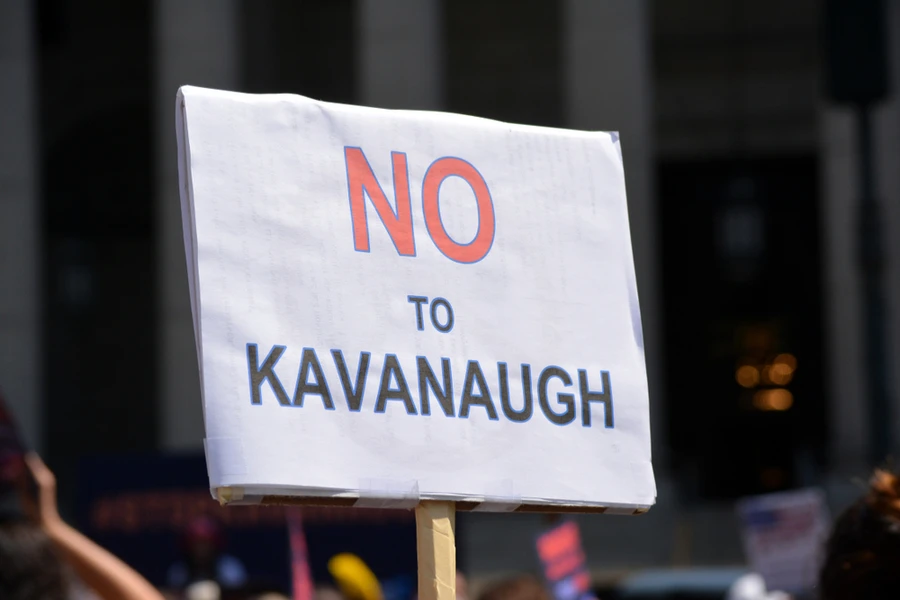
Washington D.C., Sep 10, 2018 / 05:00 pm (CNA).- Opponents of Judge Brett Kavanaugh have suggested that a reference to birth control pills as “abortion-inducing drugs” during Senate confirmation hearings last week represented the judge’s own view on contraceptives.

During last week’s hearings, Sen. Ted Cruz (R-TX) asked Kavanaugh about a 2012 lawsuit filed by the pro-life organization Priests for Life against the Department of Health and Human Services (HHS) over the Affordable Care Act’s contraception mandate. Kavanaugh wrote a dissenting opinion in response to a lower court’s refusal to re-hear the case.

The mandate obliged insurers to include chemical contraception in a list of medications that would be covered without a copay. Cruz asked Kavanaugh to explain the case, and his opinion on the matter.

“Under the Religious Freedom Restoration Act, the question was, first, was this a substantial burden on the religious exercise? It seemed, to me, quite clearly, it was,” said Kavanaugh.

“It was a technical matter of filling out a form, in that case. But they said filling out the form would make them complicit in the provision of the abortion-inducing drugs that they were, as a religious matter, objected to.”

In 2015, the Supreme Court agreed to review the Priests for Life suit along with six others, in the consolidated case Zubik v. Burwell, eventually remanding the individual cases back to the lower courts. In 2016 the government settled with Priests for Life, agreeing not to enforce the mandate and its associated fines, and to pay Priests for Life’s legal fees.

Kavanaugh’s remarks referred to the organization’s description of the contraceptives; he did not characterize them as his own views. However, many opposed to Kavanaugh’s nomination to the Supreme Court have said the exchange illustrates pro-life bias by the nominee.

The Women’s March called the statement an “emergency, all-hands-on-deck moment for women” and said that “now we know he thinks birth control is abortion.” A statement issued via email did not clarify that Kavanaugh had been offering a summary of the case, not a personal view.

Sen. Kamala Harris (D-CA), who is considered to be a potential Democratic presidential candidate in 2020, said via Twitter that while Kavanaugh “chooses his words very carefully,” his response to Cruz was a “dog whistle for going after birth control.”

Harris also said that Kavanaugh “was nominated for the purpose of taking away a woman’s constitutionally protected right to make her own health care decisions,” and that his nomination was “about punishing women.”

The tweet included a video of Kavanaugh saying: “Filling out the form would make them complicit in the provision of the abortion-inducing drugs that they were, as a religious matter, objected to.” The video left out the part of the exchange where the judge clarified that it was the group that believed this, not himself. The fact-checking website PolitiFact rated Harris’ characterization as “false.”

Kavanaugh, a practicing Catholic, has not publicly stated his thoughts about birth control or the Church’s teaching on the topic.  He has rather affirmed his commitment to judicial precedent and the need for judges to apply the law to each case with dispassion.

[…]

No Picture
News Briefs

Bishop Rhoades denies misconduct allegation from time in Harrisburg

September 10, 2018 CNA Daily News 1

Harrisburg, Pa., Sep 10, 2018 / 04:28 pm (CNA).- An allegation of misconduct has been filed against Bishop Kevin Rhoades of Fort Wayne-South Bend and is being investigated by the district attorney’s office. The nature of the alleged misconduct is not clear.

“Bishop Rhoades adamantly denies any validity to this accusation and the insinuation of inappropriate behavior. He did nothing wrong, and is confident any investigation will bear this out,” the Diocese of Fort Wayne-South Bend said.

According to PennLive, the Harrisburg diocese – where Rhoades served as bishop from 2004-2009 – reported the allegation to the office of District Attorney Fran Chardo and to the child protective services program, PA ChildLine.

The district attorney said the accuser, who died in 1996, was a male and about 18 years old when the alleged incident occurred. He said there is no first-hand account of the incident, but that the report received by his office “alleged that they perceived the relationship as odd” but “did not witness any inappropriate conduct.”

According to PennLive, the district attorney’s office is investigating the allegation against Rhoades, who has not been charged.

“We would stress that this is an allegation,” Mike Barley, a Harrisburg diocesan spokesman, told PennLive. “We will have no further comment until the investigation of the Office of the District Attorney is concluded.”

The alleged incident involving Rhoades took place before he became a bishop. His previous work in Harrisburg included serving as assistant chancellor, pastor of Saint Francis of Assisi Parish, and a faculty member and later rector at Mount Saint Mary’s Seminary.

The diocese of Harrisburg was one of the six dioceses covered in the Pennsylvania Grand Jury Report that was released last month. The report found more than 1,000 allegations of abuse at the hands of some 300 clergy members in six dioceses in the state. It also found a pattern of cover up by senior Church officials.

Bishop Rhoades said last month that he would release the names of priests in his Ft. Wayne-South Bend diocese who have been accused of child sexual abuse.

“As leaders, we have an obligation to protect the vulnerable who cannot protect themselves. As a bishop, I have worked to expose and punish those responsible for abuse,” Rhoades said.

“If the Pennsylvania grand jury report taught us anything, it’s that victims deserve to see the names of their abusers made public for all to see. For everyone to know the pain caused by these priests.”

[…]