No Picture
News Briefs

Albany bishop: Lay commission should investigate claims against bishops

August 6, 2018 CNA Daily News 4

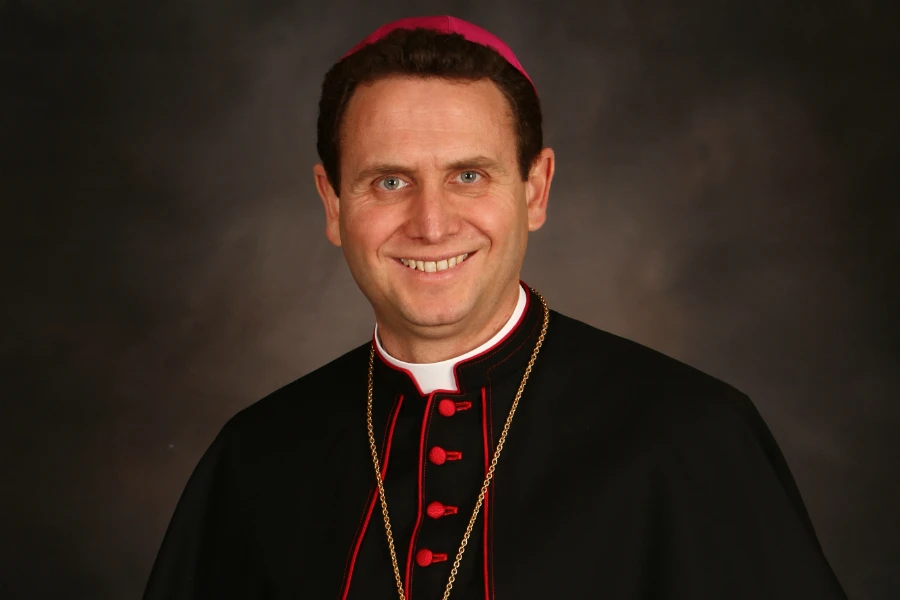
Albany, N.Y., Aug 6, 2018 / 04:45 pm (CNA).- The Bishop of Albany said Monday that a commission of lay Catholics should be formed to investigate claims of abuse or misconduct made against bishops.

“What is needed now is an independent commission led by well-respected, faithful lay leaders who are beyond reproach, people whose role on such a panel will not serve to benefit them financially, politically, or personally,” Bishop Edward Scharfenberger of Albany wrote in a statement released Aug. 6.

“I think we have reached a point where bishops alone investigating bishops is not the answer. To have credibility, a panel would have to be separated from any source of power whose trustworthiness might potentially be compromised,” he added.

The statement was Scharfenberger’s second public comment on the scandal in the U.S. Church that began when the Archdiocese of New York announced June 20 that it had concluded an investigation into an allegation that then-Cardinal Theodore McCarrick had sexually abused a teenager, finding the claim to be “credible and substantiated.”

Since that time, media reports have detailed additional allegations, charging that McCarrick sexually abused, assaulted, or coerced seminarians and young priests during his time as a bishop. McCarrick’s resignation from the college of cardinals was eventually accepted by Pope Francis.

“Let me be clear in stating my firm conviction that this is, at heart, much more than a crisis of policies and procedures. We can – and I am confident that we will – strengthen the rules and regulations and sanctions against any trying to fly under the radar or to ‘get away with’ such evil and destructive behaviors. But, at its heart, this is much more than a challenge of law enforcement; it is a profoundly spiritual crisis,” the bishop wrote in a July 29 letter to priests and deacons of his diocese.

In his Aug. 6 statement, Scharfenberger wrote that “it is time for us, I believe, to call forth the talents and charisms of our lay faithful, by virtue of their baptismal priesthood. Our lay people are not only willing to take on this much-needed role, but they are eager to help us make lasting reforms that will restore a level of trust that has been shattered yet again. In speaking with them, we all hear their passion for our universal Church, their devotion to the Gospel of Jesus Christ, and their hunger for the truth. They are essential to the solution we seek.”

“We bishops want to rise to this challenge, which may well be our last opportunity considering all that has happened. We must get this right. I am confident we can find a way to look outside ourselves, to put this in the hands of the Holy Spirit, and to entrust our very capable lay people, who have stood with us through very difficult times, to help us do the right thing. We need an investigation — the scope of which is not yet defined but must be defined — and it must be timely, transparent and credible.”

[…]

No Picture
News Briefs

Volunteers journey to US-Mexico border to aid separated families

August 6, 2018 CNA Daily News 0

Dallas, Texas, Aug 6, 2018 / 04:05 pm (CNA).- Every single mother or father arriving at Catholic Charities Humanitarian Respite Center in McAllen, Texas was able to tell Pio del Castillo exactly how long they had been separated from their child at the U.S.-Mexico border.

“One month and 13 days.”

“One month and 27 days.”

“Two months and 3 days.”

“They were counting the days and hours,” Castillo told CNA, “For me, to be able to cry with them was the most satisfying job that I have ever done.”

Castillo, from Dallas, Texas, is one of many volunteers from Catholic Charities who traveled from all over the country to the U.S.-Mexico border to aid with the surge of families released from detention centers and in need of assistance.

As the U.S. government worked to a tight-deadline in July to reunite the more than 2,000 separated families, Catholic Charities USA put out a call for more staff and volunteers.

Castillo was between jobs in Dallas when he heard his pastor talking about going to the border to help.

“I was like, ‘Wait a minute. I’m bilingual, trilingual actually, and I am able to help,” Castillo told CNA. He immediately emailed the person in charge of volunteer opportunities at his church, and they put him in touch with Catholic Charities of Dallas.

Not long after, Castillo was working 12-15 hour days at the humanitarian respite center. He conducted intake interviews with the newly released and reunited families as they arrived at the center, where Sister Norma Pimentel and her staff served hot meals and helped connect the migrants with their relatives.

To begin his intake interview, Castillo would say in Spanish, “We are here to help,” but he quickly realized that his small word of kindness would lead many of the migrants to break down crying.

“You don’t know what we have been through. It was horrible not knowing where my kid was,” one parent told Castillo.

Another mother asked him, “Does your organization offer psychological help? My daughter has this separation anxiety and I don’t know how to deal with this.”

“A lot of the kids had this psychological trauma of being separated from their parents,” explained Castillo, who saw the results at firsthand with the newly reunited families who arrived at the center.

Castillo was accompanying a mother and daughter when they passed two immigration officers wearing green uniforms. “As soon as she saw these men dressed in green, she [the daughter]  started shaking and hiding behind her mom … the kid was so nervous that she dropped her coloring book and all of her crayons on the floor.”

“Then something beautiful happened,” said Castillo, “One of the officers helped her so delicately to pick up every single crayon and put it in the box and you could see the kid relaxing a little bit. That was a beautiful moment that I will never forget.”

“I feel that our duty was to help alleviate a little bit of the trauma of these families being separated,” said Castillo.

“Our entire goal at Catholic Charities, throughout this entire border crisis issue, has been families first,” said Carla Goss of Catholic Charities of Dallas, “We need to remember that everyone involved is a human first and foremost.”

Catholic Social Services in Columbus, Ohio, also answered Sister Norma’s call for assistance at the border, sending professional staff members to help coordinate volunteers and the other logistics involved in serving 1,800 families at the respite center.

“We had an opportunity to see in a different way what for most people was just a news story that was far away and on the border,” Catholic Social Services President and CEO Rachel Lustig told CNA.

Lustig had the opportunity to meet with one woman from Honduras who had been recently reunited with her daughter. Most of the migrants her Ohio team served in Texas came from El Salvador, Honduras, and Guatemala. Speaking to CNA, she recalled one such encounter.

“One woman had left Honduras because of domestic violence in her home and because she couldn’t find a way to get recourse and safety with the local government. She was afraid for her life and the life of her daughter, who is only five years old.”

Over the course of four weeks in a detention center, the mother only had two phone calls with her daughter, who wouldn’t talk to her on the other end of the line. “All she would do was cry. It was heartbreaking for her,” Lustig explained.

Lustig said that the their experiences at the border has inspired her team to put more time and energy into their local Our Lady of Guadalupe Center, which serves the new immigrant population of Columbus.

“We have a very deep sense of connection and solidarity to what was going on at the border,” said Lustig.

Although the majority of separated families were reunited by the July 26 deadline, some 463 families remain apart because the accompanying parent was deported from the U.S.

[…]

No Picture
News Briefs

Marie Collins reacts to Cardinal Wuerl’s proposals following McCarrick scandal

August 6, 2018 CNA Daily News 1

Washington D.C., Aug 6, 2018 / 02:00 pm (CNA).- A former member of the Pontifical Commission for the Protection of Minors has said that proposals made by Cardinal Donald Wuerl in the wake of the Theodore McCarrick scandal do not go far enough.

Marie Collins, who is herself a survivor of clerical abuse, also said that the actions taken by Church leaders thus far in response to the McCarrick allegations, are not sufficient to resolve the problem.

On August 3, Cardinal Wuerl released a “pastoral reflection” on the McCarrick crisis. In it, the Archbishop of Washington, D.C., noted it was “particularly disheartening” that the Church had already been through the pain and trauma of addressing sexual abuse and episcopal failures in 2002, but quoted St. John Paul II, saying “We must be confident that this time of trial will bring a purification of the entire Catholic community.” He also pointed out that earlier work by U.S. bishops, including the Dallas Charter, could be revisited and built upon.

In response, Marie Collins told CNA that Cardinal Wuerl “speaks as if the issue had already been addressed when we know this is not the case.”

Cardinal Wuerl’s reflection also praised Pope Francis for his “strong and decisive” response to the McCarrick allegations, calling it an example to follow.

On July 28, the pope accepted McCarrick’s resignation from the college of cardinals and directed him to live in “seclusion, prayer, and penance” pending the outcome of a canonical process. This followed the similar acceptance by the pope of the resignations of five Chilean bishops in the wake of the abuse scandal still unfolding in that country.

Collins, who resigned from the Pontifical Commission for the Protection of Minors in March 2017, said that episcopal resignations were no substitute for a proper determination of guilt and formal punishment following a canonical trail. She said that allowing bishops to effectively remove themselves following public scandal was not a credible means of resolving the crisis.

“Asking for resignations is not the same thing as having a proper, transparent, penal process,” she said, “no proper structure has been put in place to hold bishops or religious leaders to account.”

Cardinal Wuerl’s reflection noted that, in 2002, U.S. bishops issued a “Statement of Episcopal Commitment” which bound them to self-report allegations made against them to the Apostolic Nuncio, and to similarly report allegations they received against other bishops.

Wuerl said the statement could “serve as the nucleus of a more effective mechanism” for holding bishops accountable. Collins was deeply skeptical of the suggestion.

“It is disturbing that Cardinal Wuerl speaks of revising the very unsatisfactory Statement of Episcopal Committeemen that accompanied the Dallas Charter when what is needed is that the Charter itself should be revised to cover all clerics and religious.”

A spokesman for the Archdiocese of Washington, D.C., told CNA that the cardinal’s comments were intended as a “contribution to an important and ongoing conversation.”

“Cardinal Wuerl was drawing attention to the Statement of Episcopal Commitment, to highlight what the U.S. bishops can build upon.”

“He feels it is important for the Church, and especially for victims, that time isn’t wasted reinventing the wheel. The Statement and the Charter could be built upon and improved, and might be useful in that way. But if the bishops decide to go in another direction, that’s also an option.”

In a separate media interview, given on August 5, Wuerl suggested that the USCCB could form a committee or panel of bishops with the authority to investigate allegations, and even persistent rumors concerning individual bishops, such as those which were reportedly in wide circulation concerning Archbishop McCarrick.

Collins told CNA that the Pontifical Commission for the Protection of Minors had already drawn up a set of safeguarding guidelines, approved by the pope, but that it has been left up to bishops’ conferences to take notice of the Commission’s recommendations.

“The Safeguarding Guidelines template which the Pontifical Commission for the Protection of Minors drew up, and which was approved by the Pope, is on the Commission website” she pointed out, also noting that unlike the Dallas Charter “the Commission’s guideline do not exclude bishops – they refer to ‘clerics and religious’.”

Echoing previous criticisms made about the way the Pontifical Commission’s work had been adopted, Collins said that although the guidelines were meant to be a binding standard, they have not yet become normative.

“The original intention was to disseminate the guidelines to all bishops’ conferences globally as best practice and to hold all local policies to this standard, instead, they are now simply a resource on the website to take or leave.”

When asked what a credible response to the McCarrick scandal might look like, Collins  called for a serious commitment to transparency by the Church, both in Rome and in dioceses.

“There must be transparency around every action that is taken in response to a report of any sort of abuse or exploitation. The use of the ‘pontifical secret’ to restrict the information available to victims in canonical trials should end – this was recommended to the Holy Father by the PCPM last September, but there has been no word as to whether the recommendation has been approved or not.”

Collins said that real reform would need to be dramatic, and could include a national body charged with inspecting dioceses.

“Each diocese should open itself to an annual audit by an independent body, with diocesan bishops making all their files available.  This is done in Ireland by the National Board for Safeguarding Children in the Catholic Church and their audits are published.”

“The NBSCCI are not completely independent but they are a central office not connected to any one diocese.”

In his Pastoral Reflection, Cardinal Wuerl has said that any review of policy must be more than just canonical and procedural. The cardinal said any revised version must include “an expansive theological and moral perspective” and recognize the need for “fraternal correction” among bishops.

[…]