No Picture
News Briefs

Spooky, scary, saintly? How Catholics can see Halloween at its best

October 4, 2018 CNA Daily News 0

Tulsa, Okla., Oct 4, 2018 / 03:01 am (CNA/EWTN News).- Whether you dress up as a ghoul, a hero, or a saint, Halloween has a Christian origin that should inspire us to remember our mortality and our redemption in Christ, Bishop David Konderla of Tulsa has said.

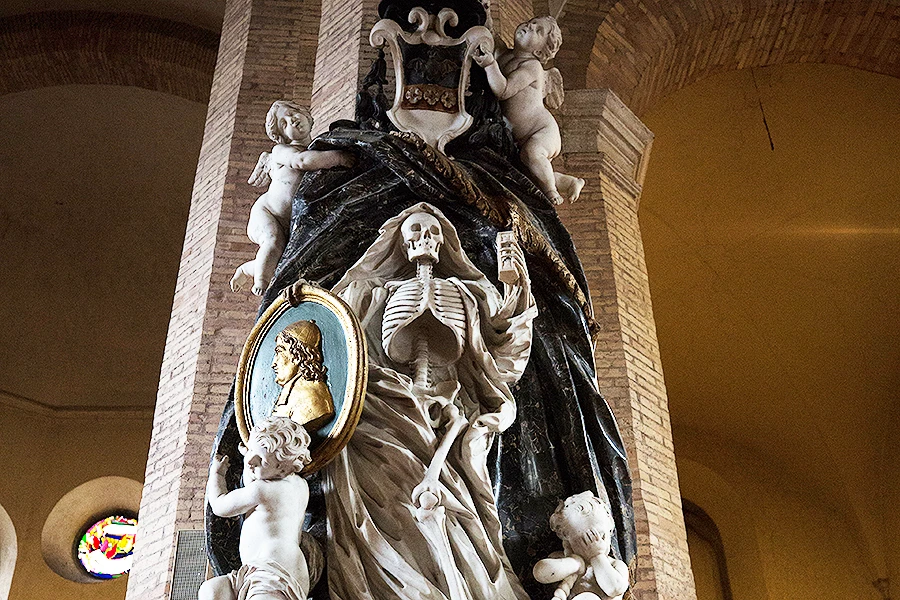
“In contrast to popular culture’s observance of Halloween, even the customary appeal to the ‘frightful’ has a devotional meaning in the Catholic tradition. Props such as skulls and scythes have historically recalled our mortality, reminding us to be holy because we are destined for judgment,” the bishop said, citing Hebrews 9:27 and Revelation 14:15. “Visible symbols of death thus represent a reminder of the last things – death, judgment, Heaven, and hell.”

Bishop Konderla discussed the upcoming holiday, which falls before the Nov. 1 feast of All Saints, in a Sept. 28 memorandum on the celebration of Halloween in the Diocese of Tulsa.

Halloween has origins in the Catholic liturgical calendar, he said, but the customs surrounding it have “drifted from the feast’s intended meaning and purpose.” The name itself derives from the archaic English phrase “All Hallows’ Evening,” referring to the Eve of All Saints. Since All Saints can begin with evening prayer the night before, Halloween is the feast’s “earliest possible celebration.”

“While the ‘Gothic’ aspect of Halloween reminds us of Christian teaching about the resurrection of the dead, our culture often represents this in a distorted manner, for when the dead are raised they will in truth be ‘clothed with incorruptibility’,” said Bishop Konderla.

When separated from Catholic teaching, the holiday’s grim, ghoulish, or “Gothic” costumes can be mistaken as “celebration or veneration of evil or of death itself, contradicting the full and authentic meaning of Halloween.”

“For the Christian, Christ has conquered death, as has been prophesied and fulfilled,” he said.  “Christ has conquered death by his Passion, Death, and Resurrection, the Paschal Mystery whose graces are evident in the glory of all saints.”

The bishop also discussed the custom of dressing up as Christian saints.

“The custom of dressing up for Halloween is devotional in spirit,” he said. “By dressing up as the saints whom we most admire, we imagine ourselves following their example of Christian discipleship. This practice allows the lay faithful in festive celebration to become ‘living icons’ of the saints, who are themselves ‘icons’ or ‘windows’ offering real-life examples of the imitation of Christ.”

“In dressing up as saints we make Christian discipleship our own in a special way, following the exhortation of St. Paul: ‘Be imitators of me, as I am of Christ’,” he said, citing Paul’s First Letter to the Corinthians.

Bishop Konderla invoked the imagery of the saints used in the Book of Revelation.

“Proper veneration of the saints naturally leads to adoration of the Lamb who was slain, whom the saints adore and follow wherever he goes,” he said. “True devotion to the saints, through our prayers and imitation of their witness, leads us sinners back to Christ.”

The bishop also voiced a few warnings. He said it is important to avoid Halloween popularizations of things that are contrary to the Catholic faith. These include the glamorization or celebration of “anything involving superstition, witches, witchcraft, sorcery, divinations, magic, and the occult.”

“We want to be good models of Christian virtue for those we serve and make clear distinctions between that which is good and that which is evil,” he added.

“Let us urge one another this Halloween to express in every detail of our observance the beauty and depth of the Feast of All Saints,” Bishop Konderla concluded.

“Let us make this year’s celebration an act of true devotion to God, whose saints give us hope that we too may one day enter into the Kingdom prepared for God’s holy ones from the beginning of time.”

[…]

No Picture
News Briefs

US Catholics’ confidence in Francis shaken

October 3, 2018 CNA Daily News 2

Washington D.C., Oct 3, 2018 / 02:24 pm (CNA/EWTN News).- A recent poll has shown a drop in popularity for Pope Francis in the United States over the past year. The poll suggests that many Americans increasingly disapprove of how the pope has handled t… […]

No Picture
News Briefs

San Diego bishop holds ‘listening sessions’ on abuse crisis

October 3, 2018 CNA Daily News 0

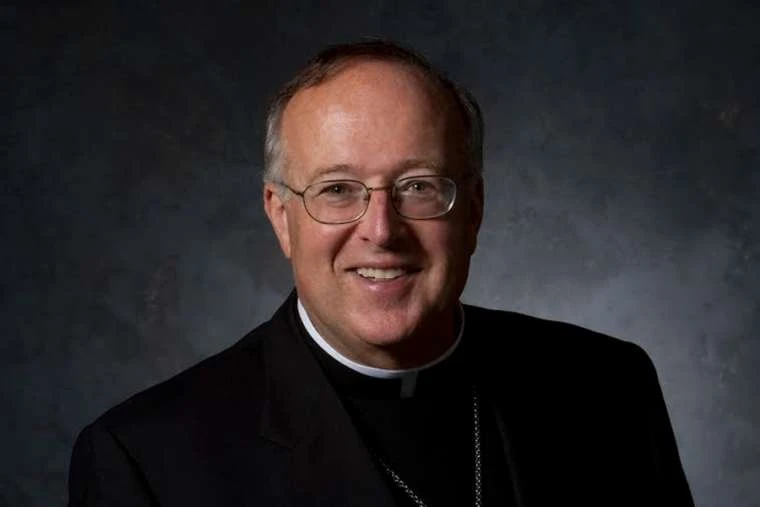
San Diego, Calif., Oct 3, 2018 / 10:00 am (CNA).- Bishop Robert McElroy told a crowd of more than 300 people that he was committed to increasing accountability for bishops and to maintaining a zero-tolerance approach to abuse in the diocese. The San Diego bishop spoke at the first of eight public meetings scheduled to provide a forum for feedback from the laity on recent abuse scandals.

The meeting was held Oct. 1 at Our Mother of Confidence parish in University City, San Diego.

“These meetings will focus on seeking input from people in the pews on the pathway to such reform, listening to those who have been victimized by clerical sexual abuse either directly or in their families, and praying for God’s grace to be our only guide,” McElroy said in a statement announcing the fora which was distributed after weekend Masses in the diocese.

Bishop McElroy began the session Monday evening by acknowledging the “wrenching” effect that recent scandals had had on Catholics, and he invited the audience to help form the Church’s response to the crisis.   

The open forum proved to be a difficult event for the bishop, according to local media. The San Diego Union-Tribune reported that McElroy fielded vocal criticism, including some booing, for his perceived “downplaying” of recent scandals, including the revelations about Archbishop Theodore McCarrick and the “testimony” of former apostolic nuncio Archbishop Carlo Maria Viganò.

McElroy has previously called Viganò’s initial public letter, released Aug. 22, a “distortion of the truth” and an attempt “to settle old personal scores.”

During the event, McElroy was asked about a number of topics related to the recent scandals, including increased accountability for bishops, the safety of seminarians from sexual abuse and coercion, and the existence of a “homosexual subculture” in some parts of the Church.

McElroy told those attending that there was no link between the sexuality of priests and instances of abuse. “Abuse is not about sex,” he said. “It is about power and domination.”

In an Aug. 27 statement on the crisis of sex abuse in the Church, Bishop McElroy wrote that “the bishops of our nation, in union with the Holy Father, should be focused solely on comprehensively revealing the truth about the patterns of the sexual abuse of minors and vulnerable adults by clergy in our Church, so that deep reform can be enacted.”

As part of the listening session, McElroy also explained the measures which the diocese has had in place since 2003 to enforce its policy of zero-tolerance for abuse.

“I think we’re in an OK place in the structures we have put in place for the protection of minors,” McElroy said.

According to the Union-Tribune, McElroy also said that the diocese had received no credible allegations of abuse against living priests in more than three years.

In March of this year, the Diocese of San Diego removed a religious priest from his position as associate pastor in the parish of St. Patrick in Carlsbad, CA, following an alleged sexual assault on a seminarian after a parish event.

While parishioners were not told why Fr. Juan Garcia Castillo was removed from his post, the diocese confirmed to CNA in September that they had suspended his priestly faculties. The priest is facing criminal charges of sexual battery.

Despite the sometimes aggravated tone of questions and contributions, loud bursts of applause did break out in appreciation of the priests of the diocese, of whom attendees spoke warmly.

A further seven “listening sessions” have been scheduled by the diocese, with the next taking place at 7pm, Oct. 3, at St. Joseph Cathedral.

[…]

No Picture
News Briefs

The Holy Spirit can guide, heal nation, justices hear at DC Red Mass

October 1, 2018 CNA Daily News 0

Washington D.C., Oct 1, 2018 / 04:42 pm (CNA/EWTN News).- Americans should call on the Holy Spirit to guide and heal the Church and nation, Msgr. Peter J. Vaghi said to attendees at Sunday’s annual Red Mass, celebrated at the Cathedral of St. Matthew the Apostle in Washington, DC.

Vaghi, who is chaplain of the John Carroll Society as well as pastor at the Church of the Little Flower in Bethesda, Md., spoke at the Sept. 30 Mass of the Holy Spirit, which traditionally marks the beginning of the judicial year. The US Supreme Court’s 2018-2019 session opened Oct. 1.

The name Red Mass is taken from the red vestments worn to symbolize the tongues of fire of the Holy Spirit.

It is this Holy Spirit whom people should call upon “to return and enlighten us, to enlighten in a special way each of you who serves the cause of justice and the common good,” said Vaghi.

“The Spirit comes with the tenderness of a true friend and protector to save, to teach, to counsel, to strengthen, to console, to renew, to heal,” he said. “Yes, to heal us.”

Vaghi noted that both the Church and country could benefit from this healing power, as “it is a power that treats the anger and divisions that so need the healing touch of our God if we are to continue our respective missions with love and effectiveness in our day.”

The Holy Spirit is a guide for those working in the legal profession and in government service, as the Holy Spirit helps people experience God’s wisdom and love as “the guiding principles and foundation of our very existence moving us to be men and women of justice, compassion, boundless mercy and joy” in their jobs.

Vaghi drew comparisons between the Holy Spirit as “the spirit of truth” and the words used in the Declaration of Independence.

“So we call upon the Holy Spirit to help us understand and deepen our understanding of these ‘truths’ referred to in our Declaration of Independence” – life, liberty, and the pursuit of happiness. The Red Mass, he said, is “a most appropriate time” for one to think about these truths.

“In our day, these ‘truths,’ truths whose origin is the Holy Spirit, are sometimes seen in ways not always as self-evident – these truths that from the beginning of our national experiment helped define us as Americans – these truths of life, liberty and the pursuit of happiness,” he said. The country is divided, but Vaghi believes that the truths laid out in the Declaration of Independence are a solid base for rebuilding the American consensus.

The Red Mass is celebrated each year prior to the start of the Supreme Court’s new term, and stems from a tradition in the Middle Ages. It is meant for all members of the legal profession, including lawyers, judges, law students, and government officials, Catholic or otherwise. The Red Mass has been celebrated in D.C. for the past 66 years.

This year three Supreme Court Justices, Stephen Breyer, John Roberts, and Clarence Thomas, attended the Mass, along with newly-retired Justice Anthony Kennedy. Attorney General Jeff Sessions was also in attendance. Notably not present at the Mass was Judge Brett Kavanaugh, who is currently in the midst of a heated confirmation process for the Supreme Court.

[…]

No Picture
News Briefs

CNA Explainer: What rights does a pastor have?

September 29, 2018 CNA Daily News 1

Chicago, Ill., Sep 29, 2018 / 09:30 am (CNA).- The recent case of Chicago’s Fr. Paul Kalchik has generated considerable publicity, and left more than a few questions unanswered.
 
Kalchik was “temporarily” removed from his post at Resurrection Parish in northwestern Chicago last week, following a Sept. 14 incident in which a rainbow banner which had previously hung in the church building was burned by parishioners, with Kalchik in attendance.
 
Kalchik announced Sept. 2 that he planned to burn the flag publicly on Sept. 29. He acknowledged recently that the archdiocese had instructed him not to proceed with that plan.

Almost everything else about the case remains disputed.
 
The Archdiocese of Chicago told CNA recently that Fr. Kalchik had agreed not to burn the banner. Kalchik, in a recent interview, claimed that he was told not to conduct the specific Sept. 29 public event he had previously announced.
 
An archdiocesan spokesperson also told CNA that Kalchik’s departure from the parish – which the archdiocese says is temporary – was not linked to the banner burning at all, but had been “in the works” for some weeks.

Chicago’s Cardinal Blase Cupich was apparently concerned about “a number of issues” at the parish. The archdiocese added that Kalchik’s departure was arranged by “mutual agreement” and that he is presently receiving “pastoral support” for unspecified needs.
 
Kalchik says his departure was anything but a mutual decision.
 
The priest says that two diocesan officials, priests, arrived at his rectory and ordered him off the premises, threatening to call the police if he refused to comply. According to Kalchik, the priests said that he would be sent to St. Luke’s Institute, a Maryland psychiatric assessment and treatment center for priests.

The Archdiocese of Chicago declined CNA’s request for confirmation or denial of those claims.

What are a pastor’s rights?

Amid the conflicting narratives surrounding Kalchik, a question emerges: what canonical rights does a parish priest actually have?

While a priest’s ministry is dependent upon that of his bishop, and every priest promises respect and obedience to the bishop at ordination, it is a common mistake to think of a pastor as a kind of branch manager or tenant farmer of the bishop. The pastor’s canonical role is much different than that.
 
Canon law treats the subject of a parochus –  the pastor of a parish – very explicitly.
 
Canon 515 §1 of the Code of Canon Law says that each parish is to be entrusted to the care of a parochus, who serves as the shepherd of the community under the authority of the bishop.
 
The same canon makes clear that the parish itself is not a piece of land, a church, or any other collection of buildings. A parish is properly understood as a group of the faithful, usually defined as those living in a particular area.
 
The relationship between the pastor and his parish is, in a technical sense, personal: a relationship between persons, defined and circumscribed by law.  
  
In canon law, every parish has its own “juridic personality,” meaning that is a freestanding legal entity, with its own property, and its own rights and obligations.
 
The Code clarifies that the pastor represents the parish “in all juridic affairs,” and it is his responsibility to lead the community and decides what is in its best interests.

Of course, the bishop is free to establish policies for all parishes in his diocese- called particular laws- provided that they do not conflict with universal canon law or divine law. But within the boundaries established by canon law, divine law, and civil law, it is the pastor’s job to lead the parish, and to determine, prayerfully and consultatively, how best to govern the community with which has has been entrusted.

There have been cases where the pastor and the bishop disagree about parish needs, and canon law provides mechanisms to address such conflicts, including processes of appeal from episcopal decisions and directions, and canonical courts in which they can be adjudicated.
 
A bishop and pastor might disagree, for example, about parish property. A bishop may direct a pastor to sell a piece of property, or to give it over to meet a diocesan need, and the pastor may judge that to be a bad idea. Such a dispute could become a matter of “hierarchical recourse,” if the pastor appeals a decision he does not support. When disputes over such matters are appealed to Rome, the Congregation for Clergy is often obliged to remind the bishop to respect the rights of the pastor.
 
Similarly, within the scope of universal and particular canon law and the teachings of the Church, a pastor also has the autonomy to teach and preach in a way he believes is best suited to the needs of the people.

This does not mean, of course, that bishops have no authority over parish pastors. In addition to establishing particular laws for his diocese, a bishop has the authority to oblige any priest or member of the faithful to do, or not do, a particular thing he may determine to be detrimental to the wider community. He can do this through a precept- a kind of canonical induction directed at a specific person or situation.

Since a precept is a formal legal action, a pastor has the right to appeal it, provided he does so according to the procedures established by canon law. But he does not have the right to simply ignore a legitimately issued precept.

Bishops also have the authority to appoint pastors. Except for very exceptional cases, canon law gives the diocesan bishop a free choice to appoint whatever priest he thinks is most suitable for the job. This is understandable, since the pastor carries out his role “under the authority of the diocesan bishop in whose ministry of Christ he has been called to share.”

A bishop is not free, however, to remove or transfer a pastor from his office without following a detailed and non-negotiable process defined by canon law. This procedure can only be initiated if a priest has met one or more conditions for removal outlined in the law, which include actions “gravely detrimental or disturbing to ecclesiastical communion,” along with permanent infirmity of mind or body, a loss of good reputation among his flock, and neglect of his duties in the parish.

Even if a priest has met those conditions, before he can be removed from the office of pastor, the bishop must formally consult with certain priests appointed by the diocesan priests’ council, he must allow the pastor the opportunity to see the evidence against him and make a defense, and he must discuss that defense with the priests appointed to consult with him.

During this whole process, the bishop can neither remove the pastor, nor appoint a replacement.
 
If the bishop does issue a decree of removal, the priest has the right to appeal his case to Rome, where the Congregation for Clergy, or eventually the Apostolic Signatura, can examine the decision and the process used to reach it.

A bishop also has the prerogative, in certain limited circumstances, to declare that a priest is impeded from exercising priestly ministry, but that must be done through a delineated process as well. A bishop could also withdraw certain faculties for ministry from a priest, but only if he has good reasons, and only if he has followed the procedural requirements of canon law.

In short, while no priest has a right to an assignment or to ministry, once a priest is appointed a pastor, he cannot be removed from his office, or from his ministry, without serious cause, and without observation of the law’s procedural requirements. Similarly, prohibiting a priest from residing in a certain place can only be done in the limited circumstances allowed by canon law.

This also means that, except in very limited and unusual circumstances, a bishop is not within his rights to attempt to remove the legitimate pastor of a parish from its property, or to threaten to have the police do so. Were a bishop to do such a thing without observing canonical requirements, and the priest appeal to Rome, it is likely that the Vatican would order the pastor to be reinstated.

Neither can a bishop compel any priest to undergo a psychological evaluation or engage in psychological treatment. While a bishop might condition future assignments on a “clean bill of mental health,” he can not force a priest to be diagnosed or treated against his will, or to disclose the details of his mental health if he does not wish to do so.

Canon 519 says that the pastor exercises “the pastoral care of the community committed to the pastor under the authority of the diocesan bishop in whose ministry of Christ he has been called to share, so that for that same community he carries out the functions of teaching, sanctifying, and governing.”

The authority of the diocesan bishop is not absolute. Nor is the autonomy of the pastor. But both exist, as defined by canon law, for the service of the Church, and the salvation of souls. Understanding the authority of bishops, and the rights of pastors, is important at a moment in the Church’s life when so much seems unclear, and when many questions remain unanswered.


[…]

No Picture
News Briefs

Prolife Democrat laments ‘homogenization’ within parties

September 28, 2018 CNA Daily News 0

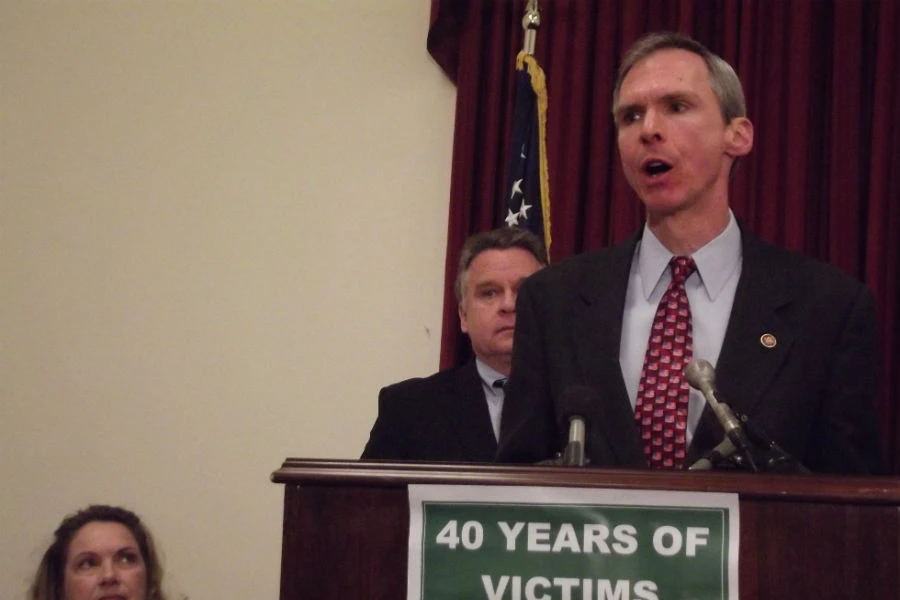
Washington D.C., Sep 28, 2018 / 03:30 pm (CNA).- Rep. Dan Lipinski (D-IL), one of the few prolife members of the Deomcratic Party with a seat in Congress, has spoken about his commitment to life issues and his concern at the increasing divide between the two major parties.

The congressman spoke at an event entitled Being a Faithful Catholic as a Public Servant on Sept. 27. The event was hosted at the Catholic University of America and sponsored by the university’s Institute for Human Ecology.

Lipinski, along with CUA Professor Joseph Capizzi, discussed what life is like in Washington for one of the last remaining Blue Dog Democrats, and how his party has shifted to the point of effectively trying to force people like him out. He has represented Illinois’ 3rd district for the last 14 years, a time in which he says divisiveness and polarization has gotten worse.

Although voting as a committed Democrat, with a 91 percent rating from the AFL-CIO and a 100 percent rating from the League of Conservation Voters— Lipinski also calls himself a strong and proud pro-life legislator, something which can leave him isolated from his party colleagues.

“The parties have really gotten more homogeneous,” he said. “It used to be that you had conservative Democrats, largely southerners but not all, and you had some more liberal Republicans. The parties have really sorted out.”

His constituents, he explained, are largely the “old-fashioned Democrats”–a phrase that he himself identifies himself with.

Over his nearly decade and a half in Congress, “things have changed. There’s less bipartisanship, but things have really gotten so much worse.”

The two major parties are generally found on opposite sides of the abortion debate. The Democratic Party’s platform has support for the public funding of abortion as one of its planks, while the Republican Party’s platform states that all Americans have an “unalienable right to life.”

In addition to being a relative rarity in his party, his pro-life views have made him something of a target.

This past March, Lipinski barely survived a primary challenge in his Illinois constituency. His challenger, Marie Newman, made abortion the central issue of that campaign, and received considerable support and money from numerous pro-abortion groups.

The Democratic Congressional Campaign Committee initially declined to endorse Lipinski, but finally endorsed the sitting congressman about two weeks before the primary election.

Lipinski said that while he is hopeful about the future of the pro-life movement, he was not comfortable with how the movement had “embraced” President Donald Trump. He explained that he pulled out of speaking at the annual March for Life when he learned that Trump would also be addressing the event.

“It very much concerns me,” said Lipinski about Trump. “I understand he’s done some very good things when it comes to protecting life, but I’m scared that getting too close is going to hurt the movement in the long run.”

Those who attended the talk were impressed with what Lipinski had to say, even if they were not necessarily on board with all of his policy positions. Many of the attendees at the Catholic University told CNA that they appreciated the stance he was taking for life.

“It’s wonderful to hear a pro-life politician who remains firm in his stance and is willing to speak out publicly in defense of life,” Sr. Mary Elizabeth, SV, told CNA.

Nick Swanson, a freshman at Catholic University who described himself as a Republican, said that he thought it was interesting how blunt Lipinski was about his time in Congress.

“It wasn’t as if he was playing to a political audience, he just wanted to be honest about the struggles he faced in making his decisions. It’s almost like he, when he approaches these decisions he takes them seriously. It’s not as if he just follows the party line,” said Swanson.

John Dashe, another freshman, told CNA that he thought it was refreshing to find ideological diversity within a party.

“Being from (Massachusetts), we have a lot of Democrats, but none of them are pro-life,” said Dashe.

“Coming from a perspective where I thought they all had a sort-of uniform view, it’s interesting to see that he was different in that way.”

[…]