No Picture
News Briefs

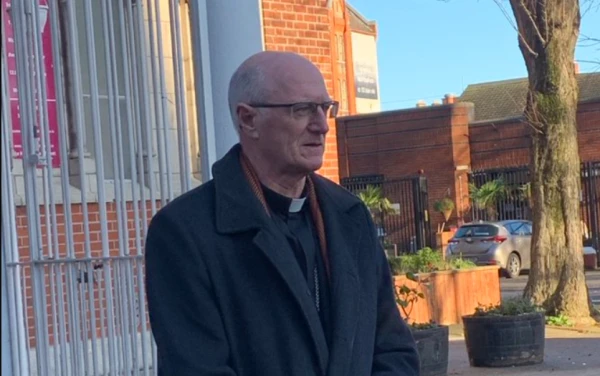
Archdiocese of Dublin may need major organizational changes says Archbishop-elect in confusing Irish Times interview

January 3, 2021 CNA Daily News 0

Dublin, Ireland, Jan 3, 2021 / 08:29 am (CNA).- In an interview with the Irish Times published on Saturday, January 2nd, the Archbishop-elect of Dublin, Dermot Farrell announced that he is looking into major administrative changes in the Archdiocese. Farrell addressed other issues such as priestly celibacy and women priests, but the newspaper’s quotes are too short and confusing.

Currently, half of Dublin’s priests are over 70, many of them retiring in the next few years, while congregations are aging and declining. Also, because of COVID 19, income is down by close to 80 percent, and priests’ income cut by 25 percent.

“I come as a pastor. “ “and I am up for the challenge” Archbishop elect Dermot Farrell pic.twitter.com/lQdlnUQb30

— Archdiocese Dublin (@DublinDiocese) December 29, 2020

According to the Irish Times, the newspaper held a “lengthy interview by telephone” with Farrell, which turned into two stories published on Saturday, but both were heavily edited and therefore unclear about the true thinking of the Archbishop-elect.

According to the paper, Farrell believes that in a world “where there are fewer priests”, every parish in the archdiocese will have to change and some will amalgamate, but this will be done in consultation with priests and parishioners, not over their heads.

“[It is about] talking to the people, it’s talking to the priests, listening. These are their churches, their faith communities. It’s not going to be the Archbishop, or Archbishop’s House going round saying, ‘Close this church’,” the Archbishop-elect is quoted as saying.

Also according to the Irish Times, the future Archbishop of Ireland’s capital city supports women deacons, “shows some flexibility” about priestly celibacy, and opposes women priests. But the quotes provided by the newspaper hardly include more than a few words and rarely a full paragraph. CNA has reached out to the author of the interview for the full version.

Pope Francis appointed Dermot Farrell (66) of Ossory, Ireland, as the next archbishop of Dublin. The Archbishop-elect is the Finance secretary to the Irish Bishops’ Conference, a position he was appointed to in March 2019.


[…]

No Picture
News Briefs

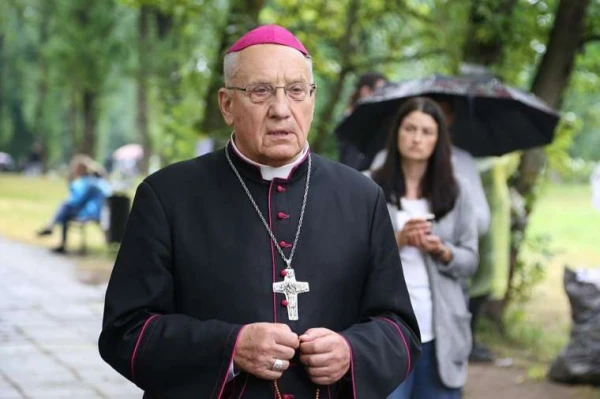
Pope Francis accepts resignation of Archbishop Kondrusiewicz days after return to Belarus from exile

January 3, 2021 CNA Daily News 0

Vatican City, Jan 3, 2021 / 06:15 am (CNA).- Less than two weeks after Archbishop Tadeusz Kondrusiewicz of Minsk was allowed to return to Belarus after a four-month exile, the Vatican announced Sunday that Pope Francis had accepted the archbishop’s resignation on his 75th birthday.

In a statement Jan. 3, the Holy See Press Office said that the pope had accepted the archbishop’s resignation in accordance with the Church canon that requests that a bishop offers his resignation to the pope at the age of 75.

The Vatican did not name a successor metropolitan archbishop of Minsk-Mohilev, but appointed 75-year-old Bishop Kazimierz Wielikosielec, the current auxiliary bishop of Pinsk, to serve as apostolic administrator of the archdiocese.

In Belarus, Catholics celebrated Kondrusiewicz’s 75th birthday on Jan. 3 by creating a video honoring his life of service to the Church and holding signs of congratulations.

Kondrusiewicz returned to Belarus on Dec. 24, nearly four months after he was barred from entering his native country after he had spoken in defense of protesters following a disputed presidential election.

Belarusian authorities permitted his return to the country to celebrate Christmas at the request of Pope Francis, according to the nunciature in Belarus.

“The challenges of the coronavirus pandemic and the socio-political crisis call us to return to true religiosity, which shows that we are created for something more than just caring for earthly affairs and pleasures,” Archbishop Kondrusiewicz said Dec. 24.

“The doors of the former Soviet Union, where militant atheism has prevailed for three generations, have opened to Christ. We got freedom, including religion. Unfortunately, we soon forgot that freedom is not only a gift, but also a responsibility,” he said in his homily, according to the website of the Catholic Church in Belarus.

Protests in Belarus began Aug. 9 after president Alexander Lukashenko was declared to have won that day’s election with 80% of the vote. Electoral officials said that the opposition candidate, Sviatlana Tsikhanouskaya, earned 10% of the vote. The opposition claims that she actually garnered at least 60% of votes.

Thousands of protesters against the election results were detained, including a number of priests. Archbishop Kondrusiewicz prayed outside of a prison where protesters were being held on Aug. 20.

Later that month Kondrusiewicz, who had been visiting Poland, was blocked from returning to Belarus by Belarusian border guards. His passport had been invalidated.

Lukashenko, who has served as president of Belarus since the position was created in 1994, suggested that Kondrusiewicz might be a citizen of more than one country — a claim that the archbishop denied.

The U.S., U.K., and EU no longer recognize Lukashenko as the Belarusian president. Canada, the U.K., and the EU have placed sanctions on senior Belarusian figures.

Lukashenko secured a $1.5 billion loan from Russian president Vladimir Putin in December as Putin denounced “external pressure” on Belarus.

Relations between the Holy See and Belarus have been strained over claims the Church in Belarus is being used to exert foreign influence, as well as Archbishop Kondrusiewicz’ exile.

Archbishop Claudio Gugerotti, apostolic nuncio to the United Kingdom, acted as a special envoy of Pope Francis to Lukashenko, delivering a letter Dec. 17 with a request regarding Archbishop Kondrusiewicz.

Archbishop Kondrusiewicz said that when he was finally allowed to cross the border and return to Belarus on Dec. 24 he knelt down, prayed and kissed the ground.

Kondrusiewicz had served as metropolitan archbishop of Minsk since 2007 and as president of the Belarusian bishops’ conference since 2015.

He was consecrated as a bishop by St. John Paul II on Oct. 20, 1989 in St. Peter’s Basilica in Rome. As bishop, Kondrusiewicz founded the Grodno Higher Theological Seminary and reopened about 100 churches that had been closed during the communist persecution, according to the website of the Catholic Church in Belarus.

In his homily on Jan. 1, Archbishop Kondrusiewicz called on Catholics in Belarus to entrust the year ahead to God “so that it may be a time of successful resolution of socio-political and epidemiological crises and a time of blessing that will bring many spiritual fruits to us and our society.”


[…]

No Picture
News Briefs

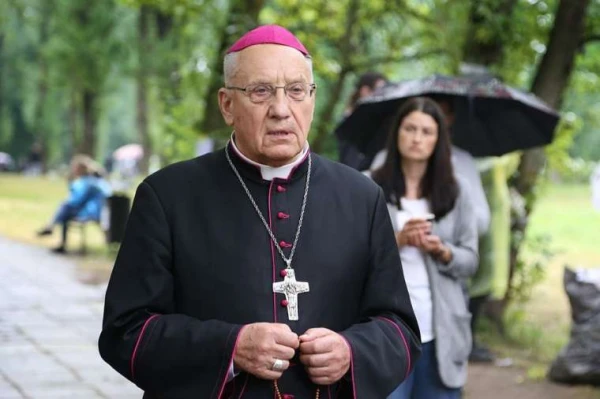
Exiled Belarusian archbishop will be allowed to return for Christmas

December 23, 2020 CNA Daily News 0

Minsk, Belarus, Dec 23, 2020 / 02:34 pm (CNA).- Belarusian authorities announced Tuesday that Archbishop Tadeusz Kondrusiewicz of Minsk-Mohilev, who was exiled in August, will be permitted to return to the country at Christmas.

“The Apostolic Nunciature express its gratitude to the State Authorities of Belarus for responding positively to Pope Francis’ request to return Archbishop Tadeusz Kondrusiewicz to celebrate the Nativity of the Lord with the faithful of which he is pastor,” the nunciature in Belarus stated Dec. 22.

Archbishop Kondrusiewicz’ passport had been invalidated, and he was blocked from returning to Belarus from Poland by border guards Aug. 31. The archbishop has spoken in defense of protests following a disputed presidential election.

Belarus has seen widespread protests since that election. The protests began Aug. 9 after president Alexander Lukashenko was declared to have won that day’s election with 80% of the vote.

Lukashenko, who has been president of Belarus since the position was created in 1994, has suggested Archbishop Kondrusiewicz might be a citizen of more than one country.

Archbishop Claudio Gugerotti, apostolic nuncio to the United Kingdom, acted as a special envoy of Pope Francis to Lukashenko, delivering a letter Dec. 17 with a request regarding Archbishop Kondrusiewicz. Archbishop Gugerotti was apostolic nuncio to Belarus from 2011 to 2015.

“Out of deepest respect for the Pope and because of good personal relations, the Belarusian head of state considered it possible to meet the Pope’s request and gave an instruction to find a solution to the issue, taking into account all available legal mechanisms,” Vladimir Makei, the Belarusian foreign minister, said Dec. 22, according to the state-owned Belarusian Telegraph Agency.

“The upcoming great holiday of Christmas and festive events were an additional reason to take this decision on Metropolitan of Minsk and Mogilev Archbishop Tadeusz Kondrusiewicz despite a number of negative things about this person,” Makei added.

The foreign minister said Belarus and Vatican City “always discuss all cooperation-related issues in an open and candid way.”

“By the way, we closely cooperate with the Vatican within the framework of various international organizations. We support each other virtually across all areas of international, regional and bilateral agenda,” Makei added.

Relations between the Holy See and Belarus have been strained over claims the Church in Belarus is being used to exert foreign influence, as well as Archbishop Kondrusiewicz’ exile.

Archbishop Ante Jozić, who was appointed apostolic nuncio to Belarus earlier this year, arrived in the country in October, being met by both ecclesial and state authorities.

And Archbishop Paul Gallagher, the Vatican’s Secretary for Relations with States, visited Belarus in September in an attempt to resolve the impasse regarding Archbishop Kondrusiewicz.

In Belarus thousands of protesters of the election results have been detained, including a number of priests. At least four people have died in the unrest.

Electoral officials said that the opposition candidate, Sviatlana Tsikhanouskaya, earned 10% of the vote. The opposition claims that she actually garned at least 60% of votes.

Tsikhanouskaya was detained for several hours after complaining to the electoral committee. She and several other opposition leaders are now in self-imposed exile in Lithuania or other nearby countries.

The US, UK, and EU no longer recognize Lukashenko as the Belarusian president. Canada, the UK, and the EU have placed sanctions on senior Belarusian figures.

Lukashenko secured a $1.5 billion loan from Russian president Vladimir Putin earlier this month, and Putin has denounced “external pressure” on Belarus.

In September the Vicar General of the Archdiocese of Minsk-Mohilev denied reports from Russia’s foreign intelligence agency that the Church in Belarus is being used by the US, calling them “complete nonsense, fake information.”

“Some media outlets published information provided by the head of Russia’s foreign intelligence service Sergey Naryshkin. This is a fake, this is nonsense. He spoke about some provocations, about the fact that the United States, the CIA and other organizations are trying to use the Catholic Church to undermine the state system in our country,” Bishop Yury Kasabutski said during his homily at a Mass in Minsk.

Naryshkin is director of Russia’s Foreign Intelligence Service. The Russian news agency Interfax reported Sept. 29 that Naryshkin had said, “the United States is also unceremoniously interfering in the religious situation in Belarus … The clergy of the Roman Catholic Church are being asked to openly criticize the Belarusian authorities and to use religious events, including sermons, prayers, religious processions, to conduct opposition political propaganda among believers.”

Archbishop Kondrusiewicz has told CNA: “I was accused that I received from Warsaw some instructions, or something, but I didn’t visit Warsaw.” He said he had visited eastern Poland to celebrate the First Communion of a relative.

Archbishop Kondrusiewicz was born in 1946 in Odelsk, in what was then the Byelorussian Soviet Socialist Republic (part of the USSR), to an ethnic Polish family. The Byelorussian SSR was succeeded in 1991 by the Republic of Belarus.


[…]