The Dispatch

China’s new ‘Patriotic Education Law’ places further limits on religious instruction

November 9, 2023 Catholic News Agency 6
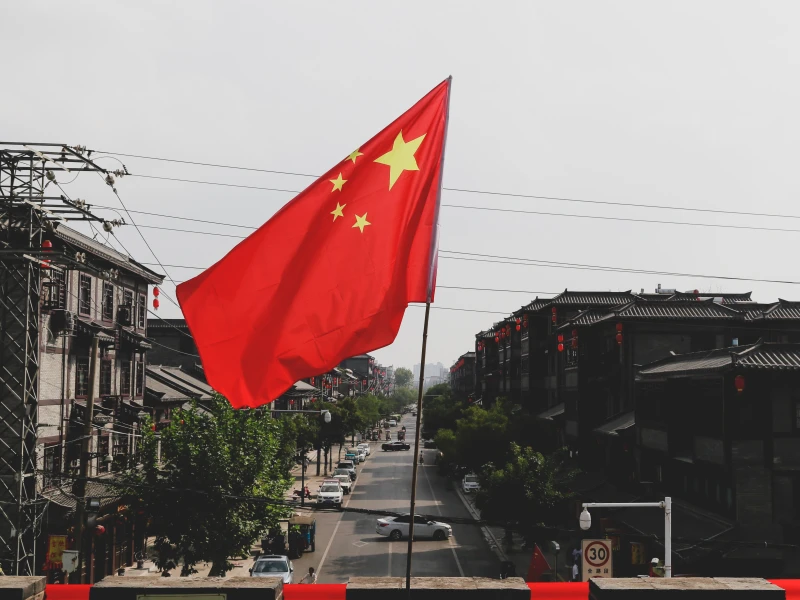
Flag of the People’s Republic of China. / Credit: Yan Ke / Unsplash (CC0)

CNA Staff, Nov 9, 2023 / 16:12 pm (CNA).

China passed a “Patriotic Education Law,” further consolidating the Chinese Communist Party’s control over education, including religious education, state-controlled media outlet Xinhua announced last month.

The new law, which was passed during a session of the National People’s Congress Standing Committee, would require churches and religious groups to adapt their educational activities to promote the party’s official ideology.

“The state is to guide and support religious groups, religious institutes, and religious activity sites in carrying out patriotic education activities, enhancing religious professionals’ and believers’ identification with the great motherland, the Chinese people, Chinese culture, the Chinese Communist Party, and socialism with Chinese characteristics,” the new law reads.

The law goes on to say that “all levels and types of school shall have patriotic education permeate the entire course of school education” and that even “the parents or other guardians of minors shall include love of the motherland in family education.”

Patriotic education has been an imperative of the CCP since the Maoist Revolution to inculcate the party’s official ideology. It has been reimagined during periods of social upheaval, namely during the Cultural Revolution and in the aftermath of the 1989 Tiananmen Square massacre. 

Xi Jinping has put his twist on patriotic education, underpinning it with the ideological doctrine of the “great rejuvenation of the Chinese people.” This mantra is in part centered on the revival of Chinese culture, but it is also predicated on “upholding the leadership of the Communist Party of China and socialism with Chinese characteristics.”

This phrase, which was first introduced under Deng Xiaoping, has since been redefined in the Xi Jinping era and was even enshrined in the constitution at the 19th National Congress of the CPC in 2017 as “Xi Jinping Thought on Socialism with Chinese Characteristics for a New Era.” 

This ideological refrain, which is immortalized in the general program of the CCP’s constitution, is repeated in article 6 of the Patriotic Education Law and forms the basis for the patriotic curriculum. 

The law also calls for broader political instruction on the “history of the Communist Party, new China, reform and opening, the development of socialism, and the development of the Chinese people.”

Included in Jinping’s “Thought on Socialism with Chinese Characteristics” is the program of bringing religious groups and beliefs in line with the party through the process of sinicization. 

“We will fully implement the party’s basic policy on religious affairs, uphold the principle that religions in China must be Chinese in orientation, and provide active guidance to religions so that they can adapt themselves to socialist society,” Jinping said.

In 2017, the CCP released updated Religious Affairs Regulations. This 77-article legislation prescribed that religion must “adhere to the principle of independence and self-governance” to maintain “social harmony.” It also mandated that religious education and sites of worship must be officially approved by and registered with the government. 

In 2021, Measures on the Management of Religious Clergy was passed, making it compulsory for clergy to register with a government database and reinforcing that clergy must adhere to the program of sinicization. 

One novelty of the Patriotic Education Law is that it is an additional tool for the CCP to extend its foothold beyond the geographic confines of the mainland to “the Hong Kong Special Administrative Region, Macao Special Administrative Region, and Taiwan.”

Following the passage of the Patriotic Education Law, Hong Kong’s chief executive John Lee announced: “The HKSAR government will fully facilitate the relevant work to coordinate within the government and also the patriotic forces of different sectors in making persistent efforts to promote patriotic education and … [to] understand the close relationship between mainland and Hong Kong.” 

After the handover of Hong Kong from the United Kingdom to the People’s Republic of China in 1997, the Basic Law went into effect promoting the notion of the “one country, two systems.” 

While the Basic Law allows for religious education, there are growing concerns in Hong Kong over the expansion of the CCP’s influence in the ostensibly autonomous region, especially as it relates to Catholic education. 

The Diocese of Hong Kong is the largest provider of education in the territory. According to 2022 diocesean figures, there are a total of 249 schools in Hong Kong with a total enrollment of 136,804 students, of which only 14,888, or 10.88%, are Catholic.

[…]

No Picture
News Briefs

Indian priest who joined Hindu nationalist party relieved of duties by bishop  

October 4, 2023 Catholic News Agency 1
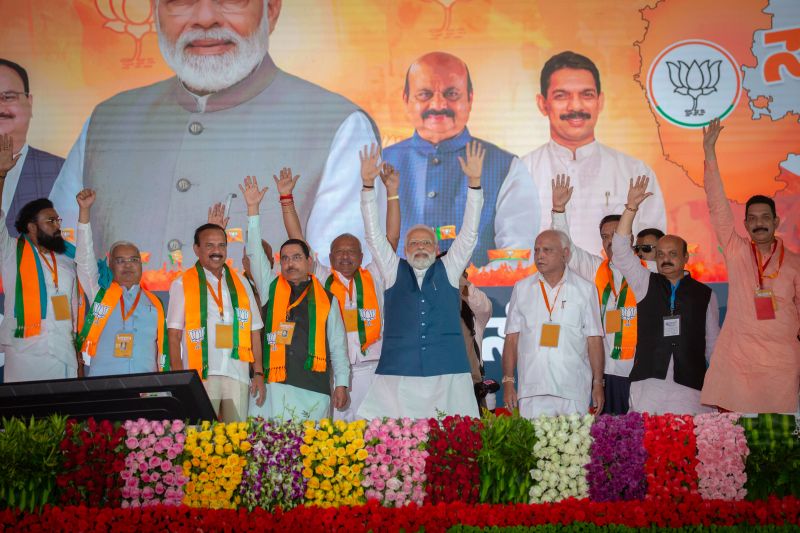
India’s Prime Minister Narendra Modi waves to the his supporters during a political event organised by the Bharatiya Janata Party (BJP) at the GMIT College Grounds on March 25, 2023, in Davangere, India. / Credit: Abhishek Chinnappa/Getty Images

Thrissur, India, Oct 4, 2023 / 13:45 pm (CNA).

An elderly Catholic priest in India’s Kerala state was suspended from priestly duties for joining India’s ruling BJP (Bharatiya Janata Party or Indian People’s Party), which is known for pursuing a Hindu nationalist agenda.

The BJP is the party of Prime Minister Narendra Damodardas Modi. The priest’s action took place at a time of rising persecution of Christians in India. According to the United Christians Forum (UCF), in the first eight months of 2023, 525 incidents of violence against Christians have been reported in 23 states of India.

“There was no option but to act, as it has become a scandal to the faithful,” Bishop John Nellikunnel of the Diocese of Idukki told CNA about the Oct. 2 suspension of Father Kuriakose Mattam, vicar of St. Thomas Parish of Mankua.

“His action violated the canon law, which prohibits priests from joining political parties without permission,” Nellikunnel said.

Elaborating further, Nellikunnel noted: “It seems that Father Kuriakose, who is close to retirement [he will be 75 in six months], was misled into joining the BJP. As the news spread, the priest was also disturbed. So, he was moved out.”

Father Jins Karackattu, spokesperson for the diocese, told CNA that a couple of local Catholics who are actively associated with the BJP had “lured” the elderly priest into joining the BJP two weeks ago, promising him a quick repair of roads in the area.

When Idukki district BJP leaders made public on Oct. 2 the photos and videos of the elderly vicar of the remote parish “taking BJP membership” on the church premises, parishioners rushed to the church.

“As the news spread, Father Kuriakose was agitated and locked himself up. Diocesan officials rushed and shifted him to the retirement home for priests,” a local Catholic said.

“We welcome the action by the diocese. The BJP propaganda is embarrassing for the Christian community,” Father Jacob Palackappilly, deputy secretary general of Kerala Catholic Bishops’ Council, told CNA.

“Their statement about the ‘entry of the Catholic priest to BJP’ is very funny. The party is trying to fool the Christians with such gimmicks. There should be no confusion as to the agenda of the BJP with Christians being harassed and persecuted under their rule in several states,” Palackappilly said. 

BJP leaders have of late made a push to reach out to Christians in Kerala. While Modi visited the Sacred Heart Cathedral in New Delhi on Easter, BJP leaders claimed to have visited 10,000 churches and Christian homes in Kerala offering “Easter greetings.” 

Kerala is home to nearly 7 million Christians who trace their faith to St. Thomas the Apostle, who landed on the Kerala coast in 52 A.D. 

The BJP is not represented among Kerala’s 20 seats in the national Parliament, nor in the 140-member Assembly of Kerala.

KS Aji, of the BJP, based in Idukki, posted on Facebook that the elderly priest joined the BJP after “observing the current situation in the country.”

Aji also shared the Indian Express report that included photos of himself with Father Mattam as he was joining the BJP wearing a party shawl on his neck.

News of the Catholic priest joining the BJP has gone national, with leading pro-BJP news outlets including the national TimesNow channel carrying the story “Catholic Priest in Kerala Suspended After Joining BJP.” 

“This incident shows how the BJP is trying desperately to get a foothold among the Christians,” KM Francis, president of Kerala Catholic Federation, told CNA.   

“With the bloodshed in Manipur exposing their anti-Christian agenda, BJP is exploring new tricks as the [national] election is forthcoming,” Francis noted.

The BJP heads both the federal government and state government in Manipur where ethnic Kuki Christians have been targeted in ethnic clashes with majority ethnic Meiteis. Nearly 200 have been killed, and over 60,000 Kukis refugees have fled, along with 10,000 Meiteis.

The priest’s public act is similar to one that took place in eastern West Bengal state in March 2021, when the BJP announced that a senior priest of the Kolkata Archdiocese, Father Rodney Borneo, would join its ranks publicly, shocking the minuscule Christian community in the state.

[…]