


There are books one reads in a single sitting, index finger atremble to turn to the next page.
Hanael Bianchi’s A Liberal Revolution is such a book.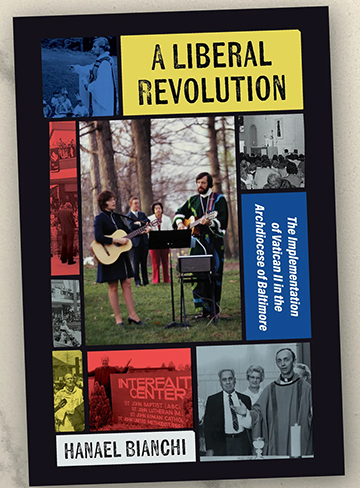
For Catholics who were subjected to the liturgy and catechesis of the 1970s yet could see all around them glimmers of the way things had been before the shipwreck, any work that helps answer the question “what happened here?” fills a need. One wants to know how such a catastrophic a period in the life of the Church came to pass. For most of the 1980s and 1990s, we were told that councils take a while to bear fruit and that we ought to be patient. Over sixty years on, the argument retains partisans, much as Parkay margarine and Sanka maintain their grip on the same generation.
For those who prefer actual butter and coffee, however, Bianchi, in his painstaking reconstruction of the precise steps taken to implement Vatican II in the archdiocese of Baltimore, joins the cohort of scholars who have researched the causes of the collapse and how it unfolded in specific sectors of the Church: Stephen Bullivant on the USA and the UK;1 Fr. Joseph Becker on the Jesuits;2 Fr. Mitchell on the loss of Catholic consensus at the Catholic University of America (the “Curran affair”);3 Guillaume Cuchet on the effondrement of the practice of the faith in France.4 One might add Kenneth Jones’s indictment-by-statistics of the sudden and startling drop in all leading indicators of Catholic life in the USA.5
All agree that it began during the last months of Vatican II, and it happened in its name; there remains only to explain who did it and how.
Bianchi explicitly shares their historiographical agenda when he says: “The pressing question for scholars. . . is why this decline occurred so rapidly in the years following the Council” (p. 4). Bianchi and these other scholars do not breezily invoke “the modernists” or “the Freemasons”: they name names, they provide the dates and locations of the meetings in which decisions took place, and they track the inevitable drops in attendance at the Sacraments, the vocations crisis, the departures from the priesthood and religious life–the whole mournful litany.
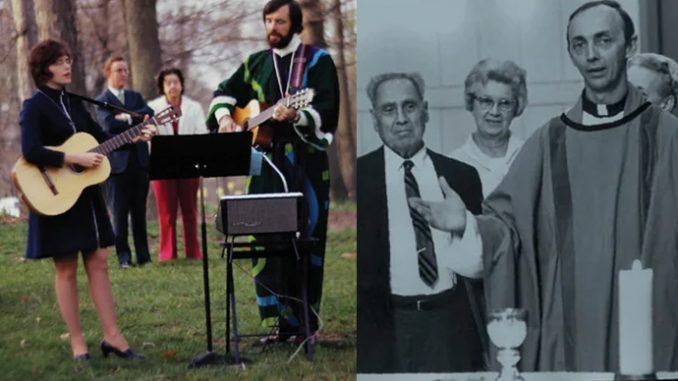
Bianchi’s book focuses on the Archdiocese of Baltimore under Archbishop Lawrence Shehan (1961–1974). Like many Conciliar bishops, he was ultimately betrayed by the very reforming machine he had naively set in motion. While this local church and its shepherd present (as any place would) their own particularities, Catholics of any diocese in the West will here recognize the outlook of the enthusiastic reformers and the steps they took to implement their vision. It was, remarkably and sadly, the same everywhere: a vanguard of young priests took control and left their stamp on the Church (particularly the liturgy), never once attributing the damage they were causing to their own program.
Like the other authors mentioned above, Bianchi is even-handed. He reports that, initially, many of the faithful gave a positive reception to the more obvious reforms that followed Vatican II, particularly to the use of vernacular in the Mass (p. 76). He quotes the optimism of Archbishop Shehan on the first page: “The Second Vatican Council is at once the symbol and the cause of our present special hope” (p. 1). He also tracks the eventual boredom and widespread confusion that spread once the novelty of the switch to English (and the other changes leading to a new Missal in 1969) had worn off.
The same applies to the early attempts at what we today would call “synodality.” At the time, it manifested itself in the proliferation of “councils” (Parish Councils, Area Councils, the Council of Catholic Men, the Archdiocesan Pastoral Council, the National Pastoral Council, etc.). These ultimately disaffected the laity and ended up being mere hosts to the parasitical and revolutionary “Call to Action” conference of 1976.
There will be more such books to cover other ecclesiastical regions in this country and elsewhere; Bianchi sees his work as part of an effort to provide a “comprehensive study” to trace “the decline of the American Church through local sources” (p. 5). He just happens to have started with Baltimore. It should be said that his access to protected archival material enriches his book with granular evidence that will be difficult to ignore. Readers will not be surprised to learn (from sources external to it) that Dr. Bianchi spent ten years researching A Liberal Revolution.
The two most noteworthy contributions of this book to our understanding of the collapse are that its leaders were a new breed of priests,6 and a formidable, money-devouring, and oppressive bureaucracy grew up to implement and maintain their outlook even long after they had left the priesthood, retired, or died.7
Without going into any further detail–do buy and read the book–I should only add that the three chapters dealing with the establishment and metastatic growth of a new Church bureaucracy predicated on the promotion of the new paradigm (pp. 165–232) go a long way to explaining why it is so difficult, even today, for any well-meaning person to right the ship.
For an example of the kind of ecclesiastical-bureaucratic pressure that seems designed to discourage good men in their pursuit of sound religion, I heartily recommend David Sonnier’s book (also from the excellent Os Justi Press) on the administrative roadblocks put in the way of permission for the pre-conciliar Mass in the U.S. military.8 It can serve as a companion to Bianchi’s book.
I look forward to more of the same. If there is to be a proper reception of the last Council, there must also be, in the name of truth and charity, a proper repudiation of how it was manipulated or subverted.
A Liberal Revolution. The Implementation of Vatican II in the Archdiocese of Baltimore
By Hanael Bianchi
Lincoln, Nebraska: Os Justi Press, 2026
Hardcover/Softcover/Ebook, 241 pages
Endnotes:
1 Stephen Bullivant, Mass Exodus: Catholic Disaffiliation in Britain and America since Vatican II (Oxford University Press, 2019).
2 Joseph Becker, SJ, The Re-Formed Jesuits. Vol.1, A History of Changes in Jesuit Formation During the Decade 1965-1975 (Ignatius Press, 1992).
3 Peter Mitchell, The Coup at Catholic University: The 1968 Revolution in American Catholic Education (Ignatius Press, 2015).
4 Guillaume Cuchet, Comment notre monde a cessé d’être chrétien. Anatomie d’un effondrement (Éditions Points, 2020). See our review at Catholic World Report (13 September 2022) reprinted in Peter Kwasniewski ed., Sixty Years After: Catholic Writers Assess the Legacy of Vatican II (Angelico, 2022), 134–141.
5 Kenneth C. Jones, Index of Leading Catholic Indicators: The Church since Vatican II
(Oriens, 2003).
6 A novel set in France at the time gives a fair portrait of what made these “new priests” tick: Michel de Saint-Pierre, Les Nouveaux prêtres (La table ronde, 1964).
7 It is worth stressing that one U.S. diocese, Lincoln in Nebraska, averted the crisis when its new bishop, Glennon P. Flavin (bishop of Lincoln 1967-1992), upon arrival, kicked out of his diocese the dozen reform-minded priests who were agitating for just the policies that Baltimore, and nearly every other diocese, adopted. Priestly vocations soared among the young men of the diocese, and young women flooded the two orders of teaching sisters that this manful bishop founded. Weekly Mass attendance in the diocese remains at pre-conciliar levels. The Lincoln case indicates that the post-conciliar period might have been quite different if more bishops had taken such surgical action. The collapse was not inevitable and cannot be blamed on The World; it can, however, be blamed on those Church leaders who opened their windows to it.
8 David Sonnier, Rites and Wrongs. One Man’s Struggle for the Latin Mass in the U.S. Army (Os Justi, 2026).
If you value the news and views Catholic World Report provides, please consider donating to support our efforts. Your contribution will help us continue to make CWR available to all readers worldwide for free, without a subscription. Thank you for your generosity!
Click here for more information on donating to CWR. Click here to sign up for our newsletter.


Leave a Reply