No Picture
News Briefs

Mexican legislators introduce bills to legalize abortion
October 26, 2018 CNA Daily News 0

Mexico City, Mexico, Oct 26, 2018 / 10:07 am (CNA).- Two Mexican legislators introduced this week proposals seeking to legalize abortion throughout the country.

Abortion is a crime in Mexico on the federal level, permitted only in cases of rape. In Mexico City, the country’s capital, the procedure was decriminalized in 2007, it can be performed for any reason during the first 12 weeks of a pregnancy.

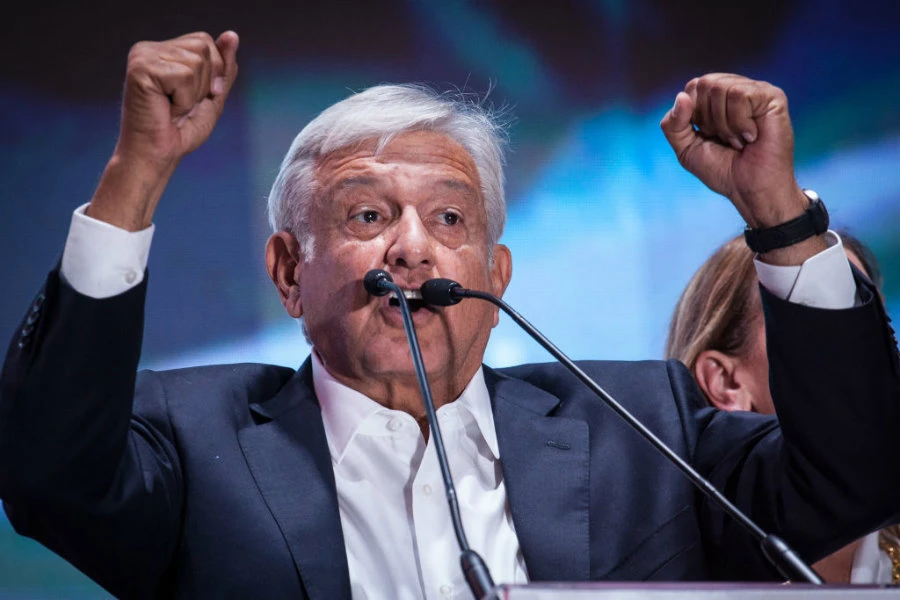
The legislators are both members of Morena, the political party of the president-elect of Mexico, Andrés Manuel Lopez Obrador.

Congresswoman Lorena Villavicencio introduced a bill October 22 designed to recognize what she called “the right of self-determination of women over their body and their life.”

“We want abortion to be legal, safe, and free,” said the congresswoman.

Villavicencio said that “Mexico must stop criminalizing women who interrupt their pregnancy in the first 12 weeks, just as Mexico City has done.”

The lawmaker also stated that her bill “must not have to pass the moral or religious litmus test,” since “this is an issue of the exercise of freedoms, the decision about whether or not a woman wants to be a mother. And unfortunately, an issue of public health, because these restrictions have harvested the death of many women.”

Villavicencio introduced her bill just two days after nearly one million Mexicans turned out October 20 for demonstrations in more than 100 cities in defense of life, the family and fundamental freedoms.

The day after the her bill was introduced, the Mexican state of Sinaloa announced the final ratification on October 23 of a constitutional amendment establishing that: “Everyone has the right to have their life respected. The state protects the right to life from the moment an individual is conceived, enters under the protection of the law and is considered as born for all legal intents and purposes, until their natural death.”

López Obrador won the Mexican presidency July1 and his party, Morena, gained the majority in the Senate and the House of Representatives.  The legislators elected this year took office  September 1 whereas the president-elect will assume the office December 1

Porfirio Muñoz Ledo, who also is a member of the Morena party and president of the governing board  of the House of Representatives, proposed October 23 an amendment to Mexico’s constitution which would declare a right “to decide in a free, responsible and informed and safe manner whether to have children or not” as well as “to receive services to access the highest level of sexual and reproductive health.”

Muñoz Ledo acknowledged that a proposal directly in favor of abortion could “very easily be thrown out,” and so he was advised “to formulate it in a different way, that would mean the same thing.”

“A betrayal of the people”

For Rodrigo Iván Cortés, president of the National Front for the Family (FNF), which organized the massive October 20 demonstrations, the bills introduced by the Morena party legislators are “a very bad sign.”

Speaking to ACI Prensa, CNA’s Spanish language sister agency, “the talks held with the people on Lopez Obrador’s transition team seemed to indicate attention and sensitivity to these issues, however he apparently has not exercised his leadership” with Morena party members in the congress.

For Cortés there is “a stark contradiction, because the vast majority of those that are here (in the newly elected congress) didn’t win their elections on their own but won through the momentum generated by Lopez Obrador. And during the campaign Lopez Obrador never proposed any of these things. Neither abortion, euthanasia, marriage equality, drugs or gag laws.”

“And what we’re seeing is that those partisans  that are in the congress  are heading toward an outright betrayal of the people.”

The FNF president pointed out that “the big question is: Does Lopez Obrador want to honor his word, does he want to fulfill what he said many times during the campaign to not lie, steal from, or betray the people? Because if he fails to keep this (promise)  then we’re going to have to fear the worse for everything else.”

He warned that Lopez Obrador’s legislators  “are not attending to the people, they don’t have ears to hear the people, they don’t have the heart to attend to the real needs of the people. And what they’re bringing on is an agenda of radical ideologies which have nothing to do with the good of the Mexican population.”

“No party ought to promote murder”

Maria Lourdes Varela, the director for 40 Days for Life for Latin America stressed that “abortion goes against the population” and “no party ought to promote the murder of their children.”

“Abortion is not a human right, because there is no right to kill,” she told ACI Prensa.

Regarding the work being done by 40 Days for Life on the international level, Varela explained that “we are aware that this battle is too big” there are many economic resources and also the media, politicians, international organizations that directly promote that a woman is the enemy of her own child, and so she sees the child as a burden, and she comes to think that the solution to any of her problems would be to eliminate her own child.”

“As we recognize that our forces are limited, we are asking God to help us win this battle, that he would transform, that he would move the hearts of those women who are thinking of abortion, that they would see that the solution could be otherwise, that death never is going to put an end to any of her problems,” she said.

They also ask God to transform the hearts of the abortionists and those who promote its legalization.

Varela also encouraged everyone who can to join 40 Days for Life, “because we are all necessary.”

“It’s not a question of one or two people praying, but that the converted Catholic population would ask God’s favor so that He would reign once again and life would be respected.” she said.

This article was originally published by our sister agency, ACI Prensa. It has been translated and adapted by CNA.


[…]

No Picture
News Briefs

Two pastors reinstated in Chile after abuse investigation

October 23, 2018 CNA Daily News 0

Rancagua, Chile, Oct 23, 2018 / 03:50 pm (ACI Prensa).- The Diocese of Rancagua announced it has restored two priests to ministry who were accused of sexual abuse after the investigations showed that the incidents reported against them “are not credible.”

The two priests are Aquiles Correa Reyes and Gino Bonomo Ugarte, both accused of belonging to a network of 14 priests known as “The Family,” allegedly involved in sexual misconduct and the sexual abuse of minors.

After failing to prove any associated crime, the priests were acquitted by civil courts Sept. 28.

The Apostolic Administrator of Rancagua, Bishop Fernando Ramos reinstated the priests in their position as pastors Oct. 18. Fr. Aquiles Correa returns to the Immaculate Conception Parish of the Company of Jesus in Graneros and Fr. Gino Bonomo rejoins Our Lady of the Rosary in Pumanque.

The preliminary investigations were conducted by Fr. Patricio Cavour Calderón, who remains responsible for investigating the other complaints against priests in the diocese.

“The Family” case became known after a former youth ministry coordinator in Rancagua, Elisa Fernández, told Channel 13 in May that in the last two years she went to see the local bishop Alejandro Goic four times to warn him about this group.

Bishop Goic then removed the 14 priests from ministry May 21. He was the president of the National Council for the Prevention of Abuse and Accompaniment of Victims but his resignation from that position was accepted by the Chilean bishops May 26 in the midst of the scandal. On June 28, Pope Francis accepted Goic’s resignation as Bishop of Rancagua.

Two other priests accused of belonging to “The Family, ” Héctor Fuentes and Freddy Gorigoitia, submitted their resignation from the priesthood July 28.


This article was originally published by our Spanish language sister agency, ACI Prensa. It has been translated and adapted by CNA.

[…]

No Picture
News Briefs

Radical feminists attack church and town hall in Argentina

October 16, 2018 CNA Daily News 0

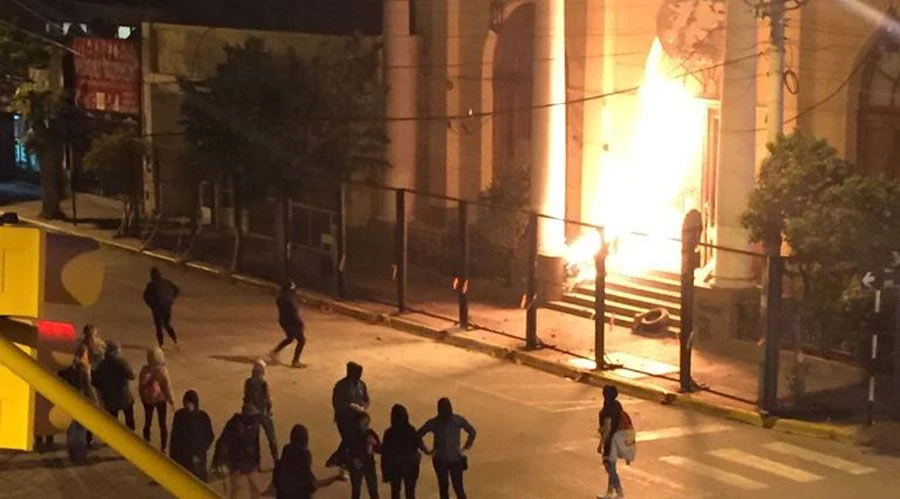
Buenos Aires, Argentina, Oct 16, 2018 / 03:30 pm (CNA/EWTN News).- Radical feminists firebombed a town hall and spray painted a Catholic Church in Argentina. The series of attacks came during a women’s conference held in the Patagonia region this past weekend.

The conference was the 33rd National Women’s Encounter held October 13-15 in the city of Trelew in Chubut province, and focused primarily on promoting abortion and so-called gender ideology.

On October 14, participants in the conference marched through the streets of Trelew with signs in favor of legalized abortion and the separation of church and state. During the demonstration, a group of bare-chested feminists stood in front of Mary Help of Christians parish and attacked Trelew town hall with Molotov cocktail firebombs.

The women also attacked other public buildings with bombs, stones, and graffiti. The police and locals eventually managed to control the mob and ten women were arrested.

Police also had to shut down two gas stations for selling gasoline to young women who were suspected to be collecting gasoline for the Molotov cocktails.

This incident is one of numerous attacks on Catholic churches since the Argentinian senate rejected a bill legalizing abortion in August of this year.

In September, a Catholic school in the town of San Justo had hate messages spray painted on it, and students at different universities have forcibly removed religious images from their campuses, saying that they demand legalized abortion and the separation of church and state.

[…]

No Picture
News Briefs

Archdiocese confirms apparent murder of Mexican priest

October 16, 2018 CNA Daily News 0

Tijuana, Mexico, Oct 16, 2018 / 01:30 pm (CNA).- The Archdiocese of Tijuana in northern Mexico has confirmed the death of Fr. Ímar Arturo Orta, who was allegedly murdered on Oct. 12.


According to local press, the priest had been missing for three days when his body was found by authorities in an abandoned car with several bullet wounds.


An anonymous official from the state prosecutor’s office who was not authorized to speak publicly about the incident has said that the priest’s death is being investigated as a homicide, according to the Associated Press.


Fr. Arturo is one of at least 26 priests who have been killed in Mexico since 2012, when President Enrique Pena Nieto first took office, and the seventh priest killed this year, according to reports from the Catholic Multimedia Center. Two priests in Mexico are also currently reported missing.


Father Ícmar Arturo Orta was pastor of St. Louis King of France parish in Tijuana, Baja California state.


In a statement published on October 14, Archbishop Francisco Moreno Barrón of Tijuana expressed his “deep sorrow” over the death of the priest. He told Catholics that as soon as he had reliable information regarding the circumstances of Fr. Arturo’s death he would make it public, and he would also inform the faithful of the funeral arrangements once they were made.


The archbishop told the members of St. Louis King of France parish that “the death of Father Arturo is a great loss for our archdiocese, but above all it is a very great affliction for you in the parish community.” He said that he knew the parish community will keep the memory of their priest alive.


“You will keep him alive in your mind and in your heart,” Moreno said.


“May the Blessed Virgin, Our Lady of Loreto, patron saint of our Archdiocese, accompany you in this painful moment, and may you also be assisted by the care and intercession of your patron, Saint Louis of France.”


In an Oct. 15 statement, the Mexican bishops expressed their sorrow at the loss of Fr. Arturo and assured Catholics of their prayers and support for the investigation of his death.

“We ask our Father God for the eternal rest of Fr. Ícmar, and that the Lord grants his family and his parish community the strength and consolation of faith and hope,” the bishops said.


“We trust that the competent authorities will clarify what happened to our brother priest, and act accordingly,” they said.


This article was originally published by our sister agency, ACI Prensa. It has been translated and adapted by CNA.
[…]

No Picture
News Briefs

Blessed Oscar Romero’s legacy of charity in El Salvador

October 11, 2018 CNA Daily News 1

San Salvador, El Salvador, Oct 11, 2018 / 03:01 am (CNA).- Oscar Arnulfo Romero y Galdamez, better known as Blessed Oscar Romero, once said that if El Salvador’s military oppressors killed him, he would “arise in the Salvadoran people.”

On March 24, 1980, Romero was assassinated in the middle of celebrating Mass, likely by a right-wing death squad. Not long afterwards, the country devolved into a devastating civil war that would last twelve years and claim more than 75,000 lives.

Though Romero’s earthly life may have ended, his love for God and the principles for which he stood— care and dignity for the poor, freedom from oppression— have been far from forgotten. Romero, along with Paul VI and Fr. Franceso Spinelli, will be canonized Oct. 14 at the synod of bishops taking place in Rome. The Vatican had recognized him as a martyr in 2015.

Romero’s words have a prophetic resonance today with the people of El Salvador, according to Rick Jones, technical advisor for policy in Latin America for Catholic Relief Services.

“You go into poor neighborhoods and everybody has a little card, a poster, a picture of Romero. He is in those poor communities, and he’s still the signpost for the Church and what they hope for,” Jones told CNA.

“He was the voice of those voiceless people who were suffering the violence and repression in the ’70s, and now people still look to him as the beacon and as the example,” he said.

“Canonizing someone in the Church is to hold them up as an example: ‘This is what we want people to be like.’ And so I think, still today, that’s who the poor point to for hope and for a sense that there is meaning and purpose, and a different way to do things.”

“A voice of those voiceless people”

Romero became Archbishop of San Salvador in 1977 and was perceived as a “safe choice” who wouldn’t cause too much trouble. At the time, right-wing military death squads were terrorizing many of the citizens of El Salvador, especially the poor, mainly because of protests over the extreme economic inequality that marked the country in the 20th century.

Just three weeks after Romero’s appointment as archbishop, a death squad ambushed and killed his friend, Father Rutilio Grande, who was an outspoken defender of the rights of the poor. Five more priests from the archdiocese would be assassinated during Romero’s time as archbishop.

Romero’s weekly homilies, broadcast across the country on radio, were a galvanizing force for the country’s poor as well as a reliable source of news. He railed against the killings and urged the government to let people live in peace.

A military junta seized the government of El Salvador in 1979, with training and financial backing from the United States. Romero criticized the US government for backing the junta, and even wrote to Jimmy Carter in February 1980— a month before his death— asking him to stop supporting the repressive regime.

The Carter and the subsequent Reagan administrations in the US continued their support in the hopes that El Salvador would not fall to the communist revolutions that had already engulfed Cuba and Nicaragua. All told, the United States had provided more than $1 billion in aid to El Salvador’s government by 1984, while in 1980 alone the Salvadoran armed forces killed nearly 12,000 people. The casualties were mostly peasants, trade unionists, teachers, students, journalists, human rights advocates, priests, and anyone perceived to be a part of the popular leftist movement.

“Both the victims of violence and the perpetrators”

The civil war between military-led governments and left-wing guerilla groups officially ended in 1992, but El Salvador remains one of the most dangerous countries in the world.

In light of the Synod on Youth taking place this month in Rome, Jones said a number of factors, including hardline policies meant to curb gang activity, have led to the rise of devastating violence among young people in El Salvador.

“It really has a lot to do with the lack of opportunities,” Jones said. “Kids get in gangs primarily because of dysfunctional families, and living in marginalized neighborhoods where they don’t have any other opportunities. Young people, coming out of a situation where there’s domestic violence, walk out their door onto the street and there’s a gang waiting to recruit them, saying, ‘We’ll be your family.’ And so kids join gangs to get a sense of power, belonging, and identity, and a lack of hope for any other alternatives.”

Jones said after the United States began deporting large number of Salvadorans from Los Angeles after the civil war ended, many of the young people who returned were already involved in gang activity.

“You have a situation where in the mid-1990s most young boys were out of school and unemployed, and only made it to 6th grade. And so they started organizing and [the gangs] spread through the metropolitan area,” he said. “Then, in 2003, the government decided to put out the ‘Iron Fist’ policy. Meaning zero tolerance. Meaning any kid with baggy clothes, tattoos and a hat on backwards could get picked up and thrown into prison.”

These hardline policies backfired, however, as the homicide rate continued to increase despite the changes.

“The level of violence has risen ever since the country put in these hardline policies,” Jones said. “What you have in the country, as I said, is you have the underlying conditions of people living in marginal, overcrowded neighborhoods, that were created spontaneously because of the war, so there’s no social service, kids don’t have access to school, and the communities are all living in fear during the war, and that just gets translated to the next generation. And this generation acts out on that by joining gangs.”

“I think it’s the latest manifestation of both structural issues, lack of opportunity, and then trauma from the war getting worked out in a new way, and thirdly the levels of repression that they’ve had now under the Iron Fist policies for over a decade,” he said.

The youth of El Salvador have the capacity to do better, Jones said, if they are given a chance.

“Young people even from the most marginal neighborhoods want to make a positive change in their neighborhood, in their family, and in the country. And what they need is the support to do that,” he said. “Repression isn’t the kind of support they need. They need access to education, to jobs, and to alternatives to violence.”

“Fleeing a nightmare”

Just as Romero and his contemporaries did nearly four decades ago, the Catholic clergy in El Salvador continue to be broadly outspoken about human rights in the country. In addition to advocating that access to water should be a human right, the bishops spoke out in April against the Trump administration’s decision to end Temporary Protected Status for Salvadorans in the US. The bishops say ending the program would send unprepared people back into a highly dangerous situation in El Salvador.

“It’s critical that people there understand that most people are leaving now because of violence, and it’s not migration as usual,” Jones said. “I think we need to understand that the dynamics have changed. It’s not just about pursuing the American dream…they’re really fleeing a nightmare here in these poor neighborhoods….just sending people back [to El Salvador] will put them in harm’s way.”

Jones said the clergy and organizations like CRS are also working hard to address the problem of gangs and violence from several fronts. This includes working with young people early on, as well as speaking out against El Salvador’s highly overcrowded prison system and the hardline policies that have led to it.  

“We need to work with adolescents and their families before they get engaged in gangs,” he said. “And so they need some policies, highly focused, very targeted, around secondary prevention. And then we’re also focused on tertiary prevention, meaning, you have to work with the guys that are locked up. So that when they get out, they don’t just go back into the gangs or into criminal behavior, that they actually become peace promoters among some of these neighborhoods.”

“We’re now working with governments, we’re trying to work with the police, to try to help them understand that the repressive tactics are not being effective, and to get better community policing, and more targeted, focused policing, and working with the kids before they get to the point where they need to be locked up.”

“Church of the poor”

Oscar Romero remains a controversial figure in some circles, mainly because of what some perceive as a tacit approval, or even outright endorsement, of the movement known as liberation theology. This belief, which gained traction especially in Latin America, combined elements of Marxism with Catholicism with the goal of “liberation” for the poor and lower class.

Msgr. Jesus Delgado, former secretary of Archbishop Romero, told CNA in 2015 that although liberation theology proponents visited the archbishop and left him their books, he was never swayed by their ideas, and Romero “knew nothing about Liberation Theology, he did not want to know about it. He adhered faithfully to the Catholic Church and to above all to the teachings of the Popes.”

Liberation theology was rebuked by the Congregation for the Doctrine of the Faith in 1984.

“The ‘theologies of liberation’…go on to a disastrous confusion between the ‘poor’ of the Scripture and the ‘proletariat’ of Marx. In this way they pervert the Christian meaning of the poor, and they transform the fight for the rights of the poor into a class fight within the ideological perspective of the class struggle,” wrote then-Cardinal Joseph Ratzinger.

Beyond the Catholic world, the political divisions between the let and right, present during the time Romero was assassinated, are still present in El Salvador despite the the civil war having ended.

“I’d like to point out, [Romero] is still very controversial,” Jones admitted. “We have to remember that there were people who applauded him being assassinated.”

Jones said he sees Romero’s upcoming canonization as a vindication of his thought.

“Archbishop Romero still stands as the beacon for what is the best that the Catholic Church can be, in terms of standing up for the poor and the voiceless and human rights,” he said. “And especially in a context in which we are today, globally, I think he represents the best of what the Catholic Church can offer, and as a symbol for people to follow.”


[…]

No Picture
News Briefs

Catholic Relief Services caring for victims of Haiti earthquake

October 10, 2018 CNA Daily News 1

Port-au-Prince, Haiti, Oct 10, 2018 / 01:17 pm (ACI Prensa).- Catholic Relief Services, the U.S. bishops’ charitable outreach, is providing first aid and sending material aid to the areas affected by the 5.9 magnitude earthquake that struck Haiti Saturday.

The earthquake occurred at 8:12 pm Oct. 6 about 12 miles from the department of Porte-de-Paix. It lasted 53 seconds and was felt in eight out of ten of the country’s departments. A tsunami alert was not sent out after the earthquake.

Haiti’s Civil Defense department reported Oct. 8 that 15 people died, 333 were injured, and 7,000 homes were destroyed.

Beatriz Afanador, the CRS communications officer for Hispanoamerica and Latin America, told ACI Prensa via e-mail that a CRS team had already made an assessment of the emergency and that “a truck was due to arrive Oct. 9 with supplies including tarps for temporary shelters, hygiene kits with buckets, chlorine, shovels and other items.”

“The truck will be arriving sometime in the afternoon. Since the area is remote and extremely poor, a long term effort will have to be made to help them get the aid they need to rebuild or repair their homes and find the means to sustain themselves.”

CRS indicated in a communiqué that the most significant damage occurred in the departments of Nord Ouest and Artibonite.

“Most of the injuries in the Nord Ouest department were due to panic and resulting accidents. Due to the remote location and the available emergency medical services, the main hospitals in the affected areas report that they do not have the capacity to respond to the needs,” the statements says.

It was also reported that “the facade of the church in Plaissance was cracked, but there are no reports of damage to the main infrastructure. All the roads and bridges appear to be open at this time.”

Finally, CRS said that immediately after the earthquake there were reports of panic in many of the country’s cities.

“The injuries in Nord Ouest were mainly due to this reaction, including motorcycle accidents, cardiac arrest and premature birth. The population remains tense as rumors are circulating of a bigger earthquake,” the communiqué concludes.

CRS is currently working hand in hand with the Civil Defense, the Haitian Red Cross, and other NGOs that are aiding the affected areas.

[…]