
No Picture
News Briefs

Terror cannot be the seed of peace, Bogota cardinal says after car bomb

January 19, 2019 CNA Daily News 0

Bogotá, Colombia, Jan 19, 2019 / 06:01 am (ACI Prensa).- Cardinal Ruben Salazar Gomez of Bogota said that terror can never be the seed of justice and peace, following Thursday’s car bomb attack at a police academy in the Colombian capital.

The Jan. 17 attack which killed 21 has been attributed to the National Liberation Army (ELN), a left-wing guerilla group. Dozens more were injured, but most have been released from hospital.

“Death, violence and terror can never be the seed of justice and peace,” Cardinal Salazar said in a message posted on the Archdiocese of Bogota’s Twitter account.

“We reject this and every attack that violates the dignity of persons and society,” he added. Cardinal Salazar also expressed his “solidarity with the nation, the police, the victims and their families, and we implore the Lord for forgiveness and peace.”

A vehicle carrying 175 pounds of pentolite, a military-grade explosive, accelerated into the General Santander police academy after being stopped at a checkpoint. The pentolite detonated when the SUV struck a wall. The academy was holding a promotion ceremony for cadets.

Attorney General Néstor Humberto Martínez reported that the vehicle’s driver was José Aldemar Rojas Rodríguez, the ELN’s top explosives expert, and that an accomplice had been arrested in Bogota.

Miguel Ceballos, High Commissioner for Peace, said the government will not dialogue with the ELN “until they hand over all the kidnapped people and completely renounce their criminal acts.”

Archbishop Oscar Urbina Ortega of Villavicencio, president of the Colombian bishops’ conference, stated that “every act of violence engenders more violence, which is why we reiterate the call to continue to work for reconciliation in the country. We pray for the victims. We stand in solidarity with their families and the national police.”

“I ask you to not lose heart in working to overcome enmities and creating bridges that lead us to fraternity in the family and in the various social environments,” he added.

The Military diocese also offered prayers for the victims, their families, and the officer training school.

In a telegram to Cardinal Salazar from Vatican Secretary of State, Cardinal Pietro Parolin, Pope Francis expressed his “deep sorrow for the victims who lost their lives in such an inhuman act.”

On the scene of the blast, the president of Colombia, Ivan Duque, said that the attack was “not just against young people, or the police, but against all of society.”

He said that what happened “was a demented terrorist attack which will not go unpunished,” and that
“we will act with unbending determination.”

Car bombings were once not uncommon in the Colombian conflict, which has been ongoing among the government, right-wing paramilitaries, and left-wing guerillas since 1964.

The conflict has abated since a 2016 peace deal between the government and the largest guerrilla group, the Revolutionary Armed Forces of Colombia (FARC).

Duque has not taken up peace talks with the ELN.


This article was originally published by our sister agency, ACI Prensa. It has been translated and adapted by CNA.
[…]

No Picture
News Briefs

Mexican bishops make statement on gasoline shortage

January 17, 2019 CNA Daily News 1

Mexico City, Mexico, Jan 17, 2019 / 03:19 pm (ACI Prensa).- Amid a crisis caused by the shortage of gasoline in Mexico and the government’s fight against the theft and adulteration of fuel, the country’s bishops have appealed to the citizenry and called for more truthful and objective information to be given.

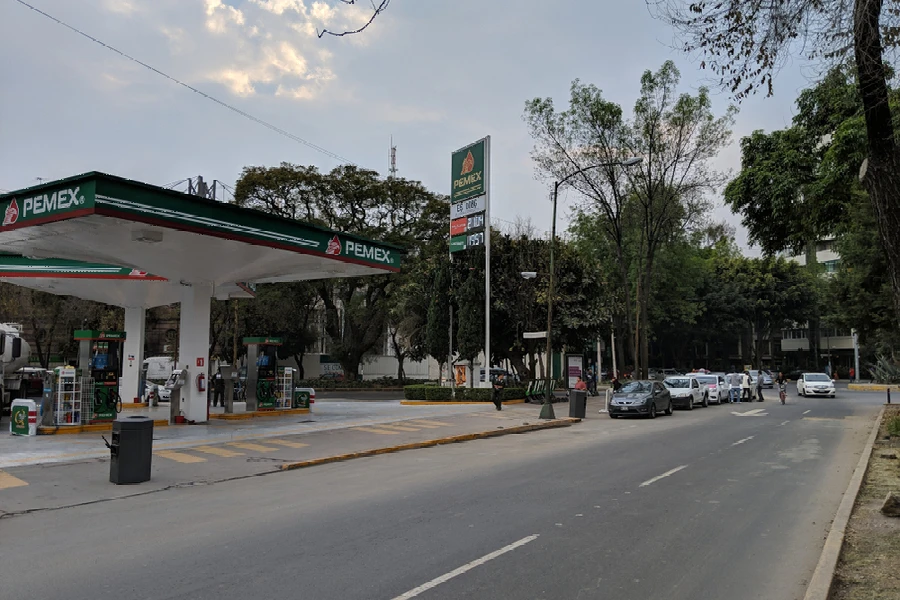
Several Mexican states and the country’s capital have been affected by a shortage of gasoline in recent days, with long lines at operating gas stations.

The situation is related to a series of measures taken by the administration of President Andrés Manuel López Obrador to deal with the theft and adulteration of fuel, which is costing the country around $3 billion a year. The government has shut down pipelines, from which fuel is tapped, using trucks and trains to transport fuel instead.

López Obrador has charged that the fuel theft has occurred with complicity within the government and Pemex, the state-owned oil company.

The shortage,which has produced long lines at gasoline stations in several cities, has caused a controversy among the citizenry and political groups a little more than a month after Lopez Obrador took office as president.

Archbishop Rogelio Cabrera López of Monterrey, president of the Mexican bishops’ conference, expressed in a Jan. 13 statement his support for “the measures taken by the president of the Republic to address the problem of the theft of gasoline which has negatively affected our country.”

“I ask citizens to support this measure, asking the authorities to not let themselves be intimidated by actions which, in the past, were common and which caused so much harm, but rather enforce the laws and quickly respond to this situation, hoping that as soon as possible this problem will be resolved,” he said.

Archbishop Carlos Garfias Merlos of Morelia, vice president of the conference, encouraged waiting for “adequate information” on Lopez Obrador’s strategy to deal with the theft of gasoline.

“At this time, there are many versions, many interpretations, which I don’t think give us enough specifics to be able to give an opinion. I hope we can have objective information as soon as possible and have an explanation about everything that has happened.”

Archbishop Garfias expressed his desire that those affected by the shortage will have their dissatisfaction redressed.

In the states where there has been a fuel shortage, he said, “there has been a lot of discontent, a lot of dissatisfaction, and I hope that we will have an adequate explanation.”

However, he noted that “when corruption appears, when there are signs of a lack of truth, when there is deception, when there are lies, it’s always going to be important to have a strategy to be able to find a way to make it clear where is the lie, the corruption, the theft, and that justice be done.”


This article was originally published by our sister agency, ACI Prensa. It has been translated and adapted by CNA.
[…]

No Picture
News Briefs

Guatemalan bishops express support for UN anti-corruption commission

January 14, 2019 CNA Daily News 0

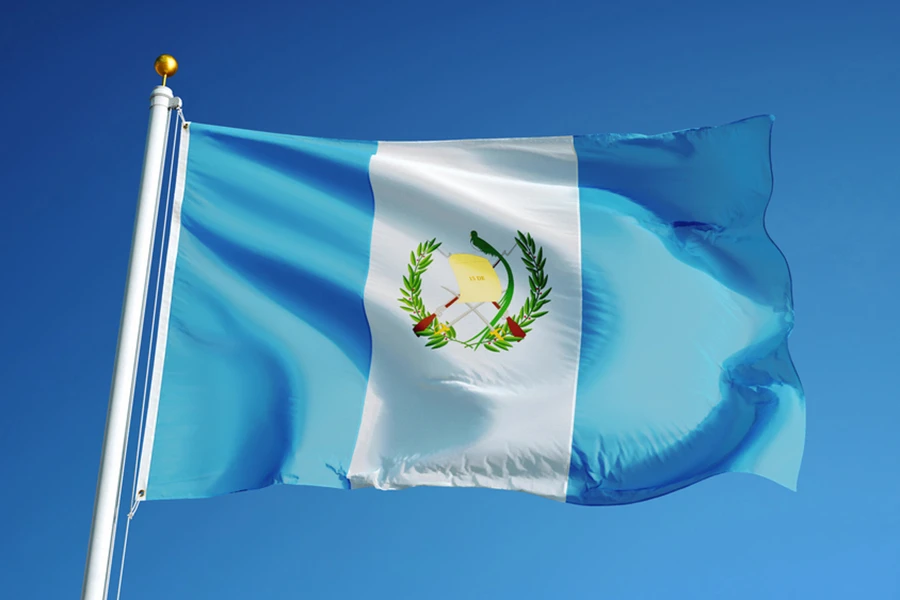
Guatemala City, Guatemala, Jan 14, 2019 / 07:01 pm (ACI Prensa).- The bishops of Guatemala expressed Thursday their grave concern at confrontations among governmental branches over a UN anti-corruption investigatory body.

The Guatemalan government informed the International Commission Against Impunity in Guatemala Jan. 7 that its member were to leave the country within 24 hours. The commission had begun investigating president Jimmy Morales over election fraud and funding irregulaties in his 2015 campaign. Its remit is not due to end until September.

The Constitutional Court granted a temporary injunction Jan. 9 to block the government’s decision.

However, the Supreme Court of Justice then held a preliminary hearing to strip immunity from prosecution for judicial malfeasance from three of the five judges on the Constitutional Court, which has created tensions among the branches of government.

The Guatemalan bishops’ conference said Jan. 10 that “We deeply lament the open confrontation between the current government and other legitimately constituted state agencies which puts at risk the already fragile rule of law in the country. Therefore we reaffirm the need to defend the primacy of the rule of law and respect for the laws, beginning with the Constitution.”

They also said that they viewed “with satisfaction and relief the actions consistent with the law taken by the Constitutional Court” and rejected the “polarization that, taken to its extremes, degenerates into violence with grave consequences for social peace.”

“Thus energies are wasted that should be directed toward the solution of the country’s serious underlying problems such as deficiencies in healthcare, education, social inequality, unemployment, migration, the victims of natural disasters, disrespect for human rights  and so many others that are detrimental to the quality of life,” the bishops said.

In their communiqué the bishops also expressed their desire that the June 16 general elections “unfold under the conditions of the rule of law.”

“We ask all Guatemalans to be adequately informed. God willing, we will all do our best to ensure that the next electoral process be an opportunity to find solutions for the common good, for corruption or illegal financing,” they added.

Finally the Guatemalan bishops exhorted the entire Christian people to “to pray and commit themselves to building a different Guatemala.”

In addition to the statement of the Guatemalan bishops’ conference, Bishop Alvaro Leonel Ramazzini Imeri of Huehuetenango stated his worry Jan. 9 at president Morales’ decision, “contrary to the constitutional norms and principles and to the norms of international law,” to expel the anti-corruption commission.

The CICIG has been operating since 2006. It has no prosecutorial power, but rather assists in investigations, which are handed over to Guatemalan prosecutors. It has helped to make cases against high-profile politicians and business leaders.


This article was originally published by our sister agency, ACI Prensa. It has been translated and adapted by CNA.

[…]

No Picture
News Briefs

Venezuelan bishops denounce Maduro’s new presidential term as illegitimate

January 10, 2019 CNA Daily News 1

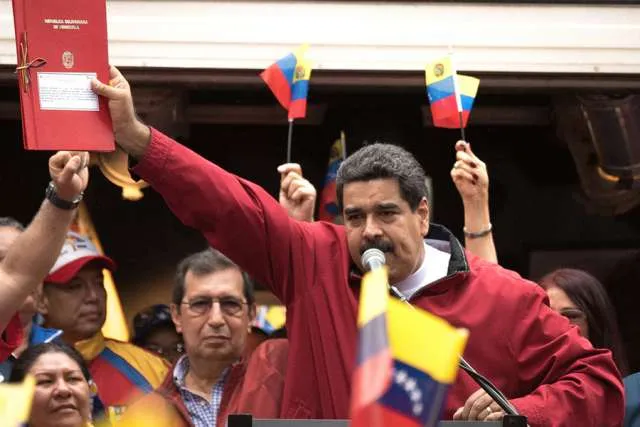
Caracas, Venezuela, Jan 10, 2019 / 07:01 pm (CNA/EWTN News).- The bishops of Venezuela have said that Nicolas Maduro’s swearing in for a second term as president Thursday is illegitimate.

“The claim to be initiating a new presidential term of office on 10 January 2019 is illegitimate in its origin and opens the door to the nonrecognition of the government, since it lacks democratic support in justice and law,” the Venezuelan bishops’ conference wrote in a Jan. 9 exhortation issued at their plenary assembly.

They recalled their statement of July 11, 2018 that the presidential election held that May “was illegitimate, as is likewise the Constituent National Assembly established by the executive authority. We are faced with arbitrary rule, without respect for the guarantees laid down in the Constitution or the highest principles of the dignity of the people.”

Maduro was sworn in for his second six-year term Jan. 10 before the Supreme Court, instead of the opposition-controlled legislature, the National Assembly. The National Assembly has been superseded by the Constituent Assembly, formed in 2017 after contested elections.

The bishops wrote that “In this present political, social and economic crisis, the National Assembly, elected by the free and democratic vote of the Venezuelan people, is currently the sole organ of public authority with the legitimacy to exercise its powers with sovereignty.”

They recalled that Cardinal Pietro Parolin, Vatican Secretary of State, has called for the restoration of the National Assembly, and they stated: “The vote of confidence that the Venezuelan people has conferred on it should now be recognised in the fulfilment of the duties of its deputies in devising and promulgating the laws which the country needs for the re-establishment of democracy and the return to decency and honesty in the administration of the public purse.”

The May 2018 presidential election was boycotted by the opposition, and faced claims of vote-rigging. Some opposition candidates were barred from running.

The National Assembly, which continues to meet despite its dissolution by the Maduro administration, has said it will not recognize Maduro’s second term. The US and 13 other American countries have said they will no longer recognize Maduro’s government.

Christian Zerpa, a judge of the Venezuelan Supreme Court, fled to the US this week to protest the inauguration, saying the May election “was not free and competitive.”

Among those attending the inauguration were Daniel Ortega and Evo Morales, the presidents of Nicaragua and Bolivia. The governments of El Salvador and Cuba have also expressed support for Maduro.

The bishops said they look forward to 2019 “as a favourable opportunity for the transformation for which the country is crying out – namely the restoration of the Rule of Law, according to the Constitution, and the rebuilding of Venezuelan society in dignity, freedom and justice for all. We wish to nourish the true hope of the people, sustained in the mystery of the Nativity, which celebrates the fact that the Son of God has become human and poor in order to make us more human and greater in mutual solidarity.”

Venezuela is in an “extremely grave situation”, they said, citing “the violations of human dignity, the disrespect of the common good and the manipulation of truth.”

“The Venezuelan people are living through a critical and extremely grave situation on account of the deterioration in respect for their rights and their quality of life, added to a growing poverty and the lack of anyone to whom they can turn. It is a sin crying out to heaven to seek to maintain power at all costs and presume to prolong the chaos and inefficiency of the last few decades. This is morally unacceptable! God does not will that the people should suffer by being subjected to injustices. Hence it is urgently necessary to heed the popular clamour for change, for a united effort to achieve the transition that has been hoped for and sought by the overwhelming majority.”

The majority of Venezuelans, the bishops said, reject “the politics of hunger, political persecution military and political repression, political prisoners, torture, corruption, inefficiency and ineffectiveness in public administration. As citizens and as institutions it is up to us to assume the responsibilities that belong to us to improve the present situation and rescue the country.”

“As Pope Francis says, we need to work together to find paths of ‘concord’ and understanding, of union among the Venezuelan people, of responses to the many problems and defence of human rights that will enable us to overcome the crisis and attend to the needs of the poorest.”

Noting the need to help “the least of our brethren,” the bishops said the Church is committed to helping “the weakest and most defenceless within the country to survive, and also those who have emigrated,” to “working for the defence and promotion of human rights” and to develop “training and organisation programmes that will enable the recovery of the democratic institutions and the rebuilding of the country in a peaceful manner.”

They thanked Pope Francis for “for his constant closeness and concern for our country,” and “the Churches and Governments of many different countries for their solidarity, and their concern for those of our countrymen who, as a result of the crisis, have felt forced to leave the country in search of better conditions of life.”

Since Maduro succeeded Hugo Chávez as president of Venezuela in 2013, the country has been marred by violence and social upheaval.

Poor economic policies, including strict price controls, coupled with high inflation rates, have resulted in a severe lack of basic necessities such as toilet paper, milk, flour, diapers and medicines.

An estimated 3 million people have fled the country since 2014.

Venezuela’s socialist government is widely blamed for the crisis. Since 2003, price controls on some 160 products, including cooking oil, soap and flour, have meant that while they are affordable, they fly off store shelves only to be resold on the black market at much higher rates.

Inflation in Venezuela in 2018 was estimated by the National Assembly at 1.3 million percent.

[…]

No Picture
News Briefs

Canadian disability groups: ‘Frightening implications’ to expanding assisted suicide

January 10, 2019 CNA Daily News 1

Ottawa, Canada, Jan 10, 2019 / 03:13 pm (CNA/EWTN News).- While many disability groups fought the initial push to legalize assisted suicide in Canada three years ago, they are having to fight again as efforts to expand access to assisted suicide to the disabled in the country continue.

In Canada, only those facing “foreseeable” death are eligible for assisted suicide.

This week, two people from Montreal, Jean Truchon, 49, and Nicole Gladu, 73, started their legal battle in the Quebec Superior Court to expand access to assisted suicide to people with disabilities and severe health problems. Both Truchon and Gladu “suffer from serious health problems that cause persistent and intolerable suffering,” their lawyer, Jean-Pierre Ménard, told the Canadian Broadcasting Corporation.

This court case, along with other efforts to open up access to assisted suicide to the disabled, has many disabled people and disability groups raising serious concerns about the implications of such a move.

“If this criteria of close-to-the-end — of foreseeable, natural end of life — is taken away, then you have put the entire handicapped and chronically ill population in harm’s way,” Gordon Friesen, who uses a wheelchair, told the CBC.

In February 2015, the Canadian Supreme Court ruled that doctors may help patients who have severe and incurable suffering to kill themselves. It ordered Parliament to create a legislative response, and a bill was passed in June 2016 allowing assisted suicide for anyone facing “foreseeable” death due to an illness or condition.

Bruce Uditsky, CEO Emeritus of Inclusion Alberta, a disability rights group in Canada, told CNA that expanding access to assisted suicide to people with disabilities could potentially jeopardize thousands of lives, and would disincentivize initiatives to provide the disabled with the resources and support they need.

“I think it brings pretty serious implications, even frightening ones, that come out of these continuing efforts to expand who would be eligible for assistance in dying,” Uditsky said.

“Our view is that if it continues to be expanded, then it will threaten the lives of those with disabilities because the perception will continue to be made that somehow those are lives that are unworthy of continuing,” Uditsky said.

Some advocacy groups are leading national efforts to intervene, and to offer the “view that the current limitation on access is a necessary, justifiable and reasonable criteria,” Uditsky said.

Uditsky said he and many within the disability rights community have serious concerns about expanded access to assisted suicide, and how that would further disincentivize the government to create or fund supports and resources for people living with disabilities who want to improve their lives.

“It’s particularly troubling because assistance with dying as a health provision, you now have a right to that if you meet the criteria,” he said. “But we don’t have the rights for people with disabilities in Canada to have the supports they require to enjoy a life comparable to those without disabilities.”

“So we’re further along almost in demonstrating a right to be killed than we are in demonstrating the right to supports to live in your own home, to be employed, to be included in school, to have a career … and when we lag behind on those fronts, it’s a little easier to see why people would have lives of quite significant struggle and challenge.”

Amy Hasbrouck, a spokesperson for disability rights group Not Dead Yet Canada, told CNA that the opposition to assisted suicide from many in the disabled community is based on concerns that assisted suicide legislation discriminates against the disabled and puts vulnerable people at risk for coercion.

“People with disabilities who ask to die are considered to be making a ‘rational’ choice, whereas non-disabled people who express a wish to die are labelled as irrational, in need of suicide prevention intervention, and may even be deprived of their liberty to prevent them from killing themselves,” Hasbrouck told CNA in email comments.

“This double standard is based on the widely-held view that life with a disability is a fate worse than death,” she said.

She also shared Uditsky’s concern that offering assisted suicide to a vulnerable population disincentivizes the government and society in providing resources and life supports.

“The reasons most people ask for assisted suicide and euthanasia are associated with the onset of disability and the discriminatory public policies that shunts old, ill and disabled people into institutional settings, where we are deprived of control over every detail of our daily lives,” she said.

“A shift in funding priorities toward consumer-directed in-home personal assistance services, home modifications and community accessibility would go a long way toward dealing with the existential suffering expressed by people who do not want to be forced to live in an institution.”

There are no amount of safeguards that a government can put in place that would prevent people from being coerced into assisted suicide, Hasbrouck added.

Even “the strictest safeguards cannot predict or prevent all eventualities,” Hasbrouck said, and currently “none of the statutes … even comes close to preventing ineligible people from being euthanized, ensuring that doctors report every assisted suicide or euthanasia, protecting against abuse and exploitation by family members, or any number of hazards associated with allowing the state to establish criteria for who lives and who dies.”

Similar concerns were also raised in the recent case of a Canadian man, Roger Foley, who suffers from an incurable disease and claims that despite asking for home care, the medical team at an Ontario hospital would only offer him assisted suicide.

Since Quebec’s assisted death law and the federal legislation came into force two years ago, 3,714 Canadians have died by assisted suicide, according to the CBC.

Besides those with disabilities, the Council of Canadian Academies is also currently reviewing whether assisted suicide should be provided to the mentally ill and to “competent minors.”

The Quebec Supreme Court case is expected to last several weeks.

[…]

No Picture
News Briefs

Debate begins on decriminalizing abortion in Ecuador

January 8, 2019 CNA Daily News 0

Quito, Ecuador, Jan 8, 2019 / 04:29 pm (ACI Prensa).- The Ecuadorian legislature began debate on decriminalizing abortion last week, amid opposition from the Church and various civil organizations.

The decriminalization of abortion is part of the reform of the Comprehensive Organic Criminal Code. The proposal would liberalize this procedure in cases of rape, non-viable fetal deformity, rape, and incest.

The Ecuadorian bishops’ conference stated in a Jan. 3 communiqué that “human life is above any political and religious banner or positions erroneously called conservative or progressive.”

“We invite all men and women of good will, families and, in a special way, the members of the assembly, to exposit with clarity and courage their scientific, ethical and legal arguments, free of any fundamentalist position, whether it be of a social, political or religious character,” the bishops encouraged.

The Ecuadorian bishops’ conference also stated that “we have prepared a document with the counsel of renowned professionals in the fields of medicine, ethics, and law, referring in a particular way to the rights of unborn children.”

Cristina Franco, of Guayaquil Pro-Life Lawyers, told ACI Prensa that the proposal to decriminalize abortion in the case of rape was made by Ernesto Pazmiño Granizo, the former People’s Ombudsman, in 2016, and other proposals were later added to it.

Finally, the proposal was incorporated into the reform of  the Comprehensive Organic Criminal Code, and it received the approval of the National Assembly’s Justice and the Structure of the State Commission in December 2018, a necessary previous step for it to be debated in the Plenary Assembly.
 
“The Constitution of Ecuador requires a bill to be submitted to two debates prior to the sanction or objection of the Executive Branch. The first debate began January 3, and out of that, the Commission will issue a second report prior to the second and final debate,” Franco said.

An additional session would have to be held the coming week as part of the first debate, before the bill will be returned to the Justice and Structure of the State Commission.

“This report would have to make note of the bill’s rejection or acceptance by the legislators, as well as proposals presented by the representatives of the different civil organizations.”

Cristina Valverde, a lawyer,  told ACI Prensa that “currently, the Comprehensive Organic Criminal Code does not penalize abortion if the life of the woman is in danger or if the pregnancy was the consequence of the rape of a woman with a mental disability.”

Valverde said that pro-life groups were eventually able to enter the Plenary Assembly Jan. 3 to “tell the members of the assembly that the majority of Ecuadorians want sexual violence to be eradicated and for life to be respected from conception.”

She said the proposal to decriminalize abortion will eventually go back to the Justice Commission, “where we hope they completely eliminate this article and that life will be respected from conception just as the Constitution of Ecuador guarantees in Article 45.”

Article 45 ensures that “girls, boys and adolescents shall enjoy the rights common to human beings, in addition to those specific to their age. The State shall recognize and guarantee life including its care and protection from conception.”


This article was originally published by our sister agency, ACI Prensa. It has been translated and adapted by CNA.

[…]